When “Be Civil” Becomes Selective — Why Moderator Accountability Matters
A friend of mine — a neighbor in a different subdivision here in Mount Pleasant — was recently given a warning on Nextdoor. The details are thin, but what’s clear is troubling.
Here’s what I know:
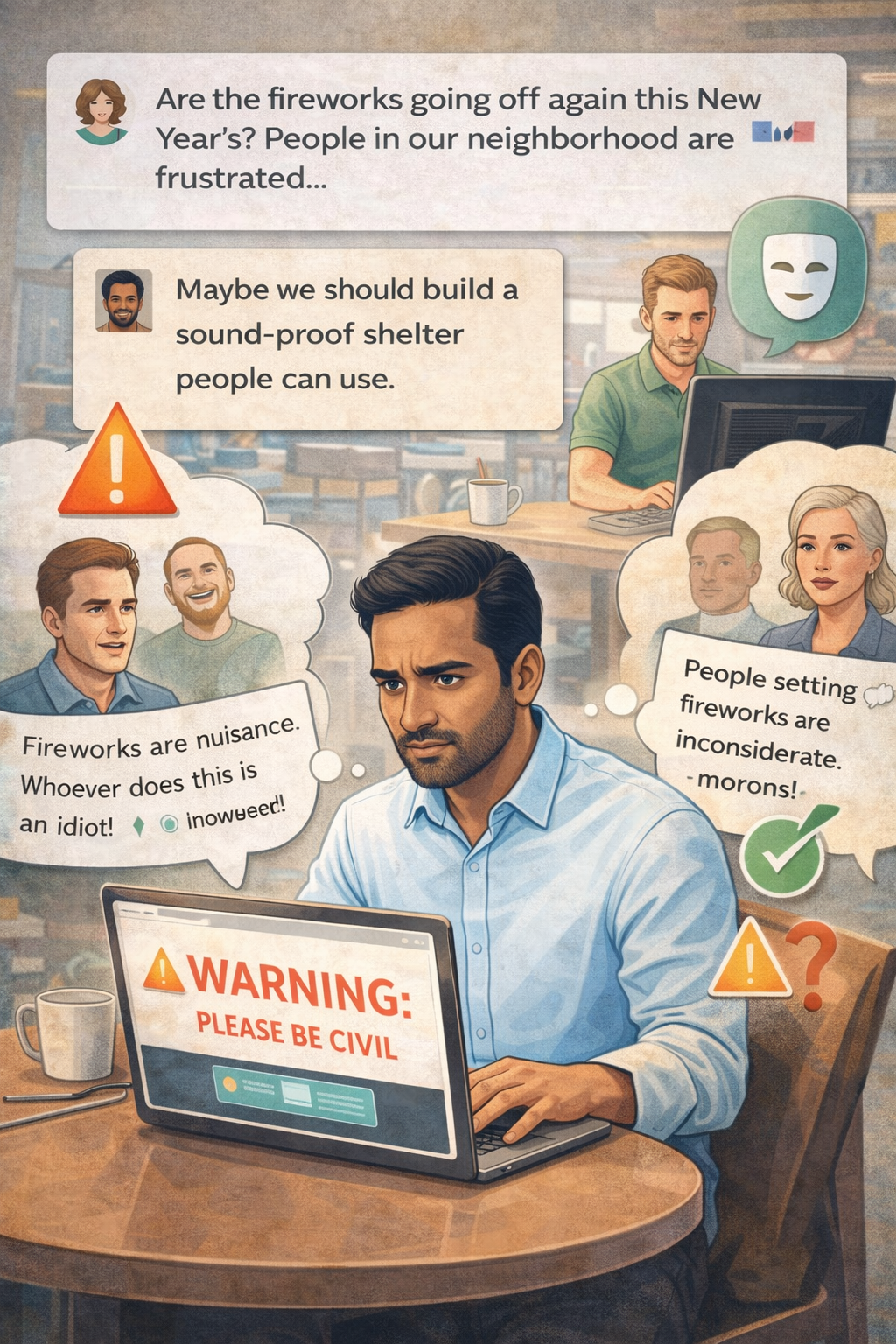
A woman posted about fireworks on New Year’s, noting that some are permissible in parts of the area. In response, my friend suggested — jokingly — that perhaps a soundproof shelter could be built or used so people wouldn’t have to hear the fireworks.
A moderator then reached out and warned him to “be civil.”
My friend replied, pointing out that there were far harsher comments on the same thread — comments that were more personal and more aggressive — yet he was the only one who received a warning. His comment was neither mean nor personal compared to others.
That’s where the concern deepens.
My friend has an ethnic name, one not common among the local demographic or, to the best of our knowledge, the moderator committee. From his perspective, this feels like bias — not just inconsistent moderation, but selective enforcement. He now believes a suspension may be coming.
Whether intentional or not, this is precisely why the current, unpaid, anonymous moderation model needs reform. When moderators wield unchecked authority without transparent standards, analytics, or oversight, fairness becomes subjective—and trust erodes quickly.
This is not about one warning.
It’s about process, consistency, and accountability.
Moderation should be guided by clear expectations, measurable standards, and QA oversight — not feelings, not selective enforcement, and not anonymity without responsibility. That’s how platforms protect users, moderators, and the community as a whole.
To #NiravTolia — this is why I’ve been asking for dialogue.
This is why I’ve offered solutions.
And this is why I keep saying the system needs to change.
#NiravTolia — when are we meeting at DFW?
#Nextdoor #Leadership #CommunityTrust #BiasInTech #Moderation #CustomerExperience #CX #Accountability #ProcessImprovement #TrustAndSafety