
When “Connection” Takes the Weekend Off: Questions for Nextdoor Leadership
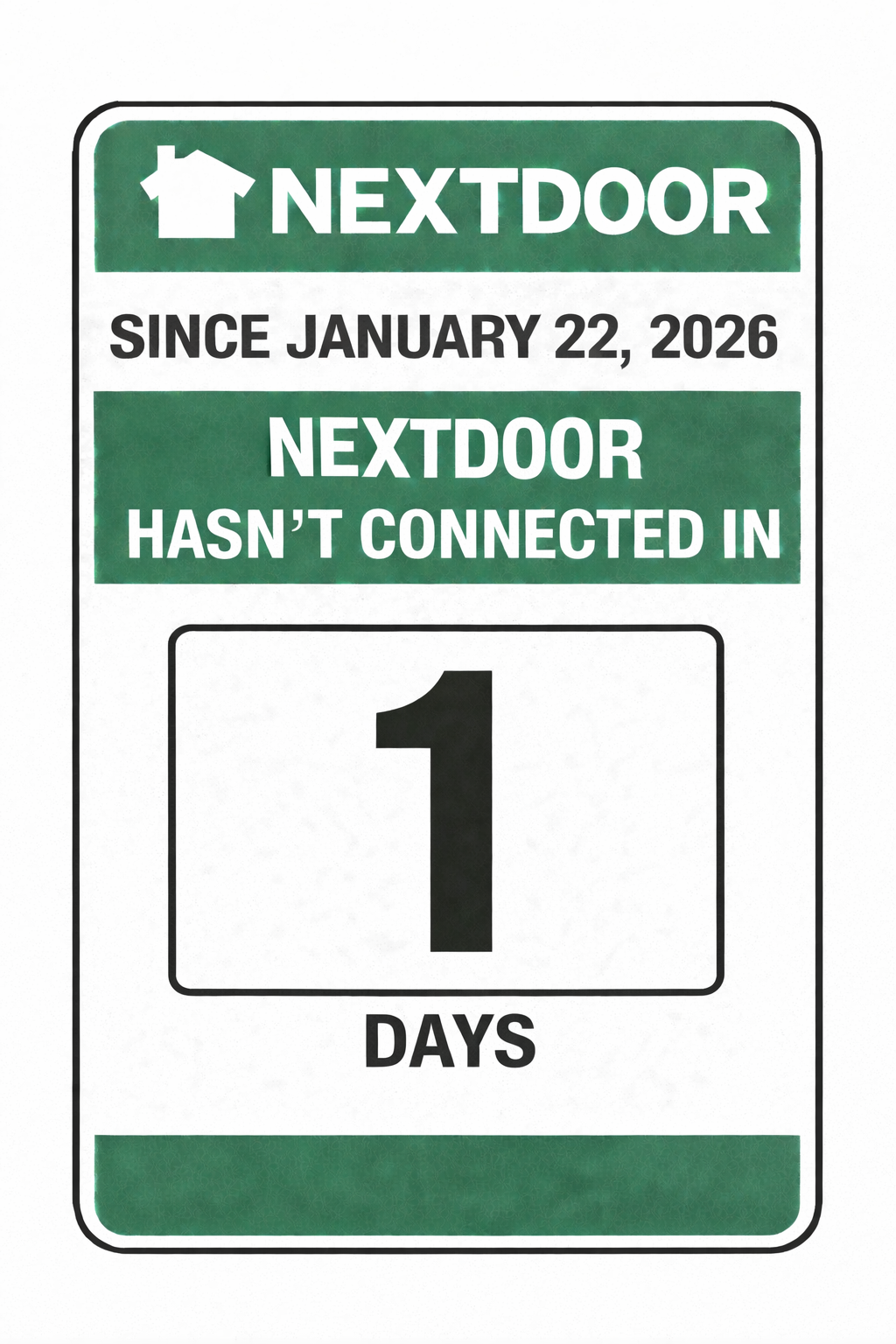
It’s Thursday, January 29, 2026—and once again, Nextdoor and Nirav Tolia appear to have started the weekend early.
As of this post, there’s no update. And if recent patterns hold, Friday (January 30) will likely be quiet too—rolling into another long weekend of silence. That raises a fair question: what are highly paid teams at Nextdoor doing day-to-day? From the outside, it looks like:
Little to no public engagement
Engineering effort focused on suspensions
Advertising sold against metrics that users increasingly question due to governance gaps
A troubling platform rule
Several users on X have pointed out a rule that effectively prohibits users from criticizing the platform, speaking ill of it, or offering improvement feedback—with immediate suspension as the consequence. That’s not community stewardship; that’s suppression.
A leadership-psychology lens (not a diagnosis)
In leadership psychology, organizations that discourage dissent often reflect defensive leadership patterns:
High sensitivity to criticism
Preference for control over dialogue
Conflating brand protection with silencing feedback
To be clear, this is not a clinical label—it’s a commonly discussed pattern in org behavior. The outcome is predictable: fear replaces trust, and “connection” becomes conditional.
If Nextdoor truly values neighbors, transparency must be allowed to breathe. Feedback—especially uncomfortable feedback—is how platforms mature.
What you can do
Join and contribute to the “I Hate Nextdoor” Facebook group to document experiences and patterns
Vote for a better moderator process in the live poll on X
Keep sharing facts, timelines, and receipts—consistently and professionally
Silence isn’t leadership. Connection isn’t a slogan. And governance without accountability isn’t value.
Read more and subscribe to NielFlamm.com.
#Nextdoor #NiravTolia #Leadership #PlatformGovernance #Accountability #Transparency #CommunityTrust #UserAdvocacy #CorporateCulture #DigitalPlatforms
