
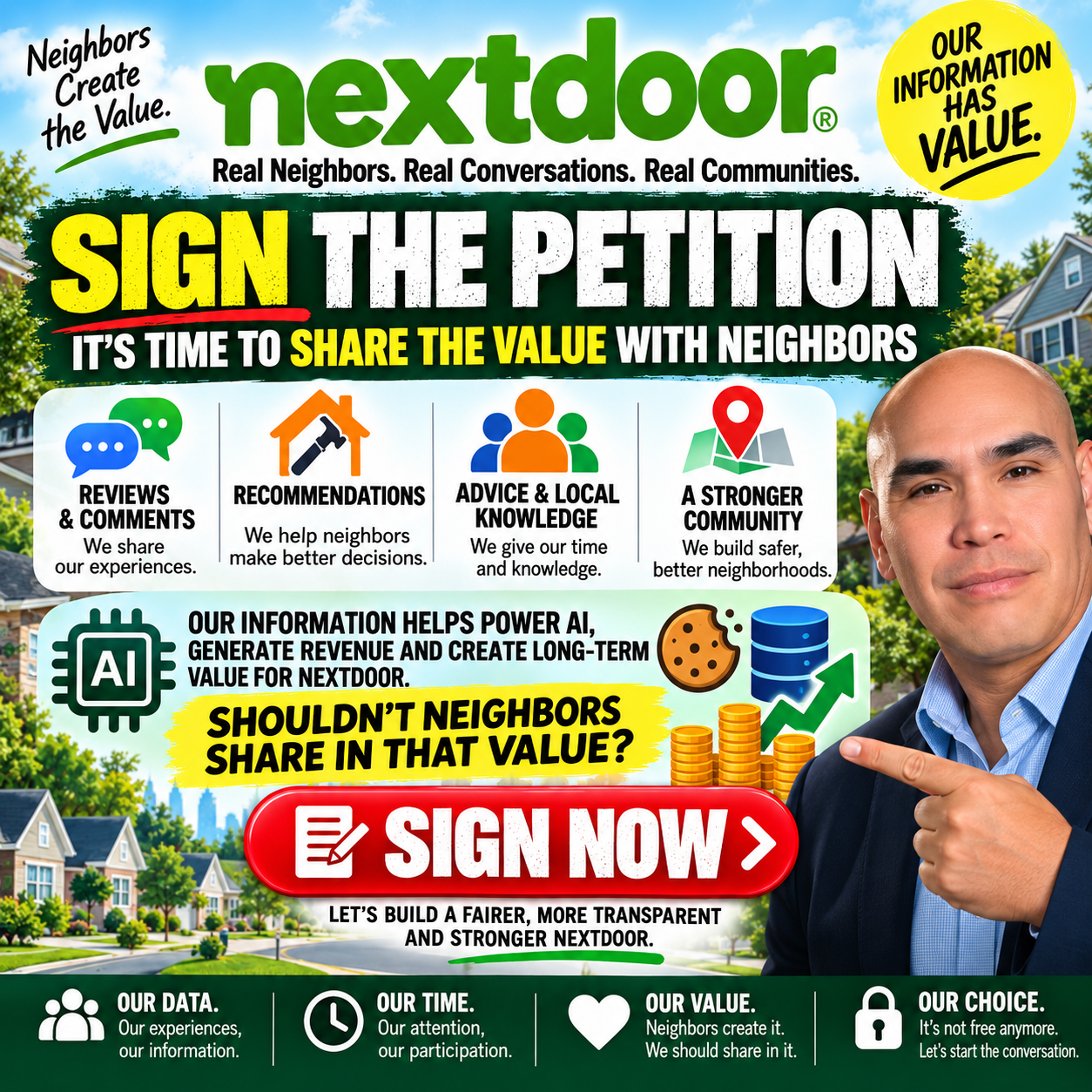
The Free Data Buffet Is Over: If Our Content Creates Value, We Should Share in It
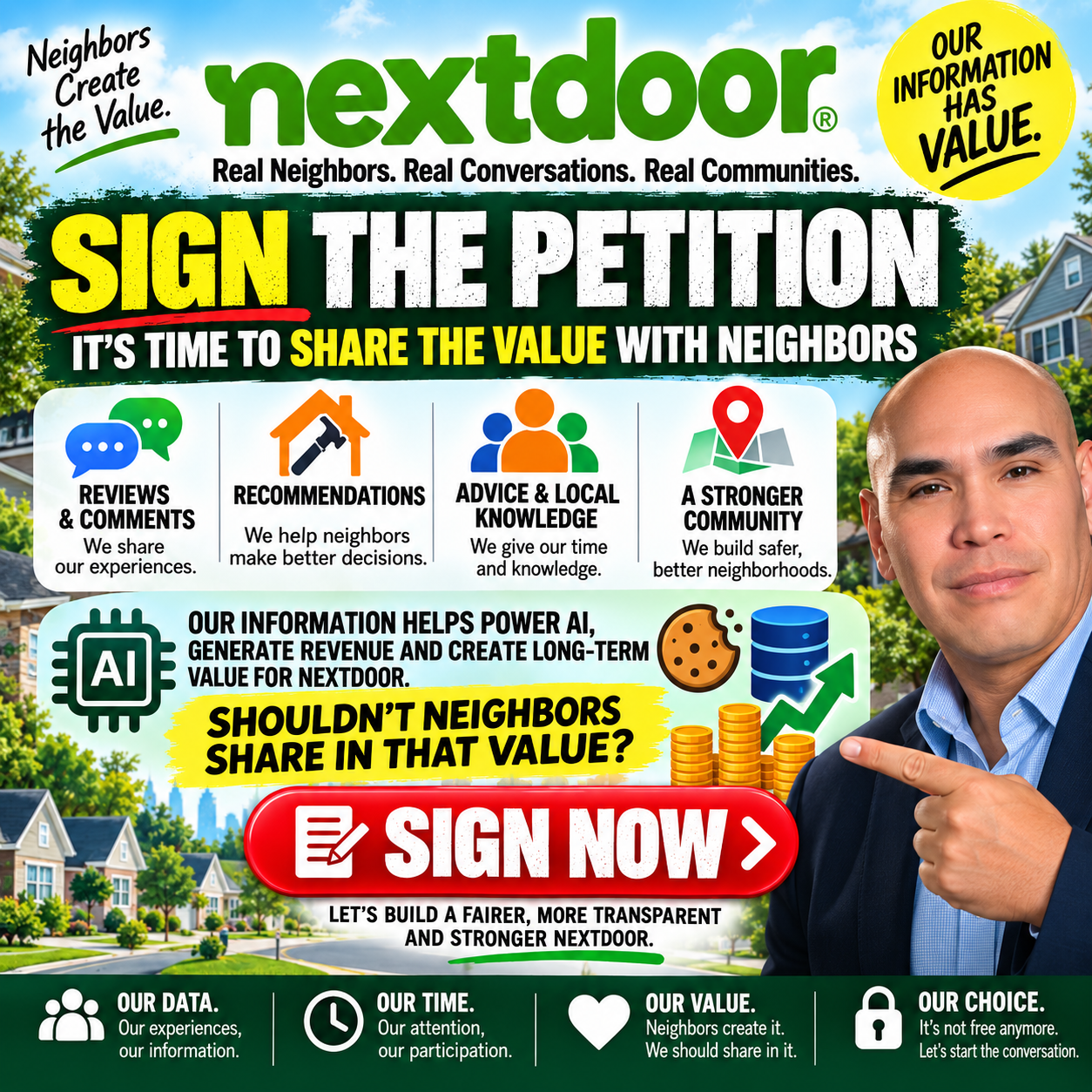
A while ago, I started a petition asking a fairly simple question:
If Nextdoor can create economic value from information neighbors provide, why shouldn't the neighbors who provide it participate in that value?
Today, I'm expanding the question.
This isn't only about Nextdoor anymore.
It's about social media platforms, websites, apps, advertising networks, and other digital businesses that collect information about what we read, click, search, recommend, review, discuss, and buy.
My message is becoming simpler:
Our information isn't free anymore.
At least, I don't think it should be.
We Keep Supplying the Raw Material
Think about what people give digital platforms every day.
We write reviews. We recommend restaurants. We tell neighbors which plumber showed up on time. We answer questions. We upload photographs. We comment. We click. We search. We like things. We tell platforms what interests us.
Then there's the less obvious information: cookies, device identifiers, IP addresses, browsing activity, clicks and other event data.
These aren't all legally or technically the same thing, and different privacy laws and platform agreements govern how different types of information may be collected and used. I'm not claiming that placing a cookie on my browser magically means somebody owes me a royalty check.
I'm making an argument about economic value.
Because individually, one click may be almost meaningless.
Multiply those clicks, posts, recommendations, and behavioral signals across millions of people, however, and suddenly we're talking about an extremely valuable resource.
Nextdoor Makes the Point Particularly Well
Nextdoor increasingly describes itself in terms of neighbor-generated knowledge. Its 2025 Transparency Report described the platform as containing “neighbor-generated content and locally relevant information,” while Nextdoor's newer AI-powered Ask product draws upon nearly 15 years of conversations among verified neighbors. Nextdoor
That's valuable.
And who created those conversations?
Neighbors did.
Nextdoor built the platform.
Nextdoor paid engineers.
Nextdoor created the infrastructure.
Nextdoor developed the advertising business.
Nextdoor has every right to try to build a profitable company from those investments.
But neighbors supplied an enormous amount of the raw material that makes the platform useful.
Nextdoor itself says almost 30% of its content consists of organic recommendations and has talked about tens of millions of “Faves” associated with millions of businesses. Nextdoor Blog
That's nothing.

Cookies Are Part of the Bigger Conversation
The same principle makes me think differently about tracking.
Nextdoor's own data-processing documentation identifies things such as cookie IDs or similar identifiers, IP addresses, user-agent information, and event data such as clicks or installs among categories of personal data involved in certain advertising-related processing. Nextdoor Legal
Again, this isn't uniquely a Nextdoor issue.
It's an internet issue.
We've spent years becoming accustomed to clicking:
ACCEPT ALL COOKIES
Maybe we should start thinking more carefully about what we're accepting and what companies receive in return.
If information about my behavior helps improve targeting, train recommendation systems, develop products, measure advertising, build audiences or otherwise contribute to commercial value, I think it's reasonable to have a larger conversation about what the person generating that information receives in return.
Welcome Back to My Very Lonely Petition 😂
My petition hasn't exactly become the Boston Tea Party of user-generated data.
Last time I checked, it had one signature.
Mine.
😂
I already know what that guy thinks.
But perhaps my original message was too focused on Nextdoor.
Because this question is much bigger.
My updated message isn't:
Destroy social media.
It isn't:
Stop using the internet.
And it certainly isn't:
Companies shouldn't make money.
It's this:
If our participation creates commercial value, let's start talking about sharing that value.
That could take many forms.
Direct compensation for opt-in research. Contribution credits. Subscription benefits. Revenue-sharing pools. Advertising credits. Payments for particularly valuable content. Rewards for reviews or recommendations that generate measurable commercial activity. Stronger controls over commercial reuse. Clear choices about whether content can be used to develop AI products.
I don't pretend to have the perfect economic model.
That's what the conversation is for.
Until Then, We Can Stop Supplying Some of the Commodity
That's the other part of my petition.
Participation is voluntary.
If I don't like the economic arrangement, I can reconsider what I voluntarily contribute.
That doesn't mean withholding information about a missing child, dangerous weather, a lost pet, a fire, an emergency, or something that could protect another person.
Human safety comes before my argument about data economics.
I'm talking about the routine commercial material platforms benefit from:
Which roofer should I hire?
What's the best restaurant nearby?
Who installed your HVAC system?
Would you recommend this dealership?
Which insurance company do you use?
Every answer adds another tiny piece to a valuable database.
Maybe we should stop automatically assuming that contribution costs $0.00.
The Internet Made Us the Product, the Customer and the Workforce
That's what fascinates me.
We can simultaneously be the audience viewing advertisements, the customer purchasing products, the creator producing content, and the source generating behavioral data.
That's an extraordinary business model.
For the companies.
Maybe it's time users become more conscious participants in the economics too.
And I'm not suggesting that users automatically have a legal right to payment for everything they post or every cookie generated. Platform terms, privacy laws, and individual choices matter.
I'm saying something much simpler:
We can ask for a different deal.

Nextdoor, You're Still My Test Case
Nextdoor remains particularly interesting to me because its product depends so heavily on what neighbors know.
Without neighbors, there are no neighbor recommendations.
Without neighbors, AI has no years of neighborhood conversations to search.
Without neighbors, there are no local experiences to organize.
Without neighbors, advertisers have far less reason to want access to those neighborhoods.
Nextdoor says it wants every voice to have value. Nextdoor Business
Great.
Let's talk about the economic value too.
Nextdoor built the container.
Neighbors keep filling it.
So I'm Updating the Invitation
To Nextdoor.
To social-media companies.
To websites.
To apps.
To companies collecting behavioral information.
And, most importantly, to the people creating all of it:
Stop thinking of your digital activity as automatically worthless simply because nobody has historically written you a check for it.
Ask what you're providing.
Ask how it's being used.
Read the privacy controls.
Decline unnecessary tracking when you prefer not to.
Think before voluntarily providing another commercially useful recommendation, review, or piece of content.
And if enough people decide the current exchange isn't good enough?
Companies will have an incentive to offer a better one.
My petition may still have only one signature.
That's okay.
Every movement has a first person willing to look slightly ridiculous standing there alone.
I'm already bald. I've survived worse. 😂
Our information has value.
Our content has value.
Our recommendations have value.
Our attention has value.
Our time has value.
The question isn't whether digital companies should be allowed to create value.
The question is whether the people supplying so much of the raw material should be part of it.
I think that's a conversation worth having.
👉 Sign the petition: https://c.org/GkNWmffgg9
👉 Follow the continuing case study: NielFlamm.com/blog

Day 101: Our Data Is a Commodity. Why Are We Giving It Away?

Day 101.
Today I want to strip this Nextdoor discussion down to basic economics.
If I have something of value, another party uses it, and that use generates revenue, why shouldn't I share in the value created?
In this case, the commodity is information.
Reviews are information.
Recommendations are information.
Posts, comments, neighborhood observations, business experiences, and local knowledge are information.
Collectively, that's user-generated content.
And when a platform can aggregate, organize, analyze, and monetize that information, those individual contributions can become economically valuable.
We Call It “Content.” But It's Also an Economic Input.
Suppose I recommend a plumber on Nextdoor.
I supplied the experience. I paid to hire the plumber. I evaluated the work. I spent my time writing the recommendation.
Another neighbor reads it.
The plumber potentially gets business.
Nextdoor gets engagement and another piece of local knowledge stored within its platform.
Now multiply that by millions of neighbors and years of participation.
Suddenly, what looks like individual posts becomes something much more interesting:
An asset.
And with AI making it increasingly possible to organize, summarize, and extract useful information from enormous collections of human-created knowledge, that accumulated information may become even more useful.
I'm Not Saying Nextdoor Shouldn't Profit
Quite the opposite.
I'm a shareholder. I want Nextdoor to make money.
Nextdoor built the technology. It operates the platform. It employs people, develops products, sells advertising, and assumes the financial risk of running the business.
Nextdoor should benefit from the value it creates.
My question is:
Why does that automatically mean the neighbor gets zero?
If my contribution becomes part of something commercially valuable, why couldn't there be a model where:
Nextdoor wins.
Shareholders win.
Businesses win.
And the neighbors supplying the information win too.
I'm not suggesting every post deserves a royalty check.
But reviews, recommendations, local knowledge, research participation, and other user-generated information that contributes to commercial value?
Let's have that conversation.
Until Then, Maybe We Stop Supplying the Commodity
That's the idea behind my Neighbor Value-Sharing Petition.
The petition asks Nextdoor users to voluntarily stop providing new routine data, business reviews, recommendations, and other commercial user-generated content until Nextdoor develops a meaningful way for neighbors to participate in the revenue and value their contributions help generate.
It's not about withholding emergency information, safety alerts, missing-person information or other important community communication.
It's about the commodity.
If our information has value, perhaps we should stop giving that value away for free until there's a conversation about sharing it.
Read and sign the petition:
Then share it with another Nextdoor user.
Nextdoor Built the Container. Neighbors Keep Filling It.
A platform without people is software.
A review platform without reviews is an empty database.
A neighborhood network without neighbors sharing neighborhood knowledge isn't much of a neighborhood network.
Nextdoor built the container.
Neighbors keep filling it.
If what's inside that container can be monetized, I think it's reasonable for the people supplying it to ask:
Where's our share?
Until Nextdoor is willing to have that conversation, I'm asking neighbors to consider something incredibly simple:
Don't provide the commodity.
No new routine reviews.
No new business recommendations.
No additional commercial data.
Then let's see how valuable the commodity becomes when the people producing it decide they want to share in its value.
Our data. Our knowledge. Our time. Our value.
👉 Sign the petition:
https://c.org/GkNWmffgg9
👉 More of my continuing Nextdoor case study:
NielFlamm.com/blog

Day 101: Nextdoor Said It. The Person Behind the Post Is Doing the Work.

I missed yesterday on LinkedIn, although I posted almost everywhere else.
So, welcome to Day 101.
NXDR closed today at $2.38, down 4.8%.
But something Nextdoor posted on LinkedIn caught my attention even more.
Read Nextdoor's LinkedIn post.
It highlights Jessica Spann, a Charlotte educator whose work supporting students ultimately caught the attention of The Drew Barrymore Show.
Then I got to Nextdoor's final sentence:
“Local posts have a way of traveling when the person behind them is doing the work.”
ABSOLUTELY!
That's my point.
Jessica did the work.
Jessica made the impact.
Jessica created something worth talking about.
Nextdoor provided the platform that helped amplify it.
That's valuable too.
But if Nextdoor recognizes that the person behind the post is doing the work, why shouldn't we also talk about that person participating in the value their contributions help create?
Think of Nextdoor as the funnel.
The funnel helps direct the gasoline.
But the gasoline makes the engine run.
Neighbors provide the stories, reviews, recommendations, conversations, and local knowledge that keep the platform interesting.
That's why I started the Neighbor Value-Sharing Petition.
And, for transparency, I remain its sole signer. 😂
I need signature No. 2.
If you believe neighbors should participate in the value their contributions help create, sign it. Then share it.
Sign the Neighbor Value-Sharing Petition
Nextdoor said it, not me: the person behind the post is doing the work.
Now let's talk about sharing the value created by that work.
👉 Full Day 101 post: NielFlamm.com/blog
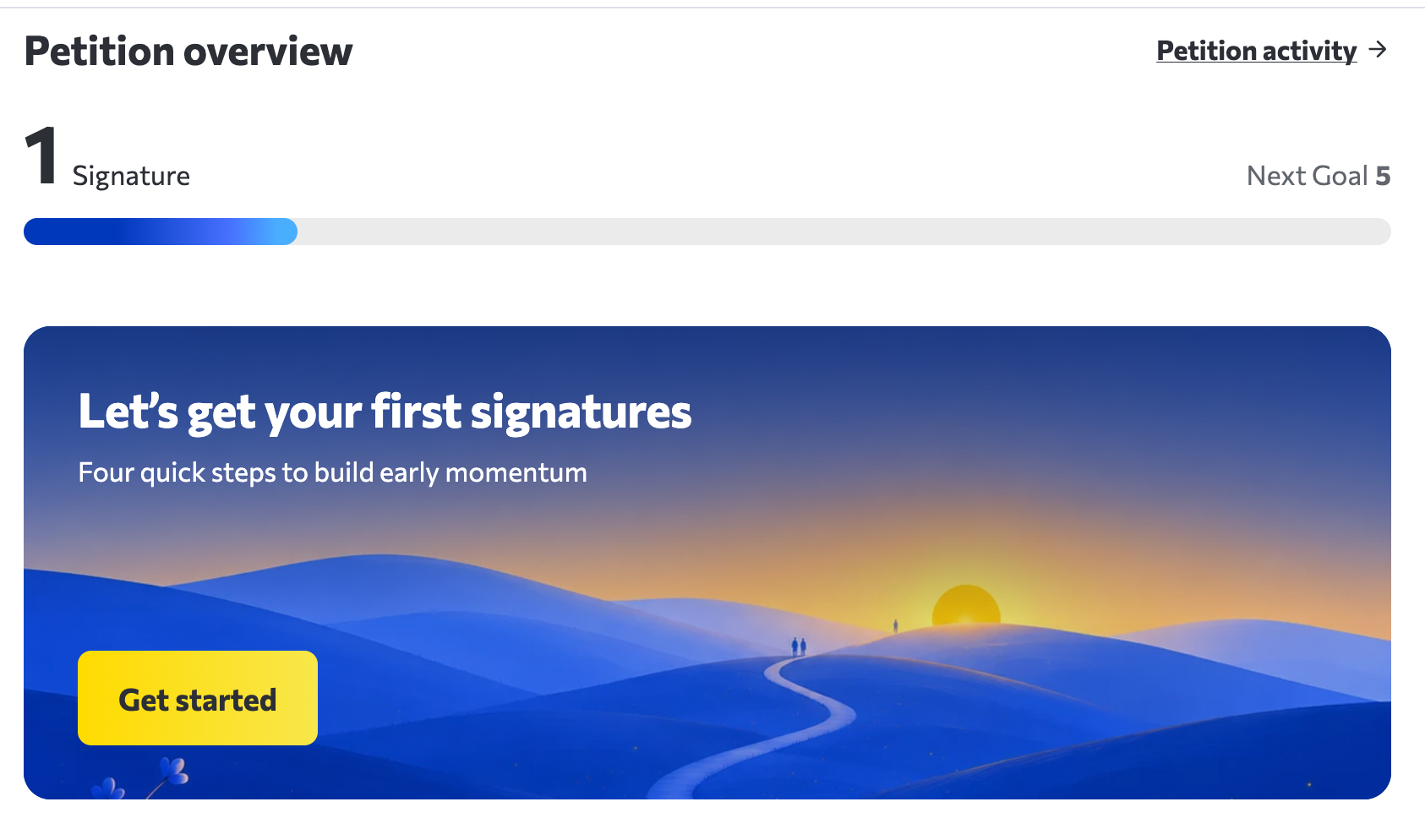
My Nextdoor Petition Has One Signature. Mine. So…What Am I Missing?
Time for a little open-book transparency.
I launched my petition asking Nextdoor to create a meaningful value-sharing model for the neighbors whose reviews, recommendations, advice and local knowledge help make the platform valuable.
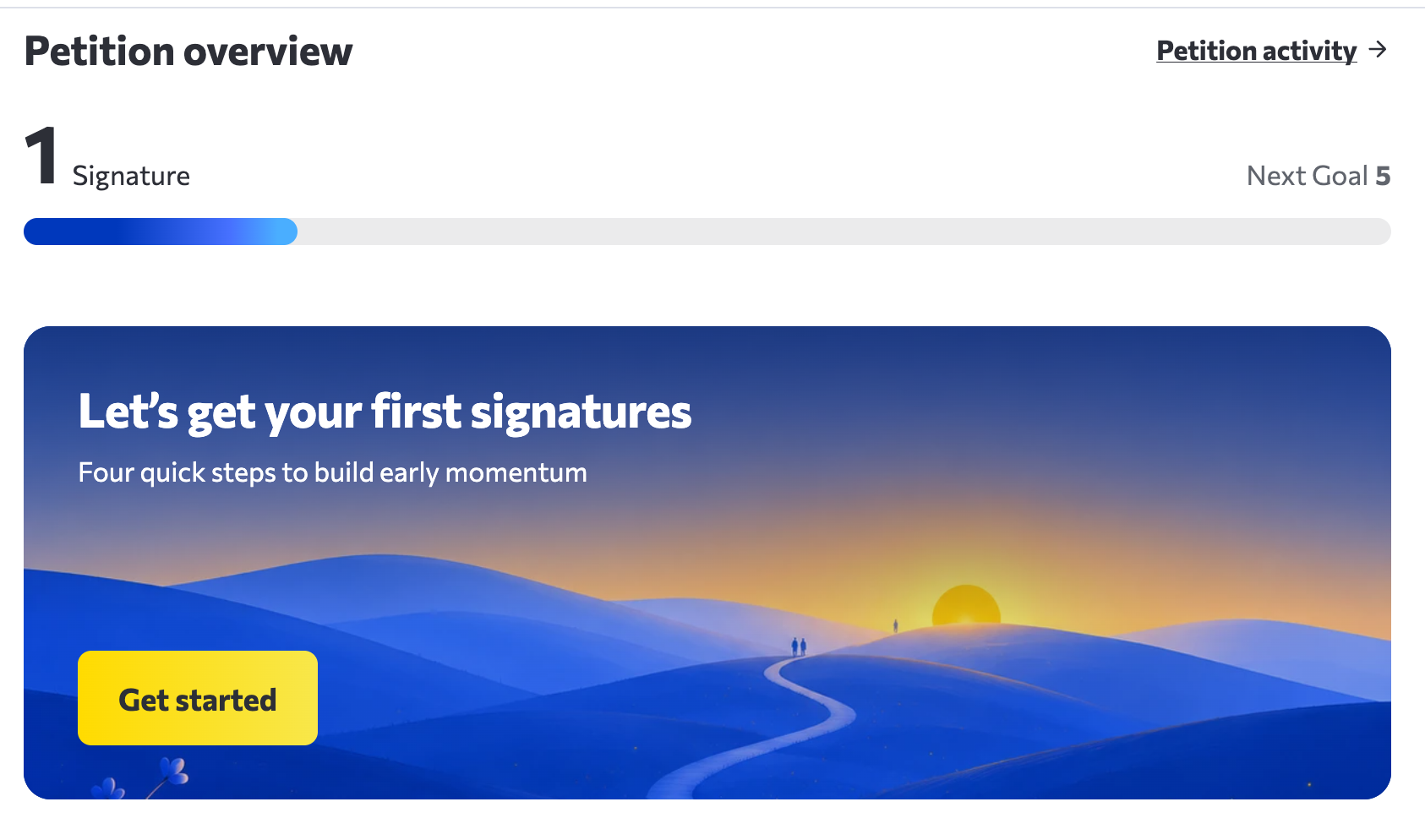
How's it going?
One signature.
Mine. 😂
So clearly, I'm not exactly storming the gates with an angry mob.
But instead of pretending it's gaining traction when it isn't, I'd rather ask why.
Maybe I Got the Petition Wrong
The basic idea still makes sense to me.
Nextdoor provides the platform. Neighbors provide enormous amounts of information and local knowledge. If that information can ultimately be organized, analyzed, used by AI, and turned into commercial value, why shouldn't the people helping create that value participate in some of the upside?
I mean some form of profit or value sharing tied to what users contribute and what the platform ultimately earns from it.
Nextdoor should make money.
I'm a shareholder. I want Nextdoor to make money.
But why does it have to be either platform profits or users’ benefit?
Why not both?
Now I Need Your Feedback
Maybe the petition is too complicated.
Maybe the ask isn't clear enough.
Maybe people like the concept but don't want to sign a petition.
Maybe asking users to pause business reviews and recommendations is the wrong approach.
Or maybe people simply disagree with me.
Tell me.
I spend plenty of time asking Nextdoor to listen to feedback, so I'd better be willing to do the same.
Read the petition and tell me what you'd change. What would make you sign it? What part doesn't work? Is there a better model for sharing the value neighbors create?
And if you do agree with the idea, I need two things:
First, sign it. Then share it.
Right now, the petition has exactly one supporter—and I already know what that guy thinks. 😂
Read and sign the Nextdoor Neighbor Value-Sharing Petition
Our information. Our time. Our value. Why not share?

Day 98: Maybe the Silence Is the Most Interesting Data of All

Day 98.
We're now two days away from triple digits, and I’m still waiting for the detailed Nextdoor Insights studies I originally requested.
But today, I’m looking at this saga differently.
What If the Experiment Wasn't the Study?
For 98 days, I've been asking Nextdoor for research data.
In the process, I've accidentally collected some data of my own.
How does an organization respond when one person simply refuses to let a reasonable question disappear?
Not with threats. Not with harassment. Not by screaming louder.
Just by continuing to ask.
At some point, the absence of an answer becomes information itself—not proof of anyone's motive, but a case study in how an organization handles persistence, ownership, and closure.
That's something you won't find in a spreadsheet.
Meanwhile, the Petition Is Live
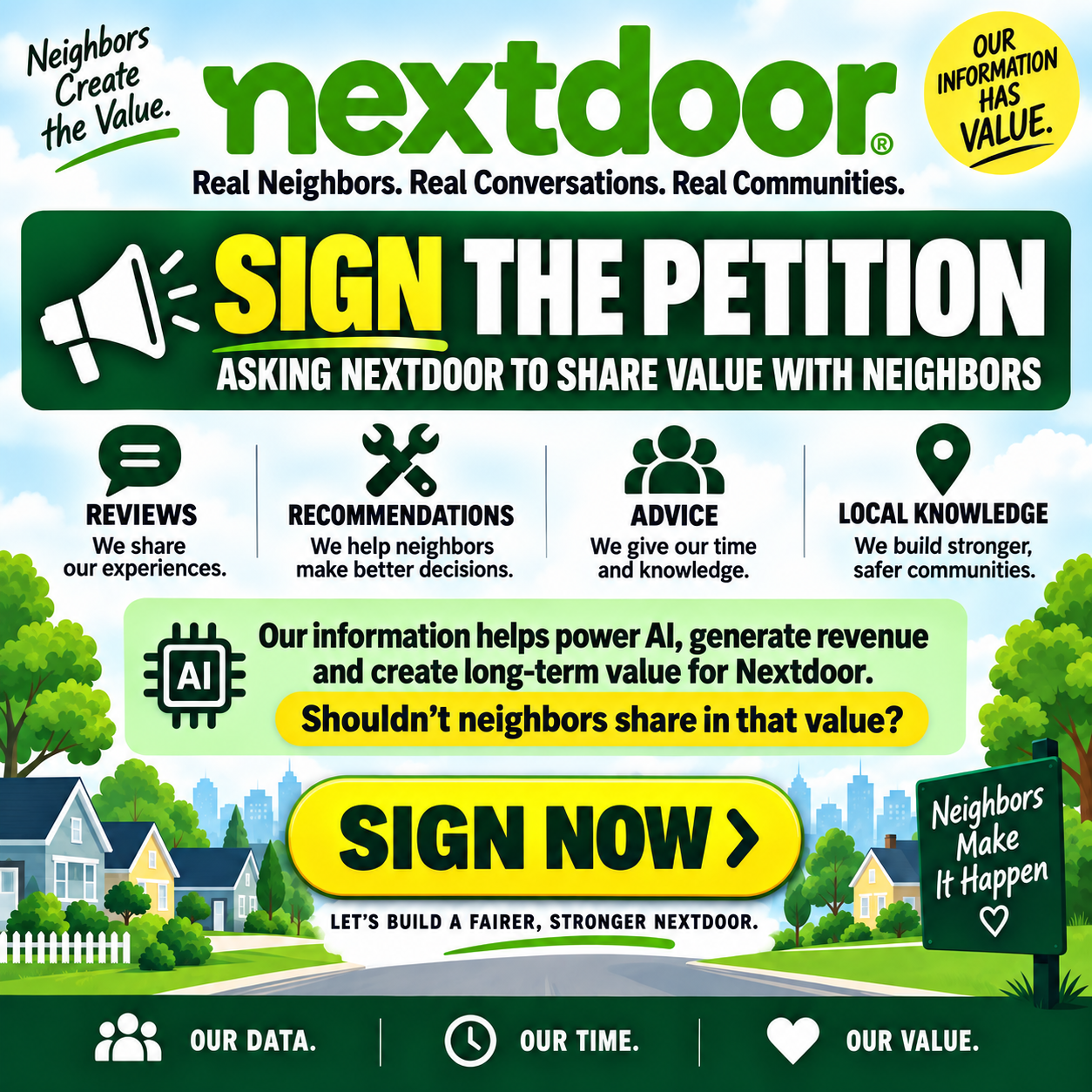
There's now another question on the table:
If neighbor reviews, recommendations, and local knowledge become increasingly valuable to Nextdoor—especially in the age of AI—should the neighbors creating that value participate in it?
I've launched the Neighbor Value-Sharing Petition to start that conversation.
If you agree, please sign it and share it.
Tomorrow: Day 99.
Then comes 100.
The funny thing is, I started this journey looking for Nextdoor's data.
I didn't expect Nextdoor's response to become data of its own.
👉 Follow the saga at NielFlamm.com/blog