
We Expect What We Inspect
A few weeks ago, I wrote about my experience at a local Starbucks where the music being played didn't exactly sound like it came from the corporate-approved playlist. Think death metal, explicit rap, and enough profanity to make me wonder if someone had hijacked the speakers.
I submitted feedback through the Starbucks website chat because I thought someone should know. My goal wasn't to get anyone in trouble. It was simply to share a customer experience that didn't match what I've come to expect from Starbucks.
Fast forward to today.
As I write this blog post, I'm sitting in that same Starbucks.
Something feels different.
I believe the store manager is here. I could be wrong, but here's why I think so:
The music isn't death metal, trap music, or The Best of "Weird Al" Yankovic. It's what I'd expect to hear in a Starbucks.
She's spent a significant amount of time working on an iPad, which looked like inventory or operational work.
She's now working tableside on a laptop.
I overheard what sounded like a discussion about scheduling with one of the baristas.
None of those things stood out to me the last Sunday I visited.
There's an old saying I've used throughout my career:
We expect what we inspect.
Whether you're leading a coffee shop, a Fortune 500 company, or a small business, it's difficult to know what's really happening if leaders never spend time where the work is being done.
Now, am I the reason she's here today?
Probably not.
Did my feedback play some small role?
Maybe.
I have no way of knowing, and I'm not going to pretend otherwise.
What I do know is this: today's customer experience feels noticeably different from the one I wrote about a few weeks ago. The atmosphere is calmer, the music fits the environment, and it feels more like the Starbucks experience I expected in the first place.
Sometimes customers don't expect perfection.
They simply want to know someone is paying attention.
What do you think? Have you ever noticed a business improve after you provided respectful, constructive feedback? I'd love to hear your experience.
Join the discussion on NielFlamm.com.

Day 48: Leadership Is About People, Not Just Processes

If you're new to this saga, welcome.
I've been documenting this journey day by day at NielFlamm.com/blog.
At this point, it's honestly hard to believe this has continued for 48 days.
The original request was simple: a study from Nextdoor that I was directed to request from Jacob Chavis.
The one thing that has stood out to me recently is something I haven't seen in about a month.
There was another Nextdoor post discussing a study shortly after I made my original request.
Since then?
No mention of any study.
No mention of Jacob Chavis.
No updates.
It seems the role and these studies no longer exist.
Coincidence?
I don't know.
But it does raise questions.
Recently, I've been watching a lot of leadership content—not just best practices, but examples of what happens when someone is managing people versus truly leading them.
This video caught my attention:
https://www.facebook.com/reel/1737323883971465
The situation in the video reminded me of something important:
Leadership is revealed in moments when people are vulnerable.
That brought me back to my own story.
I've shared my journey through my amputation and the decisions I had to make during that time:
https://www.facebook.com/share/v/18MqX3rAbE/
I was trying to figure out some of the biggest decisions of my life:
Was hospice the right path?
Was amputation the right decision?
How would I navigate disability insurance?
What would my future look like?
During that period, the people at the company I worked for showed me what leadership and compassion actually look like.
They supported me.
They treated me like a person.
They didn't just see an employee or a liability.
I would recommend those people for any role, anywhere.
Because at the end of the day:
Companies don't make companies successful. People do.
Organizations may focus on policies, procedures, compliance, and protecting the business.
Those things matter.
But the people inside an organization are the ones who create the culture, serve customers, build products, and drive results.
Companies exist to create value for customers and investors.
Taking care of people is one way they get there.
That's the leadership lesson I keep coming back to.
It's not just about what leaders say.
It's about what they do when people need them.
Join the discussion at NielFlamm.com/blog. Leave some feedback—I’d love to hear from you.
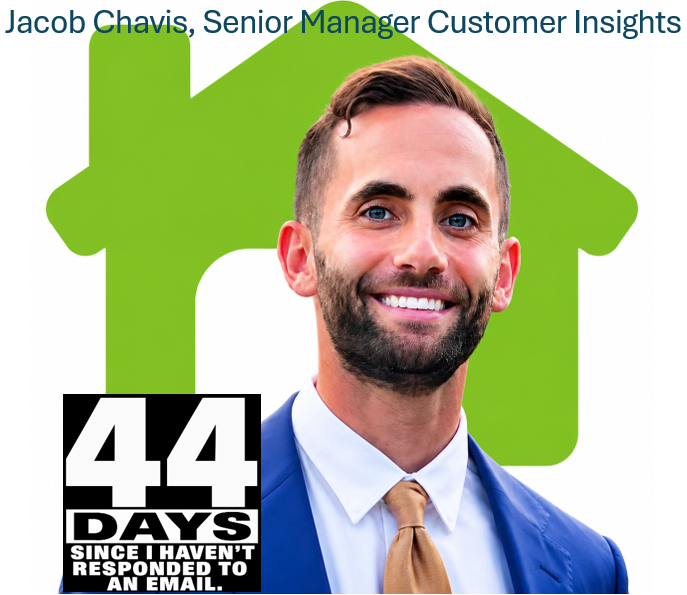
Day 44: Change Is Immediate. Results Take Time.
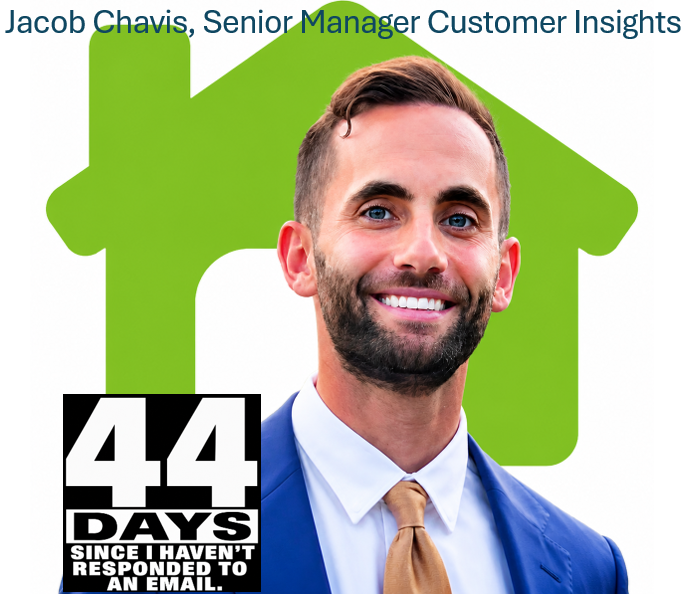
This morning started at 5:00 a.m.
First order of business? Checking my fraternity's Powerball pool tickets.
The result?
We won $8...
...on a $130 buy-in.
Let's say the return on investment wasn't exactly Wall Street material.
While I was scanning the tickets with the South Carolina Education Lottery app, I had to laugh. I remember the days when checking lottery tickets meant comparing every number by hand, trying to memorize the winning combinations. Technology really can be a wonderful thing.
I also had another thought.
Before I scanned the tickets, I checked my email.
Part of me hoped I'd wake up to a message from Jacob Chavis.
I didn't.
Today marks another day without receiving the study or even an acknowledgment.
As I thought about that, my mind wandered to a conversation that may have taken place somewhere within Nextdoor.
I don't know who was involved.
Maybe it was between Nirav Tolia and Jacob Chavis.
It may have involved someone else in the leadership chain.
Maybe no such conversation happened at all.
But I couldn't help wondering whether someone, somewhere, said:
"Don't engage."
Or...
"Don't respond."
Or...
"Let's wait."
I don't know.
What I do know is that, from the outside looking in, continued silence raises questions.
Am I the only person who thinks something feels off about that?
I don't believe I am.
One of the most encouraging parts of this journey has been the people who've taken the time to react to my posts, leave thoughtful comments, challenge my perspective, or click the thumbs-up or heart button.
Those interactions matter.
They remind me that people are reading.
People are thinking.
People care.
They remind me that this effort isn't for nothing.
Recently, I heard a short video that said:
"Change is immediate. Results take time."
That line stuck with me.
Real change often begins the moment someone decides to speak up.
The visible results usually come much later.
Whether it's improving communication, questioning corporate culture, or encouraging accountability, meaningful progress rarely happens overnight.
So I'll keep asking respectful questions.
I'll keep listening to different viewpoints.
And I'll keep running the race.
Because while results take time...
The decision to pursue change happens today.
Join the discussion at NielFlamm.com/blog. Leave some feedback—I'd love to hear from you.
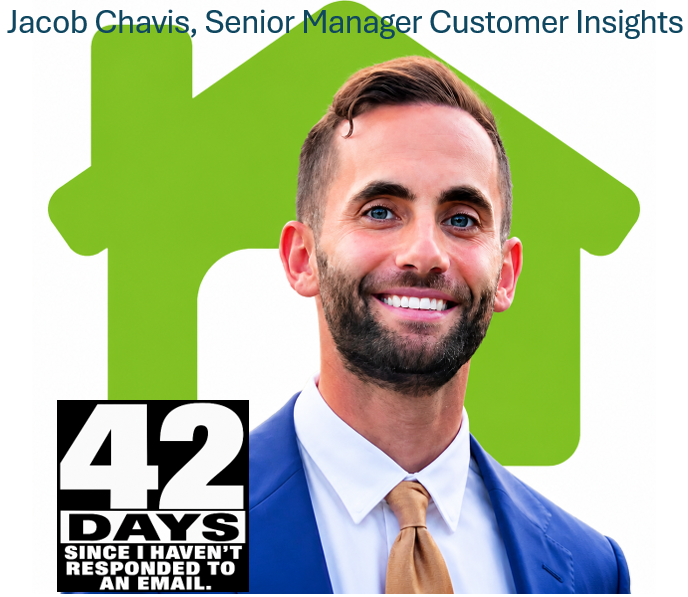
Day 42: Culture, Moderation, and the Courage to Have Difficult Conversations
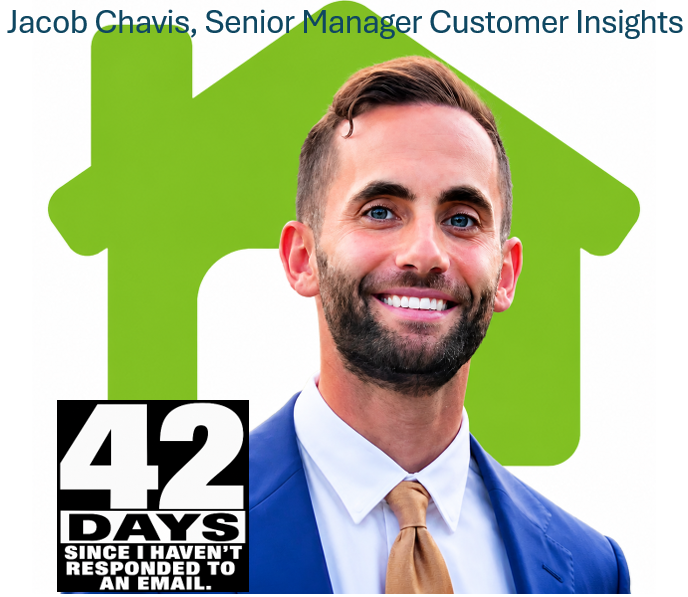
Today marks Day 42 since I requested a Nextdoor study from Jacob Chavis.
Forty-two days later, I still haven't received the study, an acknowledgment, or a response.
Over the past six weeks, my observations about Nextdoor have largely centered around three themes:
1. Culture
2. The moderation model
3. Communication
Let's start with moderation.
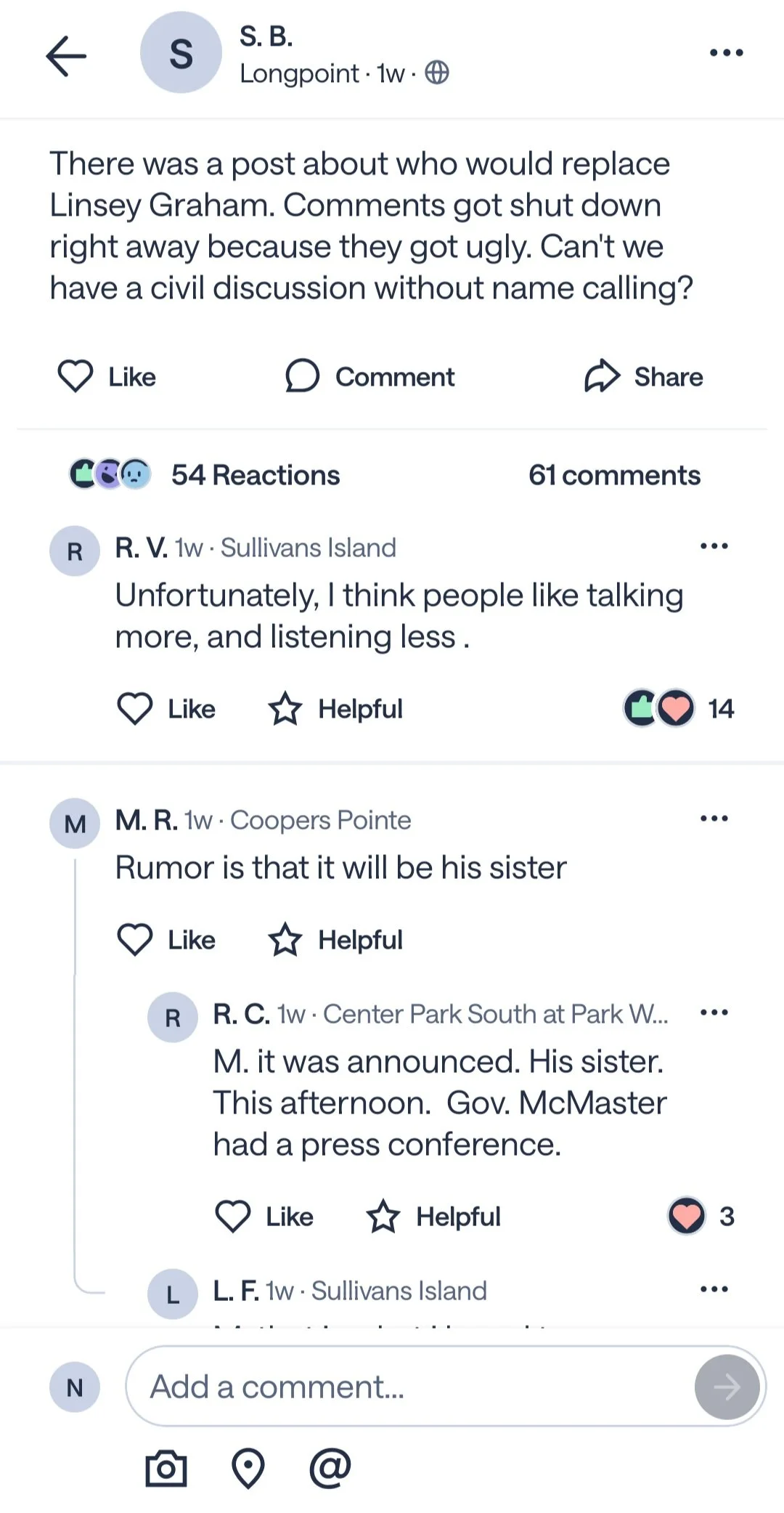
After a late night of blogging and recording videos for NielFlamm.com, I did what most people probably wouldn't do before bed—I spent some time browsing Nextdoor.
Yes, I know... I need better hobbies.
I came across a discussion that began about a week ago concerning who would temporarily fill the U.S. Senate seat vacated after Senator Lindsey Graham's death.
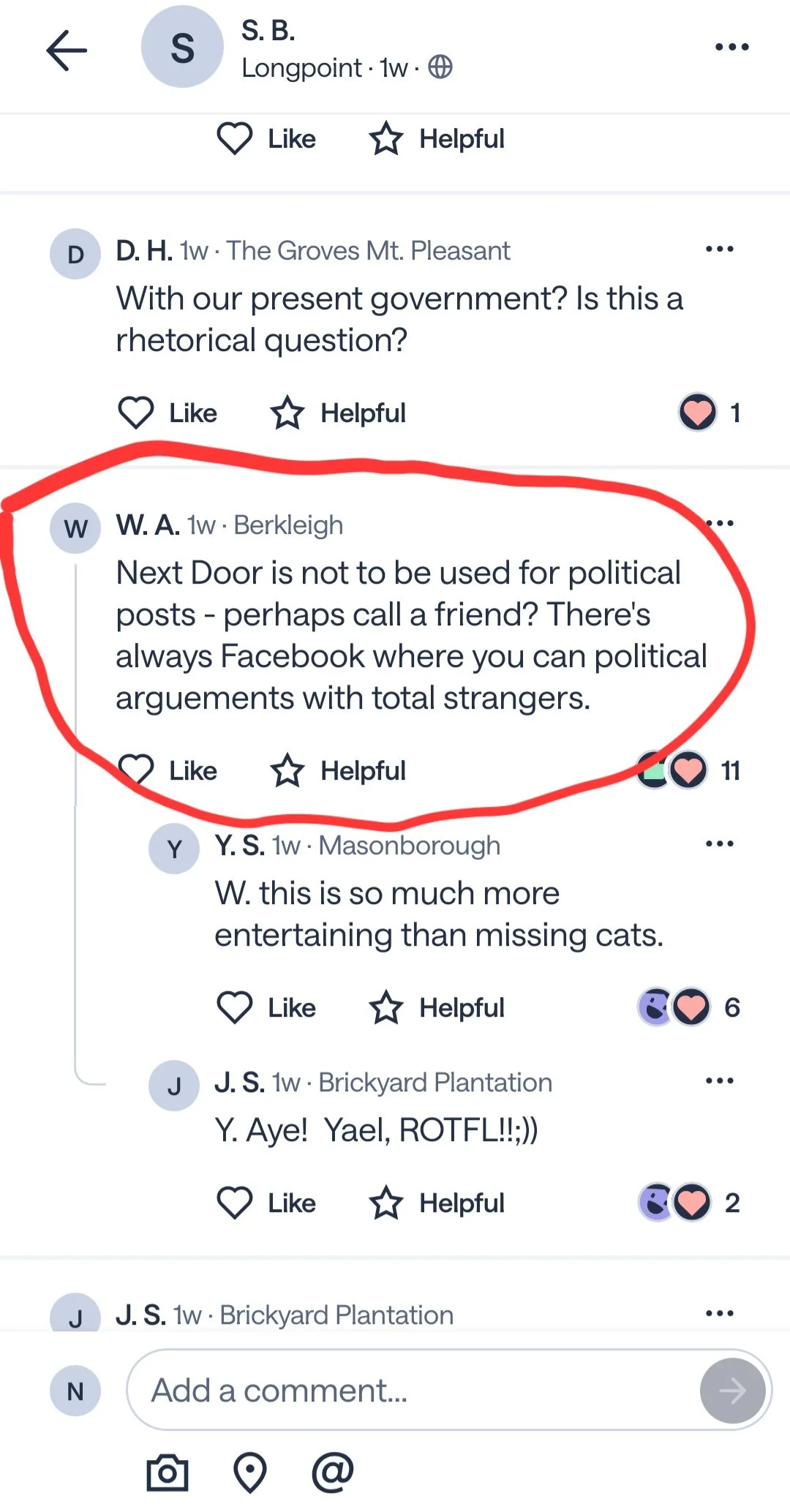
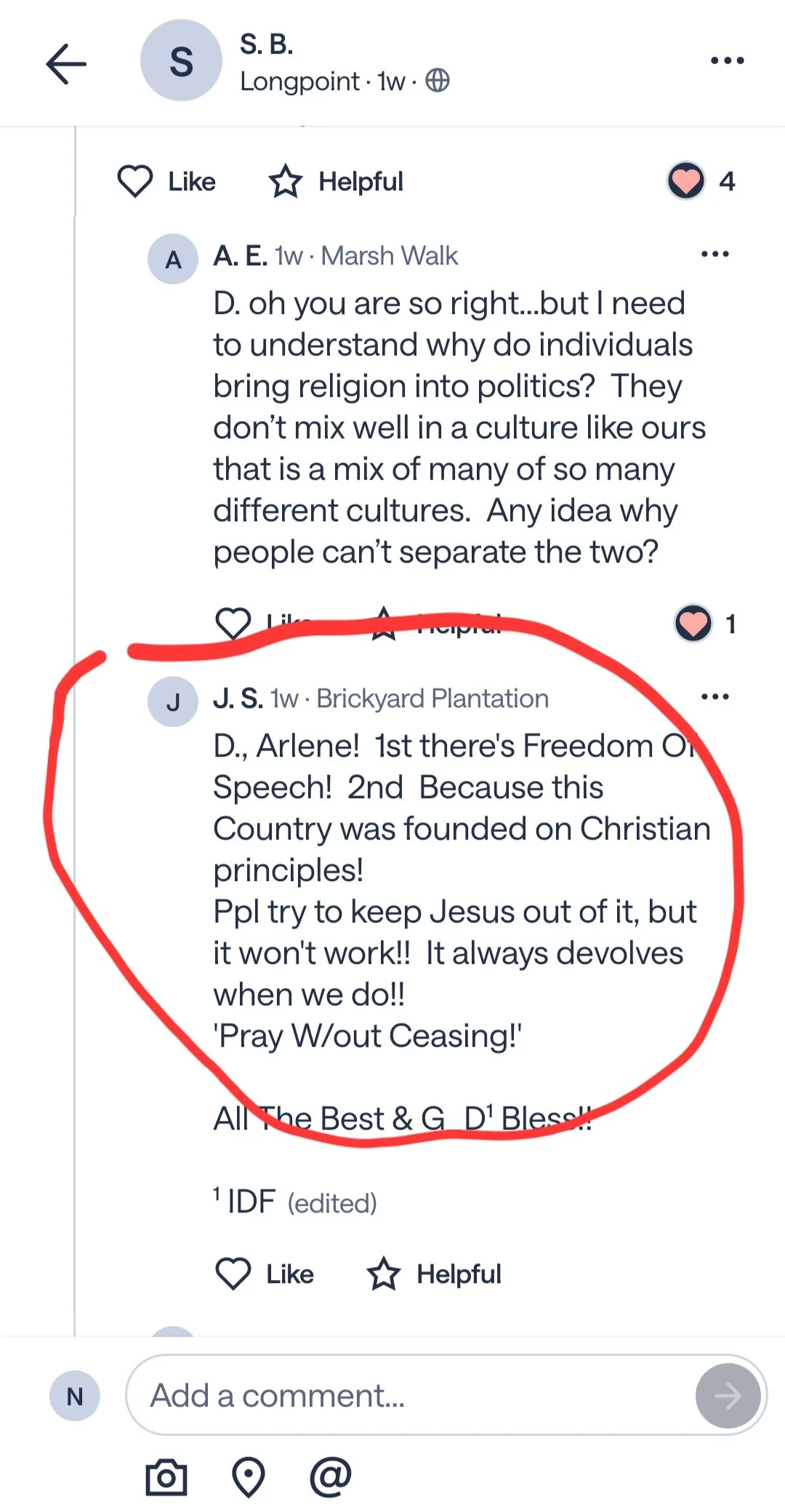
Yet, as I read through the thread, the conversation expanded well beyond the local topic into national politics, world politics, and religion.
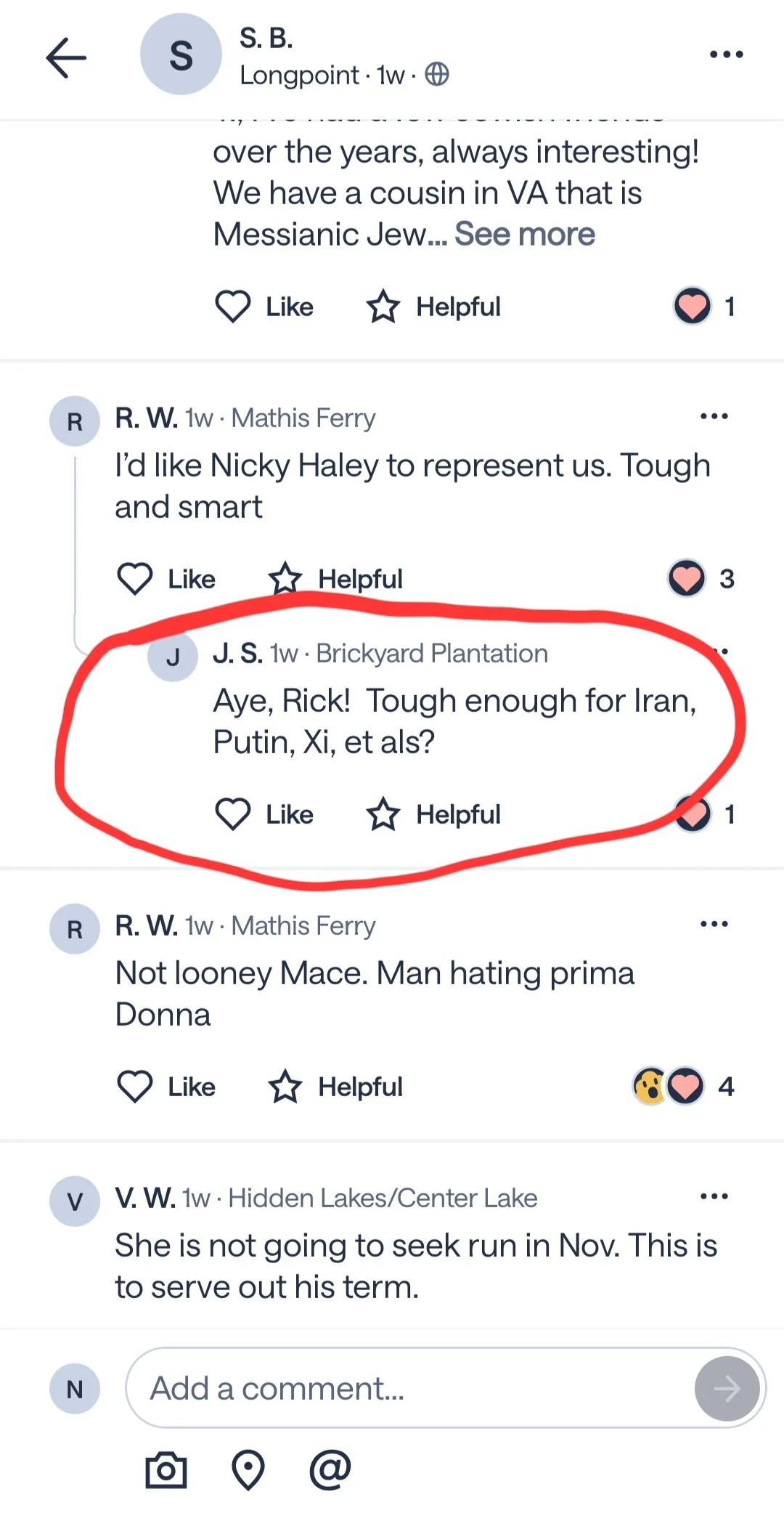
Ironically, one participant even pointed out that the platform wasn't intended for national political discussions.
Yet the discussion remained.
A week later.
That raises questions.
Was the thread never reviewed?
Was it reviewed and intentionally left up?
Were reports submitted?
If so, what standards were applied?
These are the kinds of questions that naturally arise when moderation appears inconsistent.
Consistency builds trust.
Inconsistency creates confusion.
The second thought that struck me this morning came from a Facebook Reel by Polina Mireau, a former COO, operations consultant, and leadership coach.
She talks about something many leaders struggle with: avoiding difficult conversations.
You can watch it here:
https://www.facebook.com/reel/2764410343955450
Her point is simple.
Ignoring a problem rarely makes it disappear.
People often hope difficult situations will resolve themselves.
Most don't.
Leadership means having the uncomfortable conversation.
That message resonated with me because it's exactly what I've been asking of Nextdoor leadership.
Not agreement.
Not applause.
Just a conversation.
Whether it's CEO Nirav Tolia, Jacob Chavis, Investor Relations, Communications, or anyone else at the company, my request remains the same:
Let's have the difficult conversation.
If the answer is no, say no.
If the study can't be shared, explain why.
If I've misunderstood something, tell me.
Communication—even difficult communication—is almost always better than silence.
That's what builds trust.
That's what builds culture.
And after 42 days, I believe the conversation is long overdue.
Join the discussion at NielFlamm.com/blog. Leave some feedback—I'd love to hear from you.
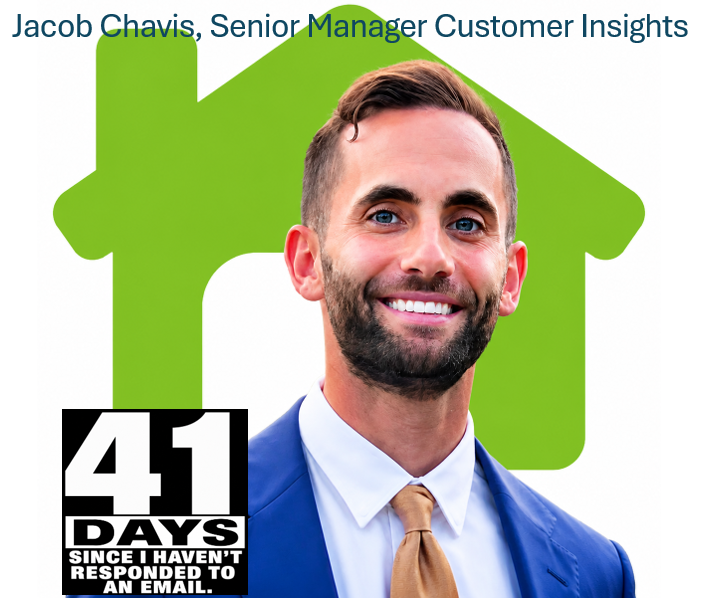
Day 41: Culture Is Measured One Interaction at a Time
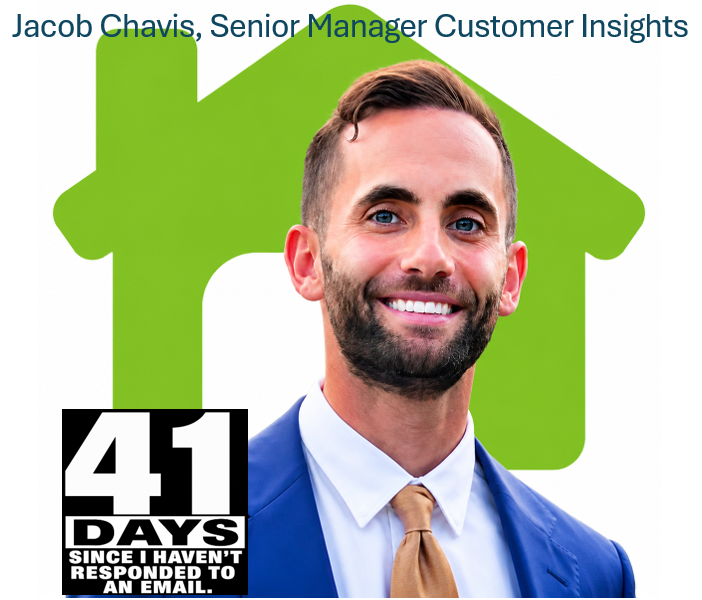
Today is Day 41 since I requested a Nextdoor study.
It's Saturday, so I'm going to assume I won't receive a response today. I'll also assume Day 42, Sunday, will likely pass the same way.
That doesn't change anything.
If there's one lesson this experience has reinforced, it's this:
Persistence matters.
I'm still asking the question.
I'm still documenting the journey.
I'm advocating for better communication and accountability.
While doomscrolling today, I came across this short Facebook Reel about car sales:
https://www.facebook.com/share/r/18xmmVf8Ee/
The message wasn't really about selling cars.
It was about culture.
The speaker talked about doing a "vibe check." Walk around. Observe how people are treating one another. Are they smiling? Are they engaged? Are they happy? What does the culture feel like?
That immediately made me think about Nextdoor.
Over the past several weeks, I've left feedback, recommendations, and questions on Nirav Tolia's X posts, Sarah Leary's posts, and Nextdoor's social media channels. I assume those notifications were received, but I haven't seen an acknowledgment from the CEO. The same pattern has continued with my request to Jacob Chavis for a study that remains unanswered.
It brings me back to a simple question:
How do you treat people?
A while back, I wrote that I try to treat the environmental engineer with the same respect I'd give the CEO.
That isn't just something I write.
It's something I try to live.
When I go to Regal Cinemas, I thank the employees who carry my oversized popcorn and Pepsi Zero because one hand is occupied with a cane.
At White Horse Auto Wash, I spend time getting to know the staff. Connor and I recently talked about The Odyssey and seeing it on the giant IMAX screen in Pooler, Georgia.
When I bring an AA meeting into a detox facility, I ask residents their names, thank them for being there, and try to make them feel seen.
None of those moments make headlines.
But they shape culture.
Culture isn't created during an annual leadership summit.
It isn't built during a podcast interview.
It isn't defined by a mission statement hanging on a wall.
Culture is built one interaction at a time, one conversation at a time, and one decision at a time.
That's why I keep asking questions.
Because every unanswered email, every ignored request, and every missed opportunity to engage is also part of a company's culture.
Join the discussion at NielFlamm.com/blog. Leave some feedback—I'd love to hear from you.