

Day 70: Nextdoor Is Becoming a White Paper on How Not to Communicate
At this point, my ongoing experience on Nextdoor could become a white paper on corporate communications.
Unfortunately for Nextdoor, it would largely be about what not to do.
There are two names that naturally come up in this conversation: Kelsey Grady, who leads Communications, and Nirav Tolia, because he's ultimately the CEO.
But for a moment, let's forget that today is Day 70 without receiving the detailed research I've requested.
Let's even forget that Communications finally responded by sending me links to the same blog posts I've been referencing—essentially answering a question I didn't ask.
I want to look at something bigger.
How Do You Communicate a Change Your Customers Aren't Going to Like?
Nextdoor has changed how businesses can participate in conversations.
As I've previously discussed, when a neighbor asks for recommendations for a service, businesses may encounter Nextdoor's new pay-to-comment model to respond as a business.
Think about who this affects.
The plumber.
The landscaper.
The handyman.
The house cleaner.
The dog walker.
The locally owned restaurant.
The contractor who has spent years building a reputation among neighbors.
These are precisely the kinds of small businesses that helped make Nextdoor useful in the first place.
And I've seen business owners who are not happy about the change.
Here's where my Learning & Development brain kicks in.
My first question isn't:
"Why are people complaining?"
It's:
"How was the change managed?"
Because when you're introducing a change that affects how people operate—and potentially their wallets—the communication strategy matters almost as much as the change itself.
Where Was the Buy-In?
I'm genuinely curious about what happened before rollout.
Was there a focus group of small-business users?
Was there a beta program?
Were businesses shown different pricing or participation models?
Was feedback collected?
Were objections identified before launch?
Did Nextdoor explain the business problem it was trying to solve?
Were longtime business users prepared for the change before suddenly encountering it?
And perhaps most importantly:
Did anyone ask the small businesses what they thought before asking them for more money?
I don't know the answers.
Maybe Nextdoor did extensive research.
If so, show us.
That's communication too.
Because good change management isn't simply:
"Here's the new policy. Good luck."
It's creating awareness, explaining the reason, gathering feedback, building understanding, addressing resistance and giving stakeholders an opportunity to participate in the change.
Will everybody agree?
Of course not.
You aren't getting 100% buy-in on a change that asks people to pay for something they previously did differently.
But there's a significant difference between:
"I don't like this change, but I understand how and why we got here."
and
"Wait...you're charging me for WHAT now?"
That's where communication earns its keep.
Kelsey and Nirav: This Is the Bigger Question
This is why my criticism goes beyond one unanswered research request.
Kelsey leads Communications.
Nirav leads the company.
So I'm increasingly interested in understanding the philosophy behind Nextdoor's communication strategy.
When people criticize the company, comments are often unavailable.
When I requested research, I spent weeks without an answer.
When Communications finally contacted me, I believe they answered something different from what I requested.
And now small businesses are publicly questioning a monetization change that directly affects how they participate on the platform.
These may look like separate issues.
I don't think they are.
They all raise the same fundamental question:
Is Nextdoor communicating with its stakeholders—or communicating at them?
That's a distinction worthy of a white paper.
Nextdoor talks extensively about community.
But community requires dialogue.
Businesses aren't just revenue opportunities.
Shareholders aren't just ticker symbols.
Users aren't just WAU.
They're stakeholders.
And stakeholder communication isn't measured by how many announcements you publish.
It's measured by whether people understand the message, have an opportunity to respond, and believe someone is actually listening.
Maybe Nextdoor's new business model ultimately proves successful.
Maybe businesses eventually embrace it.
But if the rollout creates unnecessary anger because the people affected weren't properly prepared, consulted or given a compelling reason to buy in, that's not simply a pricing issue.
That's a change-management and communications issue.
Day 70.

At this point, I'm not merely studying Nextdoor anymore.
Nextdoor is providing the case study.
Follow the continuing experiment and full timeline at NielFlamm.com/blog.
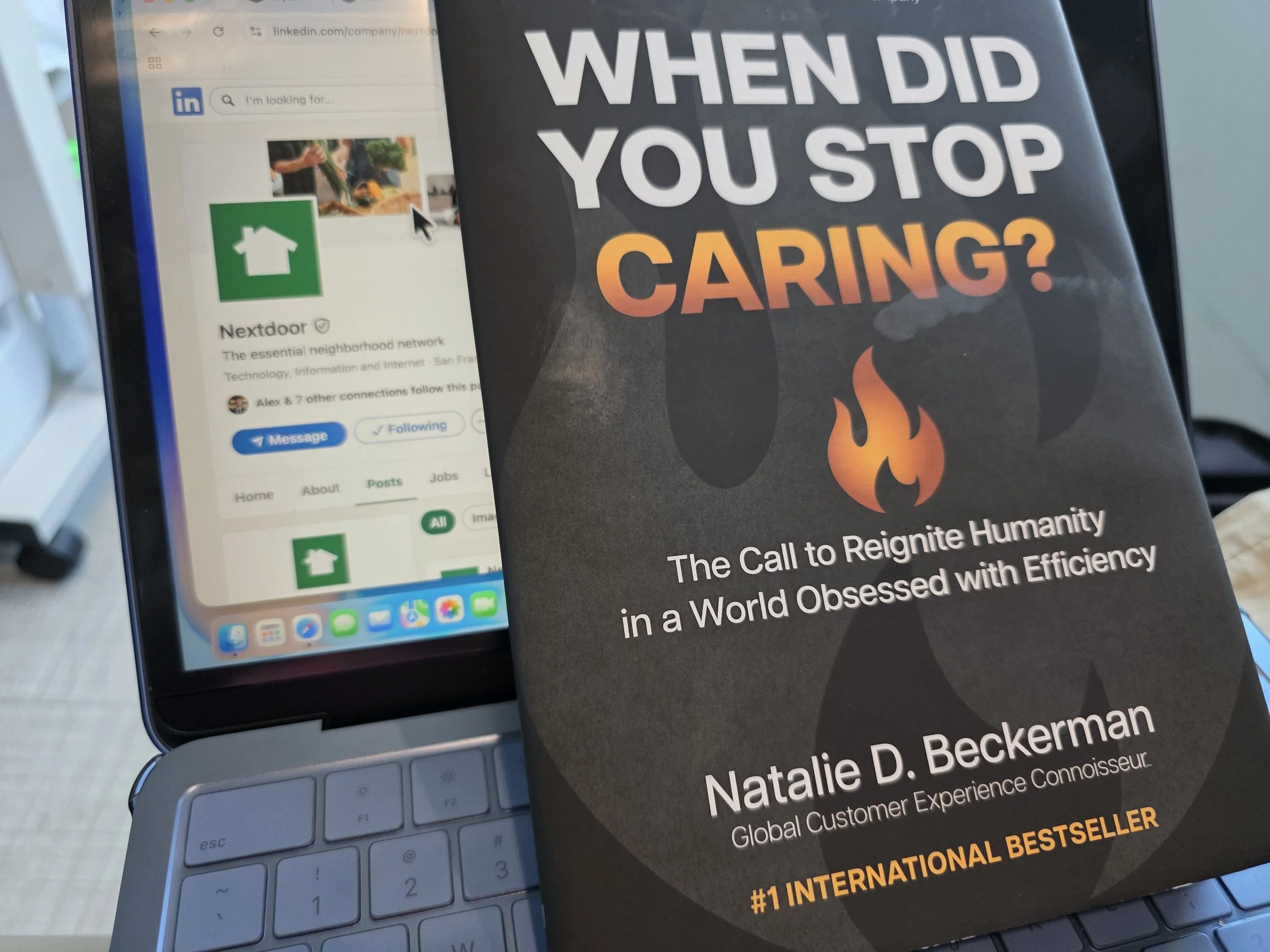
When Did You Stop Caring? The Power of a Movement
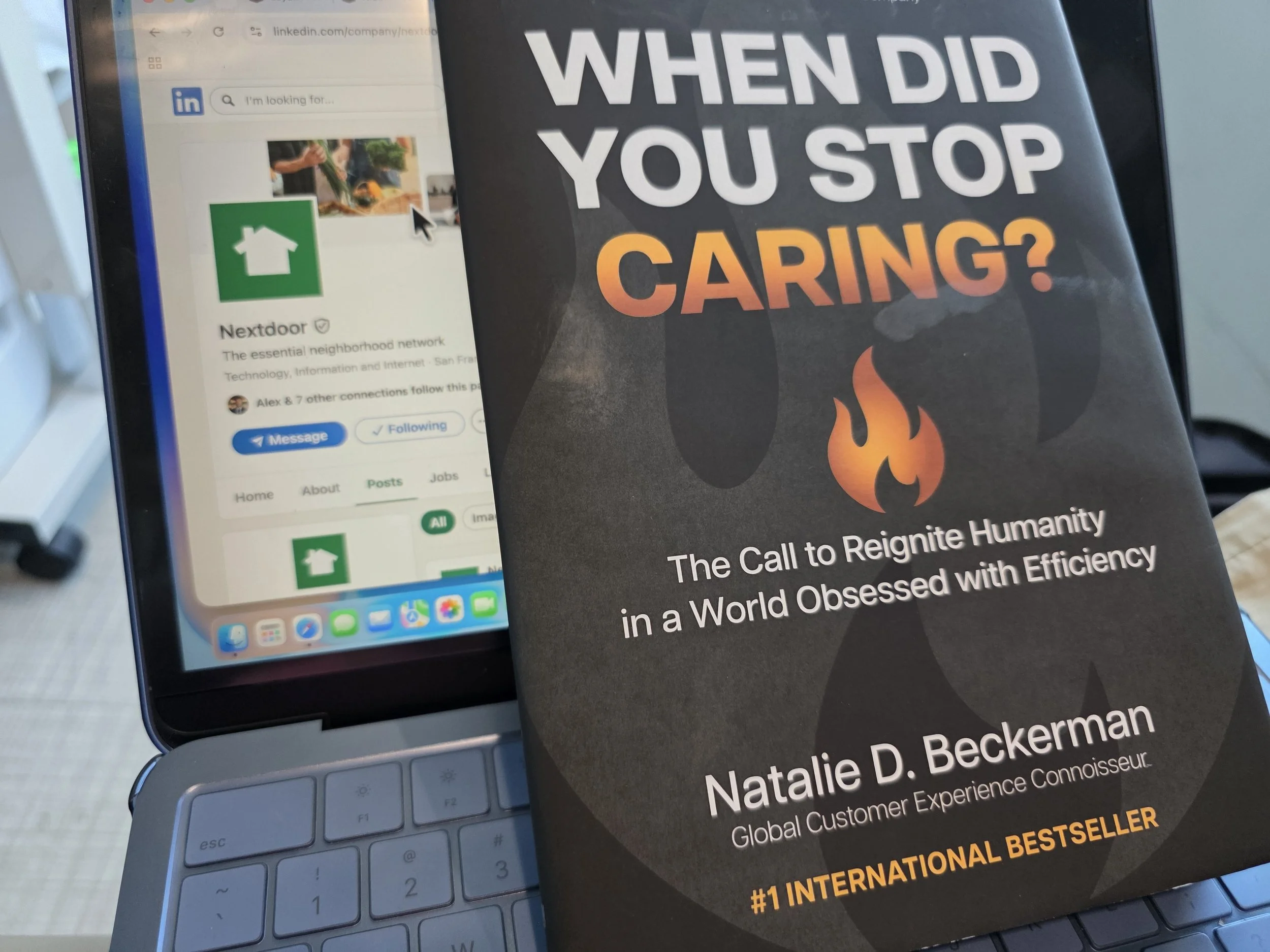
My copy of When Did You Stop Caring? by Natalie Beckerman arrived, and after starting to dig in, all I can say is: wow.
I’ve also been watching some of Natalie’s promotional shorts, and one word keeps standing out to me: movement.
Movements have the power to change people, communities, and sometimes even humanity itself.
Think about the ALS Ice Bucket Challenge. The goal wasn’t getting drenched with a bucket of ice water. The goal was awareness, conversation, and funding research to help stop ALS from devastating more lives.
Think about the Jesus Movement and the impact it had on countless people seeking purpose, faith, and connection.
Think about Pay It Forward. While fictional, the story showed how one person’s actions could inspire others and create a ripple effect of kindness and generosity.
What all of these examples have in common is simple: they started with people who cared enough to act.
Real change doesn’t happen overnight. Habits are built over time. Momentum is built over time. Success is built over time.
That’s something I remind myself of often. I keep pushing. I keep putting one foot in front of the other. I keep looking for opportunities to score a win, no matter how small.
If Natalie’s message inspires even a fraction of that mindset, then it’s a conversation worth having.
If you haven’t picked up a copy yet, you’re missing out.
📚 Amazon: https://a.co/d/0e252vBz
📚 Barnes & Noble: https://www.barnesandnoble.com/w/when-did-you-stop-caring-natalie-beckerman/1150028729?ean=9781969508448
Available now in hardcover, paperback, and digital formats.
The question isn’t whether we can change the world overnight.
The question is: What can we do today to show that we still care?