

Day 42: Culture, Moderation, and the Courage to Have Difficult Conversations

Today marks Day 42 since I requested a Nextdoor study from Jacob Chavis.
Forty-two days later, I still haven't received the study, an acknowledgment, or a response.
Over the past six weeks, my observations about Nextdoor have largely centered around three themes:
1. Culture
2. The moderation model
3. Communication
Let's start with moderation.
After a late night of blogging and recording videos for NielFlamm.com, I did what most people probably wouldn't do before bed—I spent some time browsing Nextdoor.
Yes, I know... I need better hobbies.
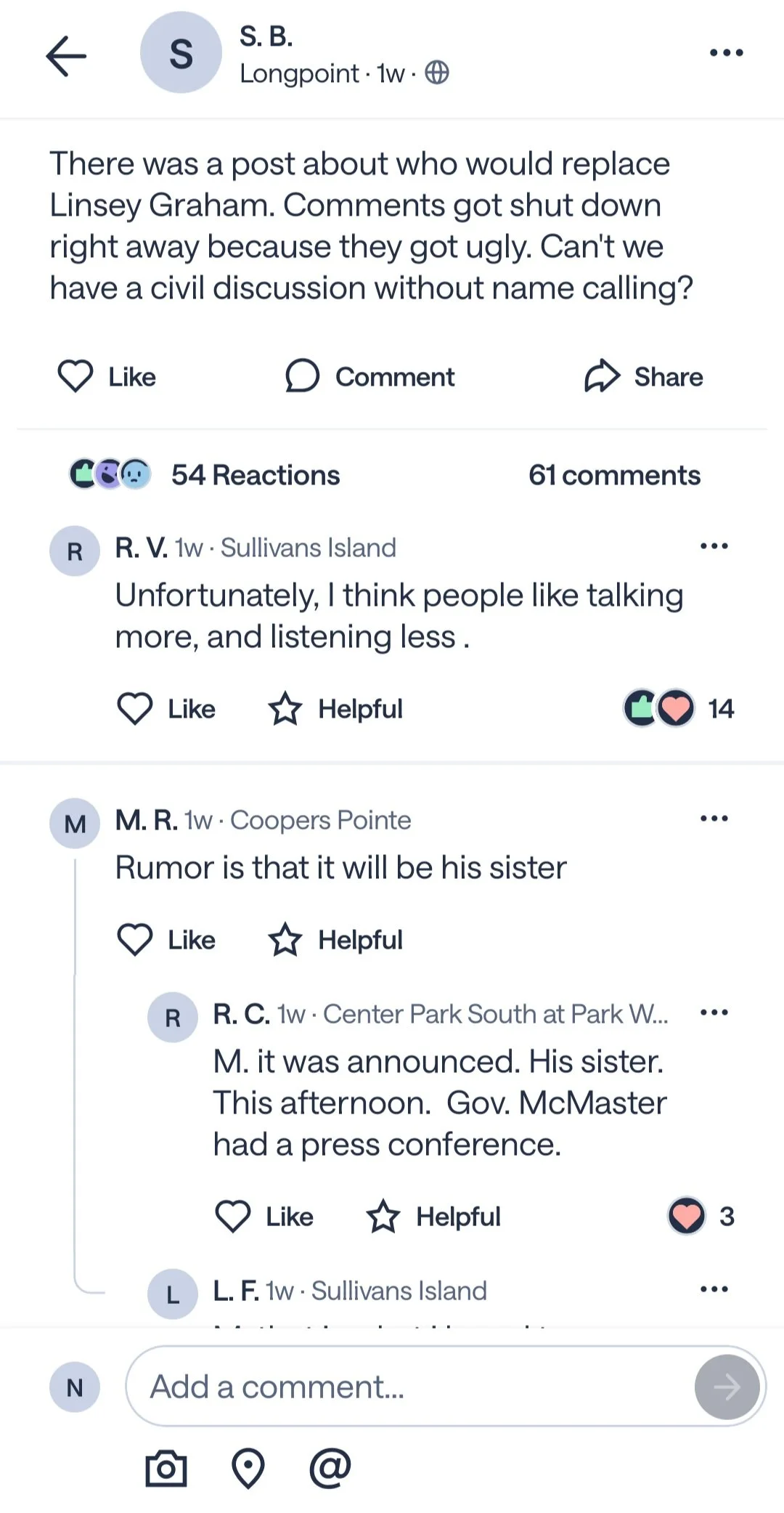
I came across a discussion that began about a week ago concerning who would temporarily fill the U.S. Senate seat vacated after Senator Lindsey Graham's death.
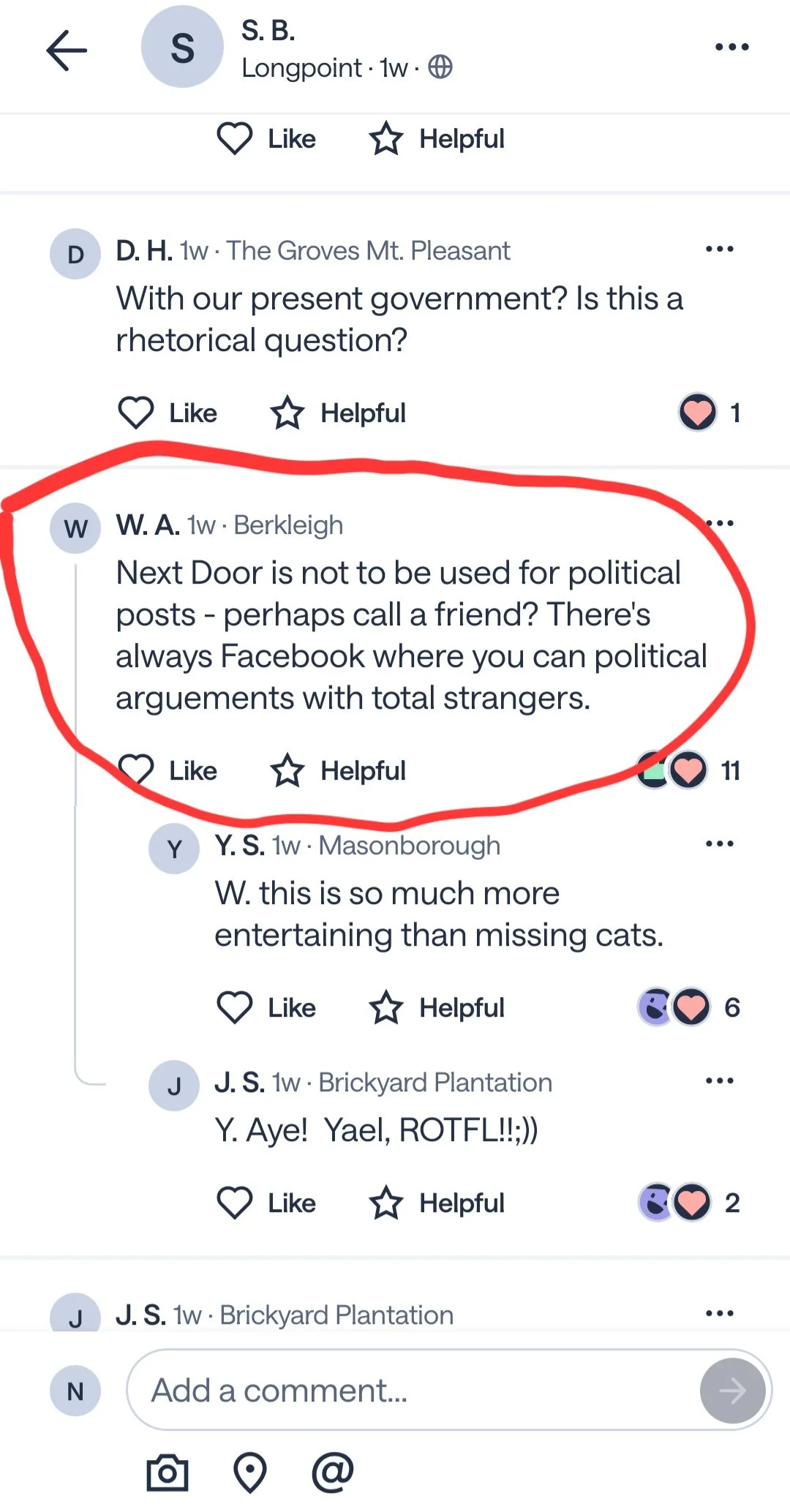
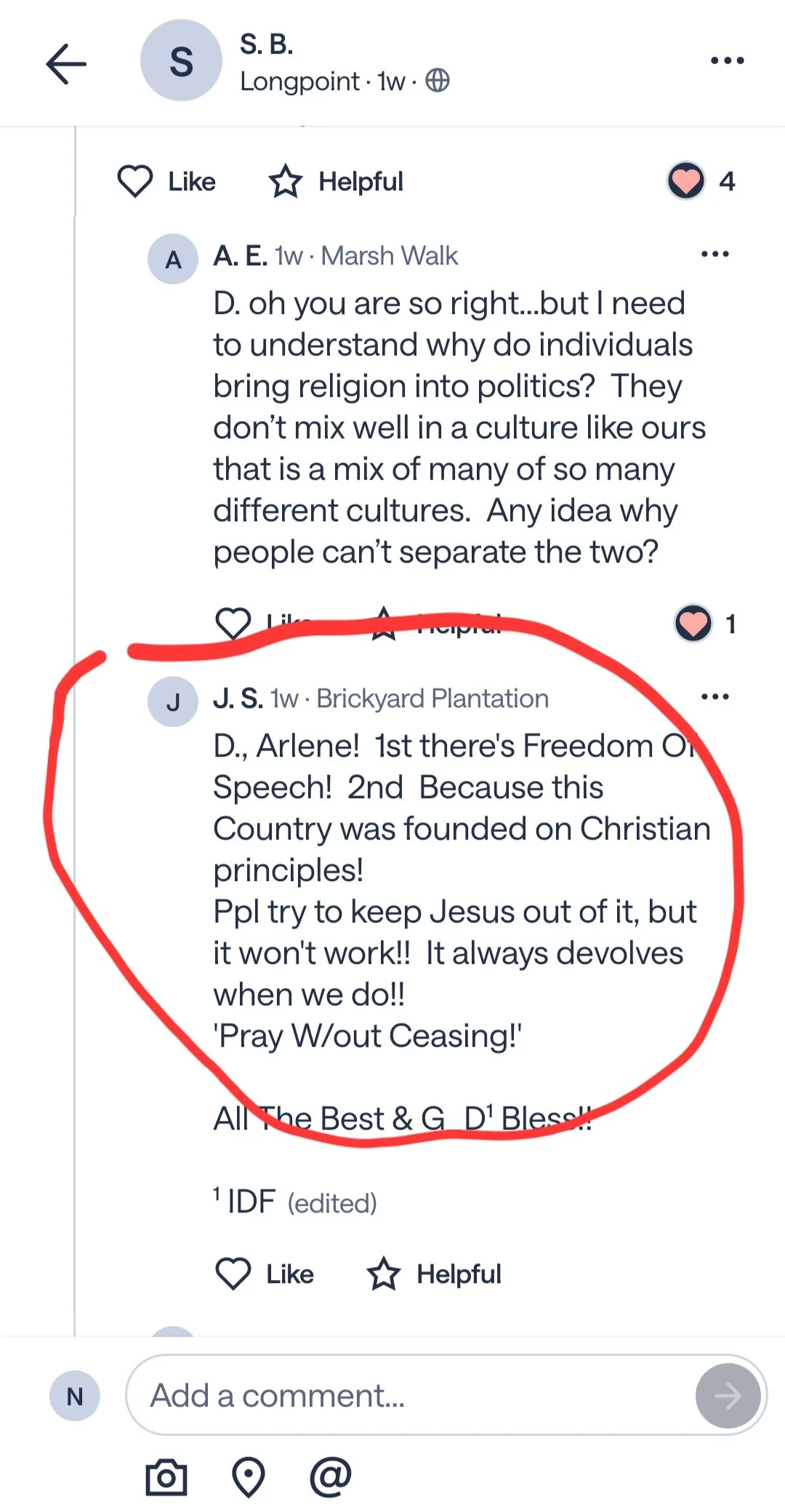
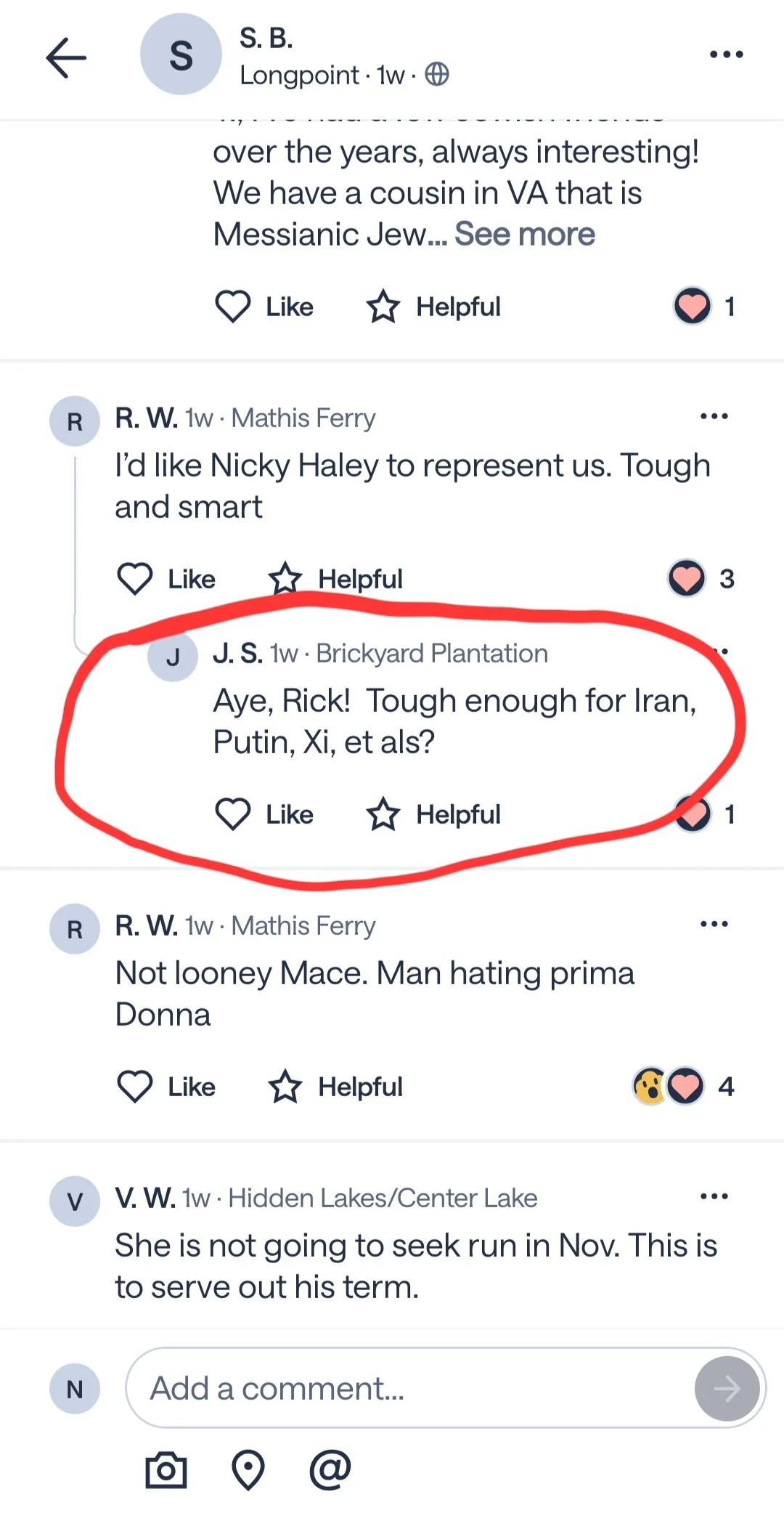
Yet, as I read through the thread, the conversation expanded well beyond the local topic into national politics, world politics, and religion.
Ironically, one participant even pointed out that the platform wasn't intended for national political discussions.
Yet the discussion remained.
A week later.
That raises questions.
Was the thread never reviewed?
Was it reviewed and intentionally left up?
Were reports submitted?
If so, what standards were applied?
These are the kinds of questions that naturally arise when moderation appears inconsistent.
Consistency builds trust.
Inconsistency creates confusion.
The second thought that struck me this morning came from a Facebook Reel by Polina Mireau, a former COO, operations consultant, and leadership coach.
She talks about something many leaders struggle with: avoiding difficult conversations.
You can watch it here:
https://www.facebook.com/reel/2764410343955450
Her point is simple.
Ignoring a problem rarely makes it disappear.
People often hope difficult situations will resolve themselves.
Most don't.
Leadership means having the uncomfortable conversation.
That message resonated with me because it's exactly what I've been asking of Nextdoor leadership.
Not agreement.
Not applause.
Just a conversation.
Whether it's CEO Nirav Tolia, Jacob Chavis, Investor Relations, Communications, or anyone else at the company, my request remains the same:
Let's have the difficult conversation.
If the answer is no, say no.
If the study can't be shared, explain why.
If I've misunderstood something, tell me.
Communication—even difficult communication—is almost always better than silence.
That's what builds trust.
That's what builds culture.
And after 42 days, I believe the conversation is long overdue.
Join the discussion at NielFlamm.com/blog. Leave some feedback—I'd love to hear from you.

Day 36: What Gets Highlighted Says a Lot

Today marks Day 36 since I requested a copy of a Nextdoor study. I still haven't received the study or a response.
I spent some time viewing my local neighborhood on Nextdoor using a non-personal address and a parody email address. I noticed considerably more moderation activity today than I saw the last two weeks. Whether that's coincidence or simply increased activity, it was noticeable.
I also hope Jacob Chavis' next career opportunity is a significant one. The internet has a long memory, and prospective employers often review a candidate's public work and online presence. One question they may ask is why a Senior Manager didn't respond to a straightforward request for a study referenced by the company.
Today's featured story on Nextdoor highlights Dallas neighbors helping protect eaglets. It's a positive community story, and it's interesting that the featured neighborhood is in the Dallas area, where CEO Nirav Tolia is based.
What I continue not to see are deeper discussions about how the platform itself operates:
- How are volunteer moderators selected?
- What training and oversight do they receive?
- How are moderation standards updated and communicated?
- What accountability exists when users question moderation decisions?
Community success stories deserve attention, but so do the governance and transparency practices that shape the community experience.
As both a shareholder and a former user, I'll continue asking those questions.
Join the discussion on NielFlamm.com.

The Nextdoor Experiment Continues: When Does Moderation Become a Barrier to Community?
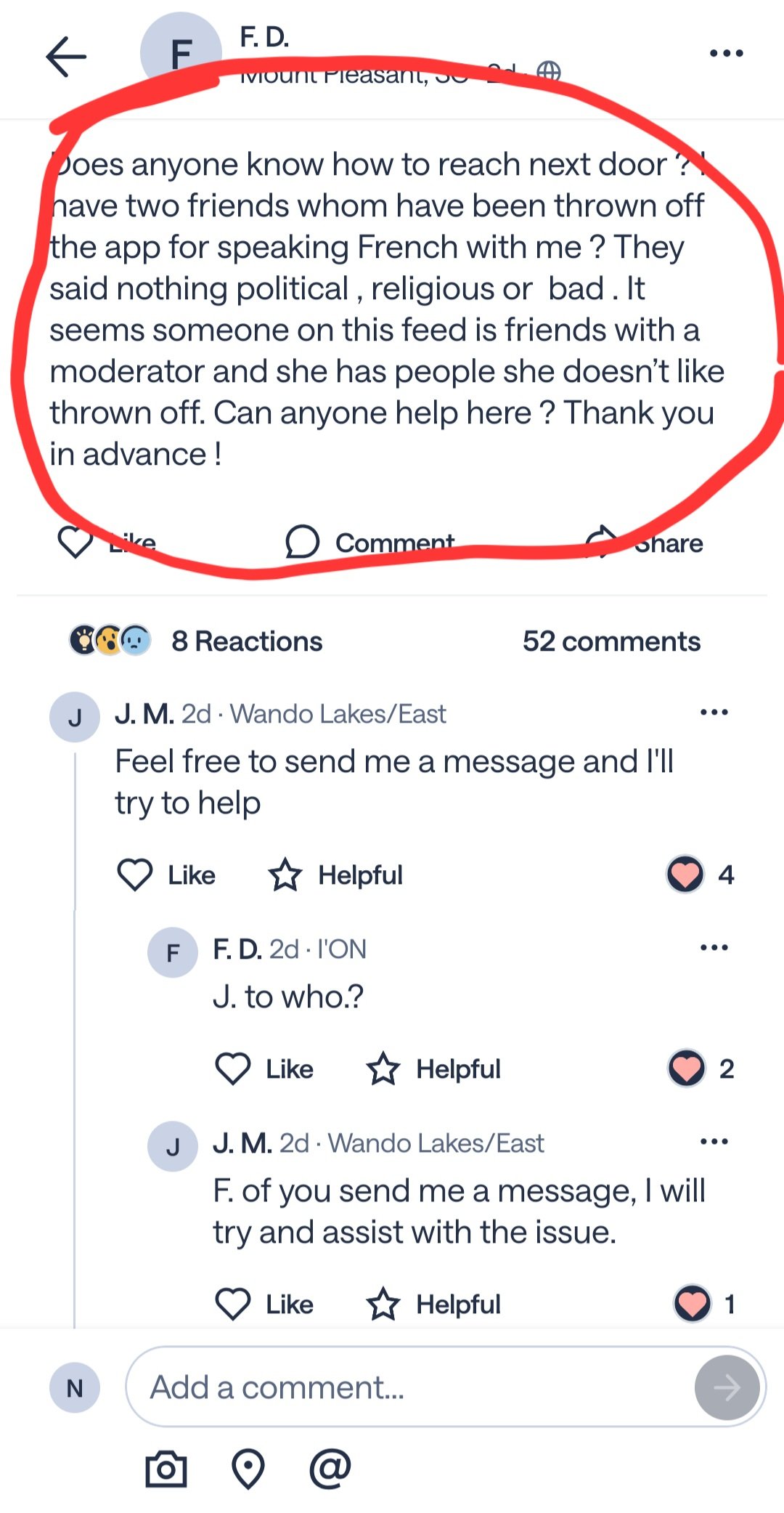
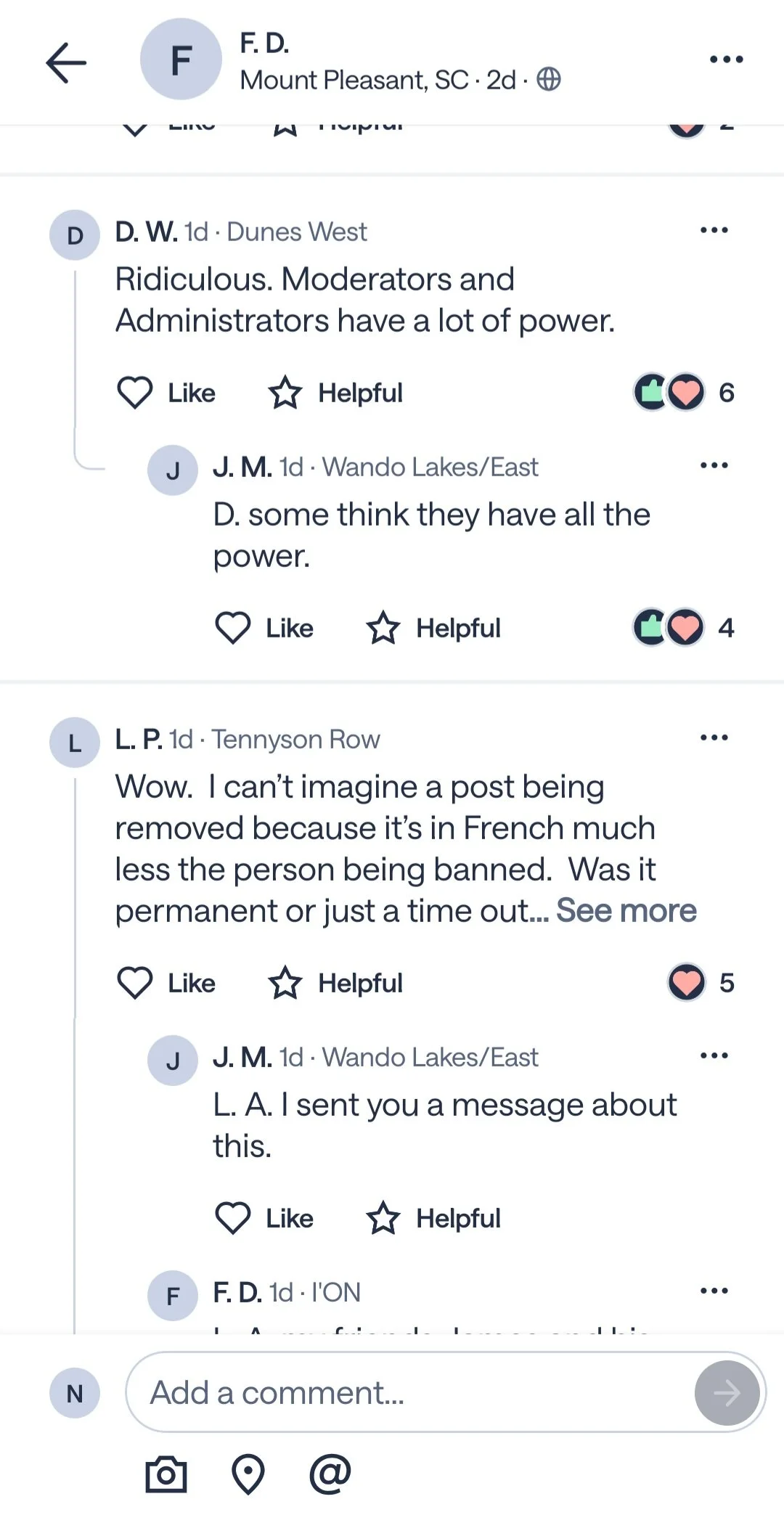
The Nextdoor experiment continues, and this latest example left me asking more questions.
While browsing the Low Country Nextdoor platform, I saw that a neighbor had a post removed and their account suspended for writing a post in French.
French.
A language spoken by millions of people worldwide.
The first question that came to mind:
Where in Nextdoor’s Terms and Conditions does it state that posts must be written only in English?
If the concern was understanding the content, there are countless free translation tools available. A moderator could have copied and pasted the text into Google Translate in seconds and determined whether the post was appropriate.
This wasn’t a discussion about nuclear codes, Area 51 secrets, or the next strategic move of the New York Yankees.
It was a neighbor attempting to connect with other neighbors.
That raises a bigger question:
Is the moderation process helping build community, or unintentionally creating barriers to it?
Nextdoor promotes itself as a platform connecting neighbors. But communities are diverse. People speak different languages, come from different backgrounds, and have different ways of communicating.
A strong moderation system should consider context.
It should encourage connection.
It should apply rules consistently.
This is another example where I believe Nextdoor’s unpaid moderator model deserves a closer look:
What training do moderators receive?
Are there guidelines for language-related posts?
Is there a quality assurance process reviewing suspensions?
Are decisions consistent across neighborhoods?
When moderation decisions feel unpredictable, trust in the platform declines.
As a shareholder, I also continue watching the business side. The stock recently moved upward, which is positive for investors, but the long-term question remains:
Can Nextdoor build a sustainable business while creating a consistent and trusted experience for every neighbor?
Community is built through connection—not unnecessary barriers.
Join the discussion on NielFlamm.com.

The Nextdoor Experiment Continues: When Are Politics Allowed?
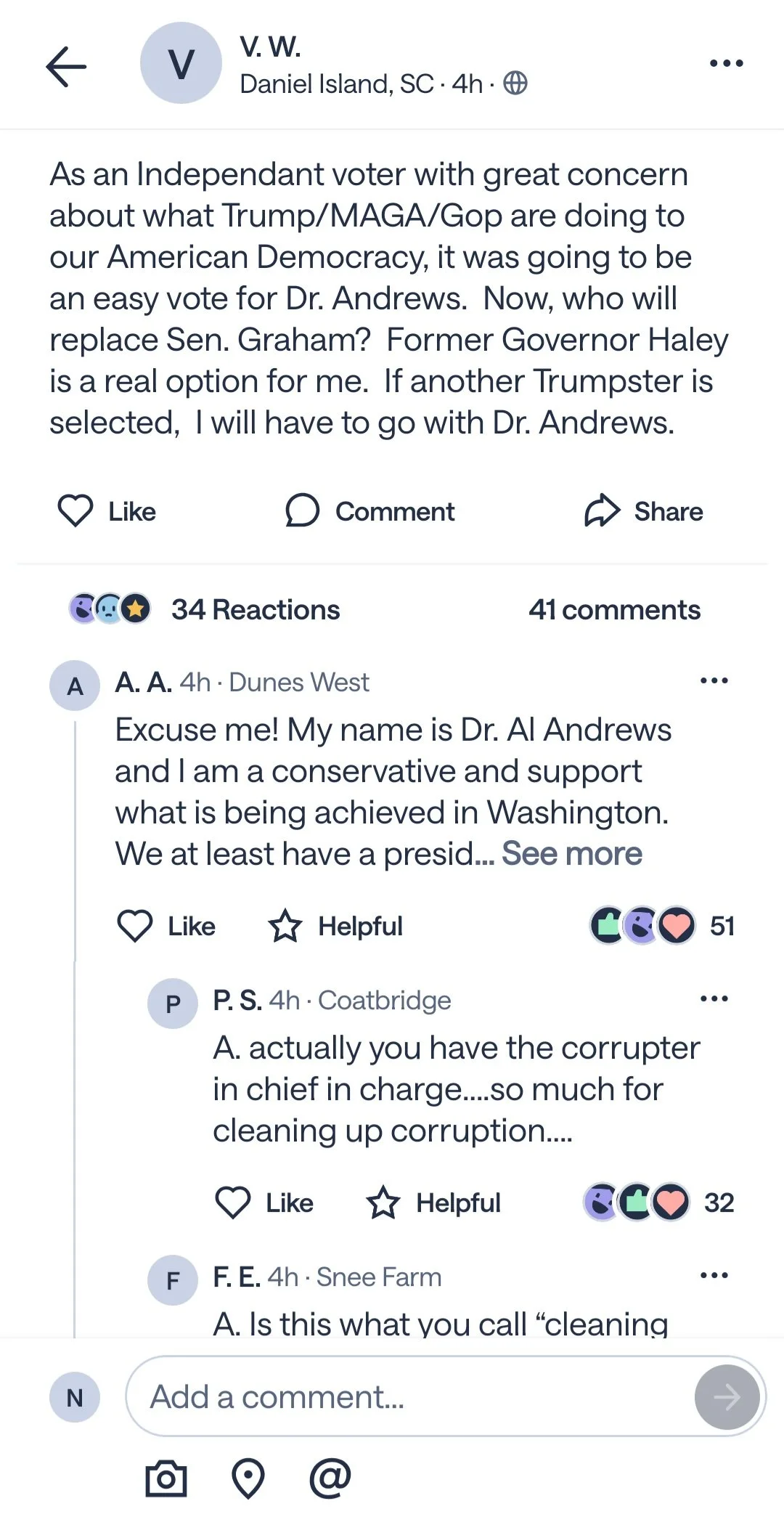
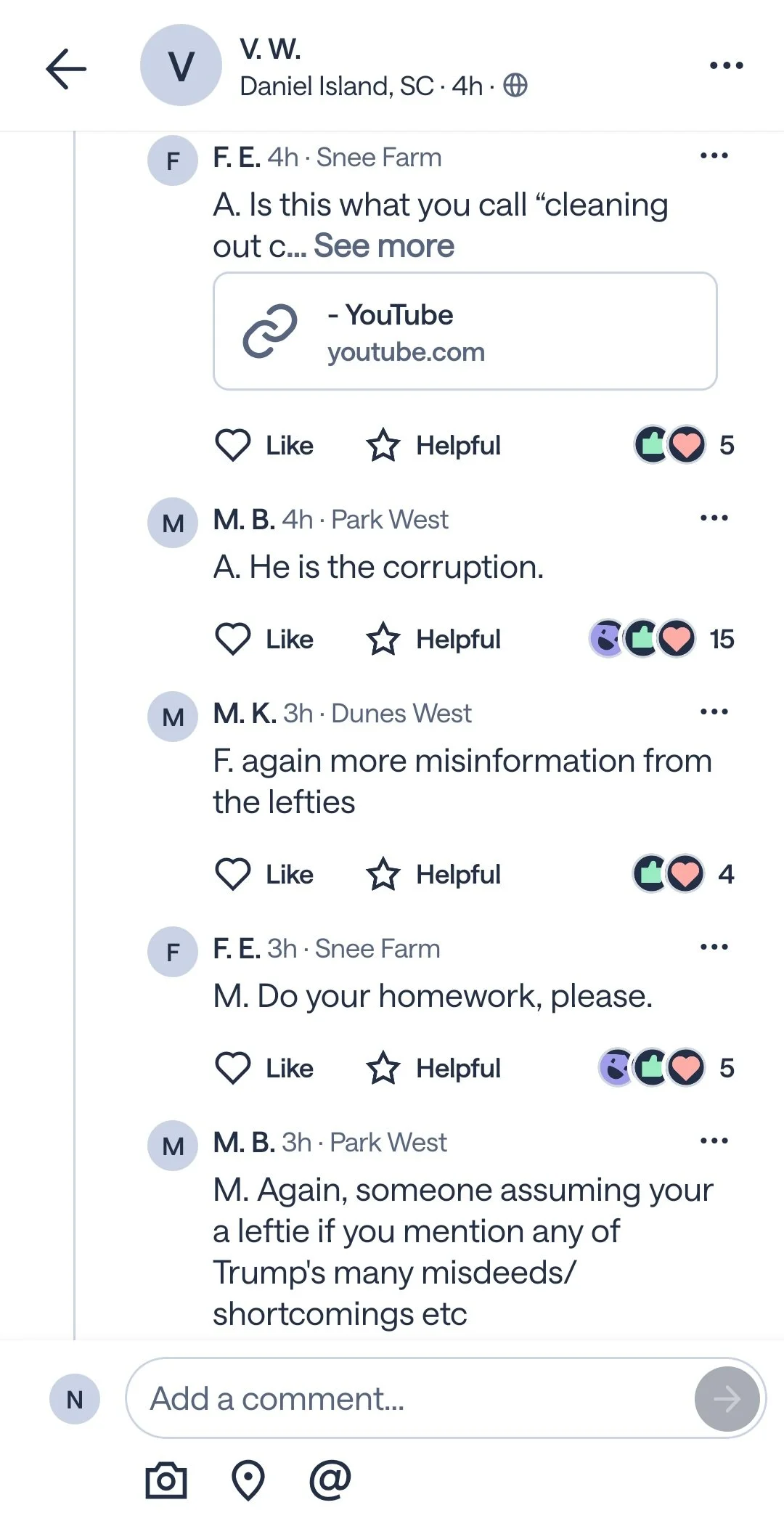
The Nextdoor experiment continues, and I have no clue what's going on with moderation in Mount Pleasant, South Carolina... assuming there are active moderators.
While browsing the platform, I came across a political discussion started by a self-described independent voter discussing MAGA, the future following the death of Senator Lindsey Graham, and what comes next politically. The conversation quickly evolved into a back-and-forth between left- and right-leaning viewpoints.
When I captured the screenshot, the thread had been active for about four hours.
That made me think.
I remember neighbors in my area being suspended over political discussions.
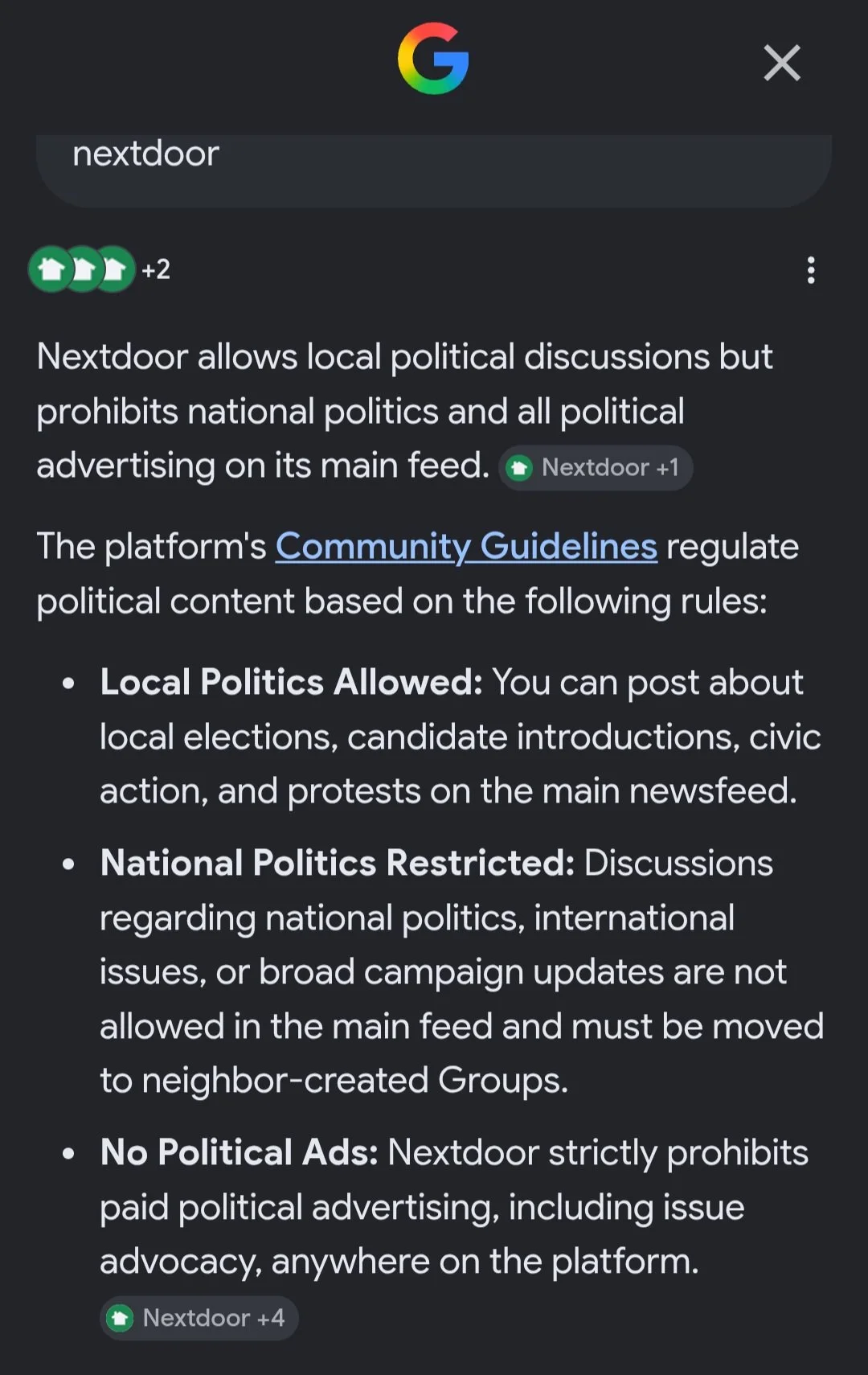
So I did what many people do—I searched online to better understand Nextdoor's policy.
My understanding is that discussions about local politics may be permitted, while national political discussions generally are not.
If that's accurate, then this thread appears to raise questions about how those policies are being applied.
Once again, I find myself asking:
Are there active moderators in my area?
If so, how often are they reviewing content?
Is there any quality assurance process to ensure moderation decisions are consistent?
Why do some political discussions remain visible while others reportedly result in suspensions?
These are questions about consistency, not ideology.
Whether someone is conservative, liberal, independent, or somewhere in between shouldn't matter.
The same standards should apply to everyone.
Sometimes it feels like the unpaid moderators are asleep at the wheel, the guards aren't guarding, and the police aren't policing.
For years, I've heard there are three topics guaranteed to start an argument:
Politics
Religion
Whether the New York Yankees are the greatest franchise in sports history.
(I'm sure Boston Red Sox fans—and probably Los Angeles Dodgers fans, too—have already stopped reading.)
Humor aside, moderation works best when the rules are clear and applied consistently.
If users can't predict how those rules will be enforced, confidence in the platform begins to erode.
Consistency builds trust.
Inconsistency invites questions.
Join the discussion on NielFlamm.com.
#Nextdoor #NXDR #Leadership #ContentModeration #CommunityManagement #TrustAndSafety #Transparency #CorporateGovernance #SocialMedia #CustomerExperience

The Nextdoor Experiment Continues: When Does a Comment Cross the Line?
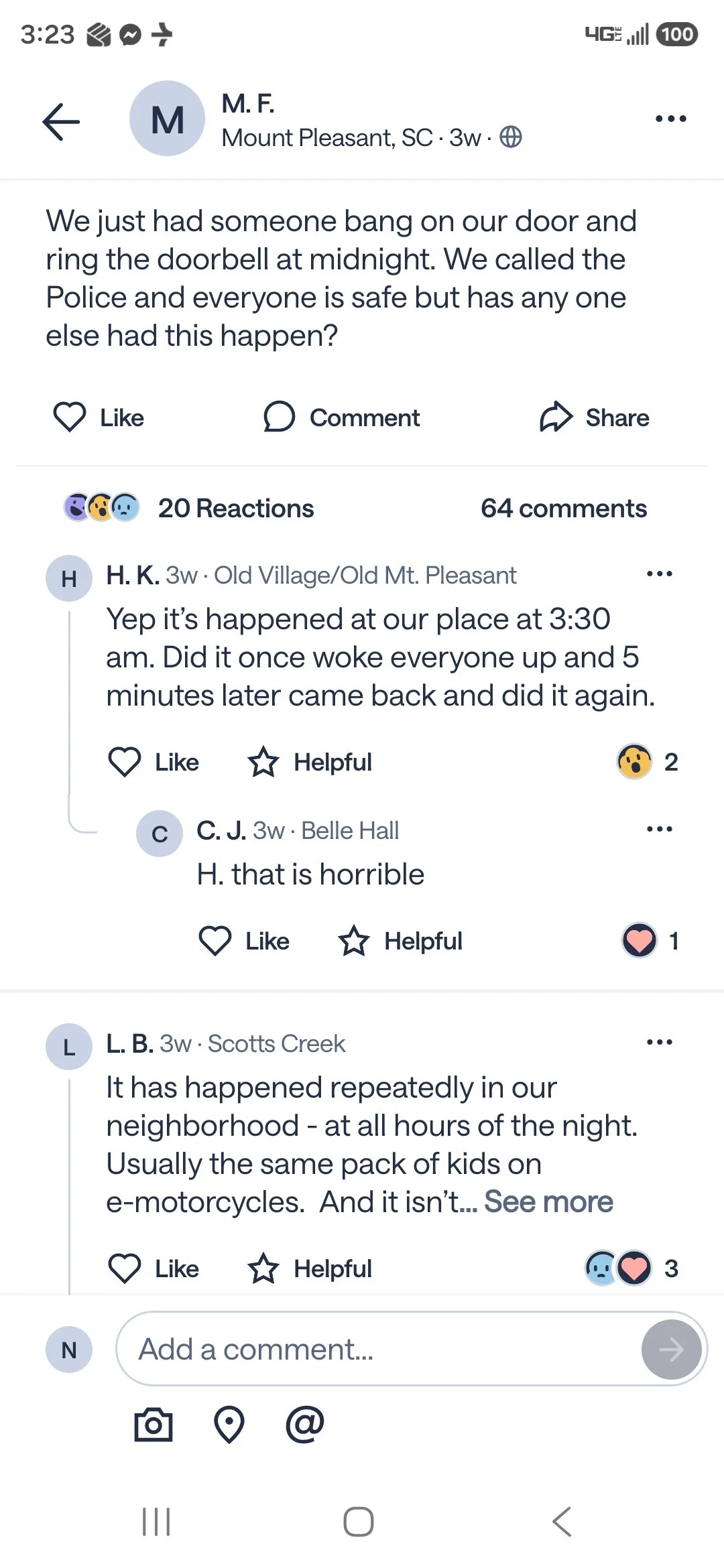
The Nextdoor experiment continues.
While browsing the platform on Saturday, I came across a neighborhood post that immediately caught my attention.
The original post was about someone whose age is unknown who rang a doorbell and ran away.
Back in my day, we called it “ding dong ditch.”
Annoying? Sure.
A nuisance? Absolutely.
But what really stood out wasn’t the original post.
It was one of the comments.
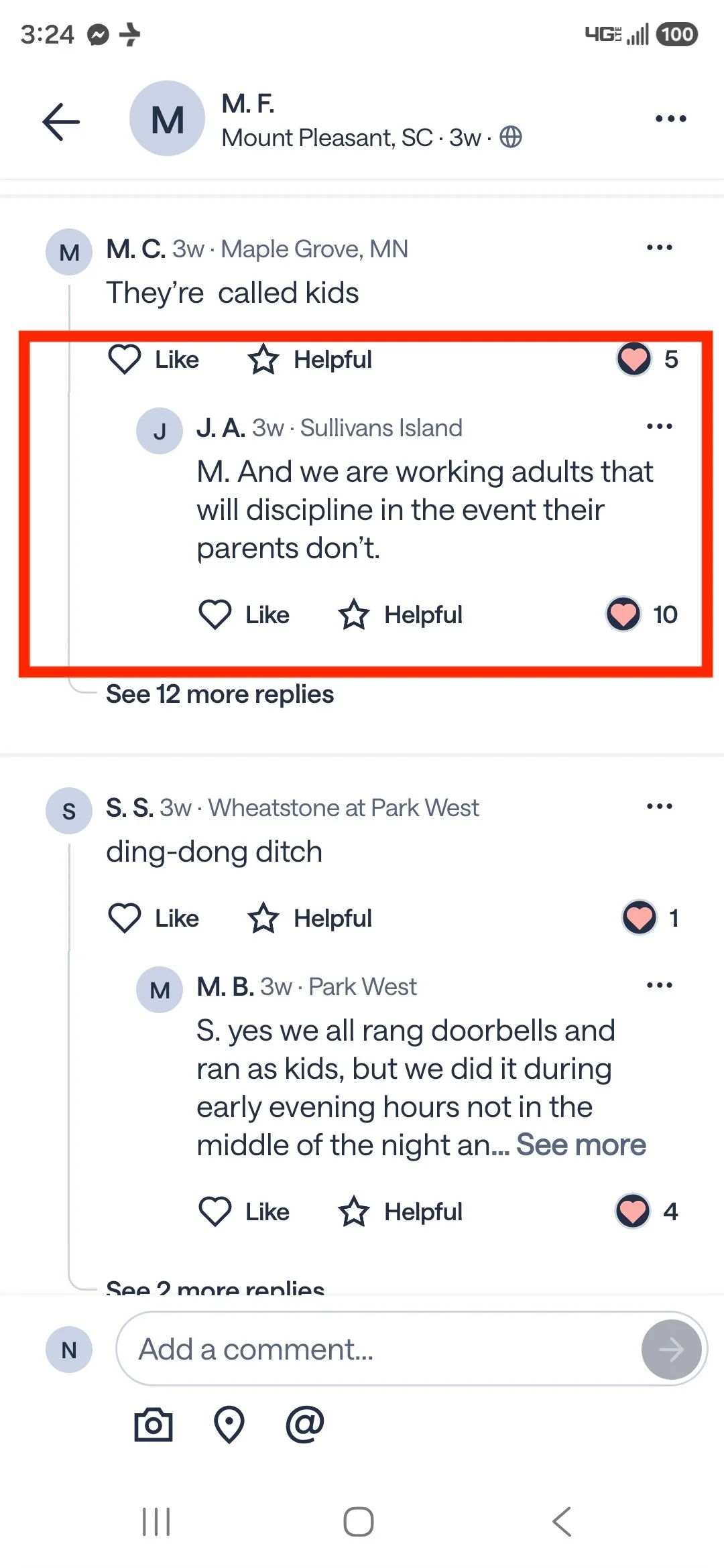
A neighbor commented that if the parents didn’t discipline the child or children, they would.
To me, that’s no longer discussing the issue—it’s a statement that could reasonably be interpreted as a threat.
According to the timestamp, this comment had remained on the platform for approximately three weeks.
That brings me back to a question I’ve been asking repeatedly:
How is this comment allowed to remain while other posts are removed much more quickly?
I don’t know why this particular comment remains visible.
Perhaps no moderator has reviewed it.
Perhaps it has been reviewed and determined not to violate the Community Guidelines.
Perhaps there simply aren’t enough moderators actively reviewing content in this area.
I don’t know.
What I do know is my own experience.
I was suspended for repeatedly posting items I had for sale.
On another occasion, I was suspended for providing negative feedback about the moderation process.
Yet here is a comment that appears to suggest someone will personally discipline another person’s child, and it has remained visible for weeks.
That’s the inconsistency I’m trying to understand.
This isn’t about one comment.
It’s about whether moderation is applied consistently and fairly.
If Nextdoor wants neighbors, advertisers, investors, and shareholders to trust the platform, consistency matters just as much as the written policies.
Otherwise, moderation begins to look less like a standard and more like a perception.
And perceptions shape trust.
Maybe I’m just not one of the “cool kids.”
Or perhaps—borrowing from Mean Girls—the moderators wear pink on Wednesdays.
Either way, consistency should never depend on who’s posting.
Join the discussion on NielFlamm.com.