
CEO Accountability: The Culture You Allow Becomes the Culture You Build
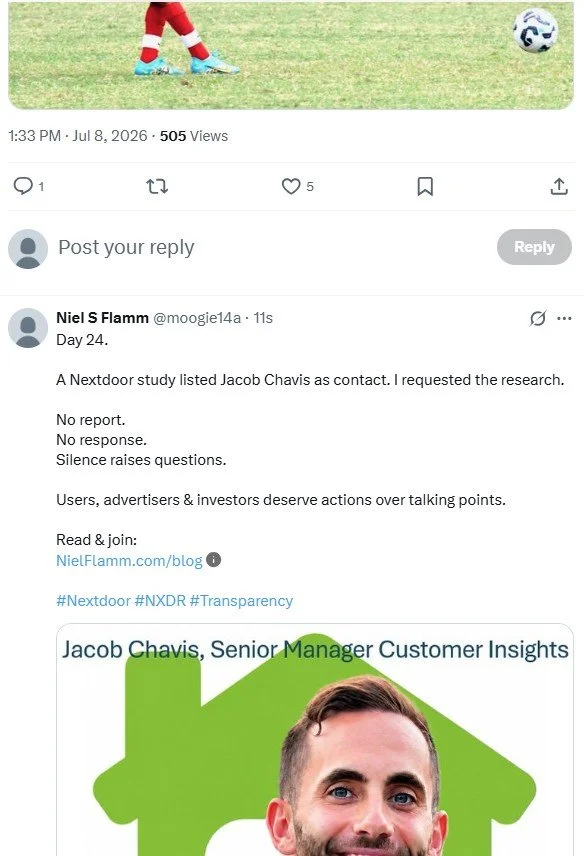
As part of my process, I continue sharing my documented experience with Nextdoor, Nirav Tolia, and, currently, Jacob Chavis.
Today is Day 24.
A simple request was made for the full study information from research published by the Nextdoor Communications team, listing Jacob as the contact.
No study.
No methodology.
No response.
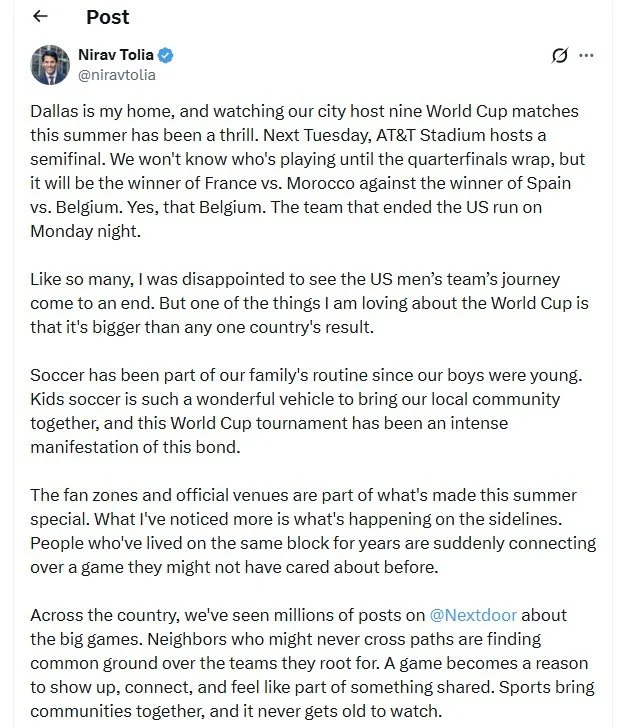
While posting updates, I noticed Nirav sharing a message about the World Cup, neighbors connecting, and finding common ground.
That is a great message.
But leadership is not only about the message you deliver externally.
It is about the experience people receive internally and externally when nobody is watching.
I commented on the post with my experience, an infographic, and directed people to the full story.
It was the first comment.
Nirav has responded to other commenters. My experience remains unacknowledged.
This is where CEO accountability matters.
Every organization has issues. Every company makes mistakes. The difference is how leadership responds when something is brought forward.
Feedback is not automatically “noise.”
Feedback can be data.
Feedback can identify gaps between what the company leaders believe they are building and the experience customers, users, employees, and shareholders are actually having.
A CEO sets the standard.
If communication gaps are accepted, they become normal.
If accountability is optional, it becomes culture.
If silence is tolerated, it becomes the process.
“I tolerate what I allow.”
The question isn’t whether every piece of feedback is comfortable.
The question is whether leadership is willing to listen, evaluate, and improve.
That is how trust is built.
Join the discussion on NielFlamm.com.
Three Books Every Leader Should Keep Within Reach
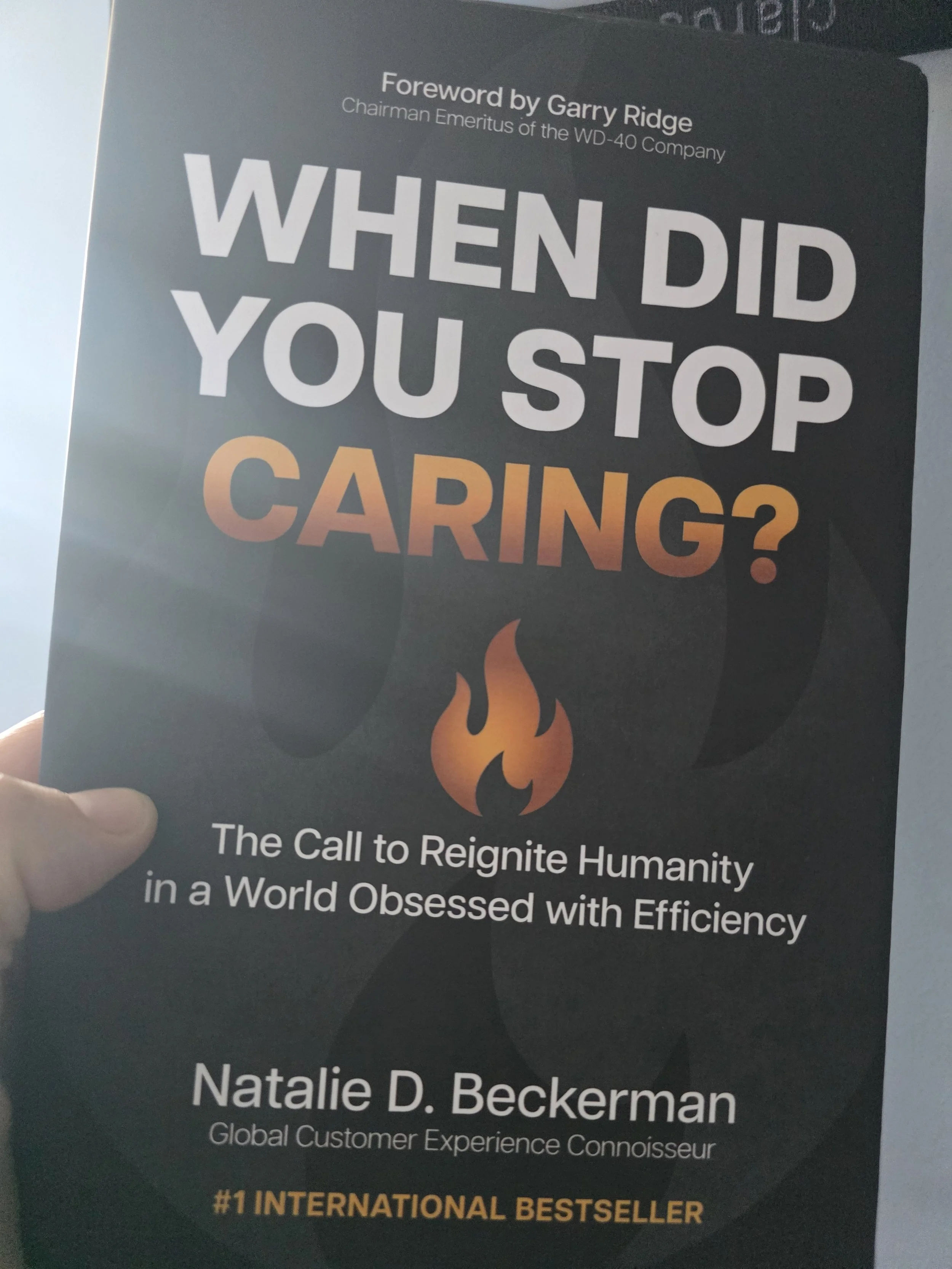
There are three books that I believe every leader, coach, mentor, and Learning & Development professional should have available at a moment’s notice.
📘 Good to Great by Jim Collins taught me that greatness isn’t accidental. It’s built through disciplined people, disciplined thought, and disciplined action. It has been a cornerstone in how I think about leadership and organizational excellence.
📙 The Tipping Point by Malcolm Gladwell changed the way I think about ideas, influence, and how small actions can create extraordinary change. I had the opportunity to hear Malcolm deliver a keynote years ago at what was then ASTD (now ATD), and his insights have stayed with me ever since.
Over the years, I’ve encouraged many of my team members to read both books as part of my coaching and mentoring. They generate great conversations about leadership, culture, and personal growth.
Now, I’m adding a third book to that list.
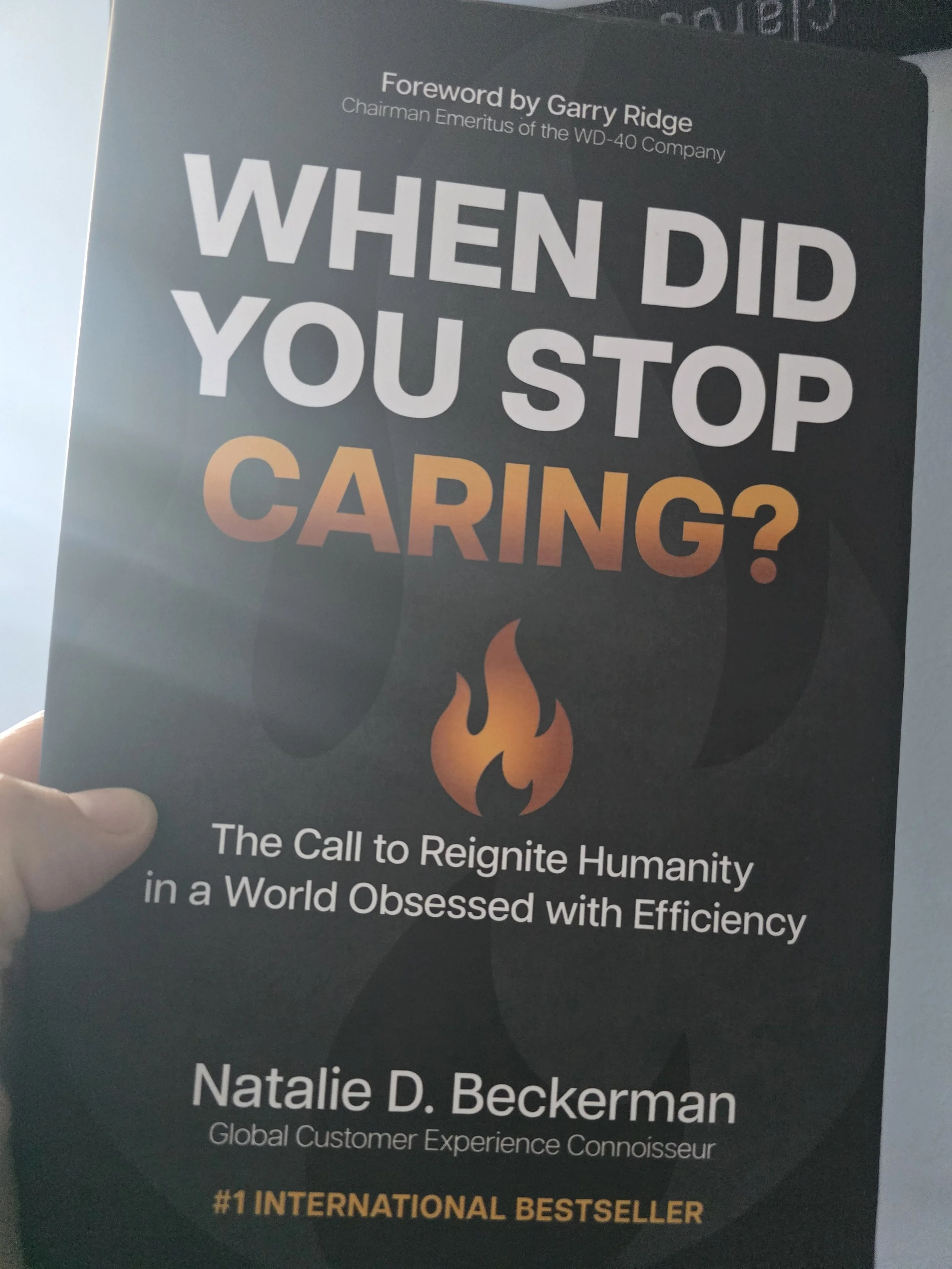
📕 When Did You Stop Caring? by Natalie Beckerman.
I’m just getting into it, but one thing already stands out: leadership isn’t just about strategy, metrics, or results. It’s about people. It’s about choosing to care, even when it’s difficult. That message resonates deeply with me.
When I have the opportunity to lead, coach, and mentor teams again, I plan to give each leader these three books. And if I can get a signed copy of Natalie’s book, even better.
The best leaders never stop learning.
And they never stop caring.
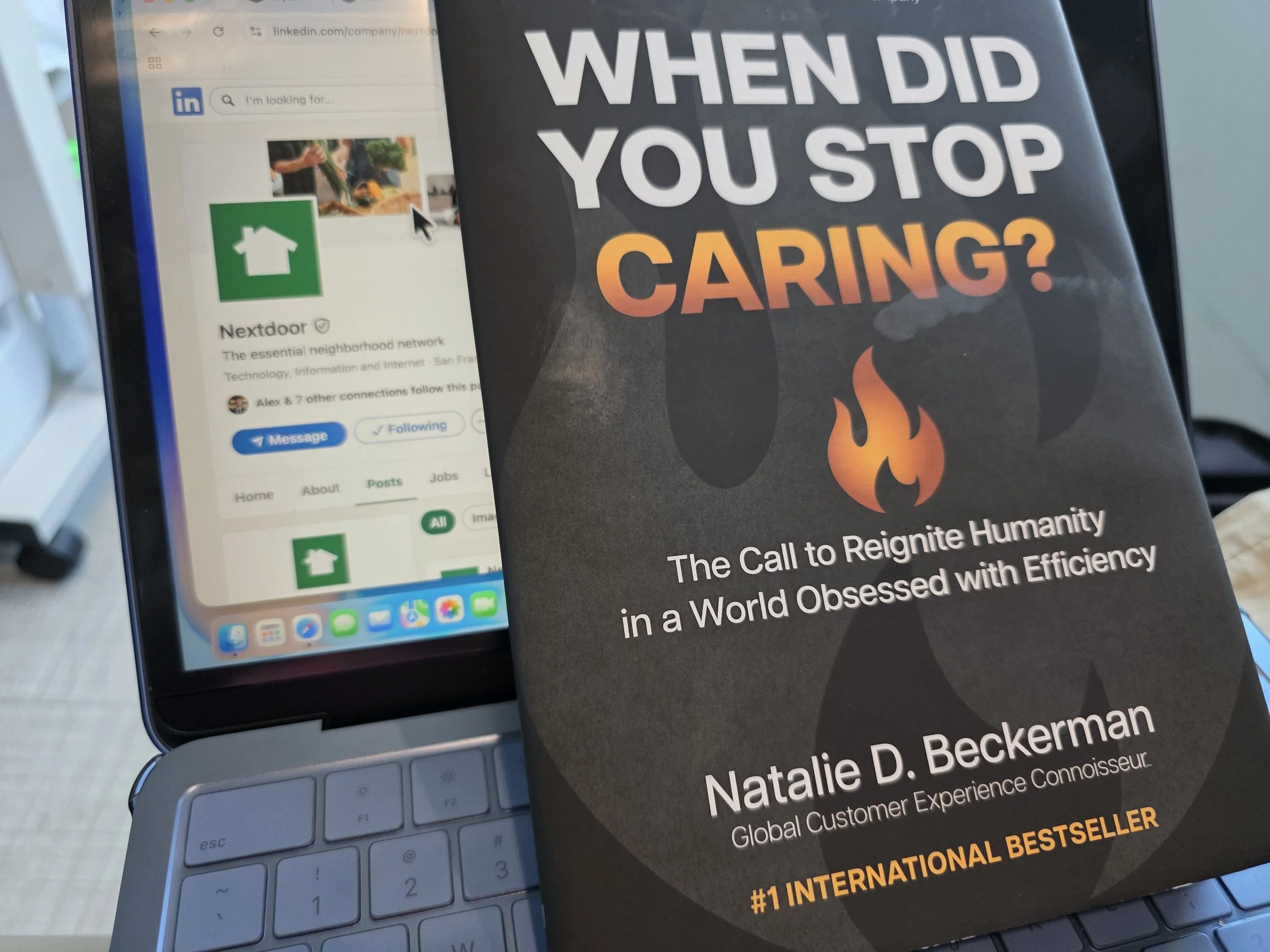
When Did You Stop Caring? The Power of a Movement
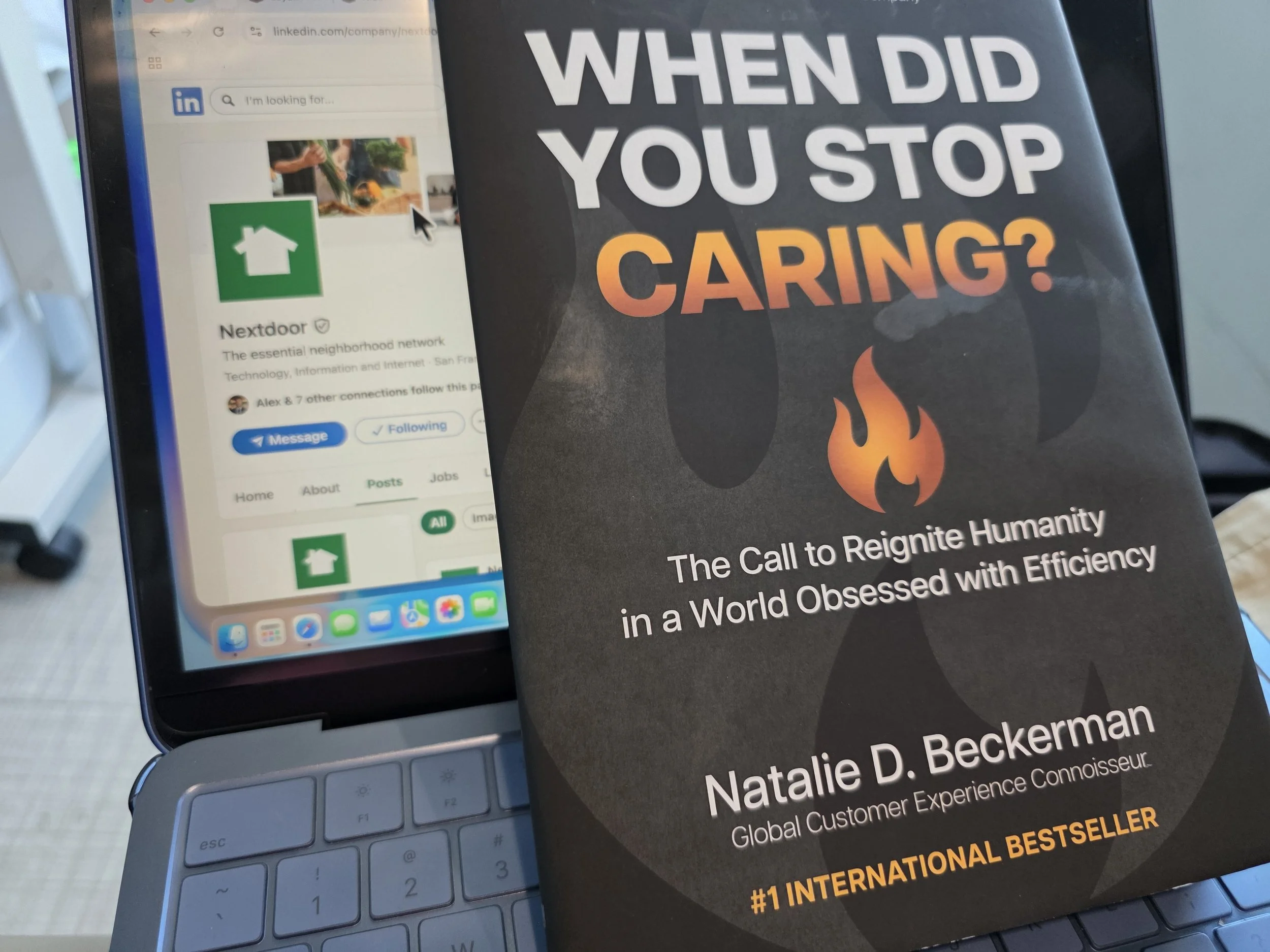
My copy of When Did You Stop Caring? by Natalie Beckerman arrived, and after starting to dig in, all I can say is: wow.
I’ve also been watching some of Natalie’s promotional shorts, and one word keeps standing out to me: movement.
Movements have the power to change people, communities, and sometimes even humanity itself.
Think about the ALS Ice Bucket Challenge. The goal wasn’t getting drenched with a bucket of ice water. The goal was awareness, conversation, and funding research to help stop ALS from devastating more lives.
Think about the Jesus Movement and the impact it had on countless people seeking purpose, faith, and connection.
Think about Pay It Forward. While fictional, the story showed how one person’s actions could inspire others and create a ripple effect of kindness and generosity.
What all of these examples have in common is simple: they started with people who cared enough to act.
Real change doesn’t happen overnight. Habits are built over time. Momentum is built over time. Success is built over time.
That’s something I remind myself of often. I keep pushing. I keep putting one foot in front of the other. I keep looking for opportunities to score a win, no matter how small.
If Natalie’s message inspires even a fraction of that mindset, then it’s a conversation worth having.
If you haven’t picked up a copy yet, you’re missing out.
📚 Amazon: https://a.co/d/0e252vBz
📚 Barnes & Noble: https://www.barnesandnoble.com/w/when-did-you-stop-caring-natalie-beckerman/1150028729?ean=9781969508448
Available now in hardcover, paperback, and digital formats.
The question isn’t whether we can change the world overnight.
The question is: What can we do today to show that we still care?