
Nextdoor's Latest "Study" or Just Another Sales Pitch?
For months, I've been requesting transparency from Nextdoor leadership regarding the surveys and research they publish. I've asked for methodology, sample sizes, demographics, confidence intervals, moderation metrics, and the data behind the headlines.
The questions have largely gone unanswered.
Now we're presented with another report claiming that 74% of Nextdoor neighbors are open to switching home insurance providers. To me, this comes across more like a marketing vehicle designed to encourage insurance companies to advertise on the platform rather than independent research.
Suppose the data is legitimate; great. Show us the methodology. Show us the complete report. Let everyone evaluate the findings for themselves.
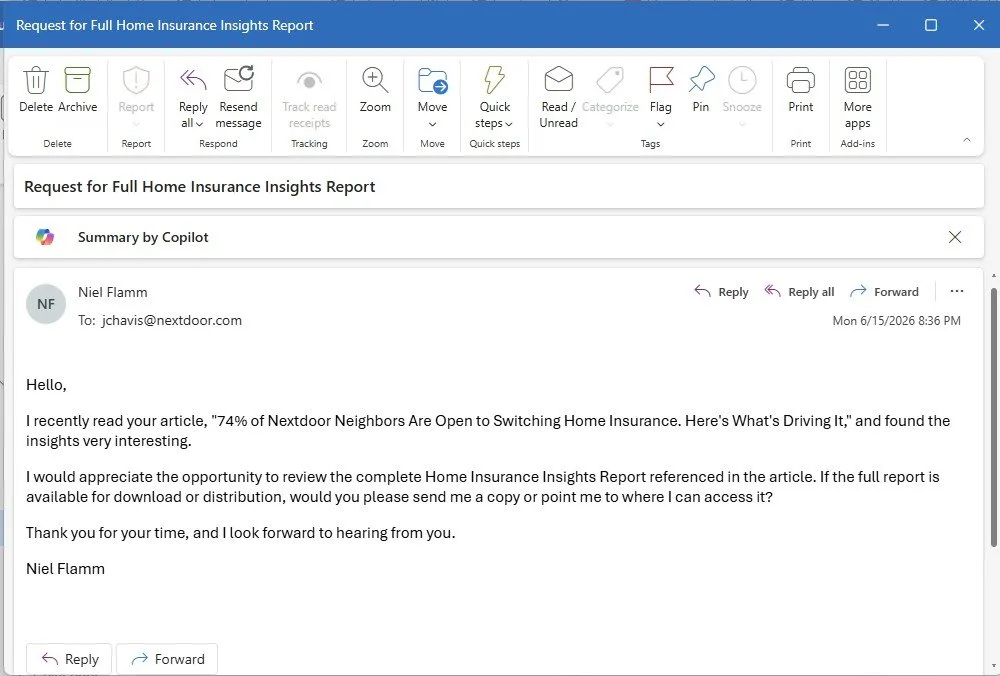
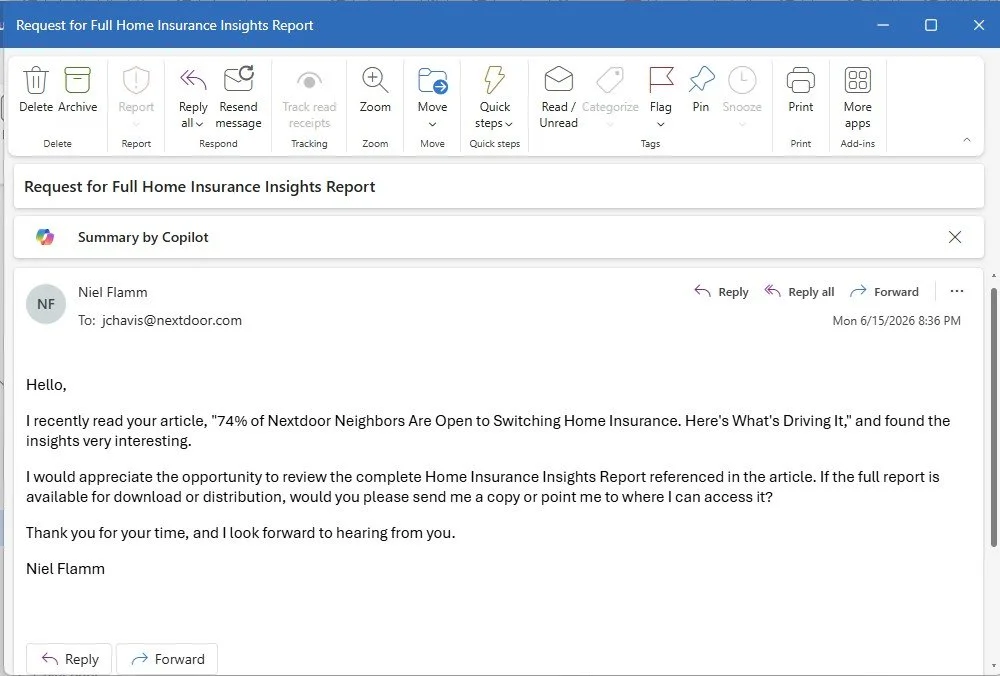
Today I sent an email to Jacob Chavis requesting the comprehensive research behind the study. We'll see what happens.
Based on my past interactions with the company, I don't have high expectations. Requests for information have historically gone unanswered or taken an unreasonable amount of time to respond.
Transparency builds trust. Marketing headlines without supporting data create more questions.
I'll happily update this post if and when the full report is provided.
When Data Is Shared, Methodology Matters
Nextdoor recently published a research article titled:
"What Neighbors Want in 2026: Resolutions, Spending Shifts, and Community Connection"
Sources include internal Nextdoor surveys, but the public materials don't appear to disclose key research details such as:
• Sample size
• Margin of error
• Response rate
• Sampling methodology
• Demographic composition
• Weighting methodology
• Exact survey questions
• Full survey results
• Independent review or validation
As someone who has spent years working with assessments, reporting, training metrics, and stakeholder analytics, one of the first questions I ask is:
"How was the data collected?"
Has no one at Nextdoor watched John King work the CNN Big Board on election night?
He doesn't simply point at a state and declare a result. He drills down into counties, demographics, turnout, voting history, margins, and methodology. The audience gets to see how the conclusion was reached.
That's what builds credibility.
Without methodology, we're left with conclusions but limited ability to evaluate the quality of the research behind them.
I'm not suggesting the findings are inaccurate.
Transparency builds trust.
If the research is strong, why not publish the complete methodology, survey instrument, respondent demographics, and supporting data? Doing so would allow advertisers, investors, journalists, researchers, and users to assess the findings and understand the limitations independently.
Data is most valuable when others can examine how the conclusions were reached.
What level of transparency should companies provide when citing internal survey research in public-facing reports?
Subscribe to NielFlamm.com.