
Plot Twist: It Was Probably the Tetanus Shot
Friday evening, around 7:00 PM EDT, I was at a recovery meeting when my neck started feeling tight.
Nothing dramatic. Just tight.
Friday is also a dialysis day, so aches, fatigue, and generally feeling like I've been run over by something aren't exactly unfamiliar territory. I had taken some time during the day to sleep and recover, so my first thought was simple:
I probably slept wrong.
Mystery solved.
Or so I thought.
I got home around 8:30 PM. There had been a group conscience/business meeting, I wrote my latest Nextdoor post, and then I hopped onto Zoom with the Fraternity guys.
Basically, a perfectly normal Friday night in my world.
As the Zoom went on, however, things started going downhill.
I was getting achier.
I was getting cold.
And then the thought entered my head:
OMG. Did I pick up ANOTHER flu or virus?
Because apparently my immune system has decided that 2026 is the year we're going to collect illnesses like they're Pokémon.
By around 11:00 PM, I gave up and went to bed.
I'm writing this now at around 6:00 AM EDT after what can generously be described as a terrible night's sleep.
My left arm hurts. I'm achy. I'm pretty sure I have a fever. I feel miserable, and most importantly, I know my body well enough to recognize that this isn't my normal post-dialysis "I've had better days" feeling.
Then, sometime during the night, my brain finally decided to provide one very important piece of information:
Thursday morning, I got a tetanus shot.
Oh.
Yeah.
That.
Mystery possibly solved.
I'm not an anti-vaxxer. I got the original three COVID shots early on, and I've been offered additional boosters since.
But here's the problem:
Every COVID shot made me feel absolutely miserable for almost exactly 36 hours.
Apparently my immune system doesn't quietly process a vaccine.
It holds a staff meeting.
There are committees.
There are breakout sessions.
Someone orders lunch.
And apparently the entire organization needs about 36 hours to discuss what just entered the building.
I understand why it happens. Vaccines are designed to get the immune system ready to recognize and respond to a particular threat. Fever, fatigue, aches, chills, and a sore arm can happen afterward.
Knowing why I feel miserable, however, doesn't make me feel any less miserable.
Which brings me to the vaccine I've been successfully avoiding:
Shingles.
I've been told I should get the shingles vaccine. I'm diabetic. I'm on dialysis. I've had chickenpox. There are plenty of reasons for me to take shingles seriously.
And yet…
I keep putting the vaccine off.
It's not because I think vaccines are bad.
It's because I know the conversation that's going to happen in my head:
Responsible Niel: "You should get the shingles vaccine."
Other Niel: "Remember the COVID shots?"
Responsible Niel: "Yes."
Other Niel: "Remember the tetanus shot?"
Responsible Niel: "Unfortunately."
Other Niel: "Let's revisit this next month."
So here I am, Saturday morning, achy, feverish, sleep-deprived, with a sore arm, writing a blog post at 6:00 AM because apparently sleeping wasn't on the schedule.
The good news?
I probably didn't pick up another random virus.
The bad news?
My immune system appears to be holding another all-hands meeting.
Given how I feel right now, attendance is mandatory.
The Tiny Device I Wish I Had Taken Seriously Years Ago
The Tiny Device I Wish I Had Taken Seriously Years Ago
How a Continuous Glucose Monitor Helped Me Build Better Habits
I'm going to be super vulnerable.
One of the reasons my body is in the shape it's in today is because I didn't manage my diabetes and insulin resistance the way I should have.
I ate poorly.
I didn't exercise consistently.
I rarely checked my blood glucose.
Why? Because the traditional process was a drag.
It went something like this...
* Wash my hands.
* Get the glucose monitor.
* Find a test strip.
* Grab the lancet.
* Stick my finger.
* Hope I got just the right amount of blood on the strip.
* Wait for the reading.
* Write it down.
* Do it all over again several times a day.
And let's not forget...it hurts. Fingertips have a lot of nerve endings, and after enough finger sticks, you start looking for reasons to skip it.
So I skipped it.
Looking back, I wish I hadn't.
Today, I live with an above-the-knee amputation, kidney failure requiring dialysis, and vision problems. While many factors can contribute to complications like these, years of poorly managed diabetes likely played a significant role in my situation.
I can't change those decisions.
But I can change today's.
Better Habits Beat Perfect Habits
I've known about Continuous Glucose Monitors (CGMs) for years.
The idea always made perfect sense.
Put on a sensor.
Go live my life.
See my glucose levels throughout the day instead of taking occasional snapshots.
Notice trends.
Get alerts.
Share the data with my endocrinologist.
The problem?
Because I'm not insulin-dependent, Medicare doesn't cover one for me. My diabetes has been managed with oral medications in the past and now Ozempic, so I didn't qualify for an insurance-paid CGM.
When Stelo became available, I jumped at the chance.
It's based on Dexcom technology, works through a subscription, and gives me exactly what I wanted—continuous insight into what my blood sugar is doing without constantly stabbing my fingers.
Even better, the data can be shared with my endocrinologist, giving us much better information than a handful of random finger-stick readings.
A Pleasant Surprise
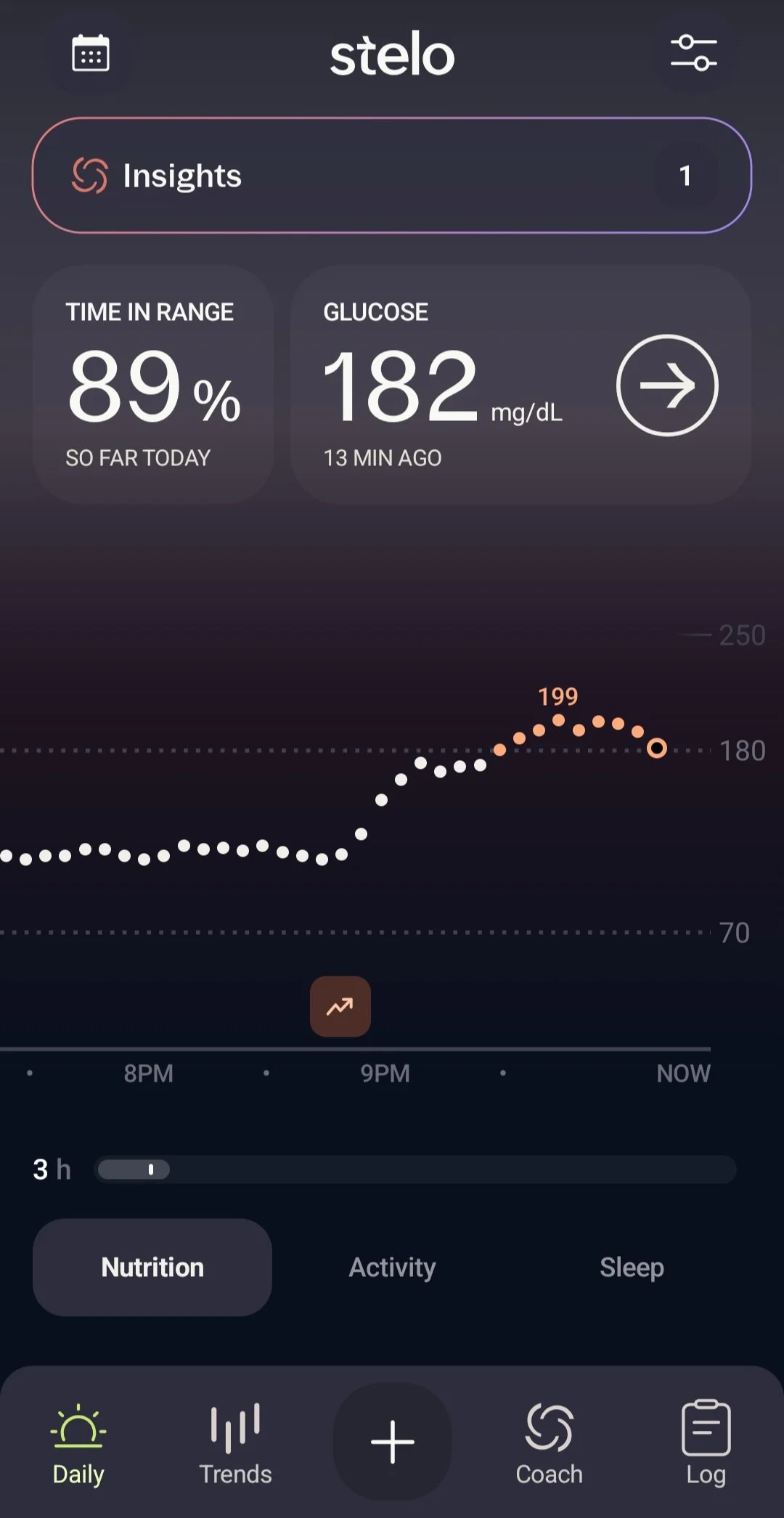
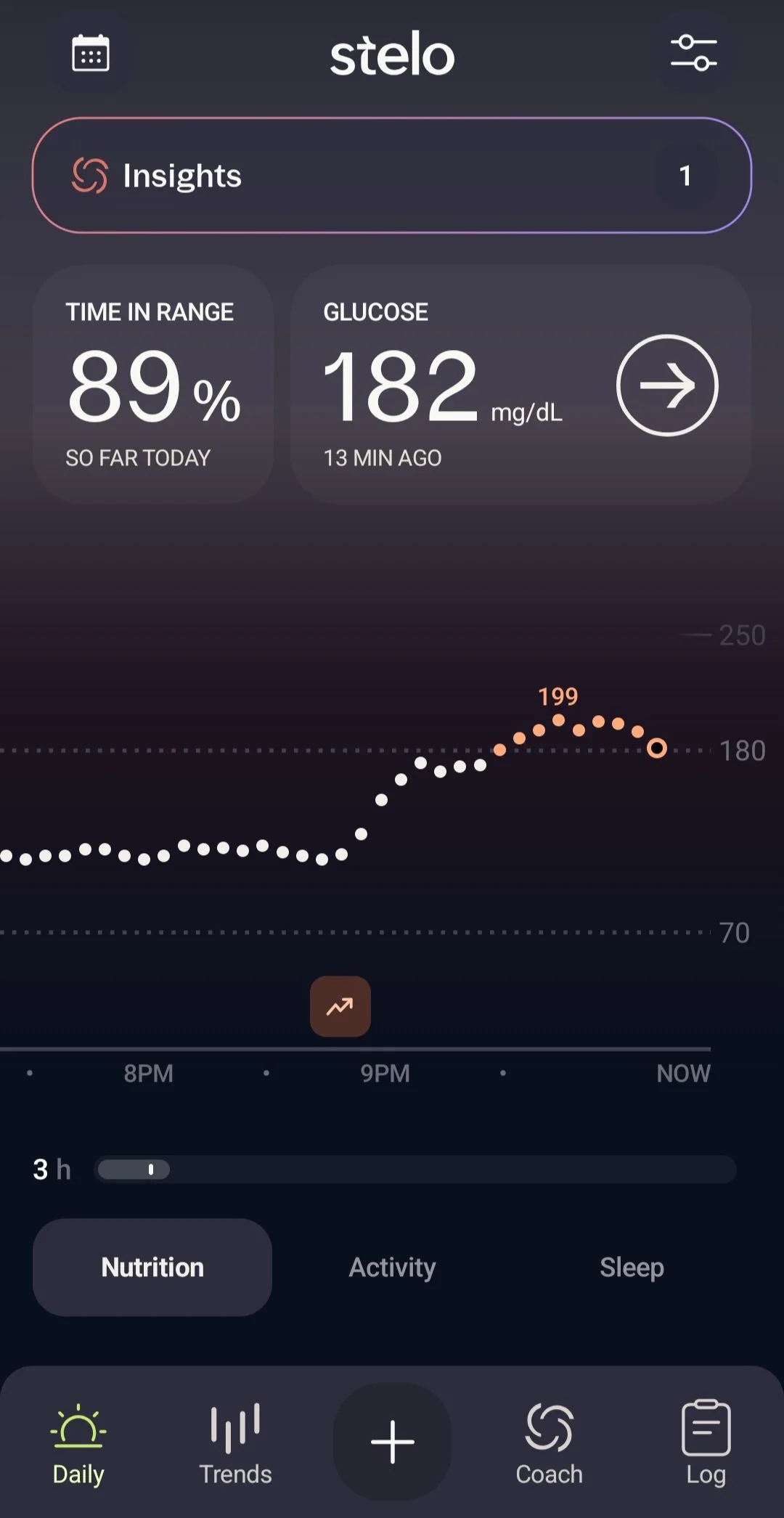
Recently, I opened the Stelo app on my Android phone and immediately noticed something had changed.
Wow.
The redesign is impressive.
Unfortunately, I didn't take screenshots of the old version, but it was functional—it got the job done.
The new version feels much more polished and informative.
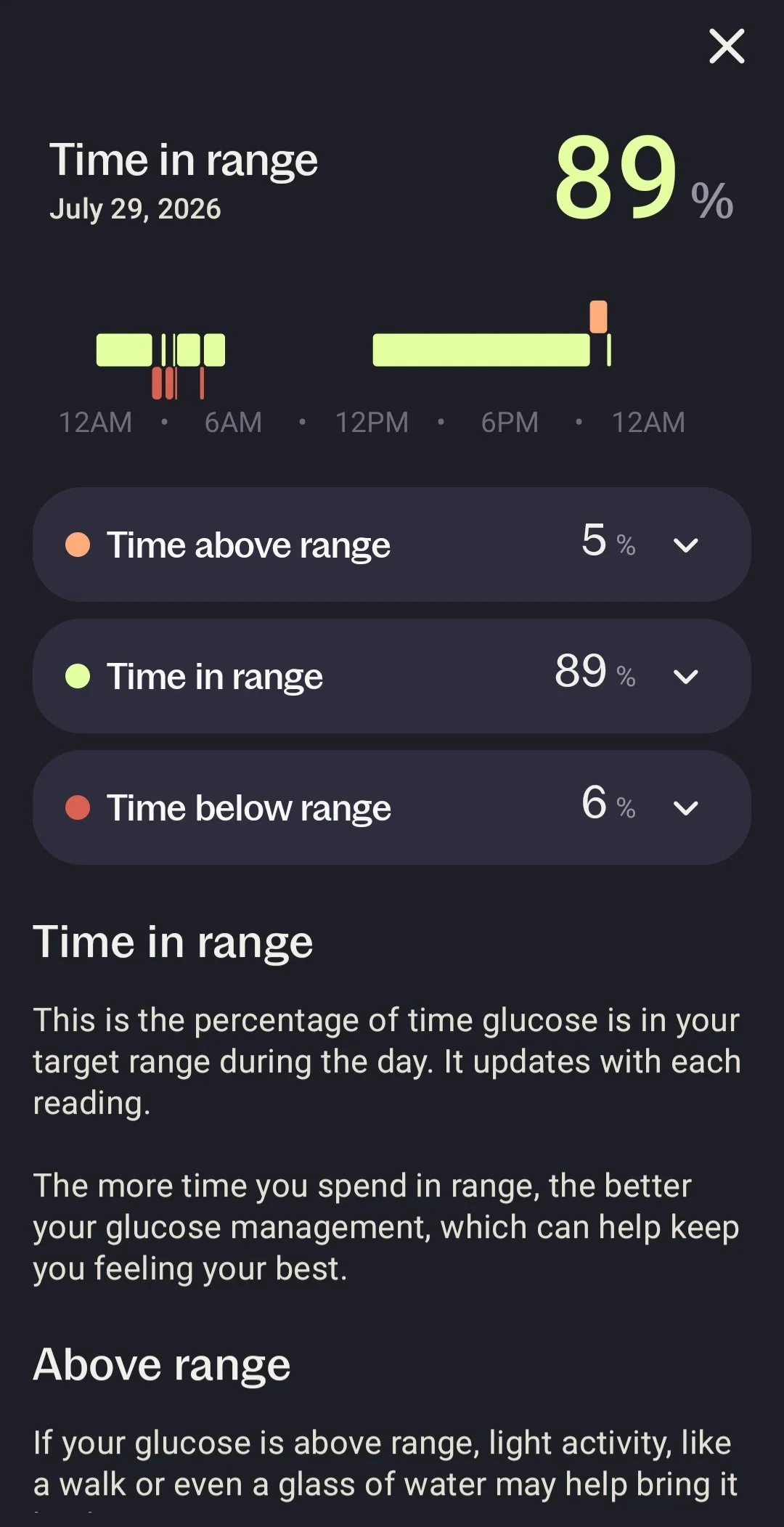
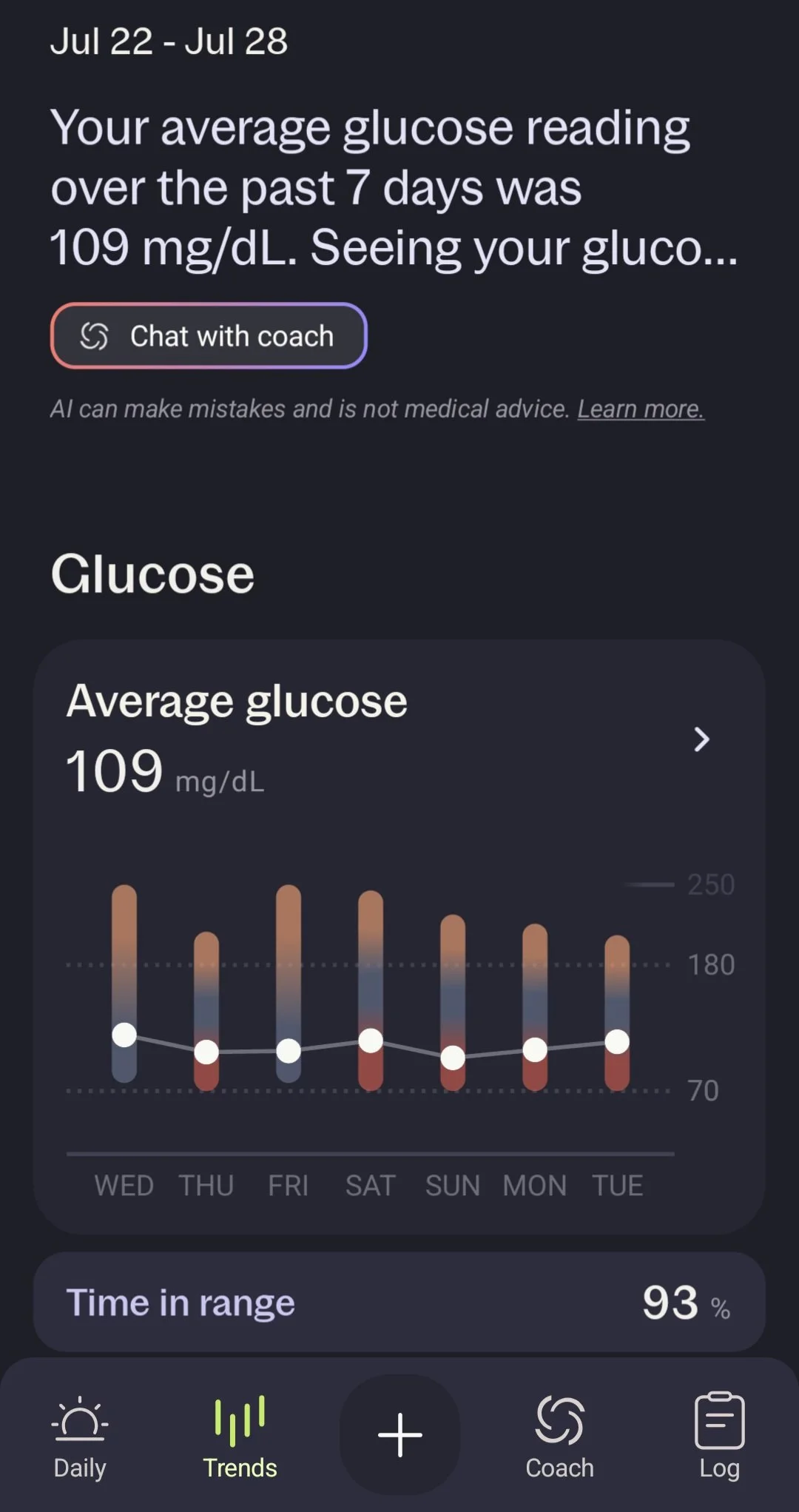
Now I can quickly see:
* The percentage of time I'm in my target range.
* Whether I'm running above, within, or below that range.
* Seven-day glucose trends in an easy-to-read graph.
* Additional ways to connect and review my data.
It's one of those updates that isn't just prettier—it actually makes the information easier to understand at a glance.
If You're On the Fence...
Whether someone is diabetic, prediabetic, or simply curious about how food, stress, exercise, or sleep affects blood sugar—and doesn't qualify for an insurance-sponsored CGM—I think Stelo is worth looking into.
No, this isn't sponsored.
Nobody sent me a free device.
Nobody paid me to write this.
I'm simply sharing something that has made it easier for me to build healthier habits.
If one small sensor can help someone avoid even a fraction of what I've gone through, then sharing my story is worth it.
Sometimes the biggest improvements don't come from massive life changes.
Sometimes they come from removing one small barrier that kept us from doing the right thing in the first place.
If sharing my story encourages even one person to take control of their health before complications develop, then being vulnerable today was absolutely worth it.
Join the discussion on NielFlamm.com.