
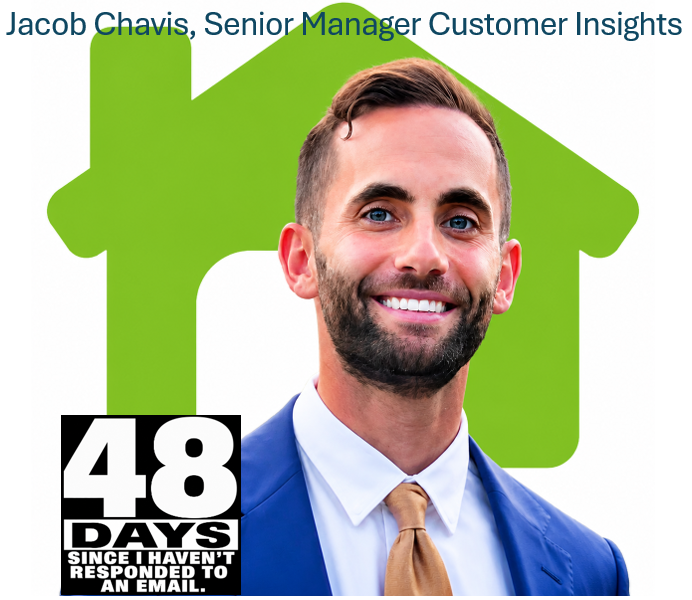
Day 48: Leadership Is About People, Not Just Processes
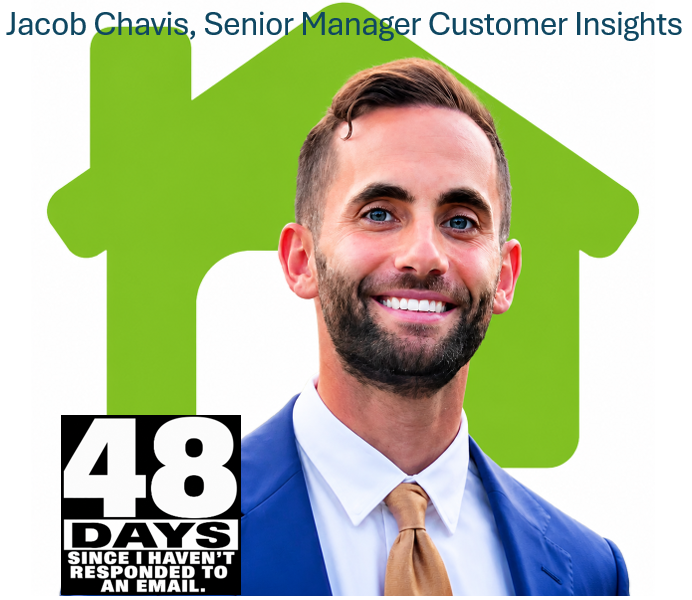
If you're new to this saga, welcome.
I've been documenting this journey day by day at NielFlamm.com/blog.
At this point, it's honestly hard to believe this has continued for 48 days.
The original request was simple: a study from Nextdoor that I was directed to request from Jacob Chavis.
The one thing that has stood out to me recently is something I haven't seen in about a month.
There was another Nextdoor post discussing a study shortly after I made my original request.
Since then?
No mention of any study.
No mention of Jacob Chavis.
No updates.
It seems the role and these studies no longer exist.
Coincidence?
I don't know.
But it does raise questions.
Recently, I've been watching a lot of leadership content—not just best practices, but examples of what happens when someone is managing people versus truly leading them.
This video caught my attention:
https://www.facebook.com/reel/1737323883971465
The situation in the video reminded me of something important:
Leadership is revealed in moments when people are vulnerable.
That brought me back to my own story.
I've shared my journey through my amputation and the decisions I had to make during that time:
https://www.facebook.com/share/v/18MqX3rAbE/
I was trying to figure out some of the biggest decisions of my life:
Was hospice the right path?
Was amputation the right decision?
How would I navigate disability insurance?
What would my future look like?
During that period, the people at the company I worked for showed me what leadership and compassion actually look like.
They supported me.
They treated me like a person.
They didn't just see an employee or a liability.
I would recommend those people for any role, anywhere.
Because at the end of the day:
Companies don't make companies successful. People do.
Organizations may focus on policies, procedures, compliance, and protecting the business.
Those things matter.
But the people inside an organization are the ones who create the culture, serve customers, build products, and drive results.
Companies exist to create value for customers and investors.
Taking care of people is one way they get there.
That's the leadership lesson I keep coming back to.
It's not just about what leaders say.
It's about what they do when people need them.
Join the discussion at NielFlamm.com/blog. Leave some feedback—I’d love to hear from you.
When the Playlist Becomes the Customer Experience
This afternoon I was doing what I normally do on a weekend—working on my blog (yes... more of my "I hate Nextdoor" content), stopping at Costco Wholesale, then settling into the Starbucks on Highway 41 in Mount Pleasant, near Rivertowne.
My order? A Venti Black Iced Tea with an extra pump of Classic and a Cheese Danish. Great combination.
I arrived around 5:00 PM and planned to spend a couple of hours writing. Around 6:30 PM, something changed.
The café music stopped.
Then music started playing from a different source somewhere in the back of the store. First came death metal. Then a rap song filled with profanity, including the N-word. Curious, I asked Shazam what it was. The only thing it identified was a sample from Star by Sly and the Family Stone. (Yes, I'm old enough to remember them.)
It was one of those moments where you wonder who is actually in charge of the customer experience.
For full transparency, I laughed at myself because I've been on the other side.
When I was about 13, I was helping run the Village Delicatessen in Westbury. Before customers came in, I'd blast Def Leppard's Hysteria while drinking wine coolers. Later, while working at Piece By Peace on the Upper East Side, someone decided that Darude's "Sandstorm" was appropriate store music. In both cases, though, the music stopped when customers walked in.
Today, I provided feedback while I was still in the store using the Starbucks website chat. I explained exactly what happened, noted that I had short videos of both songs, and even offered to share them with local management.
After about 20 minutes of answering questions, I was asked to call a phone number instead.
That experience was more disappointing than the music.
Here are my suggestions for Starbucks:
• If a customer clearly states they're trying to provide store feedback, don't spend 20 minutes collecting information only to redirect them to another channel.
• Customer experience impacts revenue. I skipped the grilled cheese and left.
• Consider creating or expanding a Customer Experience QA team that periodically visits stores, much like secret shoppers. Today's technology makes it easier than ever to understand what customers actually experience in your locations.
One final thought.
I don't care what's on the secret menu nearly as much as I care about feeling heard, welcomed, and valued as a customer.
If you'd like to see the short videos from today's visit, they're available at NielFlamm.com/videos/starbucks.
I'd love to hear from others in customer experience, retail, hospitality, and leadership.
How should companies make it easier for customers to provide feedback before they decide not to come back?
Join the discussion on NielFlamm.com.
When Did You Stop Caring? The Little Things Are the Big Things
Over the past few days, I’ve been getting food to go for Mom and me while she’s been at Novant Health (formerly East Cooper Medical Center).
Why?
Because hospital food is… well… hospital food. 😬
I used to tell my parents this when they visited me during my hospital stays in 2023 and 2024. Now Mom understands.
My brothers and I have been bringing her things she actually wants to eat — breakfast, sushi, snacks, seltzer, and anything that makes a hospital stay a little more comfortable.
I’m a big believer in ordering ahead. Use the app, time the drive, walk in, grab the order, and get back.
I’m also a believer in tipping.
Food service and hospitality workers work hard. They deal with people all day. Many are underpaid. If the service is great — tip. If the service is average, I still tip.
But tipping before receiving the service? I’m starting to rethink that.
Here’s why.
Thursday 7/2/26 — Big Bad Breakfast, Mount Pleasant
I ordered Mom an omelet and pancakes for myself. I picked it up, asked the person handing me the bag:
“Are utensils in the bag?”
Answer: “Yes.”
I get back to the hospital.
No utensils.
I start searching the hospital, trying to find some. Mom is so hungry that she eats part of the omelet by hand.
Yes — I should have checked. That’s on me.
But I also specifically asked.
Tip: $4.84
I emailed the restaurant’s general manager.
No response.
Today, July 4th — Chipotle Mexican Grill
I ordered two Sofritas bowls. Mom has never had Chipotle Mexican Grill, and I thought the Sofritas would be easier for her to eat.
I ordered ingredients on the side and labeled the bowls so we’d know whose was whose.
I arrive at the hospital:
• Lids weren’t secure, causing spills
• Bowls weren’t labeled
• Black beans were missing
Tip: $3.14
I tried contacting Chipotle Mexican Grill support and met “Pepper,” the chatbot wall that didn’t solve the issue.
So what did I do?
I disputed the tip amounts.
Not the food.
The tips.
Because tipping is supposed to recognize service.
The dollar amount isn’t the point.
The principle is.
I tolerate what I allow — and I’m not allowing this.
Small details matter.
A fork matters when someone is sitting in a hospital room hungry.
A secured lid matters.
Checking an order matters.
Follow-through matters.
So I’ll ask the question from Natalie Beckerman’s best sellerbook:
“When Did You Stop Caring?”
Chipotle?
Because the little things tell customers everything.
Join the discussion on NielFlamm.com
Whistleblowers Welcome: Help Shine a Light on Leadership and Workplace Culture
Every organization has room to improve. Some embrace feedback. Others silence it.
If you are a current or former employee who is concerned about workplace culture, leadership, management practices, accountability, or organizational performance, I’d like to hear your perspective.
If you choose to reach out, I will take reasonable steps to redact identifying information before discussing your experience publicly. Please do not send confidential, proprietary, or legally protected information. I’m interested in your experiences, observations, and opinions—not trade secrets.
Poor performance should not be rewarded.
Ineffective leadership should be examined, not ignored.
A toxic culture rarely appears overnight. It often starts at the top and spreads throughout an organization until someone has the courage to confront it.
One of my favorite leadership principles is simple:
You tolerate what you allow.
If leaders allow dysfunction, it becomes the culture.
If employees remain silent out of fear, meaningful change becomes even more difficult.
Constructive transparency and accountability make organizations stronger—not weaker.
If there are stories that deserve to be heard, let’s have that conversation.
Do as I Say, Not as I Do?
Earlier today, I wrote a post asking questions about Nextdoor’s workplace strategy.
From what I’ve seen, members of the C-suite appear to work from various locations, while engineers are expected to report to a new engineering hub in Dallas, Texas. If that’s the strategy, I’d genuinely like to understand the business rationale behind it.
I tagged several members of Nextdoor’s leadership team. Some I couldn’t tag because I couldn’t locate their LinkedIn profiles. Ironically, one of them was Kelsey Grady, Executive Vice President, Communications.
An interesting thing happened afterward.
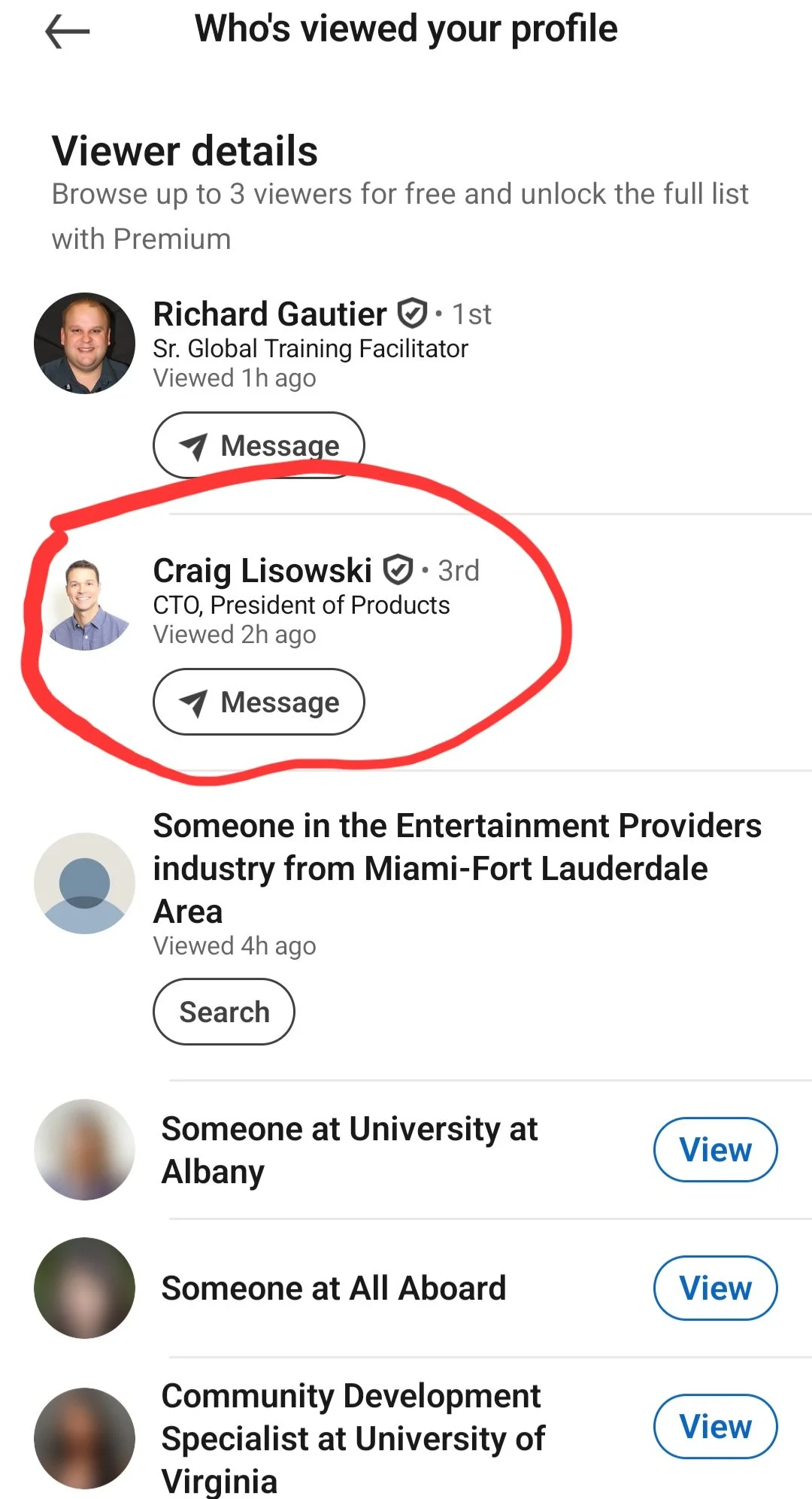
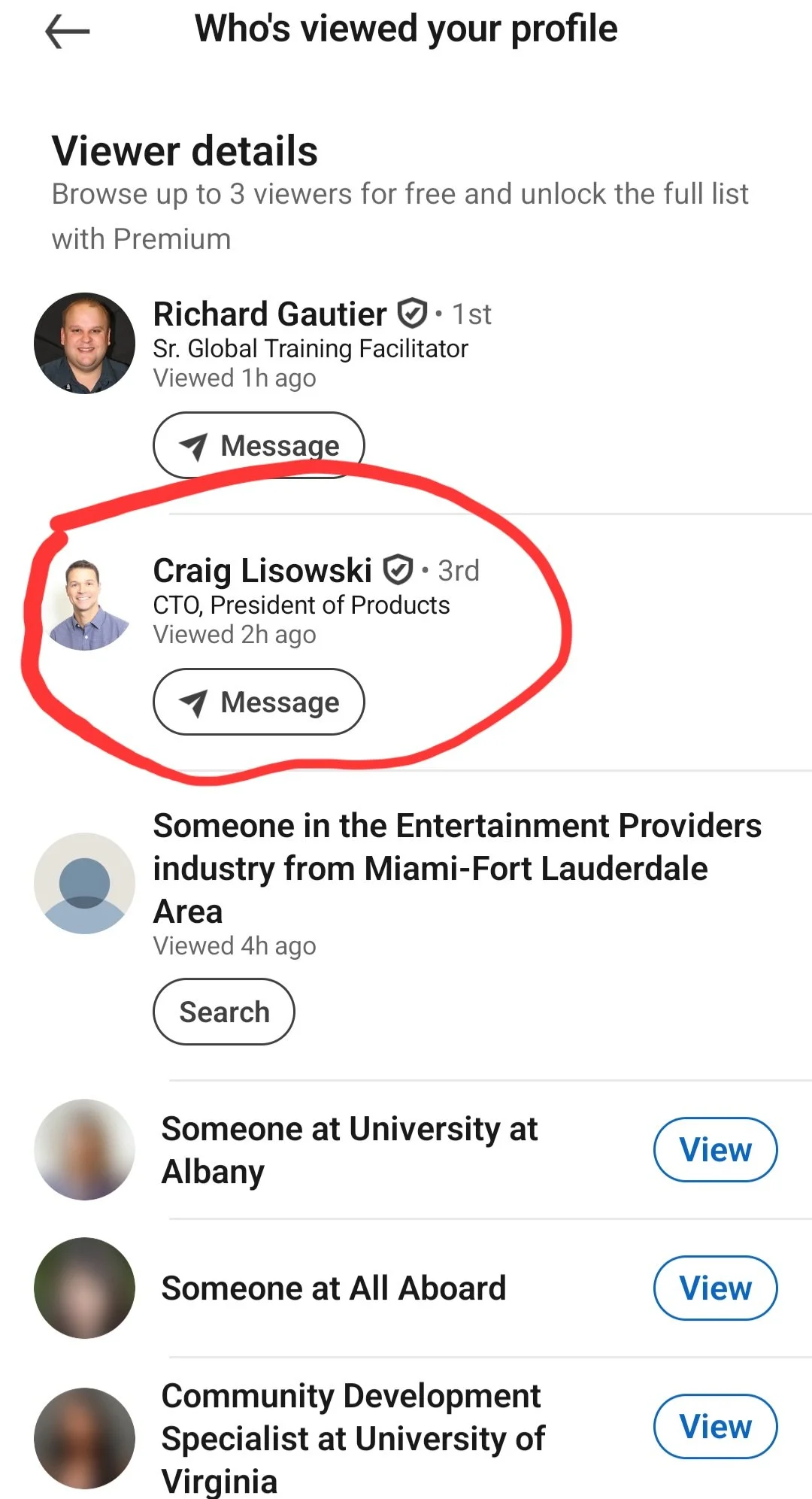
Craig Lisowski viewed my LinkedIn profile.
According to his LinkedIn profile, he is CTO (Chief Technical Officer) and President of Products, and his location is listed as San Francisco, California.
If the engineering “meeting of the minds” is centered in Dallas, that’s quite a commute.
So I’ll ask again, respectfully:
What is the leadership philosophy behind having executives distributed across multiple locations while requiring engineers to work from a centralized office?
There may be a sound business reason. If so, I’d love to hear it. Transparency around decisions like these helps employees, prospective candidates, shareholders, and customers better understand the company’s direction.
Someone, please explain this to me.
Join the discussion on NielFlamm.com/blog