

Day 88: NXDR Ends at $2.23—If Citigroup Sees $2.85, Why Doesn’t the Market?

It's Day 88 of my continuing Nextdoor case study, and today I'm looking at something that should be encouraging to me as a shareholder.
On August 17, 2026, Citigroup analyst Jamesmichael Sherman-Lewis maintained a Neutral rating on Nextdoor Holdings (NYSE: NXDR) but increased his price target from:
$2.30 → $2.85
That's a 23.9% increase in the price target.
Sounds pretty good, right?
Well...
NXDR ended today at approximately $2.23.
And that's where this gets interesting.
Citigroup says $2.85. The Market Says $2.23.
At $2.23, NXDR would need to gain approximately:
27.8%
to reach Citigroup's $2.85 target.
That's a substantial difference between what one major Wall Street analyst believes Nextdoor could be worth and what investors are currently willing to pay.
And on Day 88, that leads me to the obvious question:
If Citigroup sees $2.85 of potential value, why doesn't the market?
Don't Ignore the Word “Neutral”
Citigroup raised the target.
But it didn't upgrade NXDR to Buy.
The rating remained Neutral.
That's important.
Raising a target suggests the analyst sees greater potential value than before.
Maintaining Neutral isn't exactly someone running through Wall Street screaming:
“BUY NEXTDOOR!”
It's more like:
“There's more potential here...but we're still watching.”
As a shareholder, I understand the feeling.
NXDR Is Still Down 16.8% Since August 10
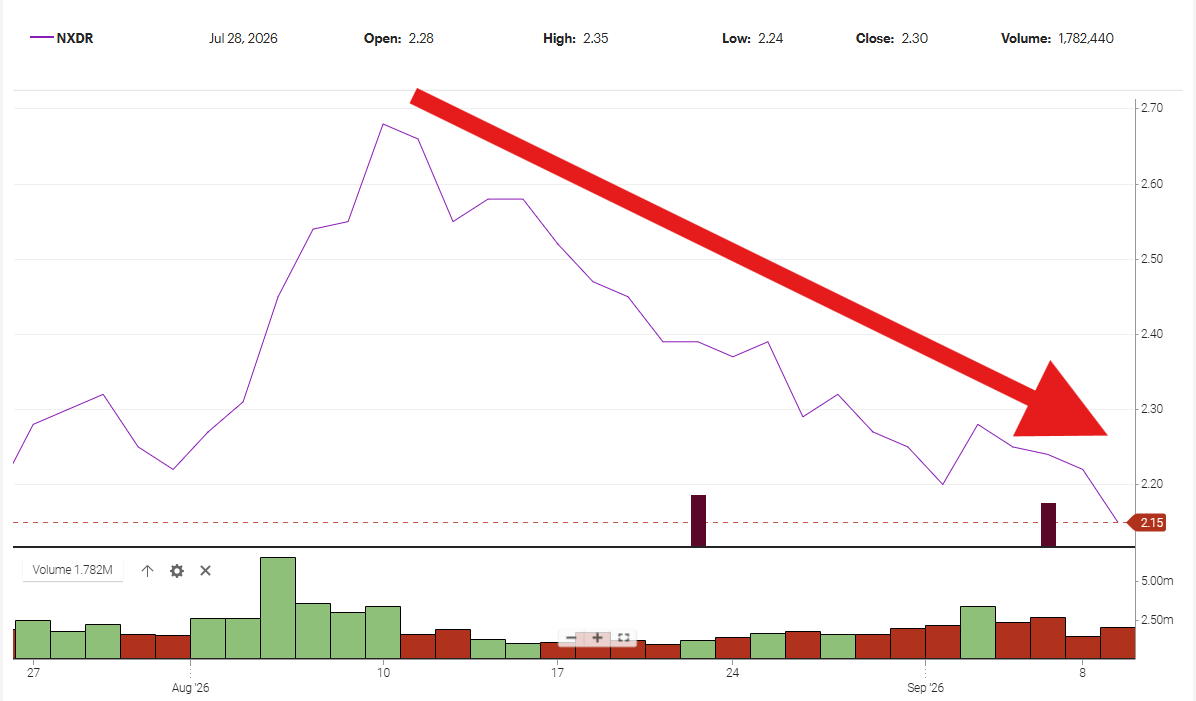
On August 10, NXDR closed around $2.68.
Today it ended at $2.23.
That's:
$0.45 lost per share.
Or approximately:
16.8%
Using roughly 387 million shares as a constant-share-count approximation, that $0.45 decline represents approximately:
$174 million in market capitalization.
That's an improvement from the approximately $205 million decline I calculated when NXDR was trading at $2.15.
But we're still talking about roughly $174 million in market value compared with August 10.
That gets my attention.
Markets fluctuate, share counts change, and one month of stock performance doesn't prove whether a CEO or strategy is succeeding or failing.
But shareholders can certainly ask why the market isn't assigning Nextdoor the value that Citigroup apparently believes is possible.
Where Is the Disconnect?
If analysts believe Nextdoor is worth more...
If management believes the strategy is working...
If advertising is growing...
If the small-business strategy creates value...
If AI-powered search improves the platform...
If verified recommendations differentiate Nextdoor...
Why isn't the market buying the story?
Maybe the market is wrong.
Maybe Citigroup is overly optimistic.
Or maybe investors see Nextdoor's potential but aren't yet convinced leadership can turn that potential into sustained shareholder value.
That's the possibility that interests me.
And What About That $100 Million Buyback?
This makes my recent question about Nextdoor's stock-repurchase program even more interesting.
Nextdoor has a $100 million share-repurchase authorization.
Yet the company repurchased zero shares during Q2 2026.
Put the numbers together:
NXDR closing price: $2.23
Citigroup target: $2.85
Difference: $0.62
Potential upside: ~27.8%
Buyback authorization: $100 million
If Nextdoor's Board and management genuinely believe the company is worth substantially more than $2.23:
At what price does Nextdoor believe Nextdoor is a bargain?
I'm not suggesting management blindly spend $100 million tomorrow.
Capital allocation isn't that simple.
But management already has authorization to repurchase shares.
If leadership believes NXDR is significantly undervalued, buying shares is one way to demonstrate that conviction.
Day 88: Less Storytelling. More Value Creation.
Nirav Tolia has been making the podcast rounds.
Nextdoor has been issuing announcements.
AI.
Verified neighbors.
Local businesses.
Recommendations.
Advertising.
Community.
Trust.
Great.
But ultimately:
Decisions drive value.
Not podcasts.
Not slogans.
Not press releases.
Execution.
Citigroup sees $2.85.
The market ended today at $2.23.
That's a $0.62 gap—or nearly 28% potential upside.
Someone eventually gets proven right.
And I Hope It's Citigroup
That's something that sometimes gets lost in my feedback.
I want Nextdoor to succeed.
I'm a shareholder.
If NXDR goes from $2.23 to $2.85—or considerably higher—I'm certainly not going to complain.
That's precisely why I've spent 88 days questioning leadership, communication, accountability, monetization and shareholder value.
I want Nextdoor to realize the potential people keep telling shareholders exists.
So on Day 88, my question for Nextdoor is simple:
If Citigroup sees $2.85, what does Nextdoor see?
More importantly:
What is leadership doing to close the gap between potential value and realized shareholder value?
Because shareholders can't spend price targets.
We own the stock that's actually trading.
Follow my continuing Nextdoor case study at NielFlamm.com/blog.

Day 83: Nextdoor Has $100 Million for Stock Buybacks. So Why Isn't It Buying?

It's Day 83 of my continuing Nextdoor case study.
Today I want to talk about something different:
NXDR shares.
More specifically, if Nextdoor's leadership believes the company is undervalued and believes strongly in its direction, why isn't it aggressively buying its own stock at these prices?
Before somebody jumps into the comments with a correction, let me make one myself.
Nextdoor DOES have a stock-buyback program.
And it has bought shares.
According to Nextdoor's SEC filings, during the first six months of 2026, the company repurchased and retired approximately 17 million shares for $28.7 million, at an average price of $1.69 per share.
But here's the part I find interesting:
During Q2 2026, Nextdoor repurchased ZERO shares.
And as of June 30, the company still had $100 million available under its current share-repurchase authorization.
So my question isn't:
Why doesn't Nextdoor have a buyback?
My question is:
Why aren't you using it now?
Nextdoor reported $378 million in cash, cash equivalents, and marketable securities at the end of Q2.
The Board has already authorized up to $100 million for share repurchases through June 2028.
Meanwhile, NXDR has recently been trading in the low-$2 range.
If management believes Nextdoor's strategy is working...
If management believes the market is undervaluing the company...
If management believes all these new products, small-business initiatives, AI features, and advertising strategies are going to create substantial future value...
Why wouldn't buying your own stock be an attractive use of at least some of that authorized capital?
Put Your Money Where Your Podcasts Are
I've watched Nirav Tolia make the podcast rounds.
I've heard the vision.
I've read the press releases.
I've seen Nextdoor describe itself as the “essential neighborhood network.”
Okay.
Show me the confidence with capital.
A meaningful stock repurchase at a price management genuinely believes is substantially below intrinsic value can send a very different message than another podcast interview.
It says:
We believe our shares are worth more than this.
And we're willing to put the company's money behind that belief.
Nextdoor itself made almost exactly that argument when it announced its original buyback program in 2022, saying the plan reflected confidence in its strategy and a belief that the market valuation didn't reflect the company's opportunity.
So what does management believe today?
Then There's Stock-Based Compensation
There's another side to this discussion.
Nextdoor reported approximately $14.9 million in stock-based compensation in Q2 2026.
Stock compensation isn't automatically bad. It's extremely common in technology companies and can help align employees and executives with shareholders.
But shareholders should still ask what happens to their ownership percentage as equity compensation is issued over time.
Dilution matters.
If you're issuing equity to employees and executives while the stock struggles, shareholders have every reason to ask whether repurchases are sufficiently offsetting that dilution—and whether compensation is producing the performance shareholders are paying for.
That's particularly important to me when we're discussing executive compensation.
I've repeatedly questioned how Nirav Tolia's compensation aligns with the value being delivered to shareholders.
Here's another way management could demonstrate confidence:
Buy the stock.
Imagine the Message
Forget another Business Wire release for a moment.
Imagine Nextdoor announcing that management believes NXDR is materially undervalued and therefore intends to meaningfully utilize its existing $100 million repurchase authorization.
That's a statement I would notice as a shareholder.
Not because buybacks magically fix a company.
They don't.
Nextdoor itself warns investors that repurchases aren't guaranteed to increase long-term shareholder value and that they reduce cash available for other purposes.
That's fair.
If Nextdoor can invest $1 internally and generate substantially more than $1 in long-term shareholder value, invest the dollar in the business.
But if management believes its own stock represents one of the best values available to the company?
Buy it.
That's capital allocation.
This Is Really a Question About Confidence
Nextdoor's Q2 wasn't all bad.
Revenue increased 15% year over year to $75 million.
Platform Weekly Active Users reached 22.9 million.
Adjusted EBITDA reached approximately $10 million.
The GAAP net loss narrowed dramatically to approximately $2 million, compared with $15 million a year earlier.
And the company finished June with approximately $378 million in cash, cash equivalents, and marketable securities.
Those are real improvements.
So here's what I want to understand:
If management believes those improvements are the beginning of something much bigger, why did Nextdoor repurchase zero shares during Q2?
You already have the authorization.
You have substantial liquidity.
You've bought shares before.
And the stock remains at a valuation that has frustrated shareholders like me.
Day 83
I'm still waiting for the two detailed Insights studies.
I'm still questioning the small-business monetization strategy.
I'm still questioning corporate communication.
I'm still questioning leadership.
And now I'm adding another question for Nirav Tolia and Nextdoor's Board:
You authorized $100 million to buy back NXDR shares.
At these prices, what are you waiting for?
If leadership believes in the direction of Nextdoor, I'd like to see that confidence demonstrated not just through words, podcasts and press releases.
Show shareholders through decisions.
Because ultimately, confidence isn't what management says about the company.
It's what management is willing to do with the company's capital.
Follow my continuing Nextdoor case study at NielFlamm.com/blog.
Narratives Don't Build Great Companies. Execution Does.
While scrolling social media, I came across a Reel from entrepreneur and investor Michael Girdley discussing the rise and collapse of FTX and its founder, Sam Bankman-Fried.
Girdley has built, acquired, and operated businesses for years. His perspective comes from evaluating companies through the lens of operations, leadership, financial performance, and execution—not hype.
The Reel made me stop and think.
https://www.facebook.com/reel/2186793178830723
Not because I believe Nextdoor is FTX.
I don't.
But I noticed patterns that every investor should pay attention to.
Both companies were built around compelling stories.
Both attracted significant outside investment.
Both had leaders who became the public face of the company, regularly appearing on podcasts and interviews to explain the vision.
A compelling narrative can attract users.
A compelling narrative can attract investors.
But eventually, every public company is judged by something much simpler:
Execution.
At FTX, the narrative eventually collided with reality. When investors, regulators, and journalists dug into the financials and governance, the story changed dramatically.
That is why transparency matters.
As a Nextdoor shareholder, I'm continuing to ask questions that any investor should ask.
Why has my request for a published study gone unanswered for more than a month?
Why are moderation decisions that appear similar producing very different outcomes?
Why are executive bonuses awarded while shareholders continue waiting for sustained profitability?
Why does leadership spend so much time discussing AI and future monetization while investors are still waiting for consistent financial results after more than 15 years?
None of those questions accuses anyone of wrongdoing.
They are governance questions.
They are shareholder questions.
And they deserve answers.
Nextdoor's stock has recently risen.
Markets can be optimistic.
Markets can also be wrong.
History has shown that stock price alone is not evidence of a healthy company.
The real test is whether the business fundamentals eventually justify the valuation.
As shareholders, our responsibility isn't to cheer every interview or podcast appearance.
It's to evaluate leadership based on measurable results, transparency, capital allocation, communication, and long-term value creation.
The lesson I took from Michael Girdley's discussion wasn't about FTX.
It was about remembering that every company eventually reaches the point where execution speaks louder than the story.
Join the discussion on NielFlamm.com.
I Asked ChatGPT What This Means for Nextdoor. The Answer Wasn’t What I Expected.
Nextdoor recently announced a partnership with the Independent Insurance Agents & Brokers of America.
Instead of immediately forming my own opinion, I asked ChatGPT to analyze this announcement:
https://blog.nextdoor.com/indagency-partner
…along with Nextdoor’s business model, public strategy, and the potential impact on users, local businesses, and investors.
The response surprised me.
Yes, there were positives.
More advertising revenue.
More opportunities for independent insurance agencies.
Potentially better monetization.
But the majority of the analysis focused on the risks.
Local businesses could face increasing pressure to pay for visibility instead of earning it organically.
Neighbors may experience a platform that feels more like an advertising marketplace than a community.
Investors could see additional revenue without meaningful improvements in engagement or long-term loyalty.
More partnerships don’t automatically create more trust or stronger neighborhoods.
The core question remains: Does each new partnership improve the user experience, or does it primarily expand advertising opportunities?
One observation stood out to me.
ChatGPT didn’t focus on technology. It focused on behavior.
AI analyzed incentives, relationships, engagement patterns, and the gap between the company’s public messaging and the experience users may have on the platform.
Technology can generate revenue.
Behavior determines whether people return.
I’d love to hear your thoughts after reading the announcement and discussing its potential impact.

NXDR and The Gambler: Know When to Hold 'Em... and Know When to Walk Away
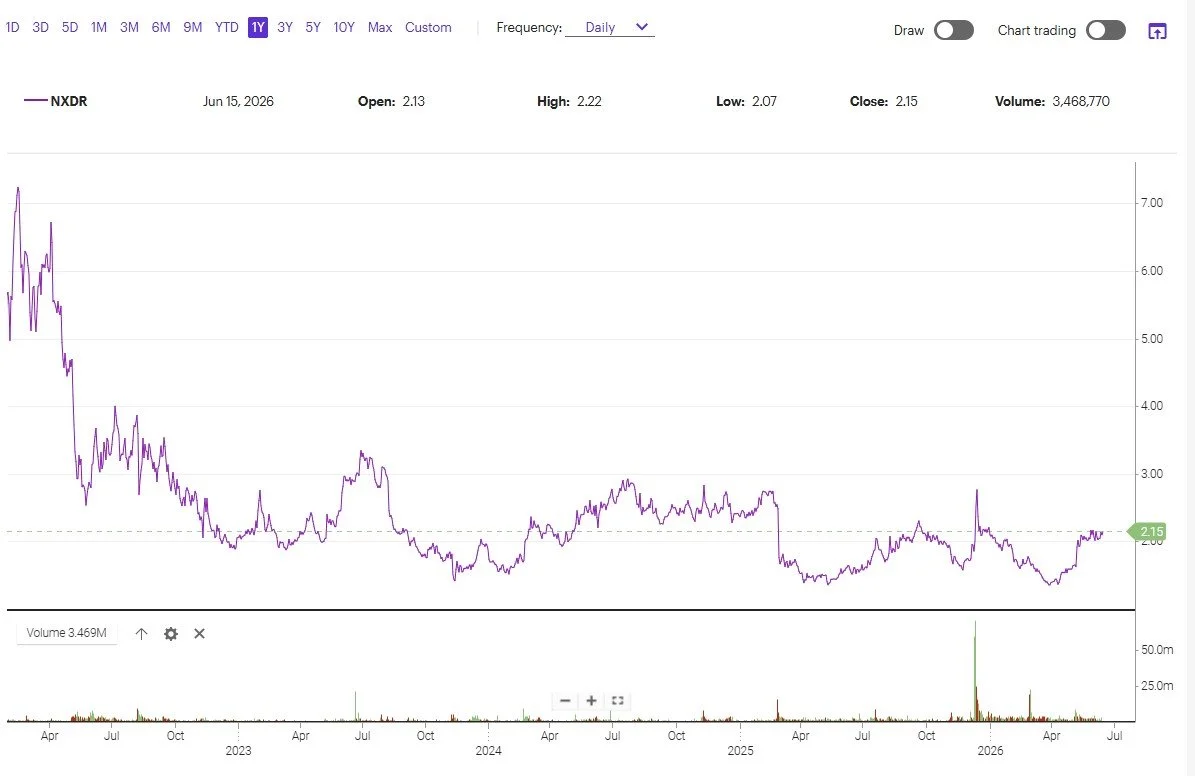
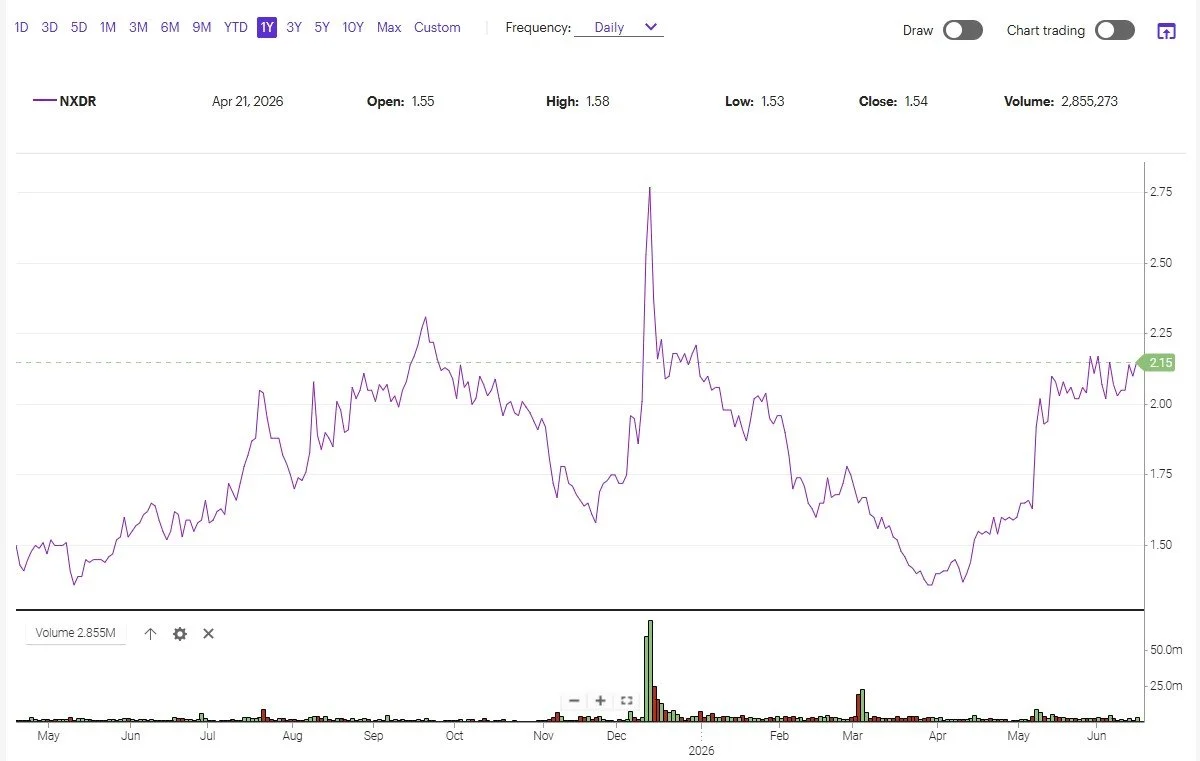
Looking at the 1-year chart of Nextdoor Holdings (NYSE: NXDR), the stock is up roughly $0.60 year over year, rewarding investors who bought during periods of pessimism.
Based on the historical trading patterns I've observed over the past four years, I believe July could bring another round of profit-taking as short-term investors lock in gains.
Kenny Rogers' The Gambler offers timeless investing wisdom: "Know when to hold 'em" and "know when to walk away." For investors, knowing the difference can mean everything.
That brings me to a larger question.
What is CEO Nirav Tolia doing to ensure minority shareholders receive a meaningful return on their investment?
If AI is truly the future of Nextdoor, why aren't users seeing a steady stream of innovative features that strengthen neighbor relationships and make communities more useful?
Instead, the public conversation often revolves around disputes over moderation, neighborhood division, sponsored surveys, and advertising initiatives.
Likewise, the recent publicity campaign featuring appearances on podcasts and interviews may generate headlines, but has it materially changed user engagement, revenue growth, or investor sentiment? The stock chart suggests investors are still waiting for stronger evidence of execution.
Nirav Tolia graduated from Stanford with a degree in English, and he is clearly an effective communicator. But public companies ultimately succeed by delivering measurable results, not compelling narratives. We expect a strategy supported by transparent metrics and product execution.
Some questions I'd like leadership to answer:
Where are the AI features that materially improve the neighbor experience?
How is AI translating into shareholder value?
Why does the platform still appear more divisive than connective?
What measurable milestones should investors expect over the next 12 months?
How will management demonstrate that AI investments are producing tangible financial returns?
As a shareholder, I want Nextdoor to succeed. But success requires more than media appearances and AI talking points. It requires products that users love, communities that thrive, and financial results that reward investors.
These are my personal opinions and observations and should not be considered financial advice. Always perform your own due diligence before making investment decisions.