

Bacon, Brain Nourishment, and a Little Leadership Reflection at 13.5 Knots
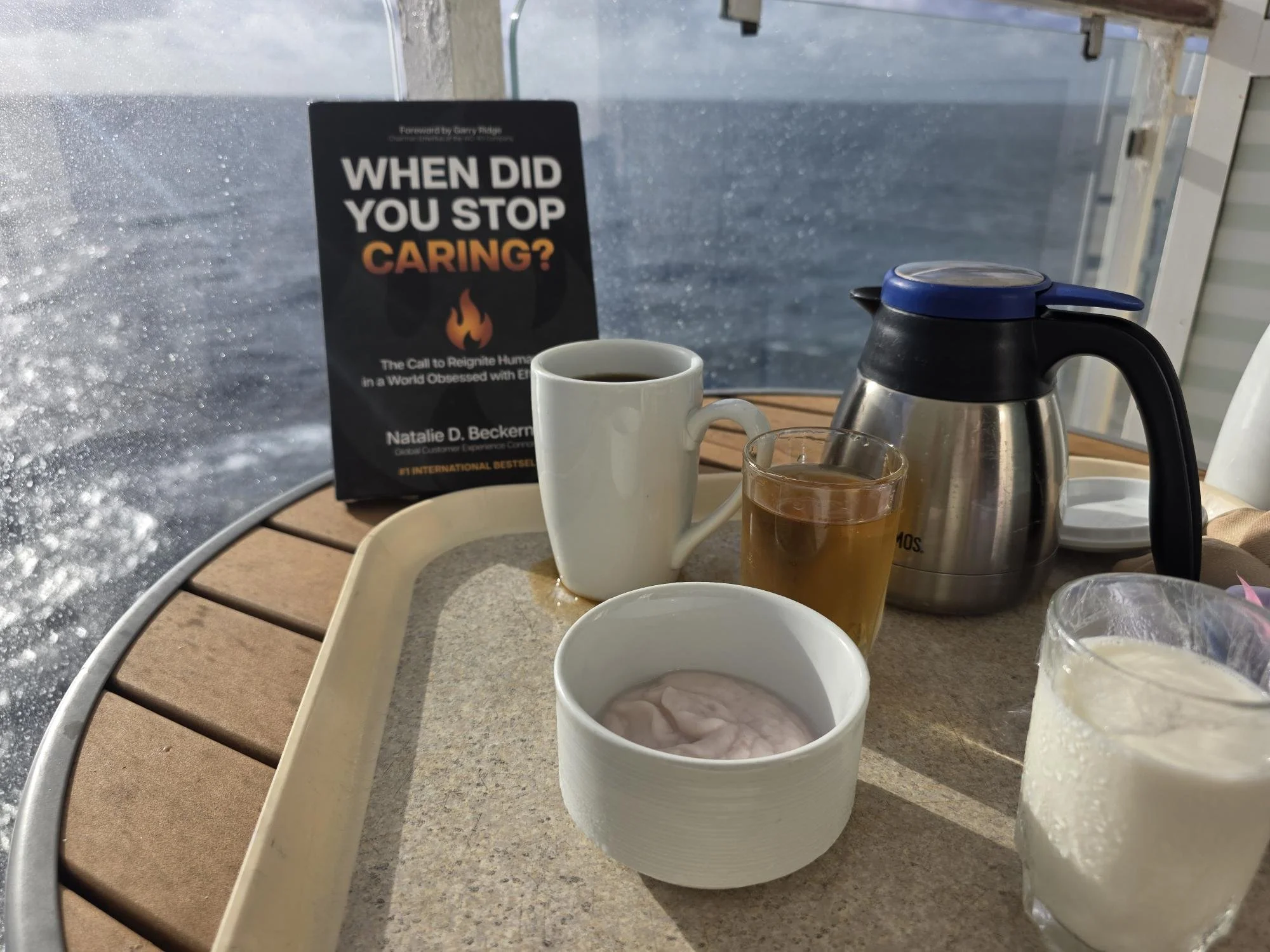
There's something special about enjoying a cup of coffee on a cruise ship balcony, watching the waves roll by, and listening to them crash against the ship. Add a little breakfast, some sunshine, and a good book, and I have a pretty wonderful way to start my day.
But I decided to combine two of my favorite things: enjoying the ocean and continuing to learn how I can become a better leader.
Not just a better leader with employees or teams, but also someone who understands customers, consumers, and the expectations they have of the brands they choose to do business with.
After all, a brand makes a promise. The customer experience is where that promise either becomes reality or falls short.
And that's where my morning reading comes in.
A Little More Than Just a Good Book
The book I'm talking about is When Did You Stop Caring? by bestselling author Natalie Beckerman.
When Did You Stop Caring?
The Call to Reignite Humanity in a World Obsessed with Efficiency.
A wake-up call for leaders to remember that businesses serve people, not spreadsheets.
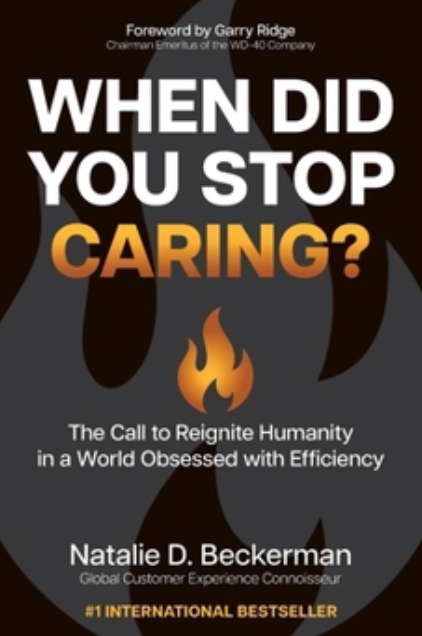
Author: Natalie Beckerman
Explore the book and its message
For anyone who hasn't come across the book, Natalie challenges the way organizations have increasingly prioritized efficiency, automation, metrics, and cost reduction at the expense of the human experience.
She explores what happens when customers become transactions, employees become numbers, and policies take precedence over judgment and empathy.
One central theme is that caring isn't a soft skill or simply a nice thing to have. It's a business strategy. It's about rebuilding trust, empowering employees, making technology work for people, and creating experiences that demonstrate that a company actually values the people it serves.
That message resonates with me.
The Brand Promise Is Only the Beginning
I've spent much of my professional life in learning and development, customer experience, and operational environments. I've seen how much effort goes into building processes, developing employees, implementing technology, and measuring performance.
But I keep coming back to a fundamental question:
What happens when the experience a company delivers doesn't match the promise it makes?
I can have the slickest mobile app, the most sophisticated technology, the best-looking website, and a beautifully written mission statement. But if I can't deliver what I promised, what have I really accomplished?
I believe the customer experience starts long before someone speaks with an employee or contacts customer service. It starts with the expectations the brand sets.
And it continues through every interaction.
When I order something, make a reservation, purchase a product, or reach out for assistance, I'm forming an expectation. When that expectation isn't met, I notice.
I also believe the reverse is true. When I encounter an employee who takes ownership, a company that follows through, or an organization that makes an experience better than I anticipated, I notice that too.
Those moments influence whether I return, recommend the company, or take my business elsewhere.
A Floating Classroom
So here I am, somewhere out on the water, cruising at 13.5 knots on a heading of 206 degrees.
I've got coffee, bacon, the sound of the ocean, and a book that challenges me to think differently about leadership.
I can't think of a much better combination.
I haven't even finished the book yet, and I'm already finding myself reflecting on how I approach leadership, customer experience, and the expectations I set for others.
My copy is still unsigned, which gives me another reason to hope I'll have an opportunity to get Natalie to autograph it.
And hopefully, this isn't the last masterpiece she shares with us.
For now, I'll keep turning pages, enjoying the view, and reminding myself that learning doesn't have to happen in a classroom, a conference room, or behind a computer screen.
Sometimes, the best professional development happens with a cup of coffee, a plate of bacon, and a good book while floating through the ocean.
Because being a better leader isn't just about knowing more. It's about caring enough to keep learning, listening, and improving.
And if I can do a little of that while enjoying the waves, I'm going to call that a pretty successful morning.

Three Books Every Leader Should Keep Within Reach
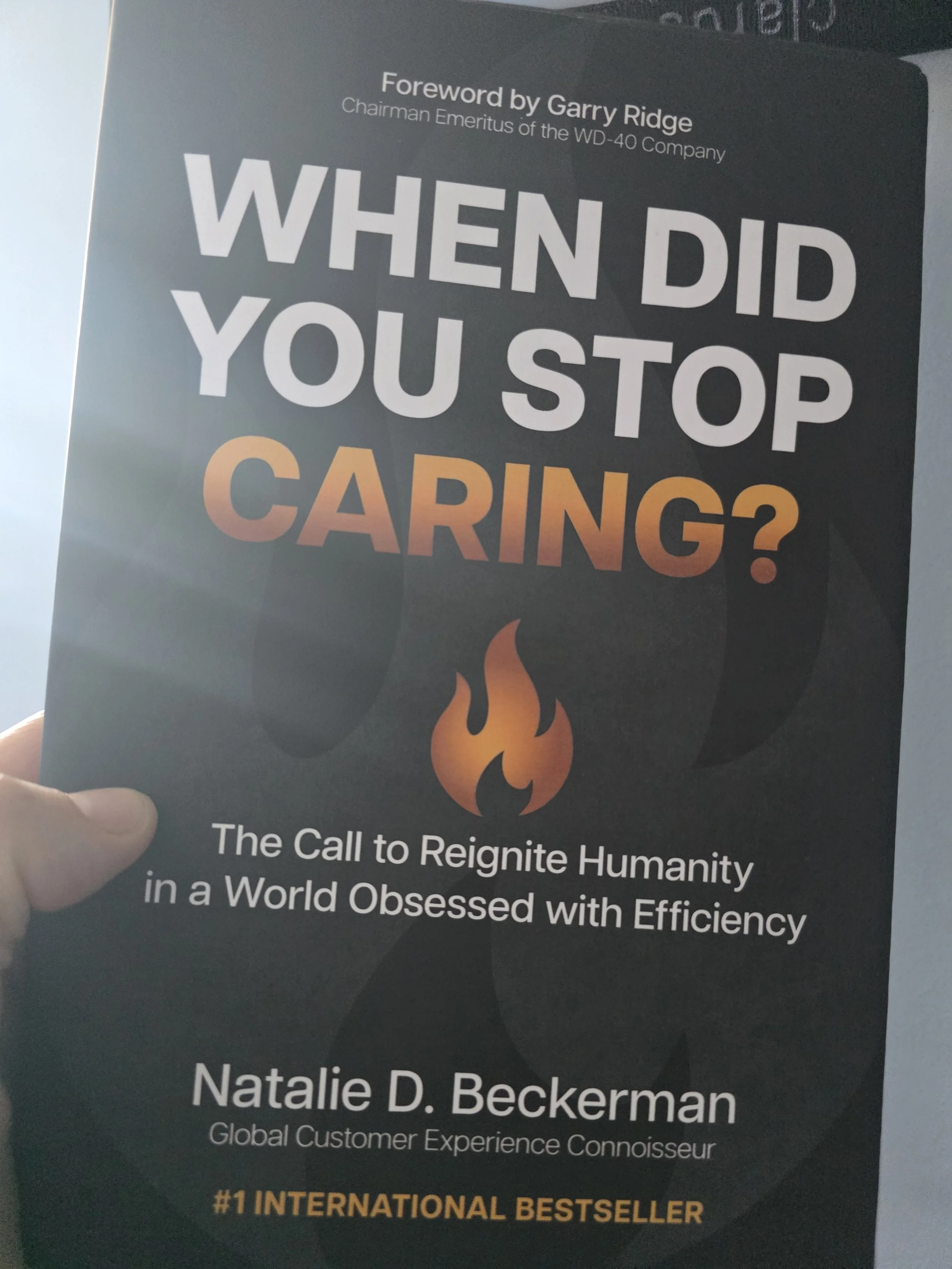
There are three books that I believe every leader, coach, mentor, and Learning & Development professional should have available at a moment’s notice.
📘 Good to Great by Jim Collins taught me that greatness isn’t accidental. It’s built through disciplined people, disciplined thought, and disciplined action. It has been a cornerstone in how I think about leadership and organizational excellence.
📙 The Tipping Point by Malcolm Gladwell changed the way I think about ideas, influence, and how small actions can create extraordinary change. I had the opportunity to hear Malcolm deliver a keynote years ago at what was then ASTD (now ATD), and his insights have stayed with me ever since.
Over the years, I’ve encouraged many of my team members to read both books as part of my coaching and mentoring. They generate great conversations about leadership, culture, and personal growth.
Now, I’m adding a third book to that list.
📕 When Did You Stop Caring? by Natalie Beckerman.
I’m just getting into it, but one thing already stands out: leadership isn’t just about strategy, metrics, or results. It’s about people. It’s about choosing to care, even when it’s difficult. That message resonates deeply with me.
When I have the opportunity to lead, coach, and mentor teams again, I plan to give each leader these three books. And if I can get a signed copy of Natalie’s book, even better.
The best leaders never stop learning.
And they never stop caring.

When Did You Stop Caring? The Power of a Movement
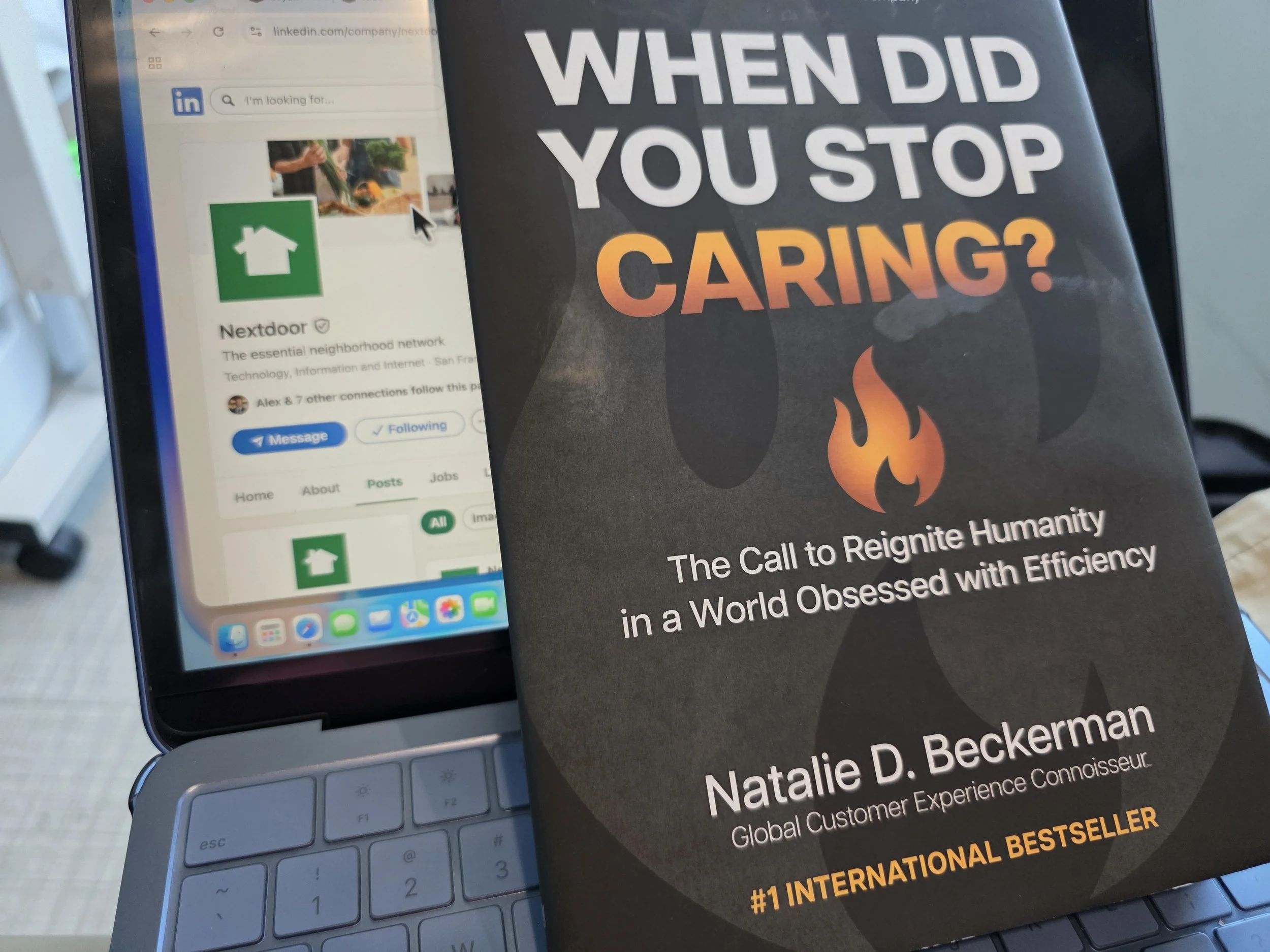
My copy of When Did You Stop Caring? by Natalie Beckerman arrived, and after starting to dig in, all I can say is: wow.
I’ve also been watching some of Natalie’s promotional shorts, and one word keeps standing out to me: movement.
Movements have the power to change people, communities, and sometimes even humanity itself.
Think about the ALS Ice Bucket Challenge. The goal wasn’t getting drenched with a bucket of ice water. The goal was awareness, conversation, and funding research to help stop ALS from devastating more lives.
Think about the Jesus Movement and the impact it had on countless people seeking purpose, faith, and connection.
Think about Pay It Forward. While fictional, the story showed how one person’s actions could inspire others and create a ripple effect of kindness and generosity.
What all of these examples have in common is simple: they started with people who cared enough to act.
Real change doesn’t happen overnight. Habits are built over time. Momentum is built over time. Success is built over time.
That’s something I remind myself of often. I keep pushing. I keep putting one foot in front of the other. I keep looking for opportunities to score a win, no matter how small.
If Natalie’s message inspires even a fraction of that mindset, then it’s a conversation worth having.
If you haven’t picked up a copy yet, you’re missing out.
📚 Amazon: https://a.co/d/0e252vBz
📚 Barnes & Noble: https://www.barnesandnoble.com/w/when-did-you-stop-caring-natalie-beckerman/1150028729?ean=9781969508448
Available now in hardcover, paperback, and digital formats.
The question isn’t whether we can change the world overnight.
The question is: What can we do today to show that we still care?