
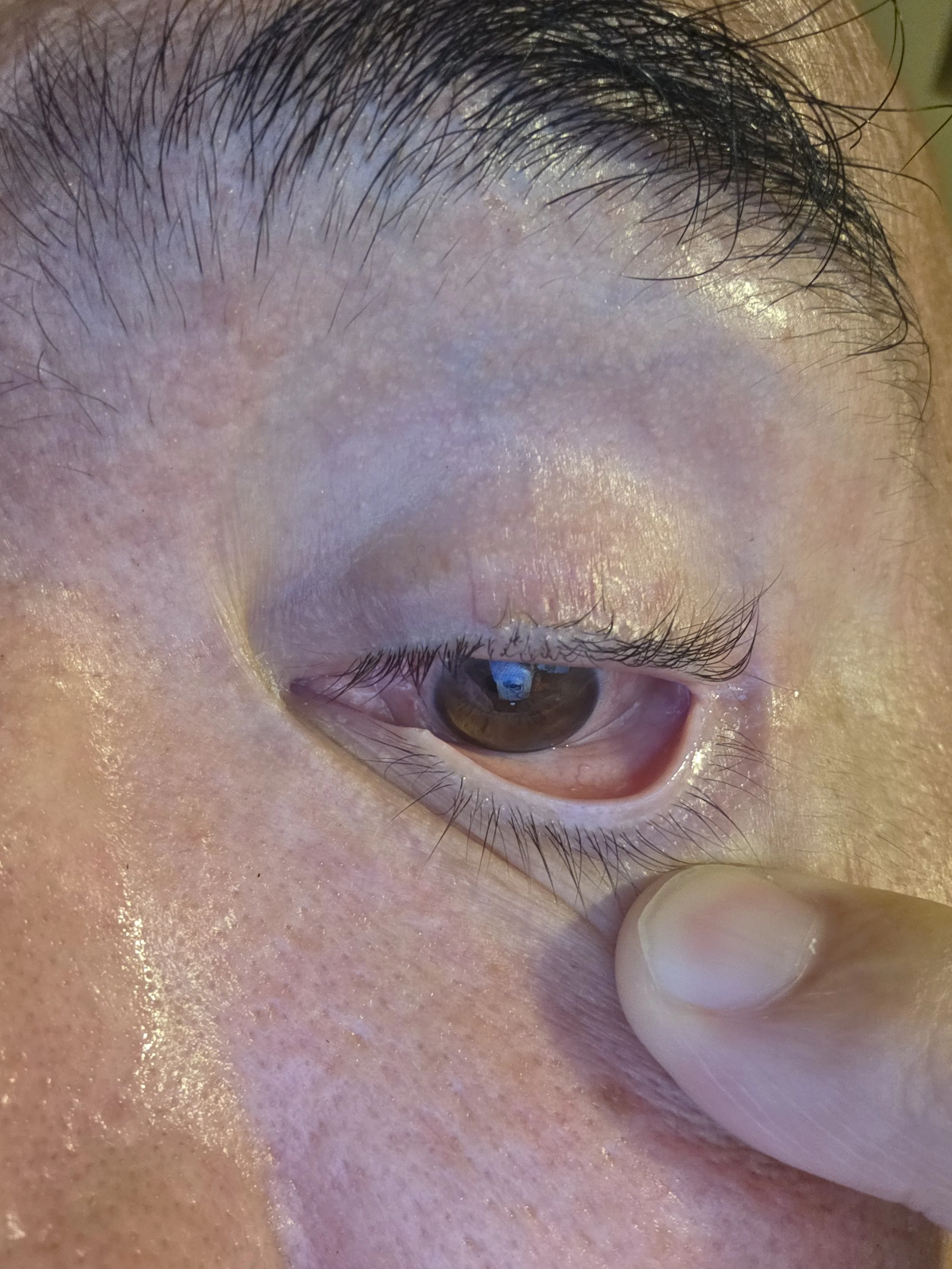
Recovery Update: No Dots, More Crust & Where’s My Hello Kitty Bandage?
Today’s medical status report involves three different body parts, three different stages of recovery, and one serious complaint about the hospital’s lack of premium bandage options.
Let’s start with the good news.
👁️ The Eye: The Dot Is GONE
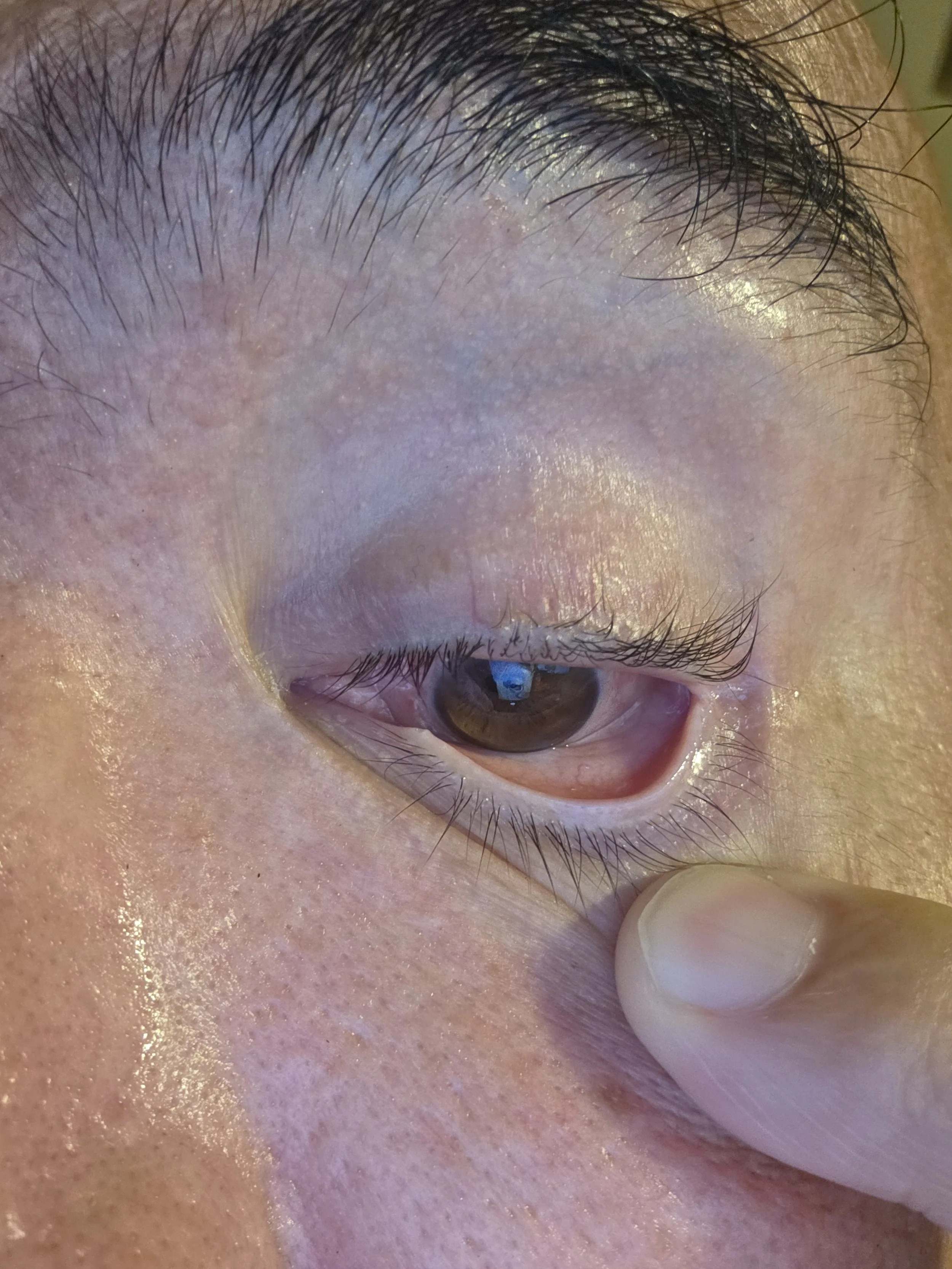
No dot.
No mysterious air bubble.
No little object floating around my field of vision.
No floaters.
After watching that little dot shrink from something noticeable to about the size of a Euro 1-cent coin, to a pinhole, it has finally disappeared.
My left eye still looks a little bruised and red, and every once in a while it hurts. I’m continuing with the prescribed eye drops and letting the healing process do its thing.
But considering that not long ago I was describing my vision as vinaigrette, then an airplane horizon indicator, then an eclipse...
I'll happily accept boring vision.
Boring is underrated.
💪 The Other Arm: Welcome to Crust City
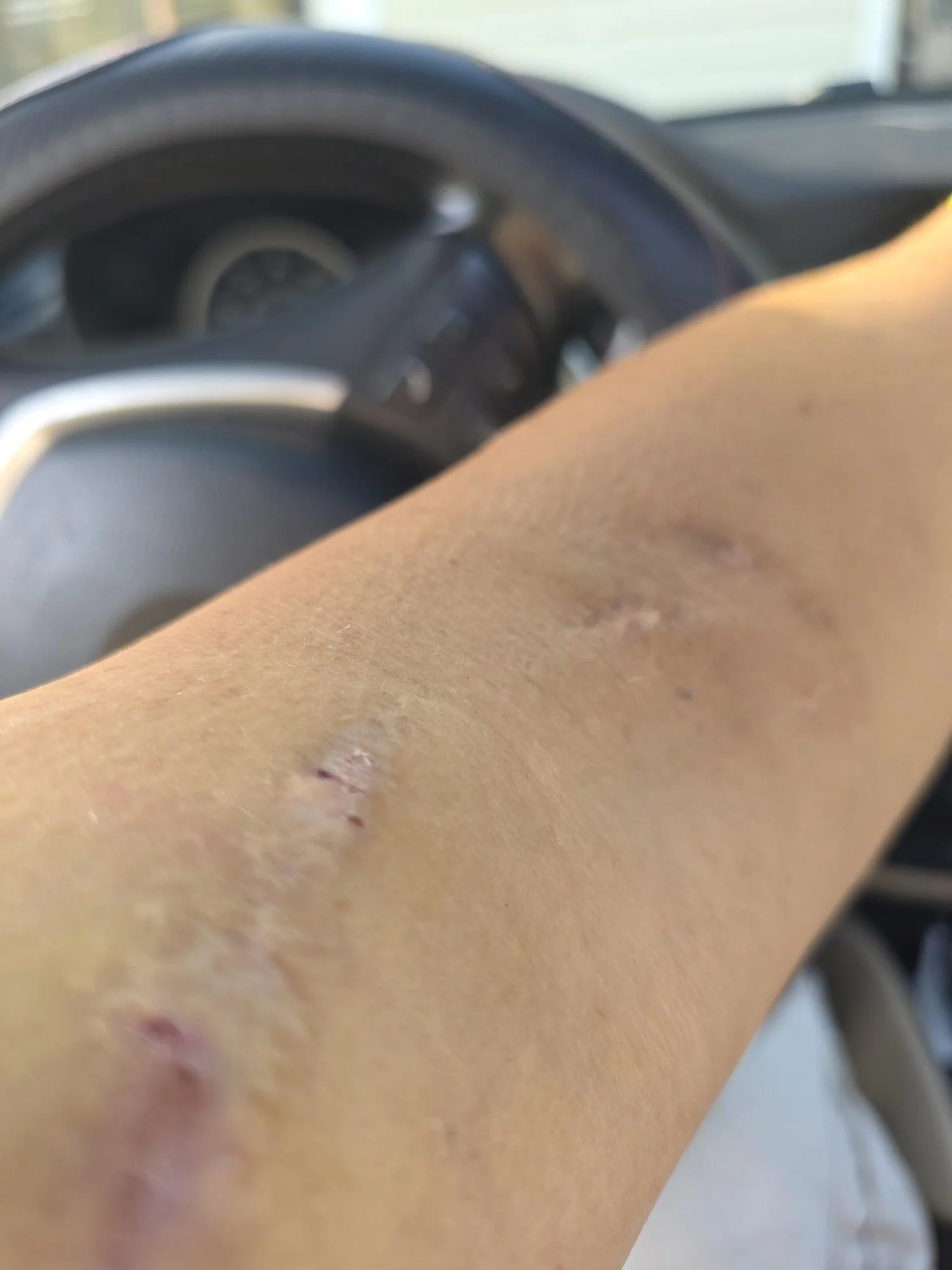
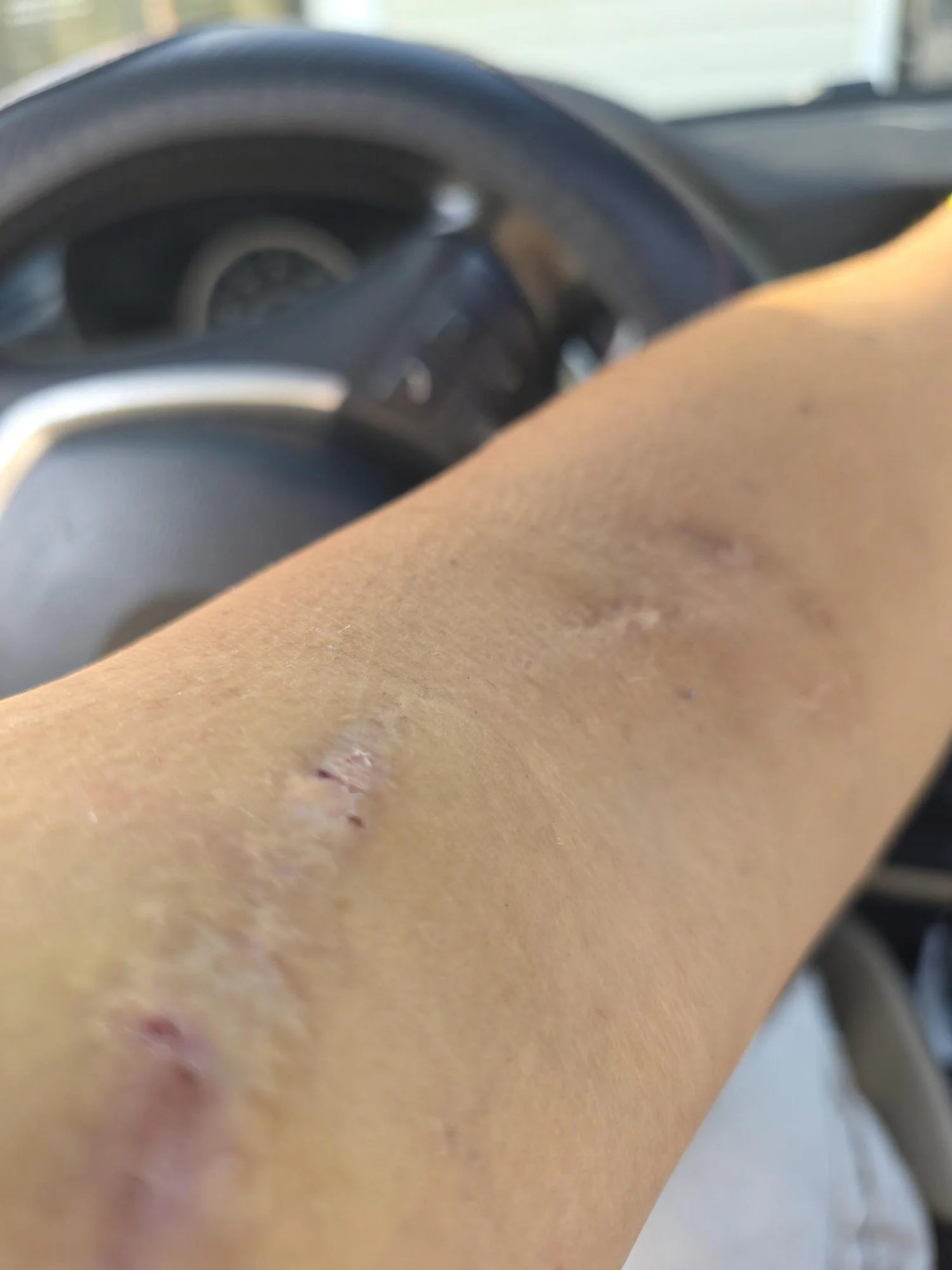
Meanwhile, the arm I scraped during my disagreement with my prosthetic, gravity, and the carpet continues its transformation.
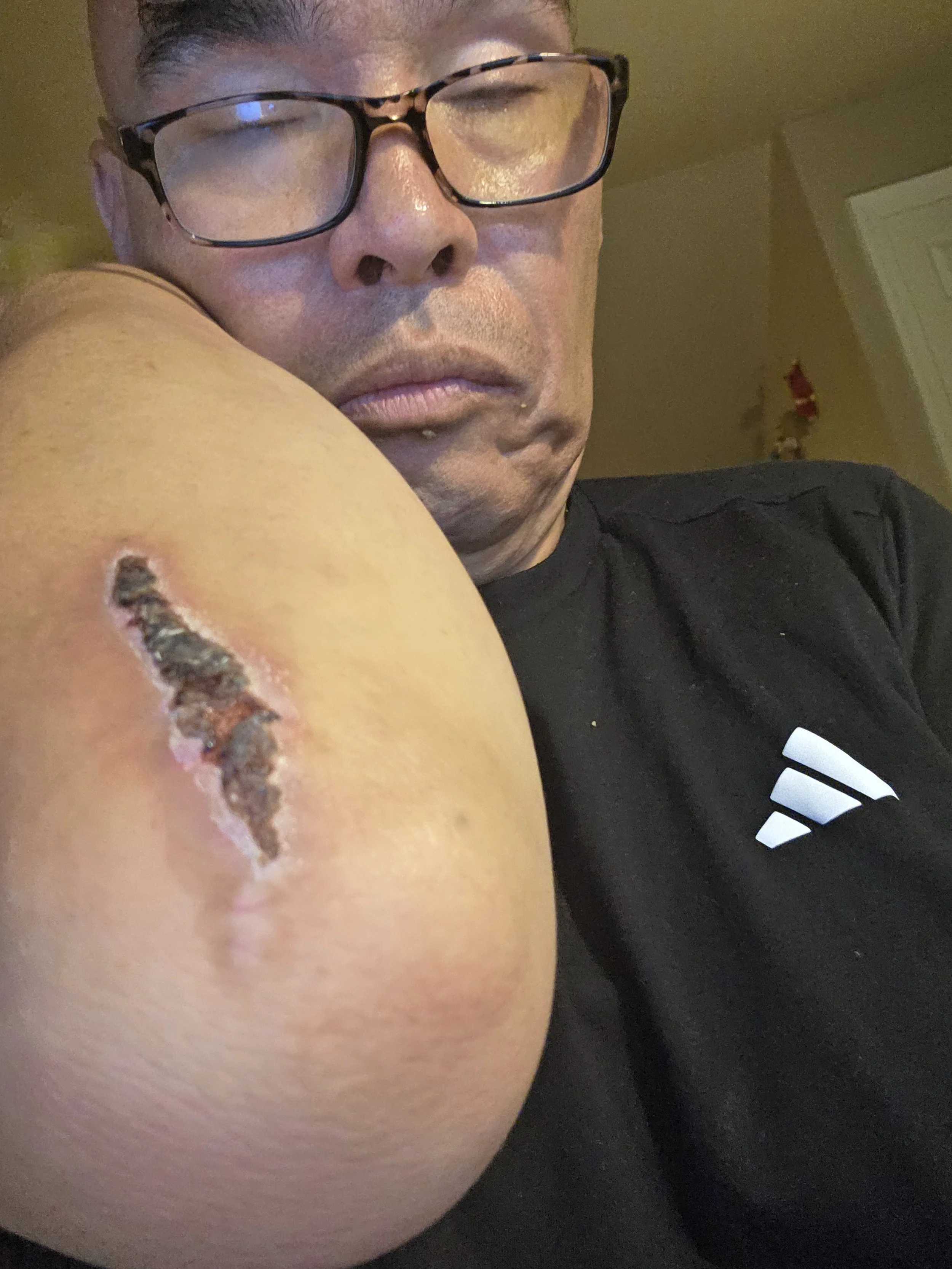
At this point:
It's crusty.
Very crusty.
We're now waiting for the scabs to do what scabs eventually do—dry up, peel off and reveal whatever exciting new layer of me is underneath.
I'm resisting the temptation to help them.
No picking.
At least that's what I'm telling myself.
🩺 And Then There's the Fistula Arm...
Today was also Fistulagram #4, so my dialysis-access arm has joined the recovery party.
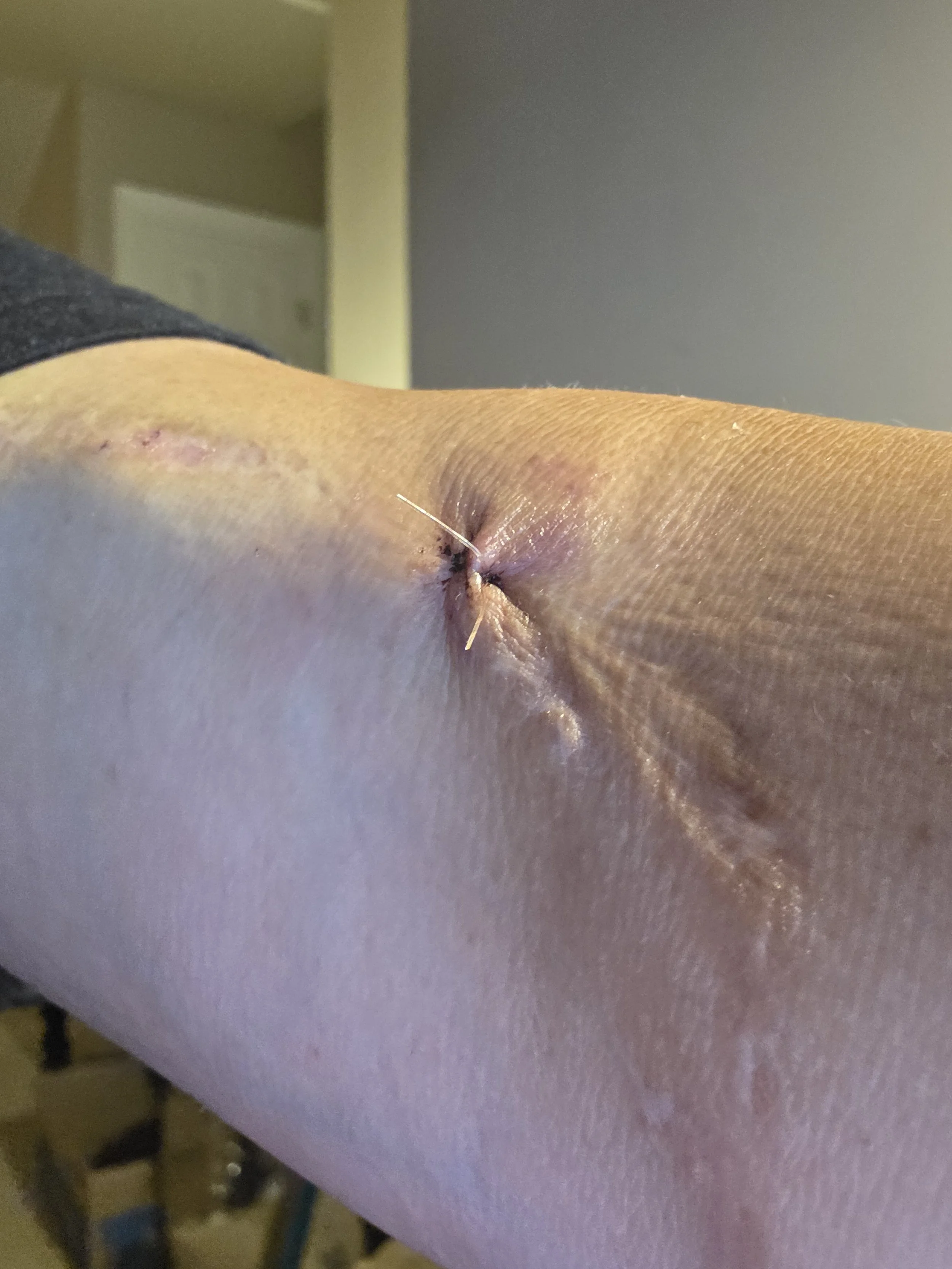
It's a little sore tonight, which isn't particularly surprising considering somebody was inside there earlier today inflating a balloon.
The procedure site has a stitch that is supposed to dissolve on its own.
Very sophisticated.
Very medical.
Very boring.
Because I have one complaint:
Where is my Hello Kitty Band-Aid?
Seriously.
I've had four fistulagrams.
I've had dialysis.
I've had eye surgery.
I've been poked, prodded, scanned, stitched, and ballooned.
At some point I believe I've earned an upgrade from Hospital Beige.
Give me Hello Kitty.
And before someone corrects me...
Apparently, Hello Kitty isn't actually a girl.
At least that's what I've read.
Sanrio has famously described Hello Kitty as a little girl character rather than a cat, which somehow raises approximately 37 additional questions that I'm not emotionally prepared to address tonight.
She looks like a cat.
Her name is Kitty.
She has whiskers.
But apparently we're supposed to accept that she's a little girl.
Fine.
Whatever.
Just put her on my Band-Aid.
So That's Tonight's Recovery Scorecard
👁️ Eye: No dots. No floaters. Still a little red and occasionally sore. Drops continue.
💪 Scraped arm: Crusty. Scabby. Waiting for nature to handle demolition.
🩺 Fistula arm: A little sore after today's fistulagram, complete with a dissolvable stitch.
🎀 Hello Kitty Band-Aid: DENIED.
Of everything happening with my body right now, that last one may be the greatest medical injustice of all.
I expected better.
Fistulagram #4: The Balloon Ride Nobody Asks For
Tomorrow morning, Tuesday, September 8th, I get to experience something that has become a recurring event in my dialysis journey:
Fistulagram #4.
If you’ve never heard of a fistulagram, you’re not alone. It’s a procedure where a doctor injects contrast dye into your dialysis access (my AV graft), takes X-ray images to see how blood is flowing, and if they find a narrowing, they inflate a tiny balloon inside the blood vessel to open it back up.
Think of it as calling Roto-Rooter… but for your bloodstream.
The goal is simple: improve blood flow so dialysis can do a better job cleaning my blood three times a week.
Now here’s the part that usually gets people’s attention…
I don’t use anesthesia.
I don’t take pain medication.
Why?
Because I want to drive myself home afterward and get on with my day.
That doesn’t mean you don’t feel anything.
When they inflate that balloon…
Oh, I know it’s there.
You can actually feel the pressure as it expands inside your arm. It’s one of the strangest sensations I’ve ever experienced. It isn’t unbearable, but it’s definitely one of those moments where you think:
“Yep… that’s happening inside my arm.”
My instructions are the usual pre-procedure fun:
🚫 No food after midnight.
🚫 No drinking after midnight.
⏰ Arrive at the hospital at 6:30 AM for a 7:30 AM procedure.
🩺 About 30 minutes for the procedure itself.
⏳ Another 30 minutes getting prepped and recovering before heading home.
And yes…
If I accidentally eat after midnight…
I’ll turn into a Gremlin.
(Okay, maybe not medically accurate… but it makes following the instructions a little more entertaining.)
Hopefully this will improve the flow through my graft and make dialysis treatments run more efficiently.
I’ll let everyone know tomorrow how Fistulagram #4 goes. Hopefully the balloon and I will continue our strange little friendship… and hopefully it’ll be a while before we’re reunited again.
Proof It Was Time for a New Dialysis Backpack 🎒
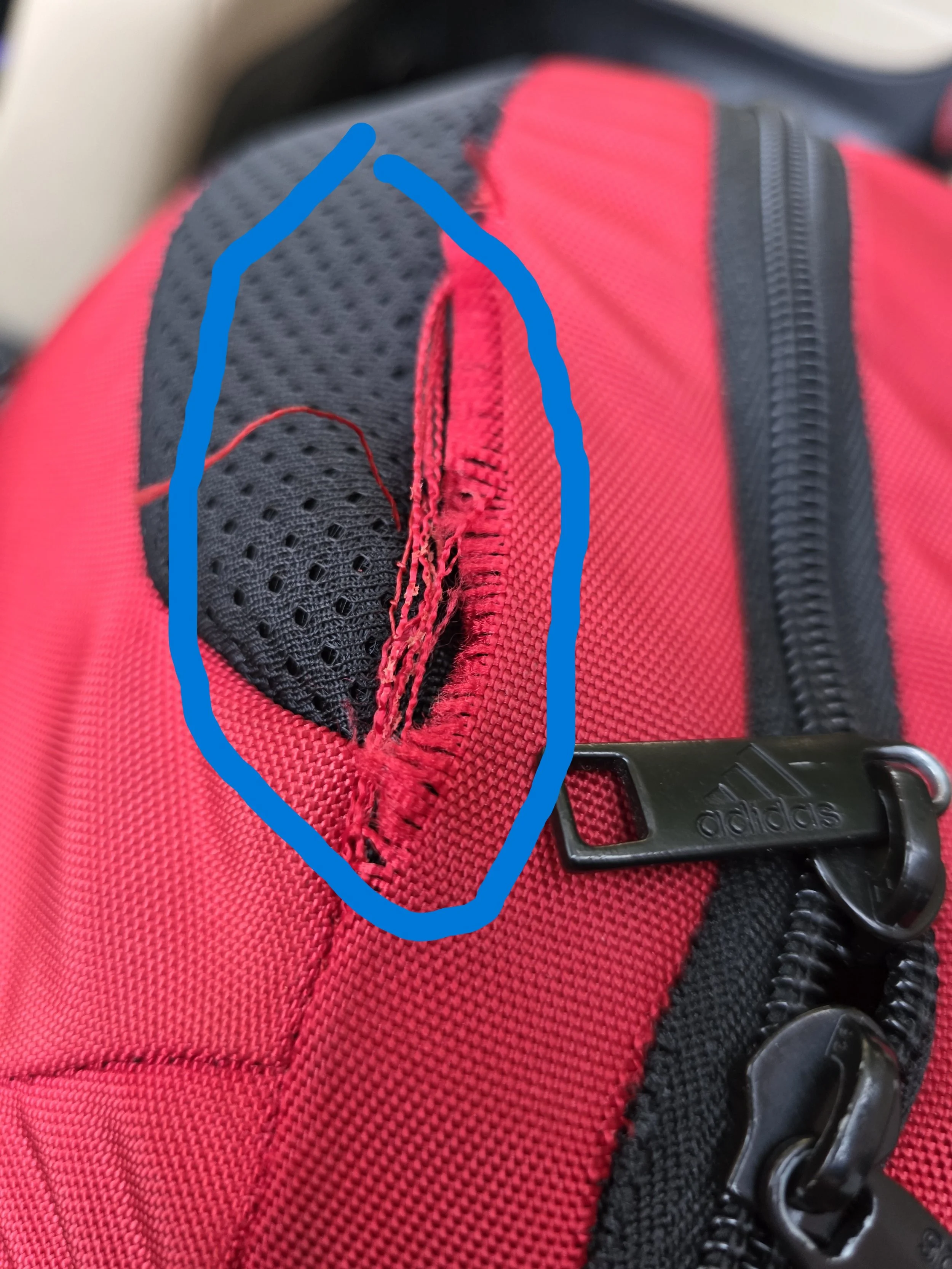
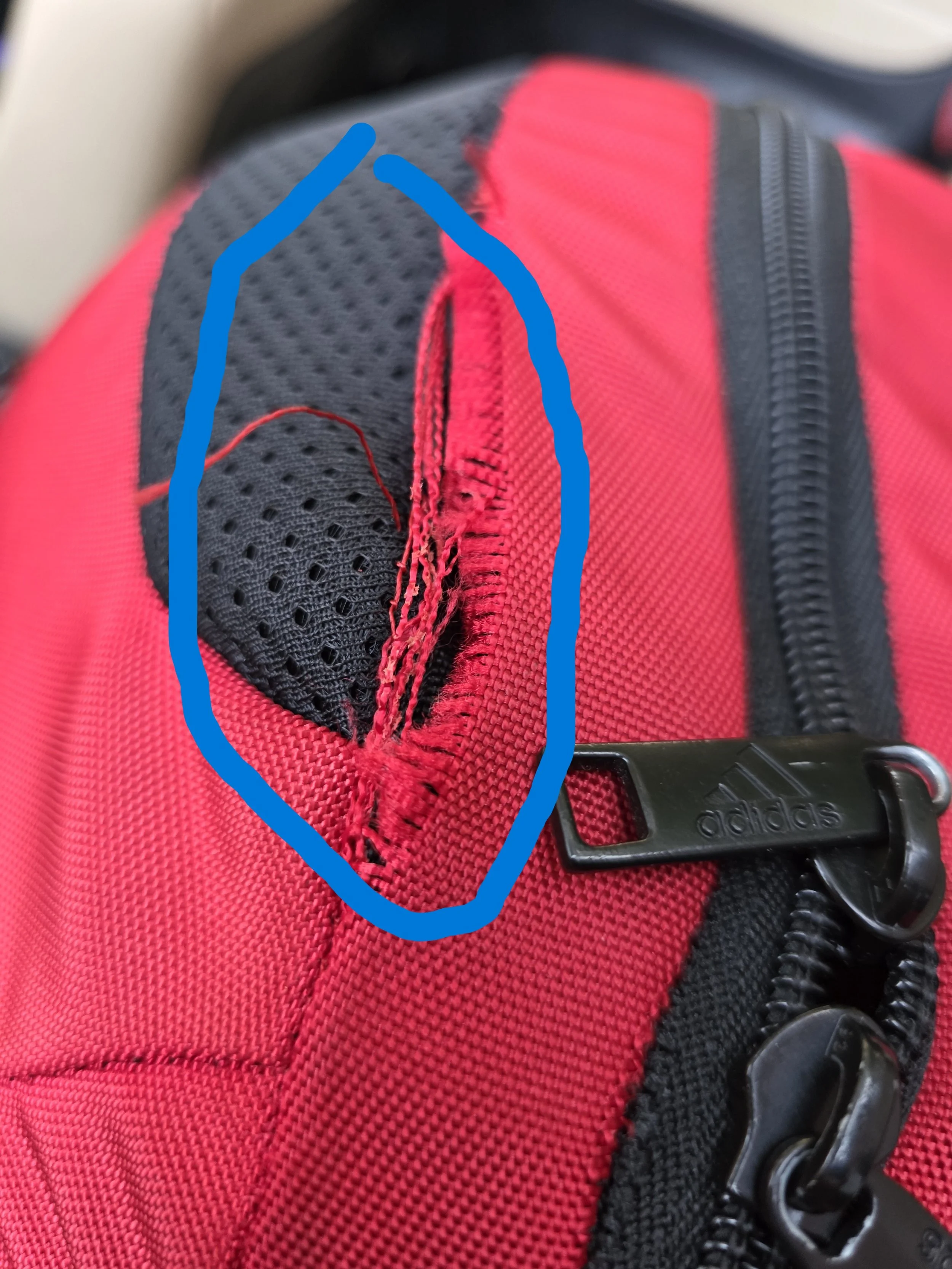
Yesterday I purchased a new backpack for dialysis, and today was its first trip to the clinic.
Could I have used my old backpack a little longer? Maybe. But after looking at it, the answer became pretty clear. The seams were ripping, and it was only a matter of time before it failed. It wasn't a case of wanting a new backpack—it was a case of needing one.
My dialysis backpack carries my blanket, pillow, and other essentials three mornings a week. The last thing I want is for the seams to split while I'm walking into or out of the clinic, leaving everything on the ground in the middle of the swampy Lowcountry heat and humidity.
The old backpack served me well, but this is proof that replacing it wasn't an impulse purchase. Sometimes the smartest time to replace something is before it completely falls apart.
Monthly Dialysis Labs: A Surprising Number I Haven't Seen Since 2025
Every month during dialysis, I have a full set of lab work done. The nice part? No extra needle stick. The blood is drawn directly through the dialysis tubing while I'm already connected.
The monthly labs help monitor many aspects of living with End Stage Renal Disease (ESRD), including:
Potassium – helps reduce the risk of dangerous heart rhythm problems.
Creatinine – shows how well my kidneys are filtering waste.
Phosphorus – high levels can pull calcium from the bones, while levels that are too low can affect oxygen delivery to muscles and lead to weakness.
Iron
Hemoglobin
Sodium
Chloride
Carbon Dioxide
Total Serum Protein
Albumin
Magnesium
Platelet Count
White Blood Cell Count
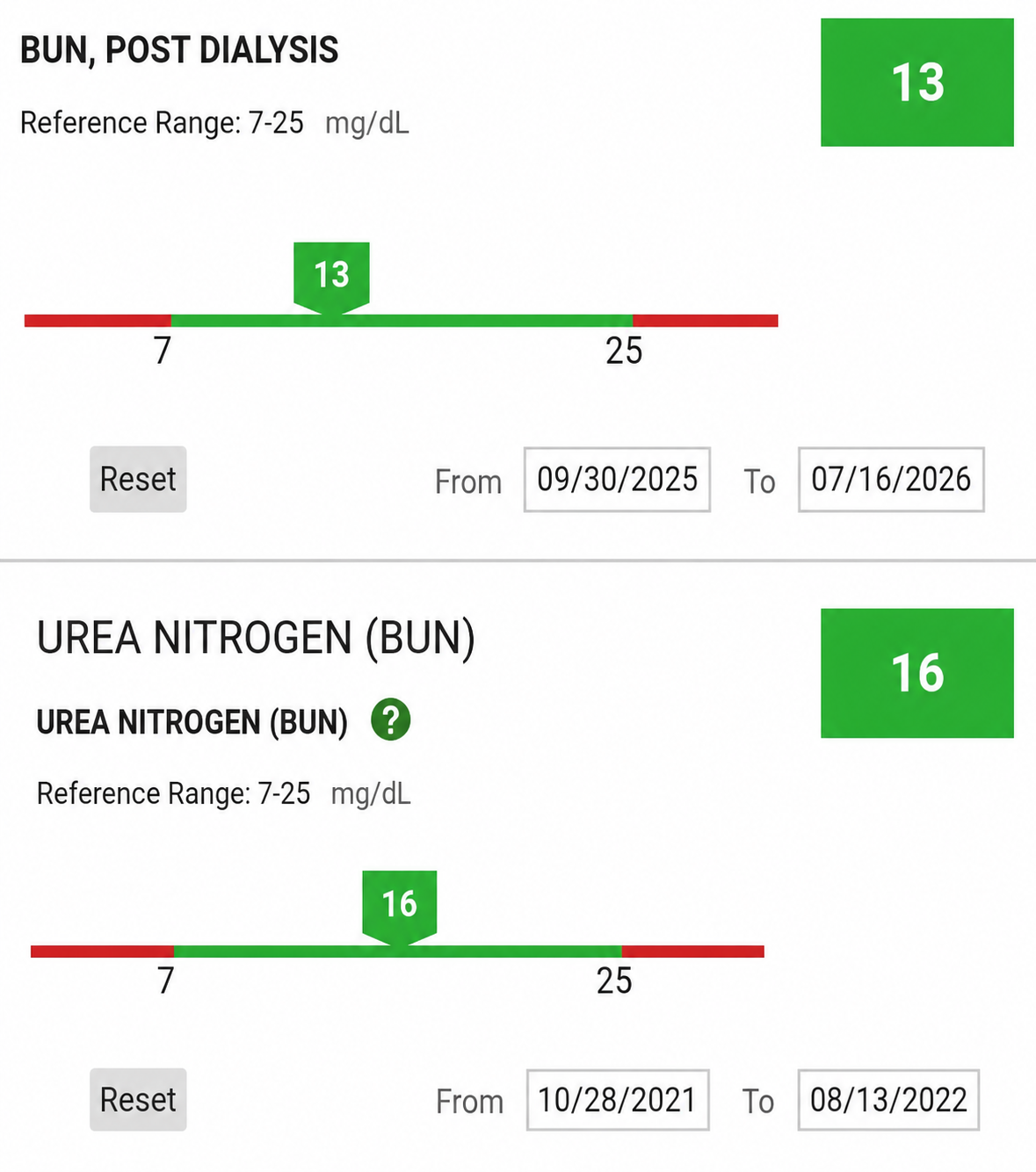
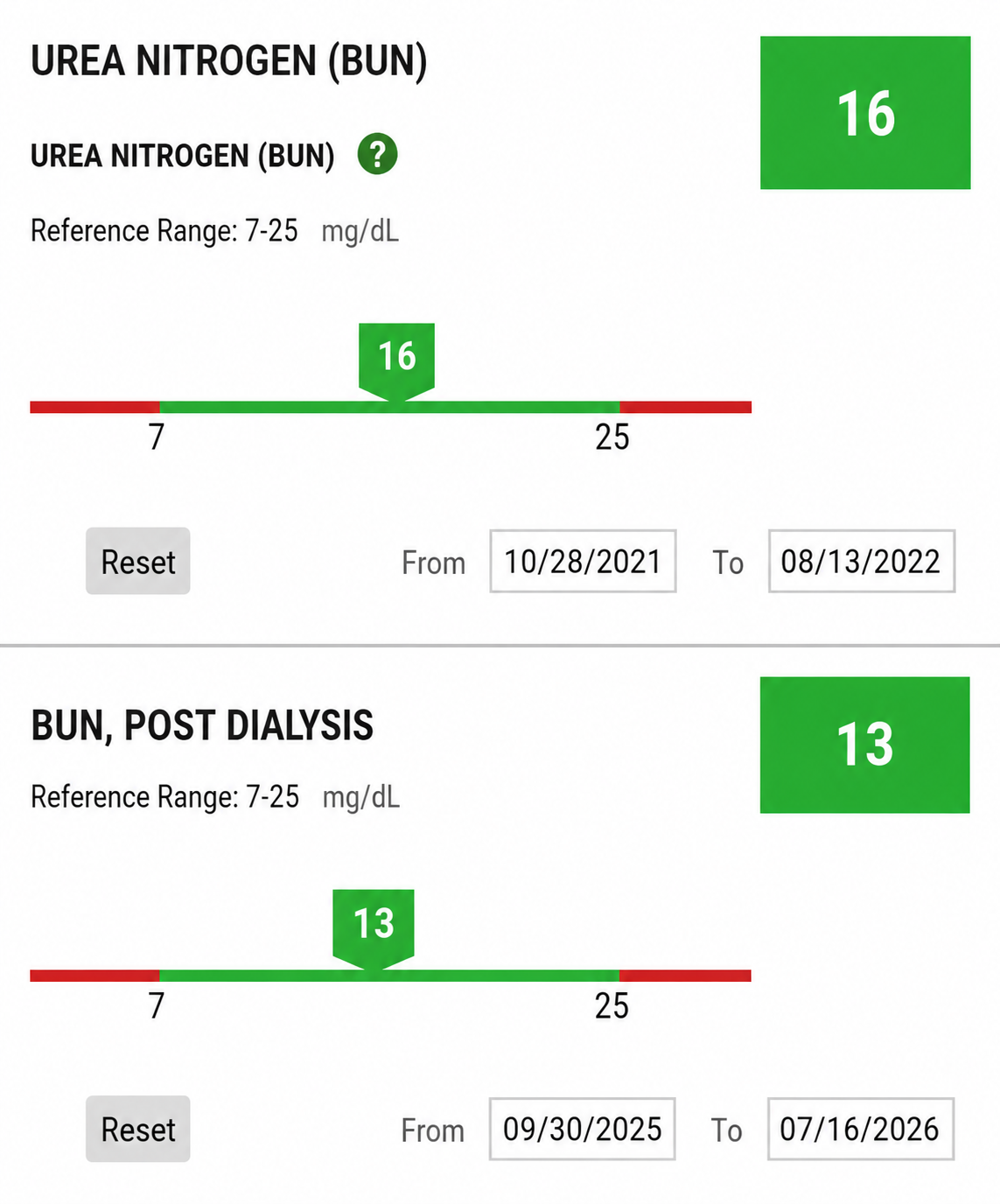
The number I paid the closest attention to this month was BUN (Blood Urea Nitrogen).
Here's the simple version. When we eat protein, our bodies break it down, producing ammonia, which is toxic. The liver converts that ammonia into urea. Urea travels through the bloodstream to the kidneys, where healthy kidneys filter it into urine.
With ESRD, that process doesn't work very well, so BUN levels can rise because waste isn't being removed efficiently.
During dialysis, my care team measures BUN before treatment and after treatment to see how effectively the dialysis removes that waste.
When I reviewed my results on Saturday, July 18, something caught my attention.
For the first time, when my monthly labs were tracked starting in October 2025, my pre-dialysis BUN was in the normal (green) range.
Even more interesting, my post-dialysis BUN wasn't dramatically lower. Normally, I'd expect to see a much bigger drop after treatment.
So now I'm left with a few questions:
Are my kidneys somehow recovering a little?
Was this simply an unusually good month?
Did my diet or hydration affect the result?
Or was it just one of those lab quirks that occasionally happens?
The answer is... I don't know.
One lab result doesn't establish a trend, especially with ESRD. But after months of watching these numbers, seeing that green result definitely made me stop and smile.
I'll be watching closely next month to see whether this was the beginning of a trend or simply a one-time surprise.
Either way, I'll keep sharing the journey.