
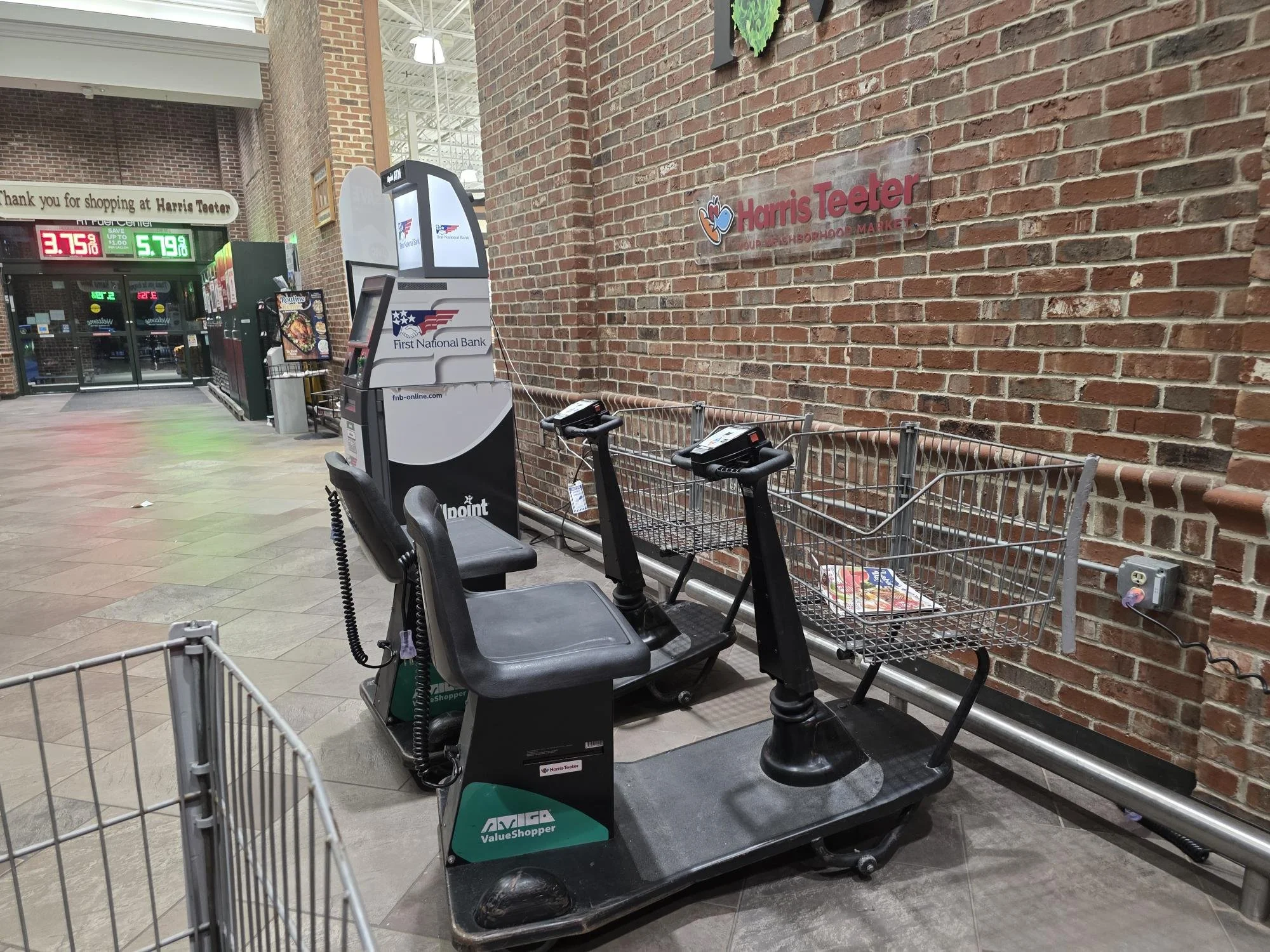
What is wrong with this picture?
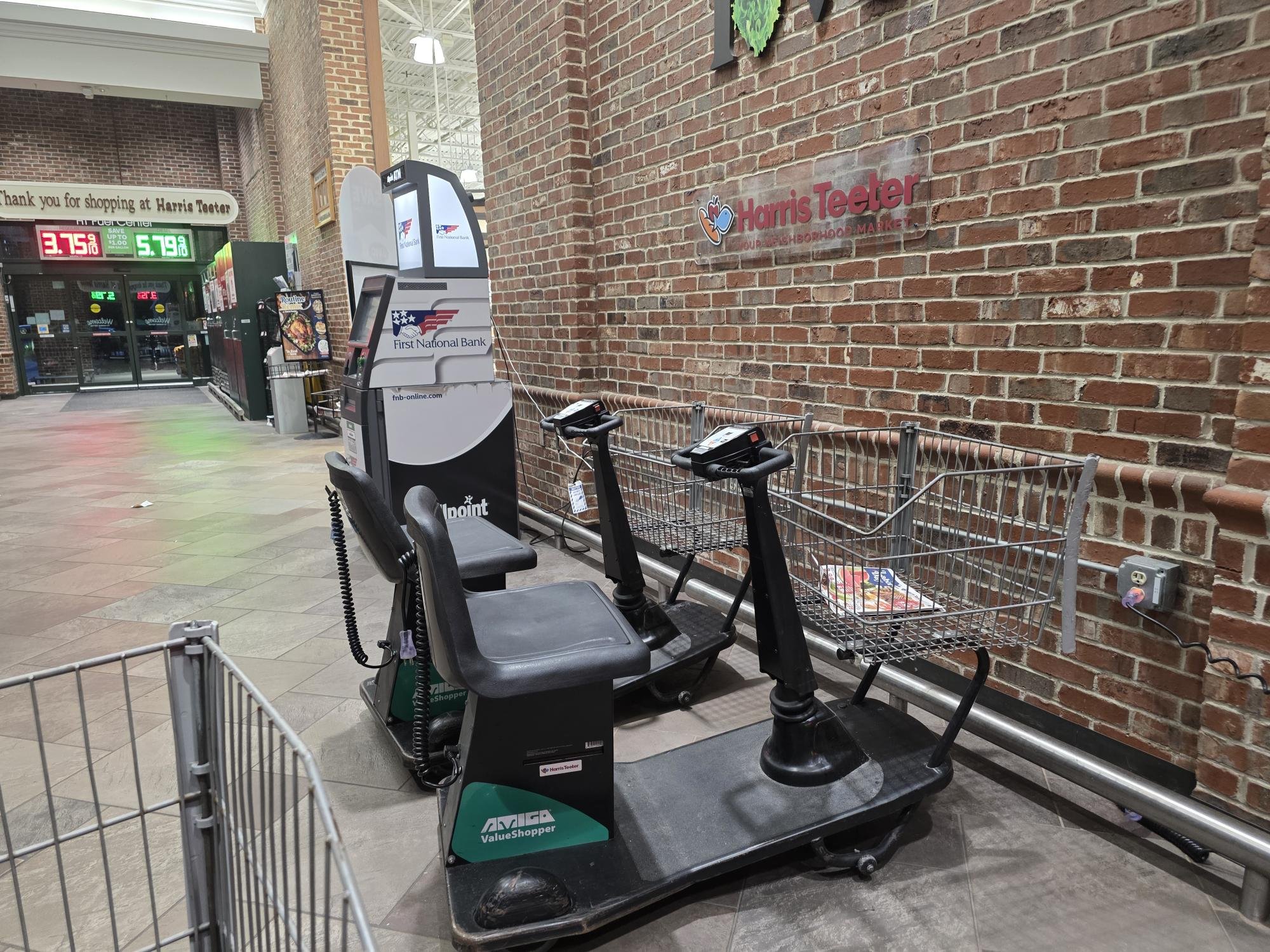
Accessibility Should Start in the Parking Lot
I was at the Harris Teeter in the Rivertowne area on Thursday and saw these electric shopping scooters parked inside. Most of you might not notice anything wrong. In my opinion, though, this picture shows a gap in how we think about accessibility.
First, let me say thank you to Harris Teeter for providing this equipment for customers with mobility issues, including me. These scooters make grocery shopping easier and less stressful. I appreciate having them available.
Here is where my opinion may be controversial—or perhaps seem petty to someone who has never struggled to walk across a parking lot.
The scooters are inside.
Someone who needs one must first get from their vehicle to the store and through the entrance before reaching the equipment that helps them get around. For some customers, that journey is already difficult.
The help is there. But you have to reach it first.
I do not know whether stores are required under the Americans with Disabilities Act to provide these scooters. My concern is about the everyday experience of using them. From my perspective, providing mobility assistance only after someone gets inside feels like a half-measure.
I have suggested keeping scooters in a designated, sheltered area near the accessible parking spaces during store hours, with the spaces and access aisles kept clear. Employees who collect shopping carts could check that area and bring the scooters inside when the store closes.
I understand these machines are expensive. Weather, charging, security, and upkeep all need to be considered. That is why I am suggesting a managed arrangement during business hours. If outdoor storage isn't practical, an easy way to request a scooter from the parking lot could help close that gap.
The people who need these devices should have a say in where and how they are made available.
I have written reviews of hotels where, from my experience as a guest with mobility issues, the approach to accessibility felt like doing the minimum—especially in bathrooms. A feature can be present and still be awkward or difficult to use. The details matter when you are the person depending on them.
I would love to see a company take the lead by asking customers, “What would make your visit easier from the moment you arrive?”
I believe that kind of care could bring a meaningful return through loyalty, repeat visits, and recommendations. When a business makes an everyday task easier, people remember.
So, thank you, Harris Teeter, for providing these scooters. They make a difference to customers like me.
Please consider taking that care a few steps farther—out to the parking lot, where we may need it first.