
From Bagels to Battlefields: When a Breakfast Question Becomes a Food Fight
Sometimes I think Nextdoor deserves a new slogan.
Not "The neighborhood network."
Maybe...
"The Maury Povich Platform."
Because all that's missing is someone virtually throwing a chair while Maury announces...
"You ARE the father!"
A neighbor recently asked a simple question:
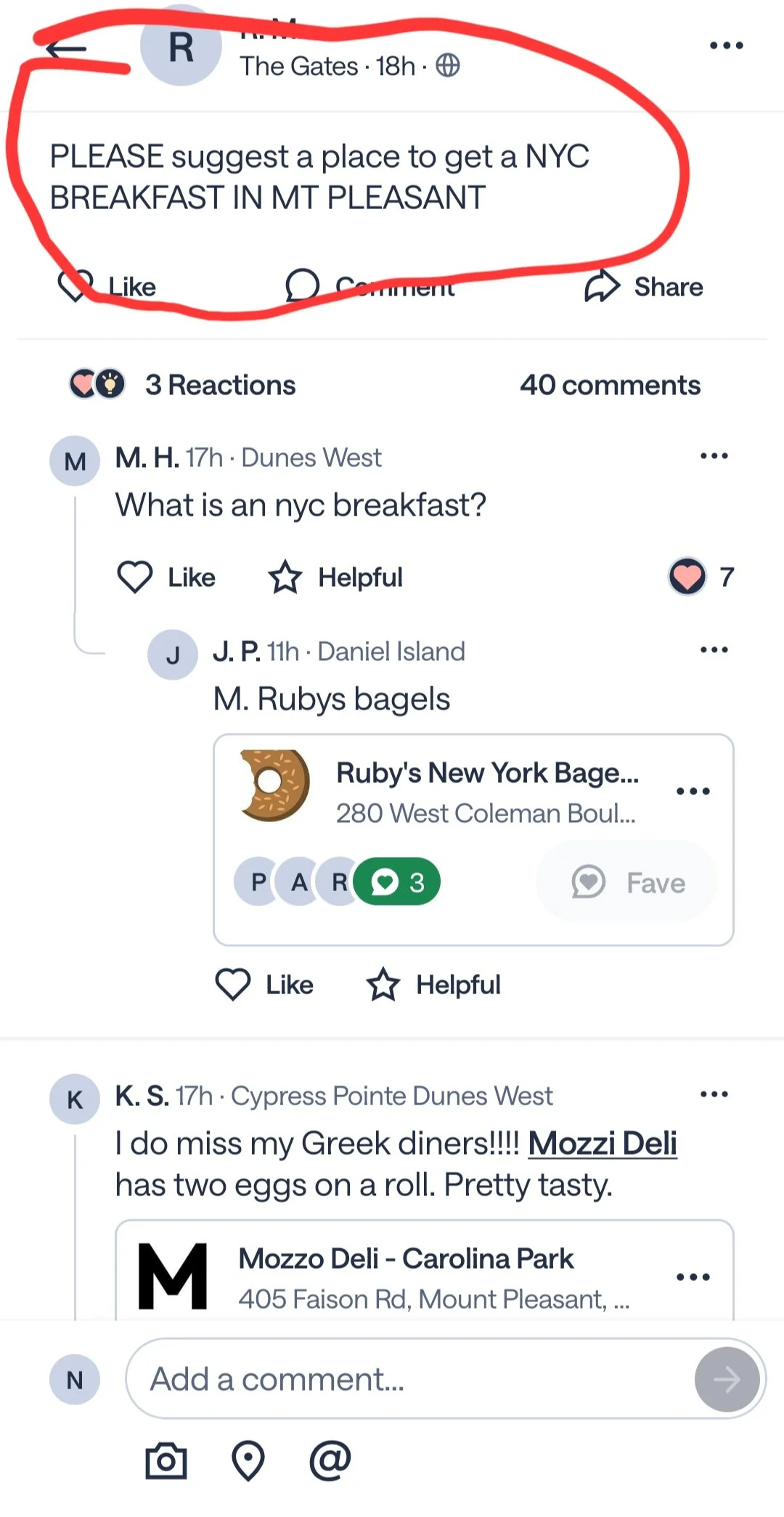
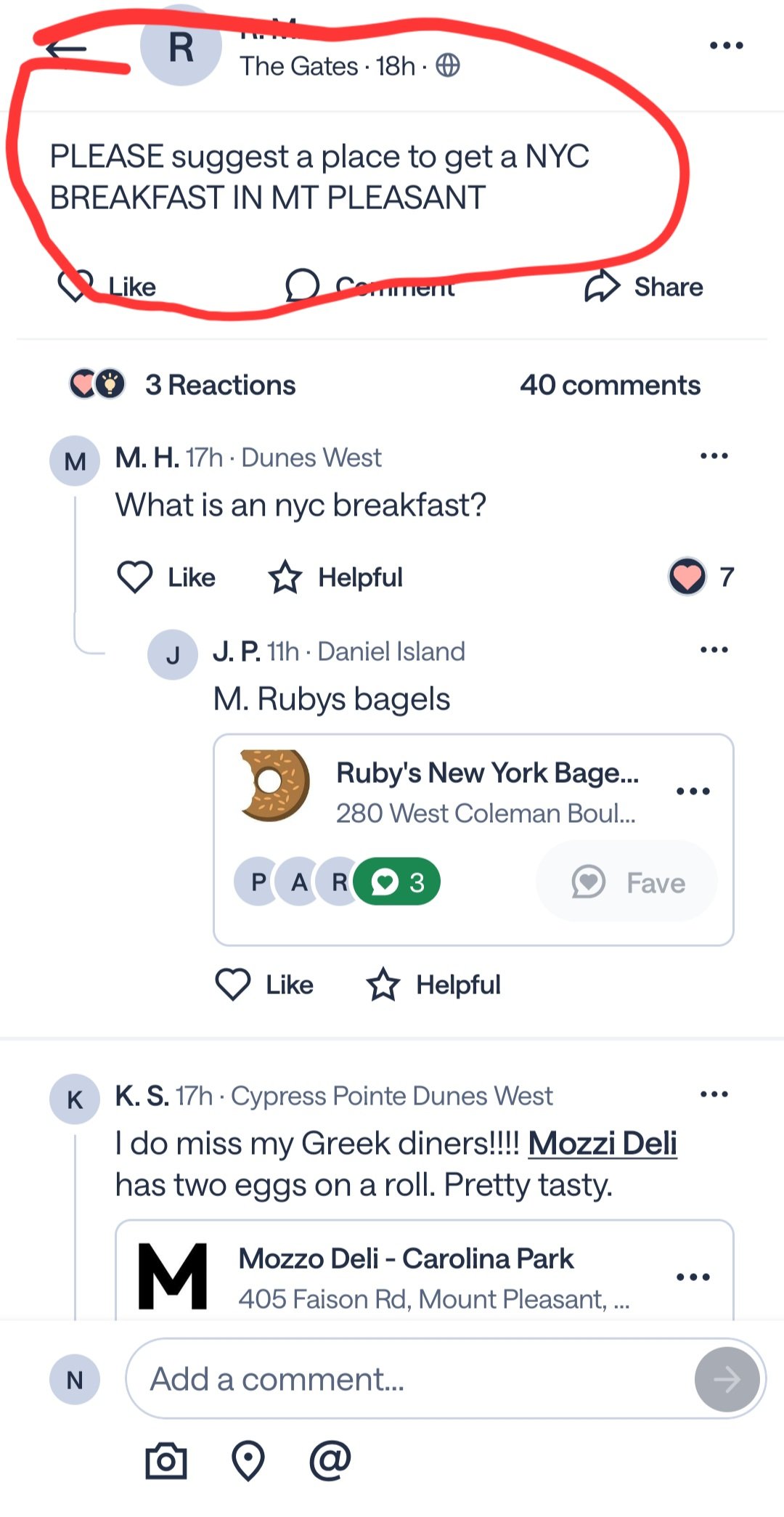
"Please suggest a place to get a NYC breakfast in Mount Pleasant."
Seems harmless enough.
If someone moved from New York and misses a bagel, a bacon, egg, and cheese on a hard roll, or a classic deli breakfast, why not ask the neighbors?
At first, that's exactly what happened.
People recommended restaurants.
They shared favorites.
The conversation was helpful.
Then...
It went off the rails.
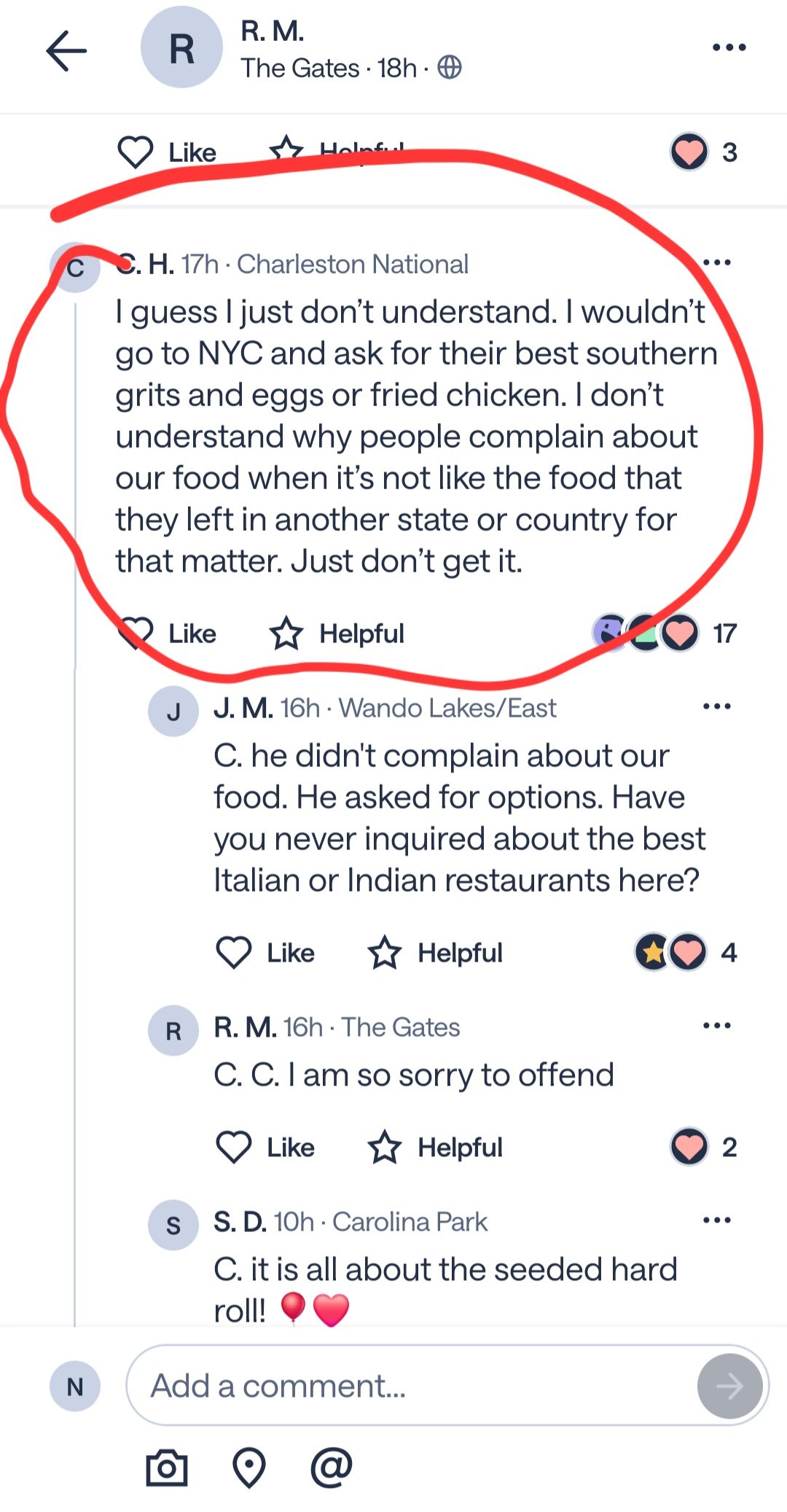
Someone responded that they "just didn't get it," suggesting they wouldn't go to New York asking for Southern grits or fried chicken and questioning why people move somewhere only to ask for food from another place.
Except...
That's not what the original poster asked.
They weren't criticizing Charleston.
They weren't saying New York was better.
They wanted a recommendation for a meal that reminded them of home.
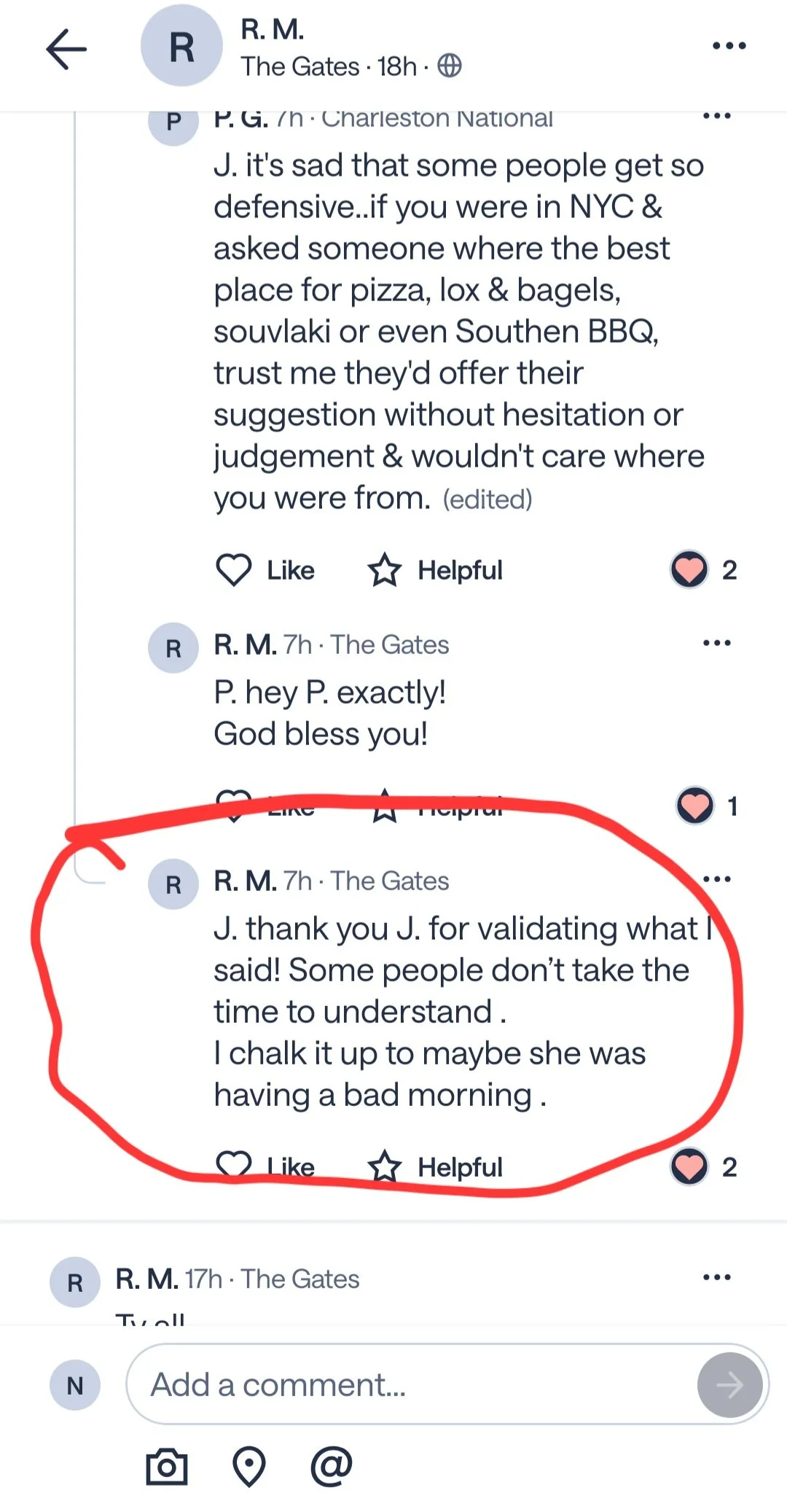
Thankfully, several neighbors pointed that out, and the original poster even responded by saying:
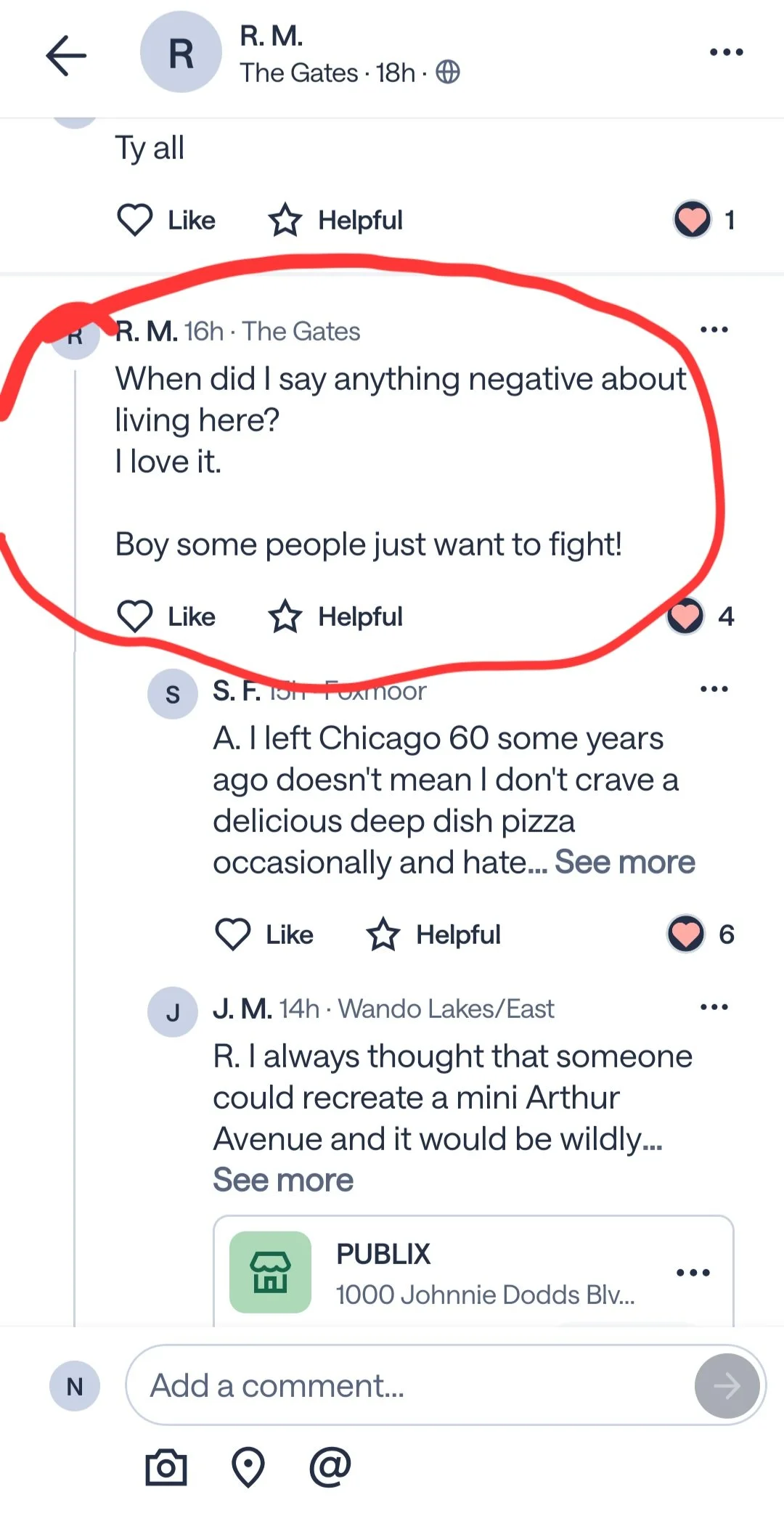
"When did I say anything negative about living here? I love it. Boy, some people want to fight!"
That comment resonated with me.
Because it highlights something I've been writing about for weeks.
Not every discussion needs to become an argument.
Not every question deserves to be interpreted as an attack.
Sometimes people want information.
Which got me thinking...
Maybe Nextdoor doesn't need to connect every nearby resident into one giant conversation.
Maybe there's another approach.
What if I could choose which neighbors I wanted to engage with?
Just because someone lives three houses away doesn't mean I want every post I make open to their opinions. In real life, we all have neighbors we enjoy talking to and others we coexist with. Why not let users customize their neighborhood feed around the people they actually want to interact with, while still keeping the platform hyperlocal?
Maybe I don't want every one of my real-life neighbors commenting on every post I make.
Maybe there's someone down the street with whom I've had a fence dispute, a tree dispute, or whom I don't get along with.
In real life, we avoid each other.
Why should every online conversation become another opportunity for conflict?
Giving people more control over who participates in their conversations might reduce unnecessary friction while still preserving the local community that makes Nextdoor unique.
Because right now, too often, simple questions become debates, debates become judgments, and judgments become entertainment.
That's why I jokingly call it "The Maury Povich Platform."
The platform has tremendous potential.
The challenge is creating an environment where curiosity doesn't automatically turn into conflict.
#NiravTolia, the ball's in your court. Whatcha going to do?
Join the discussion at NielFlamm.com/blog. I'd love to hear your thoughts.
#Nextdoor#NXDR#Leadership#Community#CorporateCulture#CustomerExperience#ProductManagement#Neighborhoods#SocialMedia#Innovation
Nextdoor's Biggest Opportunity Isn't AI—It's Trust
I didn't start writing about Nirav Tolia until he blocked me on LinkedIn.
My "offense" was providing feedback about Nextdoor's moderation model and user experience. Instead of engaging with criticism that could improve the platform, he removed the feedback from his view.
I recently listened to Nirav's June 3, 2026 appearance on the New Economies podcast with Ollie Forsyth:
https://www.neweconomies.co/p/nirav-tolia
Throughout the conversation, Nirav discusses AI, local commerce, and what matters to neighbors today. To me, much of it sounds like lip service because the most pressing issue facing Nextdoor isn't AI—it's trust.
What really matters to people today is a consistent moderation program with transparency from the moment a post is submitted through the final moderation decision and the metrics behind those decisions.
Nextdoor's model is built around real names and verified addresses. That's a tremendous amount of trust that users place in the company. Yet I have repeatedly asked a simple question:
What vetting is performed to ensure a volunteer neighbor moderator cannot retaliate against another neighbor?
I've asked several times and haven't received a meaningful response.
During the podcast, Nirav also discusses the value of the information that Nextdoor possesses. That data is clearly a valuable corporate asset and part of the company's monetization strategy.
But if users are expected to trust the platform with their identities, addresses, neighborhoods, and conversations, then transparency around moderation should be every bit as important as monetizing that data.
The future of Nextdoor won't be determined by AI features alone. It will be determined by whether neighbors believe the platform is fair, consistent, and accountable.
Leadership Can't Fix What It Doesn't Experience
I don't believe Nextdoor CEO Nirav Tolia is an active, everyday user of the platform in the same way millions of neighbors experience it.
If he were regularly navigating neighborhood conversations, moderator actions, appeals, and the frustrations many users describe, I suspect the moderation model would look very different today.
Living in an affluent community like Cary Estates, where homes routinely sell in the $10–13 million range, creates a very different environment from that of many neighborhoods across America. Public records show a home purchased through a trust in 2020 that was listed around $12.5 million. That level of insulation can make it difficult to understand the pulse of the average user.
It reminds me of McDonald's CEO Chris Kempczinski promoting the Big Arch burger. The marketing videos felt staged, and his reaction while eating it came across as less than enthusiastic. Consumers can usually tell when an executive is sampling a product for the cameras versus regularly enjoying it like a customer.
The same principle applies to social media platforms.
My suggestion? Put Nirav Tolia on an episode of Undercover Boss. Have him spend a week shadowing volunteer moderators in neighborhoods that aren't insulated by wealth or status. Let him watch reports come in, observe moderation decisions, see appeals, and experience the frustration that many users describe.
Earlier in my career, I worked for an automotive finance company owned by an automobile manufacturer. One of the employee benefits was an incredible lease program with no out-of-pocket costs, insurance included, and discounted payroll-deducted lease payments.
Why? Because the company wanted employees to drive the product they represented. We became ambassadors. Whether you worked in collections, training, or customer service, you experienced the vehicle firsthand and could speak to it authentically.
That philosophy created better employees and better advocates.
Does every employee at Nextdoor actively use the platform? Do executives, engineers, legal staff, and product managers spend time participating in neighborhood conversations and seeing what moderators and users experience every day?
The best leaders don't manage from a boardroom—they manage from experience. Until leadership truly experiences the platform the way everyday users do, the moderation model risks remaining disconnected from reality.