
Houston, We Have a Problem
I got up at 4:00 this morning to clean up, pack, and head to Charleston International Airport (CHS) for my 7:09 flight. Boarding began at 6:44, so there wasn’t much time to spare.
Everything was going according to plan. I showered, got my head nice and bald, got dressed, finished packing, and was ready to head out.
There was just one last thing to do: crank the prosthetic socket to make it snug.
Then I heard it.
“SNAP!”
Uhhh…what was that?
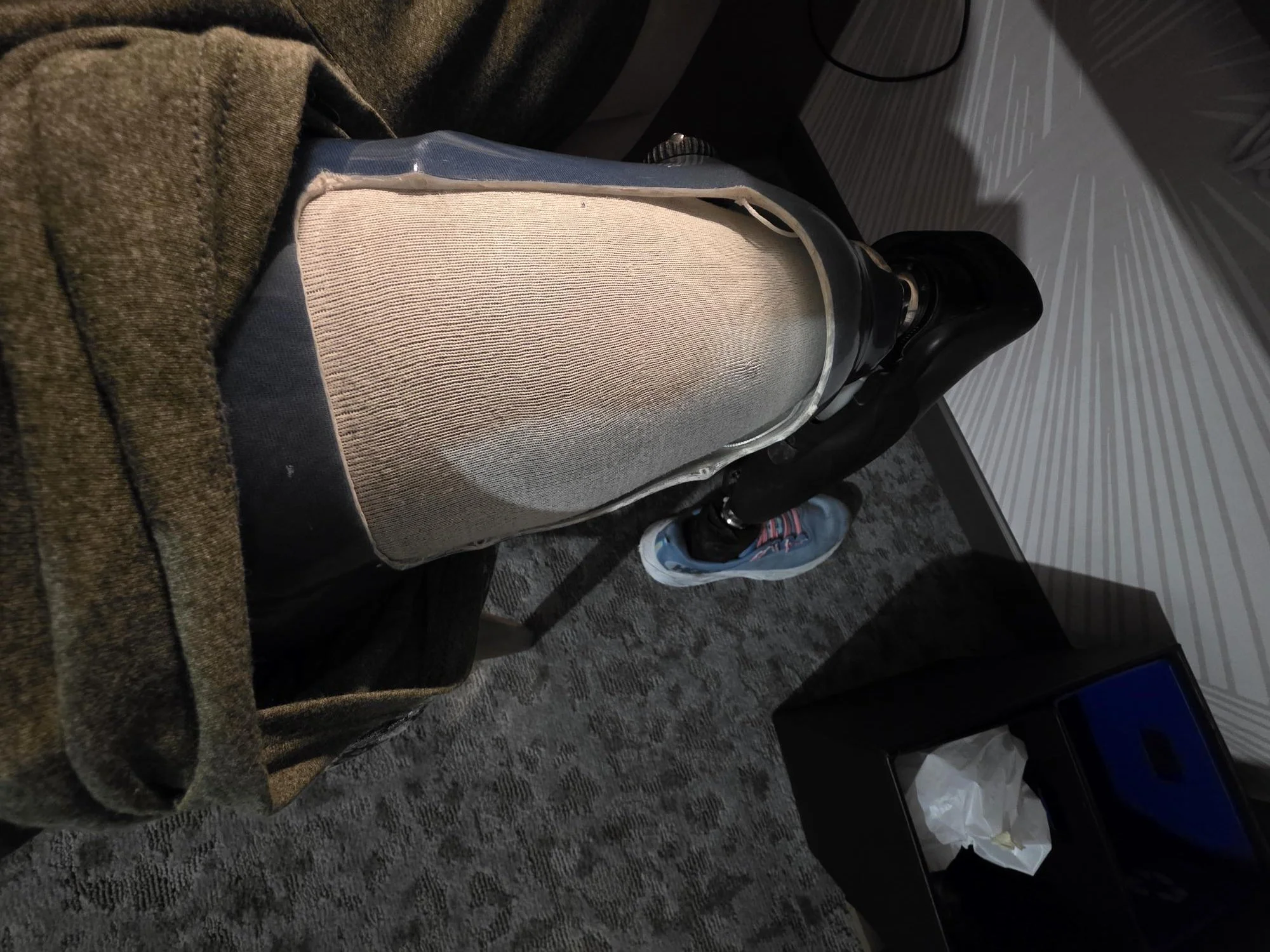
I looked down and discovered that the string connected to the piece that tightens my prosthetic socket had broken off somewhere.
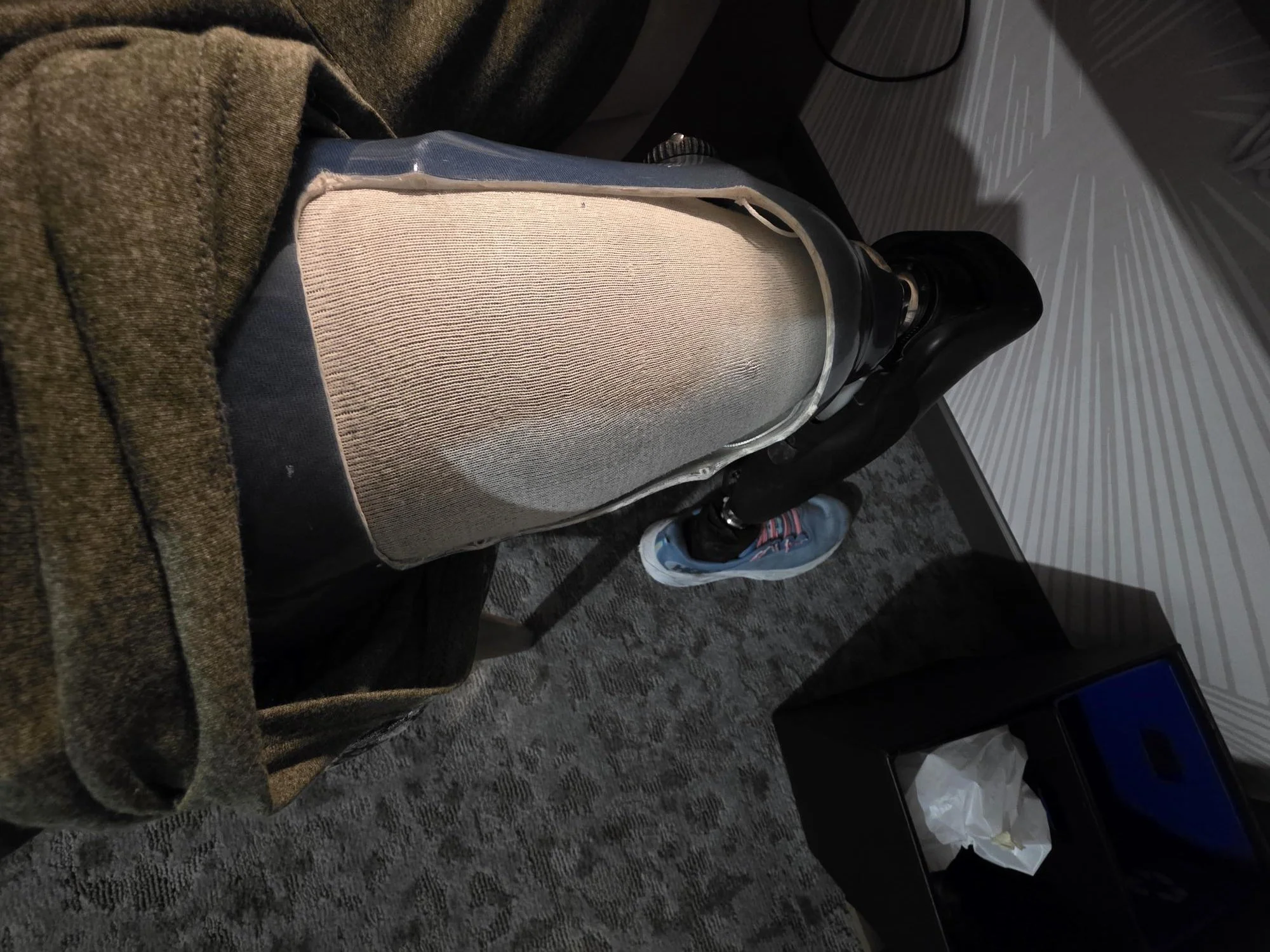
Was this going to stop me?
For a moment, I thought, “Yup, it is.”
Then I reconsidered. The prosthesis wouldn’t be as secure, and I would have to limit my walking—but I could still go.
So, off I went.
On the way to the airport, I called Floyd Brace. They have an emergency hotline, and if I had been staying in the MTP area, I would have used it. But I was heading for the Big Apple, and this wasn’t an emergency.
I left a message asking for an appointment after dialysis on Monday.
When I arrived at the airport, I handed my keys to the valet and used wheelchair assistance at both CHS and LaGuardia Airport (LGA). So far, I’ve been okay.
Because the socket doesn’t fit as snugly as it should, I have to work a little harder. Still, I made it to New York.
This is life as an amputee. Sometimes something snaps at the worst possible moment, and you have to stop, assess the situation, adjust the plan, and keep moving.
This problem will be solved eventually.
Until then, I’ll keep adapting.
Back Where I Never Wanted to Be
There are places in life you hope you never have to visit again.
For me, the hospital is one of them.
This time, I’m not here as the patient. I’m here as a visitor and caregiver for my mother.
In 2023 and 2024, the hospital became a place I knew far too well. My first extended stay came after a severe allergic reaction to an antibiotic. The second marked the beginning of my End Stage Renal Disease journey. Those experiences changed my life in ways I never imagined.
After each acute hospital stay, I was transferred to a physical rehabilitation unit. One of the most eye-opening lessons I learned was that simply lying in a hospital bed can cost you about 10 percent of your strength each day. It’s amazing how quickly the body can weaken when it’s not moving.
During rehab, the therapists asked me a question I’ll never forget:
“What kind of quality of life do you want to have?”
That question became my motivation.
The first rehabilitation stay lasted about two weeks. The second was about a week. Every exercise, every painful step, every frustrating moment had one goal—to reclaim as much of my independence as possible.
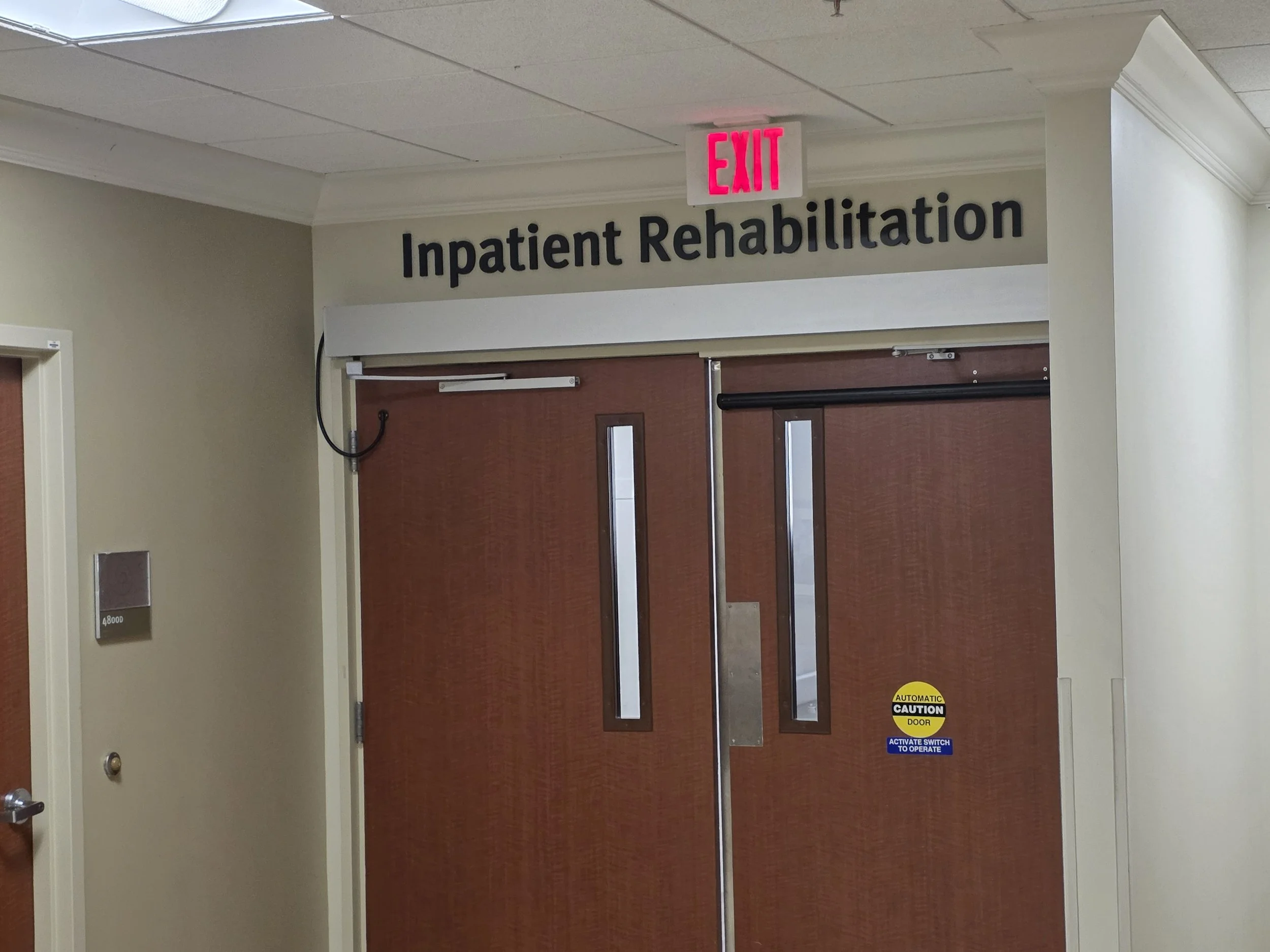
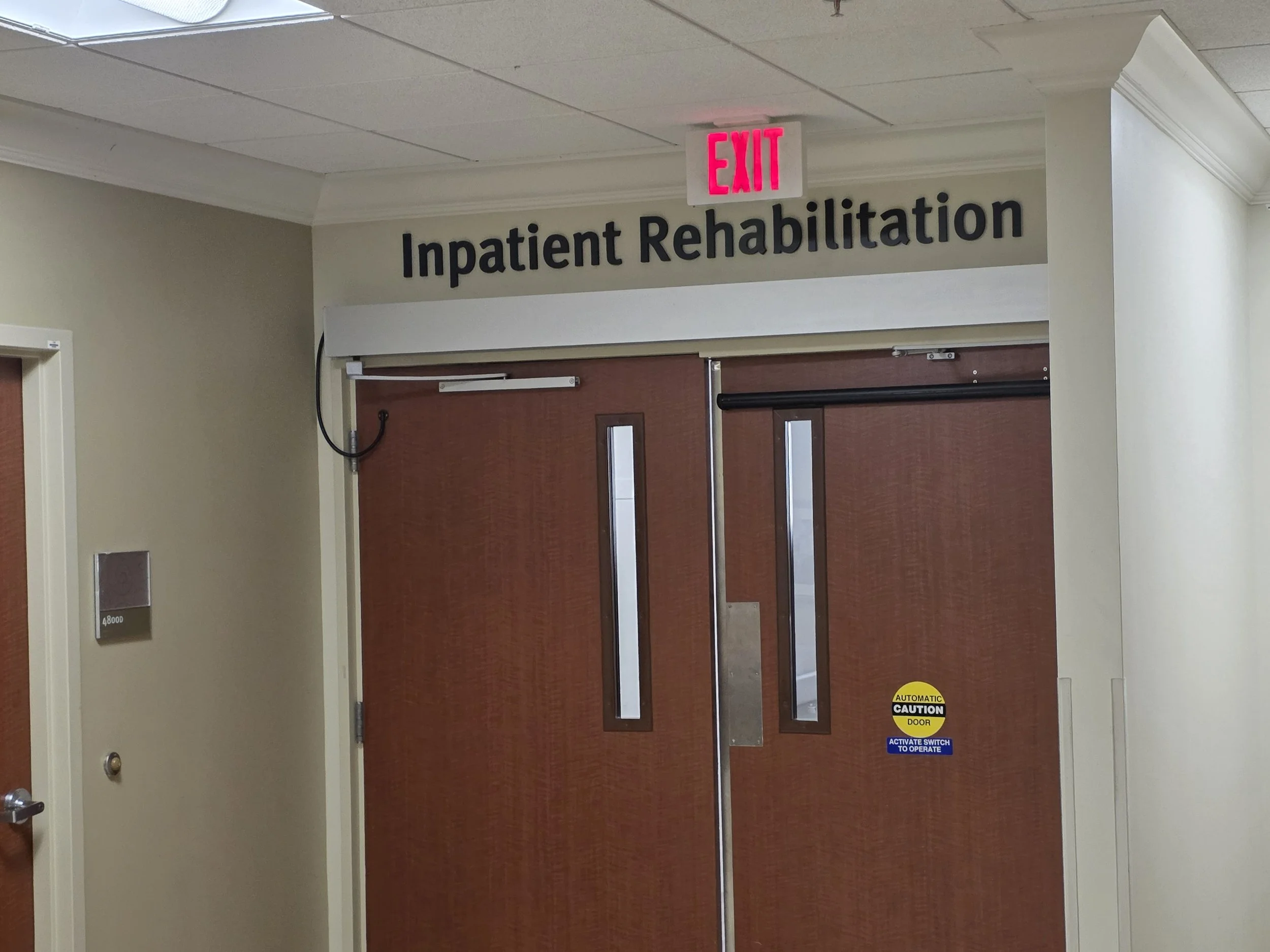
Walking through these same hallways today feels surreal. There are familiar faces everywhere. Several providers have recognized me, which is both heartwarming and a little funny. It’s strange when people remember you not because you were a regular customer, but because they helped you through some of the hardest chapters of your life.
Now the roles have changed.
I’m the one sitting beside the bed.
I’m the one encouraging someone else.
I’m the one helping navigate questions, translating when needed, and trying to bring a little comfort during an uncertain time.
Life has a funny way of bringing us full circle.
As difficult as hospitals can be, they also remind us of something important: healing doesn’t always happen the way we expect. Sometimes we’re the ones receiving the care. Other times, we’re fortunate enough to be the ones giving it.
If there’s one lesson I’ve learned, it’s that difficult seasons don’t last forever. They shape us, strengthen us, and prepare us to help someone else when their turn comes.
So today, I’m choosing gratitude—for the caregivers, for the second chances I’ve been given, and for the opportunity to be there for my mother the same way so many people were there for me.
Tomorrow may bring new challenges, but it also brings new hope. And hope is a powerful medicine.