

Another "Recruiter" Says They're Not Selling a Service... Until the End
I've seen this pattern enough times that I recognize it almost immediately.
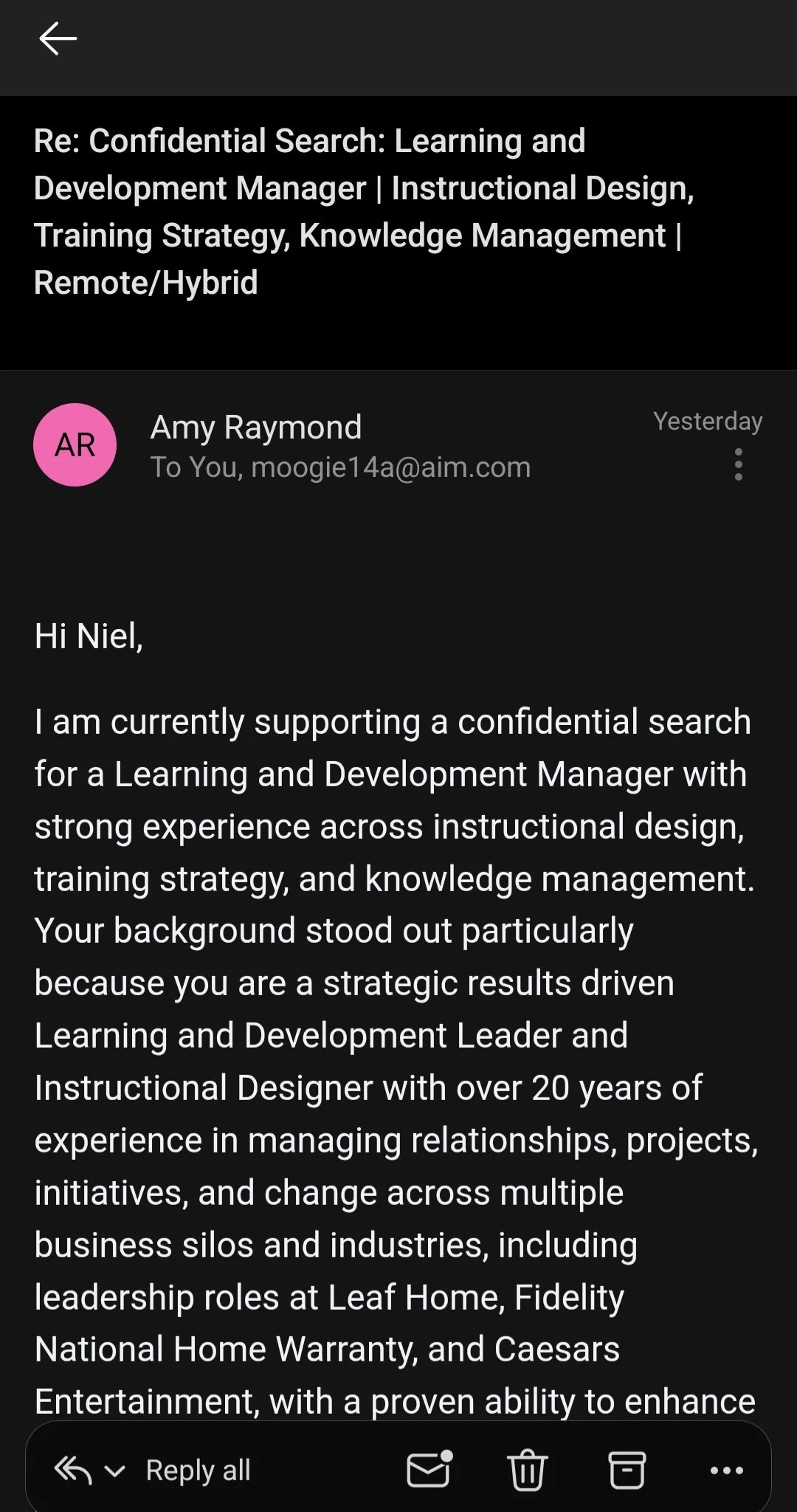
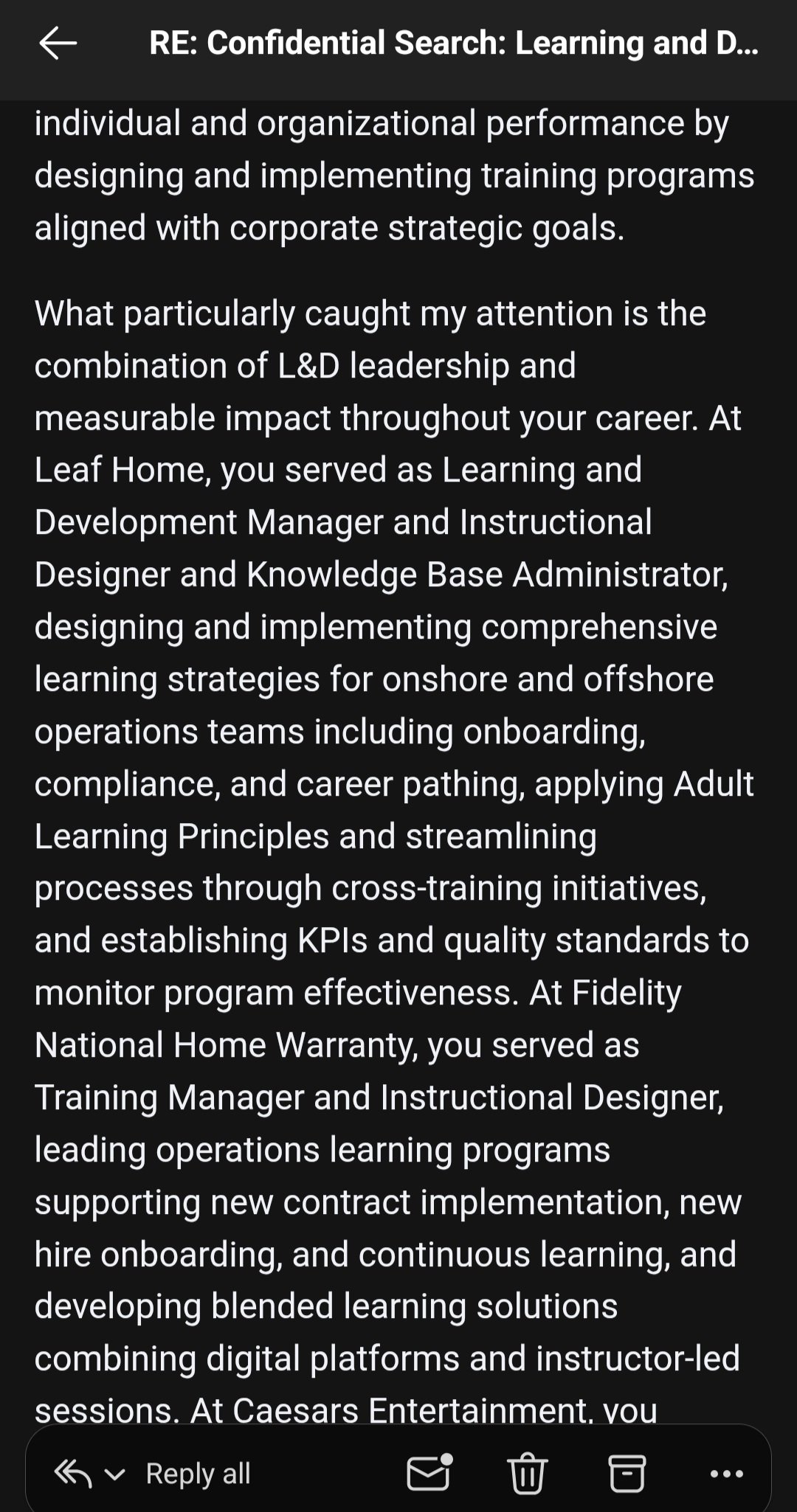
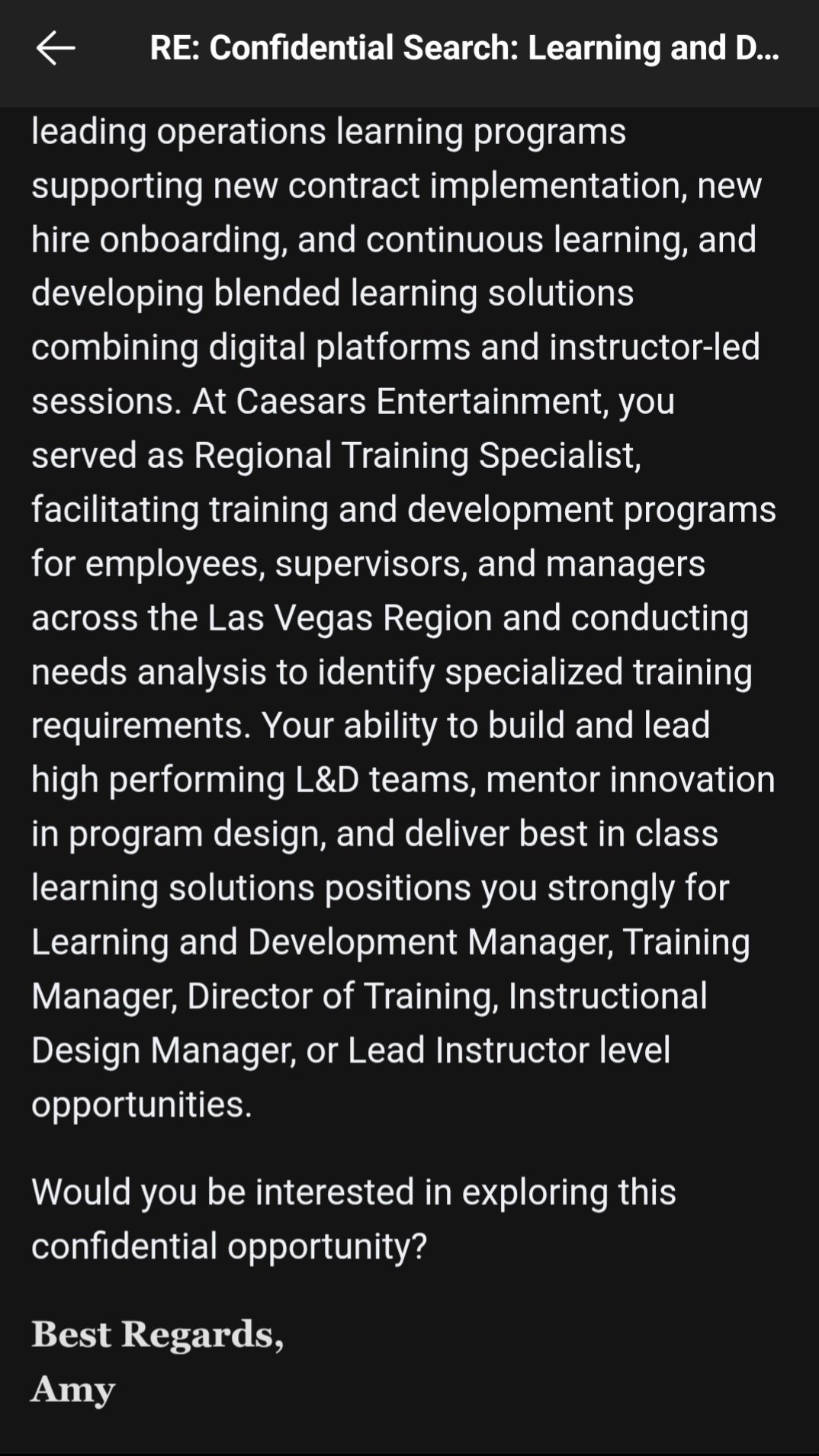
A recruiter reaches out with a "confidential search" for a role that seems tailored to your background. The message is highly personalized, highlighting your experience and accomplishments. It looks legitimate.
So I asked a very direct question:
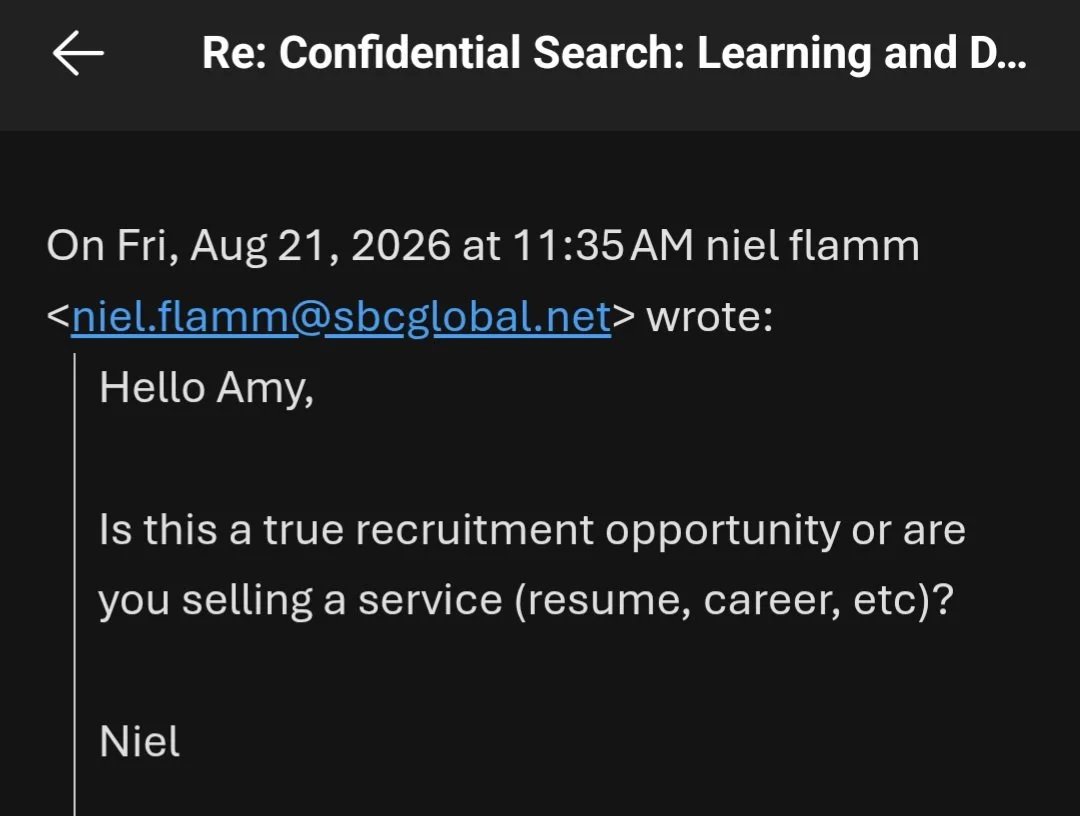
"Is this a true recruitment opportunity or are you selling a service (resume, career, etc.)?"
The response?
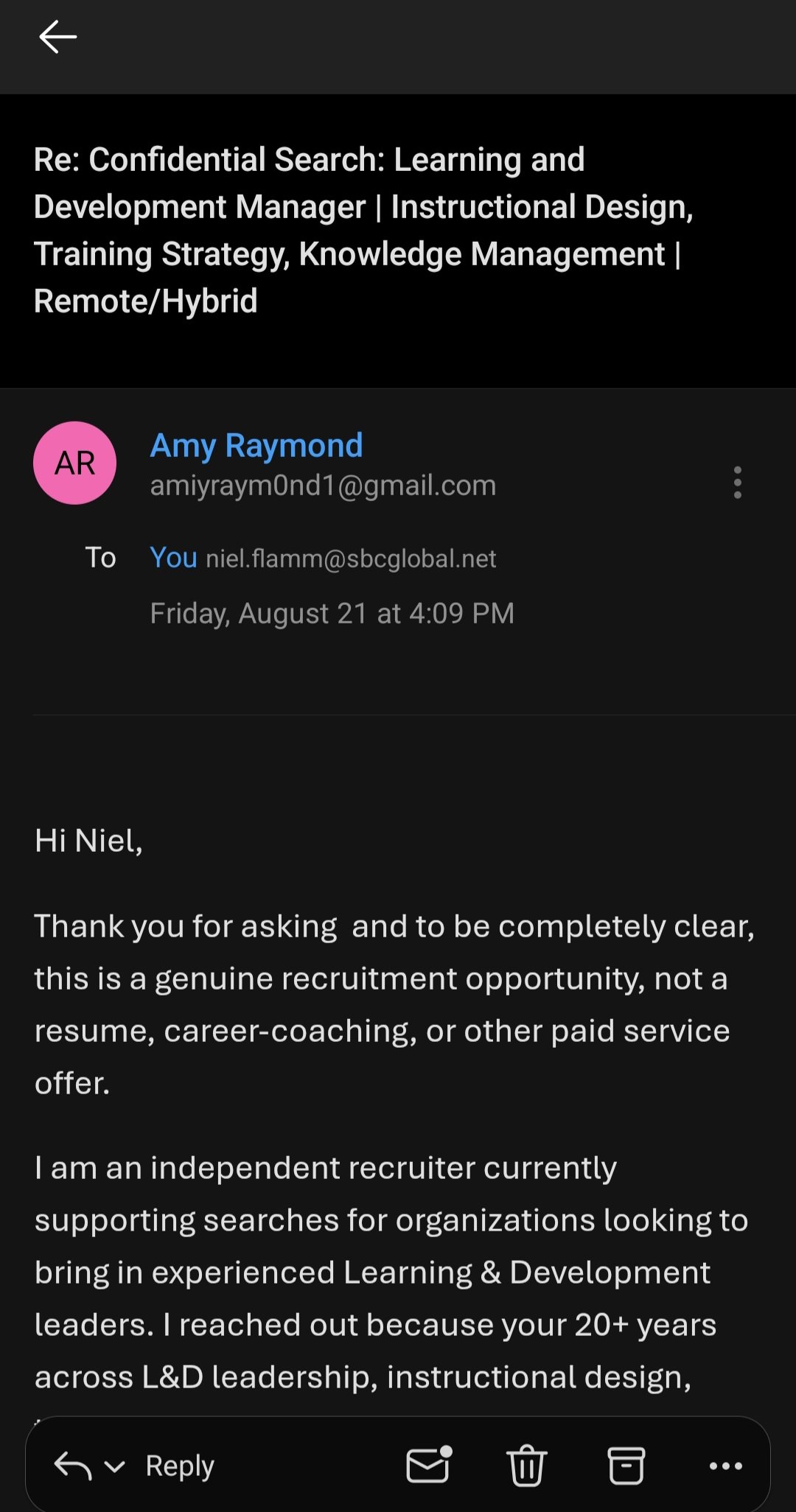
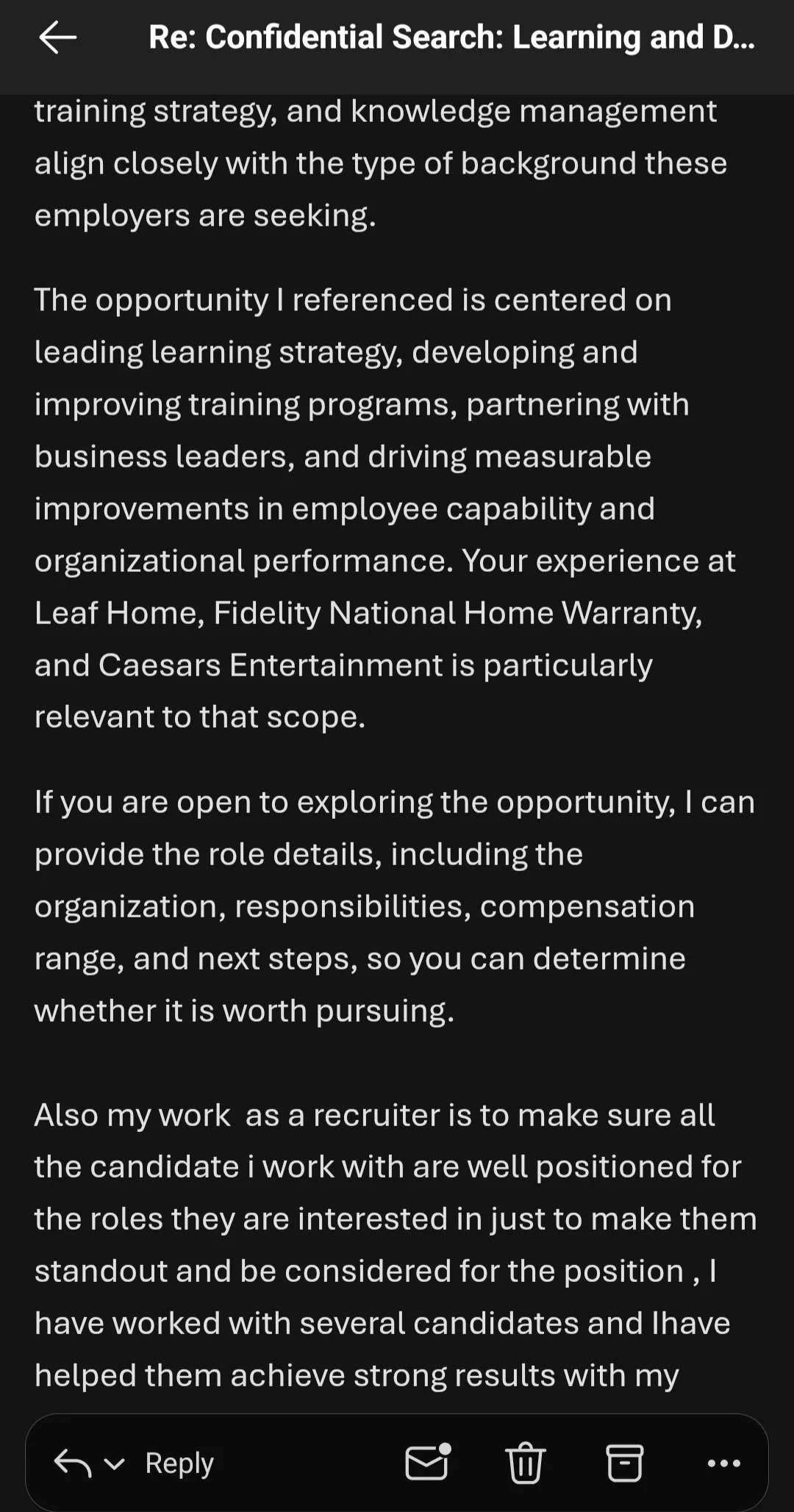
"This is a genuine recruitment opportunity, not a resume, career-coaching, or other paid service offer."
Sounds reassuring... right?
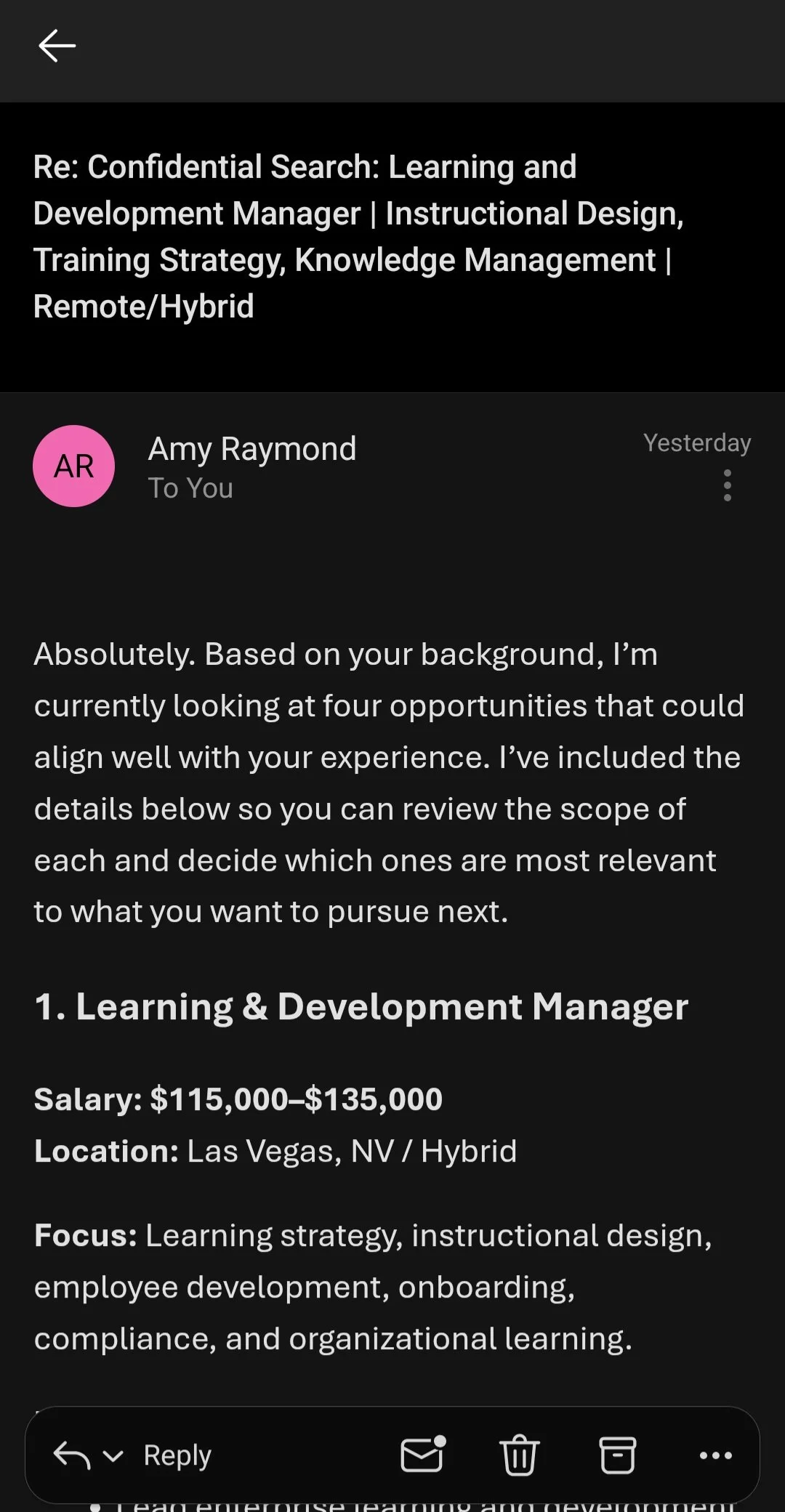
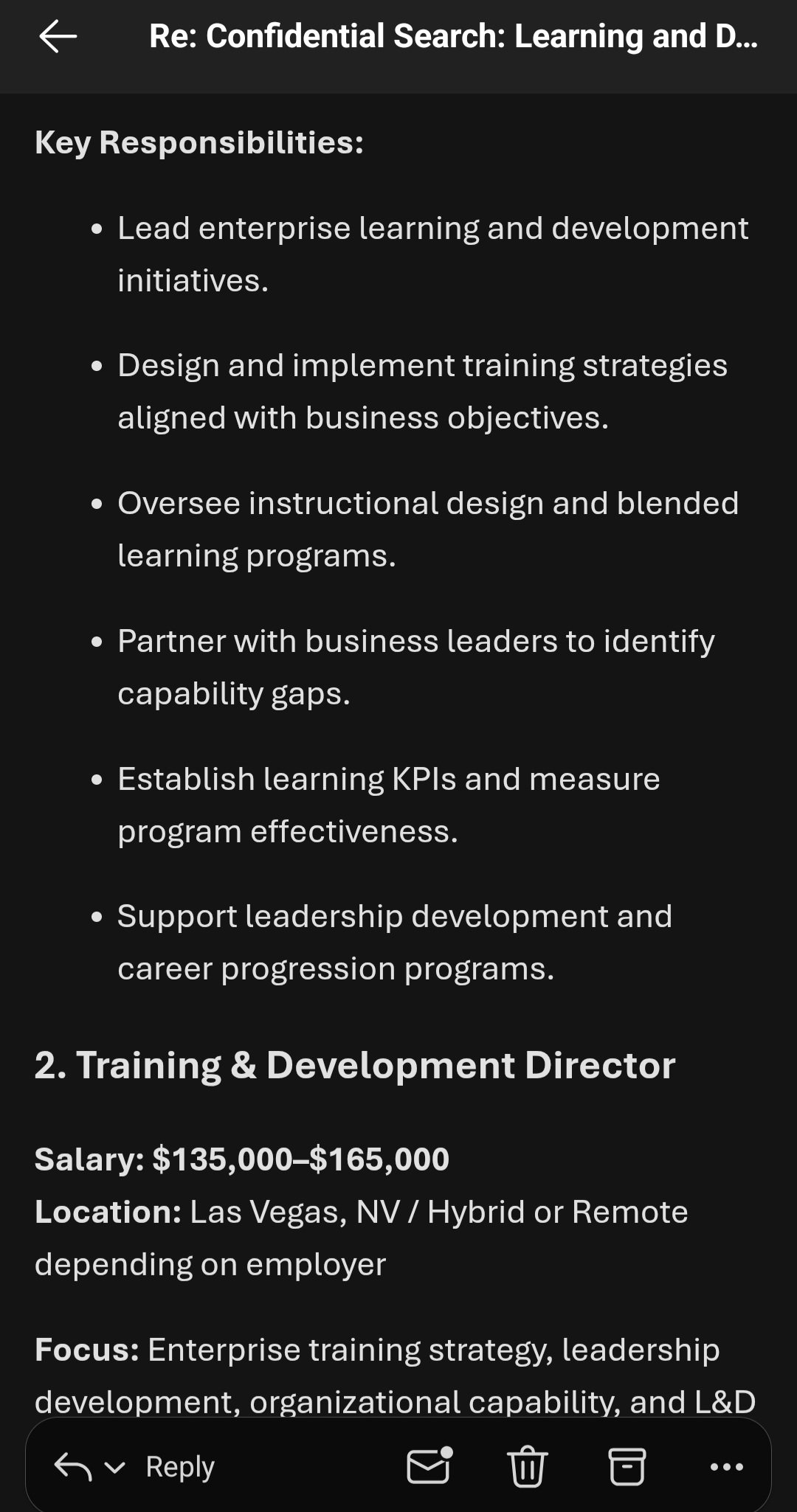
The conversation continued with detailed job descriptions, salary ranges, and responsibilities. Everything appeared legitimate.
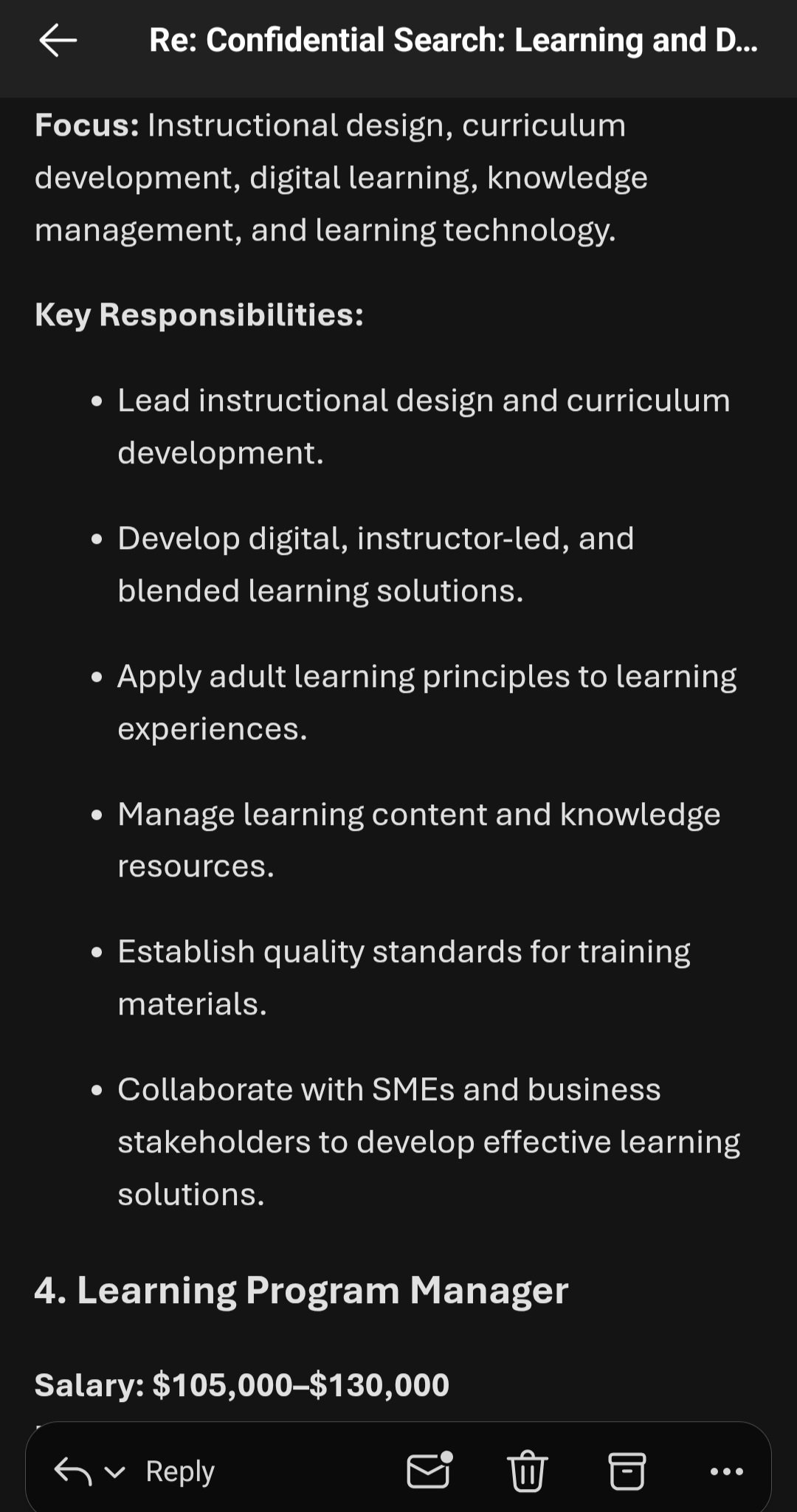
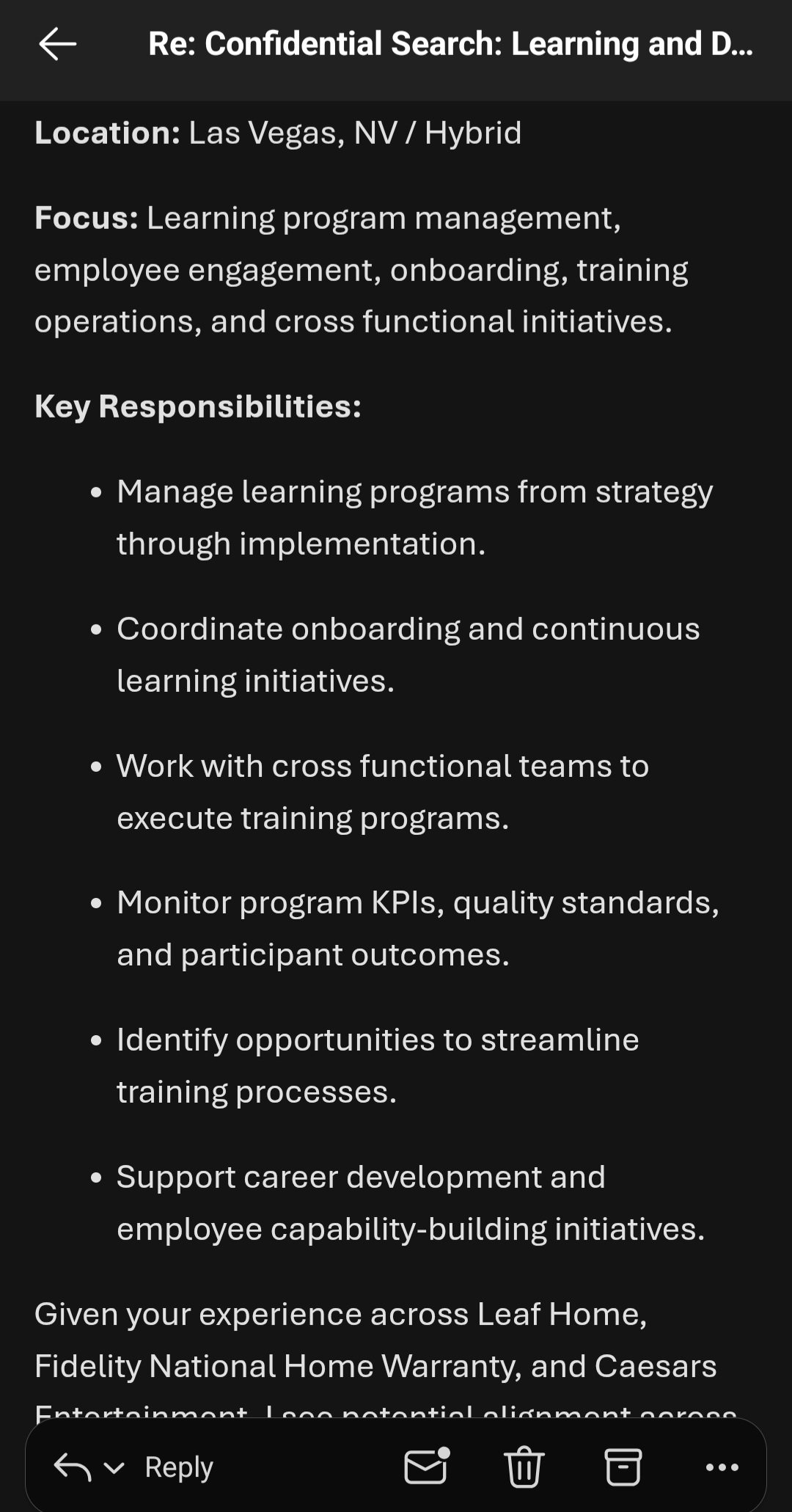
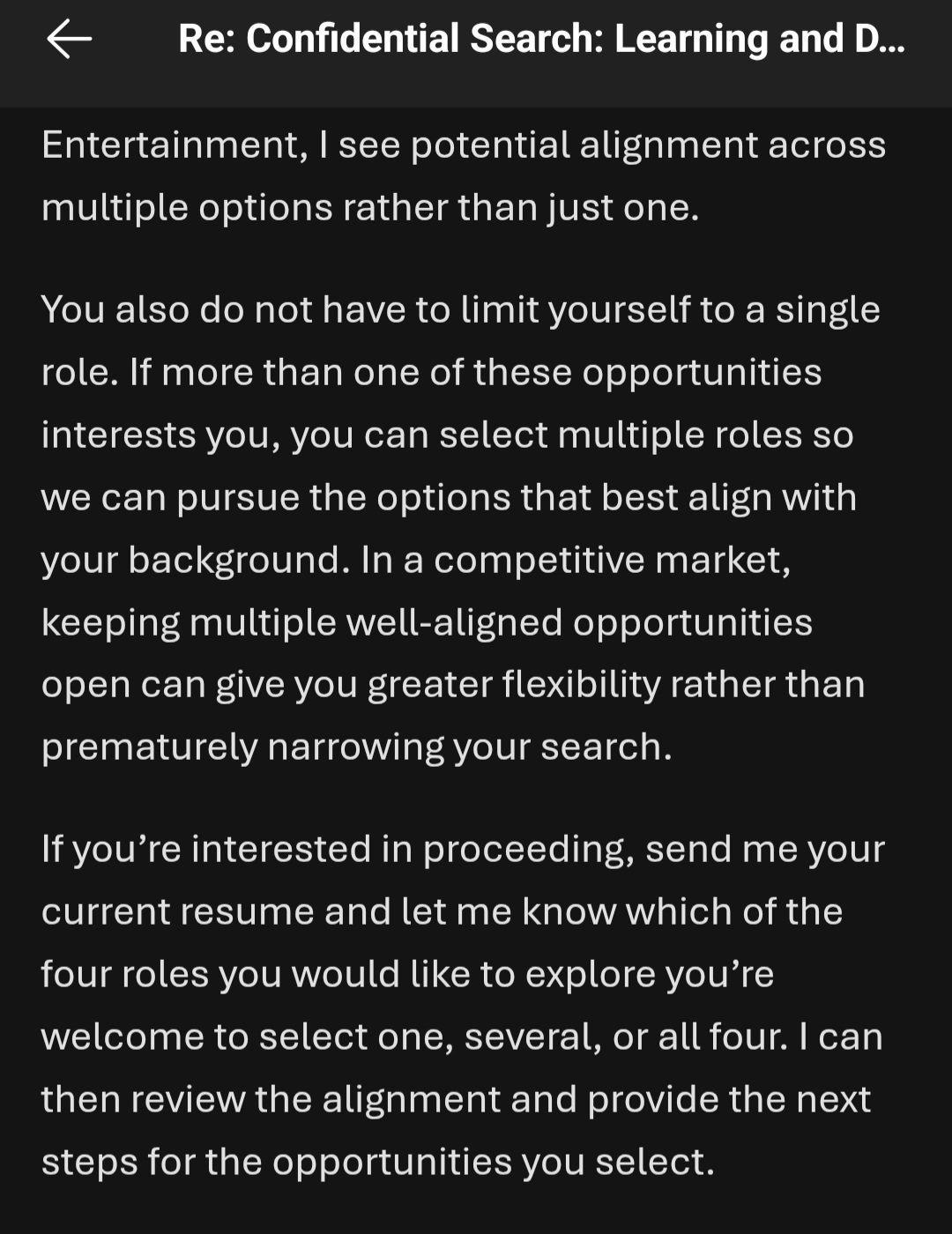
Then came the familiar next step.
"Send me your current resume."
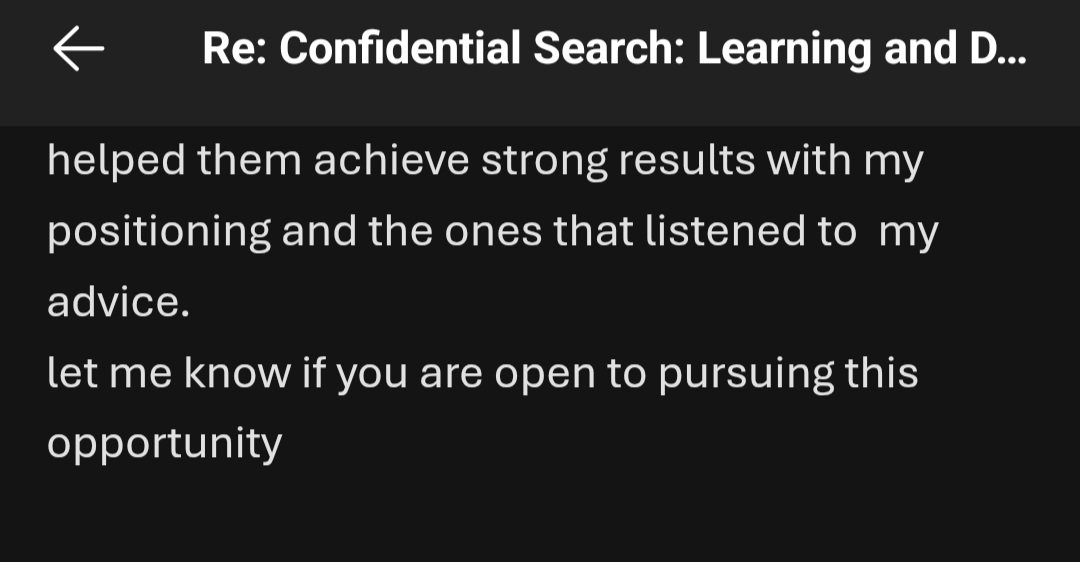
If you've followed these scams before, you know what often comes next.
This is where many job seekers eventually hear that their resume "needs work," they're not positioned correctly, or they need help standing out before they can be presented to the employer. That's when the sales pitch begins.
I'm not saying that's what would have happened here—I chose not to continue the conversation before it reached that point. But it follows a pattern I've documented many times.
Another detail that caught my attention was the email address used to contact me.
The recruiter somehow found my moogie14a@aim.com email address—a mailbox I haven't actively used in years. Not exactly the email address I'd expect a professional recruiter to find first.
This is why I encourage every job seeker to ask direct questions early in the conversation.
If someone says they are not selling a service, that's a good start—but don't stop asking questions.
The real concern isn't just wasting time.
The fear is that someone pays hundreds of dollars through PayPal, Zelle, cryptocurrency, Cash App, or another payment method, only to discover they never receive what was promised—or have little chance of recovering their money.
I'll continue documenting these interactions, the tactics being used, and the warning signs so others can recognize them before it's too late.
Follow my blog for additional recruiting scam investigations, screenshots, and real-world examples:
Stay skeptical.
Ask questions.
Verify everything.
Trust your instincts.