
We Inspect What We Expect
I've been using the phrase "We tolerate what we allow."
Full disclosure—I didn't come up with it. A former colleague, now a friend, shared it with me years ago, and it has stuck ever since.
He also left me with another one that's just as powerful:
"We inspect what we expect."
I've been thinking about that as I continue writing about Nextdoor's value proposition, its identity, and what I see as opportunities to improve the platform.
Some may call what I'm doing trolling.
I call it inspecting.
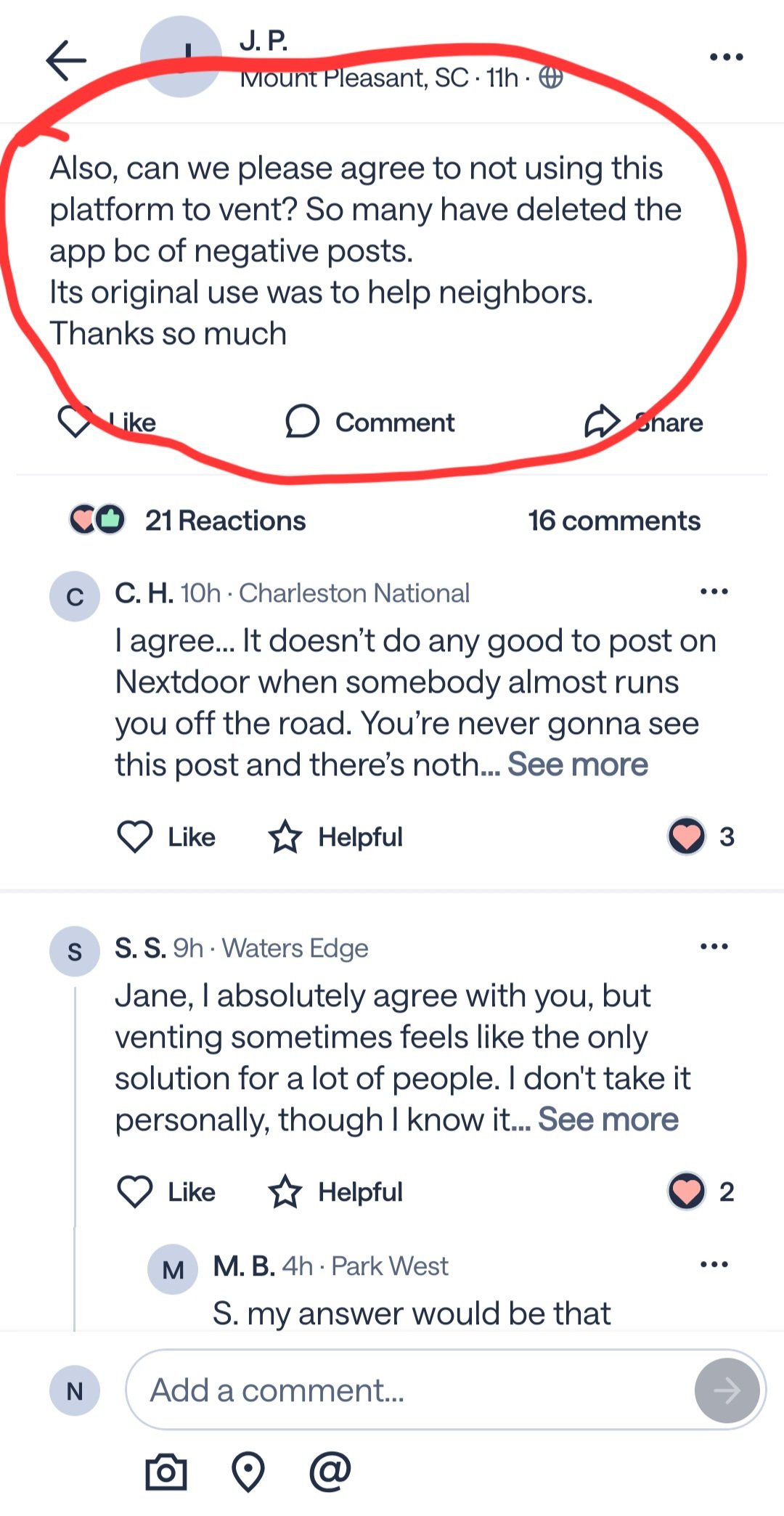
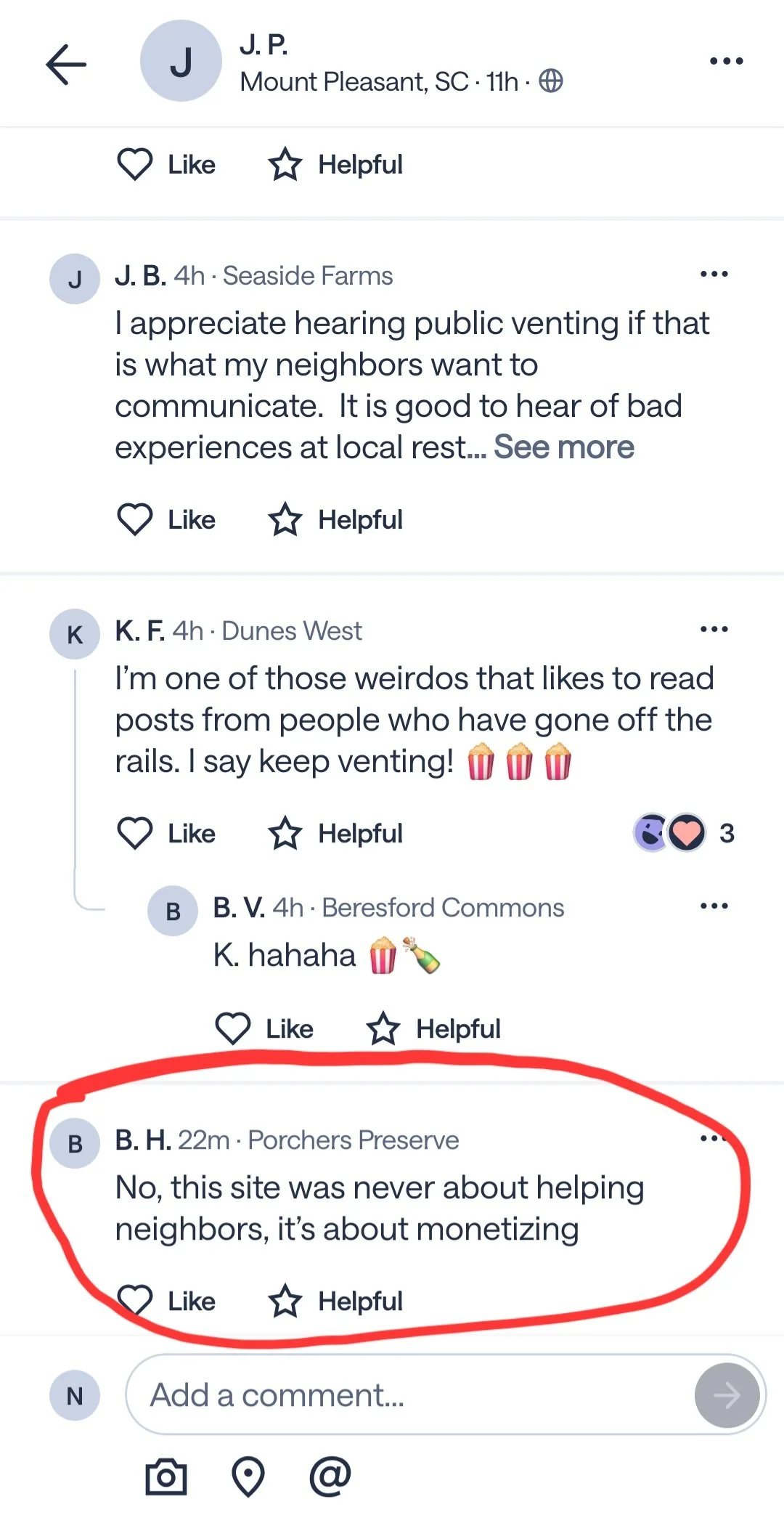
Recently, I was viewing Nextdoor through an account that doesn't use my real name or address. I came across a post encouraging neighbors to stop complaining, stop deleting the app, and focus on being more positive.
The intent was good.
Then I read the comments.
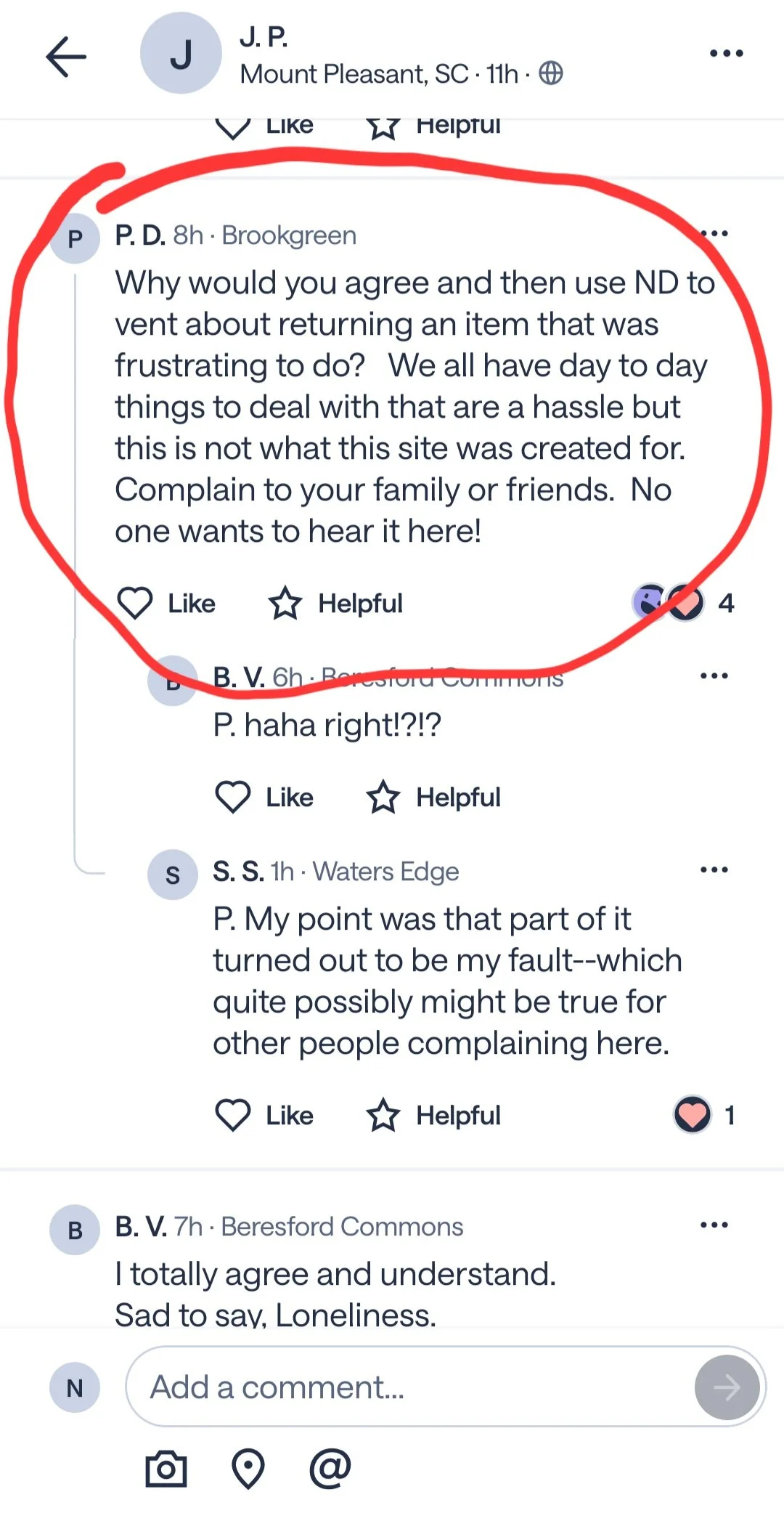
One person pointed out the irony of telling others not to complain while complaining.
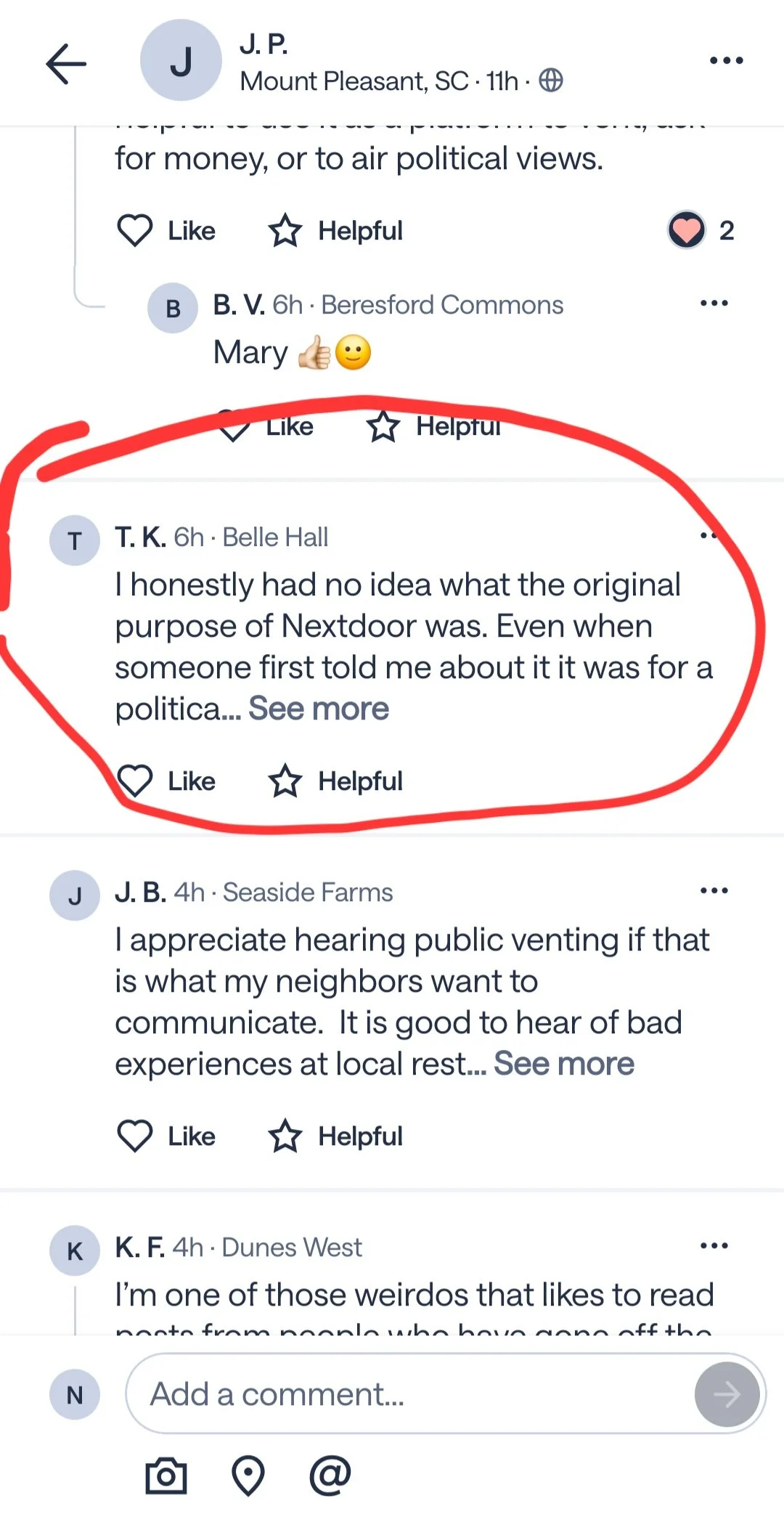
Another questioned what the platform's purpose even is.
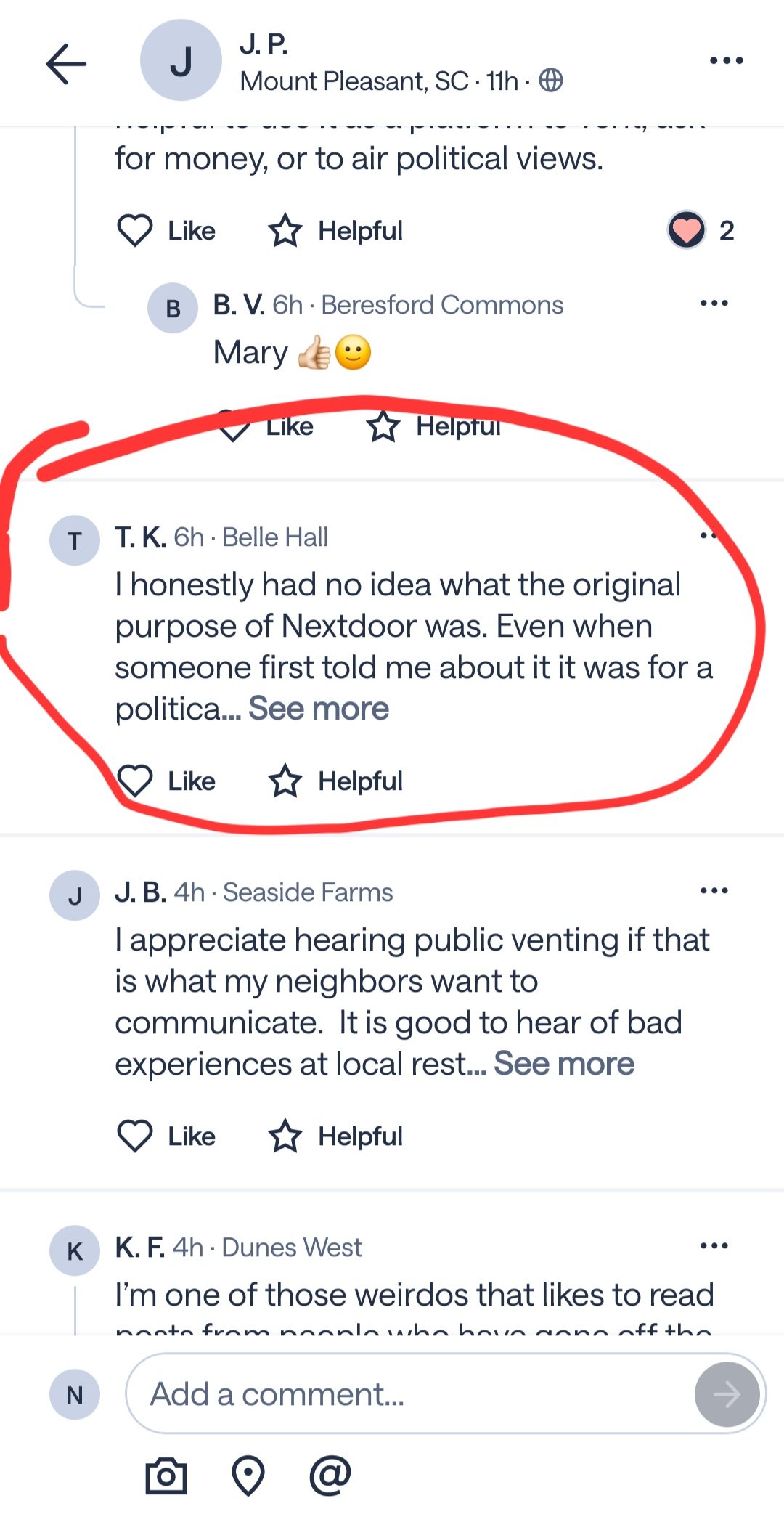
Another expressed the opinion that the platform's primary goal is monetization and enriching company leadership.
Whether you agree with those comments or not, they reveal something important.
They're signals.
They're feedback.
They're opportunities to inspect the experience people are actually having.
That's why I keep returning to the question of identity.
What is Nextdoor's purpose today?
If leadership expects neighbors to have productive, positive interactions, then it's worth inspecting whether the product, moderation model, communication, and overall user experience are supporting that expectation.
As the saying goes:
We inspect what we expect.
In my opinion as a shareholder, if those questions had been asked consistently over the past two years, the conversation around Nextdoor might look very different today.
There's nothing wrong with being on podcasts. If leadership spends more time speaking than inspecting the platform, listening to feedback, and experiencing neighborhoods firsthand, they shouldn't be surprised when the market, users, and shareholders do the inspecting for them.
Join the discussion on NielFlamm.com.

Day 33: Silence, Culture, and the Identity of Nextdoor

Today marks Day 33 since I requested a copy of a Nextdoor study from Senior Manager Jacob Chavis, as directed in a company communication. I still haven't received the study or a response.
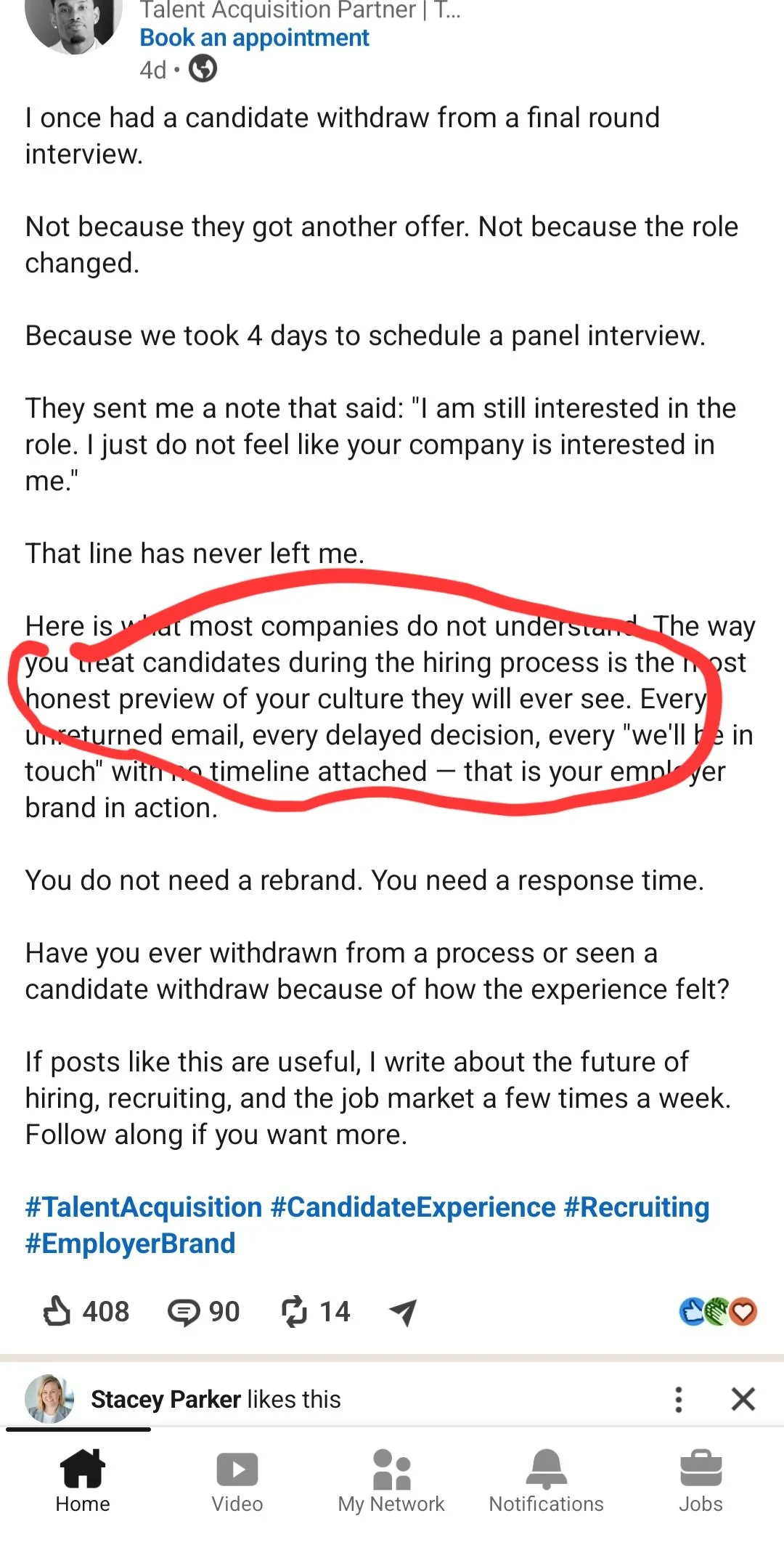
While scrolling LinkedIn today, I came across a post discussing company culture, particularly how culture is reflected in hiring and leadership. It made me think about my own experience. If this is how a straightforward request is handled, it raises questions for me about the culture that supports that experience.
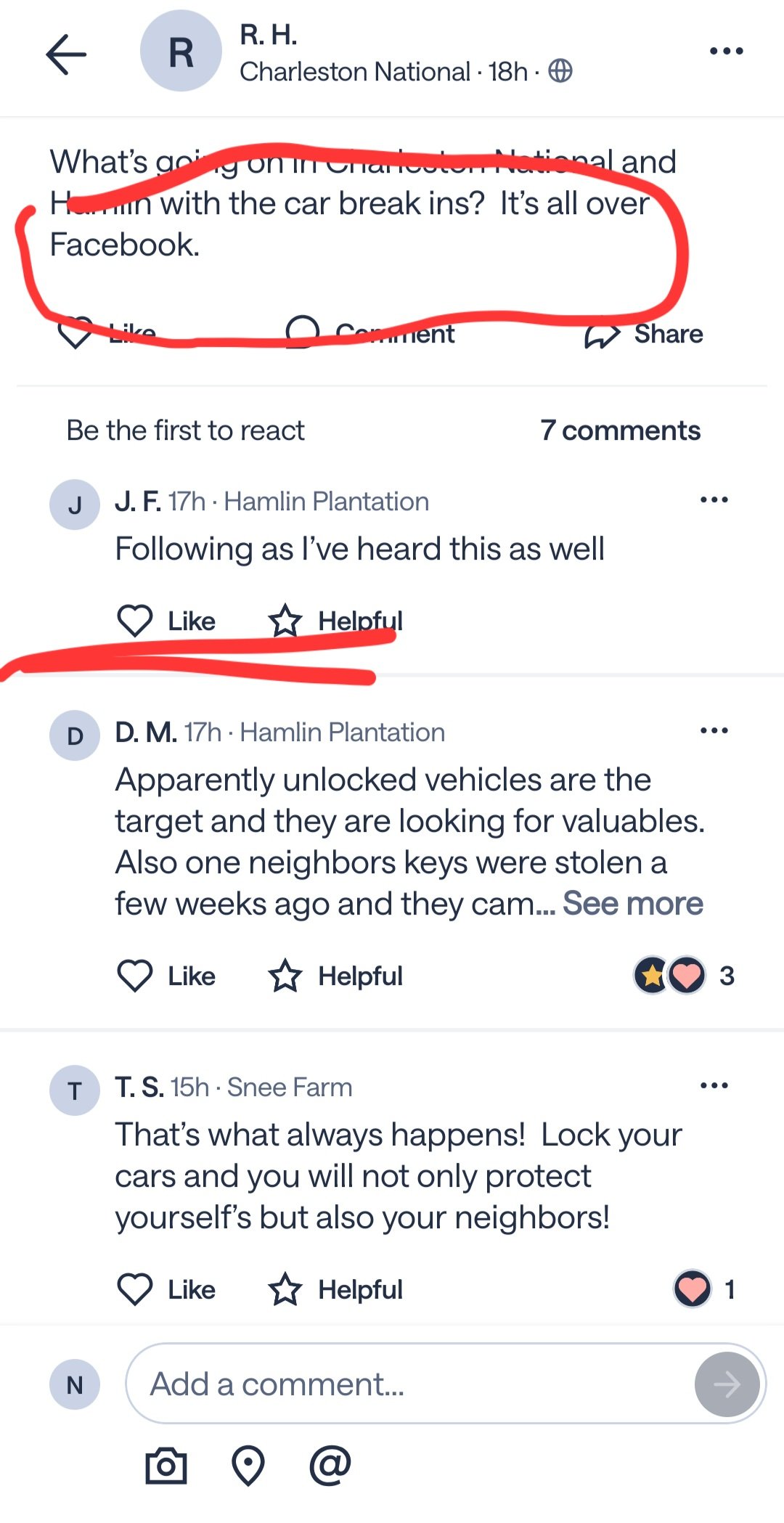
I also noticed a post on Nextdoor where someone asked what was happening in their subdivision, only to be told the information was on Facebook instead.
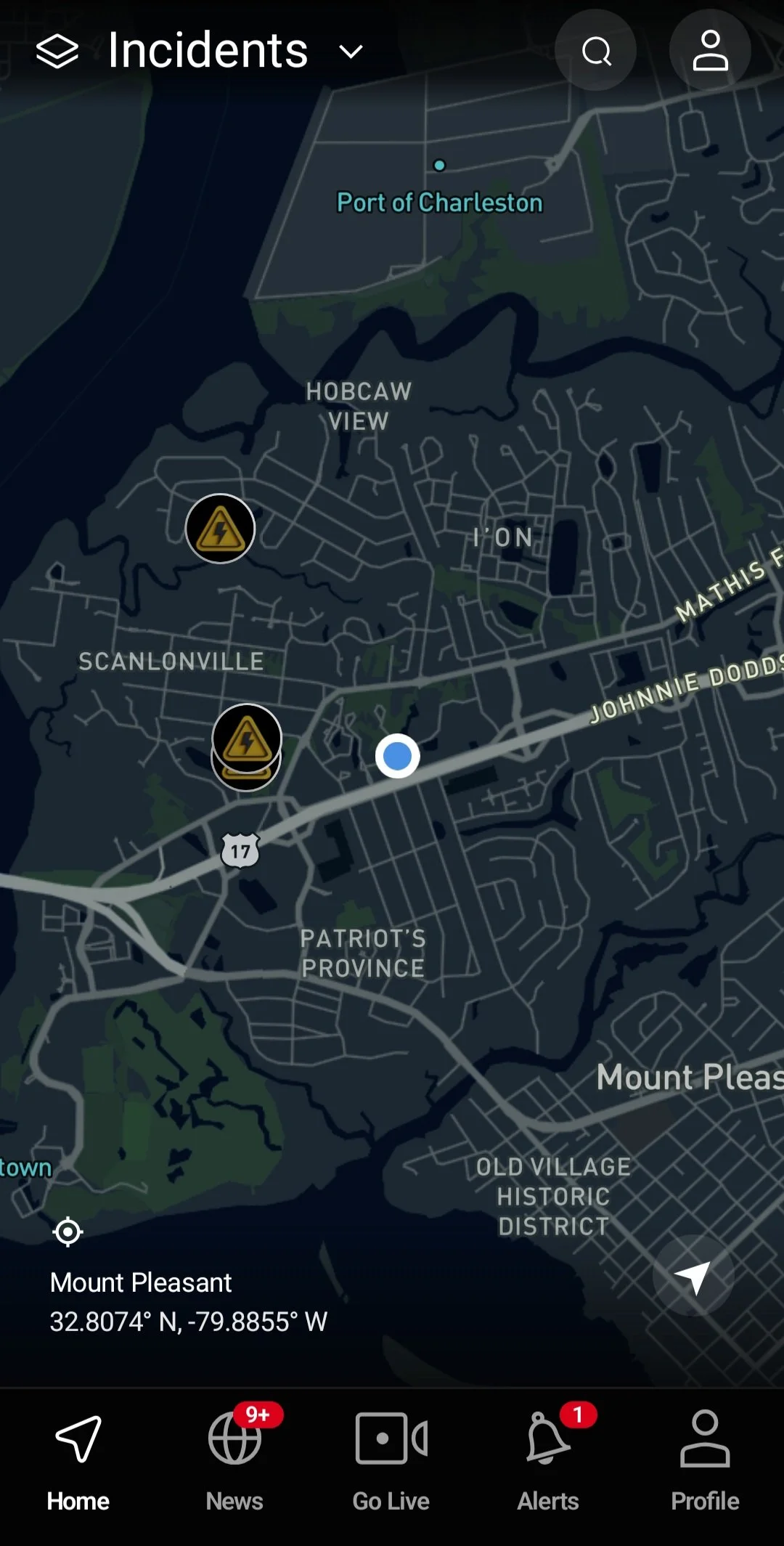
Then I opened Citizen. Within seconds, I saw real-time information about power outages within about a mile of my location. No wall of text. No advertisement every few posts. No constant stream of email notifications filling my inbox.
That got me thinking about identity.
What problem is Nextdoor trying to solve in 2026?
Is it the best place for timely neighborhood information, or have users found faster, less intrusive alternatives? If important neighborhood updates are happening elsewhere and competing platforms provide real-time information with fewer interruptions, that's a question worth asking.
As both a shareholder and a user, I believe these are important conversations. Products evolve, user expectations change, and listening to feedback has always been one of the best ways to stay relevant.
What do you think the future of neighborhood platforms looks like?
Citizen vs. Nextdoor: My First Few Days of Real-World Use
After spending the last few days using the Citizen app alongside my ongoing experience with Nextdoor (which I’m still accessing through a parody email account for research), the differences have been hard to ignore.
Citizen has been refreshingly simple.
I haven’t been bombarded with emails all day long. I don’t see my feed cluttered with advertisements. I can immediately see how many users are active within a small radius of my location, and that number updates as I travel.
I also like that Citizen offers optional premium features, such as access to local police and fire radio feeds. I haven’t subscribed yet, but it’s a straightforward value proposition: if it’s useful to you, you pay for it.
One feature I find especially interesting is the ability to livestream an incident. Rather than relying on speculation or secondhand accounts, users can provide a real-time, firsthand view of what’s happening. Citizen also offers contributors opportunities to earn money for qualifying content.
Compare that with my experience on Nextdoor.
Even after trying to reduce notifications, the platform continues to generate a steady stream of emails about everything from barking dogs to garbage cans left at the curb overnight. The text feed is saturated with advertising. Users generate the content, volunteer moderators enforce the rules without compensation, yet there is no meaningful opportunity for contributors to share in the value they create.
As someone who has written extensively about Nextdoor as a shareholder and user, I expected another neighborhood app. Instead, I found a platform that, at least in my early experience, feels more focused, less intrusive, and more useful.
The clear winner for me so far is Citizen.
For transparency, Citizen is not a publicly traded company. I have no financial interest in it. I’m simply evaluating it as a user. If the company ever went public, it’s one I’d seriously consider researching as a potential investment.
What has your experience been with neighborhood and community apps? Have you used Citizen, Nextdoor, or both? I’d be interested in hearing your perspective.
Join the discussion on NielFlamm.com.
Citizen vs. Nextdoor: What Are People Really Looking For in a Local App?
During my semi-weekly Zoom call this evening with my Fraternity Brothers from Tau Epsilon Phi Fraternity, Phi Chi Chapter, someone mentioned the Citizen app. I had heard the name before, but I had never really looked into it. After the conversation, I did some research — and tonight I’m starting to use it.
The more I looked, the more interesting the comparison became.
Nextdoor has always positioned itself as the digital neighborhood — a place to connect with neighbors, ask for recommendations, discuss local issues, and discover businesses.
Citizen takes a different approach: real-time awareness. It focuses on what many people immediately want to know when they open a local app:
What is happening around me right now?
Is there an accident nearby? Police activity? A fire? A safety concern? An emergency alert?
Sometimes people don't want another social network. They want useful information that affects their day, commute, family, and safety.
Nextdoor has a massive opportunity because community connections and local intent are incredibly valuable. But the challenge has always been balancing conversations, commerce, moderation, and trust.
Citizen appears to have a clearer "why open the app?" moment.
I’m beginning my own Citizen experiment tonight. I’ll see how the alerts, accuracy, usability, and overall experience compare.
Stay tuned — I’ll share what I learn.

Day 21: AI Talk vs. AI Execution

Today marks 21 days since I requested the report referenced on blog.nextdoor.com, in which Jacob Chavis of Nextdoor (jchavis@nextdoor.com) was listed as the contact for the full study.
Why did I request it?
Simple.
I wanted to understand the details behind the research:
What methodology was used?
What was the sample size?
What demographics were represented?
How was the data collected?
Basically, is this a meaningful research study or more of a FAMILY FEUD survey board?
It’s now been three weeks.
I’ll give some grace—it is Sunday, the weekend, and right after celebrating the 250th birthday of the United States of America.
However, throughout my career, as a manager and even before moving into leadership roles, responsiveness mattered. I monitored communication through company tools and responded when something required attention.
Now, compare that experience with one I recently had.
I use the Dexcom Stelo CGM to monitor my blood glucose levels. Since I’m not insulin dependent, I don’t qualify for a traditional Dexcom CGM under my UnitedHealthcare requirements, but Stelo helps me manage important health information.
Recently, my sensor session ended 8 days early.
That matters because consistent monitoring helps me understand if my glucose is trending too high or too low.
I had just received my regularly scheduled replacement, so I was able to swap sensors—but that meant I would eventually be short.
What happened next?
I used the Stelo chatbot.
It asked questions.
Created the incident.
Guided me through the process.
I filled out the required information.
Less than 24 hours later, a replacement CGM was on the way.
That made me think:
Why isn’t Nextdoor using AI like this?
A real-time AI assistant could help with:
Neighbors experience issues.
Moderation questions.
Suspension appeals.
Advertiser concerns.
Basic customer support.
Nirav Tolia frequently discusses AI as part of Nextdoor’s future.
The question I continue asking is:
Where is the execution that directly improves the user experience?
Talking about AI is easy.
Implementing AI where customers actually feel the impact is the difference.
Read more and join the discussion at NielFlamm.com