
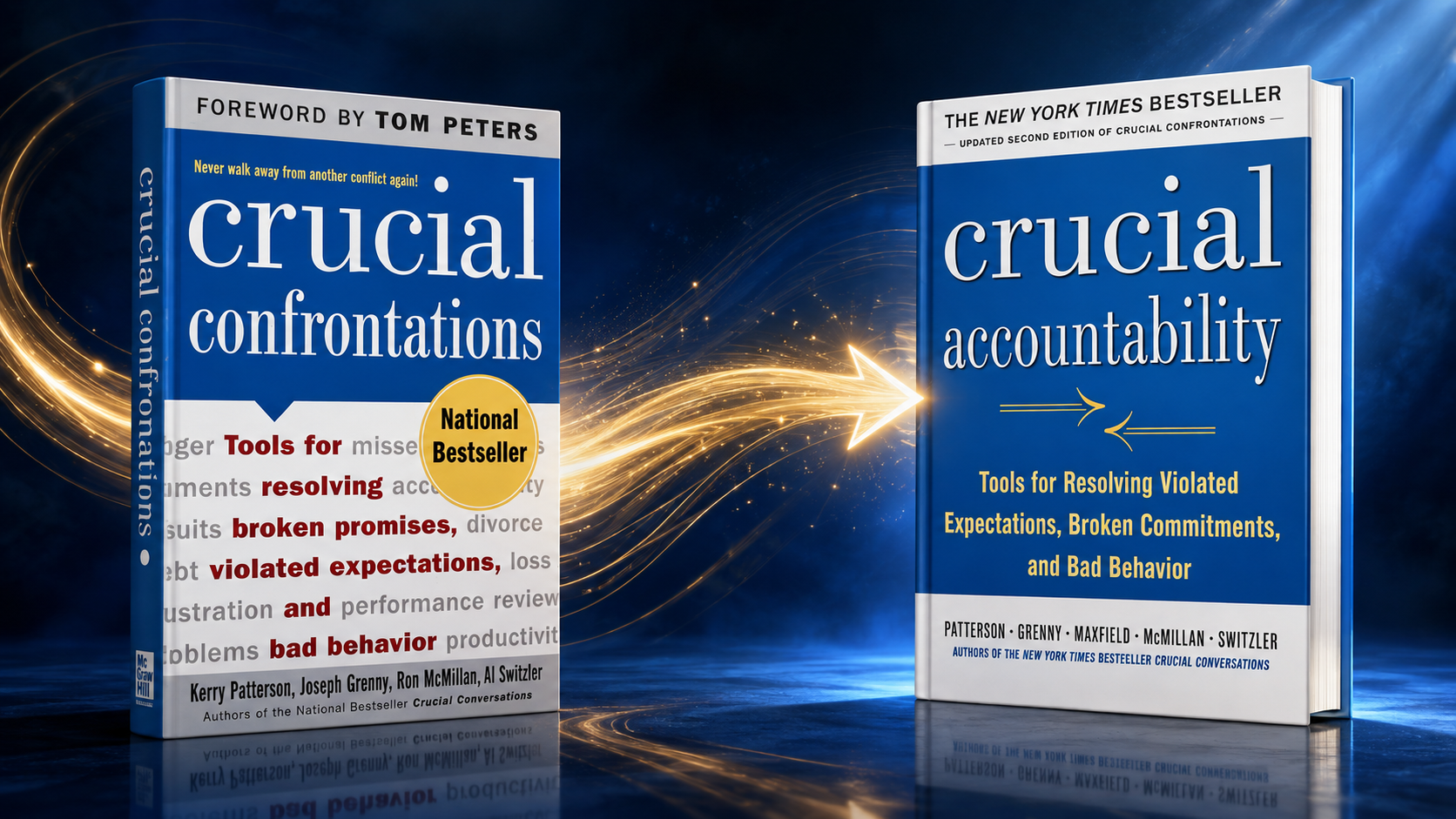
Same Book, Different Title: From Crucial Confrontations to Crucial Accountability
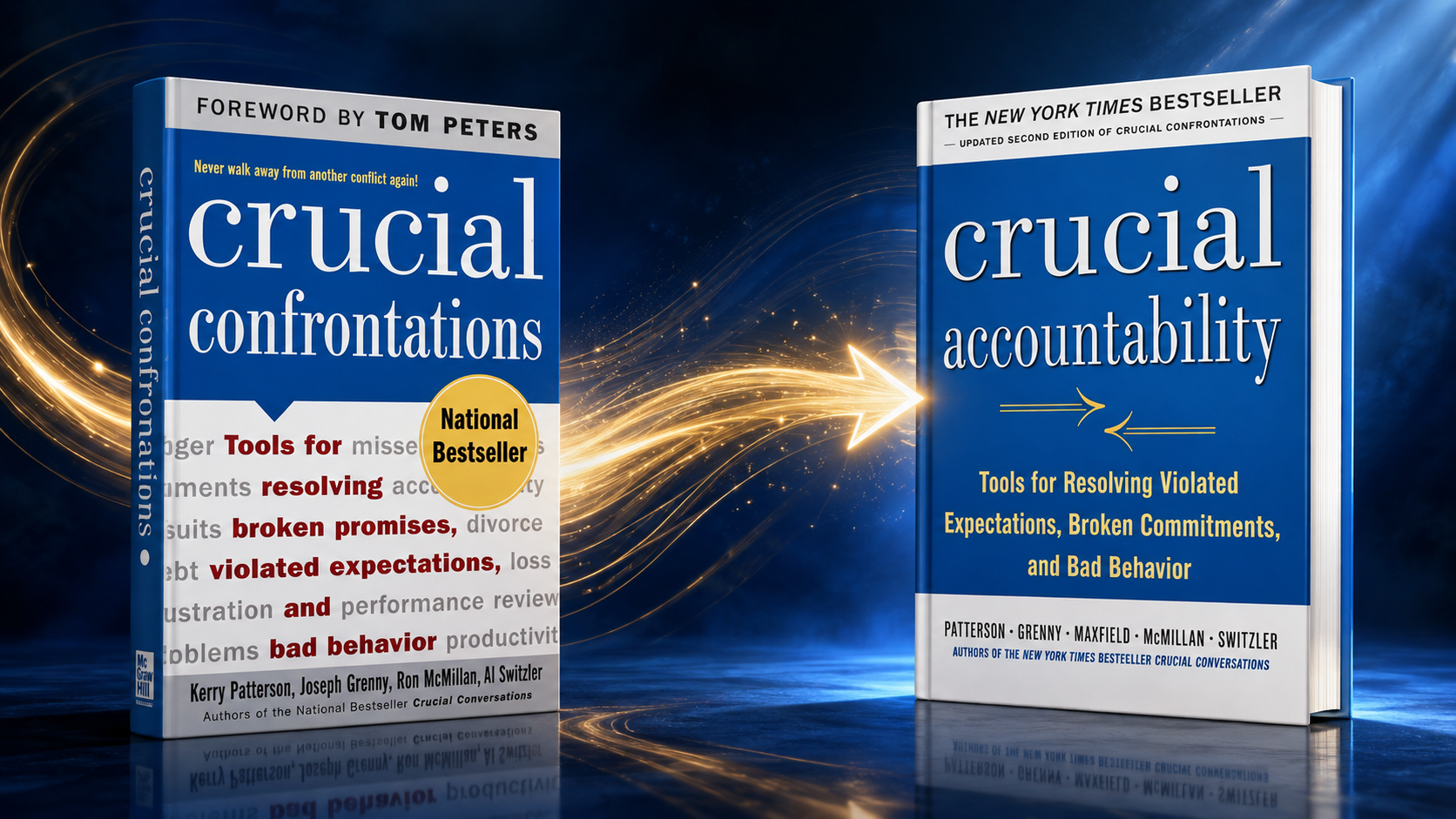
I recently noticed something interesting: Crucial Confrontations and Crucial Accountability are essentially the same book. The authors changed the title, but the message remained focused on resolving violated expectations, broken commitments, and bad behavior.
The new title makes sense.
The word confrontation has developed a bad reputation. People hear it and immediately picture yelling, aggression, finger-pointing, and someone flipping a table like a reality television reunion.
But confrontation doesn’t have to be aggressive. Sometimes it simply means addressing an uncomfortable issue directly instead of pretending it didn’t happen.
And apparently, I’ve been doing a lot of confronting lately.
I’ve questioned unanswered requests, challenged inconsistent explanations, followed up when people hoped I would forget, and refused to accept silence as a satisfactory response. I’m not looking for an argument. I’m looking for answers.
That isn’t aggression. That is accountability.
That’s why the revised title works better. Accountability describes the real purpose of these conversations: identifying what was promised, explaining what actually happened, and asking what will be done about the difference.
Of course, some people would still prefer the original title—especially when they’re the ones being held accountable. Calling it a “confrontation” makes it easier to portray the person asking questions as the problem.
That can become the easy way out:
“Why are you being so confrontational?”
Translation: “Why won’t you stop asking about the thing I haven’t answered?”
Changing the language doesn’t change my approach. I will continue to ask direct questions and follow up, and I expect people and organizations to stand behind their words and actions.
Call it confrontation if you want.
I call it accountability—and I’m not allowing the easy way out.
Whistleblowers Welcome: Help Shine a Light on Leadership and Workplace Culture
Every organization has room to improve. Some embrace feedback. Others silence it.
If you are a current or former employee who is concerned about workplace culture, leadership, management practices, accountability, or organizational performance, I’d like to hear your perspective.
If you choose to reach out, I will take reasonable steps to redact identifying information before discussing your experience publicly. Please do not send confidential, proprietary, or legally protected information. I’m interested in your experiences, observations, and opinions—not trade secrets.
Poor performance should not be rewarded.
Ineffective leadership should be examined, not ignored.
A toxic culture rarely appears overnight. It often starts at the top and spreads throughout an organization until someone has the courage to confront it.
One of my favorite leadership principles is simple:
You tolerate what you allow.
If leaders allow dysfunction, it becomes the culture.
If employees remain silent out of fear, meaningful change becomes even more difficult.
Constructive transparency and accountability make organizations stronger—not weaker.
If there are stories that deserve to be heard, let’s have that conversation.