The “I Don’t Fly Often” Crowd Has Entered the Cabin
I’d like to formally update my flight log with a new entry in the ongoing series titled “Why Airplane Etiquette Is Apparently Optional.”
Welcome aboard American Airlines Flight AA333.
Seat 15B.
Right next to me.
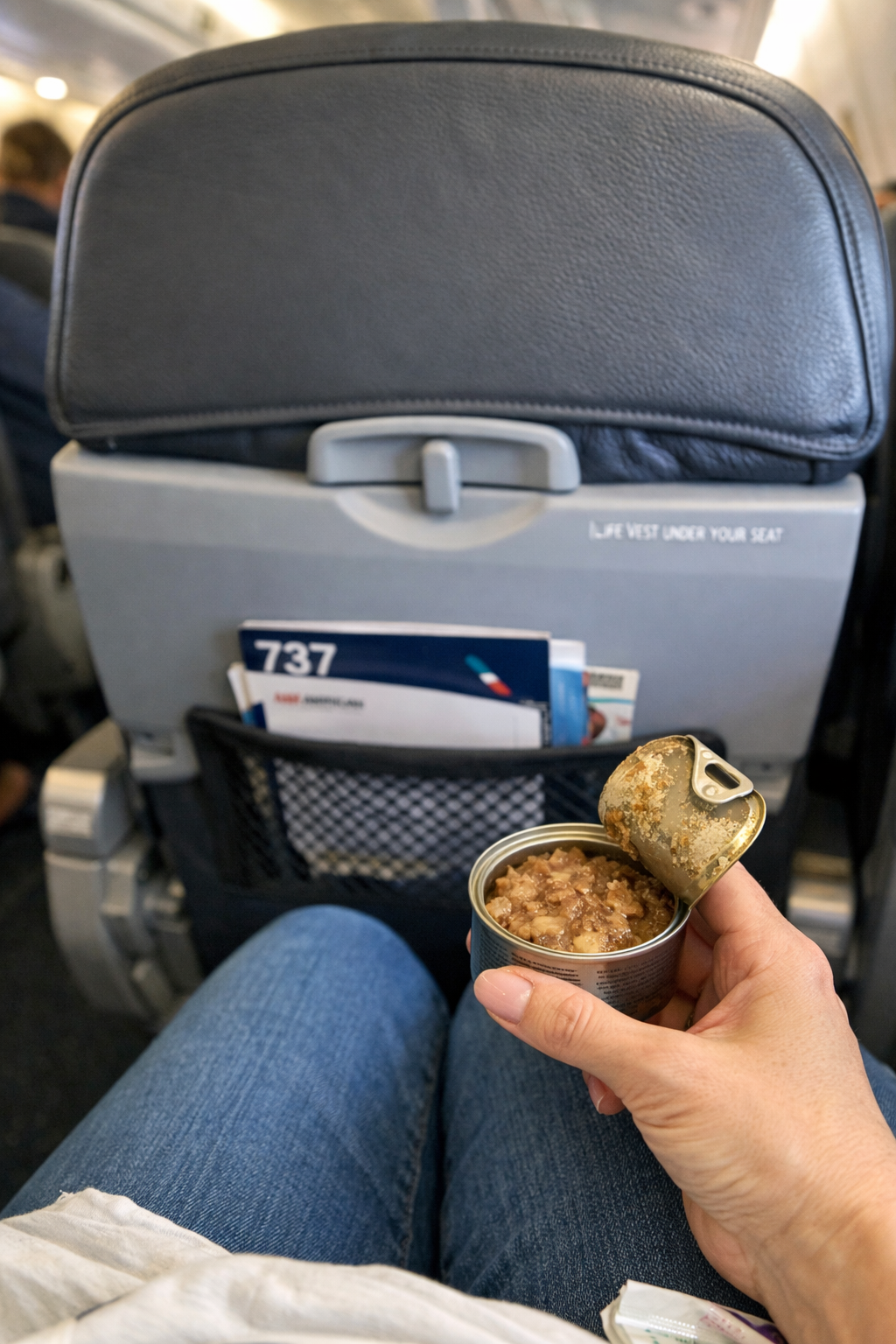
And friends… we have food.
Not snacks.
Not a sandwich.
Not even something politely neutral like pretzels.
This is hot, pungent, aggressively aromatic food that smells uncannily like cat food.
Now, before anyone gets defensive—no judgment on cuisine preferences. Eat what you love. Live your truth. But there’s an unspoken rule of flying that seasoned travelers understand instinctively:
If it smells like it belongs in a bowl on the floor, it does not belong in a pressurized metal tube.
This, once again, is classic “don’t fly often” behavior.
The signs are always there:
Zero situational awareness
No concern for shared air
Complete confidence that this was the right moment to open that container
Airplanes are already a sensory assault. Limited legroom. Engine noise. That one guy who coughs like he’s auditioning for a medical drama. We do not need olfactory chaos added to the mix.
And yet here we are.
Between the early seat recliners and now the mystery protein-emitting eau de feline entrée, this cabin is shaping up to be a masterclass in rookie mistakes.
Frequent flyers don’t need reminders. We know the drill:
Neutral-smelling food only
Eat fast or wait
Respect the invisible bubble of misery we all share
So to seat 15B: I hope your meal was worth it. Truly. Because the rest of us will be smelling it until cruising altitude… and possibly until landing.
Fasten seatbelts.
Tray tables up.
And please—next time—leave the cat food at home. 🐈✈️
Seat Etiquette 101: A Masterclass in How Not to Fly
I’m currently on American Airlines flight 3322, and before we’ve even left the gate, I’ve already witnessed something that should be covered in every “So You’re Flying for the First Time” pamphlet.
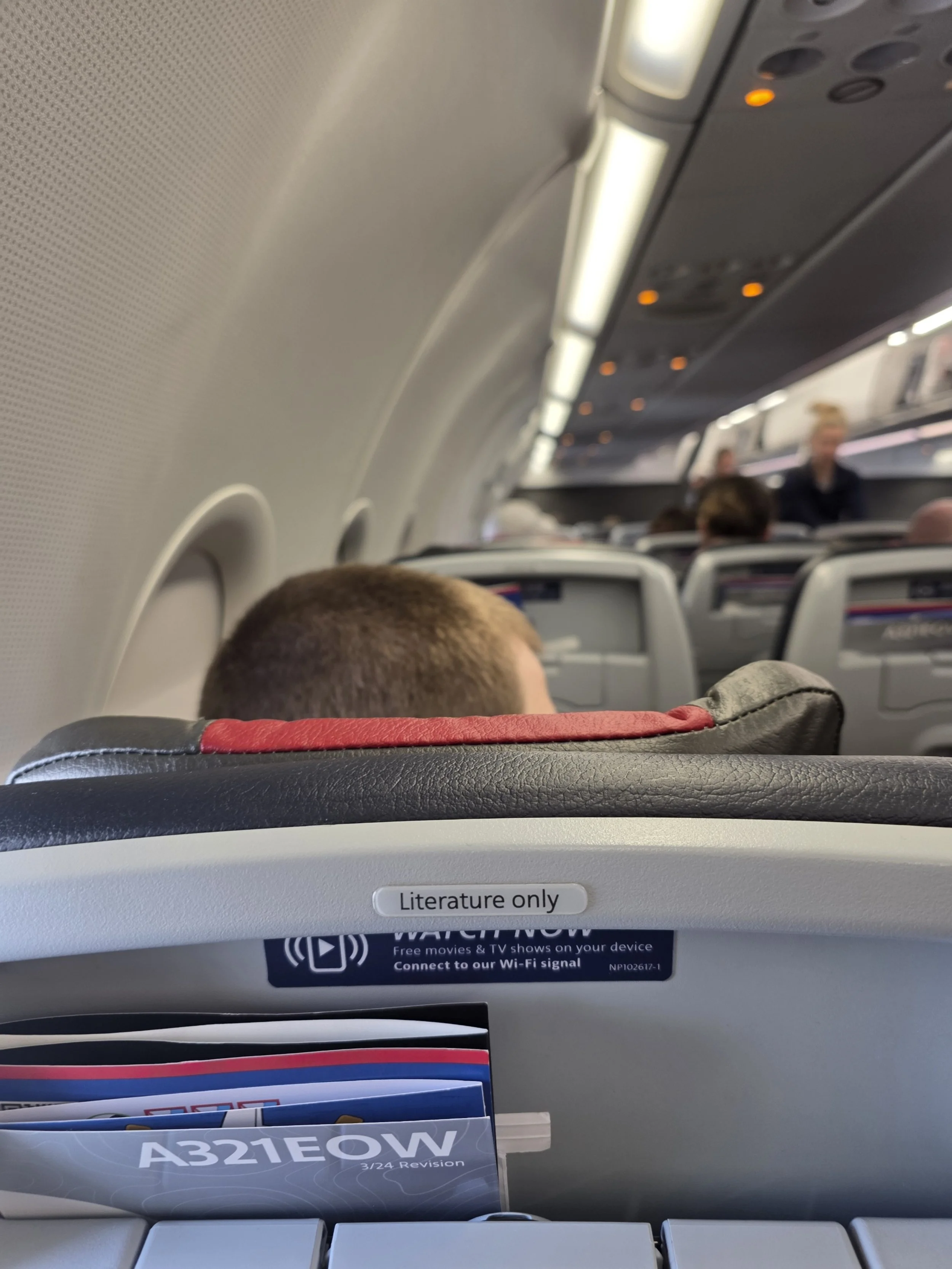
The guy in seat 14A, directly in front of me, decided—before takeoff—to fully recline his seat.
Not a gentle lean.
Not a cautious test.
No hesitation whatsoever.
Just full send, like we were already cruising at 35,000 feet with drink service underway.
Let’s be clear: this isn’t advanced flying behavior. This is novice flyer energy.
For those new to air travel (or apparently seated in front of me today), here’s a quick refresher:
Takeoff = seat upright
Landing = seat upright
Taxiing = seat upright
Still on the ground = seat upright
Reclining before takeoff isn’t just bad etiquette—it’s a dead giveaway that you either:
Rarely fly
Don’t care about anyone behind you
Think airplane seats work like a La-Z-Boy in your living room
The worst part? The confidence. The sheer, unearned confidence of someone who has absolutely no idea what they’re doing.
Now I understand—air travel can be stressful. Seats are tight. Comfort is a myth sold by marketing departments. But there’s an unspoken social contract on planes: we all suffer equally.
You don’t get to skip ahead to “nap mode” while the rest of us are still waiting for the safety demo.
So here’s a friendly PSA from seat 14-something-behind-you:
If you’re going to fly, learn the basics.
If you’re going to recline, wait your turn.
And if you’re going to announce you’re a rookie flyer—apparently, 14A is the place to do it.
Fasten seatbelts.
Seats upright.
Common sense… optional, but encouraged.
Subscribe to NielFlamm.com.
Missed Flight, Missed Conversation — Day 16 of Silence
Sometimes timing decides things for you.
My #AmericanAirlines flight 1890 from LAS to DFW on January 4 was canceled. The brief window I had hoped to use to meet #NiravTolia in person is, for now, gone. In that sense, Nirav lucked out — even though neither he nor anyone from #Nextdoor reached out to have the conversation in the first place.
That said, the door is still open. #NiravTolia and #Nextdoor — we can still meet.
In the meantime, today marks Day 16 of #Nextdoor’s voluntary silence:
- No LinkedIn post
- No Facebook post
- No update on the Nextdoor blog
I’ve been reading recent posts from companies that proudly claim they are customer-centric. It raises an obvious question: How is silence customer-centric? Neighbor-centric? Advertiser-centric? Shareholder-centric?
#Nextdoor’s brand promise is connection. Yet the absence of a leadership voice, combined with an unpaid and inconsistently governed moderator model, is doing the opposite. Moderators are meant to help build trust and connection; instead, inconsistency and opacity erode it. And leadership silence doesn’t just fail to fix the problem — it amplifies it.
Connection doesn’t happen by waiting for the calendar to cooperate. It happens when leaders show up, engage, and talk — even when it’s uncomfortable. Growth hurts. Complacency is easy.
Day 16 is still counting.
Subscribe to NielFlamm.com.
#Nextdoor #Leadership #Accountability #CustomerExperience #CX #CommunityTrust #ShareholderVoice #BrandTrust #ShowUp
When Cost Savings Undermine Brand Experience
I want to share a candid customer experience with #AmericanAirlines—specifically regarding its chat support service.
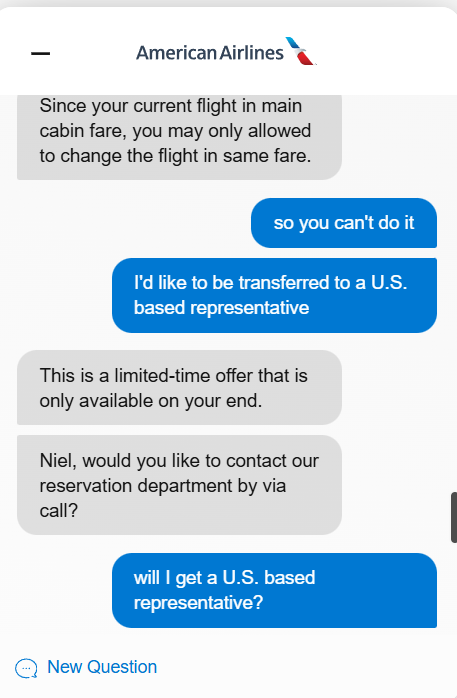
On my current round-trip CHS ↔ LAS, I’ve used #AA's chat support three times. Each interaction felt dry, unempathetic, and robotic. The tone and approach suggest an offshore #BPO model that, at least in these instances, doesn’t reflect the warmth, accountability, or customer-centric culture the #AmericanAirlines brand promises.
This raises a bigger question for me as a loyal customer:
Do companies truly save money in the long run by outsourcing customer experience to partners that don’t deeply understand their customer base—or the brand they represent?
Over the past two years, I’ve been an exclusive #AmericanAirlines customer—flying regularly, paying for onboard Wi-Fi, and using additional services. Loyalty is built on trust and experience, not just price or routes. When service interactions consistently miss the mark, it erodes that trust.
As a result, I’m now actively considering other carriers, particularly those that invest in on-shore or culturally aligned customer support that can deliver empathy, clarity, and ownership when things matter most.
Customer experience is the brand—especially in moments when travelers need help.
Read more and subscribe to NielFlamm.com.
#CustomerExperience #BrandIntegrity #Aviation #BPO #CX #CustomerSupport #AirlineIndustry #Leadership #Loyalty

What Happens When Sea Level Meets the Desert: How Las Vegas Is Wreaking Havoc on My Sinuses
I’ve traveled enough to know that every place has its quirks—but this trip to Las Vegas has introduced me to a special kind of misery: altitude and desert air teaming up to destroy my sinuses absolutely.
Coming from near sea level, the jump to Las Vegas—sitting roughly 2,000 feet above sea level—might not sound dramatic. But combine that elevation change with ultra-dry desert air, and my body is making its objections very clear.
Here’s what I’m dealing with:
Intense sinus pressure, especially behind the eyes and forehead
Dry, burning nasal passages
Headaches that come and go
Thick congestion that somehow exists despite the dryness
Fatigue and that foggy, “something’s off” feeling
Occasional ear pressure and popping
So why does this happen?
First, altitude change. Even a modest increase in elevation reduces air pressure. My sinuses are air-filled cavities, and when outside pressure drops quickly, they struggle to equalize. That imbalance creates pressure, pain, and inflammation.
Second, desert dryness. The Las Vegas air is dry. Dry air strips moisture from my nasal passages, which are supposed to stay damp to filter air and fight off irritants. Once they dry out, inflammation kicks in, mucus thickens, and everything feels blocked—even when it isn’t.
Third, hydration imbalance. I lose moisture faster here—through breathing, skin, and just existing. If I’m even slightly dehydrated, my sinuses feel it immediately.
Put it all together, and I get what I’m experiencing: terrible wonders. The kind where I marvel at how quickly my body reminds me it doesn’t like sudden environmental changes.
Vegas may be known for excess, but this sinus reaction feels especially over-the-top. Lesson learned: altitude, dryness, and quick transitions are not a friendly trio—at least not for my head.
Now, if you’ll excuse me, I’ll be over here drinking water, looking for saline spray, and counting the hours until my sinuses remember how to function.
Subscribe for updates on NielFlamm.com
#VegasTrip #SinusPressure #AltitudeChange #DesertAir #TravelReality #SinusIssues #DryClimate #BodyKnows #NotUsedToThis #VegasProblems