
What Waffle House, In-N-Out, and Nextdoor Can Teach Us About Consistency
After leaving my podiatrist appointment and before heading to the next one, I stopped somewhere familiar and comforting: Waffle House.
If you've never been, you're missing out. Their slogan, "Good Food Fast," is simple, memorable, and consistently delivered. The menu isn't complicated, the service is friendly, and the staff seamlessly handle multiple roles while creating a welcoming atmosphere. Give me a waffle, a patty melt, and hash browns smothered and covered, and I'm a happy customer.
It reminded me of another favorite, In-N-Out Burger. A small menu, fresh ingredients, and remarkable consistency no matter which location you visit.
That consistency is something I believe Nextdoor struggles to achieve.
The company's messaging shifts between promoting human connection, AI-driven experiences, advertiser opportunities, dynamic pricing, and neighborhood engagement. As a shareholder and observer, I find myself asking: What is the core mission?
There's another interesting contrast. Waffle House and In-N-Out remain privately owned businesses, allowing leadership to execute a long-term vision without quarterly market pressures.
If Nextdoor's leadership truly believes its strategy will create long-term value, perhaps the boldest statement would be to invest alongside shareholders through a meaningful stock buyback or even consider taking the company private. With shares hovering around $2 after spending time closer to $1.50, confidence could be demonstrated through action rather than messaging alone.
Consistency builds trust. Whether it's serving breakfast or building communities, people know when an organization has a clear identity—and when it doesn't.
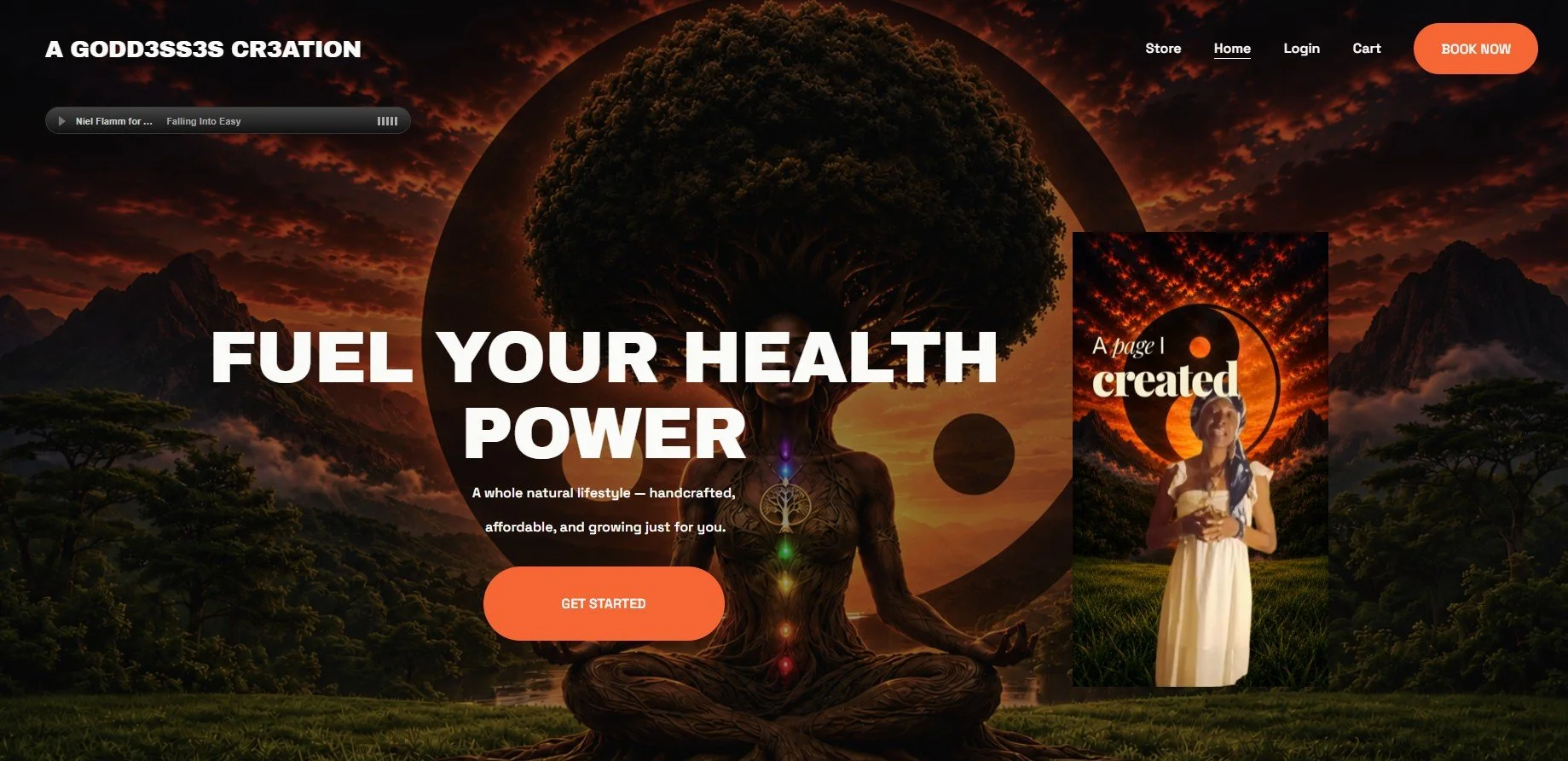
🌿 Excited to Help Bring Natural Wellness to More People!
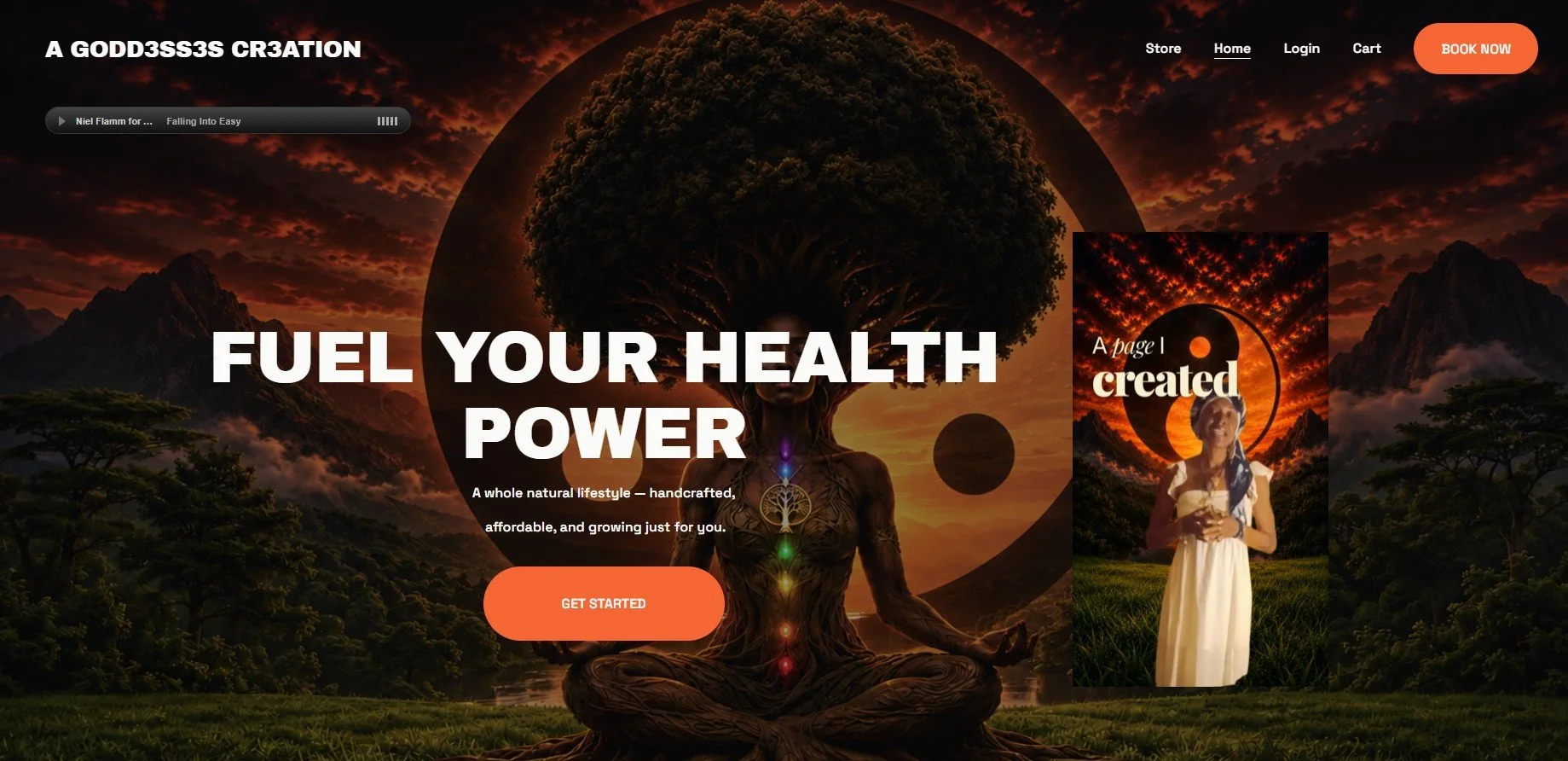
I'm excited to share a new project that’s close to my heart!
I’ve partnered with Aisha Wells and Alicia Tanksley to help bring affordable, natural apothecary products to more people through A Godd3ss3s Cr3ation.
This collaboration has given me the opportunity to put my growing web design and digital skills to work by helping build and enhance the website. It’s been an amazing experience combining creativity with technology while supporting a mission centered on holistic wellness and natural living.
The site is still a work in progress, with two products currently available and more to come. You can also reach out directly to founder Aisha Wells to learn more about her vision and passion for natural healing.
Check it out and follow along as we continue to grow!
17 Years Without a Drink... and I'd Like to Keep the Body Parts I Have Left
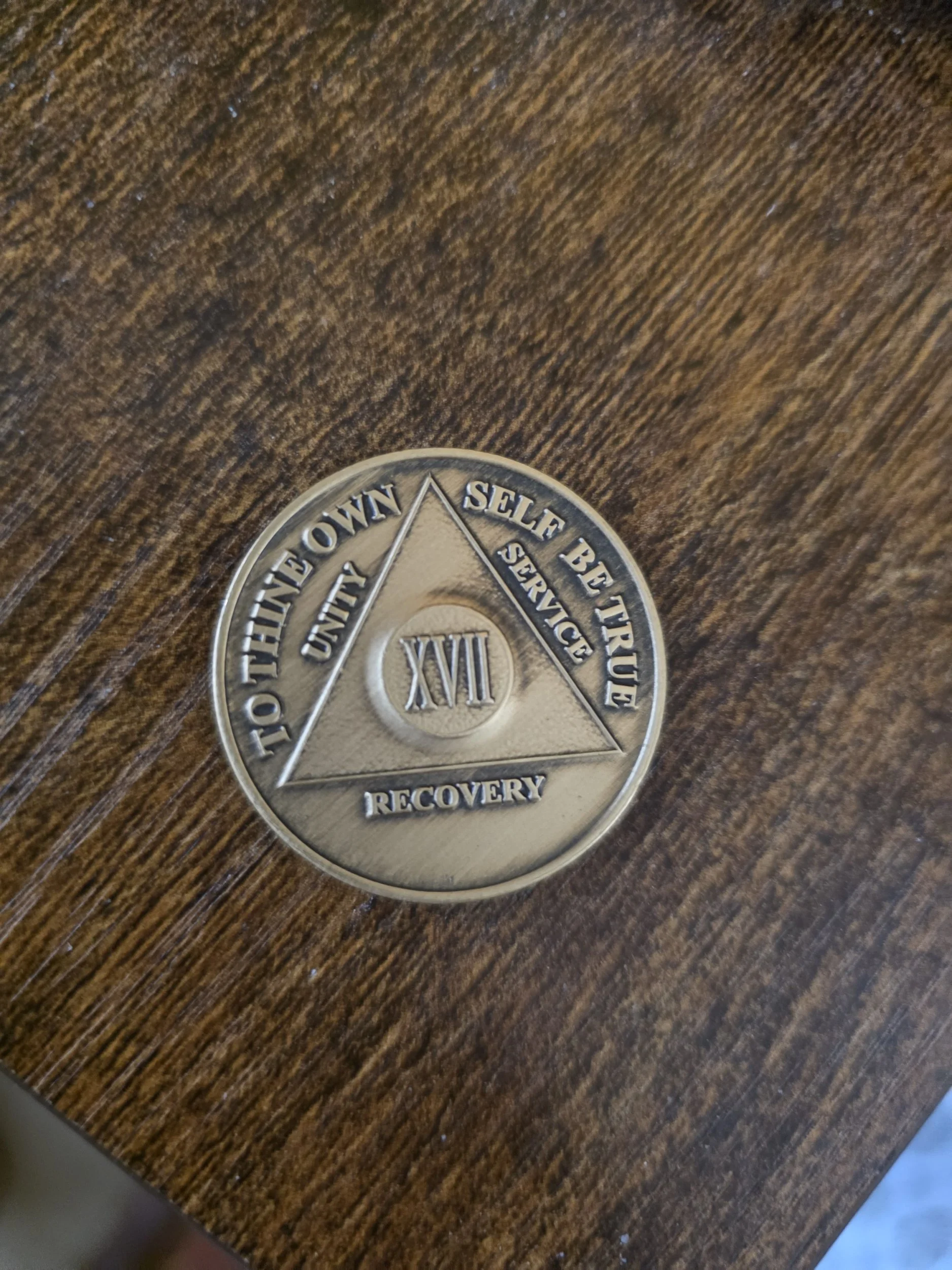
On June 6, 2026, I celebrated 17 years without a drink. That's 17 years since I last picked up an alcoholic beverage, and I am incredibly grateful for that gift.
I received a medallion, or as many of us call it, a chip, recognizing the milestone. When I picked it up, I was reminded of something that has been said in meetings for years:
"Pick up the chip to show the newcomer that it can be done."
I love that thought.
Have I worked the program perfectly? Absolutely not.
In fact, when I stop doing the simple things that got me here, life has a funny way of reminding me who's really in charge. Somewhere along the way I've lost a leg, gained kidney failure, and accumulated enough medical specialists to field a baseball team.
At this rate, if I stop working the program, it's only a matter of time before I run out of body parts to donate to bad decisions.
Humor aside, I've learned something important.
I once heard that science is the ability to reproduce the same result over and over again. In that sense, the recovery program I work is scientific enough for me. I do the work, I receive the gifts that are promised. I've seen it happen in my own life, and I've watched it happen in the lives of countless others.
The difficult part is that recovery often requires me to do the exact opposite of what my brain naturally wants to do.
I want to isolate.
The program tells me to connect.
I want to think only about myself.
The program tells me to help someone else.
I want to complicate everything.
The program reminds me to keep it simple.
For whatever reason, those simple actions continue to produce extraordinary results.
Today, I have friendships I never imagined, opportunities I never expected, and a life that—while certainly not perfect—is far better than the one I left behind 17 years ago.
To everyone who has walked beside me during this journey, whether for a day or for years, thank you.
Your encouragement, friendship, honesty, patience, and example have helped carry me through some incredibly difficult times.
I appreciate each and every one of you.
And if you're new and wondering if recovery is possible, I'm holding this chip for you.
It can be done.
On June 6, 2026, I celebrated 17 years without a drink. That's 17 years since I last picked up an alcoholic beverage, and I am incredibly grateful for that gift.
I received a medallion, or as many of us call it, a chip, recognizing the milestone. When I picked it up, I was reminded of something that has been said in meetings for years:
"Pick up the chip to show the newcomer that it can be done."
I love that thought.
Have I worked the program perfectly? Absolutely not.
In fact, when I stop doing the simple things that got me here, life has a funny way of reminding me who's really in charge. Somewhere along the way I've lost a leg, gained kidney failure, and accumulated enough medical specialists to field a baseball team.
At this rate, if I stop working the program, it's only a matter of time before I run out of body parts to donate to bad decisions.
Humor aside, I've learned something important.
I once heard that science is the ability to reproduce the same result over and over again. In that sense, the recovery program I work is scientific enough for me. I do the work, and I receive the gifts that are promised. I've seen it happen in my own life, and I've watched it happen in the lives of countless others.
The difficult part is that recovery often requires me to do the exact opposite of what my brain naturally wants to do.
I want to isolate.
The program tells me to connect.
I want to think only about myself.
The program tells me to help someone else.
I want to complicate everything.
The program reminds me to keep it simple.
For whatever reason, those simple actions continue to produce extraordinary results.
Today, I have friendships I never imagined, opportunities I never expected, and a life that—while certainly not perfect—is far better than the one I left behind 17 years ago.
To everyone who has walked beside me during this journey, whether for a day or for years, thank you.
Your encouragement, friendship, honesty, patience, and example have helped carry me through some incredibly difficult times.
I appreciate every one of you.
And if you're new and wondering if recovery is possible, I'm holding this chip for you.
It can be done.
Leadership Is More Than Looking Back
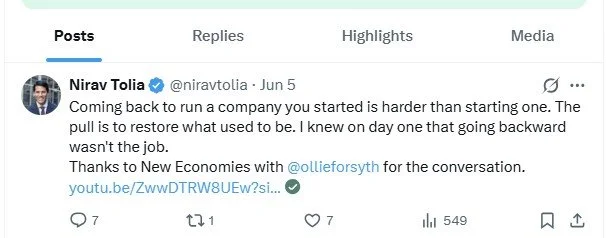
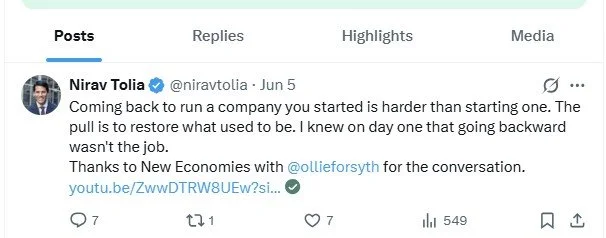
I came across a recent post on X from Nextdoor CEO Nirav Tolia reflecting on the challenges of returning to lead a company he founded. My reaction? It reads more as frustration than inspiration.
Running a public company is difficult, and every CEO faces pressure. But leadership is about setting the tone for employees, shareholders, customers, and the broader community. Looking backward can be part of the journey, but people also want to hear a vision for moving forward.
I've also seen current and former employees post online about what they describe as a difficult workplace culture. Those are their opinions and experiences, not mine, but they reinforce the importance of leadership messaging.
In a previous blog, I also commented on a March 3, 2026 X post that began with the phrase, "I'll be honest…" I believe communicators should avoid that expression because it can unintentionally invite readers to question whether previous statements were equally candid.
Which brings me to another question: Does Nextdoor have a public relations strategy that helps shape these messages? The company has a Media Relations team, but strong executive communications require more than media outreach.
If you need additional communications expertise, firms like JMac PR, led by John McCartney and known for technology and media campaigns, can provide strategic messaging support to help organizations better connect with stakeholders.
Leadership isn't just about what you say—it's about the confidence and clarity people take away after hearing it.
Subscribe to NielFlamm.com.
Empathy or Automation? The $1,000,000 Nextdoor Question
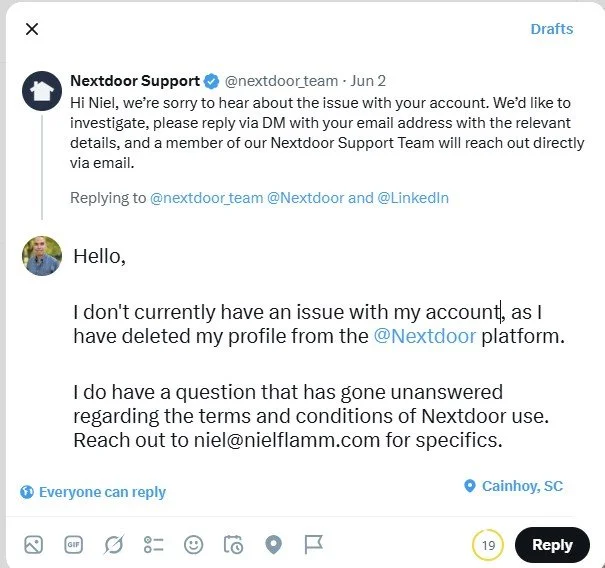
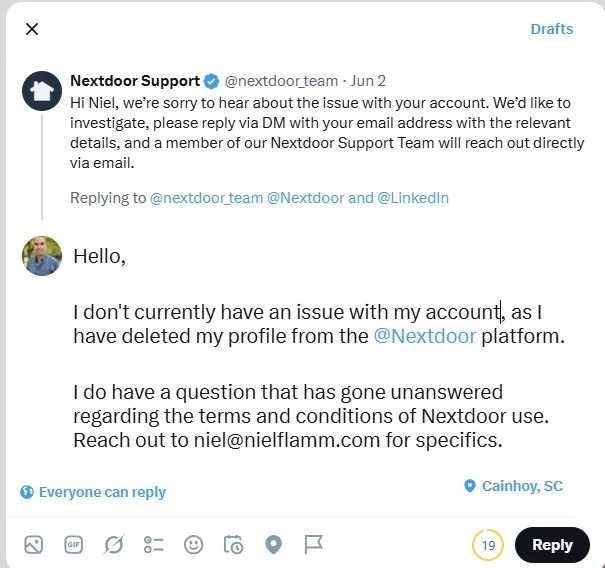
I recently received what appears to be a familiar, canned response from Nextdoor Support after posting on X. The message said they were sorry to hear about my issue and wanted to investigate, asking me to send my email address so someone from the Support Team could reach out directly.
So I replied.
I explained that I no longer have an account, but I have an unanswered question regarding Nextdoor's Terms and Conditions, and I invited them to contact me by email.
Now comes the $1,000,000 question:
Will someone actually follow through?
It's easy to express empathy with a template. It's much harder to demonstrate it through action. The appearance of caring and actually caring are two very different things.
That reminds me of Natalie Beckerman's new book, When Did You Stop Caring?, now available June 23, 2026, through Amazon and Barnes & Noble. I'm also looking forward to her presentation at Customer Contact Week (CCW) in Las Vegas, June 22–25, 2026, where I hope the conference delivers an enormous conversation around empathy, leadership, and customer experience.
The title makes me wonder:
When did Nextdoor stop caring enough to see conversations through to completion?
I'll gladly update everyone if an email arrives.