
Peace, Serenity... and the World's Longest Car Horn
Today I was reminded that peace and serenity aren't destinations—they're things I have to keep practicing every single day.
I've shared this story before, but it still makes me laugh... and cringe.
On my way home from my initial retina detachment consultation in Hanahan, South Carolina, traffic came to a complete crawl. Bumper-to-bumper. I was actually doing fine with it. Traffic happens.
Then someone decided the shoulder was their own personal VIP lane.
They flew past everyone who had been patiently waiting and squeezed right in front of me.
At that exact moment, my serenity clocked out for the day.
I didn't give a polite courtesy honk.
I didn't tap the horn to let them know I was there.
I introduced them to the entire catalog of my car horn.
And I kept introducing it.
For so long... that I literally wore out my car horn.
Yes... I broke my horn.
I actually heard it take its last breath.
I'm pretty sure if my BMW could talk, it would've said, "Niel... buddy... enough already."
I estimate I was honking continuously for at least 15 minutes.
The person who cut me off probably forgot about me after 30 seconds.
Meanwhile, I was apparently auditioning to be the Low Country Symphony's first horn section.
Looking back, it's hilarious.
It's also a little wild.
For me, that's what alcoholism can look like today. It isn't that I'll pick up a drink—that was never my first thought, and recreational drugs weren't my thing either. Instead, it can show up as anger, self-righteousness, and reacting in ways that make absolutely no sense.
I've never repaired the horn.
Not because I don't have the time.
Not because I don't have the money.
I haven't fixed it because, in my mind, I haven't yet truly learned how to share the road with other people. Until I make more progress on that, the broken horn serves as a daily reminder that I still have work to do.
Recovery isn't about becoming perfect.
It's about recognizing when I'm the problem, owning it, laughing at myself when appropriate, and trying to do a little better tomorrow than I did today.
Recently, an awesome friend from one of my recovery meetings thought of me. She knows this story. She knows I still wrestle with the rage that can pop up out of nowhere—and she knows I've been driving around with a silent horn ever since.
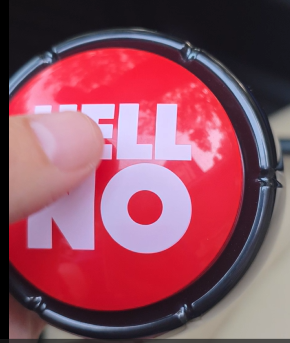
She surprised me with the perfect gift.
I laughed immediately.
Now I need to mount it on my dashboard.
If you want to see what she gave me—and hear some of the hilarious things it says—head over to:
Oh... and before anyone points it out, ignore the lack of manicure in the video. Dialysis, life, and recovery have been keeping me just a little busy.
Who knew one broken horn would become one of my biggest recovery reminders?
Life has a funny way of teaching us lessons.
Sometimes those lessons arrive with a whisper.
Sometimes they arrive with 15 minutes of uninterrupted honking.
Thanks for reading, and if this story made you smile—or reminded you of one of your own moments of insanity—leave a comment. I'd love to hear it.
Join the discussion on NielFlamm.com.

Day 38: Context Matters

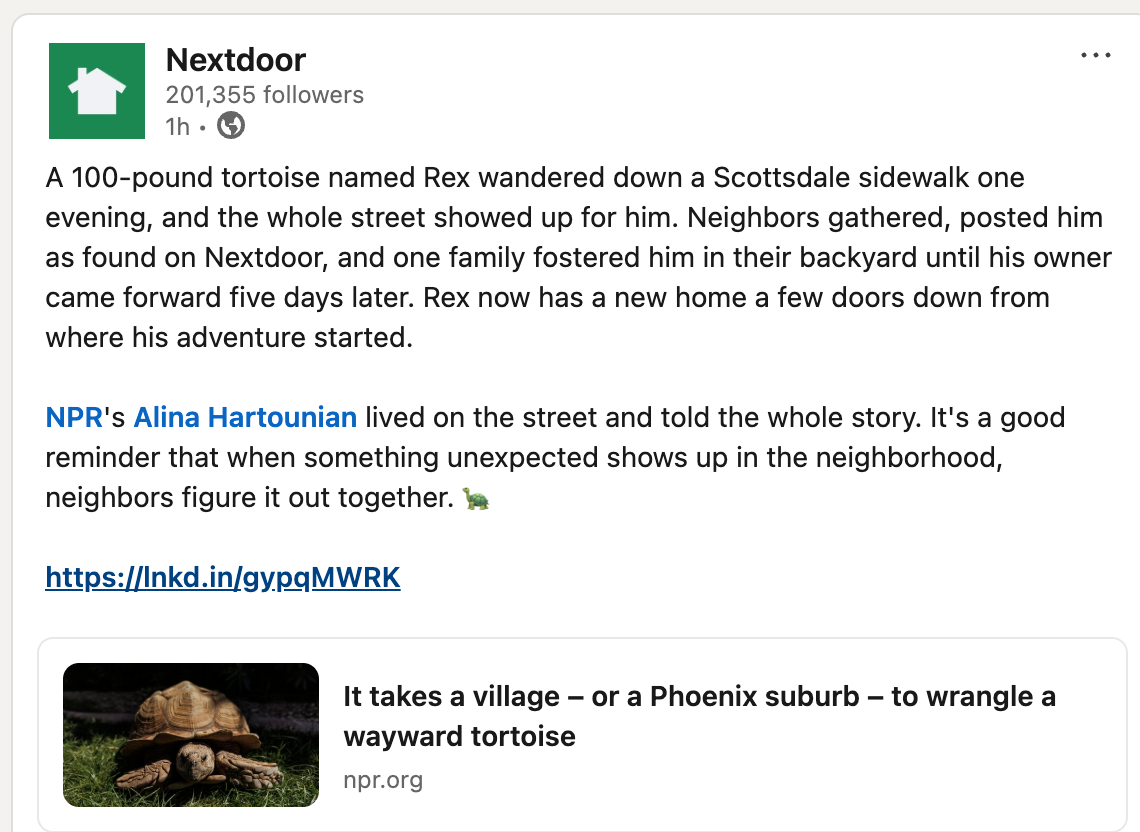

Nextdoor recently shared another feel-good story on LinkedIn about a lost tortoise and a neighborhood coming together to help.
It's a great story.
What caught my attention, however, was what wasn't included in the LinkedIn post.
In the accompanying NPR article by Alina Hartounian, the story notes that both Facebook and Nextdoor were used to help spread the word—with Facebook mentioned first. The LinkedIn post, by contrast, highlights only Nextdoor's role. To me, that leaves out important context about how the community effort came together.
It also raised a few questions.
I wonder whether Alina Hartounian is aware of the criticism some users have raised regarding Nextdoor's moderation and communication practices. NPR has a long history of reporting on issues involving free expression, transparency, and the role of the First Amendment in public discourse. While the First Amendment limits government restrictions on speech rather than private companies' moderation decisions, NPR has frequently covered debates about censorship, platform moderation, and the importance of open dialogue. That made me curious how those broader conversations intersect with reporting on social media platforms.
At the same time, Nextdoor's CEO, Nirav Tolia, continues to lead a company whose LinkedIn posts do not permit public comments. As someone who values feedback and discussion, I find that contrast noteworthy.
Today is also Day 38 since I requested a Nextdoor study. I still have not received the study or a response. At this point, I continue to wonder whether the document is intended primarily as a marketing or lead-generation asset rather than research distributed broadly upon request. I don't know the answer, but the continued silence naturally raises the question.
Transparency isn't just about the stories we tell.
It's also about the context we provide, the conversations we allow, and the questions we're willing to answer.
What are your thoughts?
Join the discussion on NielFlamm.com.
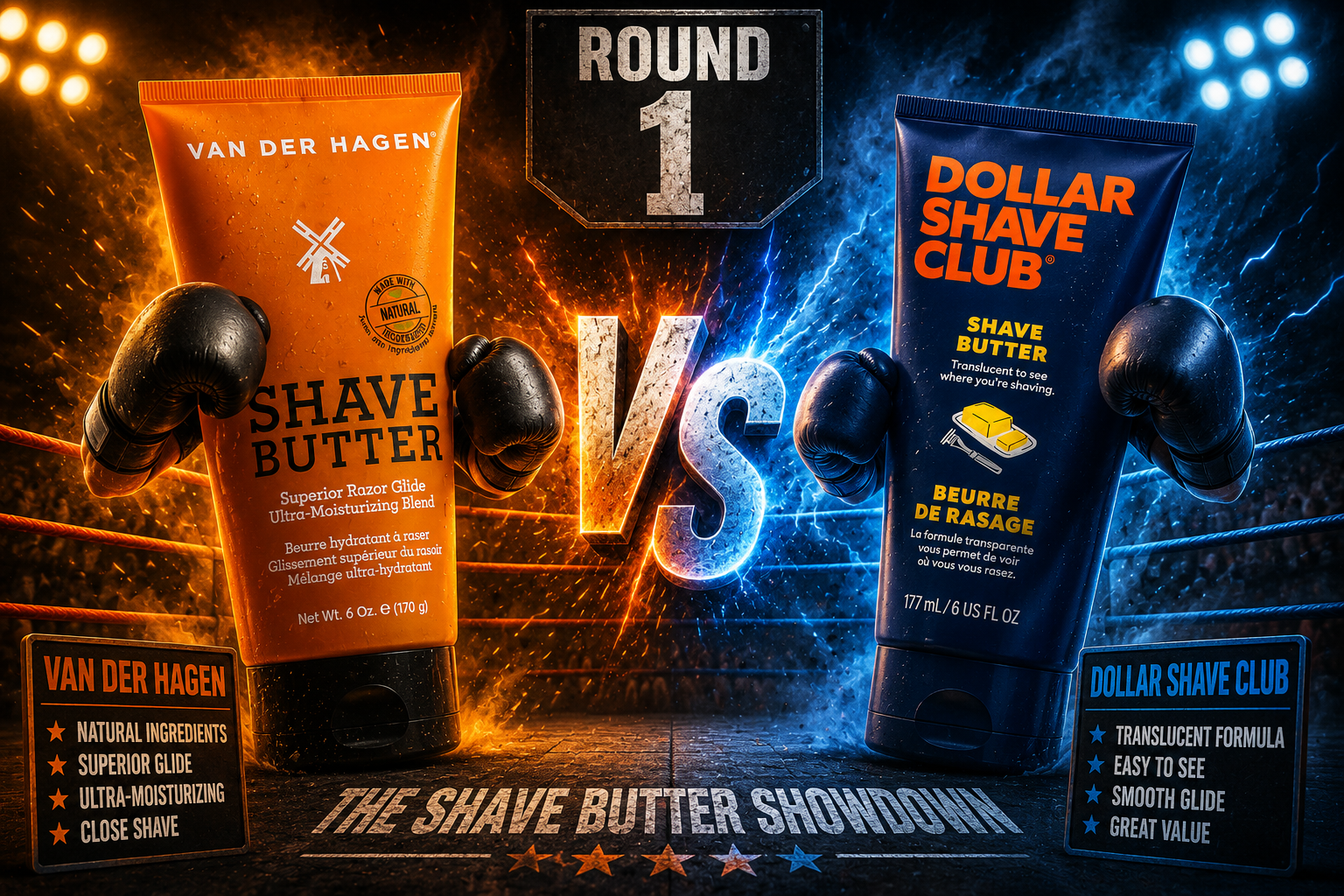
Battle of the Shave Butters: Round 1 — Scent
After spending at least a week with my new challenger, it's finally time to begin the comparison.
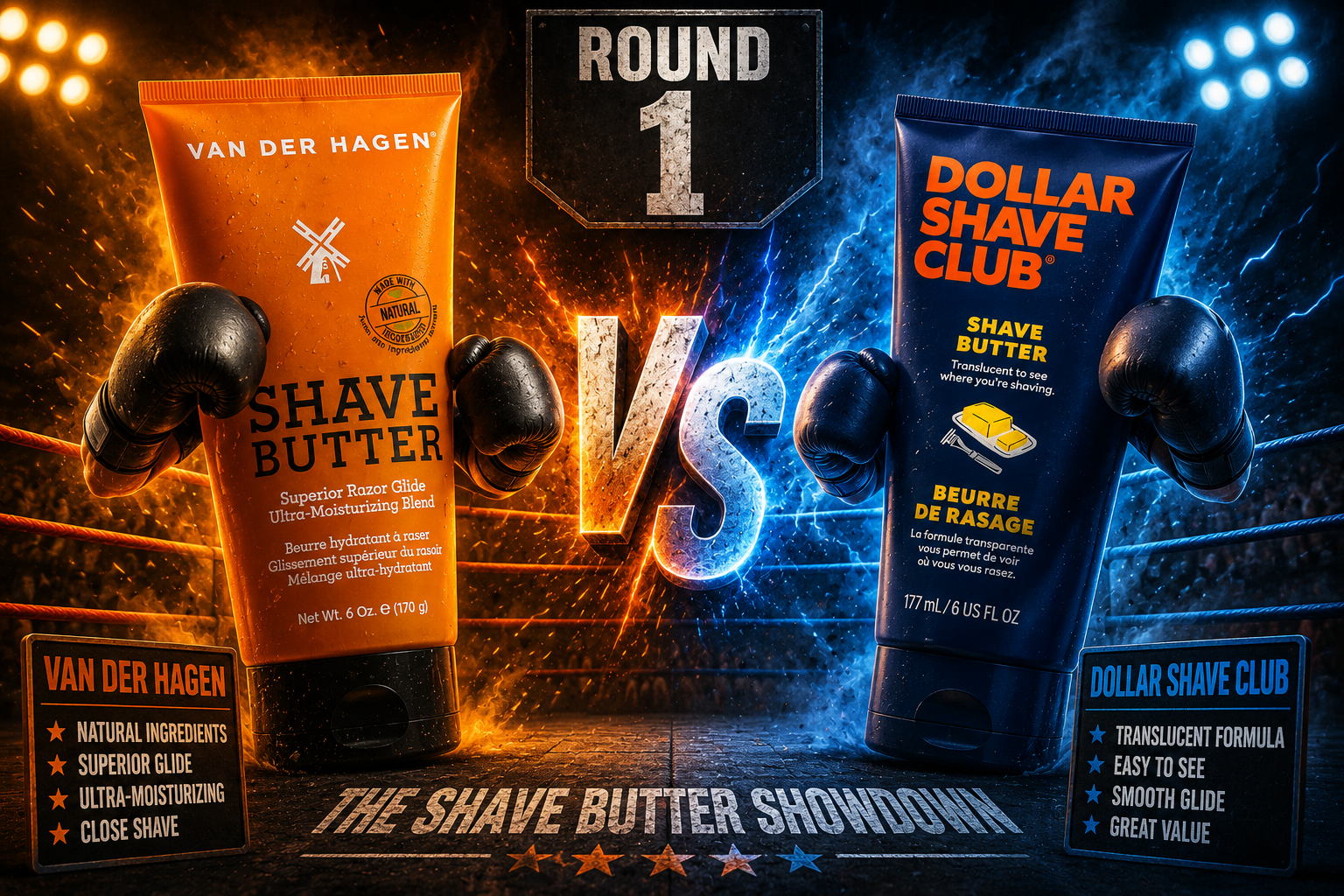
Welcome to Round 1 of the shave butter showdown:
Dollar Shave Club vs. Van Der Hagen.
This first round is all about one thing...
The smell.
When I open a tube of Dollar Shave Club Shave Butter, the scent reminds me of butter you'd use in the kitchen. Think baking a cake, making macaroni and cheese, or one of those rich French dishes where the chef believes there is no such thing as too much butter. It's a pleasant, warm scent that I've grown to enjoy over the years.
The Van Der Hagen Shave Butter is completely different.
To me, it smells very similar to Cetaphil, a well-known line of gentle skincare cleansers and moisturizers designed for sensitive skin. Cetaphil products are fragrance-light, non-irritating, and formulated to help cleanse while maintaining the skin's natural moisture barrier. Many dermatologists recommend them for people with dry or sensitive skin.
Now, here's where a completely unrelated story comes in.
Years ago, while attending a recovery meeting in Las Vegas, I was either chairing the meeting or filling in as the secretary. The person I was serving with mentioned skincare, and somehow the conversation turned to Cetaphil. They commented that crystal meth smelled like Cetaphil.
Whether that's accurate or not, I have no idea.
What I do know is that I wasn't particularly fond of the scent before hearing that story, and afterward I gravitated toward it even less. Funny how our brains make associations that stick with us for years.
That doesn't mean Van Der Hagen is a bad product. This is simply my personal reaction to the fragrance.
There are several more rounds to come—glide, razor feel, closeness of shave, skin hydration, value, and overall performance—but if we're scoring only Round 1: Scent, there's a clear winner for me.
🥊 Round 1 Winner: Dollar Shave Club Shave Butter.
What do you think? Have you tried either of these shave butters? Do scents influence your buying decisions, or is performance all that matters?
Join the discussion on NielFlamm.com.

The Worst Trifecta: When “Authenticity” Sounds Manufactured

I took a drive today from Mount Pleasant to Summerville with SiriusXM playing in the car. I don’t remember which channel I started on—possibly Hits 1 with Mack & Jen—but I do love the commercial-free experience.
Then an Alex Warren song came on.
I immediately changed the station.
The next channel was playing Teddy Swims.
I changed it again.
Then came Adele.
For me, it was the worst musical trifecta imaginable.
All three artists are celebrated for vulnerability, soulfulness, and deeply personal storytelling. Yet their music strikes me as highly manufactured—less connected to everyday people and more connected to the massive machine that is the modern music industry.
Adele is often presented as an artist who represents “every woman,” yet the face-value prices for her Caesars Palace residency were beyond the reach of many everyday fans.
Alex Warren has spoken publicly about his personal struggles, but some of his comments about his wife’s weight may be perceived as body-shaming. That creates a disconnect for me between the vulnerability associated with his image and the way those remarks can land with listeners.
Teddy Swims is marketed as a singer with tremendous soul. However, his comments about AI-generated music complicate that image for me. Music created with artificial intelligence raises difficult questions about authenticity, creative labor, and what happens when technology begins replacing the contributions of professional musicians.
These examples—and others—are why I change the station every time one of these artists comes through my speakers. Their music may resonate deeply with millions of listeners, but it doesn’t resonate with me. What others hear as authenticity, I hear as carefully packaged vulnerability.
Of course, music is intensely personal. One listener’s heartfelt anthem is another listener’s reason to change the station.
What are your thoughts? Do these artists feel authentic and relatable to you, or do you also hear the machinery of the music industry behind their stories?
Leave a comment and join the conversation.
Join the conversation at NielFlamm.com/blog

Day 37: Building a Brand vs. Repairing One

Yesterday, Nextdoor CEO Nirav Tolia shared a clip from a podcast interview with David Bergnaud on X:
https://x.com/niravtolia/status/2079617582869684510
I intentionally use the word participated.
Early in my career, I completed an unpaid internship with a small public relations agency in New York City. We shared office space with a web development company, pitched stories to journalists, worked to secure media opportunities for clients, and attended technology events at the Javits Center.
One lesson I learned is that, unless you're already a household name, podcast appearances rarely happen by chance. Public relations teams develop a strategy and actively work to place executives in front of audiences to expand brand awareness.
That made me think.
If time and resources are being invested in expanding the Nextdoor brand, shouldn't equal attention be given to strengthening the product and the customer experience behind that brand?
A compelling interview can create awareness, but awareness alone doesn't define a company's identity. Products, communication, and user experience do.
That brings me to Day 37.
It has now been 37 days since I requested a copy of a Nextdoor study that company communications directed readers to request from Jacob Chavis.
I still haven't received the study.
After reviewing similar job descriptions, my opinion has evolved. I now wonder whether the role is less about leading research operations and more focused on helping businesses understand and use research to support advertising decisions. I don't know if that's the case, but it's one possible explanation for why a straightforward request has remained unanswered for more than a month.
Regardless of the reason, this has become less about the study itself and more about communication.
I've said it before, and I'll say it again:
We tolerate what we allow.
As a shareholder, I believe companies should welcome thoughtful questions and respond to reasonable requests. That is how trust is built—with users, advertisers, employees, and investors alike.
Join the discussion on NielFlamm.com.