
What 98 Questions Revealed About Me
Every now and then, a job application asks to go beyond a résumé and complete an assessment that digs into how I think, work, and interact with others.
I'm currently applying for a role here in the Charleston, SC area. Like many opportunities these days, part of the hiring process included a behavioral assessment—98 questions that took about 45 minutes to complete.
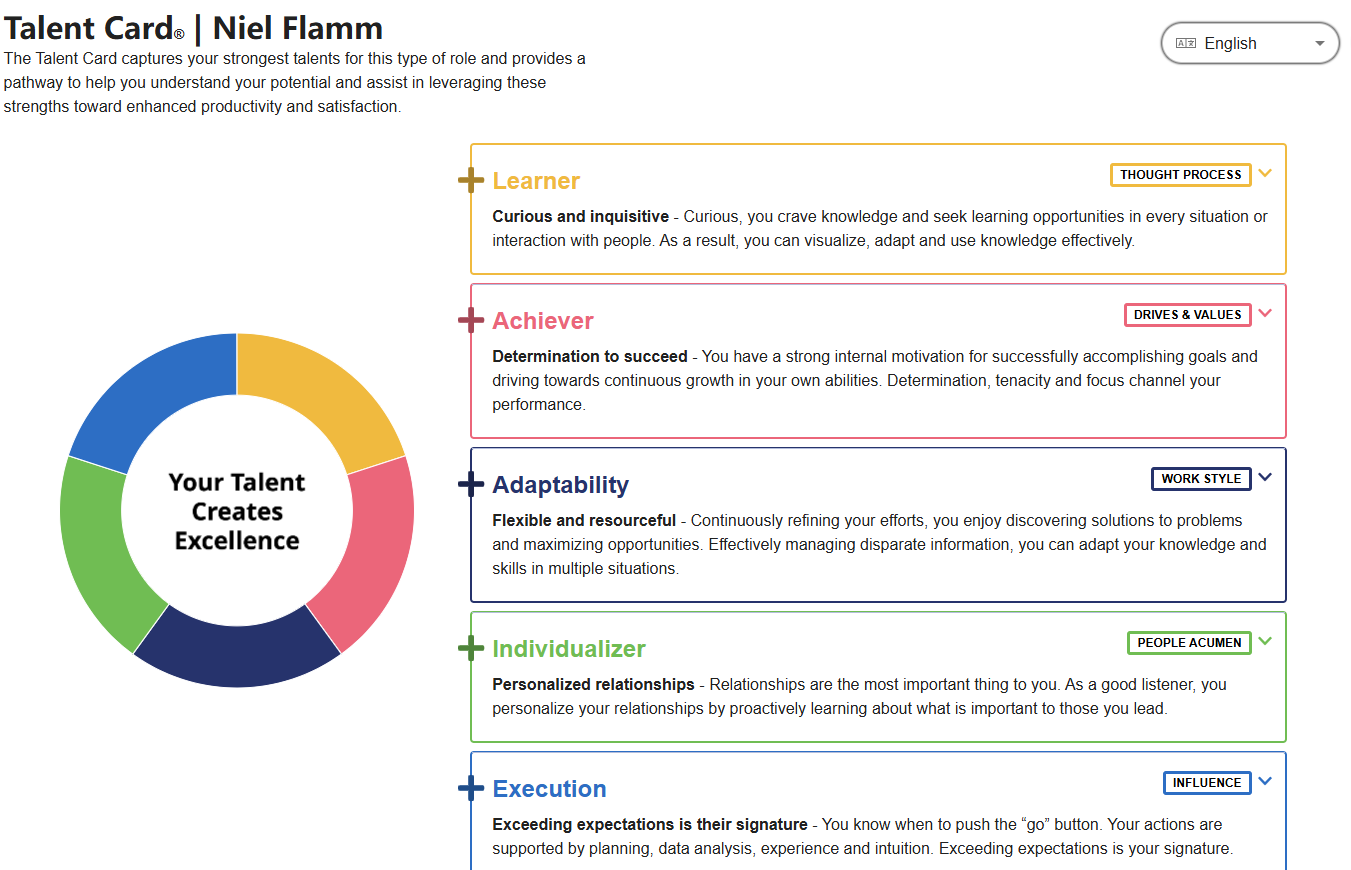
The results were interesting because they aligned closely with how I've approached my career in Learning & Development, leadership, and continuous improvement.
Here are the competencies the assessment highlighted:
📚 Learner (Thought Process)
Curious and inquisitive. I enjoy learning new things, asking questions, and finding ways to apply new knowledge to solve problems and improve performance.
🎯 Achiever (Drives & Values)
Determined to succeed. I set high standards for myself and stay focused on accomplishing meaningful goals while continuously growing.
🔄 Adaptability (Work Style)
Flexible and resourceful. Whether it's changing priorities, new technology, or unexpected challenges, I enjoy finding solutions and helping organizations navigate change.
🤝 Individualizer (People Acumen)
Building personalized relationships. One-size-fits-all leadership rarely works. I enjoy understanding what motivates each person and helping them succeed in ways that fit their strengths.
🚀 Execution (Influence)
Exceeding expectations. Planning, data, experience, and intuition all come together to deliver results. My goal has always been to leave projects, teams, and organizations better than I found them.
What I appreciated most wasn't receiving a "score." It was seeing characteristics that I've tried to demonstrate throughout my career.
I'm still looking for the right opportunity—one where I can contribute, make an impact, help people grow, and continue learning myself. Whether that's through Learning & Development, instructional design, leadership development, or organizational effectiveness, I'm excited about what comes next.
Sometimes a behavioral assessment is more than another step in the hiring process. It's an opportunity to reflect on who I am and how I create value for others.
What strengths have been most consistent throughout your career?
Join the discussion on NielFlamm.com.

Day 40: How Is This Acceptable?

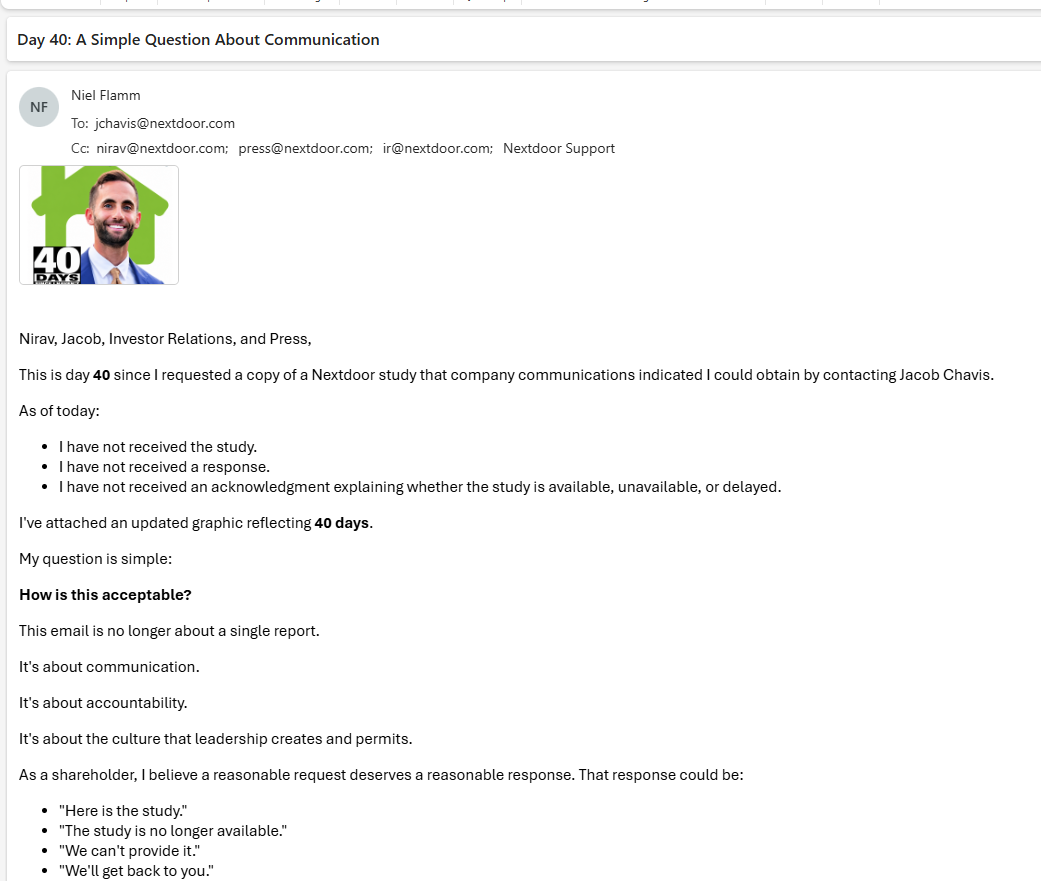
Today marks Day 40 since I requested a Nextdoor study that company communications directed me to request from Jacob Chavis.
Today, I sent another email to:
Nirav Tolia, CEO
Jacob Chavis
Investor Relations
Press
The question I asked was intentionally simple:
Forty days have passed.
Not forty days waiting for an answer I agree with.
Forty days without receiving the study.
Forty days without a response explaining whether the study is available.
Forty days without a simple acknowledgment.
At this point, this has become much larger than one report.
It's about communication.
It's about accountability.
It's about the culture an organization chooses to build.
As a shareholder, I don't expect every answer to be "yes."
I do expect organizations to acknowledge reasonable requests and communicate professionally.
A response could have been:
"Here's the study."
"The study isn't available."
"We can't share it."
"We're looking into it."
Any one of those would have moved the conversation forward.
Instead, today marks Day 40.
Some may wonder why I continue posting these updates.
The answer is simple:
Consistency.
If I believe communication and accountability matter, then I have to be consistent in asking for them. I'm not going to stop asking simply because the answer hasn't come. I'll stop asking when I receive a response or when there's nothing left to ask.
I've often quoted two lessons from a former colleague:
"We tolerate what we allow."
and
"We inspect what we expect."
Those ideas continue to guide my thinking.
If leadership expects trust from users, advertisers, employees, and shareholders, then communication is one of the first things to inspect.
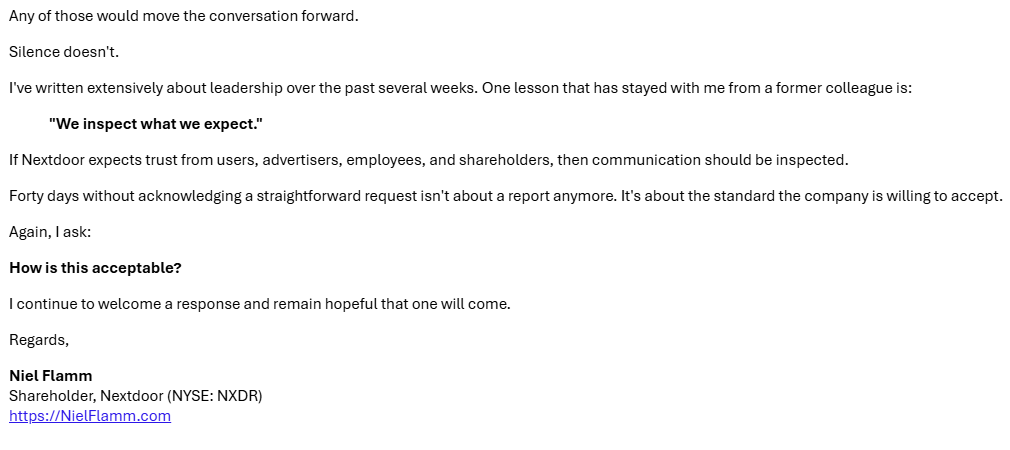
I've attached the image that accompanied today's email.
Join the discussion at NielFlamm.com/blog. I welcome feedback.
We Inspect What We Expect
I've been using the phrase "We tolerate what we allow."
Full disclosure—I didn't come up with it. A former colleague, now a friend, shared it with me years ago, and it has stuck ever since.
He also left me with another one that's just as powerful:
"We inspect what we expect."
I've been thinking about that as I continue writing about Nextdoor's value proposition, its identity, and what I see as opportunities to improve the platform.
Some may call what I'm doing trolling.
I call it inspecting.
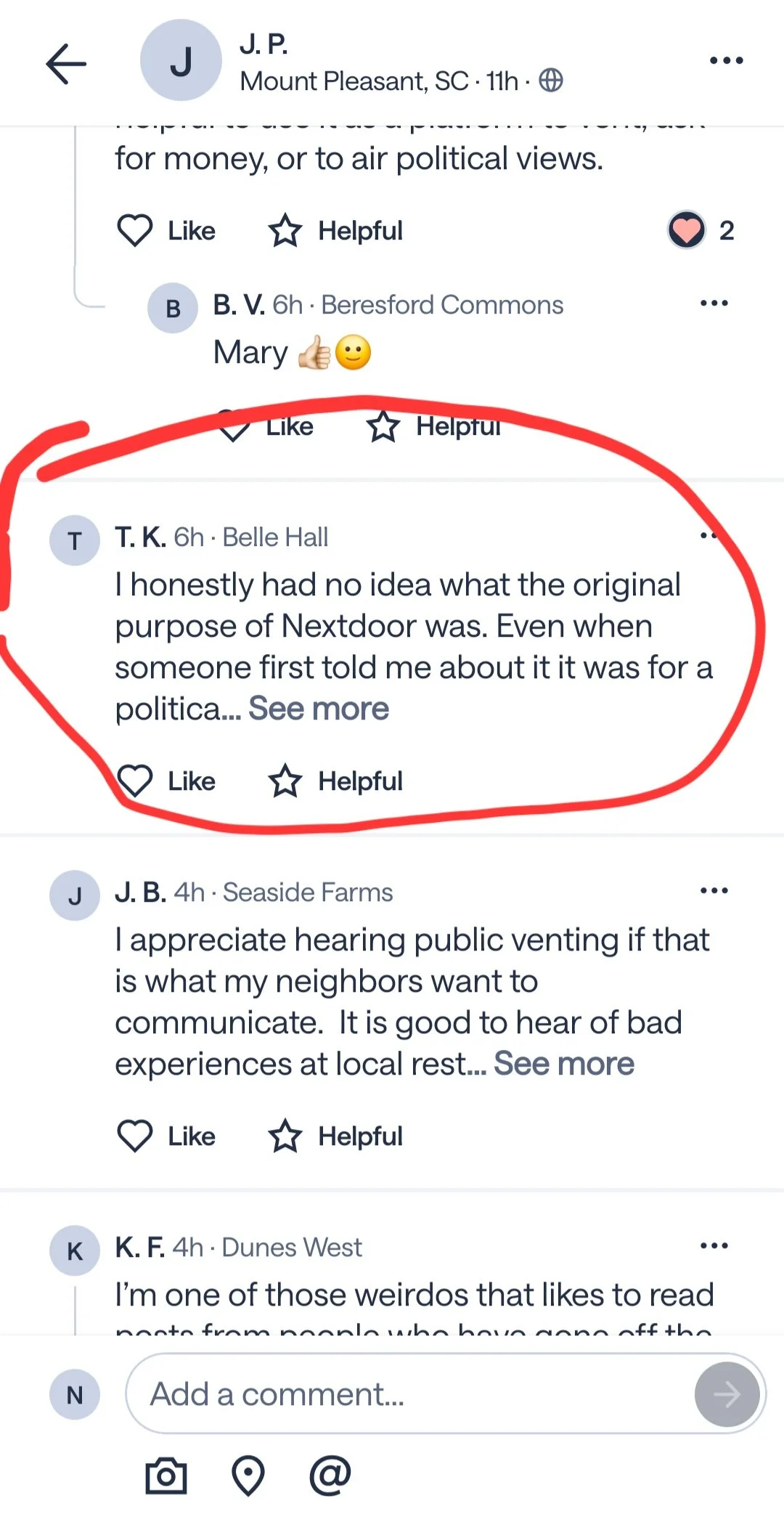
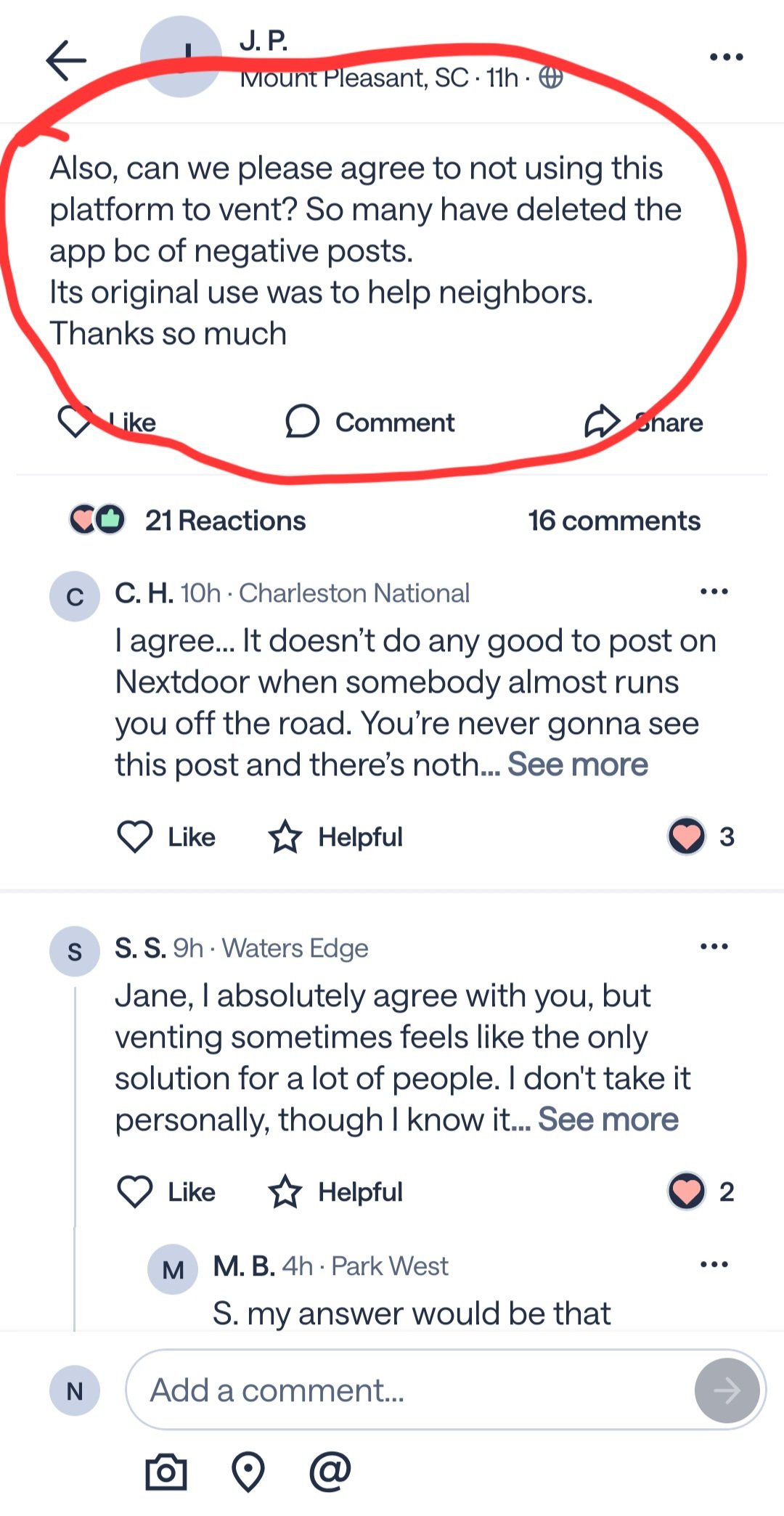
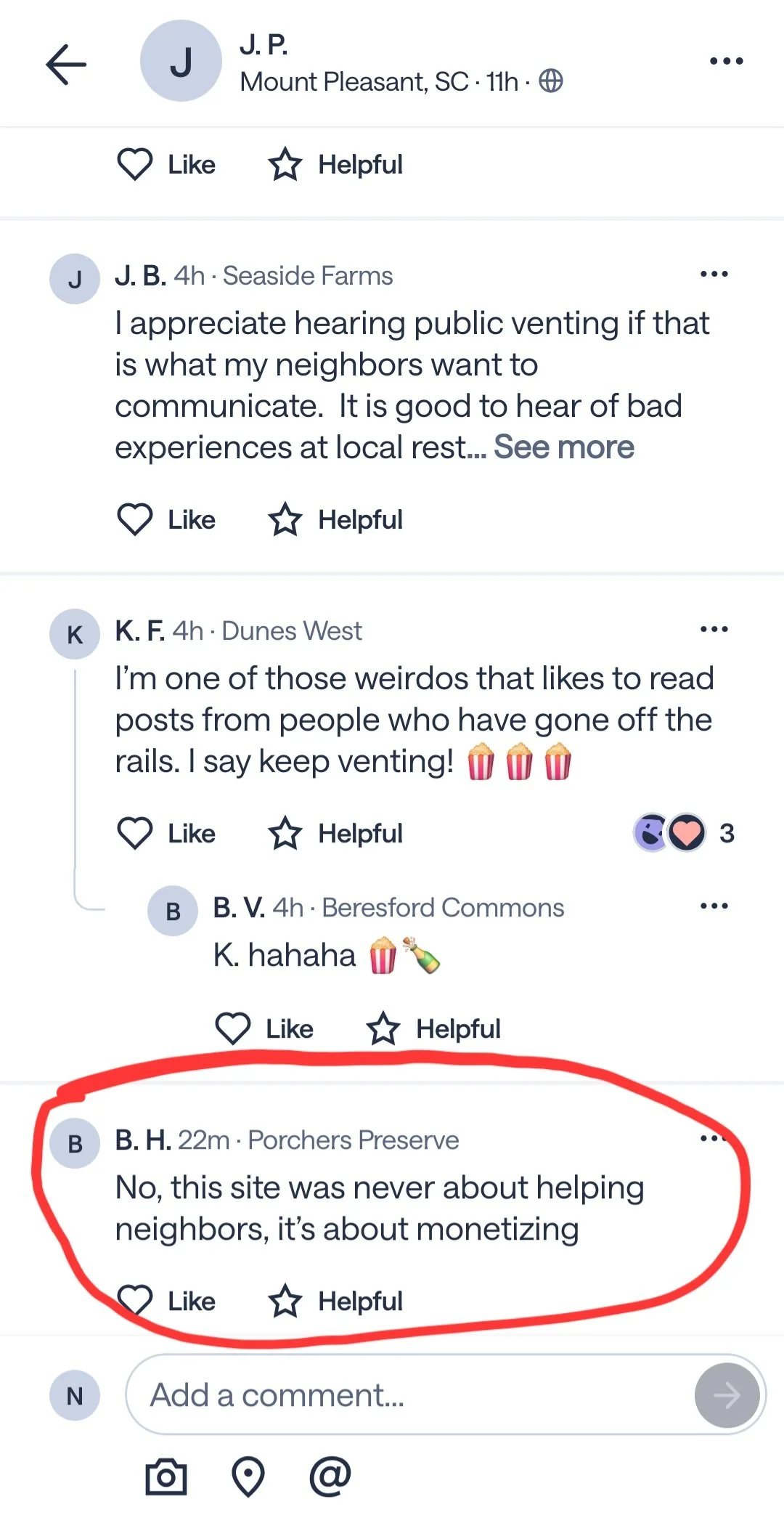
Recently, I was viewing Nextdoor through an account that doesn't use my real name or address. I came across a post encouraging neighbors to stop complaining, stop deleting the app, and focus on being more positive.
The intent was good.
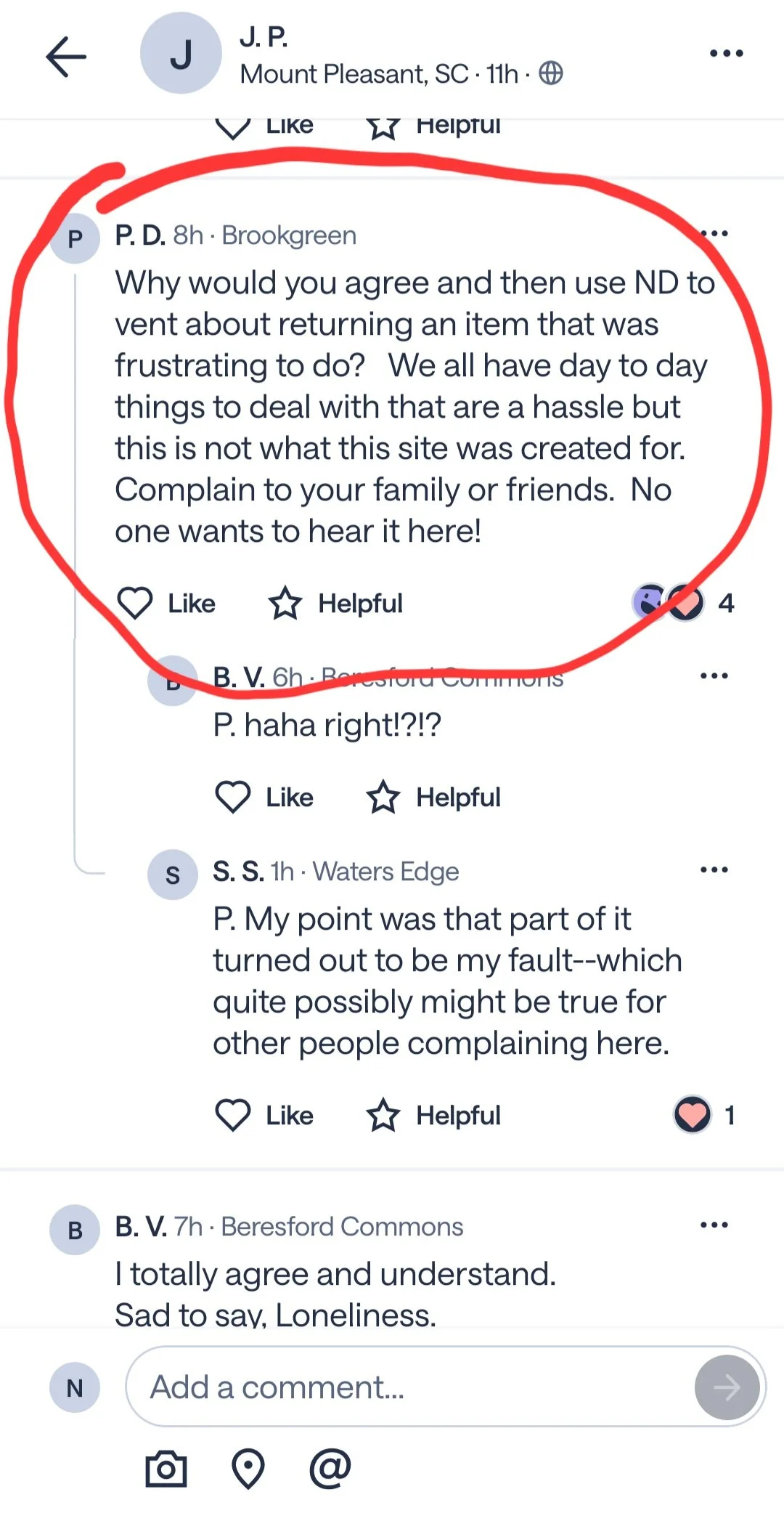
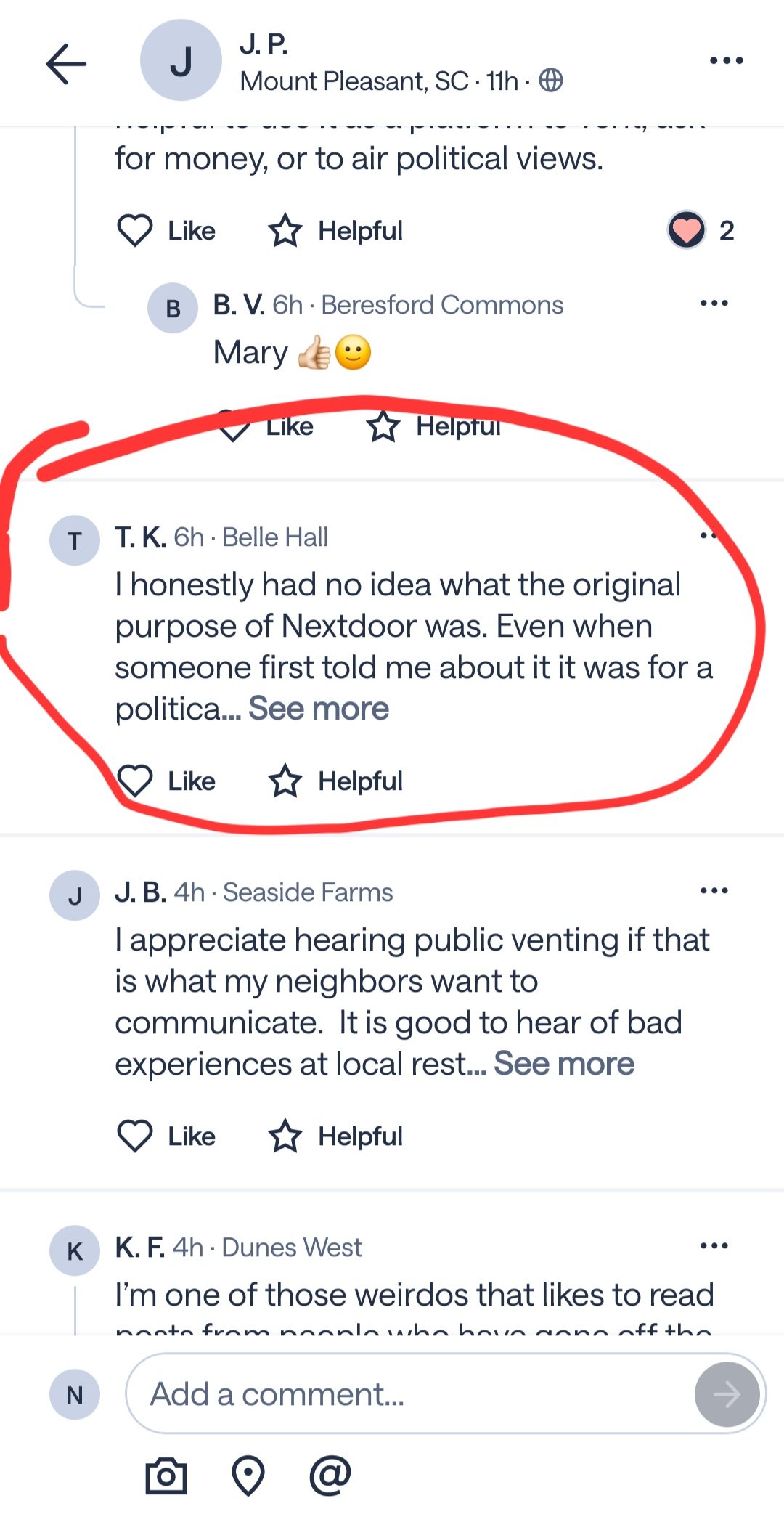
Then I read the comments.
One person pointed out the irony of telling others not to complain while complaining.
Another questioned what the platform's purpose even is.
Another expressed the opinion that the platform's primary goal is monetization and enriching company leadership.
Whether you agree with those comments or not, they reveal something important.
They're signals.
They're feedback.
They're opportunities to inspect the experience people are actually having.
That's why I keep returning to the question of identity.
What is Nextdoor's purpose today?
If leadership expects neighbors to have productive, positive interactions, then it's worth inspecting whether the product, moderation model, communication, and overall user experience are supporting that expectation.
As the saying goes:
We inspect what we expect.
In my opinion as a shareholder, if those questions had been asked consistently over the past two years, the conversation around Nextdoor might look very different today.
There's nothing wrong with being on podcasts. If leadership spends more time speaking than inspecting the platform, listening to feedback, and experiencing neighborhoods firsthand, they shouldn't be surprised when the market, users, and shareholders do the inspecting for them.
Join the discussion on NielFlamm.com.
Nextdoor and Gravity: When Value Doesn't Support the Climb
One of the first scientific principles many of us learn is Newton's Law of Universal Gravitation:
F = G × (m₁m₂) / r²
Where:
- F is the gravitational force between two objects.
- G is the gravitational constant.
- m₁ and m₂ are the masses of the two objects.
- r² is the square of the distance between their centers.
In simple terms, larger objects exert a stronger gravitational pull, while increasing the distance between them weakens that force.
Centuries later, Einstein expanded our understanding through General Relativity, explaining gravity as the curvature of space-time caused by mass and energy rather than simply a force acting at a distance.
Financial markets don't follow the laws of physics.
But they often follow something just as powerful: fundamentals.
When a company's market value rises faster than investors believe its long-term value supports, gravity can seem to take over as investors reassess their expectations.
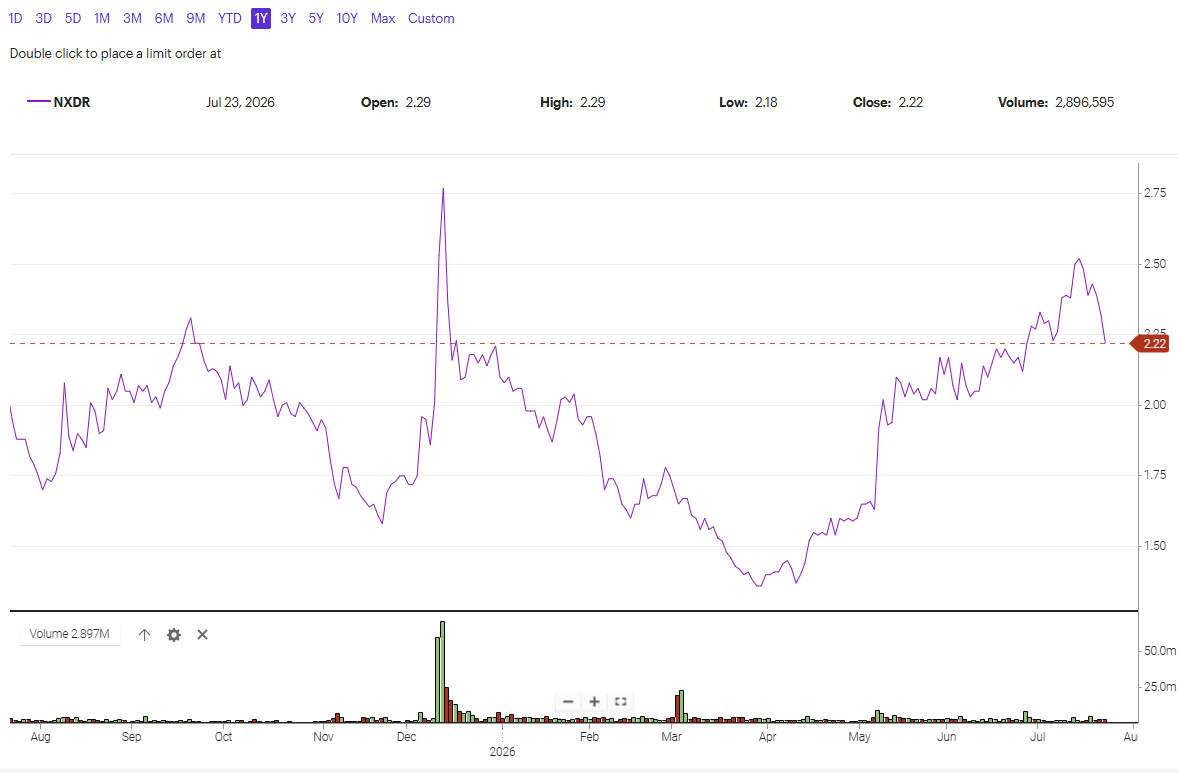
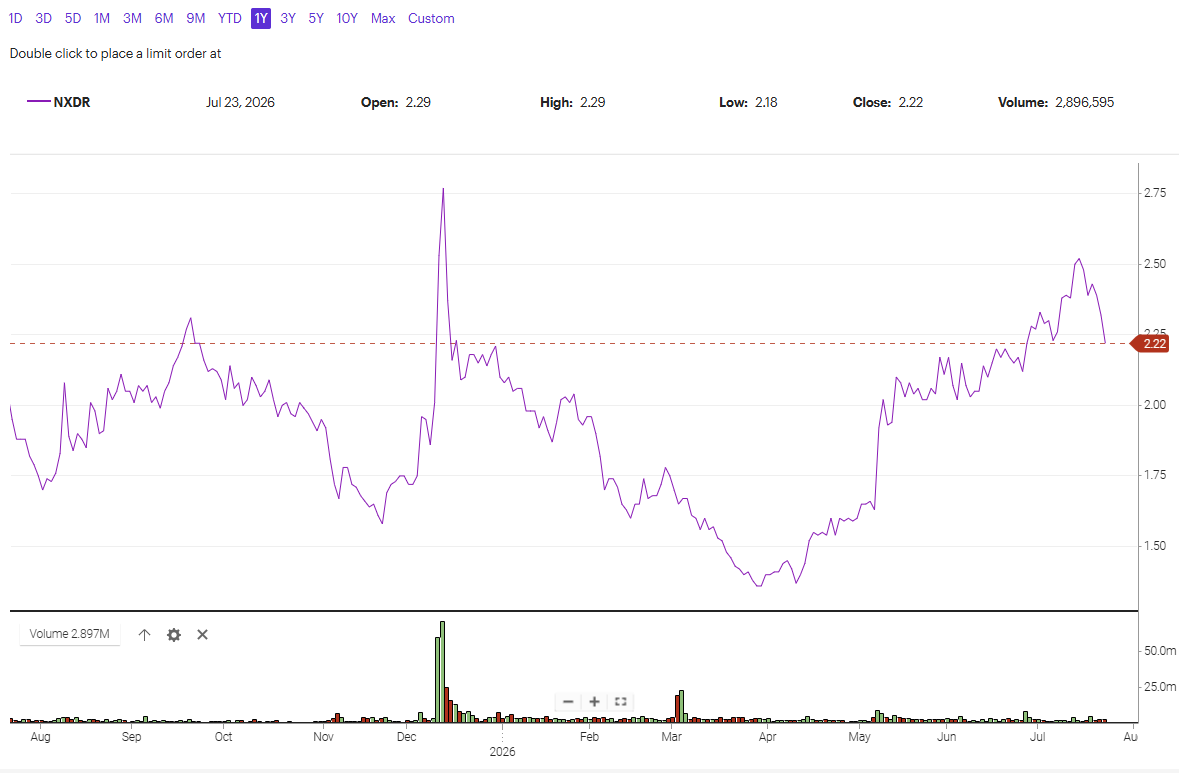
That's how I view Nextdoor (NYSE: NXDR, formerly KIND).
I've previously shared that I believed the stock would begin to decline after reaching recent highs. Since July 15, 2026, we've seen the share price move lower as some investors appear to have taken profits or reassessed the company's prospects. That's my interpretation of the market, not a statement of fact about every investor's motivations.
Gravity isn't inevitable for every company.
Look at companies such as NVIDIA, Apple, Amazon, Meta, and Alphabet Inc. Their valuations have been supported by strong execution, clear value propositions, measurable business results, and long-term strategies. Their leadership teams communicate, but ultimately their products, financial performance, and innovation tell the story.
As a shareholder, I continue to believe Nextdoor would benefit from different leadership.
In my opinion, a CEO should foster a culture of communication and accountability. When a straightforward request remains unanswered for 38 days, when LinkedIn comments are disabled, and when leadership decisions raise questions for shareholders, I believe it's reasonable to ask whether the company's priorities are aligned with creating long-term value.
Leadership isn't measured only by interviews, podcasts, or public appearances.
It's measured by results, accountability, and the trust a company earns from its users, employees, advertisers, and shareholders.
I continue to believe Nextdoor has potential.
I also believe realizing that potential will require a different approach at the top.
Join the discussion at NielFlamm.com/blog. I welcome feedback and differing viewpoints.

Sometimes Saving Money Costs You More: A Lesson From My Fuel Tank

There was a piece of advice I heard about a month ago that I never got around to sharing. As I was driving to a local detox facility to bring a recovery meeting, it came back to me.
It was one of those simple pieces of car care advice that makes perfect sense once someone explains it.
Most gasoline sold in the United States contains ethanol. The exact blend varies depending on the season and location. Alcohol has impressive cooling properties. That reminded me of my drinking days.
Back then, a bottle of Jack Daniel's often lived in the freezer. Since alcohol freezes at a much lower temperature than water, there was no need for ice. If I was drinking it straight—or with Coke—it stayed ice cold without getting watered down. (Side note: Applebee's serves Pepsi products. Jack & Pepsi? No thank you.)
Anyway... back to the car.
I recently heard that during the hot summer months, it's a good idea to keep your gas tank at least half full whenever possible. Why? Because the electric fuel pump sits inside the gas tank. The gasoline surrounding it helps keep the pump cool while it's working, and having more fuel available reduces the chances of the pump working harder than it needs to.
That advice made a lot of sense.
Unfortunately, I didn't follow it.
Not too long ago, I found myself driving around with less than a quarter tank of gas. I was trying to time the market, waiting to see if gas prices would drop a few cents before filling up.
Then it hit me.
The price of gasoline might fluctuate by a few dollars per tank. Replacing a failed fuel pump can cost hundreds—or even well over a thousand dollars once you factor in labor. On many vehicles, the technician has to remove the fuel tank to access the pump.
That's a pretty expensive way to save five bucks.
Sometimes we focus so much on saving a little today that we forget the much higher cost tomorrow.
I think I'll stick with keeping my tank at least half full from now on. My wallet—and hopefully my fuel pump—will thank me.
Join the discussion on NielFlamm.com.