
More Than a Stereotype: What My High School Gave Me
I was watching another Facebook Reel very late at night—or very early in the morning, depending on your perspective and how much judgment you would like to apply—when this video appeared in my feed:
https://www.facebook.com/share/v/1DvswRzH8W/
The Reel presents five Long Island high schools along with the stereotypes attached to them. The very first school out of the gate was mine, Westbury High School.
Well, that woke me up.
I graduated from there in 1990, ranked around seventh in a class of approximately 250 students. My parents wanted me to be number one. I was apparently comfortable leaving room for six other people to shine.
Still, I worked hard, did well, and remember the school as a great place where I learned a tremendous amount. My education extended far beyond textbooks, report cards, and trying to convince my parents that seventh place was actually quite respectable.
I excelled at two musical instruments. I took AP Biology and AP Math. I joined the Mathletes—yes, I was a nerd before being a nerd became marketable—and received a school award for physics. I also won recognition for a poem I submitted about the AIDS epidemic.
During my senior year, I participated in a student exchange program in France that I did not have to pay for. For a teenager, “France” and “free” are two excellent words to hear in the same sentence. After returning, I spoke with incoming exchange students about my experience.
I also played football during my junior and senior years. As a senior, I was the starting center on a team that won only two games. Let’s just say nobody was making a movie about our championship season.
We may not have had a winning record, but being part of that team taught me about responsibility, discipline, perseverance, and showing up for the people beside me—even when the scoreboard strongly suggested that everyone might have been happier somewhere else.
My high school gave me opportunities to explore science, mathematics, music, writing, athletics, international travel, and leadership. That is an impressive list for someone who supposedly was not motivated enough to finish first.
The school’s demographics were very different from what many outsiders might have expected. As best as I can remember, it was roughly 90% Black, about 7% Spanish-speaking or Latino, and perhaps 3% white. Then there were my brother and me. I know those numbers do not add up neatly—that is how small the Asian population was. Consider us the rounding error.
Yet I never saw that environment as something that limited my education. Quite the opposite: I learned a great deal about the world, my community, other people, and myself. Some of those lessons came from the classroom. Others came from hallways, football fields, music rooms, friendships, disagreements, and the everyday experience of being part of a diverse community.
I remember the teachers, coaches, and administrators as available, open, and welcoming. My parents were deeply involved in my education. They pushed me—probably a little too hard at times—but they paid attention, asked questions, and helped me make course corrections when I needed them.
When my SAT scores suffered, I was not allowed to continue playing football until we reached an agreement about how I would improve academically. This was not the type of contract negotiation young athletes dream about, but it worked. My parents understood something I did not fully appreciate at the time: football was a privilege, while my education was the priority.
Of course, I still made poor choices. I was an adolescent. Making questionable decisions is practically part of the job description. Somehow, I came through it reasonably well-adjusted—or at least well-adjusted enough to write reflective posts after watching Facebook Reels in the middle of the night.
More than three decades have passed since I graduated. Things change, and they do not always change for the better. I cannot pretend that my experience in 1990 automatically reflects what students experience there today. Apparently, neither the school nor I has remained frozen in time, although some mornings my knees suggest otherwise.
But a school should never be reduced to a stereotype in a social-media video. A school is its students, families, teachers, coaches, administrators, opportunities, struggles, and shared history. It is also the lessons its graduates carry with them long after they leave.
When a school is not serving its students as well as it should, students and parents have a responsibility to speak up, ask questions, demand accountability, and advocate for change. Educators and administrators must be willing to listen and respond. Strong schools are built through involvement, communication, and a shared commitment to doing better.
My high school was not perfect. Neither was I. But it gave me room to learn, compete, create, travel, stumble, recover, and grow.
No stereotype can capture all of that—especially one squeezed into a Reel between cooking videos, dance challenges, and whatever the algorithm thinks I need to see at two o’clock in the morning.

Day 52: Better Numbers. The Same Questions.

Nextdoor released its Q2 2026 financial results, and there are positive developments that deserve recognition.
Revenue increased to $75 million, up 15% year over year.
Platform Weekly Active Users grew to 22.9 million, a 5% increase.
The company also narrowed its GAAP net loss to $2 million, compared with $15 million a year ago, reported $10 million in Adjusted EBITDA, and maintained $378 million in cash.
As a shareholder, I'm glad to see progress.
Credit should be given where it's due.
However, one number still stands out:
Nextdoor is still losing money.
The loss is much smaller, but it's still a loss. Financial results reflect leadership decisions about where to invest, cut costs, monetize the platform, and allocate capital.
Today marks Day 52 since I requested a study from Jacob Chavis.
Fifty-two days later, I still haven't received:
An acknowledgment.
A timeline.
Another observation caught my attention.
The last Nextdoor Insights article appears to have been published on July 6, 2026.
I'm still waiting on a response from Jacob Chavis, and I haven't seen a new Insights article in about a month.
Those may be unrelated.
As a shareholder, I have a few questions.
Has Nextdoor shifted away from publishing Insights?
Are new studies still being produced?
I don't know.
That's why I've continued asking.
A simple response—even "the study isn't public"—would provide clarity. Silence leaves shareholders filling in the blanks.
I've written extensively about what I believe are three major challenges:
A communication culture that doesn't adequately engage with shareholders.
An unpaid moderation model that creates inconsistent user experiences.
Strategic decisions that deserve scrutiny, from monetization to capital allocation.
The earnings report shows improvement, and I hope that trend continues.
I genuinely want Nextdoor to succeed.
But I also believe leadership decisions influence profitability, corporate culture, and shareholder confidence.
I've said this repeatedly because I believe it:
Communication isn't measured when everything is going well. It's measured by how a company responds when someone asks a simple question.
I'll continue acknowledging progress while also raising concerns.
That's what I believe engaged shareholders should do.
Join the discussion at NielFlamm.com/blog. Leave some feedback—I'd love to hear from you.
Day 51: Another Email Sent. The Question Remains the Same.
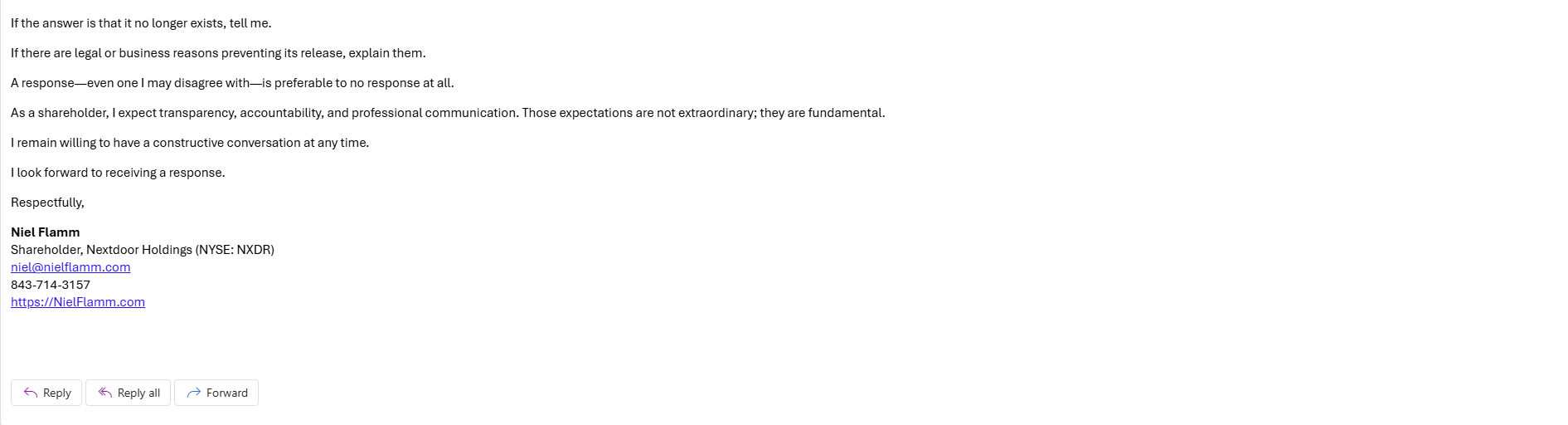
Today, I sent another email regarding my request for the Nextdoor study.
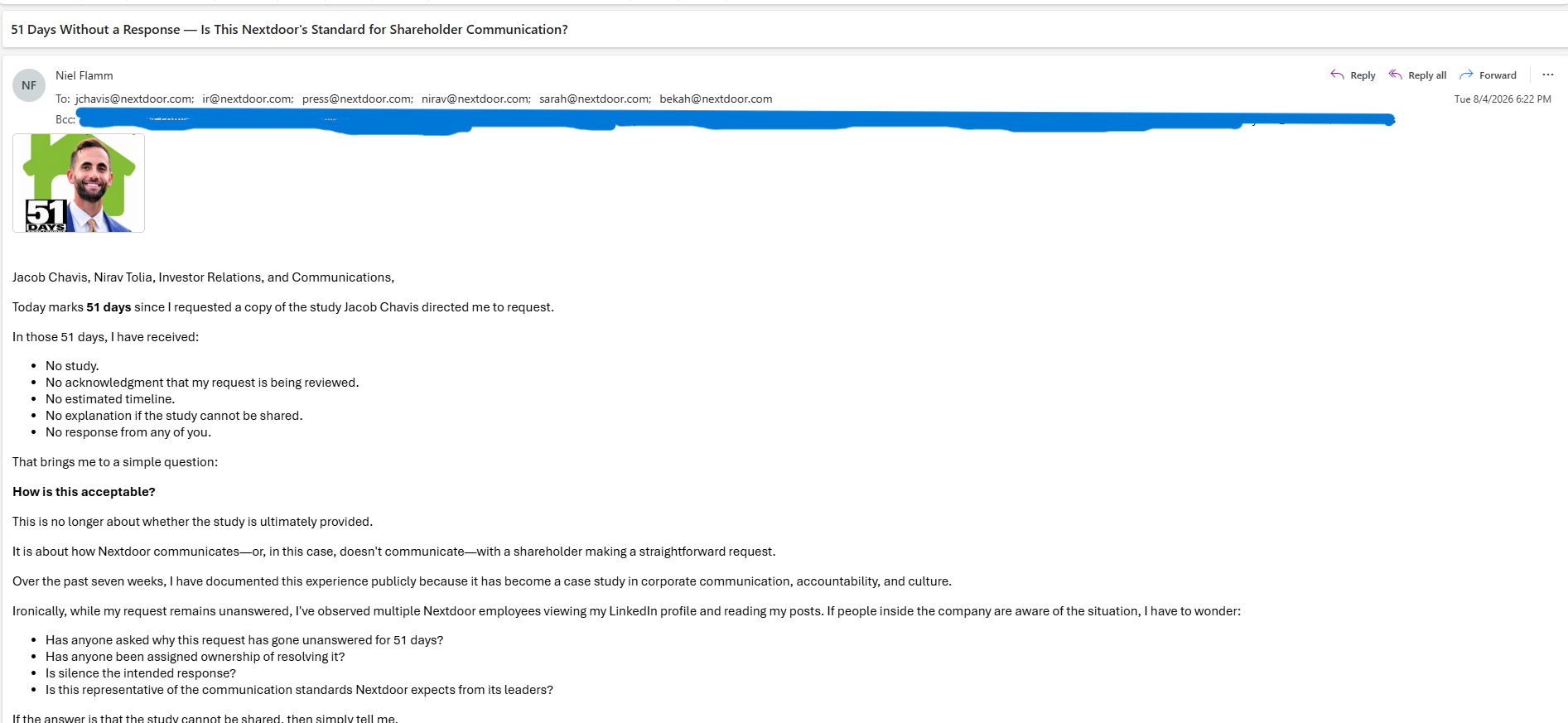
The recipients were:
Nirav Tolia, CEO
Jacob Chavis
Sarah Leary, Co-Founder
Investor Relations
Communications
Bekah Hufnagel, a Nextdoor intern studying Communication Design at the University of Cincinnati
One thing I can confirm:
None of the emails bounced back as undeliverable.
So, as far as I know, the message reached the intended inboxes.
The email wasn't complicated.
It asked a straightforward question:
How does a simple shareholder request go unanswered for 51 days?
At this point, the study itself has almost become secondary.
The larger issue is communication.
If the answer is "no," say no.
If the study can't be shared, explain why.
If it no longer exists, say that.
Communication doesn't require agreement.
It requires acknowledgment.
One reason I included Bekah on the email is that she's studying Communication Design. This is a real-world case study in corporate communication.
If this situation were presented in a college classroom, what discussion would it generate?
How would 51 days without a response from Jacob Chavis, CEO Nirav Tolia, Investor Relations, or the Communications team be evaluated?
As someone who has spent much of my career in learning and development, I believe some of the best lessons come from real situations—not hypothetical ones.
This continues to be one of them.
I'm still willing to have a conversation.
I'm still waiting to see if it's worth having.
Join the discussion at NielFlamm.com/blog. Leave some feedback—I'd love to hear from you.

SOULM8TE: AI, Obsession... and a Familiar Story?

SOULM8TE puts a new spin on AI companionship, but while watching it I couldn't shake the feeling that I'd seen this story before.
In my latest movie review, I compare SOULM8TE to Subservience, Her, and especially the 1995 The Outer Limits episode "Valerie 23." Was Blumhouse's latest thriller worth the watch, or did an old TV episode do it better?
🎬 Watch my full SOULM8TE review at:
https://NielFlamm.com/videos/moviereviews
Then check out Valerie 23 and decide for yourself:
Scamming, Site Traffic, and an Open Invitation
I’m aware that maintaining even a small online footprint can expose me to hacking, scams, and other security risks. That’s why I regularly monitor my site’s traffic, metrics, and visitor demographics.
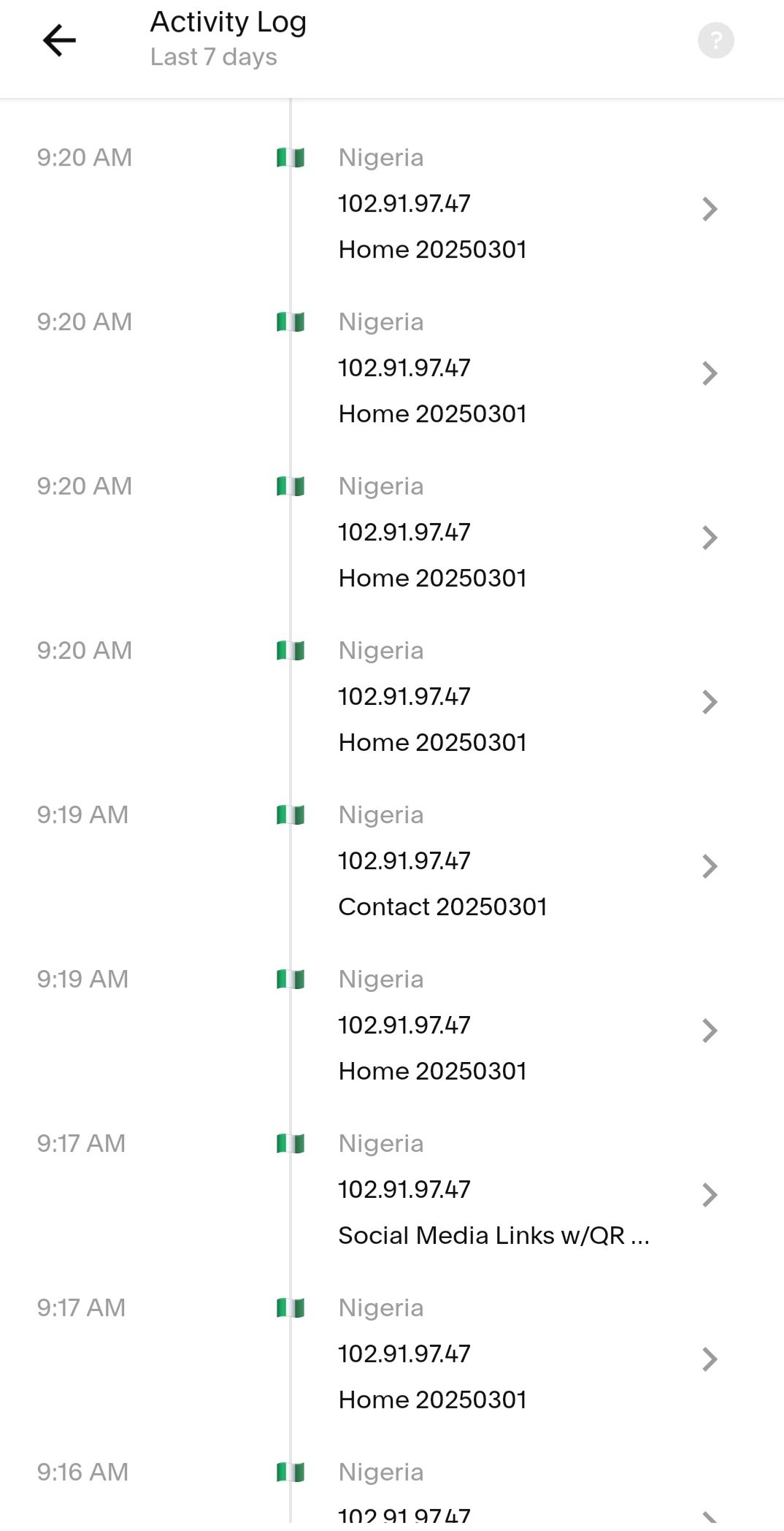
When people hear the phrase “online scamming,” Nigeria may be one of the first countries that comes to mind—fairly or unfairly. This morning, I noticed repeated activity from the same IP address, geolocated to Nigeria.
Of course, an IP location isn’t always accurate, and someone’s country doesn’t prove malicious intent. Still, the activity caught my attention.
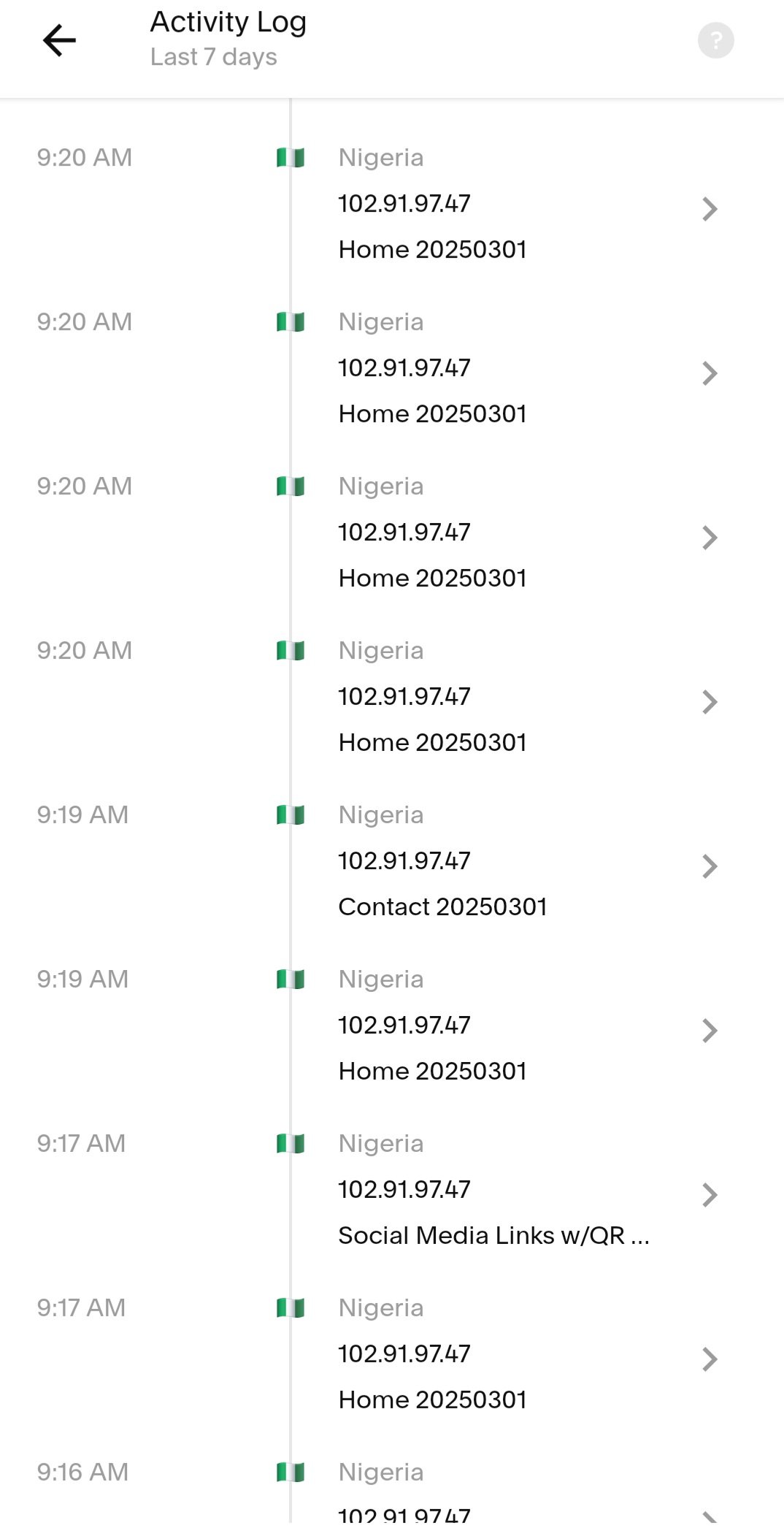
So, if you’re the person behind those visits: What brought you to my site? What are you looking for, and how can I help?
Let’s bring your intent to the surface. It could lead to an interesting conversation—and perhaps even an opportunity we can monetize together.
Post your contact information at NielFlamm.com/blog or email me directly at niel@nielflamm.com.