

Day 58: Trust Is the Foundation—But How Strong Is the Verification?
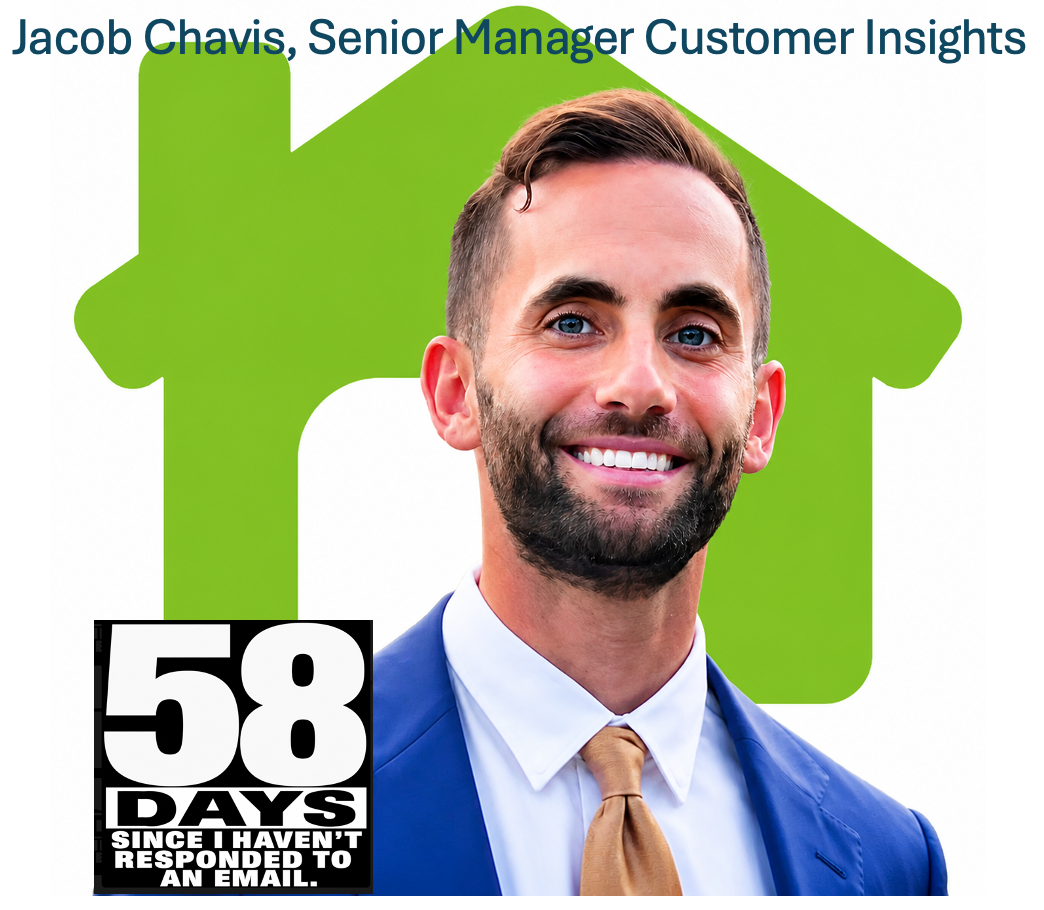
It's Day 58.
At some point, I have to wonder whether my continued attempts to engage Nextdoor have actually made their way into a C-Suite conversation.
"What are we going to do about this guy?"
"Don't engage."
"Don't respond."
Or maybe nobody has discussed it at all.
I genuinely don't know.
Who wants to spill the tea? ☕
While posting about a free mystery movie screening in Las Vegas—link is on NielFlamm.com/blog—I came across another post from CEO Nirav Tolia on X.
Nirav discussed a decision Nextdoor made approximately 15 years ago: requiring real names and verifying physical addresses.
His central point was:
"Trust was always going to be the foundation for Nextdoor's community."
He also wrote that Nextdoor asks people to verify who they are and "stand behind what they said."
That's a compelling message.
There's just a problem.
My own experiment suggests the verification system isn't nearly as airtight as that rhetoric makes it sound.
I previously tested Nextdoor's verification process using a pseudonym—a play on Nirav's own name—and a corresponding email account.
I was able to establish an account that did not represent my actual name or residence.
I'm deliberately not going to publish step-by-step instructions for bypassing Nextdoor's verification. The point isn't to teach people how to exploit it.
The point is that I was able to do it.
That matters when the CEO publicly describes verified identity and physical address as the foundation of trust.
It raises questions I'd like Nextdoor to answer:
How frequently does Nextdoor audit its verification system?
How does it identify accounts that successfully pass verification using inaccurate information?
What happens when location-based verification conflicts with actual residency?
And what quality controls exist around newly established addresses where third-party verification data may be limited?
Those questions aren't attacks.
They're exactly the questions I believe a company should be asking itself when trust is part of its value proposition.
I have plenty of time to think about these things.
And since I'm now on Day 58 without receiving the study or having the conversation I've repeatedly requested, I've spent some of that time examining the platform instead.
That's the irony.
Nextdoor talks about people standing behind what they say.
I'm standing behind what I'm saying.
I'm asking Nextdoor to do the same.
Trust isn't created because a CEO says it's foundational on a podcast.
Trust is created when the product, policies, and actions support the claim.
So, Nextdoor: rather than another Day 59, how about a conversation?
Join the discussion at NielFlamm.com/blog. Leave some feedback—I'd love to hear your perspective.

Free Movie Screening in Las Vegas This Wednesday!
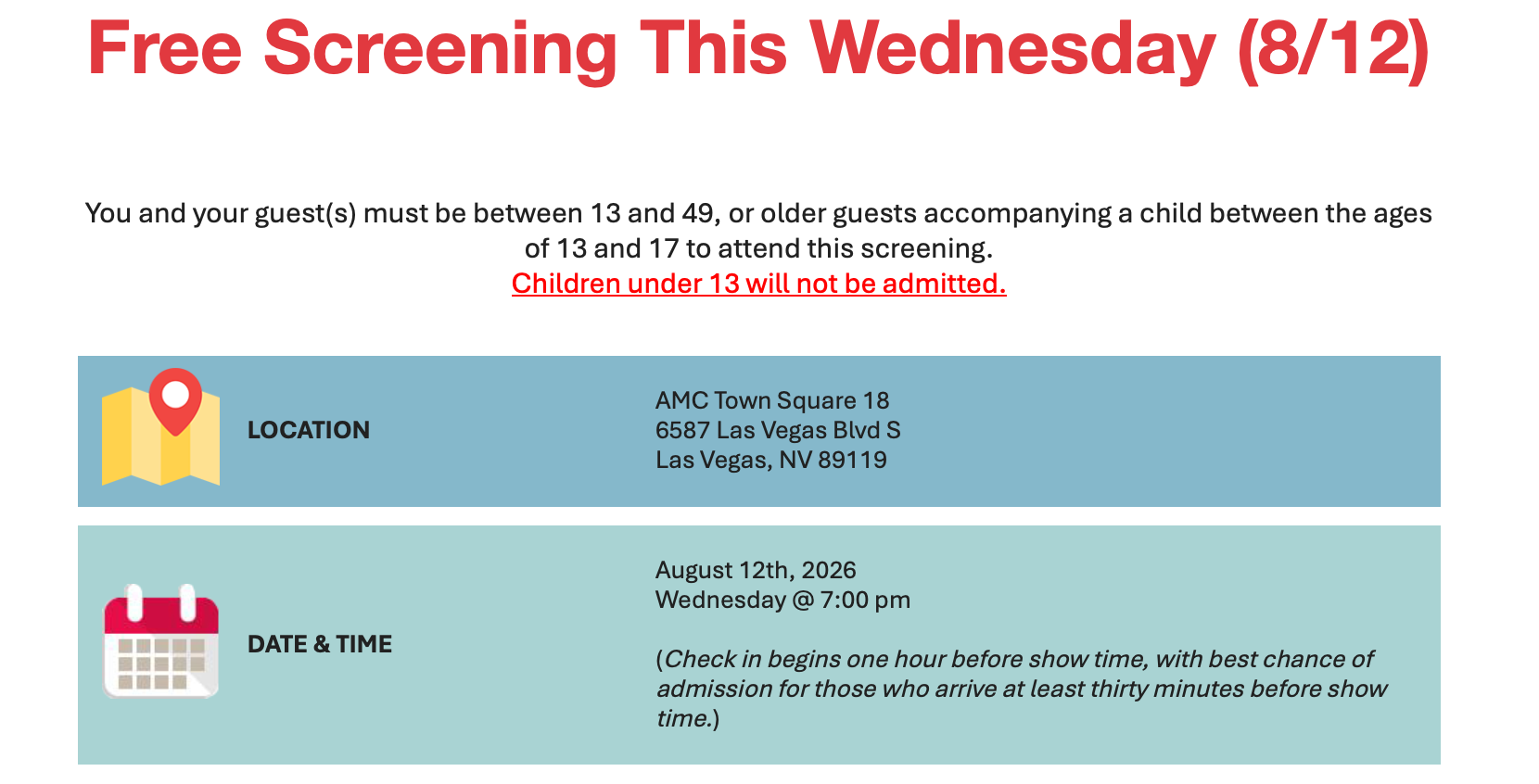
If I were in Las Vegas, I would definitely check out this free movie screening happening Wednesday, August 12, 2026, at 7:00 p.m.
The screening will be held at AMC Town Square 18, located at 6587 Las Vegas Blvd. South. Check-in begins one hour before showtime, and arriving at least 30 minutes early gives you the best chance of admission.
Attendees must generally be between 13 and 49 years old. Older guests may attend if accompanying someone between the ages of 13 and 17. Children under 13 will not be admitted.
Click the link to see if you qualify—and if you attend, let me know what you saw!
The Scale of Shame Is Ready for You
I recently went to the doctor for my yearly Medicare Wellness visit. First, the good news: my PSA is a wonderfully low 0.13. My prostate and I are apparently still on speaking terms.
When I walked in, I noticed a board displaying every provider’s name and whether they were on time or running behind.
What a fantastic concept!
Every medical office should do this. Before I even sit down, I know what to expect and can plan accordingly. Is the doctor running behind? Great—I’ll take out my phone and watch another episode of Stranger Things. Is the doctor on time? Then I’d better prepare to be called immediately and step onto the dreaded Scale of Shame.
This simple board puts the patient—or customer—first. It respects my time and gives me useful information, which should always be the goal.
Here’s the best part: once I was seen, I never felt rushed. No one minimized my questions, hurried me toward the exit, or made me feel like they were racing to hit a metric or service-level target. The providers gave me the time and attention I needed while still keeping patients informed about the schedule.
Apparently, healthcare really can provide transparency without sacrificing personal care.
I can have my cake and eat it too—although, depending on what the Scale of Shame says, perhaps only a small slice.
Join the discussion on NielFlamm.com/blog
#PatientExperience #HealthcareInnovation #CustomerService #MedicareWellness #PatientFirst

Day 57: The Stock Is Talking—But I Still Want to Hear From the People
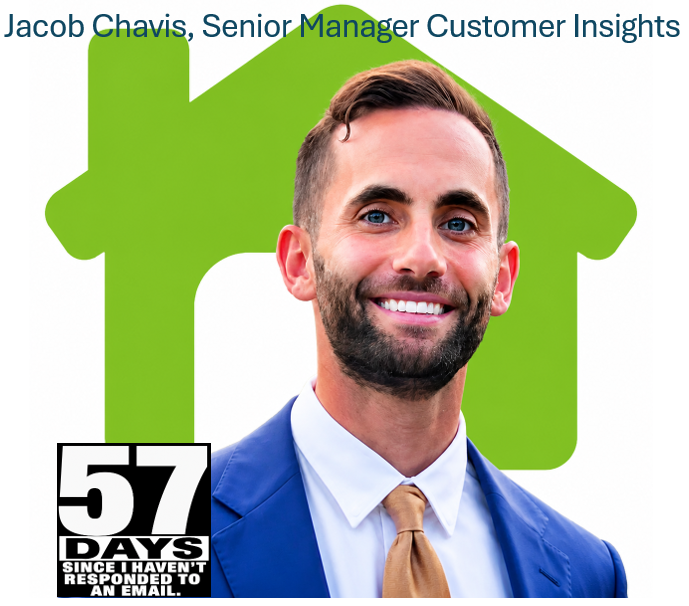
It's Day 57.
Today, I want to put a different twist on this.
As I'm writing this, NXDR is up 4.12%, trading at approximately $2.66 per share.
As a shareholder, that's good news. I own the stock. I'd like the number to increase.
I've been bearish on Nextdoor, but bearish doesn't mean I'm rooting for failure—quite the opposite. I want to see the company create sustainable value for users, advertisers, employees, and shareholders.
The market appears pleased right now.
But stock price and corporate culture are two different measurements.
Which brings me to someone I haven't discussed nearly as much:
Sarah Leary, Co-Founder of Nextdoor.
I've noticed Sarah appears to have been absent from X for some time—unless she's posting from another account I'm unaware of.
And that makes me genuinely curious about her perspective.
Sarah helped build this company.
She watched Nextdoor grow from an idea into a publicly traded company serving millions of users.
So I'd be interested to know:
What does Sarah Leary think about what's happening now?
What does she think about the current moderation model?
The increasing monetization of interactions between businesses and neighbors?
The company's approach to accepting—or limiting—feedback?
And yes, what does she think about a shareholder reaching Day 57 without receiving the requested study or even an acknowledgment?
I'm not asking Sarah to agree with me.
Actually, I'd be interested if she disagreed with me.
Tell me why.
That's a conversation.
Perhaps she believes the current strategy is exactly right.
Perhaps she thinks changes are necessary.
Perhaps she hasn't followed any of this.
I don't know.
But that's precisely why I'd like to hear her perspective.
I've spent 57 days talking about Nirav Tolia, Jacob Chavis, Investor Relations, Communications, moderation, culture, and accountability.
Maybe it's time to hear from one of the people who helped create Nextdoor in the first place.
The stock is speaking today.
NXDR: $2.66, up 4.12%.
Now I'd like to hear some of the people behind it speak, too.
Sarah, what's your take?
Join the discussion at NielFlamm.com/blog. Leave some feedback—I'd love to hear your perspective.
When the Process Fails, Don’t Forget There Are People on the Plane
I came across this Facebook Reel, and I genuinely feel for this parent trying to do the best she can for her family:
https://www.facebook.com/share/v/1GUxjuMGvT/
Watching it reminded me of something that companies sometimes forget when operations go sideways: a process failure is rarely just a process failure to the customer.
I’ve been in the situation where my flight has been canceled. It’s no fun.
You’re standing in an airport trying to figure out what happens next. Where am I sleeping? When am I getting home? What happens to my luggage? What about the hotel, rental car, work, kids, medications, connections, or whatever else was waiting for me at the other end?
Now imagine trying to manage all of that while also taking care of your family.
That’s where I think JetBlue missed something important.
Airlines have incredibly complicated operations. Weather happens. Mechanical problems happen. Crews time out. Aircraft end up in the wrong cities. Sometimes a flight cannot operate.
I understand that.
But the operational problem and the customer experience are two different things.
JetBlue may transport cargo in the belly of an aircraft, but the people sitting above it aren't cargo.
They have feelings.
They have emotions.
They have families.
They have somewhere they were expecting to be.
And when the process fails, that is when customer experience matters the most.
A great customer experience isn't demonstrated when everything works perfectly. That's the easy part.
It's demonstrated when something goes completely wrong, and the company says:
“We know this disrupted your life. Let us help you figure out what happens next.”
Policies are necessary. Procedures are necessary. Systems are necessary.
But there has to be enough flexibility—or enough humanity built into those systems—to recognize when somebody needs more than a scripted answer.
Because the passenger standing at the counter isn't thinking about aircraft utilization, crew scheduling, or operational efficiency.
They're thinking:
“How am I going to get my family home?”
Sometimes fixing the customer experience doesn't mean fixing the airplane.
It means remembering the people who were supposed to be sitting inside it.
For more of my thoughts on customer experience, the good, the bad, and sometimes the completely ridiculous, follow along on my blog:
https://NielFlamm.com/blog