
Day 71: Emergency Managers, Advertisers…and the Nextdoor Total Gym?
It's Day 71 of still not receiving the detailed Nextdoor Insights research I've requested.
But today's Nextdoor blog gave me something completely different to study.
I clicked on a new post titled:
“This August, Recognize the Emergency Managers Keeping Neighborhoods Safe.”
Full article:
https://blog.nextdoor.com/this-august-recognize-the-emergency-managers-keeping-neighborhoods-safe
Sounds worthwhile.
August is National Emergency Management Awareness Month, and Nextdoor discusses the people coordinating responses when communities face emergencies.
One observation before we continue:
Today is August 24.
Thanks for letting us know before September.
But then I kept reading.
After only a few paragraphs about emergency managers, this appeared:
“It's also a good time to share an update on the other side of the platform.”
And suddenly we're talking about advertisers.
Nextdoor Ads Manager.
Billing.
Credit limits.
Payment options.
Creative management.
Reporting tools.
Campaigns.
I had to look at the title again.
Wasn't I reading about emergency managers keeping neighborhoods safe?
Talk about a pivot.
From Emergency Preparedness to Paid Programming
I understand Nextdoor is a business.
Nextdoor needs to make money.
I'm a shareholder. I want it to make money.
That's also why Day 71 without receiving the detailed research Nextdoor's own Insights posts say readers can request continues to matter to me.
And it's why I pay attention to how the company communicates with the people who create, consume, and pay for its platform.
NXDR is down another $0.02 today, and shareholders aren't currently seeing a dividend.
Meanwhile, I've already been questioning Nextdoor's increasingly aggressive monetization strategy with small businesses.
Businesses can encounter what I consider a pay-to-play dynamic when trying to comment as businesses on posts from neighbors looking for services.
Now I click an article ostensibly celebrating emergency managers and somehow find myself reading about advertiser billing and campaign-management improvements.
It reminded me of late-night television.
You think you're watching regular programming...
Then suddenly:
CHUCK NORRIS IS HERE TO TELL YOU ABOUT THE TOTAL GYM!
All that's missing is:
“But wait! There's more!”
How Much Monetization Is Too Much?
Maybe each decision makes sense individually.
But taken together, I see a bigger question:
At what point does monetization begin interfering with the experience you're trying to monetize?
Small businesses create value on Nextdoor.
Public agencies create value.
Neighbors create value.
Emergency managers create value.
Advertisers pay Nextdoor to access that ecosystem.
The balance matters.
If you're going to recognize emergency managers, recognize them.
Give them the article.
Tell their stories.
Explain what they do.
Highlight someone doing exceptional work.
Tell neighbors how to contact their local emergency management agencies.
There's your story.
Instead, I clicked expecting emergency preparedness and somehow ended up learning about advertiser credit limits.
That's quite the journey.
And from a communications perspective, it fits remarkably well with what I've been documenting over the past 71 days.
Whether it's responding to a research request with links to summaries, communicating a new pay-to-comment business model, or transitioning an emergency-management article into an advertiser update, I keep coming back to the same question:
Is Nextdoor communicating what its audience needs to hear—or what Nextdoor wants to sell?
I remain a shareholder who wants NXDR to succeed.
But generating revenue and creating long-term shareholder value aren't necessarily the same thing.
Sometimes the better communications strategy is remarkably simple:
Write the article the headline promised.
Otherwise, what started as a meaningful piece about keeping neighborhoods safe begins feeling like a late-night Total Gym infomercial.
Chuck Norris would probably approve.
I don’t think emergency managers would.
Day 71. I still don't have detailed research, but I now know more about Nextdoor Ads Manager.
Follow my continuing Nextdoor study and full thoughts at NielFlamm.com/blog.
Does Niel have to slap a bitch?
American Airlines #4567, LGA to CHS.
I’min seat 3A.
The dude behind me, yes 4A has pulled on my seat back… TWICE!!! TWICE to get up!
Not an excuse me, pardon me, my apologies.
The world I live in has lost all courtesy.
Springhill Suites - Long Island City Review. Great Staff and Spacious Room, With a Few Accessibility and Noise Issues
I was in town for just one day to attend an “old guys” fraternity gathering in a backyard in Astoria/Long Island City. My flight arrived at LaGuardia shortly before 9:00 a.m., and I reached the SpringHill Suites around 9:30. I politely asked whether an early check-in might be possible because I was hoping to take a nap before the party—I’m old! They accommodated me immediately. SCORE!
Since Saturday breakfast ran until 10:30, I grabbed a plate of bacon and found a seat. At 9:30, the first-floor breakfast area was packed, with guests cutting in front of one another as if it were the apocalypse and the world had run out of toilet paper again. Through it all, the breakfast staff worked incredibly hard to keep the area clean, replenish food, and answer questions.
My room on the 12th floor was spacious by New York City standards. As an above-the-knee amputee, I had requested an accessible room with a roll-in shower. Like many Marriott-family hotels I’ve visited, the room seemed to meet the basic ADA requirements: grab bars, a handheld showerhead, and anchored bottles of shampoo, conditioner, and body wash.
However, the shower did not have a built-in bench, which I usually find in roll-in showers. The staff quickly provided a shower chair, so that was an easy fix. A few practical improvements would make the room much more usable for actual ADA guests. The shower tray should be closer to the mounted toiletries so guests can also place their own soaps within reach. The towels were left on the sink, forcing me to scoot the shower chair over to retrieve them because I do not shower while wearing my prosthetic leg. Placing towels within reach of the shower would make a meaningful difference.
The hotel has three elevators, but they are small considering the number of guest rooms. A line frequently formed in the lobby. The elevators are fast—unless yours turns into the local train and stops on every floor.
The hotel is in a very industrial area, although new residential buildings are being constructed or converted nearby. There is a bodega at the end of one block and a DoubleTree at the other. There is also a street-cart guy nearby, and I got a combo over rice from him at an awesome price by any standard—especially for New York City.
Rideshare vehicles can reach the hotel, but street parking narrows the remaining roadway. Since I move slowly, the cars behind my rideshare had to wait while I got out.
The first-floor gym, which I did not use, is about the size of a large Manhattan studio apartment. There are also three universally accessible restrooms near the gym. The hotel market uses a self-checkout system: select an item, scan it, and pay by card—no cash. Security is stationed at the entrance, which has become fairly typical at New York City hotels.
Noise was the biggest drawback. I could have sworn I smelled cigarette smoke coming from another room on my floor. Doors slammed throughout the night and into the morning, and some younger guests near my room seemed to be having a party in the hallway. I understand that people want to ensure their doors are securely closed, but the constant slamming was disruptive. Having security periodically patrol the guest floors—using the type of scan system commonly used in hospitals and office buildings—could help address smoking, hallway gatherings, and excessive noise.
Despite those concerns, the staff was absolutely awesome. Their friendliness, hard work, and willingness to help made the overall experience a good one. The early check-in alone was greatly appreciated, and the staff truly made this hotel shine.

Day 70: Nextdoor Is Becoming a White Paper on How Not to Communicate
At this point, my ongoing experience on Nextdoor could become a white paper on corporate communications.
Unfortunately for Nextdoor, it would largely be about what not to do.
There are two names that naturally come up in this conversation: Kelsey Grady, who leads Communications, and Nirav Tolia, because he's ultimately the CEO.
But for a moment, let's forget that today is Day 70 without receiving the detailed research I've requested.
Let's even forget that Communications finally responded by sending me links to the same blog posts I've been referencing—essentially answering a question I didn't ask.
I want to look at something bigger.
How Do You Communicate a Change Your Customers Aren't Going to Like?
Nextdoor has changed how businesses can participate in conversations.
As I've previously discussed, when a neighbor asks for recommendations for a service, businesses may encounter Nextdoor's new pay-to-comment model to respond as a business.
Think about who this affects.
The plumber.
The landscaper.
The handyman.
The house cleaner.
The dog walker.
The locally owned restaurant.
The contractor who has spent years building a reputation among neighbors.
These are precisely the kinds of small businesses that helped make Nextdoor useful in the first place.
And I've seen business owners who are not happy about the change.
Here's where my Learning & Development brain kicks in.
My first question isn't:
"Why are people complaining?"
It's:
"How was the change managed?"
Because when you're introducing a change that affects how people operate—and potentially their wallets—the communication strategy matters almost as much as the change itself.
Where Was the Buy-In?
I'm genuinely curious about what happened before rollout.
Was there a focus group of small-business users?
Was there a beta program?
Were businesses shown different pricing or participation models?
Was feedback collected?
Were objections identified before launch?
Did Nextdoor explain the business problem it was trying to solve?
Were longtime business users prepared for the change before suddenly encountering it?
And perhaps most importantly:
Did anyone ask the small businesses what they thought before asking them for more money?
I don't know the answers.
Maybe Nextdoor did extensive research.
If so, show us.
That's communication too.
Because good change management isn't simply:
"Here's the new policy. Good luck."
It's creating awareness, explaining the reason, gathering feedback, building understanding, addressing resistance and giving stakeholders an opportunity to participate in the change.
Will everybody agree?
Of course not.
You aren't getting 100% buy-in on a change that asks people to pay for something they previously did differently.
But there's a significant difference between:
"I don't like this change, but I understand how and why we got here."
and
"Wait...you're charging me for WHAT now?"
That's where communication earns its keep.
Kelsey and Nirav: This Is the Bigger Question
This is why my criticism goes beyond one unanswered research request.
Kelsey leads Communications.
Nirav leads the company.
So I'm increasingly interested in understanding the philosophy behind Nextdoor's communication strategy.
When people criticize the company, comments are often unavailable.
When I requested research, I spent weeks without an answer.
When Communications finally contacted me, I believe they answered something different from what I requested.
And now small businesses are publicly questioning a monetization change that directly affects how they participate on the platform.
These may look like separate issues.
I don't think they are.
They all raise the same fundamental question:
Is Nextdoor communicating with its stakeholders—or communicating at them?
That's a distinction worthy of a white paper.
Nextdoor talks extensively about community.
But community requires dialogue.
Businesses aren't just revenue opportunities.
Shareholders aren't just ticker symbols.
Users aren't just WAU.
They're stakeholders.
And stakeholder communication isn't measured by how many announcements you publish.
It's measured by whether people understand the message, have an opportunity to respond, and believe someone is actually listening.
Maybe Nextdoor's new business model ultimately proves successful.
Maybe businesses eventually embrace it.
But if the rollout creates unnecessary anger because the people affected weren't properly prepared, consulted or given a compelling reason to buy in, that's not simply a pricing issue.
That's a change-management and communications issue.
Day 70.

At this point, I'm not merely studying Nextdoor anymore.
Nextdoor is providing the case study.
Follow the continuing experiment and full timeline at NielFlamm.com/blog.
Another "Recruiter" Says They're Not Selling a Service... Until the End
I've seen this pattern enough times that I recognize it almost immediately.
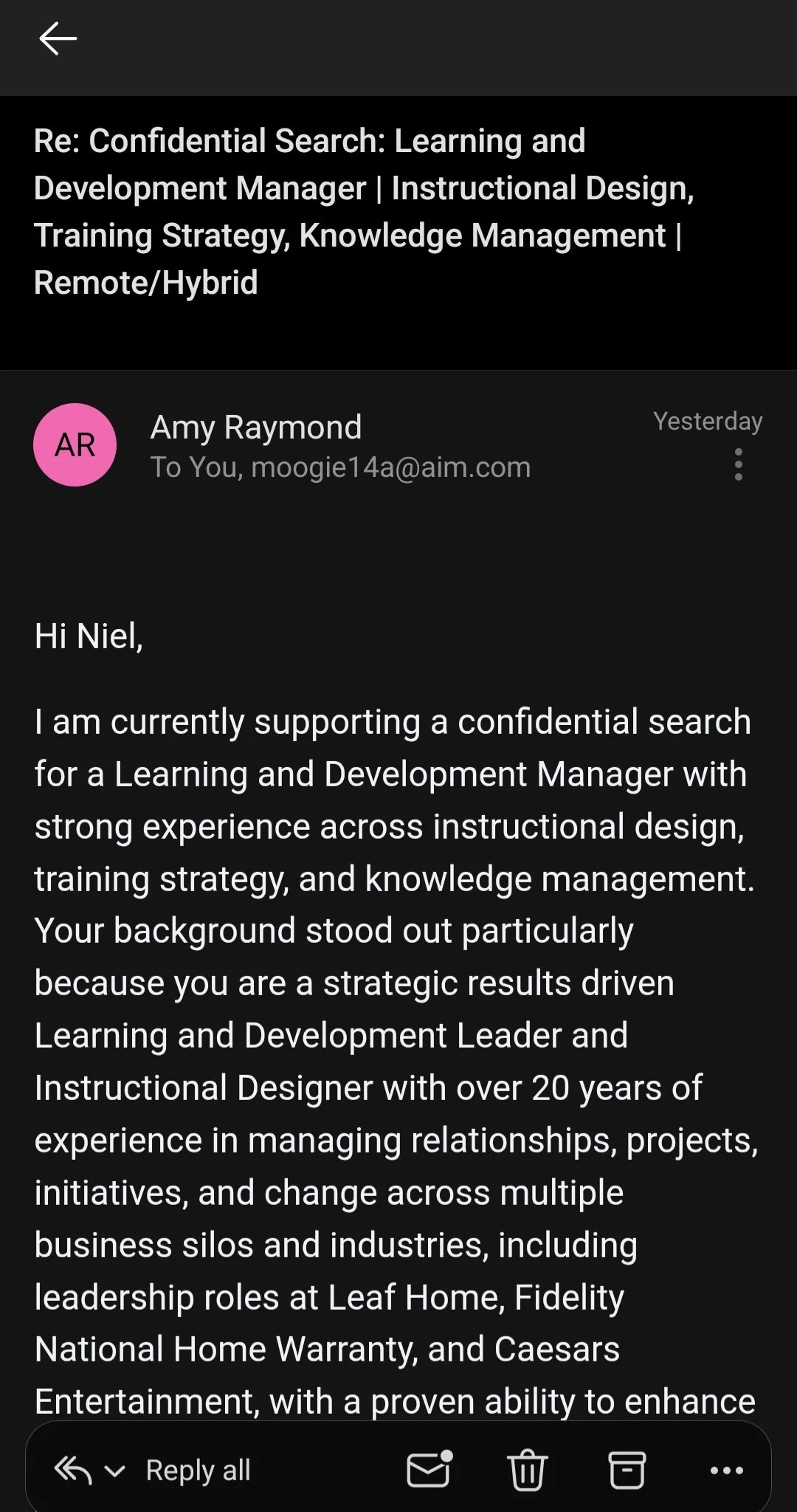
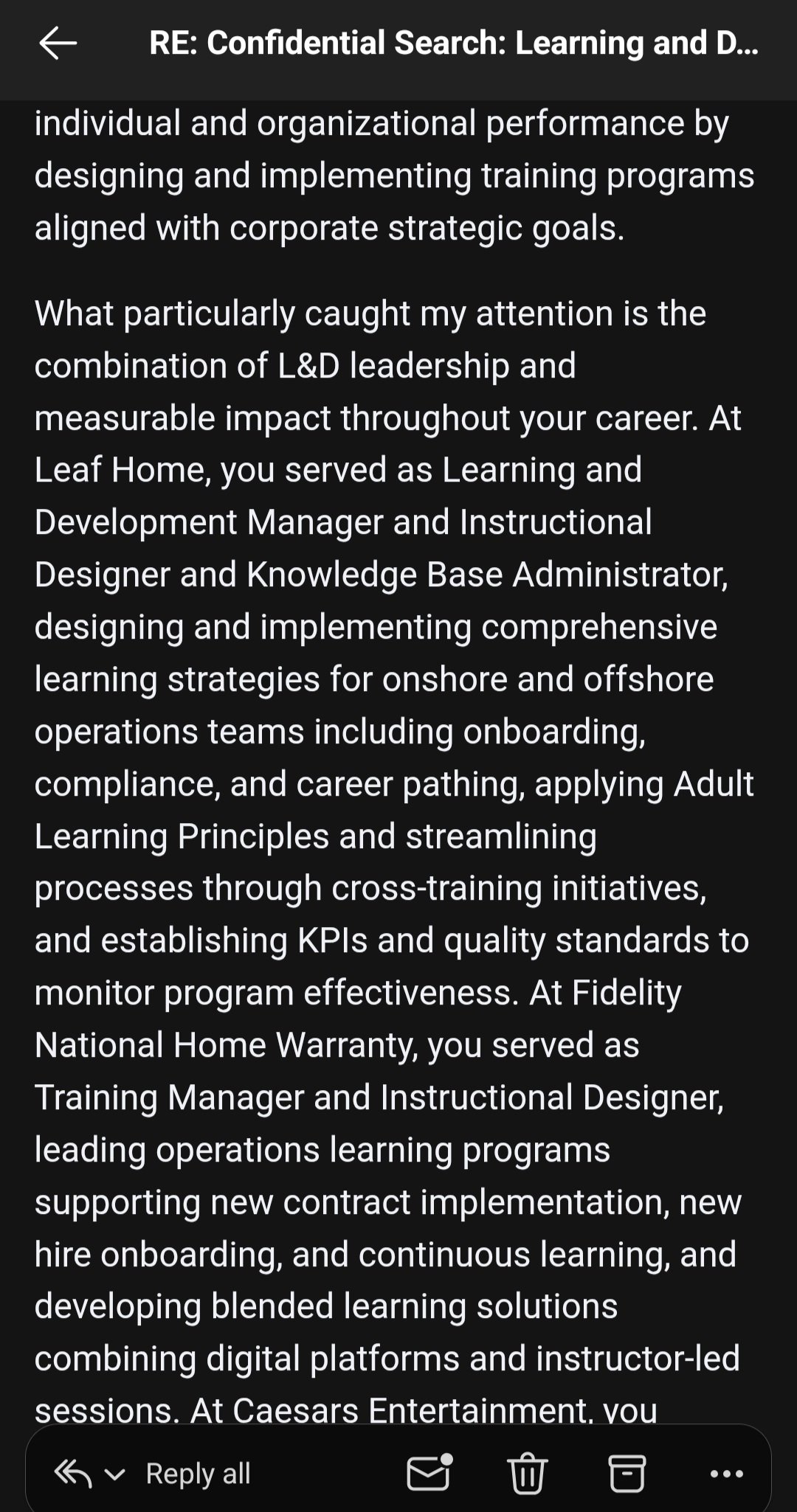
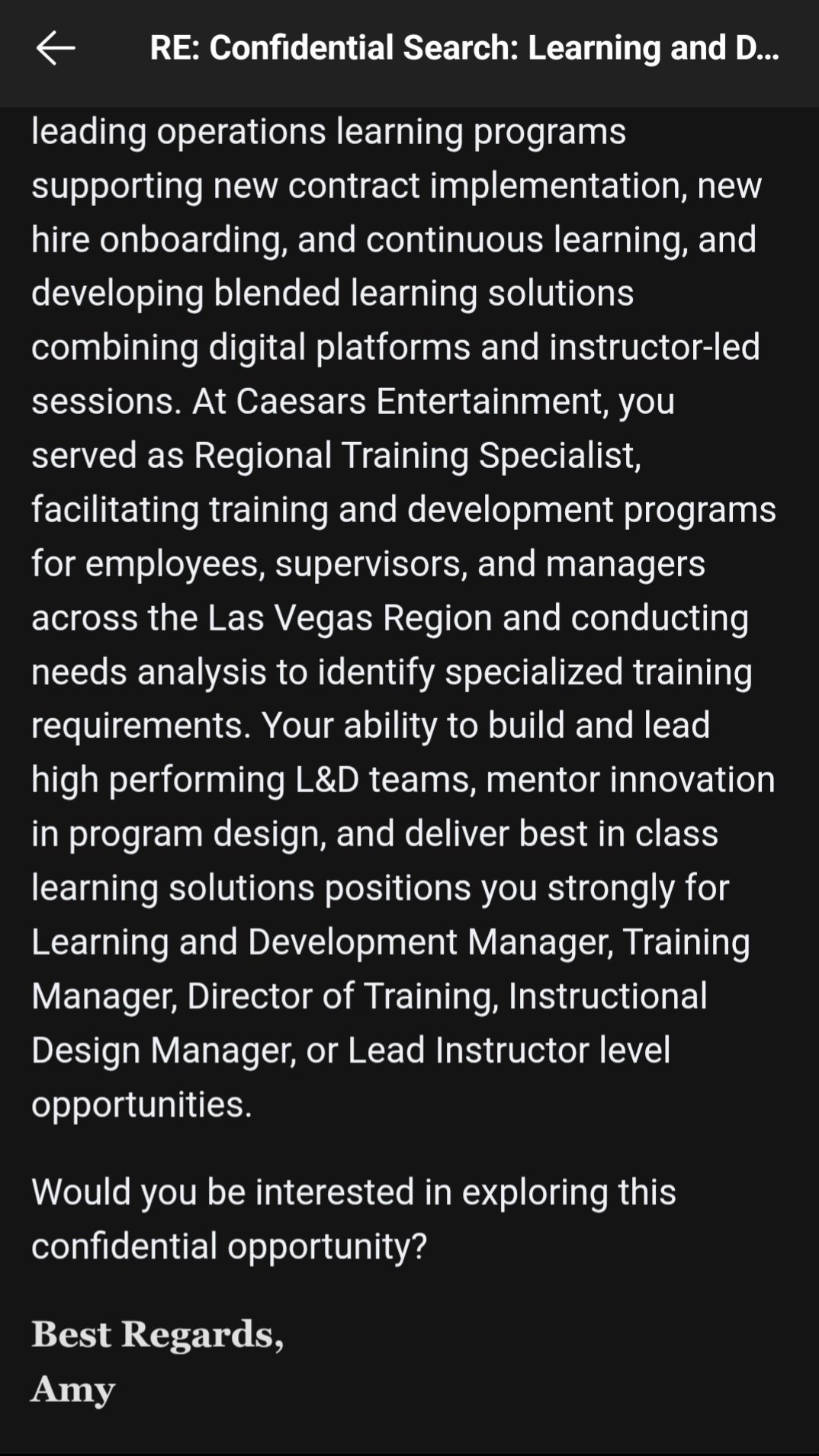
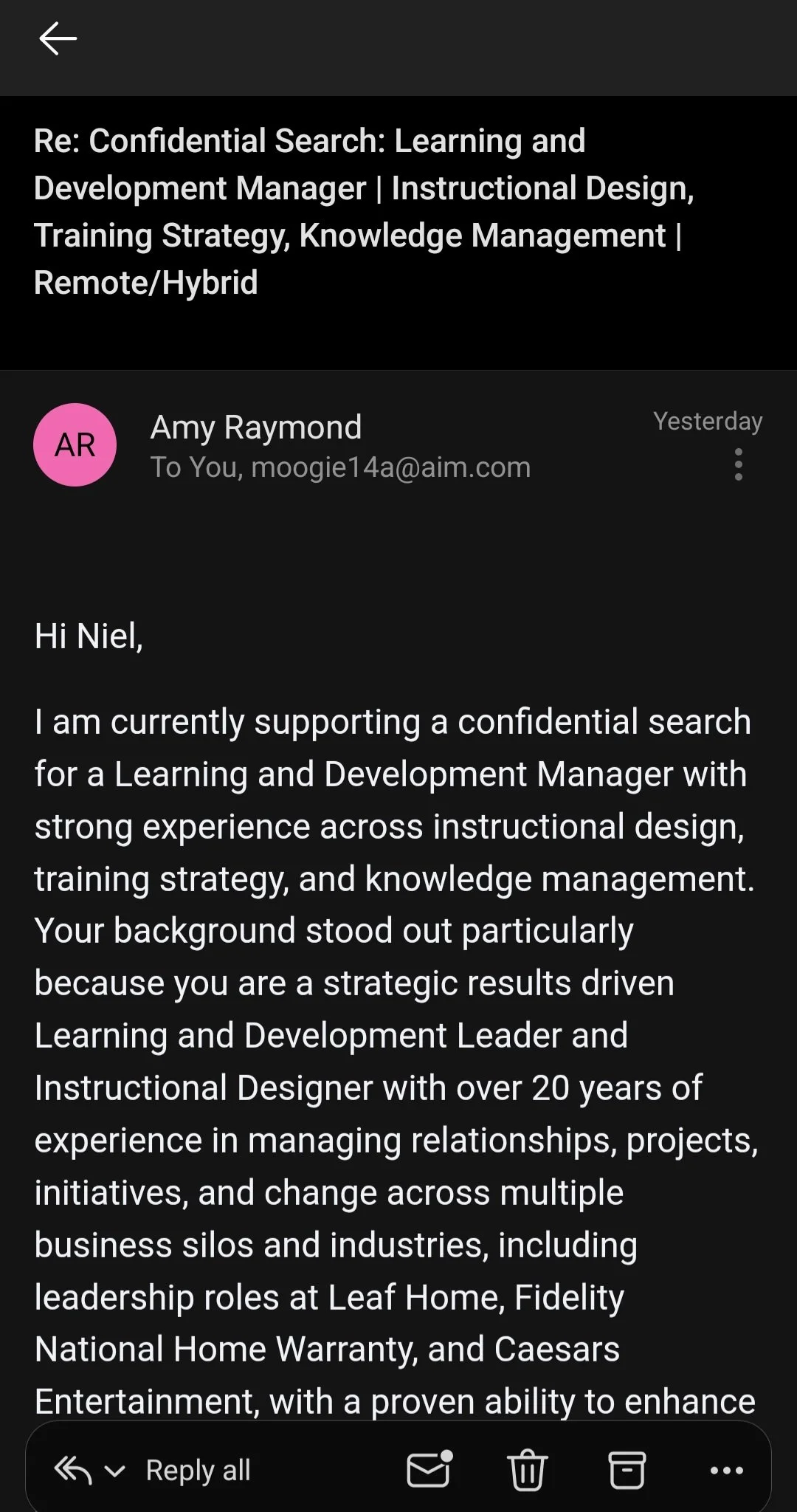
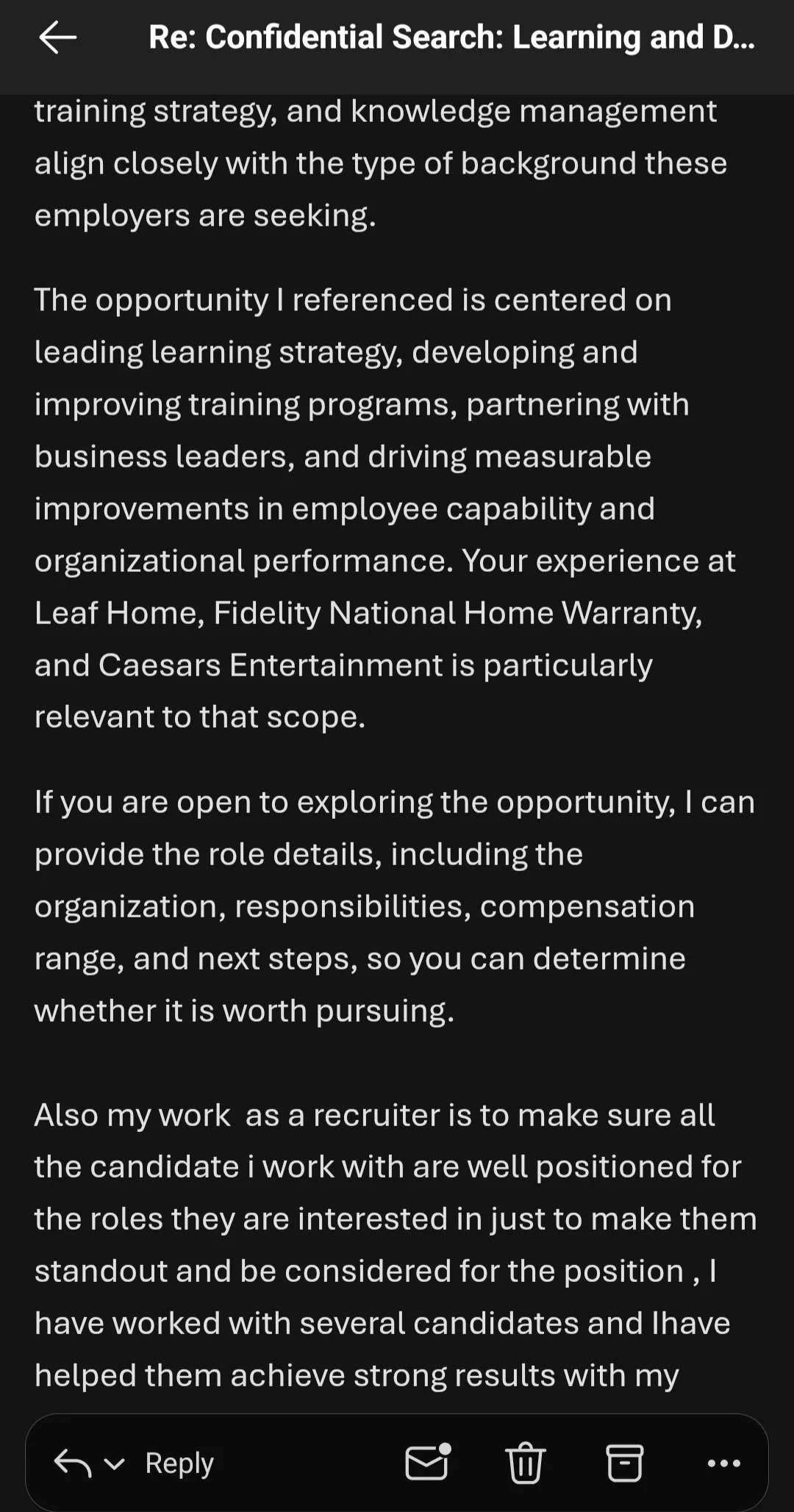
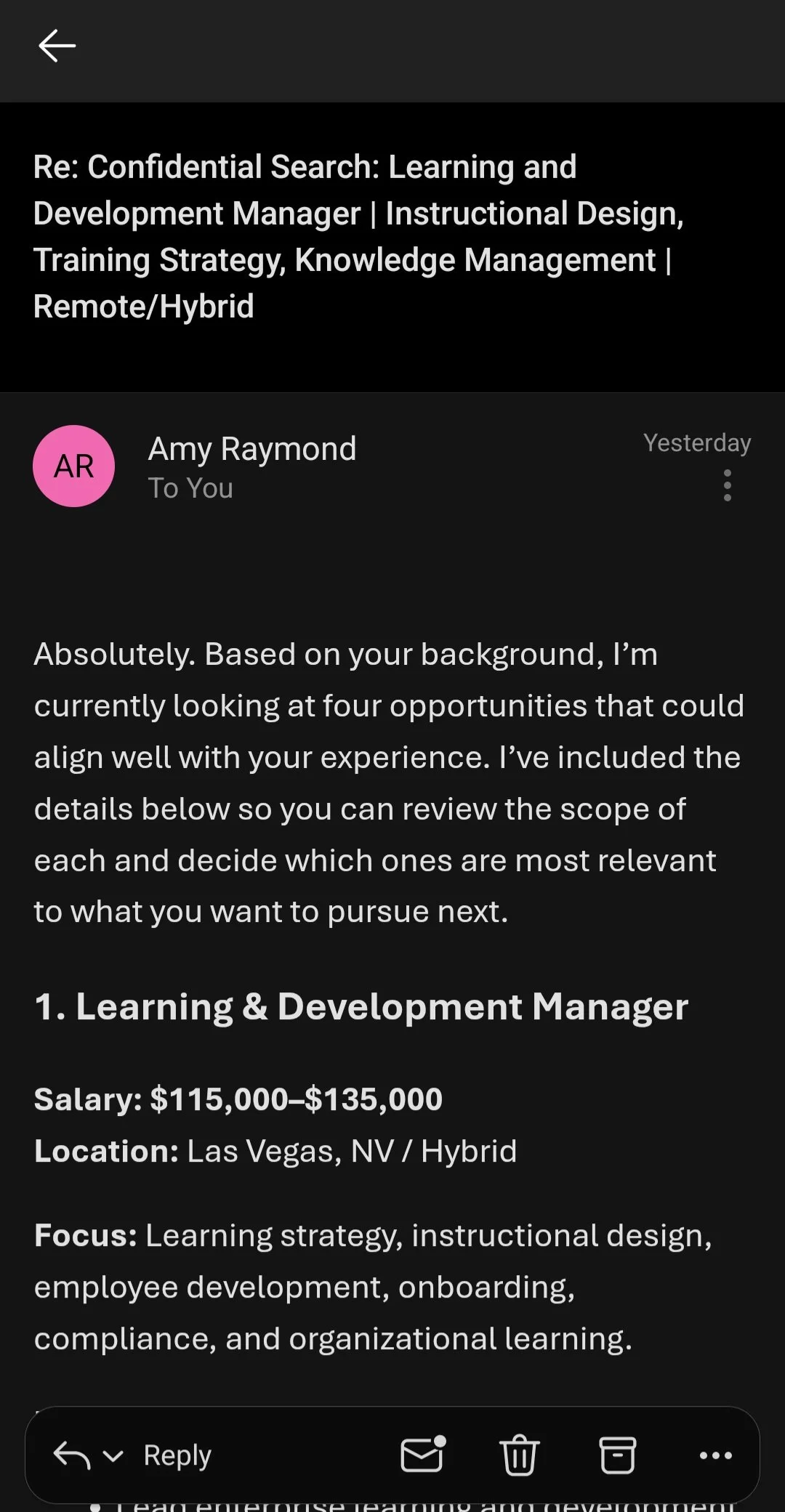
A recruiter reaches out with a "confidential search" for a role that seems tailored to your background. The message is highly personalized, highlighting your experience and accomplishments. It looks legitimate.
So I asked a very direct question:
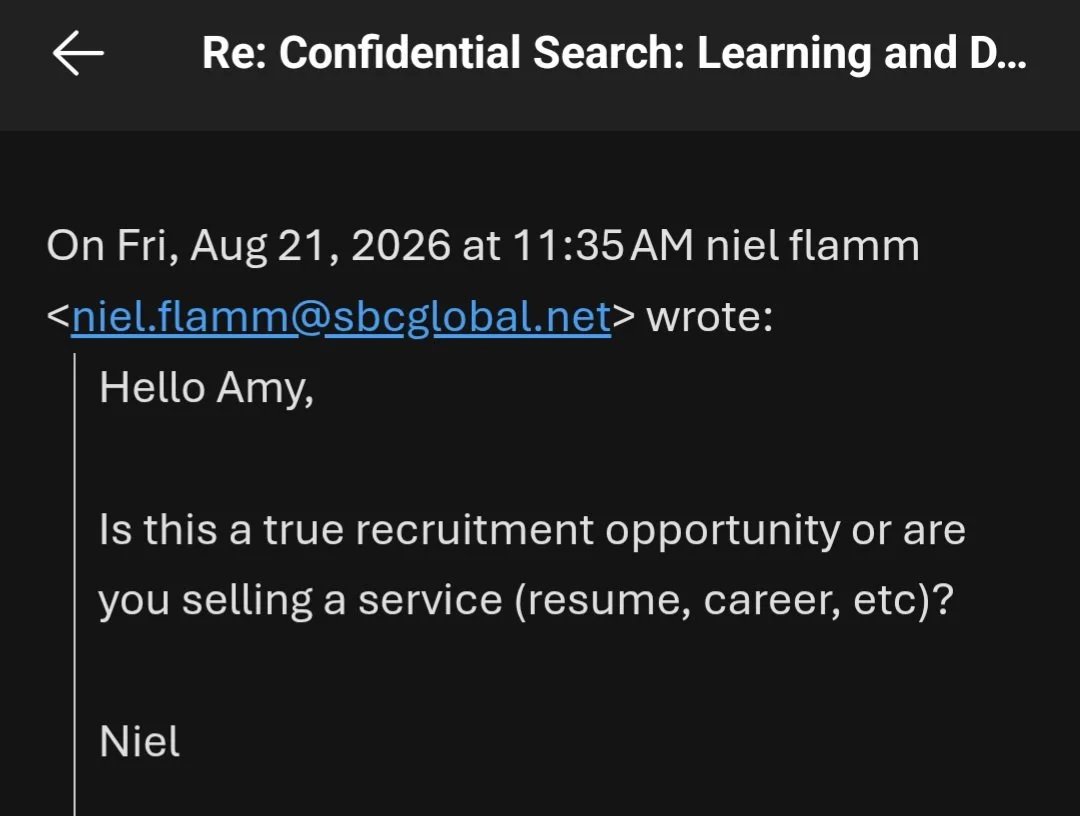
"Is this a true recruitment opportunity or are you selling a service (resume, career, etc.)?"
The response?
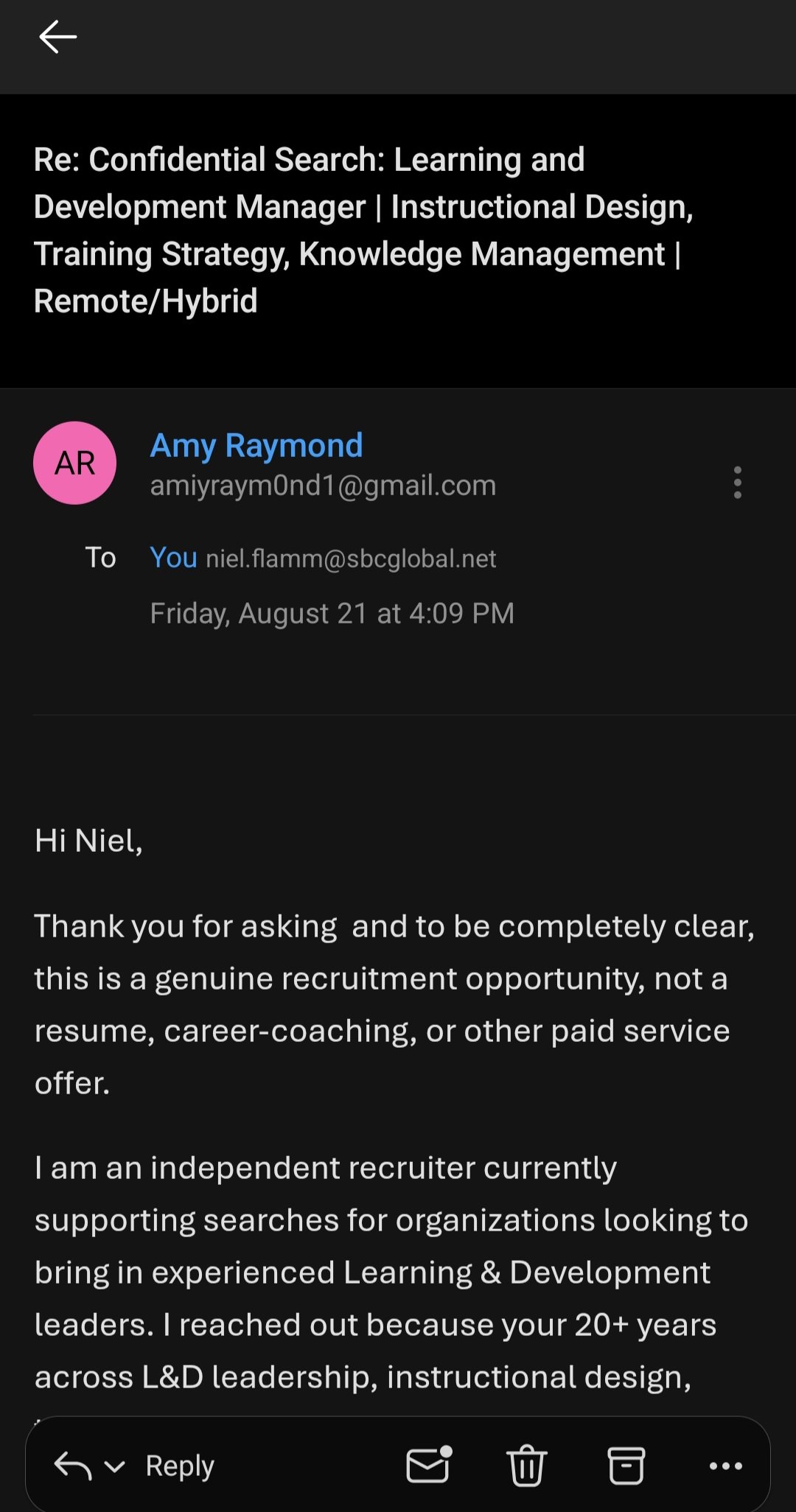
"This is a genuine recruitment opportunity, not a resume, career-coaching, or other paid service offer."
Sounds reassuring... right?
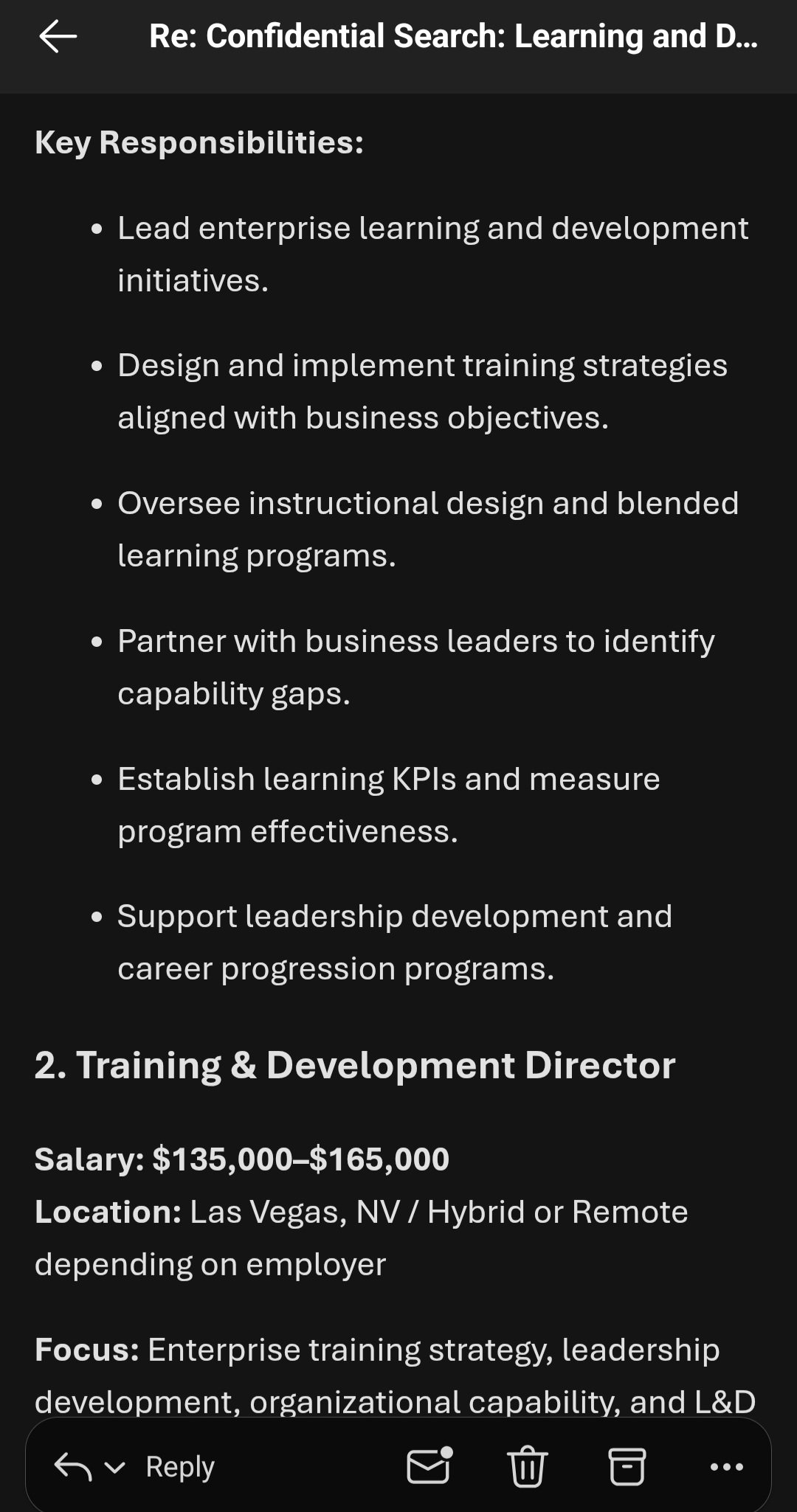
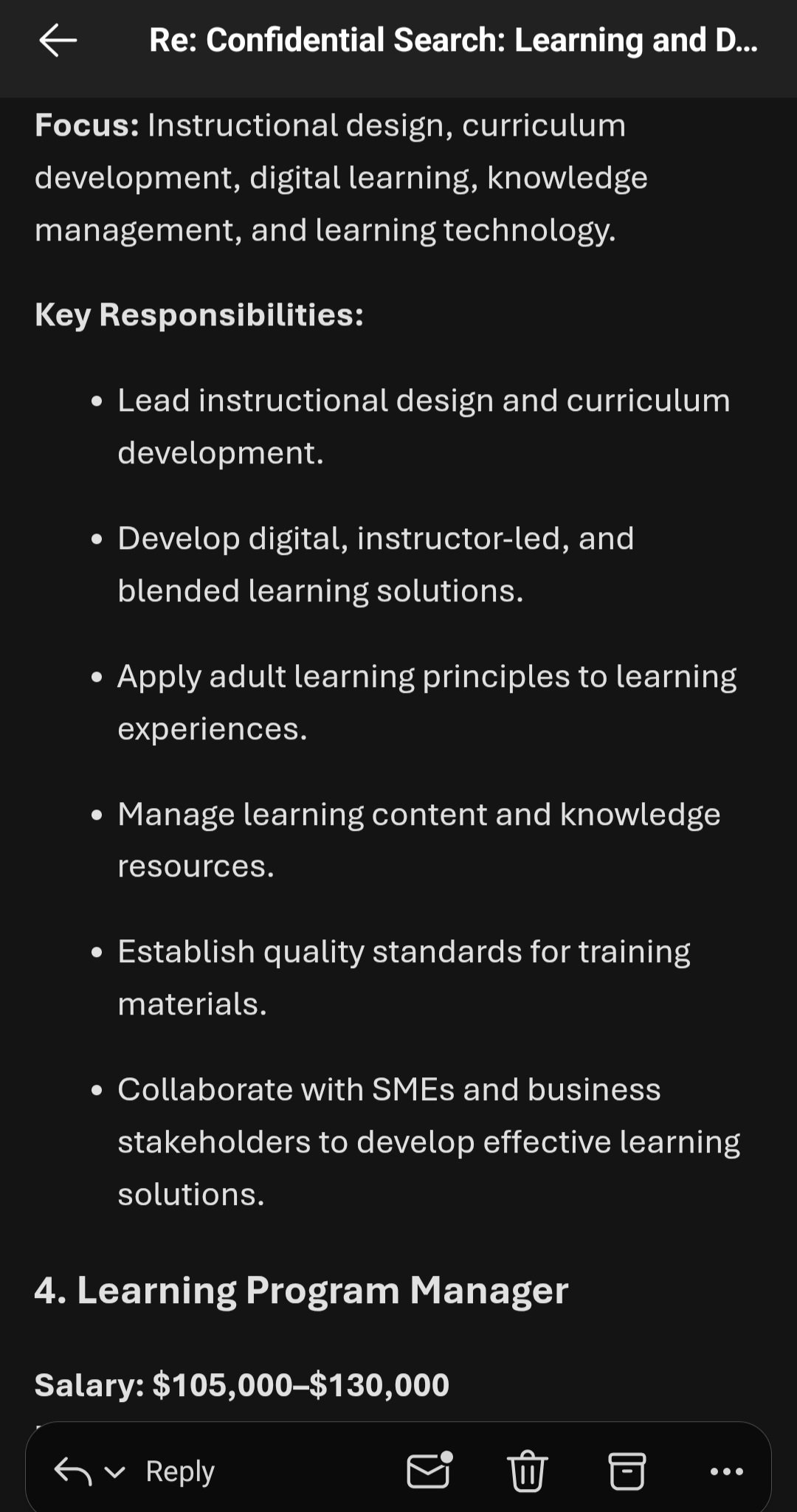
The conversation continued with detailed job descriptions, salary ranges, and responsibilities. Everything appeared legitimate.
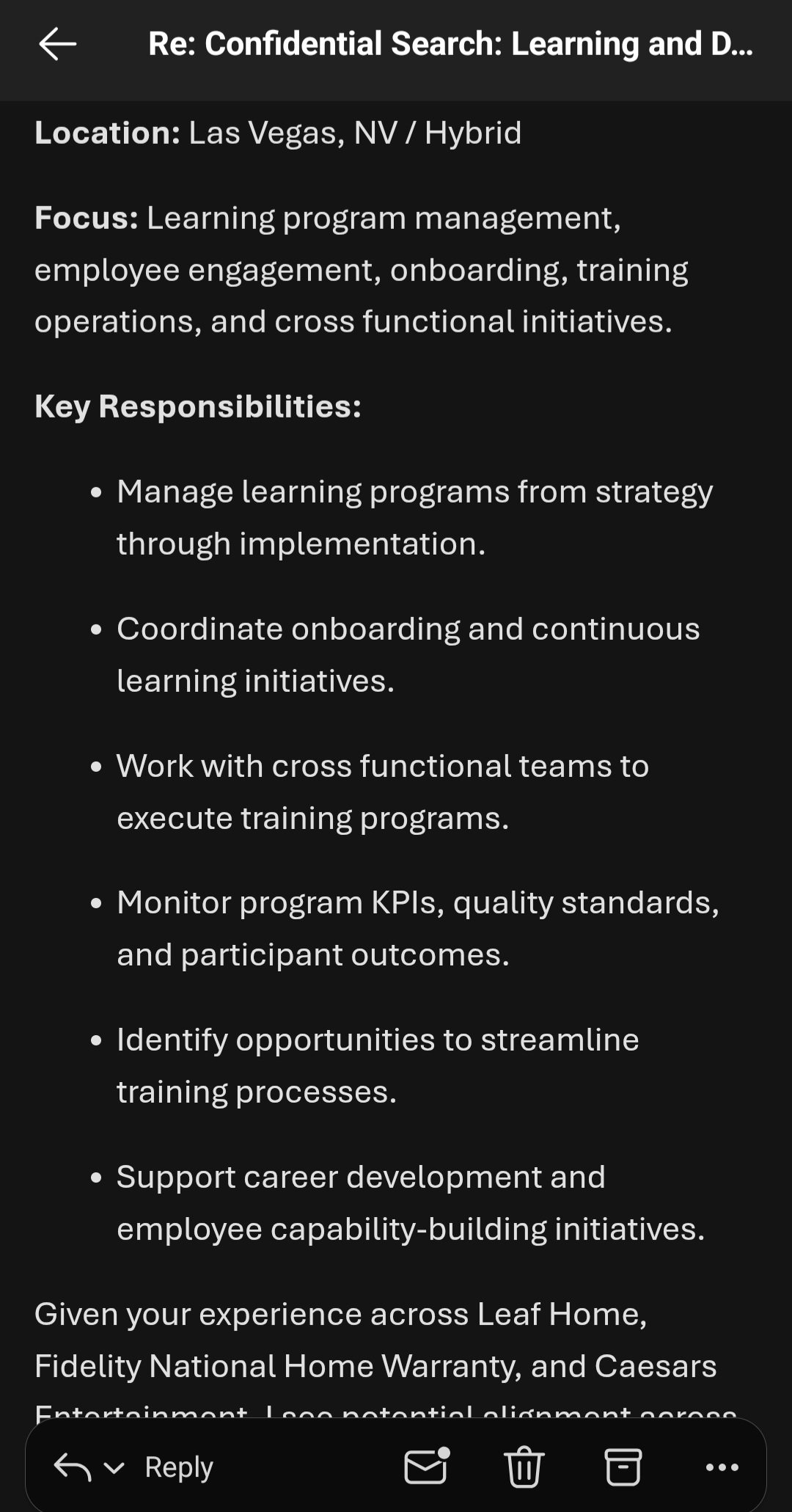
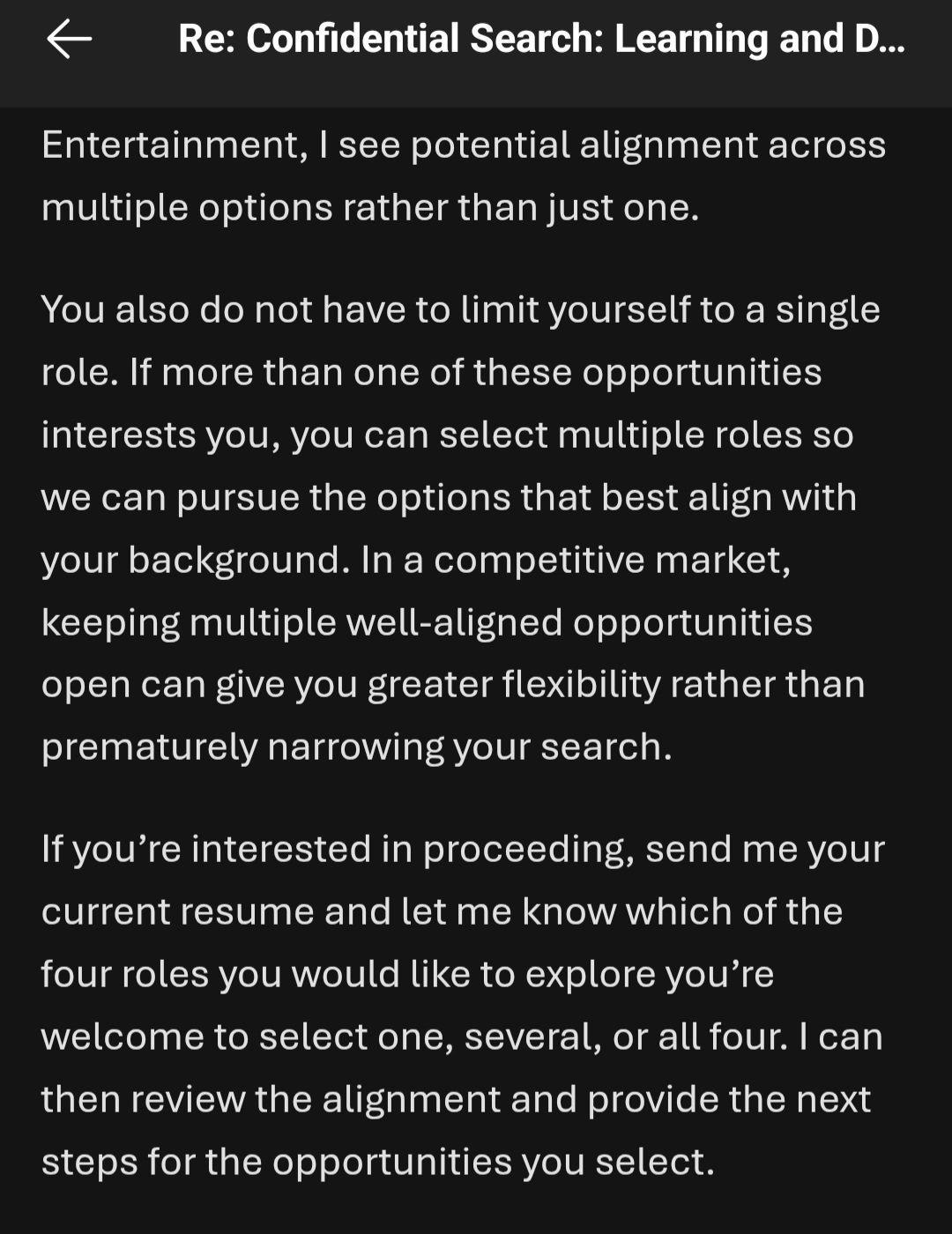
Then came the familiar next step.
"Send me your current resume."
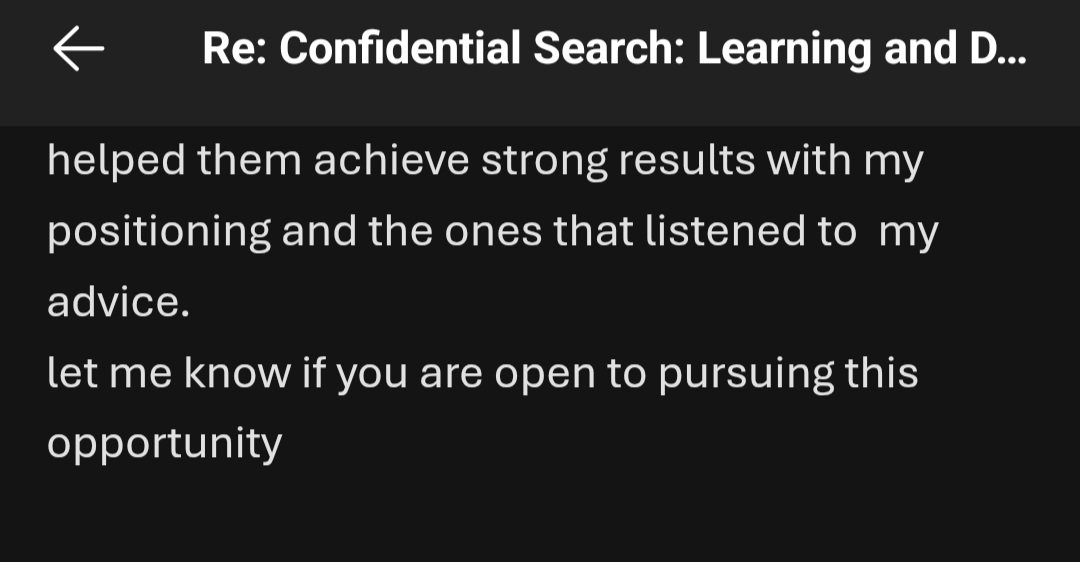
If you've followed these scams before, you know what often comes next.
This is where many job seekers eventually hear that their resume "needs work," they're not positioned correctly, or they need help standing out before they can be presented to the employer. That's when the sales pitch begins.
I'm not saying that's what would have happened here—I chose not to continue the conversation before it reached that point. But it follows a pattern I've documented many times.
Another detail that caught my attention was the email address used to contact me.
The recruiter somehow found my moogie14a@aim.com email address—a mailbox I haven't actively used in years. Not exactly the email address I'd expect a professional recruiter to find first.
This is why I encourage every job seeker to ask direct questions early in the conversation.
If someone says they are not selling a service, that's a good start—but don't stop asking questions.
The real concern isn't just wasting time.
The fear is that someone pays hundreds of dollars through PayPal, Zelle, cryptocurrency, Cash App, or another payment method, only to discover they never receive what was promised—or have little chance of recovering their money.
I'll continue documenting these interactions, the tactics being used, and the warning signs so others can recognize them before it's too late.
Follow my blog for additional recruiting scam investigations, screenshots, and real-world examples:
Stay skeptical.
Ask questions.
Verify everything.
Trust your instincts.