

Day 77: Congratulations, Nextdoor — You’ve Earned a Certificate

Today is Day 77.
I've tried serious analysis.
I've discussed corporate communications, leadership, customer experience, marketing, transparency, process improvement, hearing versus listening, and even issued my Two-Minute Challenge on Nextdoor.
So today, I'm trying something completely different.
I'm handing out an award.
🏆 The 2026 Nextdoor Certificate of Achievement in Keeping One Simple Question Alive for 77 Consecutive Days
Congratulations!
That's commitment.
The Assignment
Imagine this is a corporate training exercise.
The learner receives the following scenario:
Your company publishes research and tells readers that if they'd like “detailed data, additional audience segments, and strategic recommendations,” they should contact a specific employee.
Someone follows those instructions and requests the detailed data.
What should you do?
A. Send the requested information.
B. Explain that the information isn't available and why.
C. Explain any requirements necessary to receive it.
D. Send links to the summaries the person already read.
E. Allow the request to continue for 77 days until it becomes an ongoing public case study.
I'm going with A, B, or C.
Apparently E has entered the chat.
Let's Add a Bonus Question
Your Communications team eventually responds.
The person explains again that they're not requesting the public summaries.
They provide the exact wording from your website.
They send another email.
They even attach a screenshot highlighting what they're requesting.
What should happen next?
This one isn't multiple choice.
Answer the question.
The L&D Guy in Me Can't Help Himself
I've spent more than 20 years in Learning & Development—as a facilitator, instructional designer, and manager.
One of the most important parts of designing effective training is distinguishing between a knowledge problem and a performance problem.
If someone doesn't know what they're supposed to do, training might help.
But what if the instructions are clear?
What if the request is documented?
What if the appropriate people have received it?
What if the person requesting the information has clarified it repeatedly?
At that point, I'm not sure another training module will solve the problem.
Maybe the issue isn't knowledge.
Maybe it's execution.
Or ownership.
Or accountability.
That's something leadership should probably want to understand.
So Here's Your Day 77 Homework, Nextdoor
No essay required.
No PowerPoint presentation.
No breakout groups.
No role-play exercise.
Please avoid a 45-minute eLearning module with a “Next” button you have to click 37 times.
Just complete this sentence:
“The detailed data referenced in our Insights posts __________.”
Is available.
Isn't available.
Requires certain qualifications.
Can be obtained by doing X.
Pick one.
Explain it.
Course complete.
And Here's the Funny Part
I started this 77 days ago while looking for research on Nextdoor.
Instead, Nextdoor has provided enough material for an entirely different kind of research project.
Communication.
Customer experience.
Leadership.
Marketing.
Process.
Accountability.
At this rate, I may finish my Nextdoor case study before I ever receive Nextdoor's.
Now that deserves a certificate.
Day 77.
Still waiting for the detailed data.
Still documenting the experience.
And Nextdoor remains enrolled in the course.
This is the condensed LinkedIn version. Read the entire Day 77 post and follow my continuing Nextdoor case study at NielFlamm.com/blog. Subscribe at NielFlamm.com so you don't miss Day 78—or, preferably, the post announcing that the counter can finally stop.
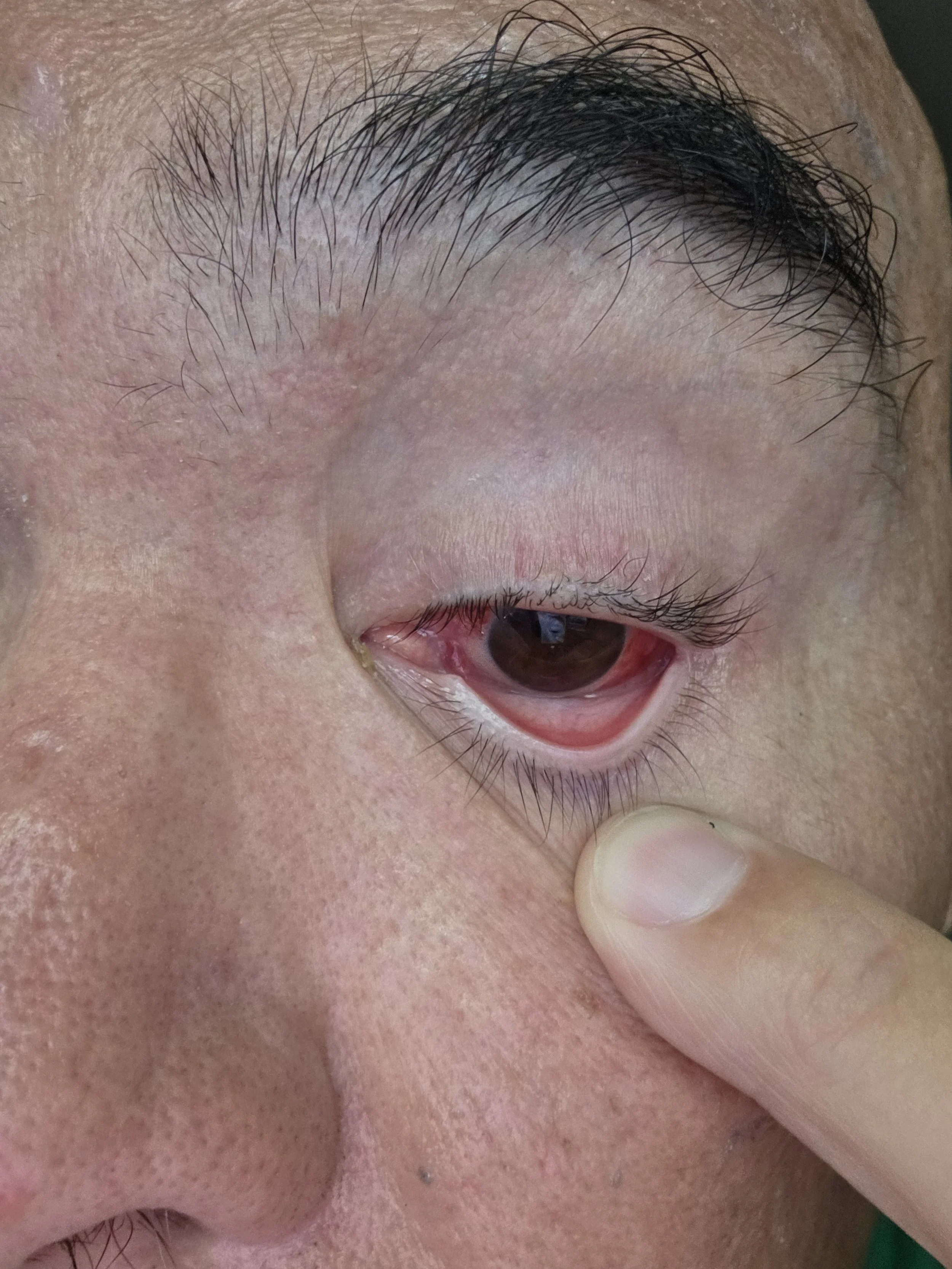
Healing… Or at Least That’s What We’re Calling It
Today’s medical update comes with two exhibits: the eye and the arm.
Let’s start with the eye.
The silicone oil was removed a few days ago, and somehow my eye looks more bruised now than it did on Day 1. Apparently, healing sometimes likes to make things look worse before making them look better.
And the view through that eye?
Previously, I described it as looking through a glass of cloudy liquid.
I’ve decided that description needs an upgrade.
It’s like looking through salad dressing.
Not ranch. Not Thousand Island. I’m thinking vinaigrette—something slightly cloudy where the oil and liquid are separating, and gravity keeps moving everything around.
Basically, my eyeball has become a condiment bottle.
Meanwhile, we also have The Arm.
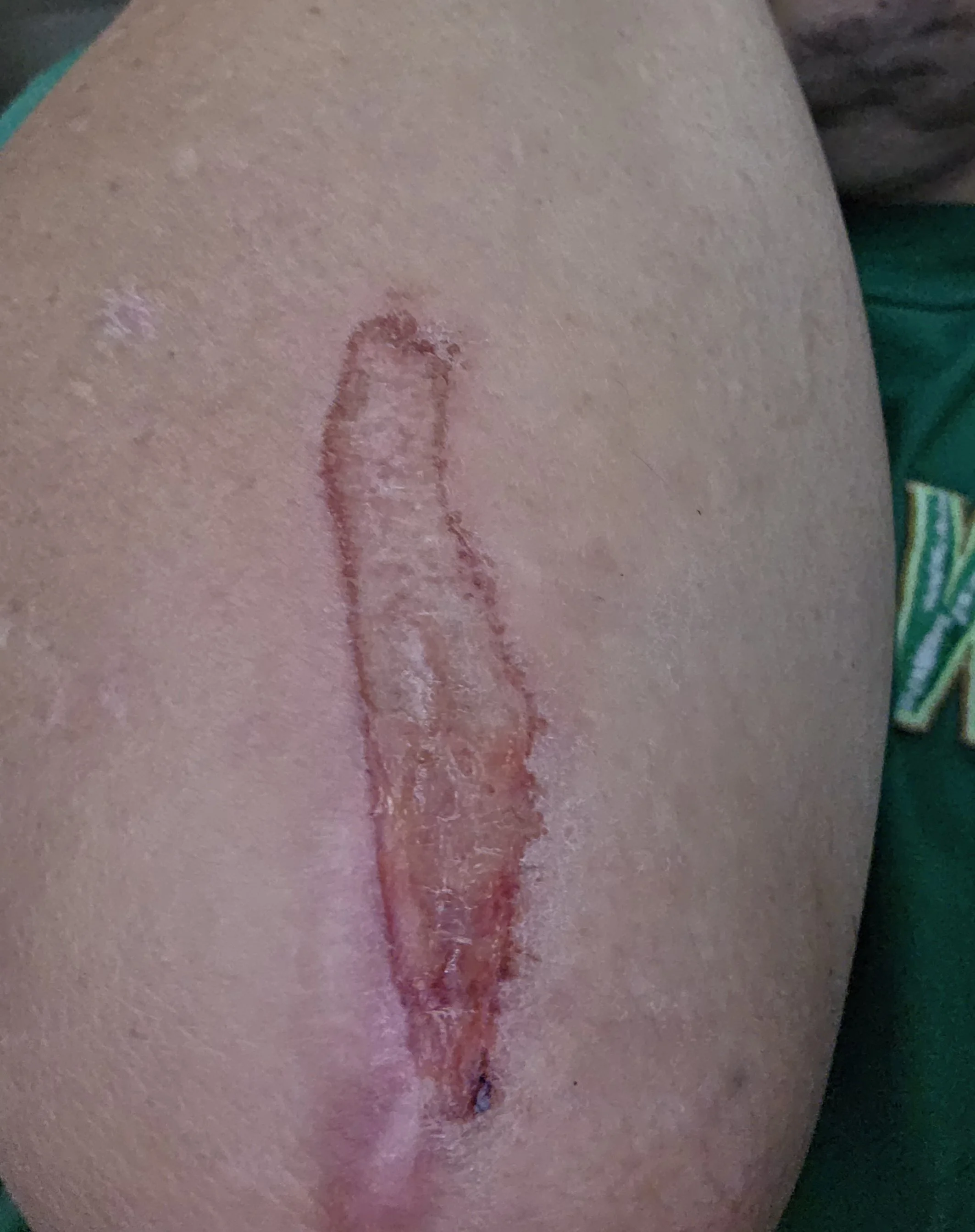
That’s the rug burn from Friday’s unfortunate disagreement between my prosthetic leg, gravity, and a large Dutch Bros passion fruit soda.
It looks horrible.
It feels… surprisingly fine.
It hardly hurts at all.
Maybe I’m just tough.
Or maybe it’s those steroid eye drops.
I keep putting steroids in my eye four times a day, so surely at some point they travel down to my arm and turn me into the Hulk. That’s how medicine works, right?
So today’s scorecard:
👁️ Eye: Looks worse. Vision by vinaigrette.
💪 Arm: Looks terrible. Barely hurts.
🟢 Hulk transformation: Still pending.
I’ll keep documenting this highly scientific healing process as both my eye and arm figure out what they’re doing.
At this rate, I’m just happy nothing else has started leaking, bleeding, bruising, or falling off.
Recovery continues.
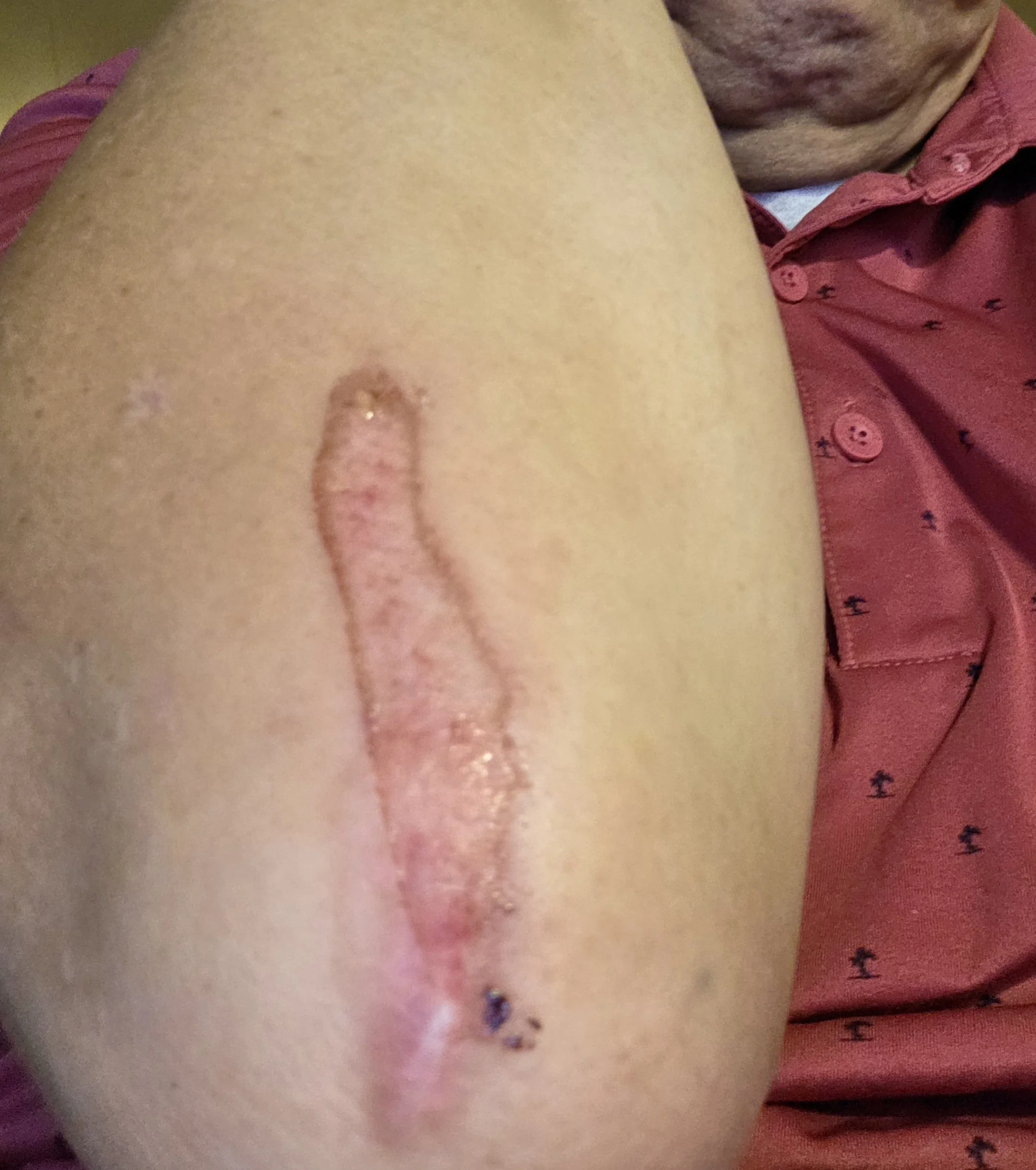
Gravity Wins Again: When My Prosthetic Decided We Were Falling
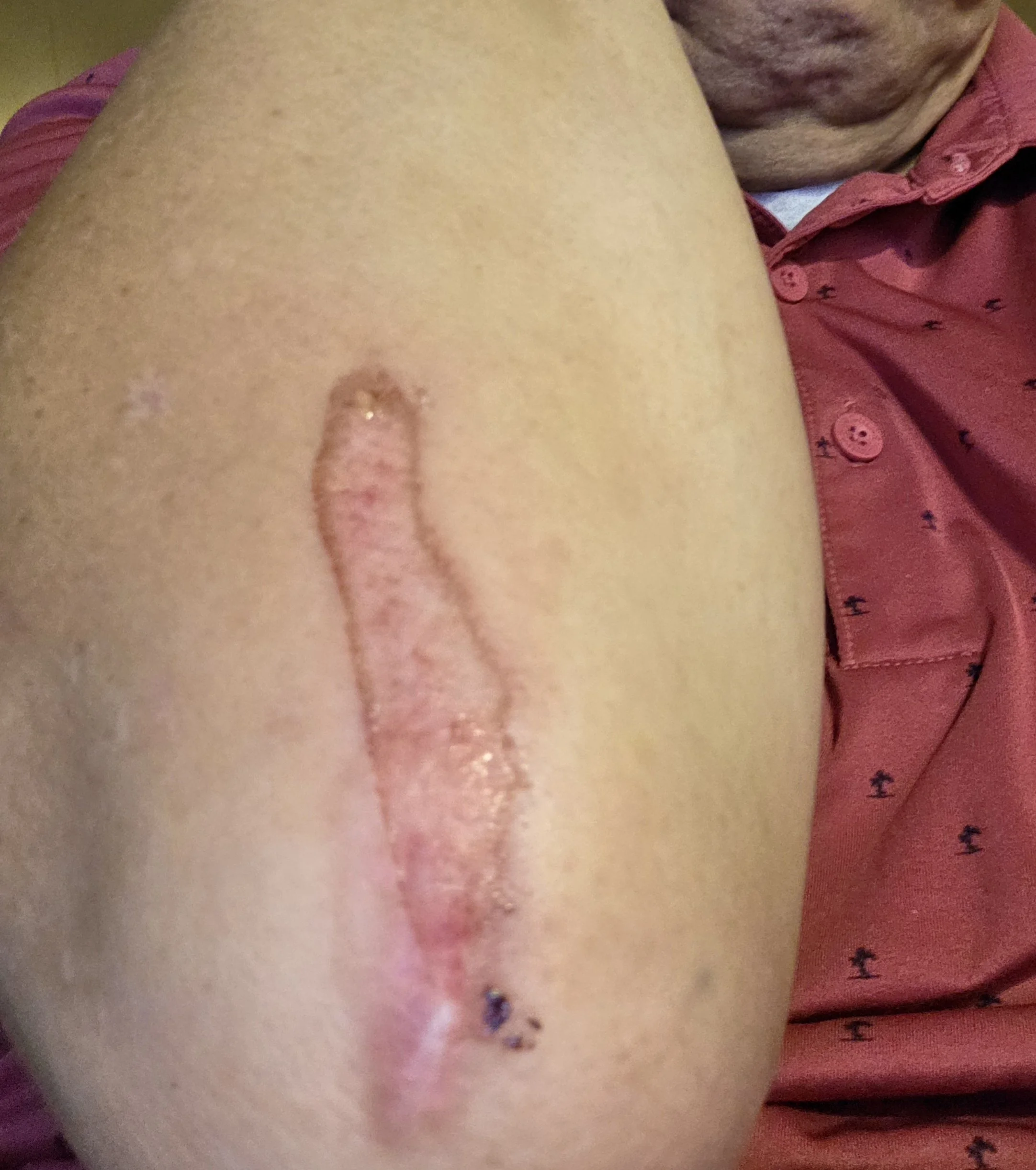
Yesterday, before my recovery meeting even started, I decided to make an entrance.
Not intentionally.
I had a large Dutch Bros passion fruit soda with me. Had.
I took one step wrong with my prosthetic leg, and the prosthetic interpreted that movement as, “Oh, we're taking another step? Got it.”
Except we weren't.
The knee started to bend.
And when you're wearing an above-the-knee prosthetic, there comes a magical moment when you realize:
I'm going down.
Once the prosthetic starts bending as though I'm passing the leg through for the next step, I can't simply pull it back and say, “Never mind.”
Physics has already accepted the assignment.
So down I went.
And so did the passion fruit soda.
All. Over. The. Carpet.
My arm got a pretty impressive rug burn in the process. It was bleeding, and as you can see from the picture, it's definitely going to leave me with a little reminder of the adventure.
Fortunately, the arm really doesn't hurt that much.
My pride? That's another story.
There's something particularly humbling about falling in front of people while simultaneously launching a giant beverage across the carpet.
At least I provided the pre-meeting entertainment.
Falls with a prosthetic are interesting because sometimes there isn't much time to recover. I knew exactly what was happening as soon as that knee began bending.
My brain: We're falling.
My prosthetic: Correct.
Gravity: I got it from here.
The good news is I'm okay. The arm will heal. My pride will eventually recover.
I'm not sure about the carpet.

Day 76: Maybe I’ve Been Asking the Wrong Question

For 76 days, I've been asking some version of the same question:
Where is the detailed data?
Today, I'm changing the question.
Why advertise something as available if you're not prepared to provide it?
That's a much more interesting question.
Nextdoor published Insights articles that don't simply say, “Here's our research. Hope you enjoyed it.”
They specifically invite readers who want more to reach out.
The language is pretty clear: if you want “detailed data, additional audience segments, and strategic recommendations,” contact the person Nextdoor identifies.
So I did.
And here we are.
Day 76.
Imagine This Anywhere Else
A restaurant puts this on the menu:
“Ask your server about today's desserts.”
You ask.
The server hands you the dinner menu again.
You explain:
“No, I already read this. I'm asking about the desserts you told me to ask about.”
They hand you the dinner menu again.
You clarify exactly what you're requesting.
You point to the sentence telling you to ask.
You eventually send them a picture of the sentence.
And then...
Nothing.
At some point, you're no longer wondering what's for dessert.
You're wondering why the restaurant put the sentence on the menu.
That's essentially where I am with Nextdoor.
This Isn't Really About a Report Anymore
The research is almost secondary now.
What fascinates me is the disconnect between invitation and execution.
If an organization publicly tells people:
Contact us for X
there should probably be a process for what happens when someone actually...
contacts you for X.
Who qualifies?
What gets sent?
Is there a sales requirement?
Is it only available to advertisers?
Is there a minimum advertising spend?
Is it proprietary and unavailable to the general public?
Is there an NDA?
Is it simply not something Nextdoor wants to provide to me?
Any of those answers would at least be an answer.
And if there are conditions attached to receiving the information, why not disclose those conditions when inviting people to request it?
Maybe There's a Bigger Marketing Lesson Here
Calls to action are promises.
Download the guide.
Request a demo.
Contact us for more information.
Reach out for detailed data.
Every one of those statements creates an expectation.
Marketing gets someone through the door.
Operations determines what happens after they walk through it.
And when those two things don't connect, the customer discovers the gap.
This has become much more interesting than my original request.
I didn't have to uncover some hidden Nextdoor process.
I followed Nextdoor's own call to action.
So Day 76 Has a New Question
I'm not asking Nextdoor where the detailed data is today.
I've asked that plenty.
Instead:
Nextdoor, what is supposed to happen when someone does exactly what your marketing tells them to do?
Because I did.
And 76 days later, I'm still trying to figure it out.
Maybe the most important data I've collected during this experiment isn't contained in the reports at all.
Maybe it's the 76 days of customer experience generated while trying to obtain them.
That's becoming quite a dataset in its own right.
Day 76.
The research request continues.
But apparently, so does the research on Nextdoor.
My LinkedIn posts are the condensed version. The full continuing Nextdoor case study is at NielFlamm.com/blog.
And subscribe at NielFlamm.com to follow along.
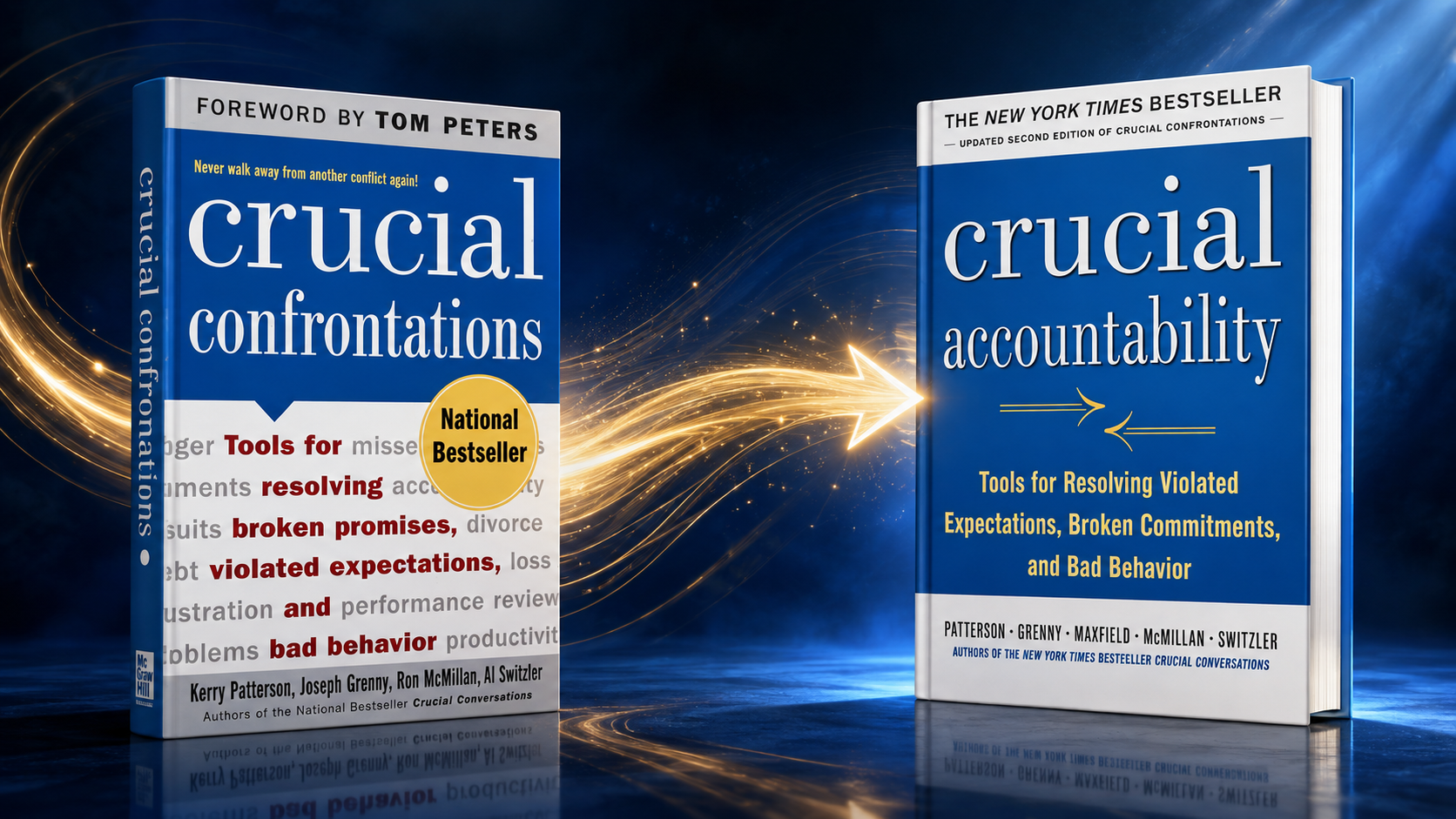
Same Book, Different Title: From Crucial Confrontations to Crucial Accountability
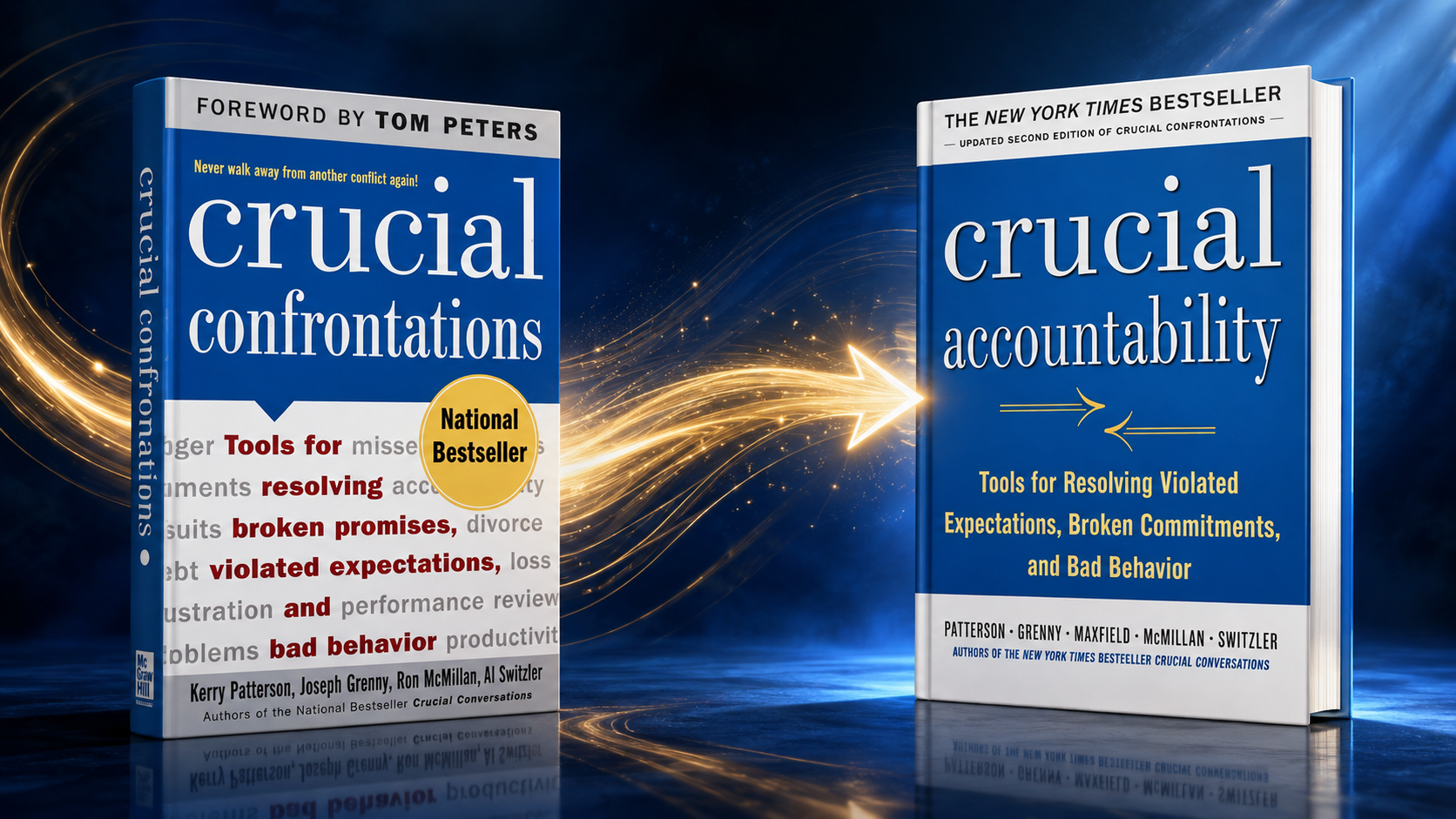
I recently noticed something interesting: Crucial Confrontations and Crucial Accountability are essentially the same book. The authors changed the title, but the message remained focused on resolving violated expectations, broken commitments, and bad behavior.
The new title makes sense.
The word confrontation has developed a bad reputation. People hear it and immediately picture yelling, aggression, finger-pointing, and someone flipping a table like a reality television reunion.
But confrontation doesn’t have to be aggressive. Sometimes it simply means addressing an uncomfortable issue directly instead of pretending it didn’t happen.
And apparently, I’ve been doing a lot of confronting lately.
I’ve questioned unanswered requests, challenged inconsistent explanations, followed up when people hoped I would forget, and refused to accept silence as a satisfactory response. I’m not looking for an argument. I’m looking for answers.
That isn’t aggression. That is accountability.
That’s why the revised title works better. Accountability describes the real purpose of these conversations: identifying what was promised, explaining what actually happened, and asking what will be done about the difference.
Of course, some people would still prefer the original title—especially when they’re the ones being held accountable. Calling it a “confrontation” makes it easier to portray the person asking questions as the problem.
That can become the easy way out:
“Why are you being so confrontational?”
Translation: “Why won’t you stop asking about the thing I haven’t answered?”
Changing the language doesn’t change my approach. I will continue to ask direct questions and follow up, and I expect people and organizations to stand behind their words and actions.
Call it confrontation if you want.
I call it accountability—and I’m not allowing the easy way out.