
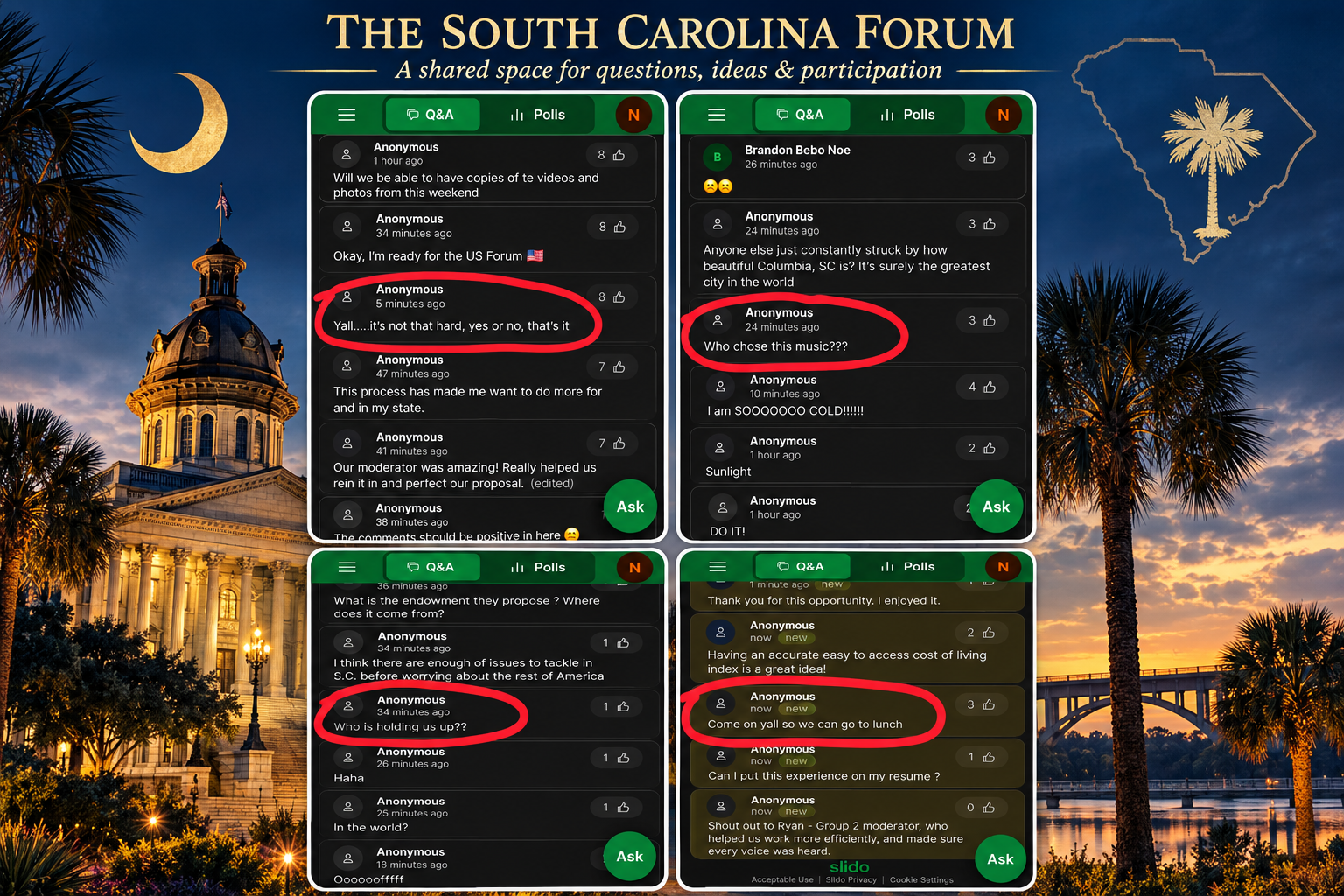
Slido at the SC Forum: A Tool Is Only as Good as How We Use It
The SC Forum weekend was an awesome opportunity to learn, share ideas, and work with people from different backgrounds and perspectives. One tool that helped bring participants into the conversation was Slido.
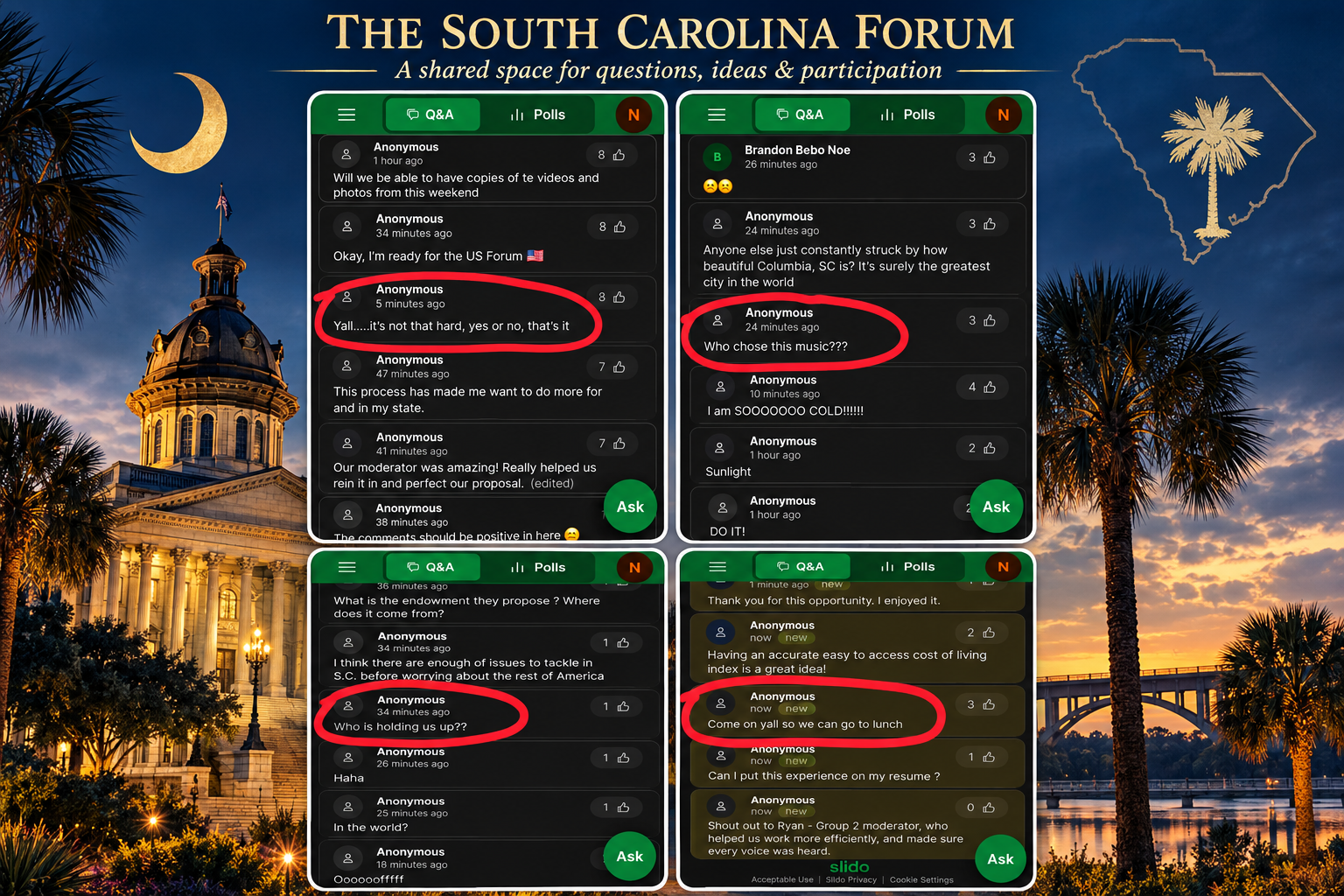
Slido is an audience participation platform used at meetings and events. Participants can submit questions, respond to live polls, and vote on questions or comments. Depending on how an event is set up, people can also post anonymously. That can make it easier for more voices to be heard, especially from people who might not want to speak in front of a room. Slido’s live Q&A features include anonymous questions and audience upvoting.
For much of the weekend, Slido was used as intended: to ask thoughtful questions, share relevant comments, and take part in votes. The screenshots also show a few moments when the tool was used for jokes or off-topic remarks. Those comments may have seemed harmless to the people posting them, but they pulled attention away from the work and the forum's purpose.
Anonymity can help people participate more freely, but it also asks us to take personal responsibility for what we contribute. A useful question to ask before posting is: Does this help the conversation move forward?
I also used Slido to thank the team for the opportunity and for a meaningful weekend. I chose to attach my name to that comment. I wanted the appreciation to be personal and direct.
The best tools make participation easier. How we use those tools best depends on the people in the room. Slido gave us a way to ask, respond, and vote; each of us had to use that opportunity with care.
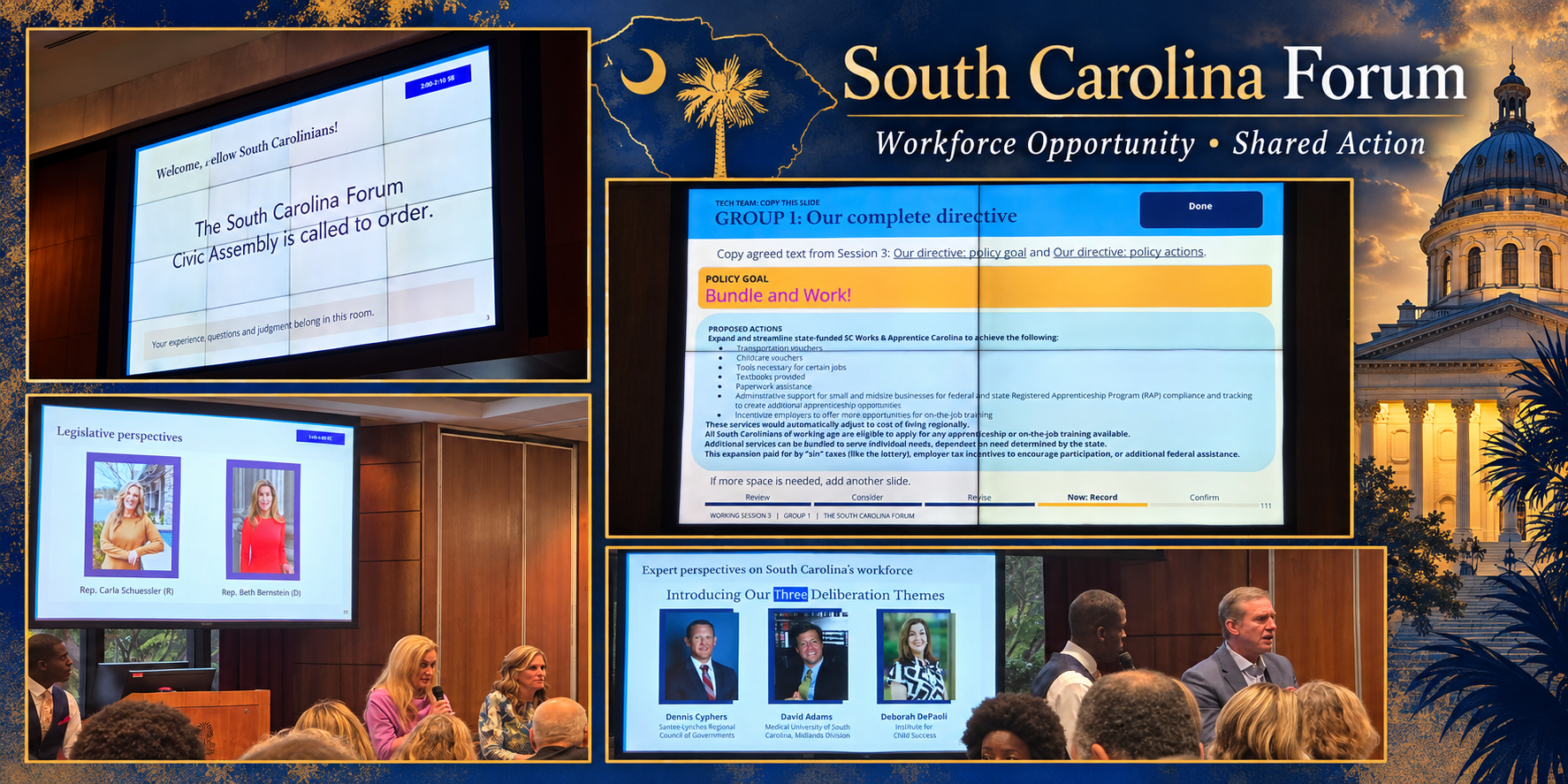
From Common Ground to Measurable Progress in South Carolina
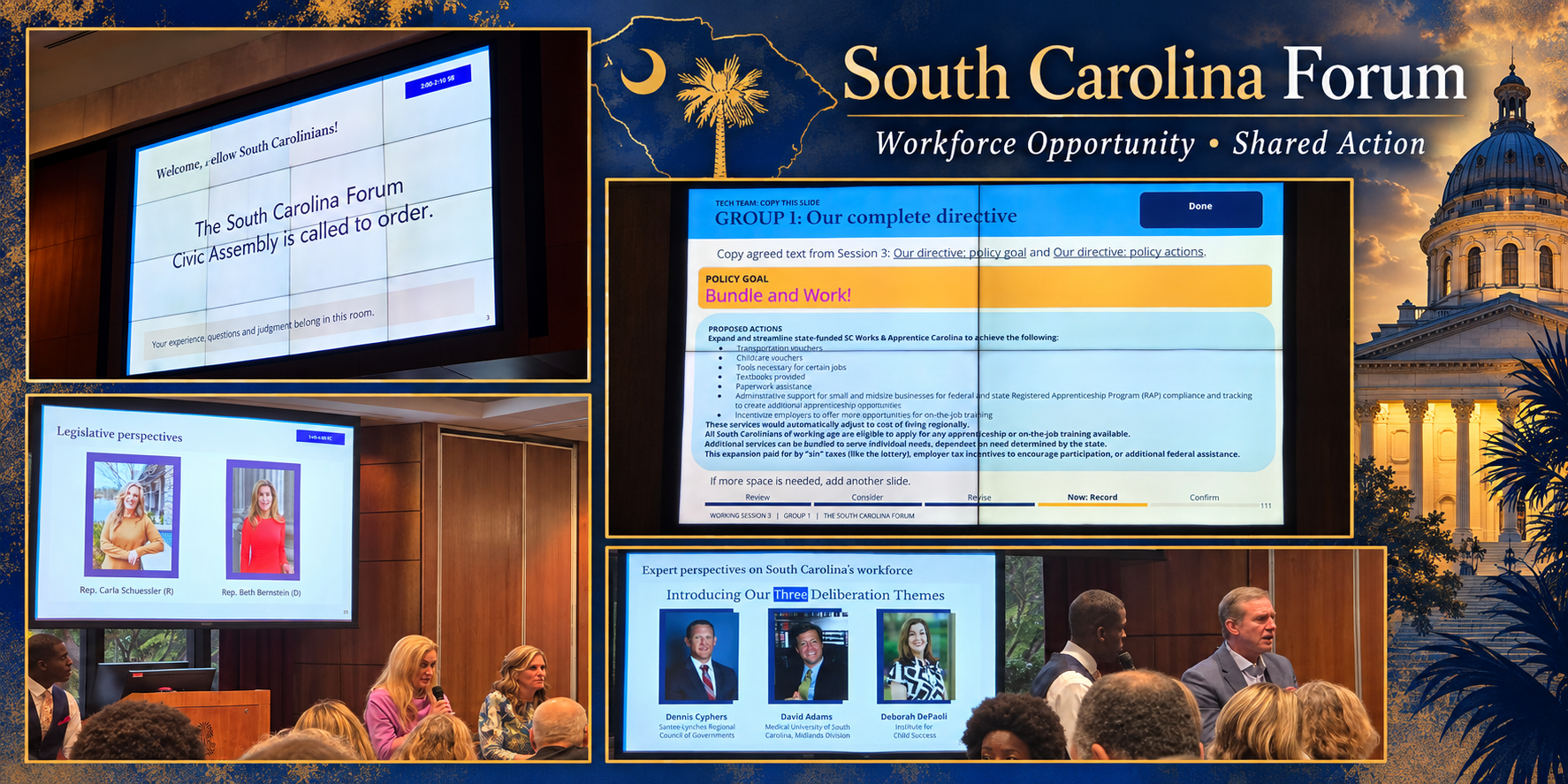
This afternoon, the SC Forum wraps up—and I’m leaving impressed by what can happen when people with different opinions, backgrounds, and ideologies come together around a shared purpose: making a meaningful difference for families in South Carolina.
Nine groups have been working on ideas to improve families’ livelihoods through better career opportunities. The conversations have included topics like the SC Works website and apprenticeship programs. The goal is to develop bill recommendations for the state legislature.
That’s ambitious work. And wearing my Learning & Development hat, I keep coming back to one question: Are we making these recommendations S.M.A.R.T.?
For anyone unfamiliar with the framework, S.M.A.R.T. goals are:
Specific
Measurable
Actionable
Realistic
Time-bound
It’s easy—and understandable—to say we want to “make things better.” But what would “better” look like for someone using SC Works? What would a stronger apprenticeship program accomplish, and for whom? How will we know whether a change is working? When will we start measuring, and when will we review the results? Is the goal ambitious but achievable?
These questions aren’t about shrinking the vision or chasing the easiest win. They’re about giving a good idea a clear path to results. A bill recommendation should make it clear what action is proposed, who is responsible, what progress looks like, and when that progress will be assessed.
My two cents: government and public policy could benefit from more of the practical tools used in the corporate and private sectors. Clear objectives, measures of success, timelines, and regular reviews can help turn a shared aspiration into accountable work.
The Forum’s strength is bringing different people to the same table. The next step is making sure the ideas we carry forward are clear enough to act on—and concrete enough to measure. That’s how common ground can lead to lasting impact for South Carolina families.