
The Art of Letting Go: What Cortisol, Stress, and a Facebook Reel Reminded Me About Life
Last night, while preparing material for my blog, I came across a Facebook Reel that really made me stop and think.
Here's the Reel:
https://www.facebook.com/share/v/1WUmeynfoW/
I found it inspiring.
The woman featured in the Reel reportedly smoked cigarettes and drank red wine. Now, before anyone gets the wrong idea, those aren't the inspiring parts! What caught my attention was the suggestion that she lived a long life in part because she learned to reduce stress and cortisol in her body.
The Reel also featured other examples with women. That part wasn't particularly shocking. What stuck with me was the bigger message: How much of our lives do we spend worrying about things we cannot control?
I don't know the medical history of the women featured, and a social media Reel isn't scientific evidence that reducing cortisol caused someone to live longer. But the message about managing stress certainly got my attention.
And it reminded me of how I try to live my life today.
"If I can't control it, why worry?"
That's a phrase I try to live by.
I thought about it for a moment. How much time do I spend worrying about things completely outside my control?
What someone else thought of me.
What someone else says or does.
The decisions made by a company, a government, or another person.
Traffic. Weather. Delayed flights. Customer service representatives who seem to have forgotten what customer service means.
I could go on.
I spent so much energy trying to control situations, people, outcomes, and circumstances that we have absolutely no control over.
And what do I get in return?
Stress. Frustration. Sleepless nights. Anxiety. And sometimes a whole lot of unnecessary aggravation.
I've learned that I can control very little when I get down to the nitty-gritty.
I can control how I respond. I can control my attitude, my decisions, and how I choose to spend my time. I can decide whether I allow someone else's behavior to ruin my day.
But I cannot control the universe.
And here's another revelation: The universe doesn't revolve around me.
I'm a very small part of something much bigger.
So, what exactly is cortisol?
I asked The Google, and here's the explanation:
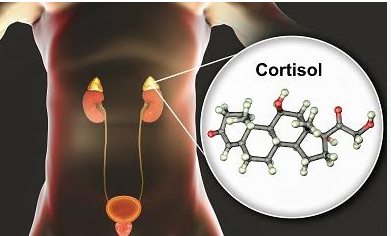
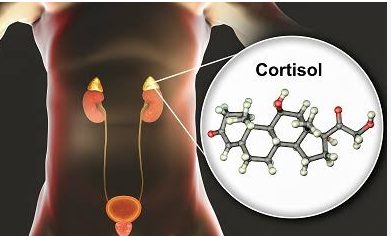
Cortisol is the body's primary steroid stress hormone, produced by the adrenal glands on top of the kidneys.
It plays an important role in regulating several essential body functions.
Cortisol isn't inherently bad. In fact, we need it.
According to the information I found, cortisol helps with several important functions:
Stress response: It helps activate the body's fight-or-flight response, temporarily increasing alertness, heart rate, and available energy.
Blood sugar and metabolism: It helps regulate blood sugar and makes stored energy available when needed.
Blood pressure: It supports normal cardiovascular function and helps maintain blood pressure.
Sleep-wake cycle: Cortisol levels naturally rise in the morning to help us wake up and generally decline toward nighttime.
Inflammation: It helps regulate immune activity and control inflammation.
In other words, cortisol is necessary. Our bodies rely on it to function.
The issue is when cortisol levels remain excessively high for extended periods.

When stress becomes a problem
The Google's explanation also noted that prolonged high cortisol levels can be linked to health problems.
For example, Cushing syndrome can result from prolonged exposure to excessive cortisol. It can be caused by certain medical conditions, including tumors, or by extended use of corticosteroid medications.
Symptoms can include weight gain, particularly around the face and abdomen, high blood pressure, and fragile skin.
Chronic stress can also affect sleep, energy levels, and overall well-being.
One important distinction: everyday stress doesn't automatically mean someone has dangerously high cortisol. Cortisol levels are influenced by many factors, and persistent symptoms or concerns are best discussed with a medical professional.
But the general lesson is worth considering: our bodies weren't designed to remain in a constant state of emergency.
I used to be the person trying to control EVERYTHING
And I mean everything.
I used to carry around an enormous amount of stress. I wanted to control situations, outcomes, decisions, and sometimes even things that had absolutely nothing to do with me.
I'd spend time thinking about what might happen, what someone might do, what could go wrong, and how I could prevent it.
I wanted to have a solution before a problem even existed.
Sound familiar?
At some point, I started realizing how much energy I was wasting.
I cannot control what other people do. I cannot control every outcome. I cannot control what happens tomorrow, next week, or next year.
I can make plans. I can prepare. I can take responsibility for my decisions.
But beyond that, I have to learn to let go.
And that has made a difference in how I approach life.
Life has a way of reminding you what's important
I've had my share of experiences that put things into perspective.
Life doesn't always follow the plan we create. Sometimes circumstances change, things happen unexpectedly, and we have to adjust.
I've learned that I don't need to carry every burden, solve every problem, or have an opinion about every situation.
Sometimes the best thing I can do is step back.
Sometimes I need to walk away.
Sometimes I need to accept that something is beyond my control and move on.
And sometimes I just need a nap. You know how much I love naps!
The point is, I don't want to spend the time I have worrying about things I cannot change.
The universe doesn't revolve around me
That's probably the biggest lesson.
I'm one person in a world of billions. I have my own responsibilities, challenges, relationships, and experiences. But I'm not the center of the universe.
Neither are you.
And there's something liberating about recognizing that.
I don't have to fix everything. I don't have to respond to every comment. I don't have to win every disagreement. I don't have to make everyone understand my point of view.
I can choose what deserves my energy.
I can choose peace over unnecessary conflict.
I can choose to focus on what I can influence rather than obsess over what I cannot.
And I can remind myself:
If I can't control it, why worry?
I'm not suggesting that we can eliminate stress or that simply changing my attitude will prevent medical problems. Life is complicated, and sometimes I need professional help.
But I do believe there's value in learning to let go of the things that consume our energy without giving anything meaningful in return.
Maybe that's the real takeaway from the Reel.
Not the cigarettes. Not the red wine. Not a promise of a longer life.
It's a reminder to pay attention to the life I have.
I'm a small part of this universe. I don't control it, and it doesn't revolve around me.
And that's perfectly fine.
Now, if you'll excuse me, I think it's time for a nap.
I Love Naps, But This Facebook Reel Made Me Think About My Brain!
I love naps.
Seriously. If I have the chance to take a nap, there's a pretty good chance I'll take it. It's one of my favorite things to do. Give me a comfortable place, a little quiet, and I'm usually good to go.
But today, I came across a Facebook Reel that made me look at naps, aging, and my brain a little differently.
And it was surprisingly sobering.
What's happening to our brains as we age?
The Reel discusses how the human brain changes as we get older. It points to changes beginning around age 35, with brain volume loss accelerating around age 60.
That caught my attention.
I'm 54. That means I'm already past the age when some of these changes are said to begin, and I'm getting closer to that next milestone.
The video emphasizes that this isn't simply about the brain getting smaller. It's about changes in the brain's structure, including neurons, the connections between them, and the way information is processed.
These are the things that help us think, remember, reason, solve problems, and make decisions.
In other words, the machinery that helps make us who we are.
I did a little additional reading after watching the Reel. Research supports the idea that brain volume begins declining in middle age, with the rate increasing around age 60. But there's an important distinction: normal aging does not mean we're simply losing huge numbers of neurons. Changes in neurons, their connections, and the brain’s supporting structures all contribute to the process.
So the subject is a little more complicated than the Reel makes it sound.
The 10% brain myth
Here's another part of the conversation that caught my attention.
We've all heard the claim that humans use only about 10% of their brains.
It's a popular myth. We use the entire brain, but different areas handle different activities, and they aren't all working at maximum capacity at the same time.
Think about it. Reading, walking, remembering someone's name, solving a problem, or watching a movie all involve different networks of brain activity.
The brain is working even when we're not consciously doing something complicated.
The Reel also discusses how only a portion of neurons fire at any given moment. That makes sense, since neurons communicate in networks and their activity changes depending on what we're doing.
I wouldn't put too much weight on a specific percentage without knowing the research behind it. The important point is that the brain is not sitting around with 90% of its capacity unused.
It's a pretty remarkable organ, and we depend on it for just about everything.
So, what does this mean for me?
This is where I started thinking beyond the video.
I have my own collection of medical adventures. I'm an above-the-knee amputee; I have end-stage renal disease, and dialysis is part of my weekly routine. I've had plenty of reasons to think about my physical health.
But how much attention do I give to my brain?
I enjoy watching movies, writing blog posts, learning new things, researching topics, and figuring out how things work. Those activities keep me mentally engaged.
I also enjoy a good nap.
And I'm not giving that up just because I watched a Facebook Reel!
But I do think it's worth considering what I'm doing to keep my brain active as I get older.
Am I continuing to learn? Am I challenging myself? Am I reading, writing, having conversations, and exposing myself to new experiences?
I don't want to get to a point where I look back and realize I spent all my time consuming entertainment without doing anything to challenge myself.
A little perspective
One thing I took away from this Reel is that aging is happening whether we pay attention to it or not.
We spend time thinking about our weight, blood pressure, cholesterol, physical appearance, and all the other things that come with getting older.
But our brains deserve some attention, too.
The good news is that normal aging doesn't automatically mean losing our ability to learn, remember, or think clearly. Older adults can continue learning new skills, forming memories, and expanding their knowledge.
That's encouraging.
I want to keep doing those things. I want to remain curious, keep learning, keep writing, and keep challenging myself.
And yes, I still want to take naps.
Maybe I'll make sure I do something mentally stimulating before I settle in for one!
Watch the Reel
I encourage you to take a few minutes to watch the video.
It made me stop scrolling and think about something I don't usually spend much time considering.
We only get one brain. It's responsible for so much of what we do, how we think, and how we experience the world.
Maybe it's time we give it as much attention as we give the rest of our bodies.
Now, if you'll excuse me, I think I've done enough thinking for today.
I'm going to take a nap.
My brain might be aging, but apparently, my love of naps isn't going anywhere!
Taking Care of Myself Was a Lesson I Learned the Hard Way
This morning, my mother was in the day room at the skilled nursing facility. She had finished her fruit and was drinking coffee while talking with a CNA student.
As I watched, she seemed to become agitated.
“We were looking for your nurse,” the student said.
I asked Mom what was wrong. She told me she had been waiting three or four hours to get cleaned up. She was losing her patience.
That was her account of the wait. I hadn’t been there the whole time. But I could see her frustration, and I could understand wanting help with something she could no longer easily do herself.
This post isn’t an assessment of the facility or its service. That moment brought up something personal for me: the responsibility I have to take care of myself when I have choices.
I am accountable for myself and the decisions I make.
For a long time, my mother didn’t see a physician. She wasn’t taking medication to manage chronic illness, and stress was a regular part of her life.
She was also my father's primary caregiver. From what I witnessed, he expected a great deal from her, including managing his medications and meals. Her own health needed attention while she was carrying those responsibilities.
Then she had her first stroke. Later, she had a second.
I can’t say exactly what caused either stroke. But I worry about the years her health went unattended and the opportunities there might have been to address it.
She was making progress after the first stroke. After the second, she lost some of that ground.
I don’t know whether she ever imagined living in a skilled nursing facility or planning a move into assisted living. Before her second stroke, I had spoken to her about the possibility of needing that level of care if her health continued to decline.
Watching her struggle now brings me no satisfaction in having raised that concern. I wish she had more independence. I wish everyday things were easier for her.
And I recognize something of myself in her situation.
I didn’t make my health a priority either.
I didn’t manage my diabetes. I didn’t see a physician. I behaved as though I were invincible, as though there would always be time to deal with my health later.
I learned, painfully, that there wasn’t an unlimited supply of “later.”
In my case, an open wound led to an infection, then sepsis, and eventually an above-the-knee amputation.
Those consequences became part of my everyday life. I couldn’t undo them by finally understanding how serious things had become.
Today, I take my medications seriously. I don’t miss my Ozempic shot. I take my medication for anxiety, my GERD medication, and the other medicines that are part of my care. I show up for dialysis.
I would like to keep the body parts I have left. And I hope a donor kidney will eventually become part of my future.
I still have a life to live, and taking care of myself helps make that possible.
Being accountable doesn’t mean I believe every illness is preventable or that someone who becomes ill has failed. I know people can do everything asked of them and still face devastating health problems.
My mother deserves timely, respectful care now, regardless of her past decisions. Her frustration matters.
I can hold that belief and still be honest about the choices I made in my own life. I put off appointments. I neglected my diabetes. I treated my health as something that could wait.
I paid a price I’m still living with.
I’m sharing this because I hope someone reading it will recognize their own habit of putting things off and take a step toward caring for themselves. Make the appointment you’ve been avoiding. Have the honest conversation about what you’re struggling to manage. Ask for help, especially if caring for someone else has left you with little energy for yourself.
I wish I had done those things sooner.
I can’t change that history. I can take responsibility for what I do today.
And I hope you get to learn that lesson more gently than I did.