

Sam’s Club: Buy in Bulk, Invent Your Own Parking Spot
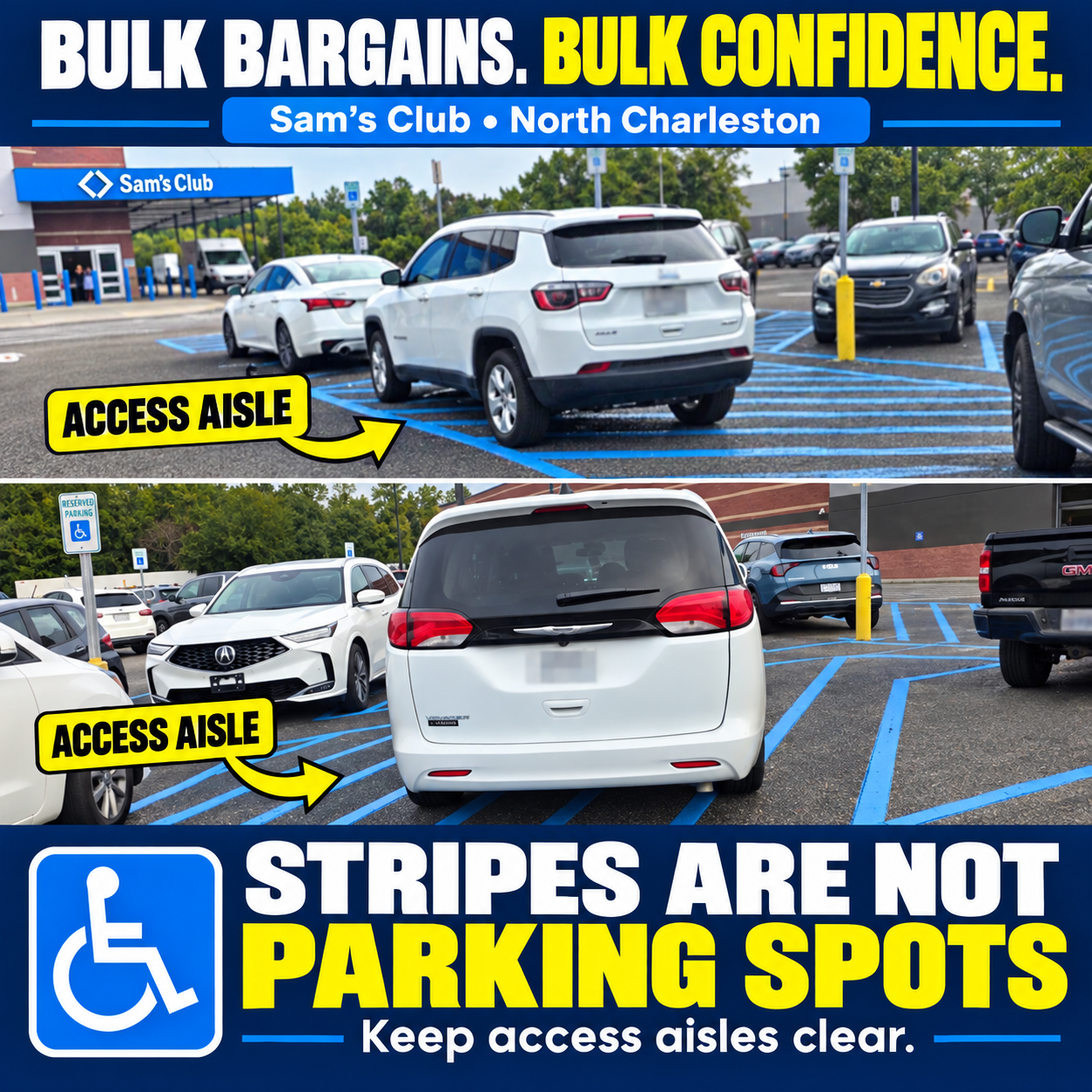
Today, October 1, around 10:45 a.m., I stopped at Sam’s Club in North Charleston before heading over to visit The Bridge assisted living. Along with the usual bulk bargains, I spotted something apparently available at no extra charge: creative parking.
Two drivers had apparently decided the marked spaces weren’t meeting their needs and set up their own accommodations in the blue-striped areas.
Apparently, those stripes looked like a welcome mat. “Reserved for people with exceptional confidence.”
Now, those areas serve a purpose. People using wheelchairs, walkers, or vehicle ramps need room to get in and out safely. That thought felt especially relevant as I headed to an assisted living community. A little convenience for one person can become a major obstacle for someone else.
But here’s the part that made me do a double take: a North Charleston police officer was at the Sam’s Club entrance, maybe 20 feet away.
Twenty feet. We’re talking sample-table distance.
I don’t know what the officer saw or whether anything happened afterward, but the scene certainly had the ingredients for an awkward parking lesson.

Sam’s Club sells plenty of things in bulk. Apparently, on this particular morning, confidence was one of them.
Please use an actual parking space and leave the striped access areas clear. Your jumbo pack of paper towels can handle a slightly longer ride in the cart.

My Eyes Weren’t Playing Tricks—That Is Not a Parking Space
After dialysis, I made the 30-minute drive to Retina Consultants of South Carolina in Ladson for my eye appointment.
Apparently, the parking lot decided to test my vision before the doctor could.
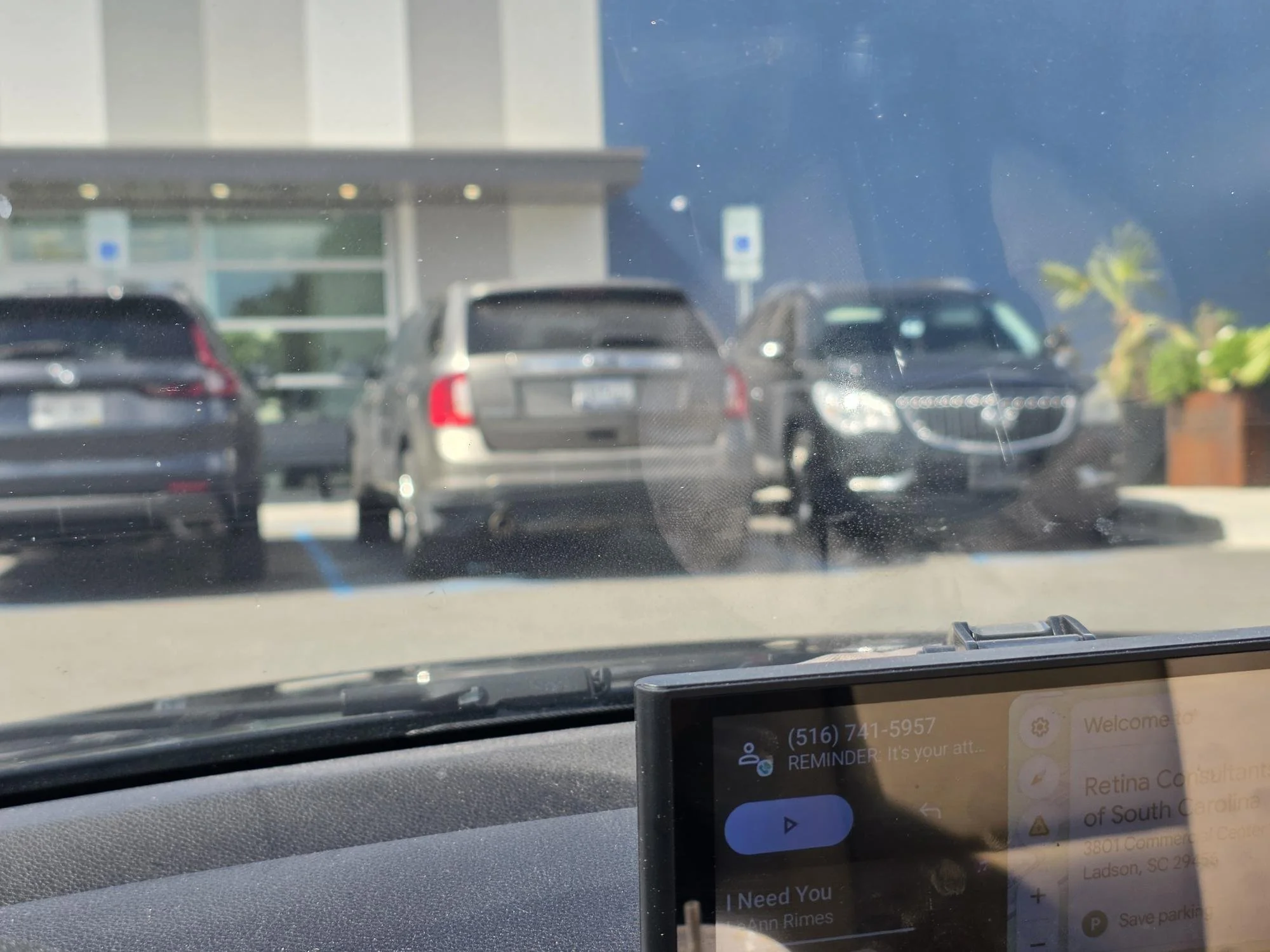
I saw a vehicle parked in a spot that was not actually a parking space, squeezed unbelievably close to the cars beside it. I am not sure the pictures fully capture just how little room was left between the vehicles.
Maybe this was part of my eye exam:
“Niel, can you identify the illegally parked vehicle?”
Yes. Yes, I can.
The scene reminded me of something that happened many years ago after a business trip. At the time, I was neither physically nor emotionally sober.
I returned to the long-term parking lot at O’Hare, exited the train, and walked down the stairs. My car was parked nearby, which should have been a pleasant surprise after traveling.
Instead, someone had parked beside me in a space that did not exist. Their car was so close to mine that I could not open the driver’s door.
I had to climb into my car through the passenger side—all 350 pounds of me, at least—and maneuver myself across the center console into the driver’s seat.
But before I did that, I gave the illegal parker a reason to get a new paint job.
That was not my proudest moment.
Let me be clear: damaging someone’s vehicle was wrong. Their terrible parking did not justify my response. That story is not advice or something I am celebrating. It is simply an honest example of who I was at the time and how poorly I handled anger and frustration.
Today, I respond differently.
I take a picture. I write a blog post. I point out the problem without creating a bigger one—and without adding an appointment at the body shop to someone’s calendar.
Still, parking in a space that does not exist and leaving barely enough room for other drivers to enter their vehicles is selfish. You do not know whether the person beside you has limited mobility, uses a wheelchair or prosthetic, or physically cannot climb through the passenger side.
And no one—especially after dialysis and on the way to a retina appointment—should have to perform parking-lot gymnastics because you decided the painted lines were merely suggestions.
My eyes may be recovering, but even I could see that was not a parking space.
Be better, people. Be better.

A Parking Job So Bad It Needed Emergency Care
I was visiting my mother at Roper St. Francis in Mount Pleasant when I left for a few hours to attend a recovery meeting.
On my way out, I saw this car parked outside the Emergency Department.
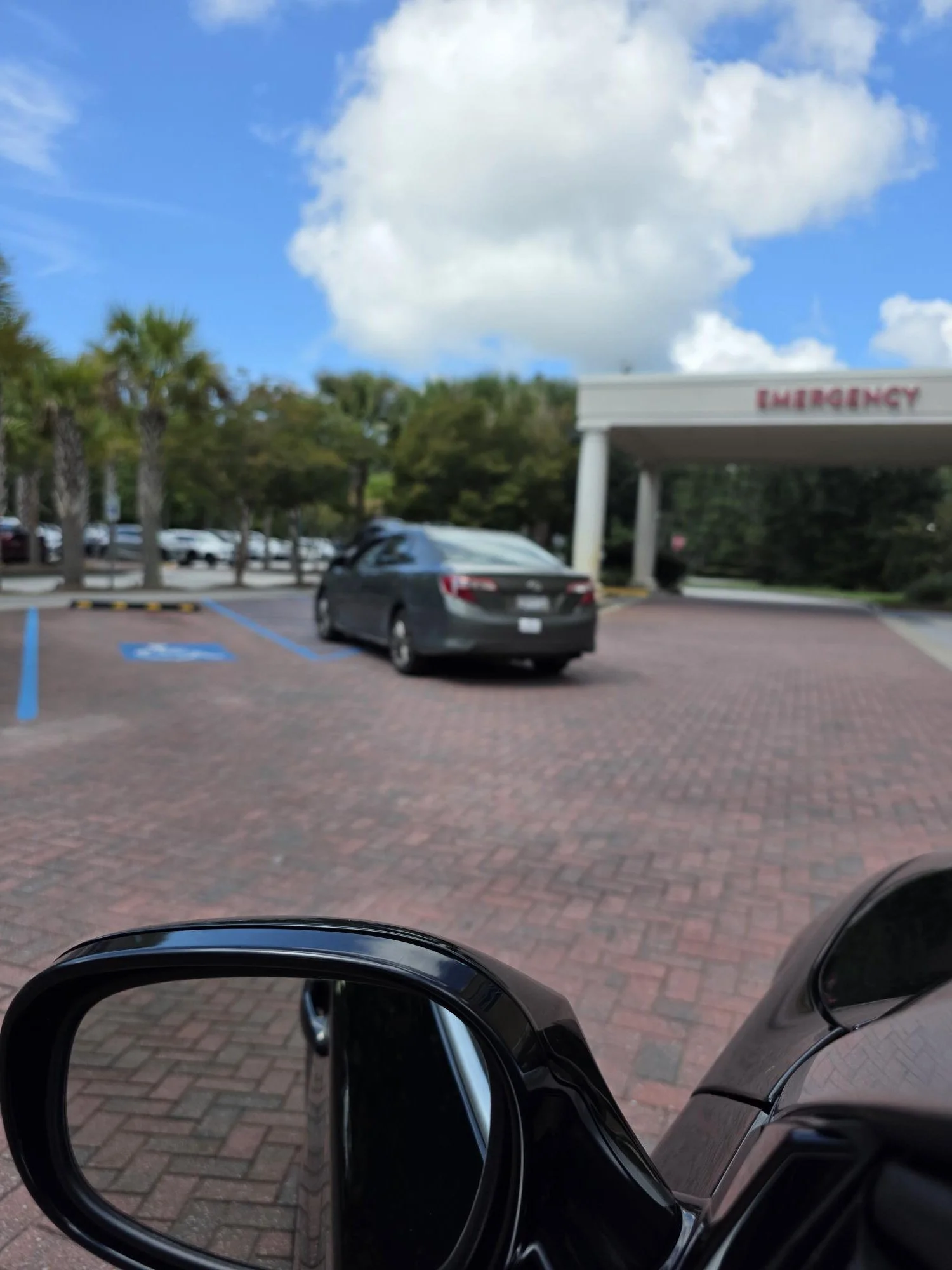
Or at least I think it was parked. It appeared to have simply stopped wherever it lost interest in moving.
Now, because this was outside the Emergency Department, I kind of understand. Emergencies are emergencies. Sometimes you pull up, get someone inside, and worry about the car afterward.
I have my own story.
When my ex-wife was about to give birth to our son—our second child—she waited until nearly the last possible moment to announce that it was time to go to the hospital.
On the way there, I may have run a few red lights. I did honk as I approached them to warn people that a panicked father-to-be was coming through.
When we reached the Emergency Department, I jumped out, ran inside, and grabbed a wheelchair. My ex-wife was still sitting in the car. I got her into the wheelchair and rushed her inside.
Meanwhile, the car was still running, the keys were still in it, and the doors were wide open.
Was that proper parking etiquette?
Absolutely not.
But a baby was arriving, and my priorities were clear: mother, baby, and then the unattended getaway car sitting outside.
So yes, I can understand a bad parking job at an emergency room—at least temporarily.
But the car I saw at Roper St. Francis was on another level. It was sitting crooked across the blue-striped access aisle next to an accessible parking space, looking less like someone had parked it and more like it had been abandoned mid-thought.
Those striped areas are not bonus parking spaces. They provide the room people need to deploy wheelchair ramps, use mobility equipment, and safely enter or exit their vehicles.
When I returned from my recovery meeting, the car was gone.
Hopefully, whatever brought the driver to the Emergency Department turned out okay.
Or perhaps the car had simply been moved to another part of the parking lot—where it was parked just as horribly.
Either way, emergencies may explain a rushed arrival. They do not turn an access aisle into a parking space indefinitely.
Be safe. Be considerate. And once the emergency is under control, please go back and park the car between two actual lines.