
Day 105: “The Power of We” Sounds Great. I’m Still Waiting for the “We.”
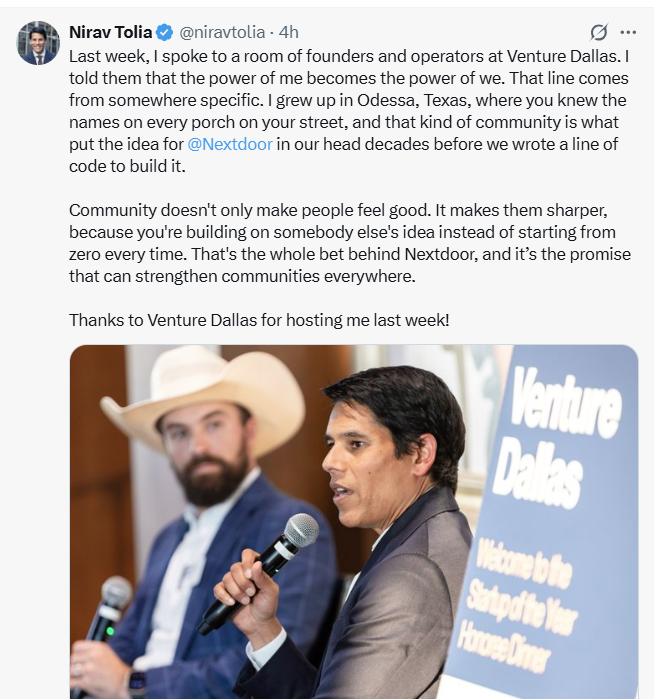
Today, Nextdoor CEO Nirav Tolia posted about speaking to a room of founders and operators at Venture Dallas.
One line immediately caught my attention:
“The power of me becomes the power of we.”
That's a pretty good line.
Actually, it fits remarkably well with what I've been writing about for the past 105 days.
Nirav went on to describe growing up in Odessa, Texas, where knowing the names of people on the street helped shape the idea behind Nextdoor. He wrote that community makes people sharper because they're building on other people's ideas instead of constantly starting from zero.
Then came another line that caught my attention:
“That's the whole bet behind Nextdoor.”
Venture Dallas itself describes its mission in similar terms: connecting innovators and investors while building collaboration and a stronger entrepreneurial community.
Great.
So let's talk about the “we.”
I've Been Trying to Join the Conversation for 105 Days

For 105 days, I've been asking Nextdoor about detailed data referenced in two of its Insights posts.
This hasn't been 105 days of demanding that somebody agree with me.
It hasn't been 105 days of demanding that Nextdoor change its business because one small shareholder has an opinion.
I've asked a question.
I've provided feedback.
I've emailed.
I've followed up.
I've publicly documented the experience.
Communications eventually responded, and I acknowledged that response. I didn't receive the complete, detailed material I requested.
Yesterday, I expanded the email to Nextdoor's Executive Team.
Those emails did not bounce.
I also attempted to CC members of the Board of Directors. Every one of those attempted Board addresses came back undeliverable.
I’m waiting to see if anyone on the Executive Team responds.
My prediction is still that nobody will.
I would love to be wrong.
“Building on Somebody Else's Idea”
This is where Nirav's post gets especially interesting to me.
He talks about the value of building on somebody else's idea.
That's exactly what feedback can be.
Sometimes feedback is wrong.
Sometimes it's annoying.
Sometimes the person providing it has misunderstood something.
Sometimes it's brilliant.
Sometimes it's somewhere in between.
But an organization doesn't figure out which it is by ignoring it.
My Learning & Development brain immediately goes to the difference between hearing and listening.
Hearing is receiving the message.
Listening requires doing something with it—even if the eventual response is:
“We heard you. We disagree, and here's why.”
That's still communication.
What Does “We” Mean When Someone Disagrees?
The “power of we” is easy when everyone in the room is nodding.
It's harder when somebody keeps raising his hand.
For 105 days.
😂
That's where community becomes much more interesting.
If Nextdoor believes communities become stronger by building upon the knowledge and ideas of other people, shouldn't that philosophy apply when the ideas are uncomfortable?
Shouldn't it include shareholders asking questions?
Small businesses providing feedback?
Neighbors questioning policies?
People challenging research methodology?
People asking how their contributions are being monetized?
People saying, “I think there's a better way to do this”?
I'm not suggesting every piece of feedback deserves implementation.
That would be ridiculous.
But feedback can at least deserve consideration and, when appropriate, an answer.
And Then There's the Other “We”
There's another reason the phrase jumped out at me.
I've recently been writing about the economic value of the information neighbors contribute to Nextdoor.
Recommendations.
Reviews.
Local experiences.
Business information.
Questions.
Answers.
Years of neighborhood knowledge.
Nextdoor provides the technology, infrastructure, and distribution.
Neighbors provide most of what's inside it.
That's a pretty literal example of “me” becoming “we.”
And if that collective knowledge becomes increasingly valuable—particularly as AI makes it easier to organize, search, and commercialize enormous amounts of information—I think there's a legitimate conversation about whether the people supplying that knowledge should share in some of the value it creates.
That's why I started my petition calling for a Neighbor Value-Sharing model.
It currently has one signature.
Mine.
I'm apparently dominating the polling. 😂
But I'm still asking the question.
Community Can't Just Be a Stage Message
I like what Nirav wrote.
I genuinely do.
Community can make ideas better. Collaboration can create things an individual never could. Venture Dallas itself is built around connecting entrepreneurs, investors, and innovators.
But that's also why I'm going to keep comparing the message with the experience.
“The power of me becomes the power of we.”
Okay.
I'm here.
I've been here for 105 days.
I've provided feedback, asked questions, and repeatedly offered to connect—phone, video, or virtual coffee, whatever works.
Yesterday, my email appears to have successfully reached the addresses for members of Nextdoor's Executive Team.
So perhaps Day 105 is the perfect day to test the philosophy.
Does the “we” include people who ask uncomfortable questions?
I hope so.
Because if community really is the whole bet behind Nextdoor, then listening to the community shouldn't be the difficult part.
Day 105.
Now I wait.
👉 Read the continuing case study at NielFlamm.com/blog
Day 76: Maybe I’ve Been Asking the Wrong Question
For 76 days, I've been asking some version of the same question:
Where is the detailed data?
Today, I'm changing the question.
Why advertise something as available if you're not prepared to provide it?
That's a much more interesting question.
Nextdoor published Insights articles that don't simply say, “Here's our research. Hope you enjoyed it.”
They specifically invite readers who want more to reach out.
The language is pretty clear: if you want “detailed data, additional audience segments, and strategic recommendations,” contact the person Nextdoor identifies.
So I did.
And here we are.
Day 76.
Imagine This Anywhere Else
A restaurant puts this on the menu:
“Ask your server about today's desserts.”
You ask.
The server hands you the dinner menu again.
You explain:
“No, I already read this. I'm asking about the desserts you told me to ask about.”
They hand you the dinner menu again.
You clarify exactly what you're requesting.
You point to the sentence telling you to ask.
You eventually send them a picture of the sentence.
And then...
Nothing.
At some point, you're no longer wondering what's for dessert.
You're wondering why the restaurant put the sentence on the menu.
That's essentially where I am with Nextdoor.
This Isn't Really About a Report Anymore
The research is almost secondary now.
What fascinates me is the disconnect between invitation and execution.
If an organization publicly tells people:
Contact us for X
there should probably be a process for what happens when someone actually...
contacts you for X.
Who qualifies?
What gets sent?
Is there a sales requirement?
Is it only available to advertisers?
Is there a minimum advertising spend?
Is it proprietary and unavailable to the general public?
Is there an NDA?
Is it simply not something Nextdoor wants to provide to me?
Any of those answers would at least be an answer.
And if there are conditions attached to receiving the information, why not disclose those conditions when inviting people to request it?
Maybe There's a Bigger Marketing Lesson Here
Calls to action are promises.
Download the guide.
Request a demo.
Contact us for more information.
Reach out for detailed data.
Every one of those statements creates an expectation.
Marketing gets someone through the door.
Operations determines what happens after they walk through it.
And when those two things don't connect, the customer discovers the gap.
This has become much more interesting than my original request.
I didn't have to uncover some hidden Nextdoor process.
I followed Nextdoor's own call to action.
So Day 76 Has a New Question
I'm not asking Nextdoor where the detailed data is today.
I've asked that plenty.
Instead:
Nextdoor, what is supposed to happen when someone does exactly what your marketing tells them to do?
Because I did.
And 76 days later, I'm still trying to figure it out.
Maybe the most important data I've collected during this experiment isn't contained in the reports at all.
Maybe it's the 76 days of customer experience generated while trying to obtain them.
That's becoming quite a dataset in its own right.
Day 76.
The research request continues.
But apparently, so does the research on Nextdoor.
My LinkedIn posts are the condensed version. The full continuing Nextdoor case study is at NielFlamm.com/blog.
And subscribe at NielFlamm.com to follow along.
Day 74: I’m Trying to Make the Questions Impossible to Misunderstand
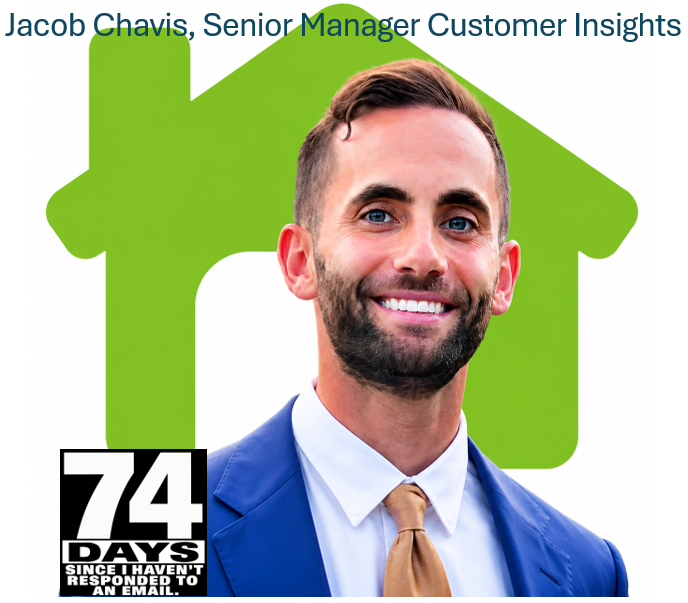
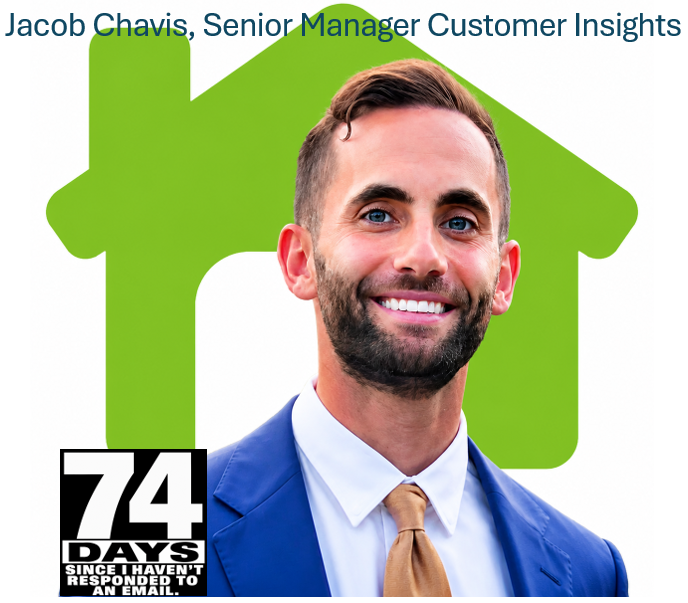
It's Day 74 of waiting for the detailed Nextdoor Insights data I've been requesting.
Last night, I sent another email to Jacob Chavis, copying Investor Relations, Press, Nirav Tolia, Kelsey Grady, Michael Kiernan, and Sarah Leary.
This time, I tried to remove any possible ambiguity.
I am not asking for links to the publicly available blog summaries.
I am specifically requesting the “detailed data” that Nextdoor itself says is available at the bottom of its Insights posts.
Both posts tell readers seeking:
“detailed data, additional audience segments, and strategic recommendations”
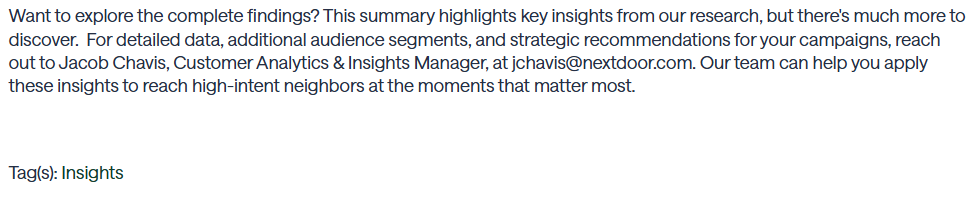
to contact Jacob.
That's what I'm doing.
Again.
I even attached a screenshot of the paragraph so there's no confusion about which information I'm requesting.
And I Added Three New Questions
My email also asks about Nextdoor's new Good Neighbor Day awards.
Nextdoor says a committee of Nextdoor employees will evaluate nominations based on how “specific, sustained, and impactful” the stories are.
So I asked:
Who are the employees serving on the committee/panel?
Who is sponsoring the awards, if anyone?
What additional information is publicly available about the scoring and selection process?
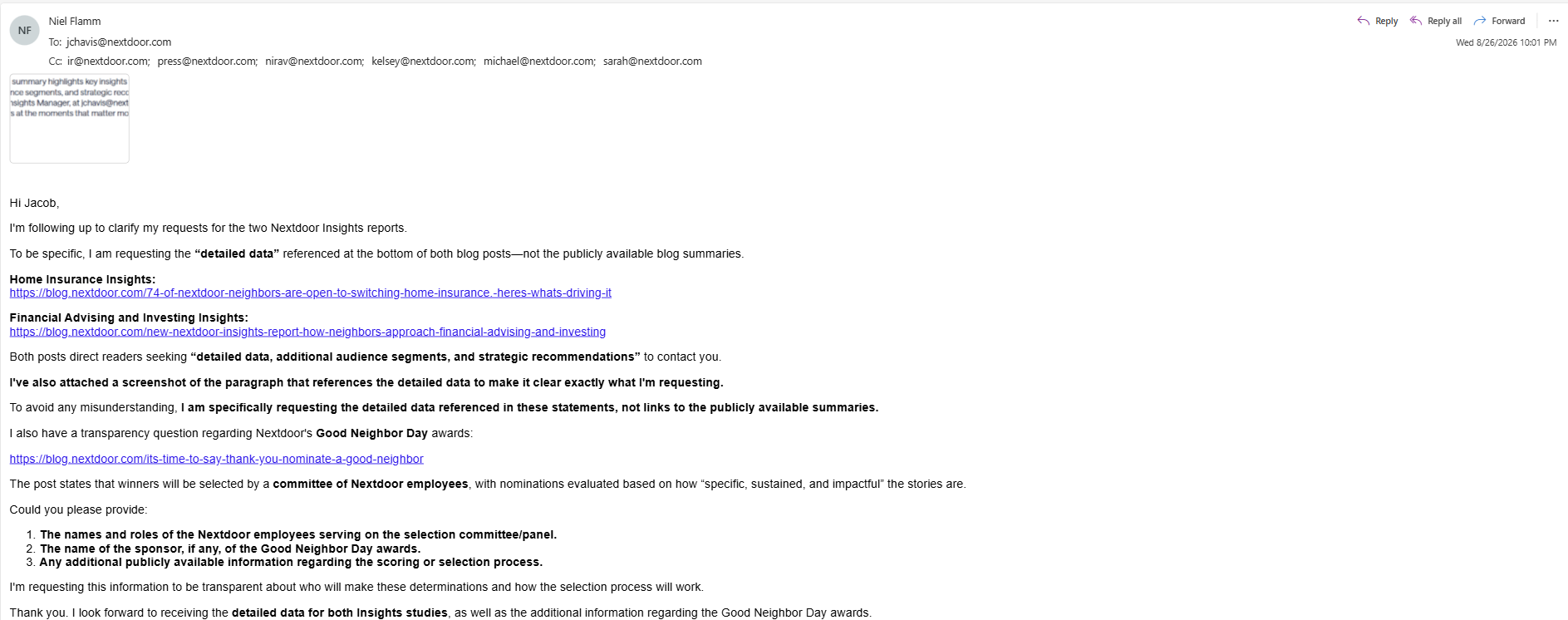
These aren't complicated questions.
They're transparency questions.
Yesterday I wrote about my concern with an unnamed panel deciding which neighbors deserve recognition.
Today I'm doing something about it:
I'm asking Nextdoor directly.
Hearing vs. Listening—Again
After 20+ years in Learning & Development, I've spent plenty of time discussing the difference between hearing and listening.
Nextdoor knows I'm asking.
Communications has responded before.
Multiple executives and departments have received my emails.
At Day 74, the issue isn’t whether the message has been heard.
The question is whether anyone will listen and answer the actual question.
No interpretation necessary.
No guessing.
No need to send the blog summaries again, please.
The request is in writing.
The screenshot is attached.
The questions are numbered.
Day 74.
Now we wait.
Again.
My LinkedIn posts are the condensed version. The complete continuing study, timeline, and my full thoughts are at NielFlamm.com/blog.
And subscribe at NielFlamm.com so you don't miss Day 75—although I'd be perfectly happy if there didn't need to be one.
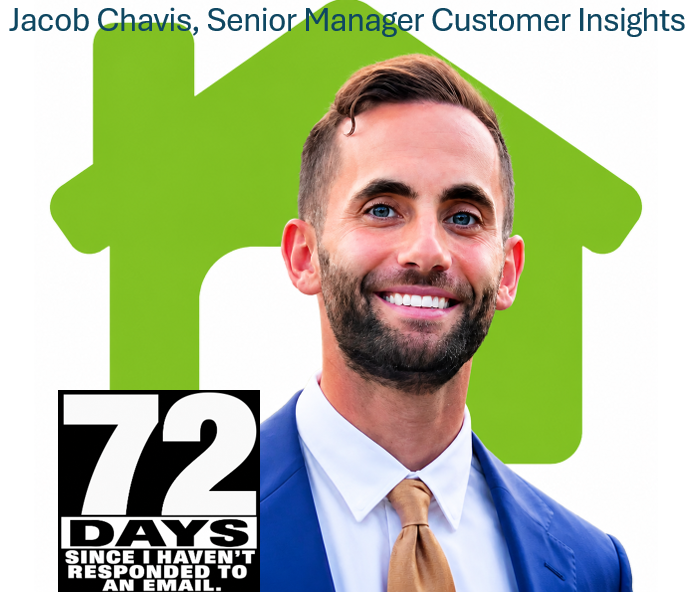
Day 72: “We Cannot Lose Our Humanness.” Are You Kidding, Nextdoor?
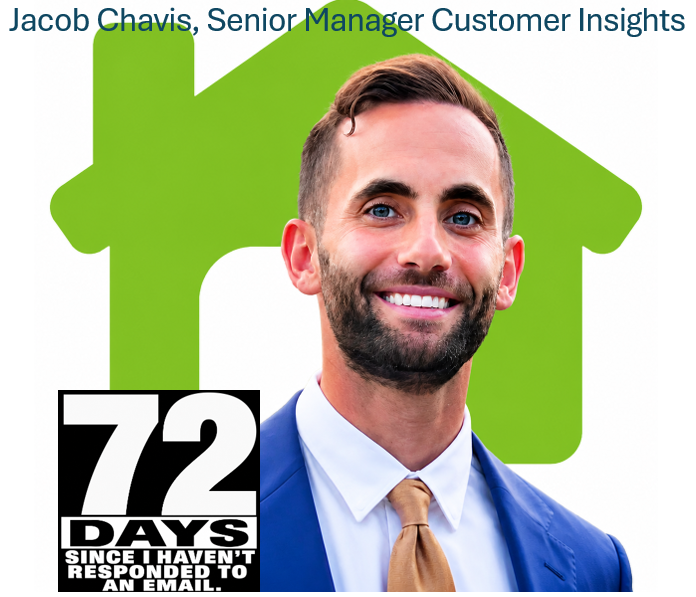
I saw Nirav Tolia is back on the podcast circuit, this time with Scott D. Clary on Success Story.
The title certainly got my attention:
“The Man Who Connected 100 Million Neighbors Says AI Is About to Make Us All Lonelier.”
Podcast:
https://lnkd.in/d6ncXhpj
Video:
https://lnkd.in/dY9AazUx
One of the first statements from Nirav highlighted in the LinkedIn post was:
“We cannot lose our humanness.”
I read that and thought:
He's kidding, right?
Not because I disagree with the statement.
Actually, I completely agree with it.
My issue is the disconnect between the rhetoric and what I've been observing and experiencing with Nextdoor.
What Does “Humanness” Actually Require?
Being human isn't simply having conversations about the dangers of AI.
To me, humanness includes:
Listening.
Empathy.
Accountability.
Acknowledging someone even when the conversation is uncomfortable.
And that's where Nirav's statement becomes fascinating when compared with what's happening at the company he leads.
It's Day 72 since I requested the detailed Home Insurance Insights research.
Enough said about that.
But this isn't only about me.
What About Nextdoor's Small Businesses?
I've been watching the reaction to Nextdoor's new pay-to-play approach, where businesses may have to pay to comment as businesses when a neighbor posts looking for a service.
And I've seen small-business owners who are not happy.
These aren't giant corporations with unlimited marketing budgets.
They're plumbers.
Landscapers.
Contractors.
Cleaners.
Handymen.
Local service providers.
Many operate on razor-thin margins.
They're also part of the small-business economy that helps keep communities—and the United States—running.
So while Nirav is discussing preserving our humanness in an AI-driven world, I'd like to know:
Who's listening to them?
Was someone sitting with Nirav when this monetization strategy was discussed asking:
“What does this mean for the small businesses that helped build engagement on our platform?”
Was there a focus group?
A beta?
Did anyone calculate the impact beyond Nextdoor's potential revenue?
Was there an effort to create buy-in?
Did anyone practice the very human behavior of listening before acting?
Maybe there was.
If so, please tell us about it.
Another Chapter in the White Paper on Rhetoric
That's increasingly what I find fascinating about studying Nextdoor.
The external messaging sounds terrific.
Community.
Connection.
Neighbors.
Humanness.
Then I compare those words with what I'm observing.
A shareholder waiting 72 days for detailed research he's repeatedly requested.
Small businesses questioning a new monetization model.
Corporate LinkedIn posts where comments are frequently unavailable.
Communication that, from my perspective, too often feels one-directional.
That's not an AI problem.
That's a human communication problem.
Nirav is right about one thing:
We cannot lose our humanness.
But perhaps the first place to demonstrate that philosophy isn't another podcast.
Maybe it's inside Nextdoor.
Listen.
Respond.
Show empathy.
Explain difficult decisions.
Engage with people who disagree.
Be accountable.
Otherwise, this becomes another fascinating chapter in my growing white paper on the difference between corporate rhetoric and corporate behavior.
And AI didn't create that problem.
Humans did.
Day 72.
Follow the continuing Nextdoor study at NielFlamm.com/blog.
Please subscribe at NielFlamm.com so you don't miss a post if the platform where you're reading this decides not to show you the next one.

Day 60: At What Point Does Ignoring One Shareholder Become a Corporate Strategy?

Day 60.
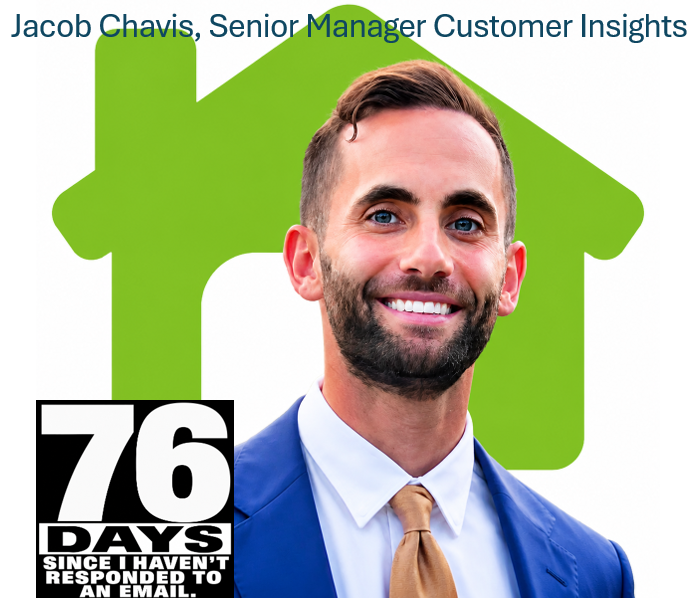
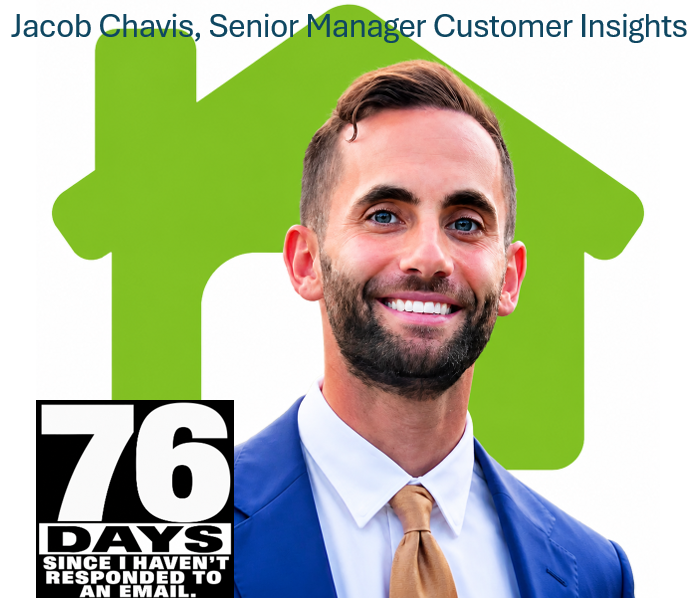
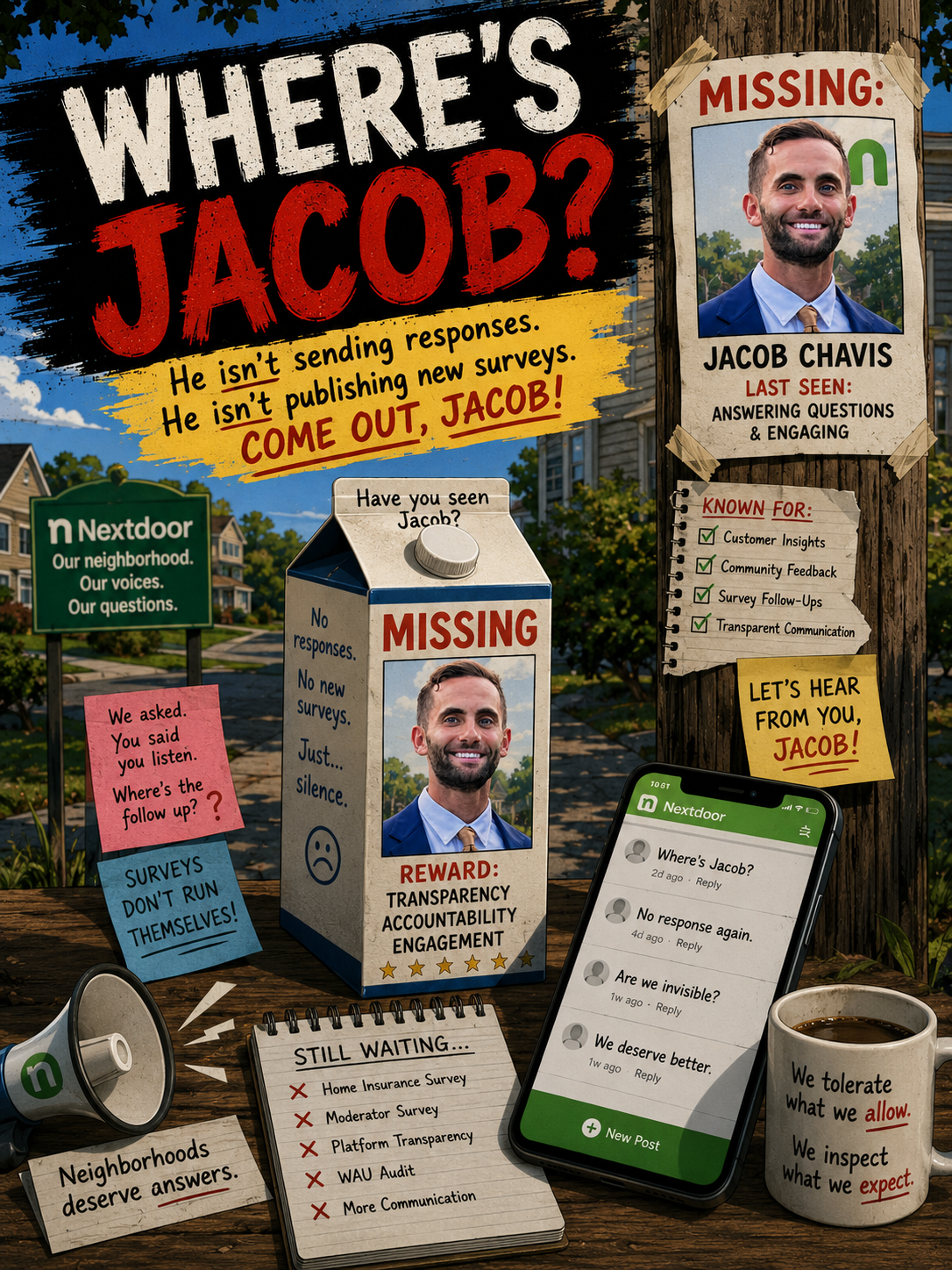
Yes, I marked the occasion with some spectacular signage. If we're going to reach a milestone this ridiculous, it deserves appropriate recognition.
But underneath the humor, I'm genuinely wondering:
Where is Jacob Chavis?
Today, Nextdoor published a LinkedIn post featuring content from Groundworks:
The Hidden Cost of "I'll Deal With It Later"
🔗 Read the post/article:
https://www.groundworks.com/resources/the-hidden-cost-of-ill-deal-with-it-later/
The irony of that title isn't lost on me.
The article, credited to Leah Leitow as Content Writer, focuses on the costs homeowners can face when they postpone addressing problems.
"I'll deal with it later."
Really?
Because I've been asking Nextdoor to deal with something for 60 days.
What caught my attention is that this type of business-oriented content feels like exactly the kind of material where, historically, I might have expected to see research, insights, or someone such as Jacob Chavis referenced.
Instead, nothing.
I've previously noted that I haven't seen a new Nextdoor Insights post since July 6.
I haven't received the study.
I haven't received an email from Jacob.
And now we're at Day 60.
Maybe these things are completely unrelated.
Maybe Jacob is working on something entirely different.
Maybe Nextdoor reorganized responsibilities.
Maybe the company's research strategy changed.
I don't know—and that's precisely the point.
Nextdoor could clear up 60 days of speculation with a remarkably simple act:
Communicate.
Which leads me to a question that I find almost absurd to ask:
Can one individual shareholder with a relatively small position really create this much reluctance to engage at a multimillion-dollar public company?
I don't believe I have that kind of power.
So why does it feel like engaging with me has become harder than simply answering the original question?
I'm not asking for a board seat.
I'm not asking to approve the quarterly earnings.
I'm not asking Nirav Tolia to hand me the keys to headquarters.
I asked for a study.
If the answer is no, say no.
If it can't be distributed, please let me know.
If the study no longer exists, explain that.
If Jacob's responsibilities have changed, say so.
Sixty days later, the unanswered request has become far more interesting to me than the document itself.
And perhaps today's Groundworks headline provides the best leadership lesson of this entire experience:
There can be a hidden cost to "I'll deal with it later."
The longer an organization avoids a small issue, the greater the chance that the response—or lack of one—becomes the bigger story.
So, Nextdoor:
It's Day 60. Who wants to spill the tea? ☕
Join the discussion at NielFlamm.com/blog.
Leave some feedback. What is your perspective?