

Day 90: What If Nextdoor Is Trying to Serve Too Many Customers at Once?

Day 90.
Ninety consecutive days of looking at Nextdoor from different angles.
Yesterday, NXDR closed at $2.27. That's up from the $2.23 close I discussed on Day 88, but I'm not going to spend Day 90 dissecting four cents.
Instead, I want to ask a completely different question:
Who exactly is Nextdoor's customer?
Sounds simple.
I'm not sure it is.
Meet the Nextdoor Family
Think about all the different people Nextdoor is trying to satisfy.
There's the neighbor who wants to know why three police cars just went down the street.
There's the small-business owner who wants customers.
There's the advertiser who wants access to those neighbors.
There's the moderator trying to keep everyone from digitally strangling each other over political signs and dog poop.
There's the researcher or marketer interested in Nextdoor's Insights.
There's the shareholder—hello!—who wants the company to create sustainable value.
And then there's Nextdoor itself, which has to somehow turn this entire neighborhood block party into a profitable business.
That's a lot of people sitting at one table.
And they don't necessarily want the same meal.
The Neighbor Doesn't Wake Up Thinking About Monetization
I doubt many people roll out of bed thinking:
“I hope Nextdoor improves its advertising yield today.”
Neighbors want utility.
What's happening?
Who can fix my air conditioner?
Did somebody find my dog?
Why is the power out?
Is that restaurant any good?
What's being built down the street?
And, naturally:
“Did anyone else hear that boom?”
That's the product from the neighbor's perspective.
But there's a problem.
The neighbor may be the person using the product...
without being the person primarily paying for it.
That's where things get interesting.
The Advertiser Wants Something Completely Different
The advertiser doesn't necessarily care whether Karen and Steve finally resolve their six-day dispute over Steve's garbage cans.
The advertiser wants:
Attention.
Preferably local attention.
And preferably attention from people likely to buy something.
That creates a balancing act.
Nextdoor needs enough people using the platform to make the audience valuable to advertisers.
But if monetizing that audience makes the experience less useful, those people may use Nextdoor less.
And then the audience becomes less valuable.
Welcome to the social-media hamster wheel.
Then Along Comes the Small Business
This is where Nextdoor has another interesting relationship.
The local business can simultaneously be:
Content creator.
Advertiser.
Community participant.
Recommended business.
Potential paying customer.
That's a lot of hats.
Nextdoor wants neighbors to recommend local businesses organically because those recommendations build trust and create useful content.
But Nextdoor also needs to make money from businesses.
That's not inherently wrong.
Nextdoor is a public company, not a neighborhood charity.
The interesting question is where the line sits between:
Helping local businesses participate
and
Monetizing their need to reach neighbors.
That's a strategic question worth watching.
And Then There Are Shareholders
This is the group I belong to.
I don't need Nextdoor to be free of advertising.
I want revenue growth.
I want profitability.
I want innovation.
I want management making intelligent investments.
And yes...
I want NXDR worth more than $2.27.
But here's the catch.
If Nextdoor squeezes too much money out of the platform and damages the neighbor experience, that isn't necessarily good for shareholders long-term.
If Nextdoor focuses exclusively on making neighbors happy but can't build a profitable business around them, that's not particularly helpful either.
The interests are connected.
Maybe Nextdoor Isn't One Product
This is the thought that really interests me on Day 90.
Maybe we're evaluating Nextdoor incorrectly by thinking of it as one product.
It may actually be several products sharing the same neighborhood.
To the neighbor, Nextdoor sells connection and information.
To the local business, it sells visibility and potential customers.
To the advertiser, it sells access and attention.
To researchers and marketers, it offers neighborhood insights.
And to shareholders, management is ultimately selling something else:
The promise that all of those pieces can become a valuable business.
That's a difficult puzzle.
Imagine Trying to Run This Restaurant
Imagine opening a restaurant where one customer wants steak.
Another wants vegan.
Another wants breakfast.
Another wants cocktails.
Another wants everything free.
And there's a shareholder standing near the kitchen asking why the margins aren't better.
Hi. I'm the guy near the kitchen.
Meanwhile, the chef is doing podcasts explaining the future of restaurants.
At some point somebody has to decide:
What's our signature dish?
That's what I'm asking about Nextdoor.
What Is the One Thing Nextdoor Must Be Exceptional At?
Not 17 things.
One.
Is Nextdoor primarily:
The place to discover what's happening nearby?
The place to connect with neighbors?
The place to discover trusted local businesses?
A hyperlocal advertising platform?
A neighborhood recommendation engine?
A source of uniquely valuable local data?
Maybe it can eventually be all of those things.
But companies usually become indispensable because they're exceptionally good at something.
Then they expand.
And That Brings Me Back to $2.27
NXDR closed yesterday at $2.27.
Four cents higher than the $2.23 close I discussed earlier this week.
Good.
As a shareholder, I'll happily take the four cents.
But Day 90 isn't about whether the stock moved four cents.
It's about what eventually moves it forty cents, a dollar, or several dollars—and keeps it there.
That requires more than announcements.
It requires a business people understand.
A product neighbors value.
An ecosystem businesses value.
An audience advertisers value.
And a strategy shareholders believe will eventually create sustainable returns.
That's a lot of customers to keep happy.
Day 90: Who Gets the Best Seat at the Table?
So after 90 days, here's today's question:
When the interests of neighbors, businesses, advertisers, and shareholders collide, who comes first?
Because saying everyone comes first sounds wonderful.
Until two of them want completely different things.
That's when corporate strategy stops being a mission statement and becomes a decision.
And those decisions may ultimately tell us far more about Nextdoor's future than whether NXDR closed yesterday at $2.27 or $2.23.
Ninety days down.
And somehow, I still haven't run out of doors to open.
Follow my continuing Nextdoor case study at NielFlamm.com/blog.

Day 71: Emergency Managers, Advertisers…and the Nextdoor Total Gym?
It's Day 71 of still not receiving the detailed Nextdoor Insights research I've requested.

But today's Nextdoor blog gave me something completely different to study.
I clicked on a new post titled:
“This August, Recognize the Emergency Managers Keeping Neighborhoods Safe.”
Full article:
https://blog.nextdoor.com/this-august-recognize-the-emergency-managers-keeping-neighborhoods-safe
Sounds worthwhile.
August is National Emergency Management Awareness Month, and Nextdoor discusses the people coordinating responses when communities face emergencies.
One observation before we continue:
Today is August 24.
Thanks for letting us know before September.
But then I kept reading.
After only a few paragraphs about emergency managers, this appeared:
“It's also a good time to share an update on the other side of the platform.”
And suddenly we're talking about advertisers.
Nextdoor Ads Manager.
Billing.
Credit limits.
Payment options.
Creative management.
Reporting tools.
Campaigns.
I had to look at the title again.
Wasn't I reading about emergency managers keeping neighborhoods safe?
Talk about a pivot.
From Emergency Preparedness to Paid Programming
I understand Nextdoor is a business.
Nextdoor needs to make money.
I'm a shareholder. I want it to make money.
That's also why Day 71 without receiving the detailed research Nextdoor's own Insights posts say readers can request continues to matter to me.
And it's why I pay attention to how the company communicates with the people who create, consume, and pay for its platform.
NXDR is down another $0.02 today, and shareholders aren't currently seeing a dividend.
Meanwhile, I've already been questioning Nextdoor's increasingly aggressive monetization strategy with small businesses.
Businesses can encounter what I consider a pay-to-play dynamic when trying to comment as businesses on posts from neighbors looking for services.
Now I click an article ostensibly celebrating emergency managers and somehow find myself reading about advertiser billing and campaign-management improvements.
It reminded me of late-night television.
You think you're watching regular programming...
Then suddenly:
CHUCK NORRIS IS HERE TO TELL YOU ABOUT THE TOTAL GYM!
All that's missing is:
“But wait! There's more!”
How Much Monetization Is Too Much?
Maybe each decision makes sense individually.
But taken together, I see a bigger question:
At what point does monetization begin interfering with the experience you're trying to monetize?
Small businesses create value on Nextdoor.
Public agencies create value.
Neighbors create value.
Emergency managers create value.
Advertisers pay Nextdoor to access that ecosystem.
The balance matters.
If you're going to recognize emergency managers, recognize them.
Give them the article.
Tell their stories.
Explain what they do.
Highlight someone doing exceptional work.
Tell neighbors how to contact their local emergency management agencies.
There's your story.
Instead, I clicked expecting emergency preparedness and somehow ended up learning about advertiser credit limits.
That's quite the journey.
And from a communications perspective, it fits remarkably well with what I've been documenting over the past 71 days.
Whether it's responding to a research request with links to summaries, communicating a new pay-to-comment business model, or transitioning an emergency-management article into an advertiser update, I keep coming back to the same question:
Is Nextdoor communicating what its audience needs to hear—or what Nextdoor wants to sell?
I remain a shareholder who wants NXDR to succeed.
But generating revenue and creating long-term shareholder value aren't necessarily the same thing.
Sometimes the better communications strategy is remarkably simple:
Write the article the headline promised.
Otherwise, what started as a meaningful piece about keeping neighborhoods safe begins feeling like a late-night Total Gym infomercial.
Chuck Norris would probably approve.
I don’t think emergency managers would.
Day 71. I still don't have detailed research, but I now know more about Nextdoor Ads Manager.
Follow my continuing Nextdoor study and full thoughts at NielFlamm.com/blog.

Nextdoor’s Identity Question: Community Platform or Data & Advertising Company?

I continue to look more deeply into Nextdoor, not only as a shareholder but also as someone trying to understand its long-term vision, strategy, and execution.
Nextdoor recently released its 2026 Back-to-School Research, which discusses today’s parents, the importance of neighborhoods, local recommendations, and how communities support each other.
On the surface, this aligns with the message CEO Nirav Tolia often shares — building connection, strengthening communities, using AI to improve the neighbor experience, and bringing people together.
I support that mission.
The challenge is that the messaging starts to feel contradictory when compared to other leadership conversations.
In a recent interview, Chief Revenue Officer Michael Kiernan discussed Nextdoor’s future revenue strategy, AI transformation, and new monetization opportunities.
He discussed how Nextdoor has over 110 million people on the platform, and how the company understands neighbors — where they live, their interests, their communities, and how they engage. He also discussed how the “neighborhood graph” could become a monetization asset.
From a business perspective, I understand this.
Nextdoor is a publicly traded company. It has shareholders. It has expenses. It needs sustainable revenue.
Advertising, partnerships, AI efficiency, and new revenue streams are expected parts of running a technology company.
But here is where I continue to ask questions:
Where does the neighbor fit into the equation?
If surveys and neighbor insights are valuable enough to promote to advertisers, partners, and the public, shouldn’t the full research methodology be transparent?
How many people participated?
How were participants selected?
What were the demographics?
What questions were asked?
What was the complete data set?
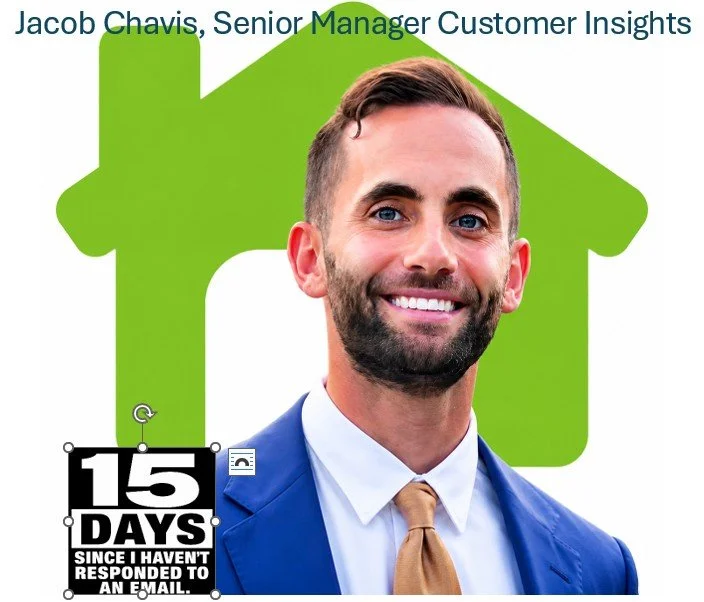
Today marks Day 22 since I requested the full research information from Jacob Chavis regarding previous Nextdoor studies.
No full study.
No methodology.
No response.
That is where trust becomes difficult.
A company cannot talk about transparency, trust, and an authentic community while also controlling which information neighbors and investors are allowed to see.
The bigger question:
Is Nextdoor a neighborhood platform that creates revenue opportunities by connecting people?
Or is Nextdoor becoming a data and advertising company powered by neighbor activity?
Those are two very different stories.
Maybe the answer is somewhere in the middle — but that requires transparency.
Neighbors deserve clarity.
Advertisers deserve clarity.
Shareholders deserve clarity.
Trust is not created through messaging.
Trust is created through actions.
Join the discussion on NielFlamm.com.
If the Ads Are There, Where Are the Profits?
My Nextdoor experiment continues.
This time I wanted to look at something simple:
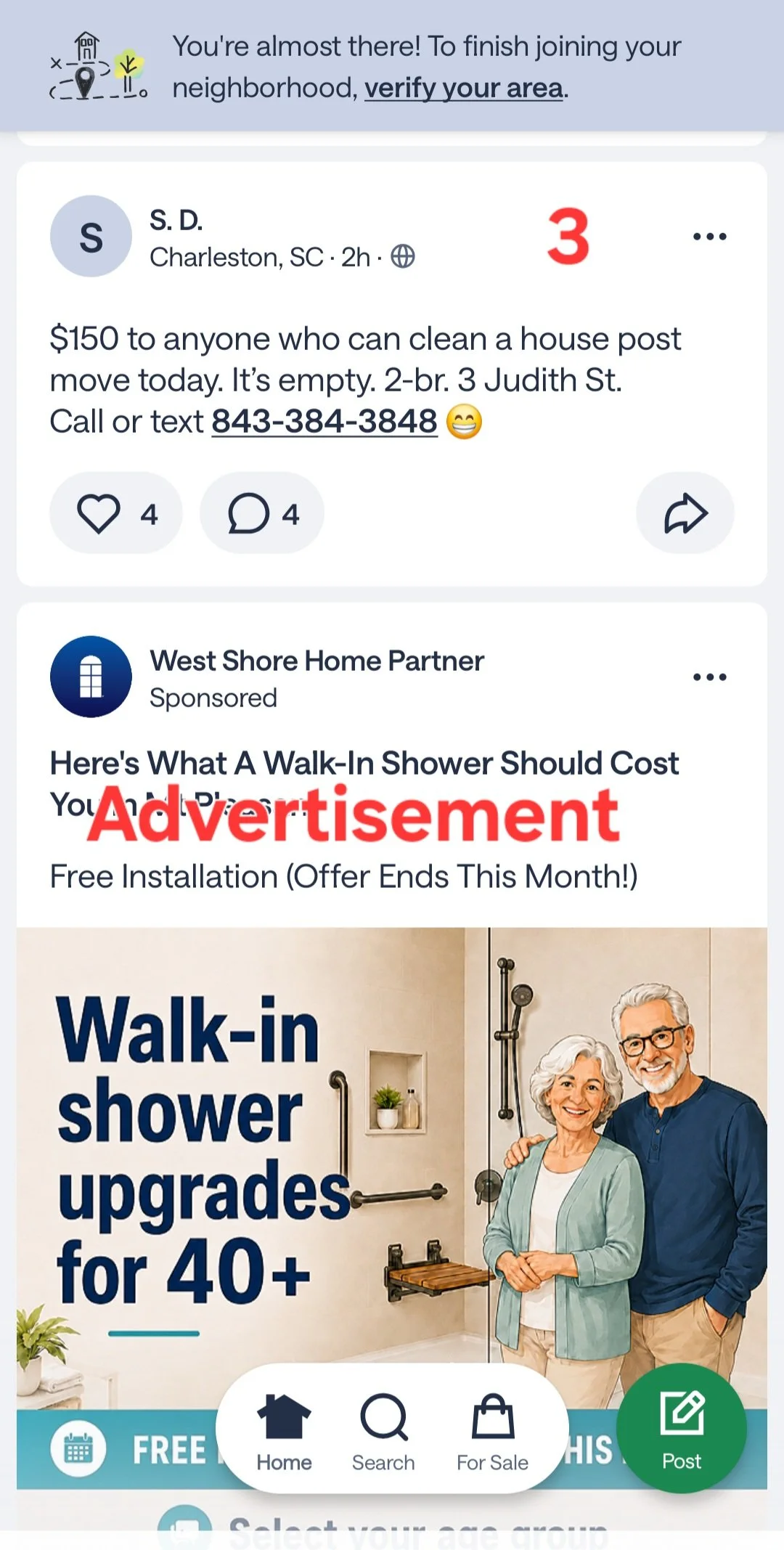
How quickly does a user see a paid advertisement?
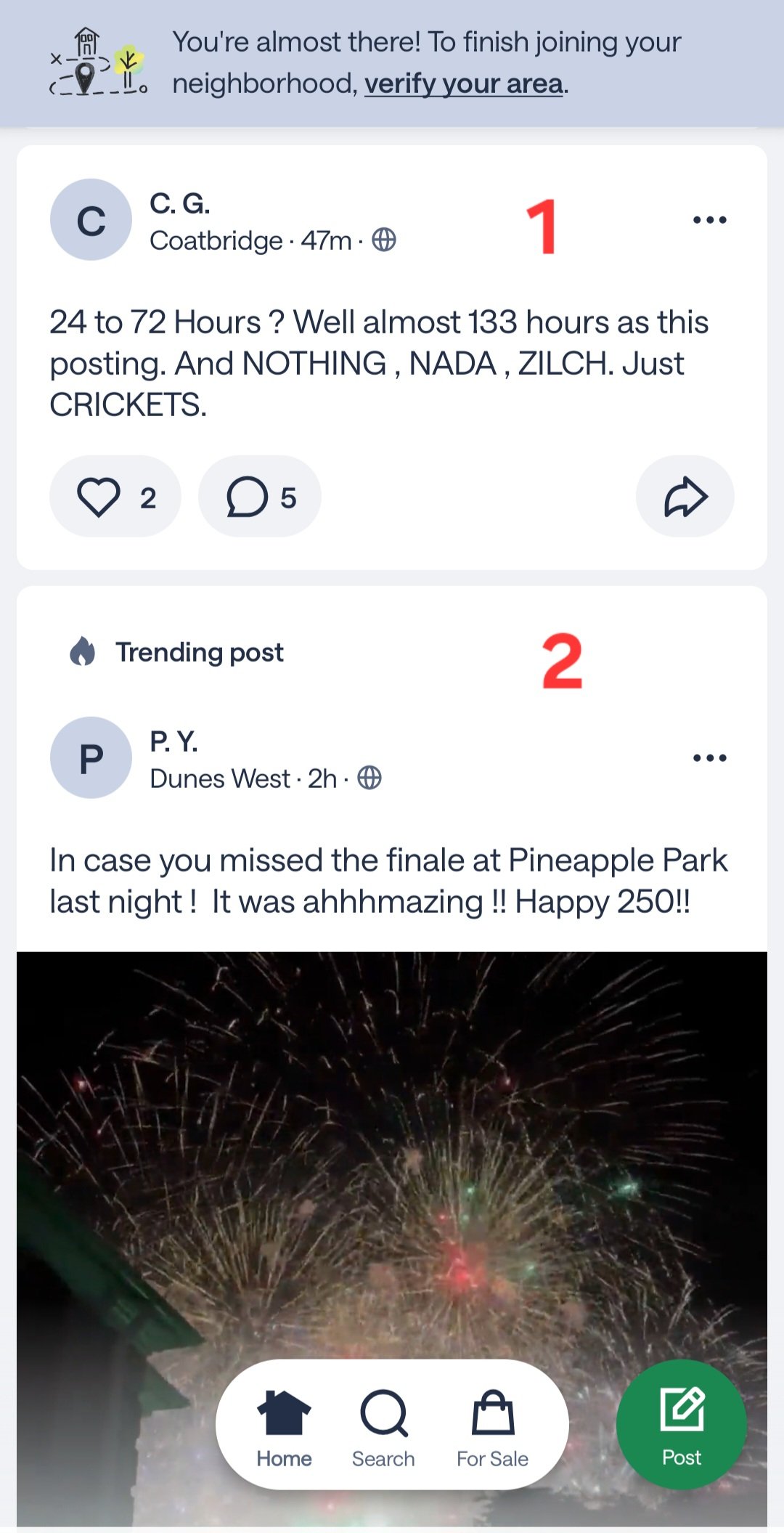
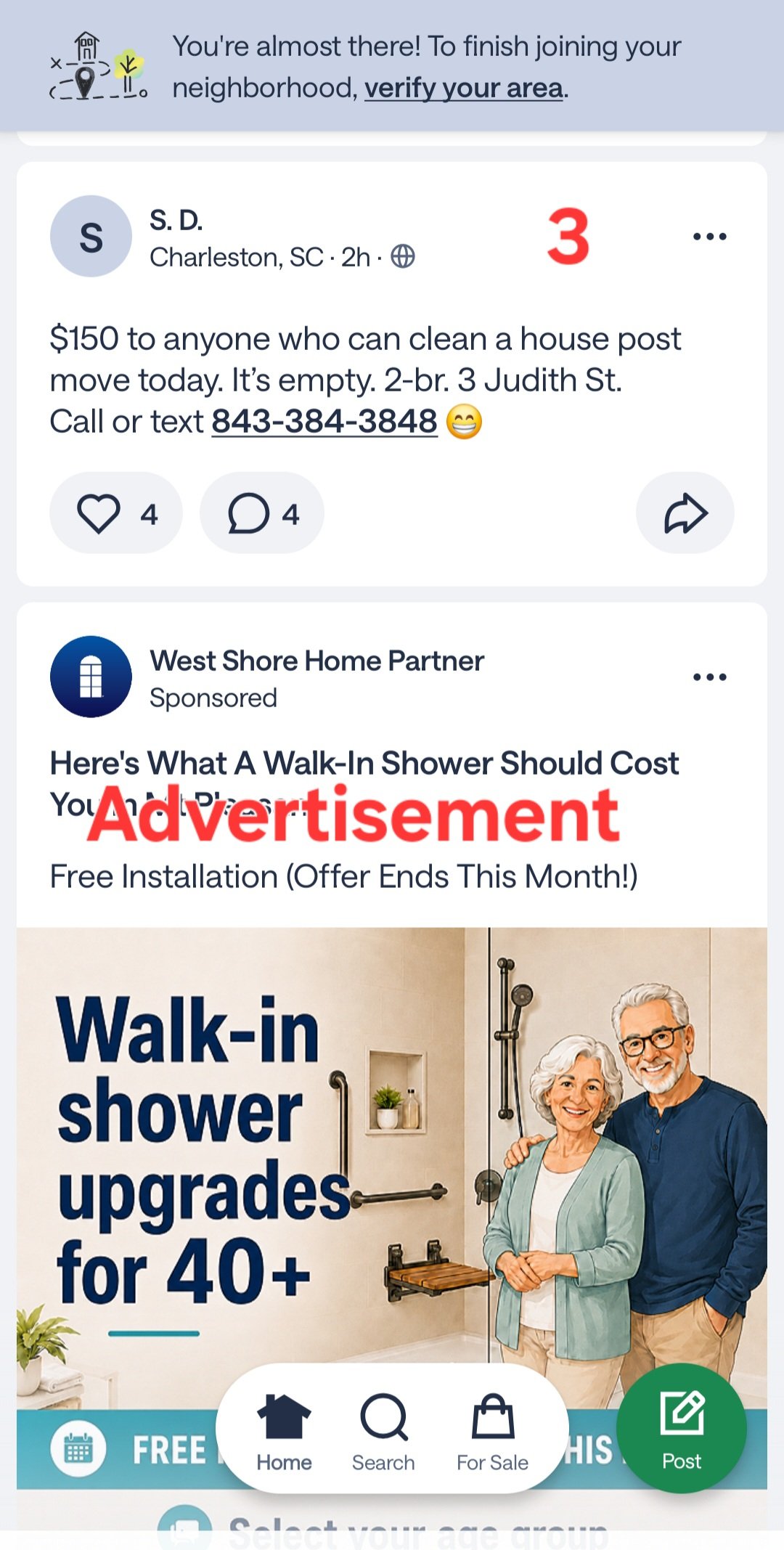
While scrolling through the app, I counted.
That’s it.
After only three neighbor posts, I was served a nationally sponsored advertisement. Not a local small business promoting a neighborhood service—a national advertiser.
So I kept testing.
More scrolling.
Same result.
Approximately three posts, then another sponsored placement.
That got me thinking about the bigger business question.
Nextdoor highlights statistics such as over 100 million neighbors, tens of millions of active users, and significant household reach.
With that kind of audience, and advertisements appearing that frequently in the user experience, I keep coming back to the same question as a shareholder:
How is Nextdoor still struggling to reach sustained profitability?
Where is the revenue going?
A social platform can always increase ad load—but is moving toward more ads really the answer for users?
A 1:1 ratio of posts to advertisements?
Fantastic user experience.
(Yes, that’s sarcasm.)
The challenge, in my opinion, isn’t simply adding more advertisements.
It’s leadership, execution, capital allocation, and turning engagement into a sustainable business model.
At the end of the day, the CEO is responsible for results.
Nirav Tolia owns the strategy, and shareholders should evaluate the outcome.
The question isn’t whether Nextdoor has an audience.
The question is whether the current leadership approach is converting that audience into long-term value.
Join the discussion at NielFlamm.com.
Day 15: The Report Is Still Missing
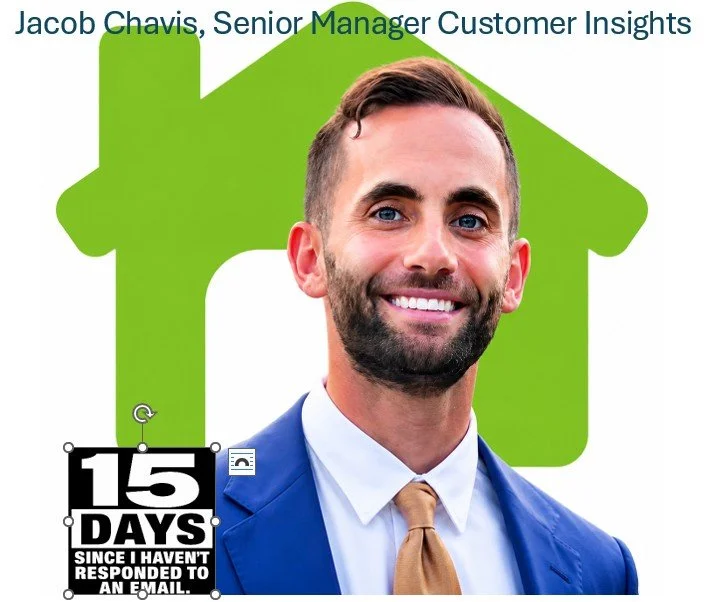
Today is Day 15 since I requested the Home Insurance Insights study. Nextdoor's Communications team said it was available upon request.
As of today, I have received:
No report.
No link.
No acknowledgment.
No indication that anyone is working on my request.
After multiple requests, I'm asking whether my experience is unique or whether others have encountered similar treatment from organizations that emphasize connecting people and communities.
Yesterday, I wrote about Nextdoor's investment in a Dallas engineering hub, even as many executive leaders are based elsewhere.
As a shareholder, I believe there may be a stronger return on investment in expanding a robust Customer Experience organization—one that supports advertisers, users, and investors with timely communication and issue resolution.
Customer experience isn't just about software.
It's about people responding.
It's about closing the loop.
It's about building trust.
My experience so far has been the opposite.
I also attempted to reach John T. Williams, who previously served as Head of Investor Relations at Nextdoor. My email was returned almost immediately because the mailbox was no longer available.
That happens when people move on, but it reinforces a broader point: when communication channels disappear, or requests go unanswered, stakeholders are left wondering where to turn.
If you're asking advertisers and shareholders to invest in your platform, responsiveness isn't a nice-to-have.
It's part of the product.
I expect someone at Nextdoor will eventually send the study or explain why it isn't being provided.
Until then, Day 15 continues.
Join the discussion on NielFlamm.com.