
A 12-Pack of Corona at the Skilled Nursing Facility? Well, That's an Unexpected Surprise!
It's Sunday, November 15, 2026.
I got a late start today. I was feeling a little tired, and I think it's time to turn on the humidifier in my bedroom again. Maybe that'll help.
After looking at the damage on the BMW X6, I decided to take my other vehicle, the BMW 128i convertible, and head over to visit Mom.
Nothing particularly unusual about that. It's become part of my routine.
But today, I walked through the doors of the skilled nursing facility and found something I wasn't expecting.
The usual weekend package pickup
When I enter the facility, there's an area immediately to the right, against the wall, where Amazon deliveries and other packages tend to accumulate over the weekend.
It's become one of those things I automatically look at when I walk in.
Usually, it's boxes, envelopes, and deliveries waiting for residents or their families.
Today, however, something caught my attention.
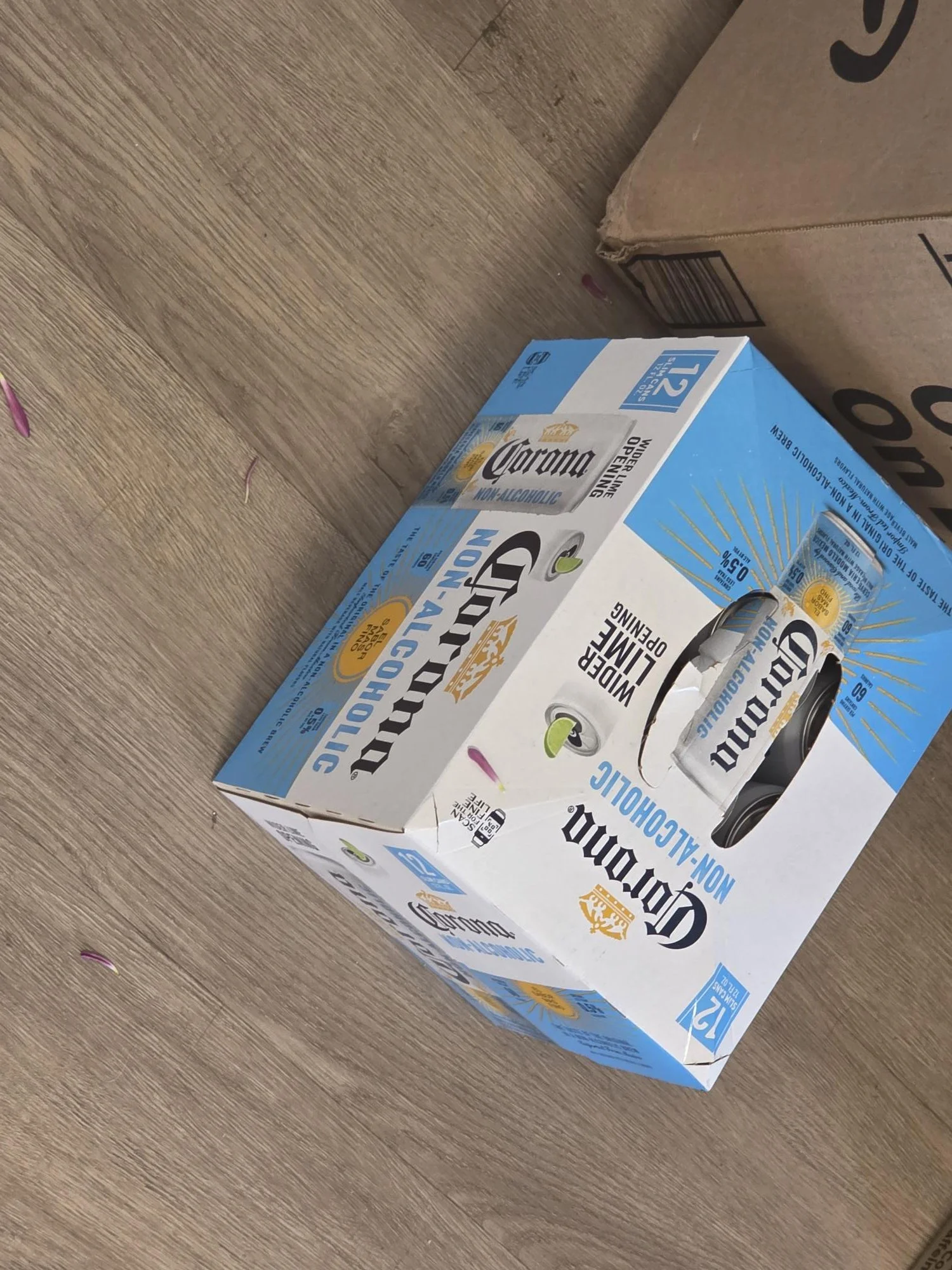
A 12-pack of Corona Non-Alcoholic.
Well, that's not something I expected to see sitting there!
I had to stop for a second and take it in.
A 12-pack of Corona Non-Alcoholic sitting in the package area of a skilled nursing facility.
It made me smile.
There's more than one kind of care happening here
One thing worth explaining is that this facility has several different types of care.
There's the rehabilitation unit, the long-term care unit, and the memory care unit.
The long-term care unit is pretty much what the name implies. It's a setting where residents receive more nursing support than they might in a traditional assisted living community.
People have different needs, different levels of independence, and different reasons for being there.
And that's what made today's discovery interesting.
When we think about skilled nursing facilities, rehabilitation centers, or assisted living communities, we sometimes picture a very specific environment.
Medical care. Therapy. Medication schedules. Meals. Activities. Visiting hours.
We tend to think about the limitations that come with living in one of these places.
But there's another side.
Just because someone lives in an assisted living or long-term care environment doesn't mean they stop enjoying life.
People are still people
I think that's the bigger takeaway for me.
People don't stop having interests, preferences, personalities, or a desire to enjoy themselves simply because they move into a facility.
They still want to have fun. They still want to socialize. They still want to enjoy the little things.
Some people might enjoy a movie; others might enjoy music, a favorite snack, a special meal, or a drink.
And apparently, somewhere in this facility, someone may be enjoying a Corona Non-Alcoholic.
I don't know who the box belongs to, and I'm not going to make assumptions. But seeing it there was a nice reminder that life doesn't stop when someone moves into a care facility.
There are still opportunities to enjoy things.
There are still moments that can make someone smile.
And there are still surprises waiting around the corner.
A different perspective on assisted living and long-term care
As I'm working through finding an assisted living facility for Mom, I'm spending a lot of time thinking about what her next chapter will look like.
I've toured places, compared costs, looked at amenities, and considered the level of care she'll need.
It's easy to get caught up in the practical details.
How much does it cost? What does the room look like? What's included? How quickly can someone respond to a call button? What activities are available?
Those are important questions.
But I also need to think about quality of life.
What will Mom enjoy? What will give her something to look forward to? What will help her feel like she's still living her life rather than simply occupying a room?
Today's small discovery reminded me of that.
I don't want to look at assisted living or long-term care as simply a place where someone receives medical attention and waits for the day to end.
It's still someone's home. It's still someone's life.
And there should be room for enjoyment, personality, and a little fun.
Who knew a box of Corona would make me think?
I went to visit Mom today.
I wasn't expecting a philosophical moment in the package delivery area.
But there it was.
A box of Corona Non-Alcoholic.
Sometimes the smallest and most unexpected things remind us to look at a situation differently.
People in these facilities aren't just patients or residents. They're individuals with lives, preferences, and things they enjoy.
And I think that's something worth remembering as I continue looking for Mom's next home.
Now, if you'll excuse me, I have another assisted living decision to work through.
But I'll be keeping an eye on that package area. You never know what might show up next!
Life doesn't stop when you move into a care facility. And apparently, neither does happy hour.
The Other Side of Acceptance: Caregiving, Family Resentment, and the Weight of Doing It All
In my last blog post, I wrote about acceptance. Specifically, the difficult conversation I had with Mom about her current situation, her health, and the possibility of moving into assisted living.
But there's another side of that coin.
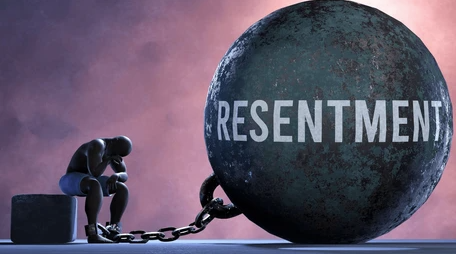
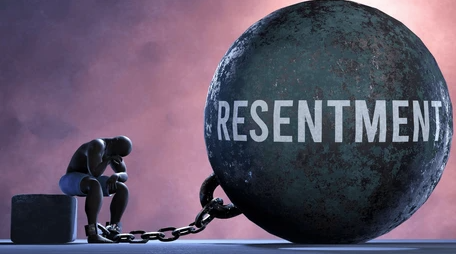
Resentment.
And I realized today that I feel some resentment toward Mom, caregiving, and the rest of the family.
Let me explain.
How did I become the person doing all this?
Let's look at the circumstances.
I'm not currently working. I'm close by. I'm living in my parents' home. I have time available, at least when I'm not recovering from dialysis or dealing with my own medical issues.
My kids live in other states. I don't have a wife (there is an Airica, though). And somehow, this enormous responsibility of helping Mom has become something I've taken on.
Here's the important distinction: I chose this.
Nobody forced me. Nobody coerced me. Nobody held a meeting and assigned me the job of family caregiver.
I decided to visit Mom. I decided to help with the assisted living search. I decided to get involved with the financial arrangements, the appointments, the questions, the concerns, and all the other things that come with being a caregiver.
I made that decision.
But making the decision doesn't mean it never gets difficult. It doesn't mean I won't get tired, frustrated, or resentful.
And today, I felt quite a bit of resentment.
The clothes conversation
After visiting Mom and having the difficult conversation I wrote about in my previous post, I asked her if there was anything I could bring her.
She asked me to bring some clothes.
That seemed simple enough.
But I remembered that my brother and sister-in-law had said they were going to get her clothes and drop them off Saturday or Sunday. I wanted to make sure Mom wasn't confused about whether they had already visited or brought anything.
So I got in the car and texted them both.
Me: "Did you drop off clothes?"
Answer: "No, not yet"
Me: "Are you dropping off clothes today?"
Answer: "No, we r in Myrtle beach"
Fantastic.
You mentioned yesterday that you were getting clothes and would be dropping them off. Now you're in Myrtle Beach, about two hours away.
And that's when the resentment started bubbling up.
The list running through my head
I could feel the thoughts piling up:
You said you were getting her clothes.
You said you would drop them off.
You can't visit her for more than an hour a day?
Why did you need to go to Myrtle Beach today?
What happened to the clothes?
Am I the only one who is supposed to make sure everything gets done?
And that wasn't even the whole list.
There's also a brother in Colorado who said he’d come out to visit and help. That hasn't happened either.
Meanwhile, I'm here. I'm visiting. I'm asking questions. I'm looking at assisted living facilities. I'm trying to work through the financial arrangements. I'm dealing with the day-to-day conversations and complaints.
And I'm also trying to manage my own life and health.
I know everyone has their own schedules, responsibilities, and circumstances. I don't know everything that went into their decision to go to Myrtle Beach. But when someone says they'll do something and then doesn't, it's frustrating.
Especially when the responsibility keeps landing in the same place.

The resentment isn't really about a bag of clothes
Let's be clear. This isn't really about the clothes.
The clothes are just the latest example of something much bigger.
It's about expectations, commitments, and the feeling that the responsibility of caring for Mom is unevenly distributed.
I don't expect everyone to drop everything and spend every day at the facility. I understand that people have jobs, families, obligations, and lives of their own.
But there's a difference between having a busy life and saying you’ll do something and not following through.
And there's a difference between visiting Mom and actually helping with the responsibilities that come with caring for her.
Sometimes a visit is just a visit. Sometimes caregiving means making phone calls, arranging things, researching options, following up, handling finances, and managing the details nobody necessarily sees.
Those details add up.
And when you're the person handling most of them, it can feel pretty lonely.
I chose this, so what am I resentful about?
This is where I have to look at myself.
I chose to take on this role. I wasn't assigned it. I didn't have to be the person who visits, researches, coordinates, and tries to make things happen.
But I did.
Does that mean I have no right to feel frustrated when other family members don't follow through? No.
Does it mean I should expect everyone else to contribute in the same way I do? Probably not.
And does it mean I should keep score? That's where I need to be careful.
Resentment can become a dangerous thing. It can take a legitimate frustration and turn it into something that consumes far more energy than the original problem deserves.
I can spend the rest of the evening replaying the Myrtle Beach conversation, thinking about the clothes, the missed visits, and the brother in Colorado.
Or I can acknowledge that I'm frustrated, recognize what I can and cannot control, and decide what I’ll do next.
Time for another dose of acceptance
I wrote about acceptance in my previous post. Today, I realized I need to practice it myself.
I need to accept that my siblings may not participate the way I would like them to.
I need to accept that people make commitments and sometimes don't follow through.
I need to accept that I cannot make other people prioritize something the way I prioritize it.
And I need to accept that choosing to be Mom's caregiver doesn't mean I have to do everything without boundaries.
I can ask for help. I can communicate what needs to be done. I can be clear about what I can handle. And I can stop assuming that everyone else will approach this responsibility the way I do.
Most importantly, I need to be careful not to let resentment drive my decisions.
I want to help Mom because I chose to help Mom. I don't want to do it while carrying around a running list of everything everyone else hasn't done.
That's easier said than done, especially on days like today.
Acceptance doesn't mean pretending everything is fine
I can accept that my brother and sister-in-law went to Myrtle Beach. I can accept that my brother in Colorado hasn't made the trip yet. I can accept that my family may not show up in the way I hoped.
But acceptance doesn't mean I have to pretend that it doesn't bother me.
It doesn't mean I can't talk about expectations. It doesn't mean I can't ask people to follow through. And it certainly doesn't mean I have to take on every responsibility simply because I'm nearby.
I have my own health to manage. I have dialysis. I have recovery. I have relationships and a life outside the skilled nursing facility.
I need to remember that, too.
So today, after writing about acceptance, I discovered something else I need to work on.
Resentment.
And apparently, I need another helping of acceptance.
Maybe a large one.
Stay tuned. This caregiving journey continues, and I'm learning just as much about myself as I am about helping Mom.
Acceptance Is a Tough Pill to Swallow: Mom, Assisted Living, and a Difficult Conversation
Today started a little later than usual. It was after noon before I got moving. My body told me it needed the rest, and since I didn't have anywhere I needed to be right away, I listened. Sometimes that's the smartest thing you can do.
I finally got cleaned up (I haven't shaved in three days), hopped in the car, washed it, and headed to Costco to pick up one quick item. I was also thinking about grabbing an inexpensive lunch, but the line at the food counter was longer than I wanted to deal with.
Next stop: the skilled nursing facility to visit Mom.
When I arrived, a couple of CNAs or techs were taking her vitals. Everything seemed routine enough. Then the conversation started.
"The people here are mistreating me."
I've heard this song before. I entertained it for a moment, but it didn't take long for the conversation to go in several different directions. And that's when I decided we needed to have a difficult conversation.
So, buckle in. Here we go.
The conversation nobody wants to have
I told Mom that her current situation didn't happen overnight, and it didn't happen because someone randomly decided to put her in a skilled nursing facility.
For at least five years, she hadn't been seeing a doctor or taking medication. I asked her repeatedly:
"Did you see a doctor or take medication during those five years?"
The answer kept changing directions. First, it was about my father. Then it was about the facility. Then something else.
I brought it back to the question.
Eventually, I got the answer: "No."
My next question was simple:
"What did you expect to happen?"
Her answer? "Not this."
Well, I don't think anyone expects to have two strokes, potentially some smaller ones, and end up needing skilled nursing care. But medical consequences don't always arrive with a convenient warning label.
I also reminded her that the peaceful, comfortable ending we see portrayed in movies isn't necessarily how life works. Sometimes things get complicated. Sometimes the consequences are difficult, and sometimes they change just about everything.

The loss of autonomy
Mom told me she "just wants to be comfortable."
I understand that. Who doesn't?
But I also tried to explain something she doesn't seem to want to accept: she's lost a significant amount of independence and autonomy.
I compared the experience to being in a medical jail or prison. Not literally, of course, but in terms of how much control she has over her daily schedule.
In a skilled nursing facility, routines run the show. Meals happen at certain times. Showers, medications, therapy, activities, and even opportunities to go outside are often scheduled around staffing and the needs of the entire facility.
It's not like being home, where you can decide to make a sandwich at 10 p.m., take a shower whenever you feel like it, or change your plans because you don't feel like doing something.
Mom responded that she didn't know because she'd "never been to jail."
Fair enough. That statement would become interesting a little later.
My point was that she needs to recognize how she got here. I told her that she has to stop fighting the reality of her situation and blaming everyone else for it.
Acceptance: Something I learned in recovery
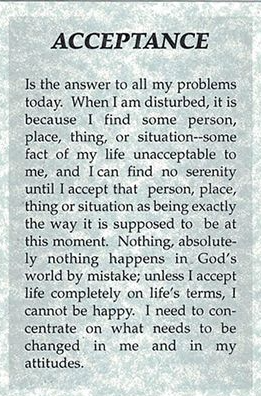
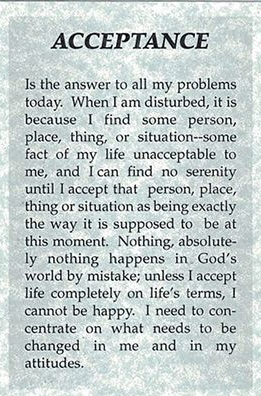
A concept in the recovery literature has stuck with me. It's on page 417, and it's about acceptance.
The idea is that acceptance can change the way we experience life. It doesn't mean we like everything that happens. It doesn't mean we approve of it. It means we stop fighting reality and start working with what is actually in front of us.
I explained to Mom that I could spend my days blaming other people for my above-the-knee amputation and my end-stage renal disease.
I could point fingers. I could complain about everything that happened. I could spend my time wishing my life were different.
But where would that get me?
My own decisions, and things I didn't do, contributed to where I am today. Once I began accepting my circumstances, life became easier to navigate. I found more peace and serenity.
I don't have to like dialysis. I don't have to like being an amputee. I don't have to enjoy the limitations that come with my medical situation.
But I can accept that this is my life today.
Not the life I had before. Not the life I wish I had—the life I have today.
And that distinction makes a difference.
I want Mom to understand that acceptance doesn't mean giving up. It means acknowledging where you are so you can figure out what to do next.
The jail conversation takes an interesting turn.
Mom then mentioned that she had thrown up and that nobody did anything about it.
I asked her, "Did you ask for a doctor?"
She said it would take two days.
"How do you know? Did you ask for one?"
Then came the response:
"They come faster in jail."
Wait a minute.
A few minutes earlier, she told me she didn't know anything about jail because she'd never been there. Now she's apparently familiar with the response times for medical care in correctional facilities?
This is where I brought up something I've discussed with her before: she tends to tell stories and embellish things. Sometimes the details change depending on where the conversation goes.
She says she doesn't make things up. I disagree.
I'm not going to pretend I know exactly why she does it. Still, when the stories keep changing, it becomes difficult to have a productive conversation about what is actually happening.
And that's frustrating, especially when we're trying to make decisions about her care.
Of course, if she's feeling sick or has thrown up, that deserves attention. I don't want legitimate medical concerns dismissed because of disagreements about the facility. Those things need to be reported to the nursing staff and addressed.
But we also need to separate an actual concern from a story that changes every time we discuss it.
The search for a place where everything is perfect
We eventually circled back to Mom saying that all she wants is to be happy.
I've told her before, and I'll say it again: she is never going to be 100% happy wherever she goes.
No facility will be exactly what she wants. The food won't always be perfect. The temperature might be too warm or too cold. The staff won't always arrive the second she presses the call button. There will be noise, lighting issues, schedules, and activities she doesn't like.
She tells me she's "not picky."
Folks, she is.
She complains about the food, the staff, the temperature, the lighting, the noise, the gym, and just about anything else that comes up. At some point, we have to acknowledge that the problem might not be entirely about the building or the people working there.
I keep coming back to the same word: acceptance.
I asked her where she wanted to go. Instead of answering, she went off on another tangent about my father.
And that's when I explained something else.
I've spent time researching and visiting assisted living facilities. I've put effort into figuring out what might work. I've been trying to find a place where she can have more independence and receive the support she needs.
But I cannot guarantee that she'll be happy there.
I can't promise that the food will be perfect, the staff will be perfect, the temperature will be perfect, or that every day will meet her expectations.
I can help find a place. I cannot manufacture happiness.

The decision is now hers.
I have an appointment with my father this Thursday to work on establishing a trust so that funds can be used to pay for Mom's assisted living care.
This is a step toward making a transition possible. It's not about me getting money. It's about making sure the money is available for Mom's housing, care, and related expenses.
But I also told Mom that she needs to decide what she actually wants.
If she doesn't want to move to assisted living, she needs to tell me.
If she doesn't want any of this, then she can come home. From a practical standpoint, that would actually be easier for me. I wouldn't have to keep driving around, touring facilities, researching options, and coordinating another move.
I don't mind visiting her. I don't mind helping her. But I do need her to participate in the process.
I cannot spend all this time trying to arrange a better living situation if she's not willing to consider it or make a decision.
I told her she has until Tuesday, when I don't have dialysis, to decide.
That's the deadline I've given her.
Acceptance applies to me, too.
Here's the part I have to remind myself about.
Acceptance isn't just something I'm asking Mom to practice. It applies to me, too.
I have to accept that I cannot control what she says, what she thinks, what she complains about, or whether she decides to move.
I can provide information. I can research facilities. I can help arrange the finances. I can visit. I can listen.
But I cannot make her accept her circumstances.
I also have to accept that my life has limitations. Between dialysis, my own medical needs, and everything else happening, I have to be mindful of how much I take on.
I want to help Mom. I want her to have a comfortable place to live and the best quality of life possible under the circumstances.
But I also need to maintain some peace in my own life.
And sometimes that means having a difficult conversation, setting a deadline, and letting someone else decide what happens next.
So, Mom has until Tuesday.
Thursday, Dad and I have the appointment about the trust.
What happens next? Well, that's still to be determined.
Stay tuned. This story isn't over.
Mom, Roommate Rumors, and the Art of Separating Fact from Fiction
So here I am again, sitting with Mom at the skilled nursing facility, having another conversation.
You never quite know where these conversations will go. Sometimes they're about her recovery, sometimes about what she wants to eat, and sometimes they take a few unexpected turns.
Today was no exception.
Wait, I Was There on Tuesday!
In a previous post, I mentioned that Mom told me I hadn't visited her in a week.
I reminded her that I had actually been there on Tuesday.
Then I remembered something else.
On that Tuesday visit, I handed her nurse, Coco, and her CNA, Heather, bottles of tequila I had picked up at the grocery store in Cozumel, Mexico, while on my cruise.
So, apparently, I wasn't just there. I was making deliveries!
I guess the tequila should have been a pretty memorable clue.
It's interesting how visit details can get lost or mixed up. I know institutional life can make the days blend together, but sometimes I wonder what Mom actually remembers.
The Story About Dotty
Then our conversation moved to her roommate, Dotty.
Mom started telling me that Dotty was dying.
Naturally, I asked how she knew.
Her explanation?
"Dotty isn't moving."
Well, that's quite a diagnosis.
Mom continued, explaining that Dotty would be at the skilled nursing facility forever. She also had plenty to say about Dotty's family, including that they didn't care about her.
There were other details and observations, too.
I listened, but I wasn't sure how much of what I was hearing was factual and how much was Mom's interpretation or imagination.
I told her something pretty straightforward:
I can't control what Dotty's family does.
I don't know their circumstances, their relationship with Dotty, or what's happening outside the facility. And neither does Mom necessarily.
There may be perfectly reasonable explanations for things she sees or doesn't see.
I don't want to turn every conversation into an investigation, but I also don't want to accept every story as fact.
Why Does Mom Make Things Up?
Here's where the conversation became a little more personal.
My mother tends to make things up.
Actually, calling it a tendency probably understates it. From my experience, it's something she does habitually.
I've noticed it over the years, and it can make conversations challenging because I sometimes find myself trying to figure out what's real, what's exaggerated, and what's been added along the way.
Today, I decided to ask her about it.
I tried to get to the root of why she does it.
First, I asked her whether she was trying to make me feel guilty.
After all, she had just reminded me that I supposedly hadn't visited in a week, even though I had been there Tuesday.
I wanted to know if there was some underlying reason for these stories or comments.
Her answer was no.
I explained that I don't feel guilty. I'm doing everything I can for her. In fact, I'm doing more than my best.
I'm visiting, advocating, researching assisted living facilities, dealing with financial arrangements, managing my own health, and trying to keep everything moving forward.
I can't manufacture more hours in the day.
I can't be in two places at once.
And I can't control everything that happens inside or outside the facility.
Then I asked another question.
Did she learn this behavior from her parents?
Again, she said no.
So much for my amateur attempt at family psychology!
I Hope I Don't Pick Up This Trait
The conversation left me thinking.
Why do people embellish stories? Why do they create narratives about other people? Is it attention? Is it a way of expressing frustration? Is it an attempt to make sense of circumstances they don't fully understand?
I don't have the answers.
And I certainly don't want to diagnose Mom based on conversations like these.
There could be several explanations, including changes in memory, perception, or cognition. Given everything she's been through medically, I think it's worth keeping an open mind rather than assuming every inaccurate statement is intentional.
Still, it can be frustrating.
Especially when I'm trying to have a straightforward conversation and suddenly find myself sorting through a collection of claims that may or may not be accurate.
And here's my biggest takeaway:
I hope I don't pick up this trait.
I already have enough going on without developing a habit of creating my own versions of events!
Another Day, Another Conversation
That's the thing about visiting Mom.
There are good moments, frustrating moments, funny moments, and conversations that leave me scratching my head.
I want her to recover as much as possible. I want her to have a good quality of life. I want to help her find the right living arrangement and make sure she has the resources she needs.
But I also have to recognize that I can't control everything she says, thinks, remembers, or believes.
I can listen.
I can ask questions.
I can clarify what I know.
And sometimes, I can simply change the subject.
And perhaps next time, I'll bring another bottle of tequila for Coco and Heather.
At least I know that part of Tuesday actually happened!
One thing is certain: life with Mom still provides plenty of material for the blog.
Breaking Out, Losing Track of Days, and the Importance of Showing Up: Another Visit with Mom
This morning was already shaping up to be busy.
I got the car washed, ran an errand, and was preparing to head to Bluffton, South Carolina, to pick up a nephew so we could see the new Godzilla movie.
But before all of that, I had one more stop to make.
Mom.
Was Mom Trying to Escape?
As I walked into the skilled nursing facility, I spotted Mom rolling toward the entrance/exit.
My first thought?
Was she trying to escape?
I couldn't really blame her.
When I was in a skilled nursing facility back in June 2023, I wanted out as quickly as possible. I couldn't leave fast enough. There's something about being in an institutional environment, having other people control your schedule, and depending on someone else for things you once did independently that can make you want to head for the nearest exit.
So perhaps Mom and I have something in common.
When I got to her, she mentioned that I hadn't been there for a week.
Well, that's interesting!
I had actually seen her on Tuesday after dialysis.
Apparently, the days are starting to run together for her.
And I can understand how that happens.
A Few Supplies for Mom
I didn't arrive empty-handed.
I brought her a few things to keep her occupied and comfortable:
Some magazines to read.
Three tubes of Pringles.
Bars of Ivory soap.
Yes, Ivory soap again!
Apparently, that's an important item on Mom's shopping list. When Mom requests something specific, I try to deliver.
After we talked for a bit, I took her outside so we could enjoy some fresh air.
We got her situated, and about five minutes later, a physical therapist appeared.
It was time for her physical therapy session.
The Hardest Working Woman Here
The physical therapist said something that caught my attention.
He described Mom as:
"The hardest working woman here."
He was excited to work with her.
That's encouraging to hear.
After everything she's been through, it's important to see her keep putting effort into rehabilitation.
Her recovery hasn't been easy, and there are still challenges with her mobility. But having someone on the rehabilitation team recognize her effort is encouraging.
It also brought back some memories of my own rehabilitation.
When I Didn't Want to Do the Work
I remember being in a skilled nursing facility myself.
Some days, I didn't particularly want to work toward a goal. In fact, I remember one day when I outright refused to participate in physical therapy.
Why?
I had developed a resentment toward the facility.
I wasn't happy with the circumstances, and that frustration carried over into my willingness to participate.
Looking back, that didn't do me any good.
The facility might not have been where I wanted to be, but refusing to work toward my recovery only hurt me.
Eventually, I had to recognize that the work I was doing wasn't for the facility, the therapists, or anyone else.
It was for me.
That's something I can relate to when I watch Mom working through her own rehabilitation.
She may not want to be there. She may want to roll toward the exit. She may have complaints about the food, the schedule, or just about everything else.
But the physical therapy is an investment in herself.
And hearing that she's working hard makes me happy.
I'll Be Back Tomorrow
Before leaving, I told Mom I'd be back tomorrow, Sunday.
It's easy to lose track of days in a place like this.
The routine becomes repetitive. Meals, medication, therapy, visitors, and waiting for the next activity. Before you know it, Tuesday feels like yesterday, and Sunday feels like another Tuesday.
I can imagine how difficult that must be.
That's one reason I try to keep visiting and letting her know when I'll be back.
Sometimes it's not about bringing something, fixing something, or having a major conversation.
Sometimes it's simply showing up.
Today, I brought magazines, Pringles, and Ivory soap. We got outside for a little while. She had physical therapy, and I heard she's working hard.
Then I headed off to Bluffton for my next adventure: a nephew, a movie, and Godzilla.
Life continues outside those facility walls.
And tomorrow, I'll be back.
Keep working, Mom. That physical therapist is excited to work with you, and I'm cheering you on, too.