
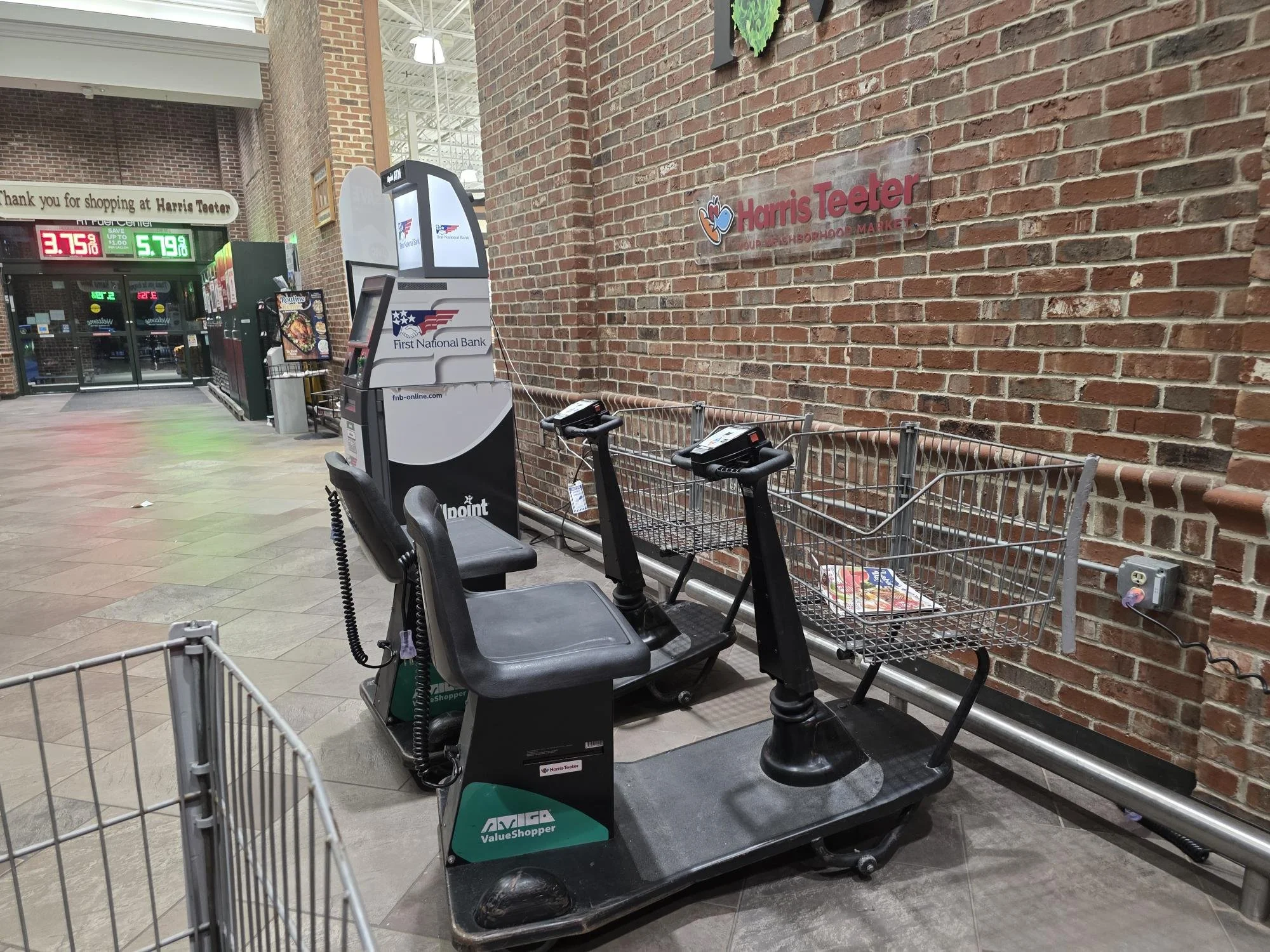
What is wrong with this picture?
Accessibility Should Start in the Parking Lot
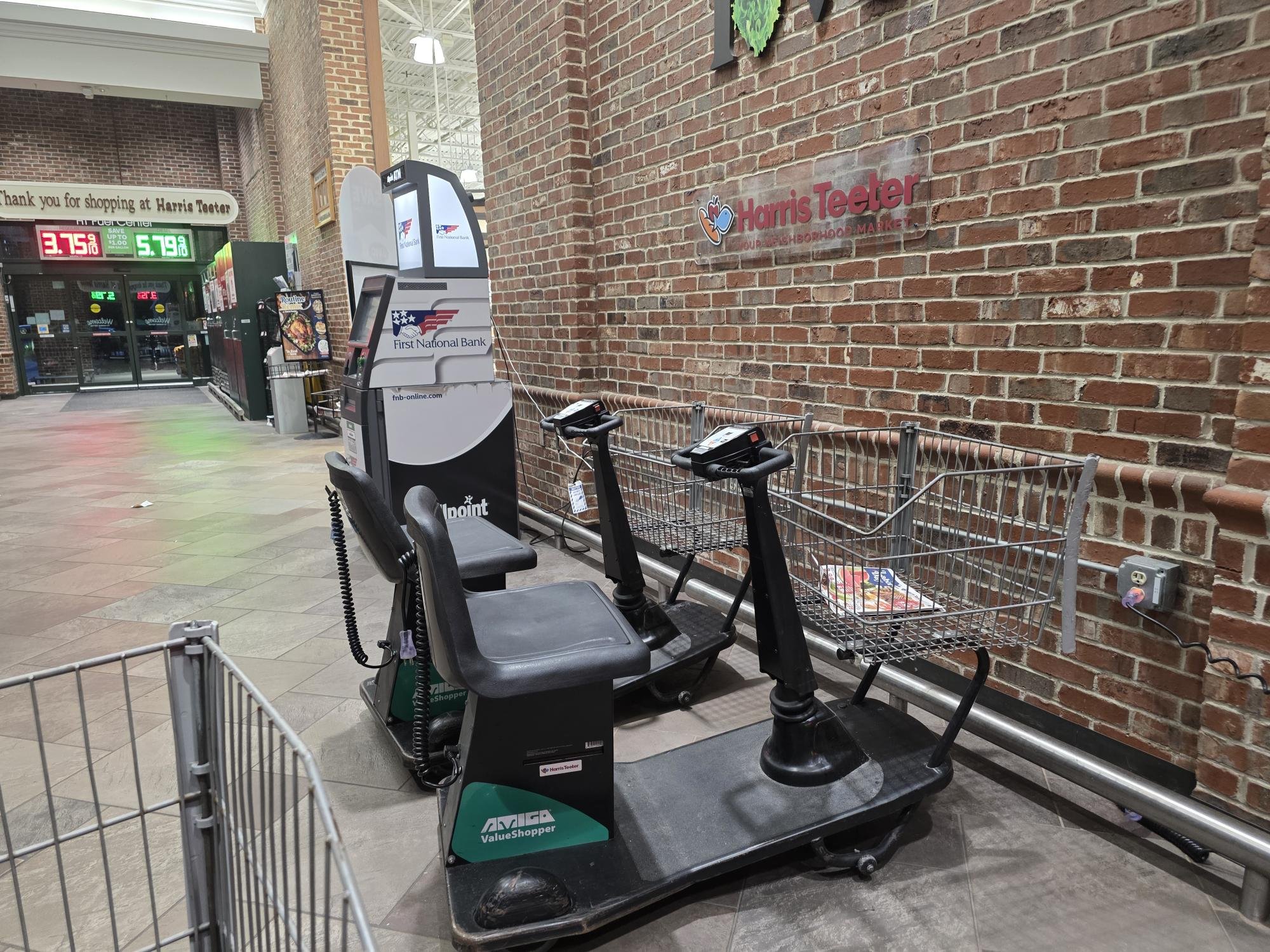
I was at the Harris Teeter in the Rivertowne area on Thursday and saw these electric shopping scooters parked inside. Most of you might not notice anything wrong. In my opinion, though, this picture shows a gap in how we think about accessibility.
First, let me say thank you to Harris Teeter for providing this equipment for customers with mobility issues, including me. These scooters make grocery shopping easier and less stressful. I appreciate having them available.
Here is where my opinion may be controversial—or perhaps seem petty to someone who has never struggled to walk across a parking lot.
The scooters are inside.
Someone who needs one must first get from their vehicle to the store and through the entrance before reaching the equipment that helps them get around. For some customers, that journey is already difficult.
The help is there. But you have to reach it first.
I do not know whether stores are required under the Americans with Disabilities Act to provide these scooters. My concern is about the everyday experience of using them. From my perspective, providing mobility assistance only after someone gets inside feels like a half-measure.
I have suggested keeping scooters in a designated, sheltered area near the accessible parking spaces during store hours, with the spaces and access aisles kept clear. Employees who collect shopping carts could check that area and bring the scooters inside when the store closes.
I understand these machines are expensive. Weather, charging, security, and upkeep all need to be considered. That is why I am suggesting a managed arrangement during business hours. If outdoor storage isn't practical, an easy way to request a scooter from the parking lot could help close that gap.
The people who need these devices should have a say in where and how they are made available.
I have written reviews of hotels where, from my experience as a guest with mobility issues, the approach to accessibility felt like doing the minimum—especially in bathrooms. A feature can be present and still be awkward or difficult to use. The details matter when you are the person depending on them.
I would love to see a company take the lead by asking customers, “What would make your visit easier from the moment you arrive?”
I believe that kind of care could bring a meaningful return through loyalty, repeat visits, and recommendations. When a business makes an everyday task easier, people remember.
So, thank you, Harris Teeter, for providing these scooters. They make a difference to customers like me.
Please consider taking that care a few steps farther—out to the parking lot, where we may need it first.
My Eyes Weren’t Playing Tricks—That Is Not a Parking Space
After dialysis, I made the 30-minute drive to Retina Consultants of South Carolina in Ladson for my eye appointment.
Apparently, the parking lot decided to test my vision before the doctor could.
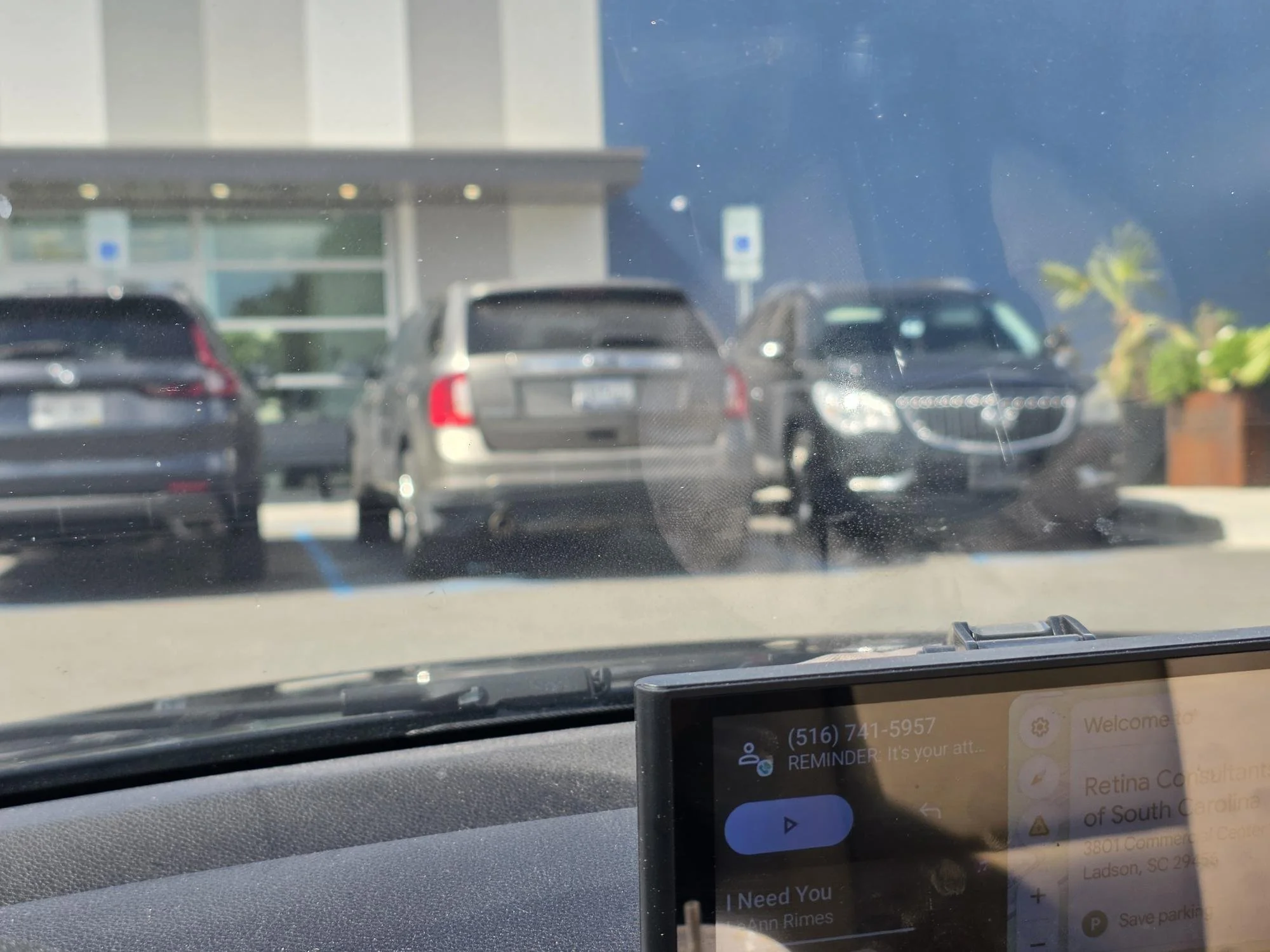
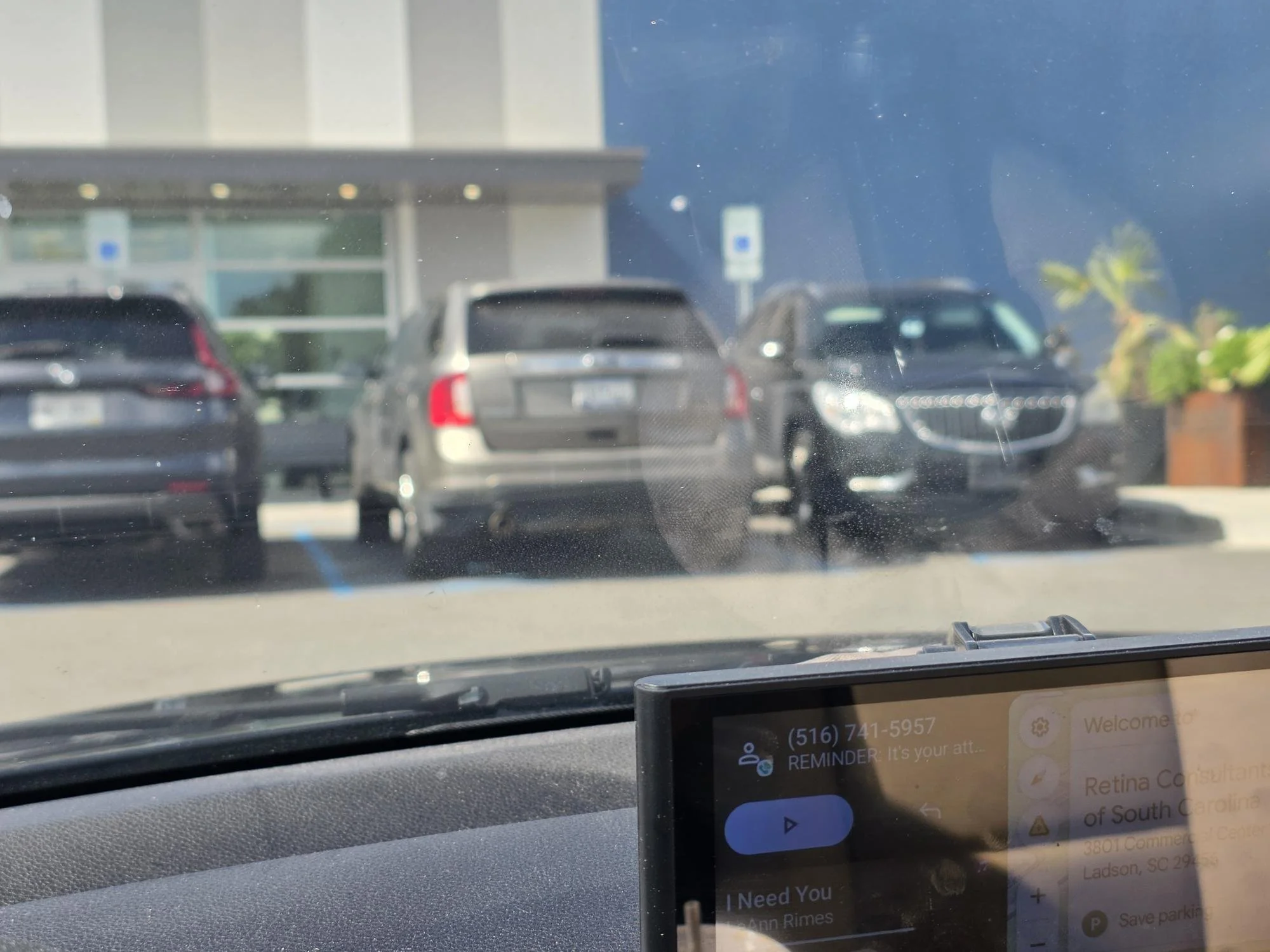
I saw a vehicle parked in a spot that was not actually a parking space, squeezed unbelievably close to the cars beside it. I am not sure the pictures fully capture just how little room was left between the vehicles.
Maybe this was part of my eye exam:
“Niel, can you identify the illegally parked vehicle?”
Yes. Yes, I can.
The scene reminded me of something that happened many years ago after a business trip. At the time, I was neither physically nor emotionally sober.
I returned to the long-term parking lot at O’Hare, exited the train, and walked down the stairs. My car was parked nearby, which should have been a pleasant surprise after traveling.
Instead, someone had parked beside me in a space that did not exist. Their car was so close to mine that I could not open the driver’s door.
I had to climb into my car through the passenger side—all 350 pounds of me, at least—and maneuver myself across the center console into the driver’s seat.
But before I did that, I gave the illegal parker a reason to get a new paint job.
That was not my proudest moment.
Let me be clear: damaging someone’s vehicle was wrong. Their terrible parking did not justify my response. That story is not advice or something I am celebrating. It is simply an honest example of who I was at the time and how poorly I handled anger and frustration.
Today, I respond differently.
I take a picture. I write a blog post. I point out the problem without creating a bigger one—and without adding an appointment at the body shop to someone’s calendar.
Still, parking in a space that does not exist and leaving barely enough room for other drivers to enter their vehicles is selfish. You do not know whether the person beside you has limited mobility, uses a wheelchair or prosthetic, or physically cannot climb through the passenger side.
And no one—especially after dialysis and on the way to a retina appointment—should have to perform parking-lot gymnastics because you decided the painted lines were merely suggestions.
My eyes may be recovering, but even I could see that was not a parking space.
Be better, people. Be better.
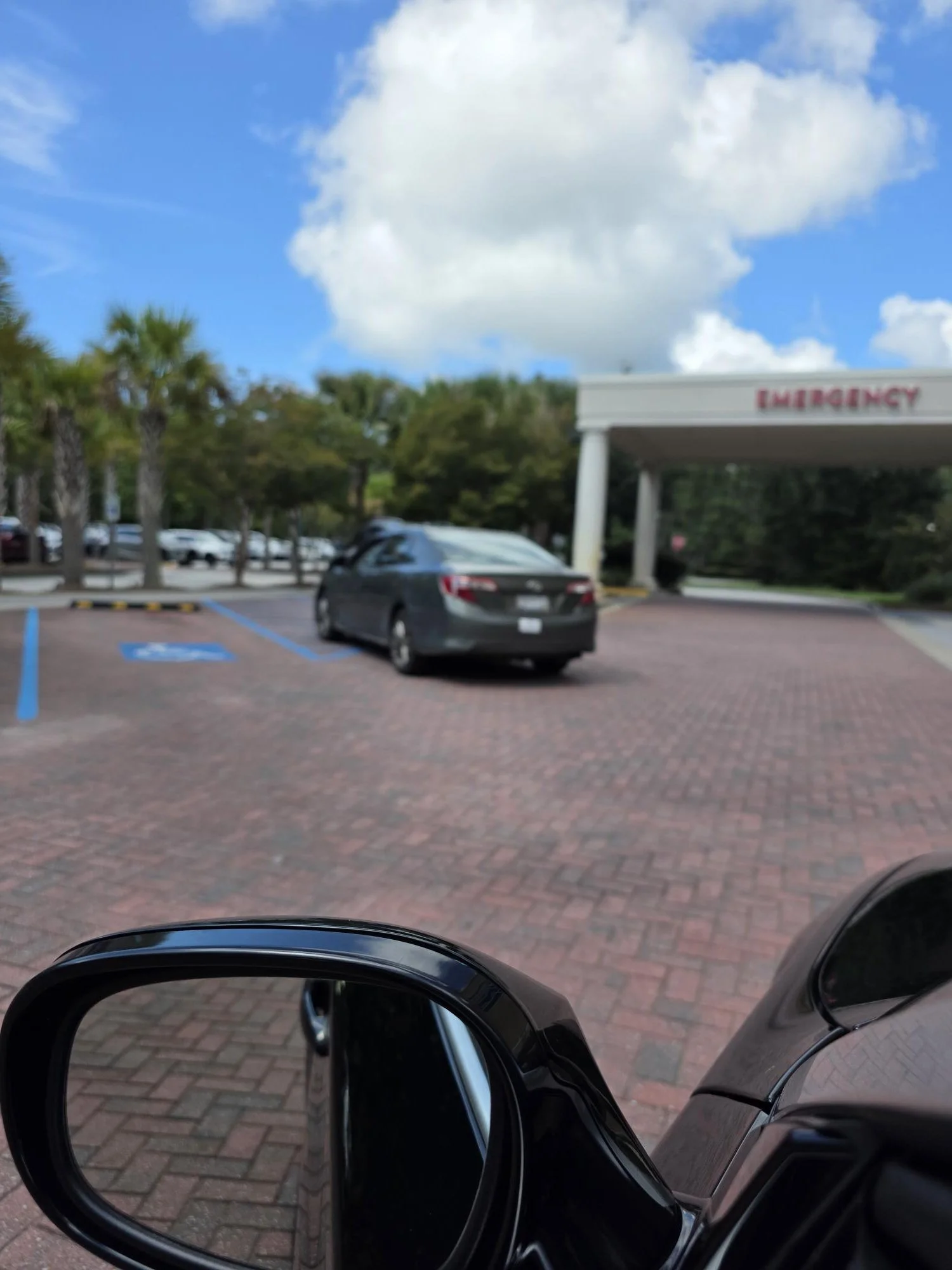
A Parking Job So Bad It Needed Emergency Care
I was visiting my mother at Roper St. Francis in Mount Pleasant when I left for a few hours to attend a recovery meeting.
On my way out, I saw this car parked outside the Emergency Department.
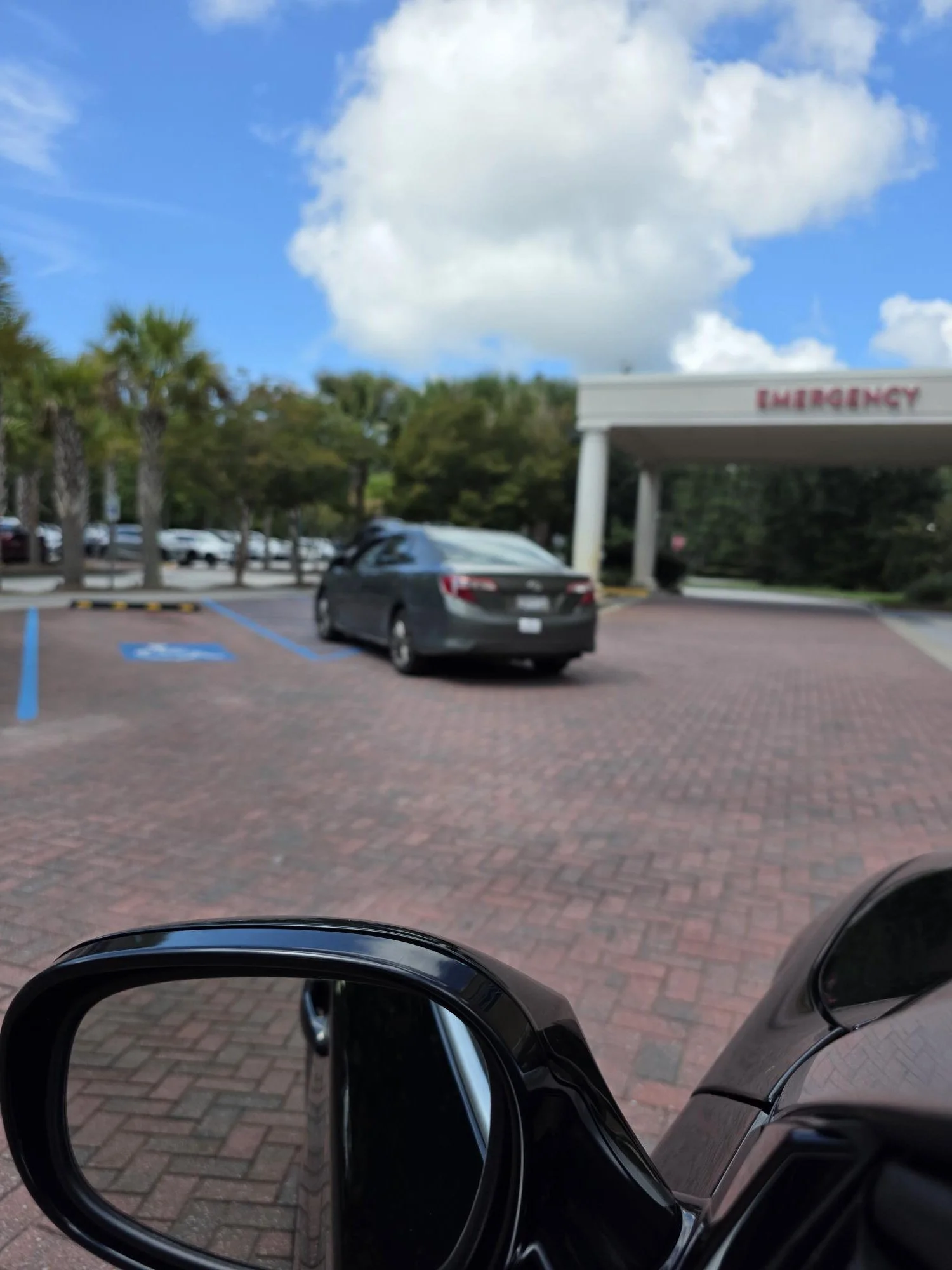
Or at least I think it was parked. It appeared to have simply stopped wherever it lost interest in moving.
Now, because this was outside the Emergency Department, I kind of understand. Emergencies are emergencies. Sometimes you pull up, get someone inside, and worry about the car afterward.
I have my own story.
When my ex-wife was about to give birth to our son—our second child—she waited until nearly the last possible moment to announce that it was time to go to the hospital.
On the way there, I may have run a few red lights. I did honk as I approached them to warn people that a panicked father-to-be was coming through.
When we reached the Emergency Department, I jumped out, ran inside, and grabbed a wheelchair. My ex-wife was still sitting in the car. I got her into the wheelchair and rushed her inside.
Meanwhile, the car was still running, the keys were still in it, and the doors were wide open.
Was that proper parking etiquette?
Absolutely not.
But a baby was arriving, and my priorities were clear: mother, baby, and then the unattended getaway car sitting outside.
So yes, I can understand a bad parking job at an emergency room—at least temporarily.
But the car I saw at Roper St. Francis was on another level. It was sitting crooked across the blue-striped access aisle next to an accessible parking space, looking less like someone had parked it and more like it had been abandoned mid-thought.
Those striped areas are not bonus parking spaces. They provide the room people need to deploy wheelchair ramps, use mobility equipment, and safely enter or exit their vehicles.
When I returned from my recovery meeting, the car was gone.
Hopefully, whatever brought the driver to the Emergency Department turned out okay.
Or perhaps the car had simply been moved to another part of the parking lot—where it was parked just as horribly.
Either way, emergencies may explain a rushed arrival. They do not turn an access aisle into a parking space indefinitely.
Be safe. Be considerate. And once the emergency is under control, please go back and park the car between two actual lines.
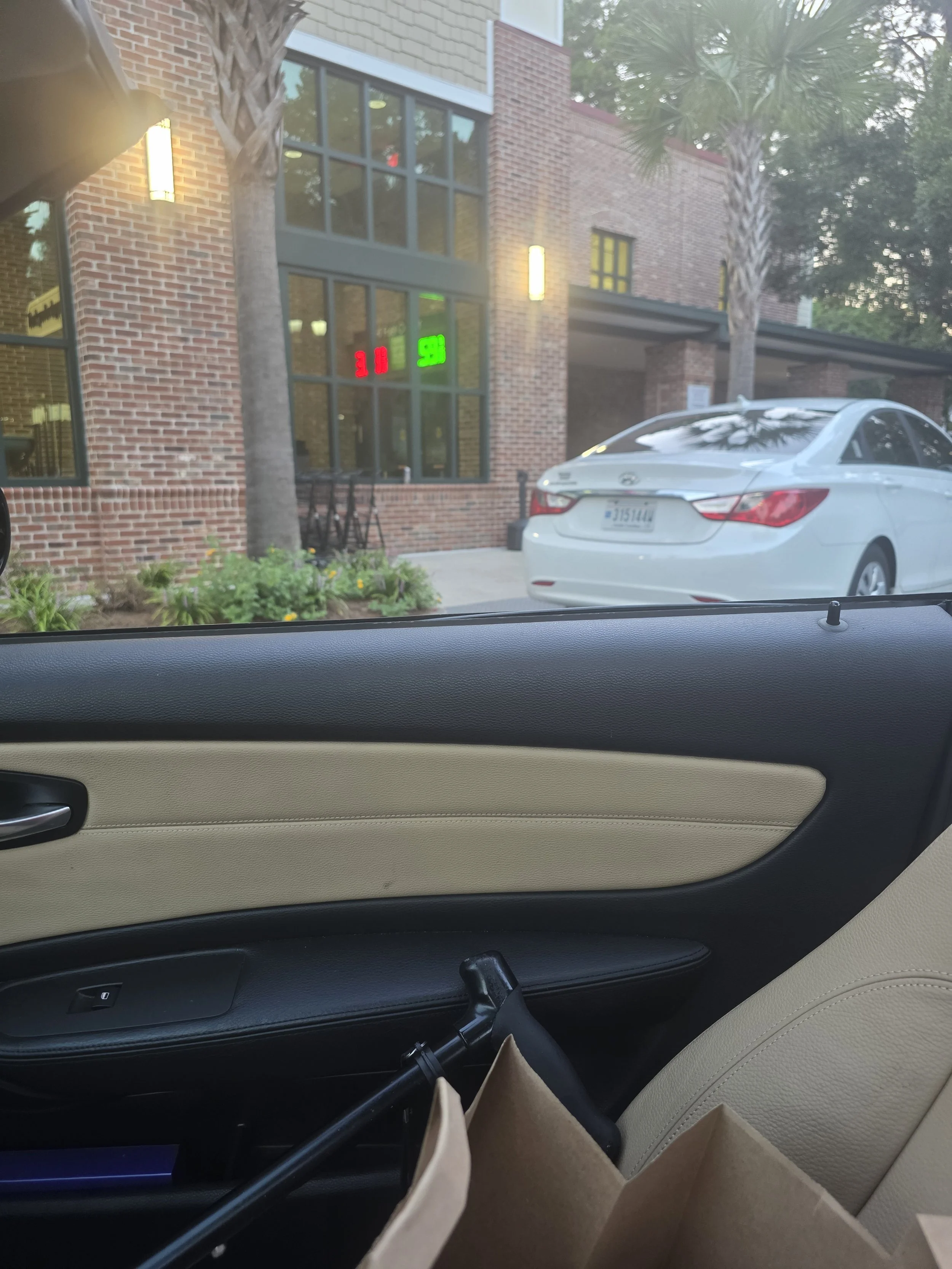
Handicap Plates Don’t Mean “Park Wherever You Want”
I stopped at Harris Teeter to grab two items.
Literally, two items.
As I left the store and made my way toward my car—parked in an actual accessible parking space—I noticed a car sitting directly outside the entrance.
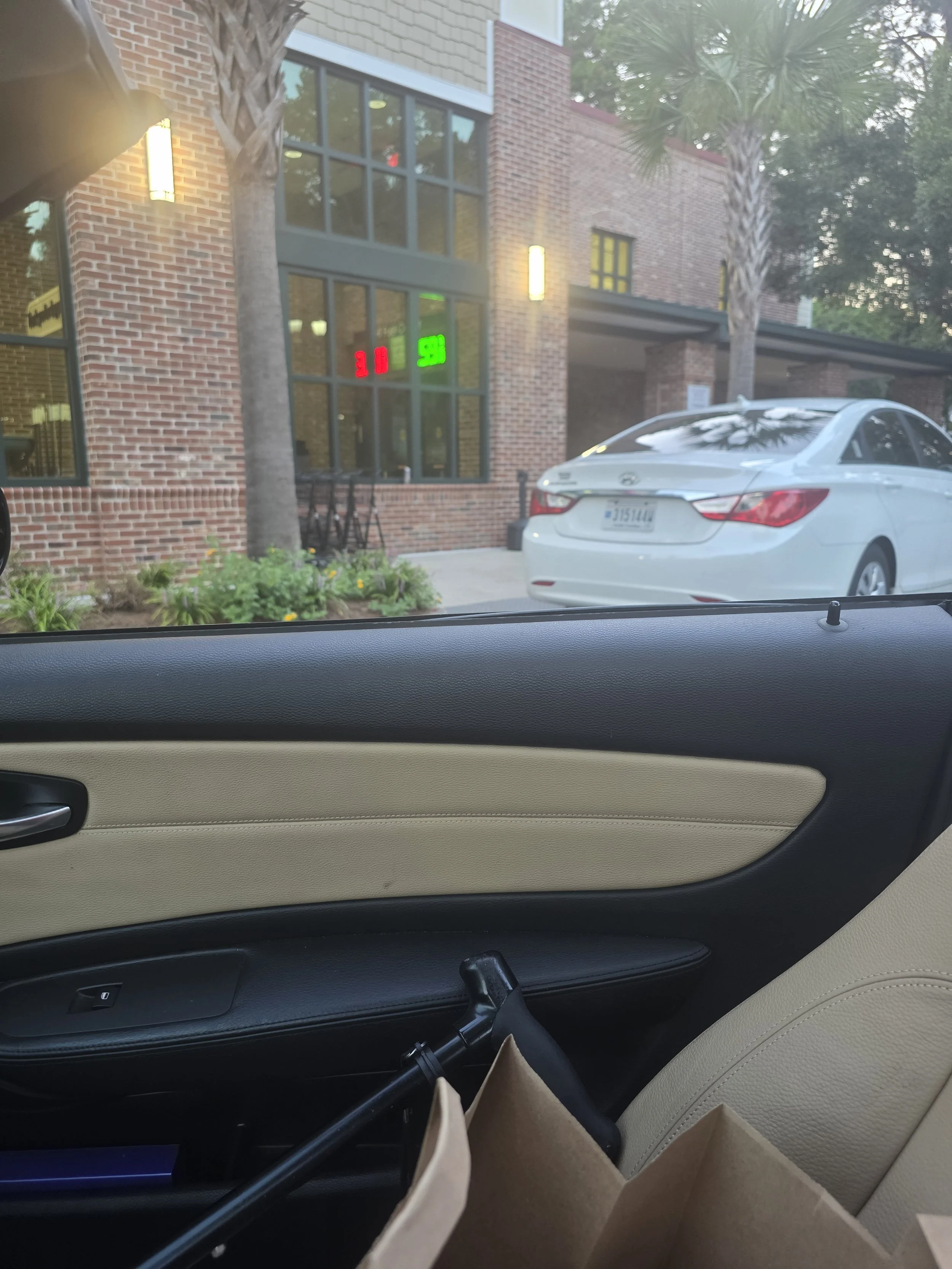
I looked inside.
No driver. No passenger. No one.
As I pulled away, I noticed the car had handicap license plates. As someone who relies on accessible parking, I understand why those spaces—and the shorter distance they provide—matter.
But handicap plates are not an all-access parking pass. They do not mean you can skip the designated spaces and create your own personal parking spot directly in front of the store.
I might—and this is a very soft might—understand the decision if every accessible parking space had been occupied.
They weren’t.
And before anyone reaches for the classic excuse, “I’m just running in, and I’ll be right out,” let’s review the timeline.
I had enough time to walk to my car, load my two items, get inside, buckle my seat belt, back out, take a picture, and drive away.
That took at least two minutes.
The driver still had not returned.
This is not about questioning whether someone has a disability. The handicap plates already answer that question. It is about recognizing that having those plates does not excuse blocking an entrance, a fire lane, or an area intended to remain clear.
Accessible parking exists to make life a little easier for people who need it. Use the designated space. If one is available, there is no excuse for parking directly in front of the store simply because it is more convenient.
Be better, people. Be better.
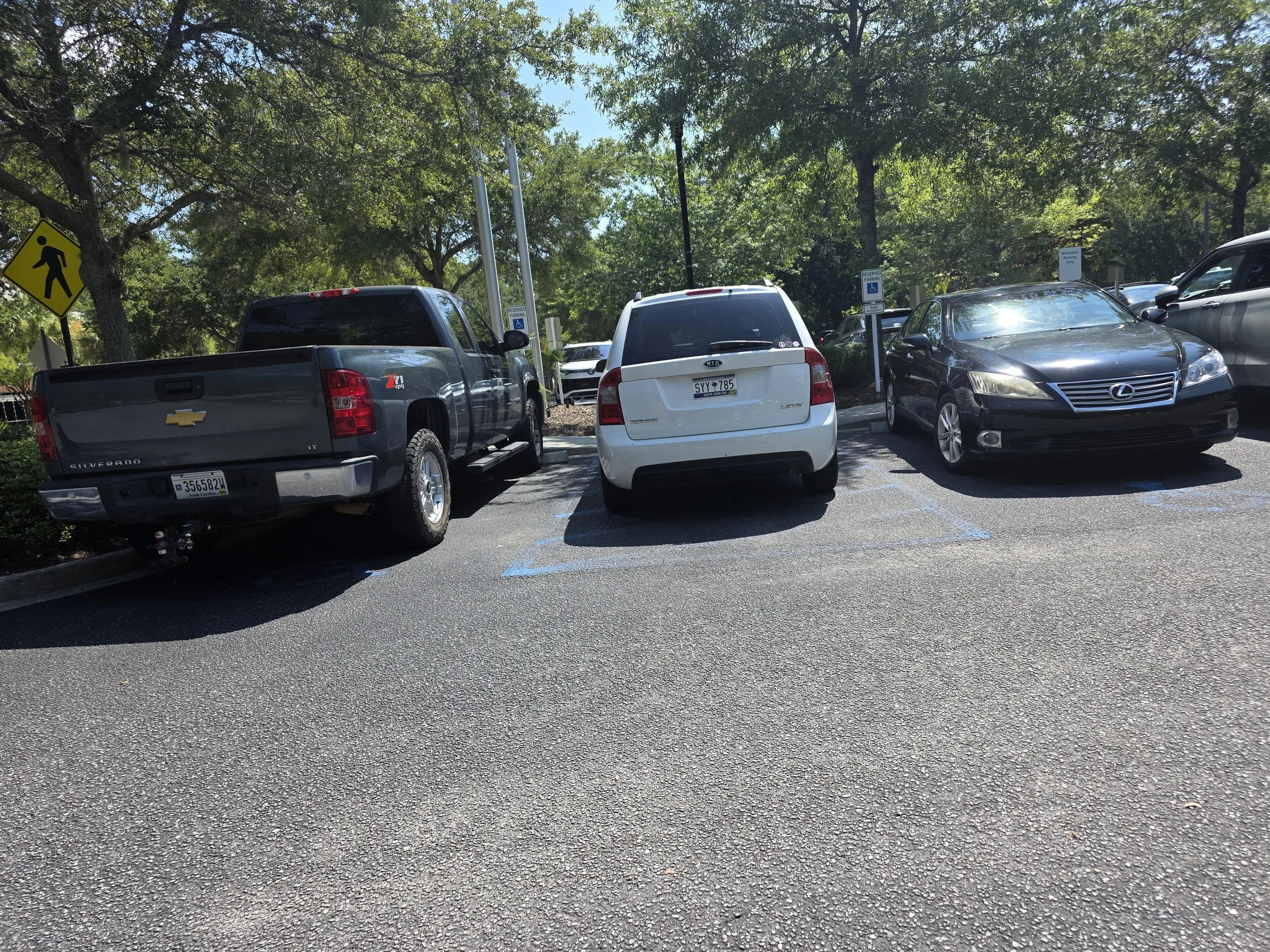
Handicap Parking: It’s Not a Suggestion, It’s a Necessity
This morning I arrived at the hospital to visit my mom. Like many mornings recently, it’s another chapter of balancing life, family, dialysis, and everything else that comes with it.
As I pulled into the parking lot, I started looking for a handicap-accessible parking spot. I have a handicap plate. Not because it’s convenient. Not because I want a closer walk.
I have one because I’m an above-the-knee amputee and I live with ESRD (End Stage Renal Disease). Some days the extra distance isn’t just a few more steps — it’s a lot more energy, more strain, and more effort.
There were no handicap spots available.
Then I noticed something.
Apparently, when the designated spots are full, someone decided the solution was simple: create their own spot.
A spot that wasn’t actually a parking spot.
Maybe they were in a hurry. Maybe they had a reason. Maybe they thought, “I’ll only be a minute.”
But here’s the thing — hospitals are one of the places where accessibility matters the most. People coming through those doors may be dealing with challenges you can see and many you can’t.
The lines, signs, and designated spaces aren’t there for decoration. They exist because someone may be walking on a prosthetic leg. Someone may be recovering from treatment. Someone may be helping a loved one while fighting their own battle.
I don’t expect special treatment. I expect people to think beyond themselves.
A little awareness and consideration go a long way.
Because one day, the spot you think doesn’t matter may be the spot you truly need.