
Touring Assisted Living: I Have Questions—and I’d Like to See the Menu
I’ve been scheduling visits to assisted living facilities for my mother. After two strokes and her current stay in skilled nursing, I want to help her find somewhere she feels comfortable, supported, and happy to live.
There’s a lot to ask about. A nice lobby is lovely, but my mother won’t be living next to the decorative vase by the front door.
I want to know what daily life actually looks like.
Who is available when she needs help, including overnight? How do they support her mobility and help with everyday tasks? How are medications handled? What happens if her needs change?
I also want a clear explanation of the cost. What’s included in the monthly price, and what costs extra? I’d prefer to discover the additional charges before they become a recurring surprise.
I’m also asking about activities, transportation, visitors, and how residents spend their time. Can Mom make choices about her day? Who do I contact with a concern, and how do they communicate with families?
And as I walk around, I want to pay attention to how people interact. Are staff members taking time to listen? Do residents seem comfortable asking for things? I want to picture my mother actually living there.
Then we get to the most important item on my personal tour agenda.
The food.
Yes, I have questions about staffing and care. I also have questions about the chicken.
I’d Like to Schedule a Tasting
My mother says she’s a picky eater.
Her reviews of the food at the hospitals and now the facility support that. The current place was supposed to have good food, according to the Google reviews.
Mom has apparently declined to join the consensus.
Somewhere, a glowing review of a meal is waiting for my mother to discuss with the author.
So I had a thought: people do tastings before weddings. Why wouldn’t I ask to taste the food before helping Mom choose somewhere she’ll eat every day?
A wedding dinner is one meal. This is a much longer commitment to somebody’s mashed potatoes.
As I schedule these visits, I’ve been asking whether they can have food available for me to try—and something I can take back to Mom.
I can look at the room, ask about the services, and review the costs. But I’m not volunteering to approve six months of lunches on her behalf without bringing her a sample.
I have enough responsibilities. Becoming the defendant in Mom v. The Meatloaf does not need to be another one.
Please Don’t Make Anything Special
One place asked whether there was something special they should make.
I appreciate the offer. But I’m not asking for Hell’s Kitchen. Nobody needs to summon Gordon Ramsay or explain the emotional journey behind a carrot.
I told one place: let me know what’s on the menu. If there’s a choice, I’ll choose from that. Please don’t do anything different.
I want the true experience.
If Tuesday lunch is turkey, rice, and green beans, that’s what I want to try. I want to know what Mom can expect on an ordinary day, after the tour is over and the welcome folder has been put away.
A special meal made just for my visit wouldn’t answer that question.
I’m also interested in what happens when she doesn’t like the scheduled meal. Are there alternatives? Can she choose something simple? How much flexibility is there?
Because “she’ll eat it when she gets hungry” is not a dining plan I’m looking to purchase.
Mom Gets a Vote—and a Fork
Plenty about this process feels serious, expensive, and emotionally exhausting. Food gives us something concrete to talk about—and, hopefully, something to laugh about.
It also matters to Mom. She’s told me that clearly, and I’m listening.
She’s already dealing with a lot of change. I want her to have meals she looks forward to, choices she feels good about, and a place at the table where she feels comfortable.
I’m not expecting every dish to become her new favorite. I would, however, like lunch to have a fighting chance.
So I’ll keep scheduling visits, asking questions, and looking closely at what each facility offers.
And I’ll be asking for a sample.
The brochure can tell me about the dining experience. Mom can tell me about the potatoes.
I Brought the Coffee. They Brought the Conversation.
As I’ve shared, my mother has had two strokes in three months. She’s now in a skilled nursing facility, with the goal of getting to assisted living and eventually becoming mobile enough to get to Thailand.
One step at a time. Literally.
Before heading to an afternoon recovery meeting, I stopped by and found her eating lunch in the day and activity room with several other residents.
I brought her Dunkin’ coffee because the world runs on it, and medical facility coffee usually makes me question whether running is still an option.
While I was there, I found myself thinking about my old call center training days.
In a previous life, I would role-play phone calls with my classes. I played the aggressive caller, the caller with an accent, the soft-spoken caller, and the caller who was older than me.
For that last role, I would talk. And talk. And talk. And talk.
I could turn a simple account question into a scenic tour with absolutely no estimated arrival time.
But I did it for a reason. I wanted my classes to understand that a phone call might be about more than whatever appeared on their computer screen. For someone who didn’t get many visitors or have many people to talk to, that call could be a welcome chance to connect.
I wanted them to hear the person, even when the conversation took the long way around.
Today, I was reminded of that lesson.
I met a woman who told me she had lived in Pensacola, Florida. I learned that her favorite burger was from McDonald’s and that the best sweet tea came from Bojangles. And that was just part of the conversation.
I arrived with coffee and left with restaurant recommendations. A productive visit by any reasonable standard.
I don’t know how often she gets visitors. I don’t know whether she had already shared those stories that morning or had been waiting for someone to tell.
I just know she wanted to talk, and I had the chance to listen.
It made me think about how often I can get caught up in the purpose of a visit—the updates, the next steps, the things that need to get done—and forget to leave room for an ordinary conversation.
My mother’s recovery has plenty of goals attached to it right now. Skilled nursing. Assisted living. Mobility. Thailand.
But there’s also today. Lunch in the activity room. A decent cup of coffee. A conversation about burgers and sweet tea.
I’m sharing this as a reminder to myself as much as anyone else: if I have time to scroll through my phone, I probably have time to use it to call someone.
And if there’s someone older in your life, I hope you’ll make that call or stop by for a visit, too.
I don’t need a perfect thing to say. I can bring some coffee, pull up a chair, and listen.
Apparently, I can also plan my next meal.
Hospital Coffee: Apparently It’s Not Just for Drinking
Unfortunately, my mother is back in the hospital. She’s been there since last Sunday, but thankfully, she’s doing a little better every day.
Today I walked into her room and immediately smelled coffee.
Not just coffee—the room smelled like somebody had opened a tiny artisanal café next to her hospital bed.
So naturally, I asked her:
“Did you get coffee?”
“No.”
Okay…
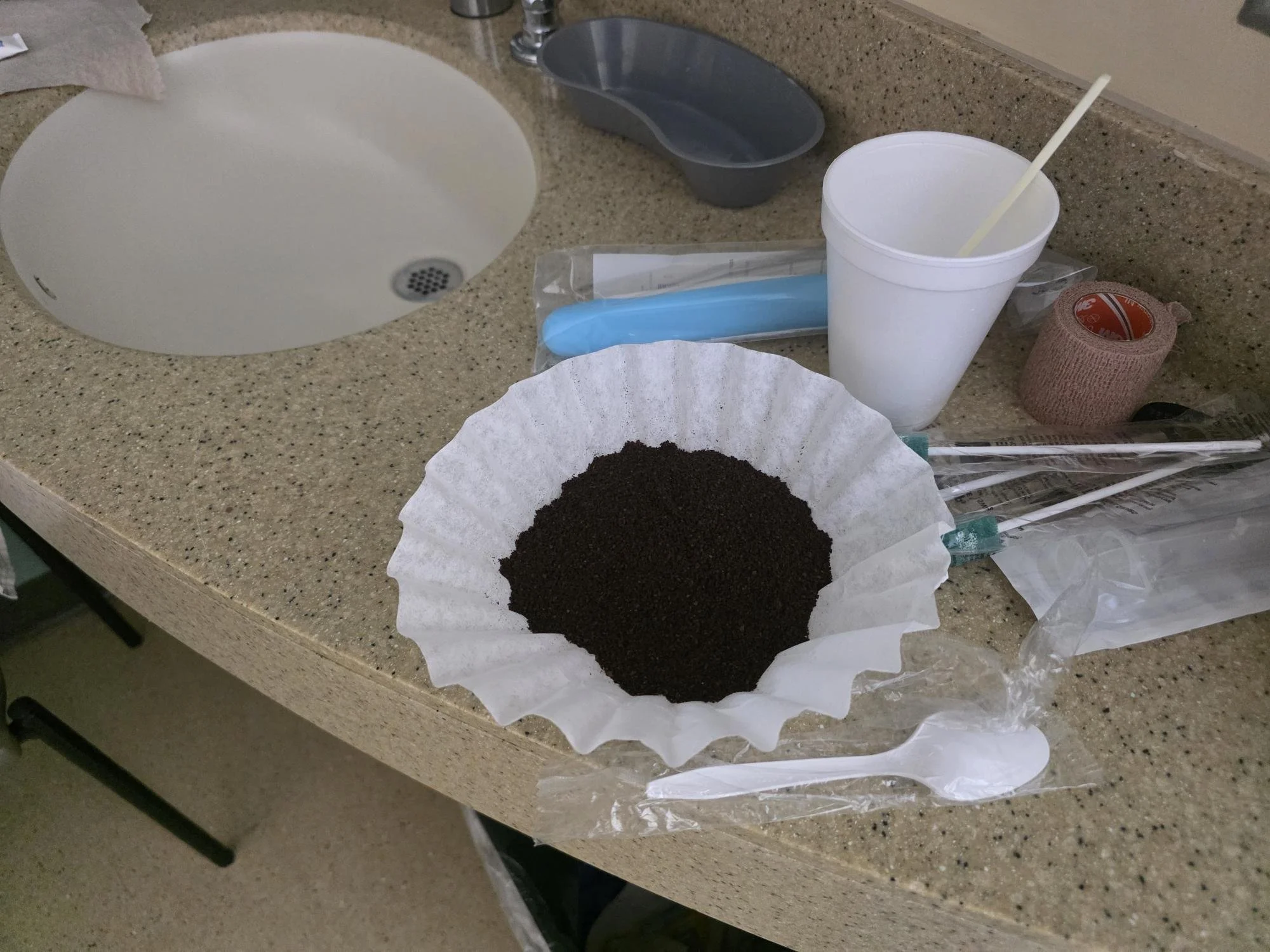
Then I spotted this.
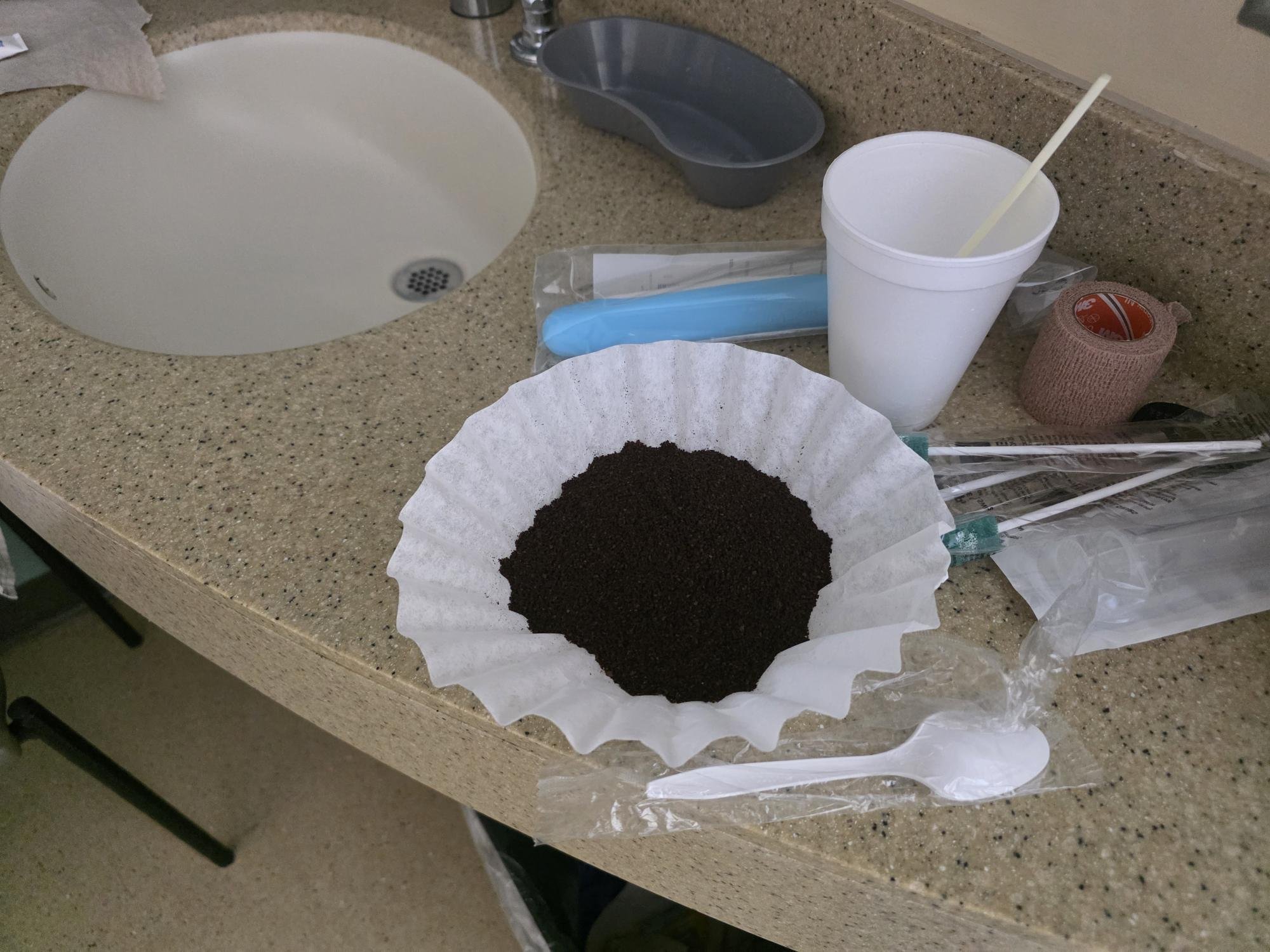
A coffee filter filled with a giant pile of dry ground coffee sitting on the counter.
Apparently, this is hospital-grade Febreze.
And I’ve actually seen hospitals do this before. Instead of spraying a bunch of chemical air fresheners around patients, they use coffee grounds to help fight unpleasant odors.
And considering some of the things that can happen in a hospital room…
that coffee has a very important job.
Forget Starbucks.
This is Stinkbucks.
☕ No espresso machine.
☕ No steamed milk.
☕ No $7 caramel macchiato.
☕ Just a mountain of Folgers standing between you and whatever happened five minutes ago.
And really, hospitals could probably make this even cheaper.
Go to Costco. Buy the biggest, cheapest can of ground coffee available. You don't even need actual coffee filters. Throw some grounds on a couple of paper towels and suddenly:
Room 312 has notes of Colombian roast with subtle undertones of “we're not going to discuss what happened in here.”
It works.
Instead of walking into a hospital room and immediately thinking, “Dear God, what IS that smell?”
I walk in thinking:
“Ooooooh… is there a coffee shop nearby?”
There isn't.
That's just the hospital fighting stink with breakfast.
And now I have a completely different concern:
If I stay here long enough smelling coffee…
someone better bring me a donut. 🍩☕😂
Back Where I Never Wanted to Be
There are places in life you hope you never have to visit again.
For me, the hospital is one of them.
This time, I’m not here as the patient. I’m here as a visitor and caregiver for my mother.
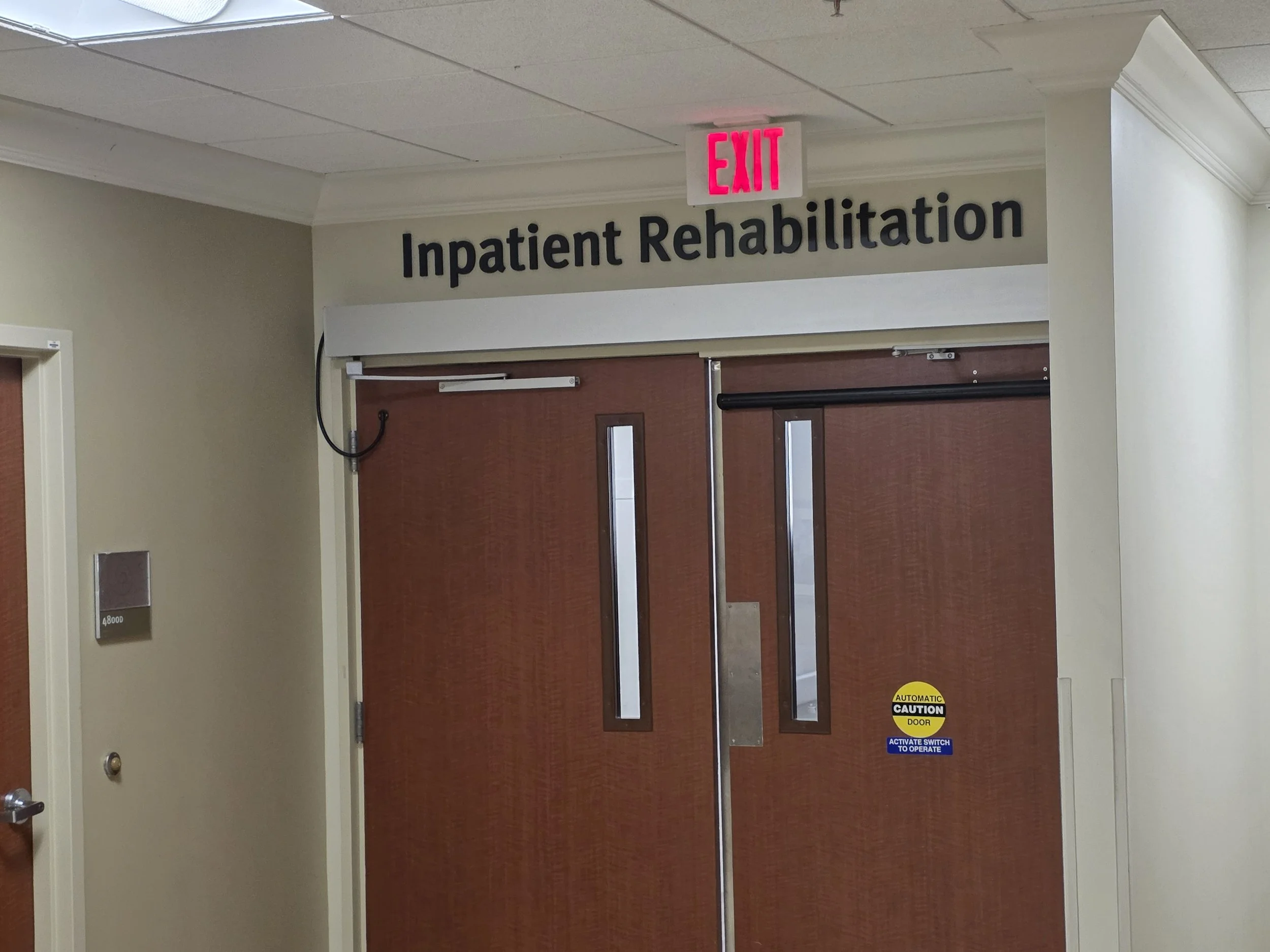
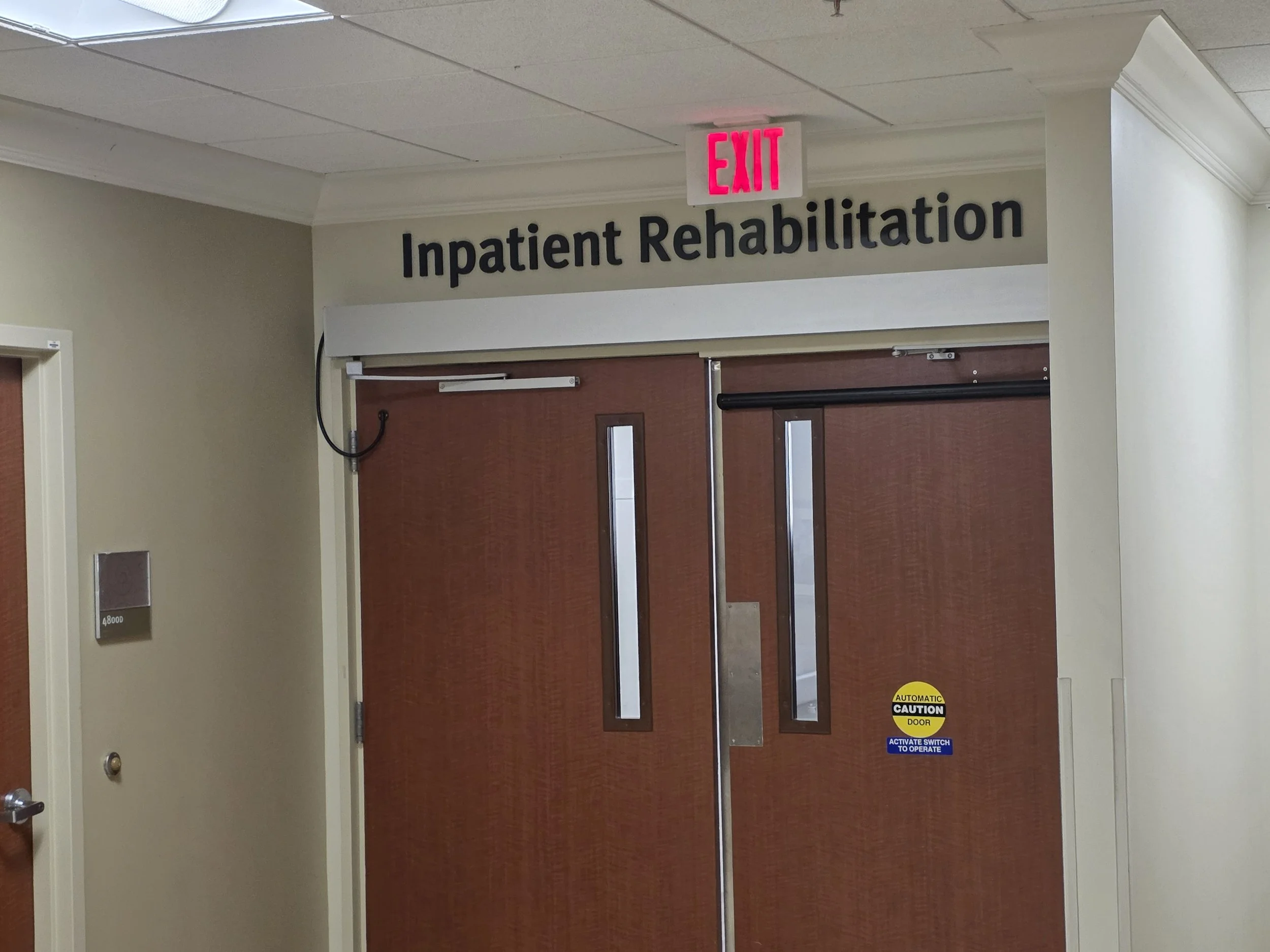
In 2023 and 2024, the hospital became a place I knew far too well. My first extended stay came after a severe allergic reaction to an antibiotic. The second marked the beginning of my End Stage Renal Disease journey. Those experiences changed my life in ways I never imagined.
After each acute hospital stay, I was transferred to a physical rehabilitation unit. One of the most eye-opening lessons I learned was that simply lying in a hospital bed can cost you about 10 percent of your strength each day. It’s amazing how quickly the body can weaken when it’s not moving.
During rehab, the therapists asked me a question I’ll never forget:
“What kind of quality of life do you want to have?”
That question became my motivation.
The first rehabilitation stay lasted about two weeks. The second was about a week. Every exercise, every painful step, every frustrating moment had one goal—to reclaim as much of my independence as possible.
Walking through these same hallways today feels surreal. There are familiar faces everywhere. Several providers have recognized me, which is both heartwarming and a little funny. It’s strange when people remember you not because you were a regular customer, but because they helped you through some of the hardest chapters of your life.
Now the roles have changed.
I’m the one sitting beside the bed.
I’m the one encouraging someone else.
I’m the one helping navigate questions, translating when needed, and trying to bring a little comfort during an uncertain time.
Life has a funny way of bringing us full circle.
As difficult as hospitals can be, they also remind us of something important: healing doesn’t always happen the way we expect. Sometimes we’re the ones receiving the care. Other times, we’re fortunate enough to be the ones giving it.
If there’s one lesson I’ve learned, it’s that difficult seasons don’t last forever. They shape us, strengthen us, and prepare us to help someone else when their turn comes.
So today, I’m choosing gratitude—for the caregivers, for the second chances I’ve been given, and for the opportunity to be there for my mother the same way so many people were there for me.
Tomorrow may bring new challenges, but it also brings new hope. And hope is a powerful medicine.