
Why I Realized I Wasn’t Cut Out for Healthcare
When I started college, I thought I wanted to be a physician.
I was a student at the Sophie B. Davis biomedical program at the City College of New York, part of the City University of New York system, in historic Harlem. It was an accelerated path: five years followed by two years of medical school, instead of the traditional four plus four.
That was the plan. My reasons for pursuing it deserve honesty.
I didn’t want to become a doctor because I felt called to help people. I wasn’t driven to make an impact or cure a disease. I wanted to be wealthy and live comfortably.
That may sound shallow. Looking back, I think it was. But those were my motivations, and pretending otherwise would make this a different story.
There is nothing wrong with wanting financial security. The problem was choosing a profession without thinking enough about whether I wanted to do the actual work.
Recently, watching my mother receive care reinforced how poorly that career would have fit me.
Seeing the Work Up Close
My mother has had two strokes in about two months. She has been in the emergency room, in the ICU, and is now back in a physical rehabilitation unit.
Through all of it, I have watched healthcare workers at every level provide care, comfort, and concern for her.
I think of them as heroes. That word comes from watching their work: attending to someone who needs help, responding to uncertainty, and bringing patience to situations that can be difficult for both patients and families.
I am grateful.
As someone who once planned to enter their profession, I am also very clear: I am not equipped to do what they do.
Knowing What I Couldn’t Give
It isn’t the sight of blood, bodily fluids, or body parts that would get to me. Although I will admit that vomit is something I find disgusting.
What I would struggle with is sustaining focus while providing care. The patience. The compassion. The ability to keep responding thoughtfully when someone needs more and is already tired.
I care about my mother deeply. But caring about someone and being prepared to care for patients throughout a demanding shift require different things.
I don’t believe I have the patience or the capacity to provide that kind of care consistently. That is uncomfortable to admit, especially while watching people give it to someone who means so much to me. I also need to be honest about that.
Patients deserve care from people who can meet those demands. A desire for a comfortable lifestyle would not have prepared me for them.
The Lifestyle I Hadn’t Thought Through
Then there are the hours.
The long shifts, particularly during residency, would have been another major challenge for me. When I think about the time and responsibility involved, the compensation during training hardly resembles the comfortable life I had imagined.
I had focused on the possible financial rewards of becoming a physician without fully considering the years of demanding work required—or whether the daily work would suit me even after training.
My picture of the profession was incomplete.
Watching my mother’s care has made the part I overlooked much harder to miss.
Gratitude and a Clearer Understanding
I am not suggesting that healthcare workers must be selfless every minute or that they shouldn’t want good pay and comfortable lives. They deserve both. I can appreciate their dedication while recognizing how much the work asks of them.
What I understand now is that my reasons for wanting to become a physician would not have been enough.
There is value in recognizing that a profession does not fit you, even one you once imagined as your future. I can respect this work deeply and acknowledge that I would have struggled to do it well.
To everyone who has cared for my mother—in the emergency room, the ICU, and rehabilitation—thank you for the care, comfort, and concern you have shown her.
Years ago, I imagined what being a physician might give me. Watching you, I see much more clearly what the work would have required of me.
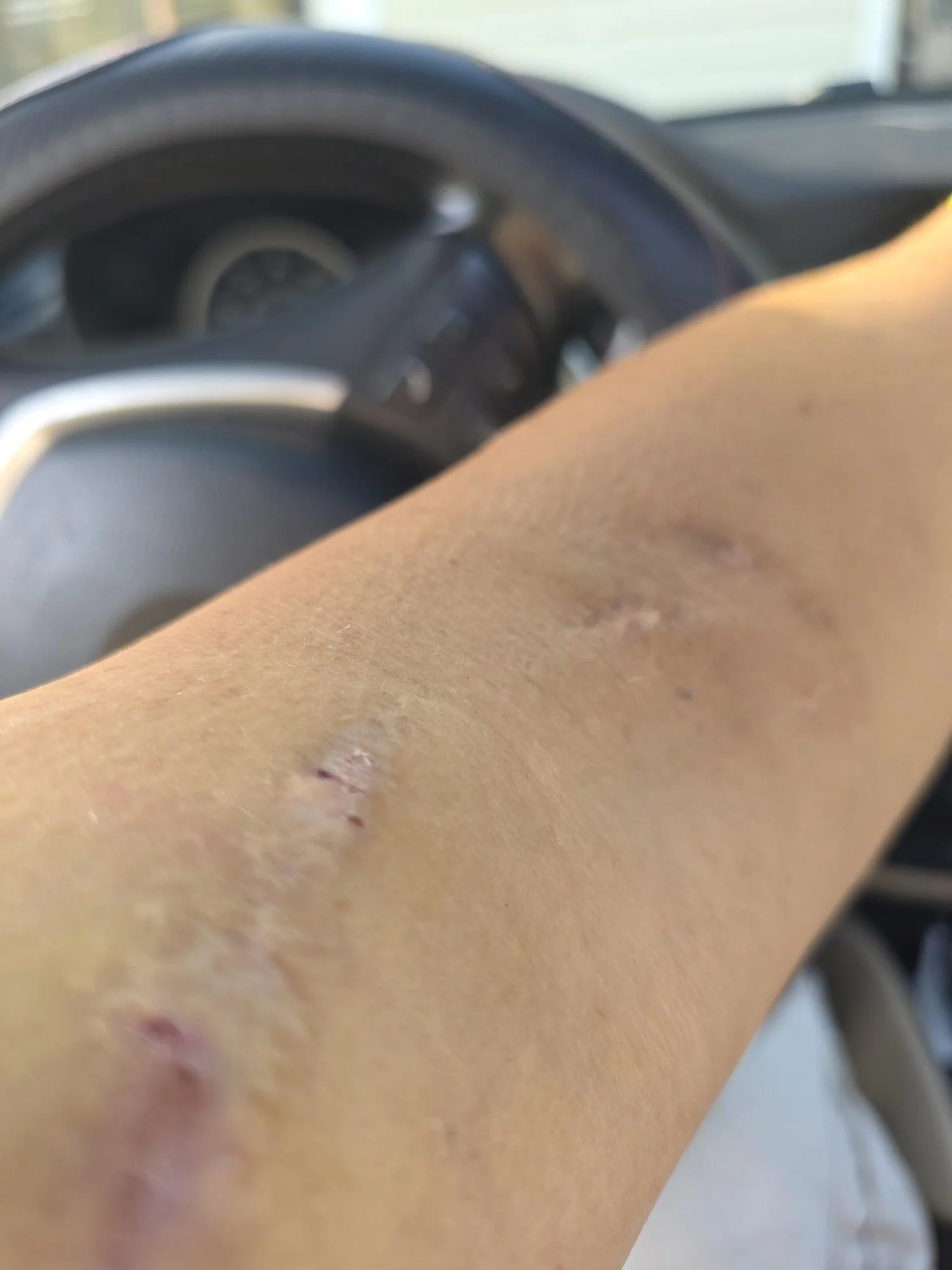
Fistulagram #4: The Balloon Ride Nobody Asks For
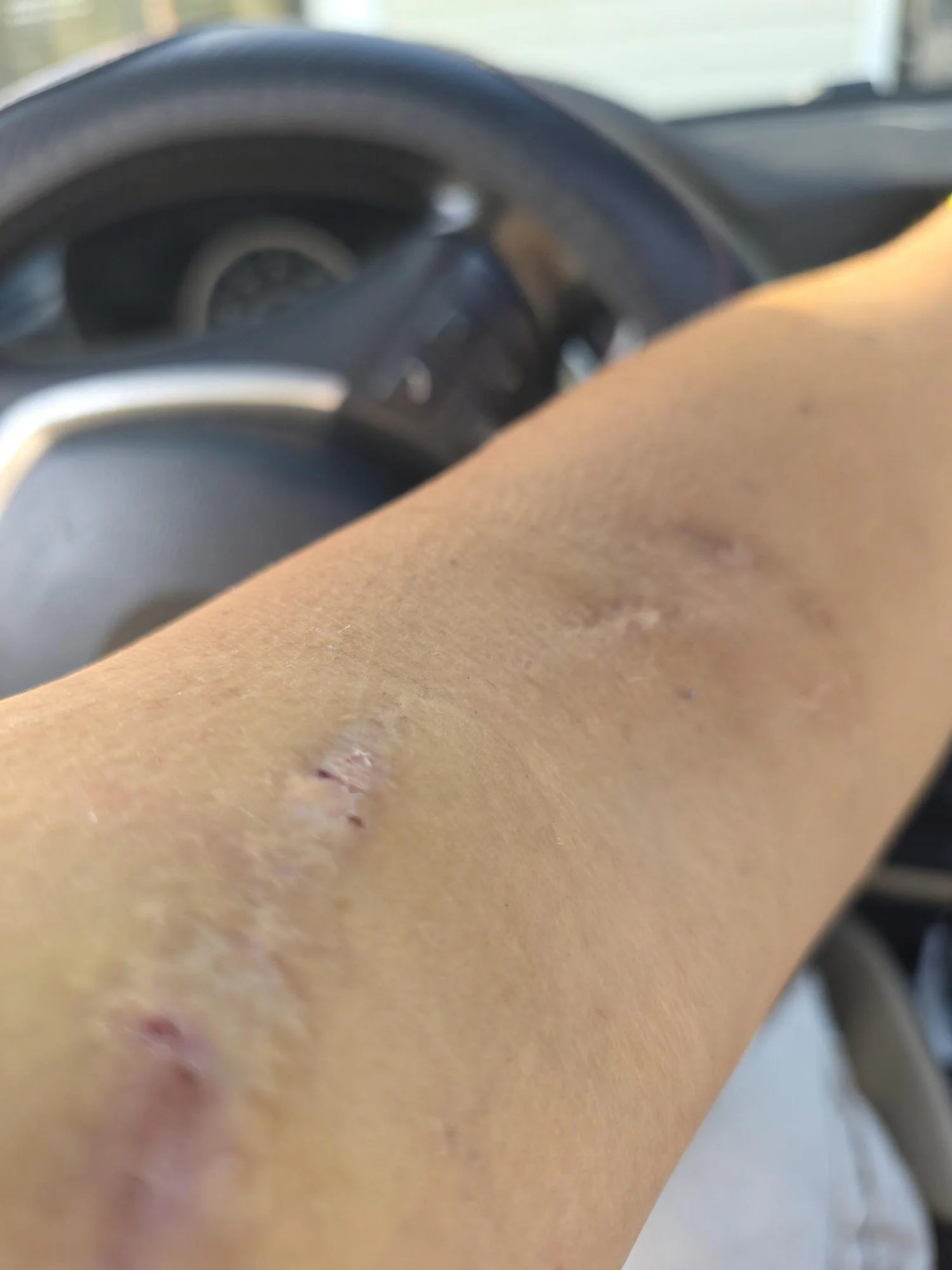
Tomorrow morning, Tuesday, September 8th, I get to experience something that has become a recurring event in my dialysis journey:
Fistulagram #4.
If you’ve never heard of a fistulagram, you’re not alone. It’s a procedure where a doctor injects contrast dye into your dialysis access (my AV graft), takes X-ray images to see how blood is flowing, and if they find a narrowing, they inflate a tiny balloon inside the blood vessel to open it back up.
Think of it as calling Roto-Rooter… but for your bloodstream.
The goal is simple: improve blood flow so dialysis can do a better job cleaning my blood three times a week.
Now here’s the part that usually gets people’s attention…
I don’t use anesthesia.
I don’t take pain medication.
Why?
Because I want to drive myself home afterward and get on with my day.
That doesn’t mean you don’t feel anything.
When they inflate that balloon…
Oh, I know it’s there.
You can actually feel the pressure as it expands inside your arm. It’s one of the strangest sensations I’ve ever experienced. It isn’t unbearable, but it’s definitely one of those moments where you think:
“Yep… that’s happening inside my arm.”
My instructions are the usual pre-procedure fun:
🚫 No food after midnight.
🚫 No drinking after midnight.
⏰ Arrive at the hospital at 6:30 AM for a 7:30 AM procedure.
🩺 About 30 minutes for the procedure itself.
⏳ Another 30 minutes getting prepped and recovering before heading home.
And yes…
If I accidentally eat after midnight…
I’ll turn into a Gremlin.
(Okay, maybe not medically accurate… but it makes following the instructions a little more entertaining.)
Hopefully this will improve the flow through my graft and make dialysis treatments run more efficiently.
I’ll let everyone know tomorrow how Fistulagram #4 goes. Hopefully the balloon and I will continue our strange little friendship… and hopefully it’ll be a while before we’re reunited again.
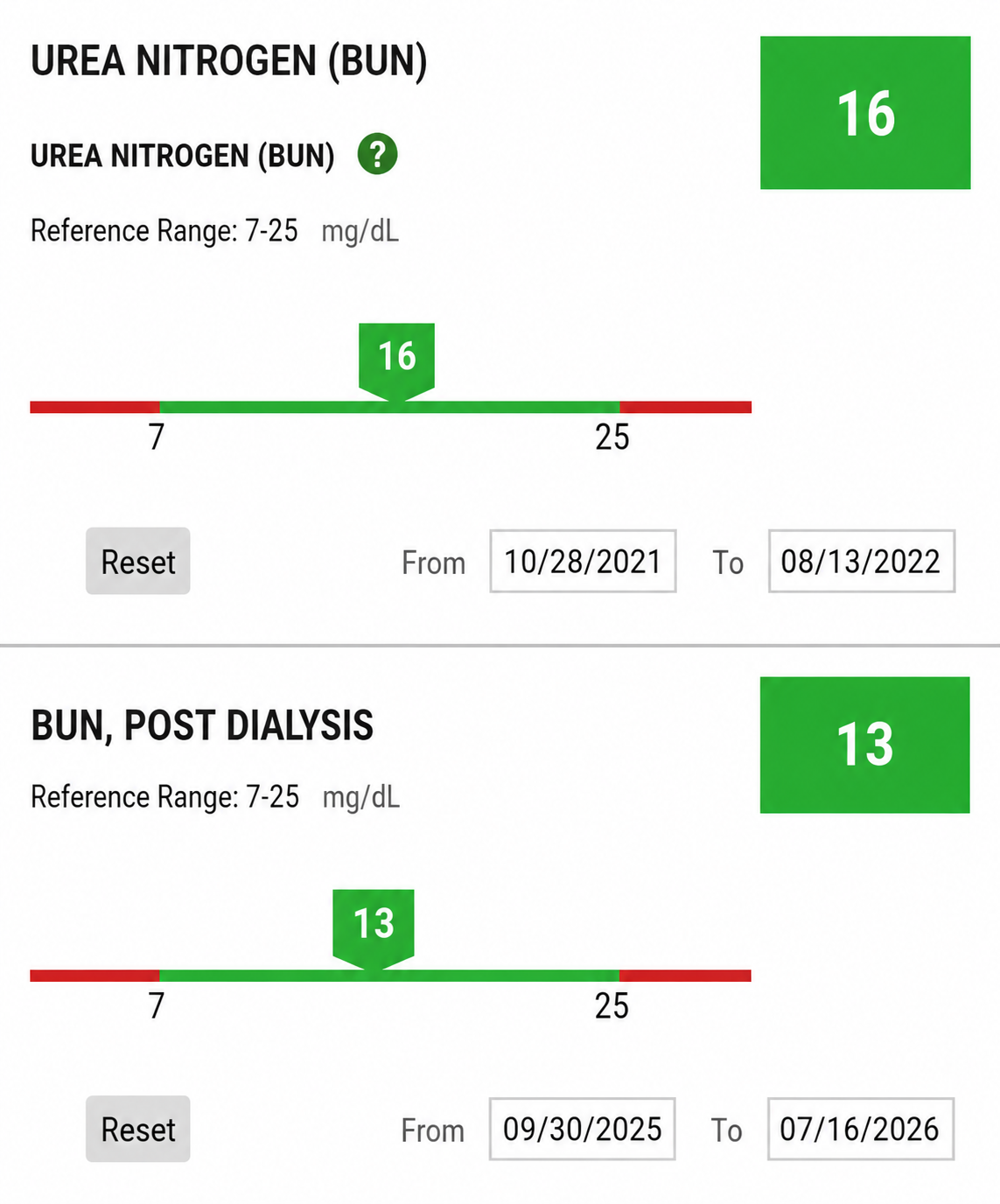
Remember This Infographic About My Last Labs?
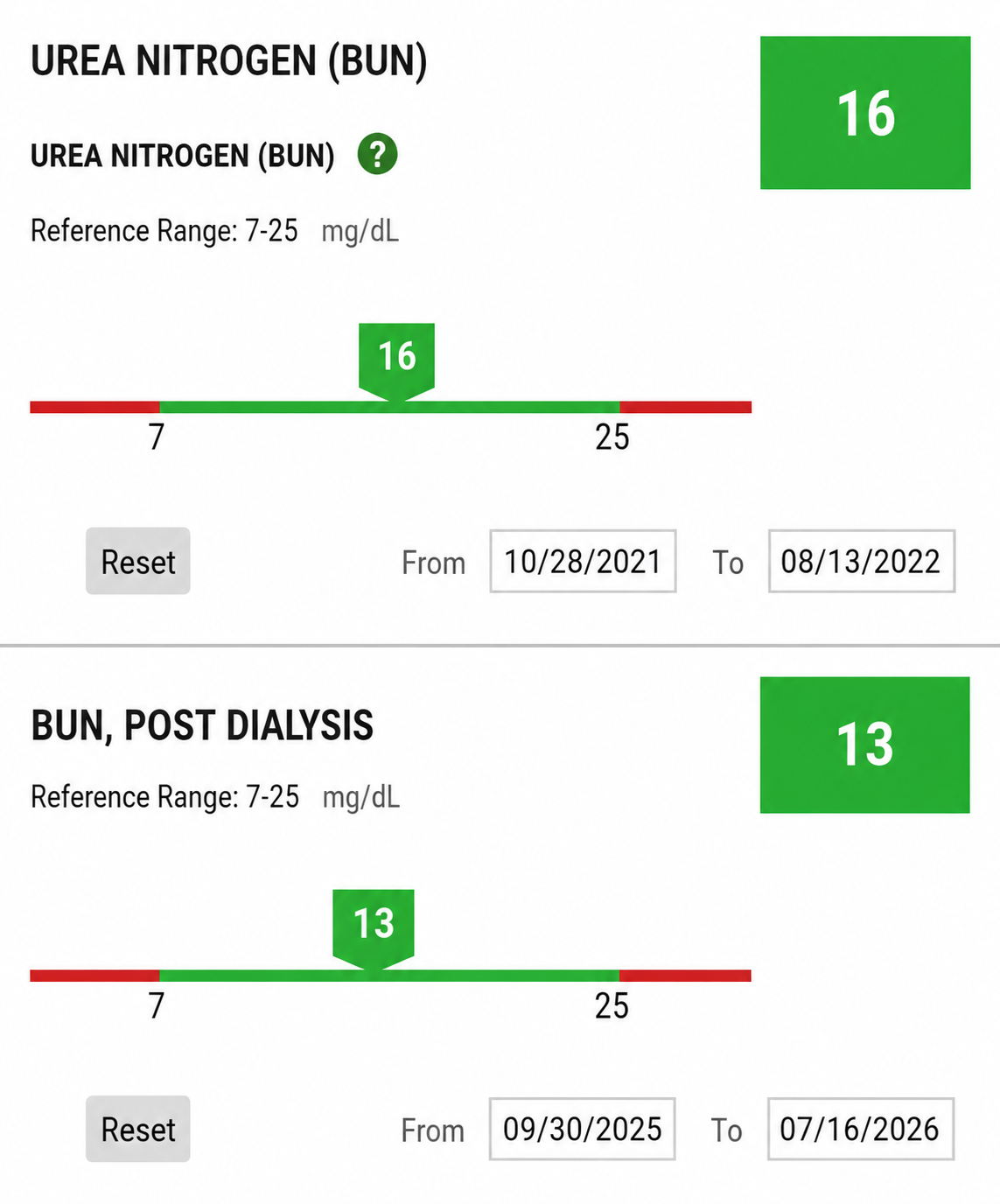
Remember the infographic I shared about my latest dialysis lab results? I was excited because my pre-dialysis BUN had fallen into the normal range for the first time since I started tracking it in October 2025.
On Mondays, either my nephrologist or a Physician Assistant from the nephrology practice stops by the dialysis clinic to check in on patients. I had a feeling the conversation I had with Clark was coming.
He reviewed my labs—not just the BUN, but the entire panel—and simply said:
"We're going to run them again."
As encouraging as the BUN result was, a few other values were out of whack. My phosphorus was very, very low, along with a couple of other numbers that deserved another look.
By the time Clark reviewed everything, I was already well into my dialysis treatment. That meant it was too late to draw a true pre-dialysis sample and then compare it with a post-dialysis sample.
So, we may repeat the labs on Wednesday to see whether last week's results were an anomaly or the beginning of a new trend.
I'm as curious as you are.
Stay tuned!
Join the discussion on NielFlamm.com.
Monthly Dialysis Labs: A Surprising Number I Haven't Seen Since 2025
Every month during dialysis, I have a full set of lab work done. The nice part? No extra needle stick. The blood is drawn directly through the dialysis tubing while I'm already connected.
The monthly labs help monitor many aspects of living with End Stage Renal Disease (ESRD), including:
Potassium – helps reduce the risk of dangerous heart rhythm problems.
Creatinine – shows how well my kidneys are filtering waste.
Phosphorus – high levels can pull calcium from the bones, while levels that are too low can affect oxygen delivery to muscles and lead to weakness.
Iron
Hemoglobin
Sodium
Chloride
Carbon Dioxide
Total Serum Protein
Albumin
Magnesium
Platelet Count
White Blood Cell Count
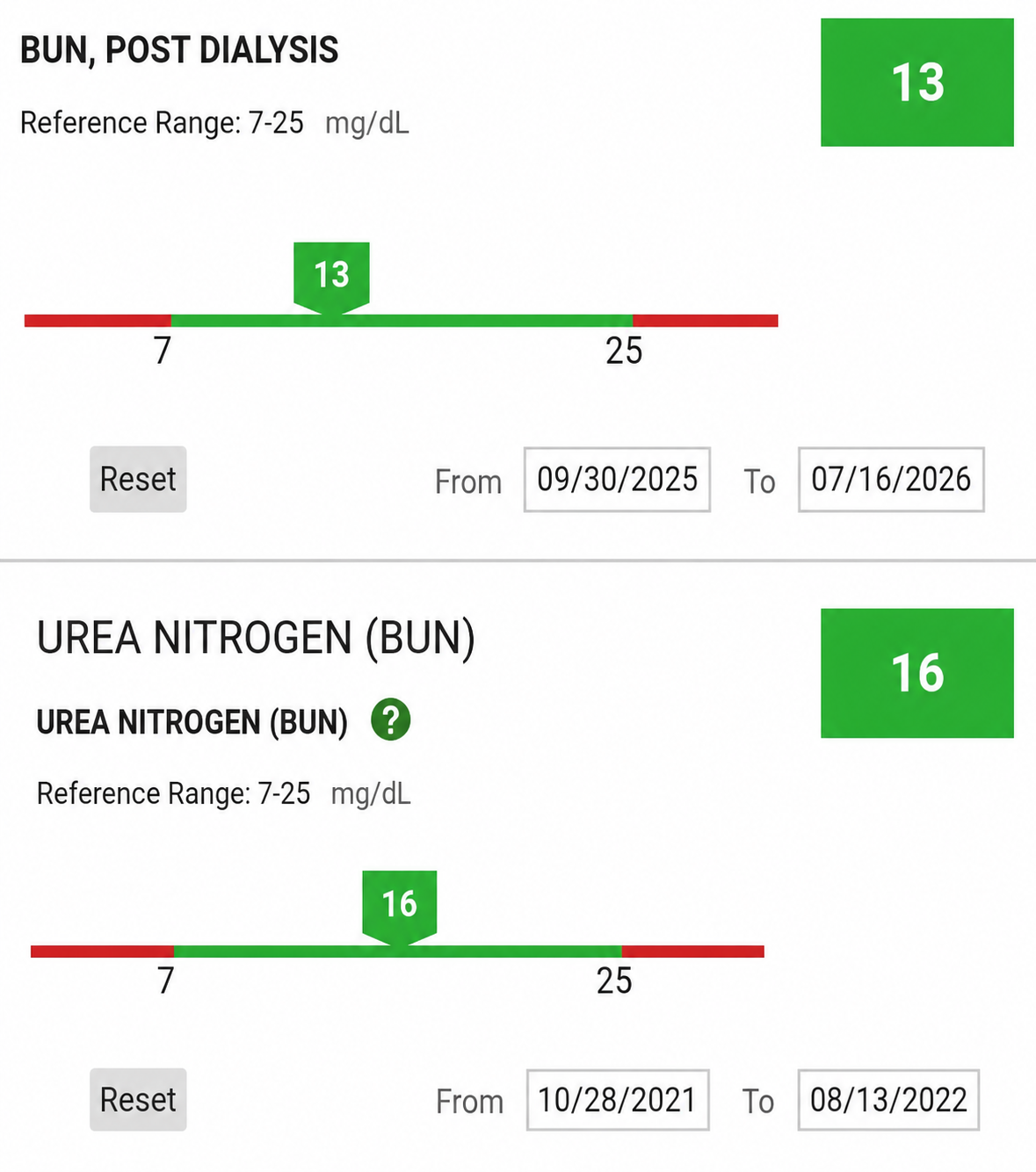
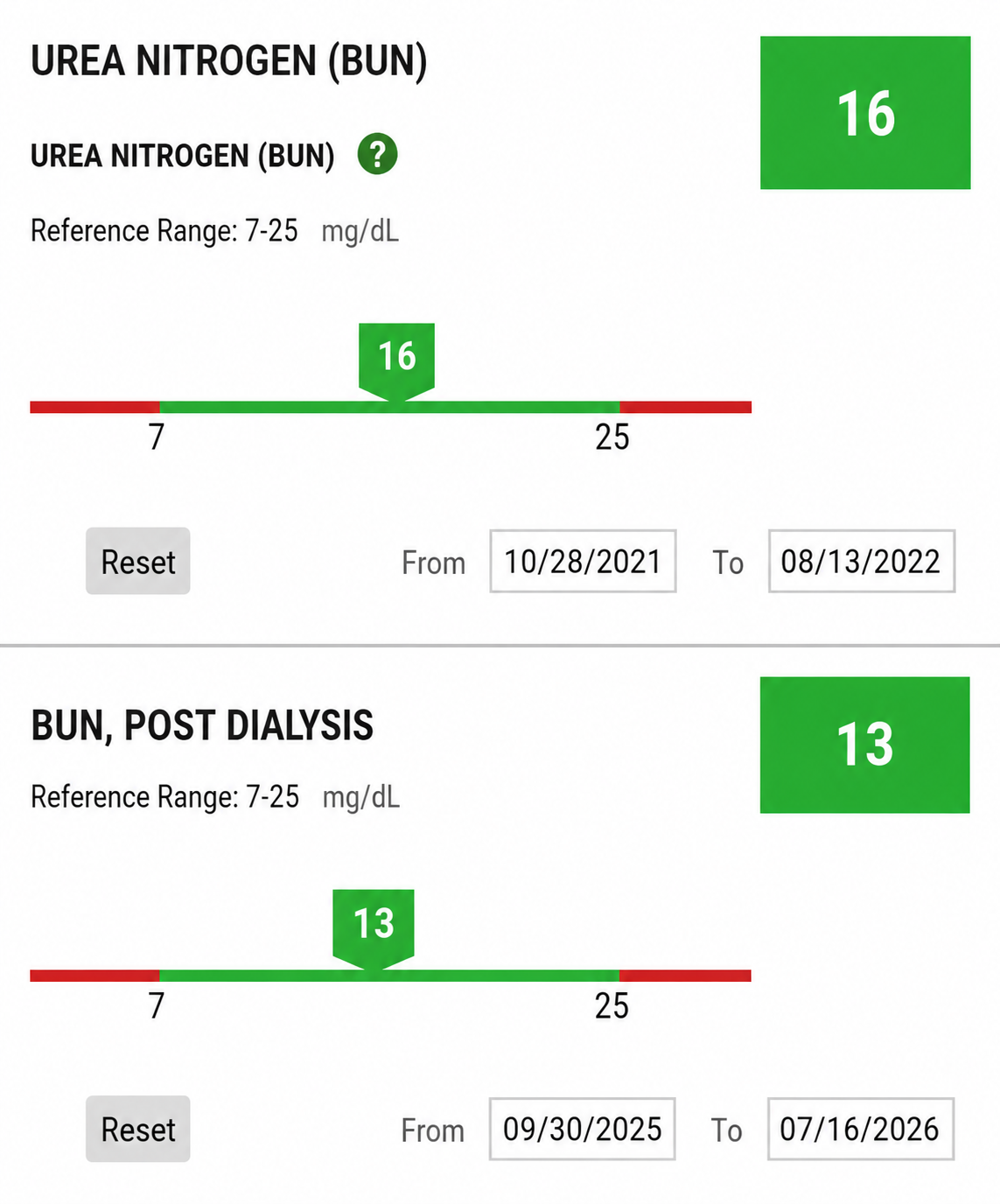
The number I paid the closest attention to this month was BUN (Blood Urea Nitrogen).
Here's the simple version. When we eat protein, our bodies break it down, producing ammonia, which is toxic. The liver converts that ammonia into urea. Urea travels through the bloodstream to the kidneys, where healthy kidneys filter it into urine.
With ESRD, that process doesn't work very well, so BUN levels can rise because waste isn't being removed efficiently.
During dialysis, my care team measures BUN before treatment and after treatment to see how effectively the dialysis removes that waste.
When I reviewed my results on Saturday, July 18, something caught my attention.
For the first time, when my monthly labs were tracked starting in October 2025, my pre-dialysis BUN was in the normal (green) range.
Even more interesting, my post-dialysis BUN wasn't dramatically lower. Normally, I'd expect to see a much bigger drop after treatment.
So now I'm left with a few questions:
Are my kidneys somehow recovering a little?
Was this simply an unusually good month?
Did my diet or hydration affect the result?
Or was it just one of those lab quirks that occasionally happens?
The answer is... I don't know.
One lab result doesn't establish a trend, especially with ESRD. But after months of watching these numbers, seeing that green result definitely made me stop and smile.
I'll be watching closely next month to see whether this was the beginning of a trend or simply a one-time surprise.
Either way, I'll keep sharing the journey.
Nextdoor, Pharma, and the Lowest-Hanging Fruit
I came across a pharmaceutical marketing benchmark survey that mentions Nextdoor as part of the media landscape.
One thing stood out to me: Nextdoor didn't even lead the study. It was simply referenced as another channel.
And, by the way, this is now Day #3 since I requested the complete insurance study from Jacob Chavis. Still no report. Still no acknowledgment. At this point, I'm not surprised.
Back to the survey.
My first reaction was that this feels like picking the lowest-hanging fruit.
A census tells us where populations are aging. Local demographic data shows where seniors live. It's hardly groundbreaking to conclude that neighborhoods with older residents will have greater demand for medications that improve quality of life.
Any competent regional pharmaceutical sales team already knows which physicians are prescribing what, which pharmacies are dispensing it, and where the opportunities exist. Compensation plans, quotas, bonuses, and territory strategies have relied on those metrics for years.
And if AI is truly the revolutionary force that Nextdoor leadership frequently promotes, why not simply overlay prescribing trends, demographic data, and ZIP code maps? The opportunities would become obvious without another marketing survey.
My larger concern is perception.
After watching the outstanding miniseries Dopesick, which explored the devastating impact of Purdue Pharma, OxyContin, and the Sackler family's pursuit of profit, I find it disappointing to see neighborhood platforms associated with pharmaceutical marketing studies without acknowledging the broader societal consequences that can accompany profit-driven healthcare initiatives.
Healthcare is essential. Medications save lives.
But when marketing becomes the primary focus without equal discussion of responsibility, history reminds us that communities can pay a heavy price.
In other news, NXDR is up today, but so is much of the broader market. I'm still watching to see whether the recent momentum holds or whether the bottom eventually falls out.
These are my personal opinions and observations and should not be interpreted as investment or medical advice.