
Day 94: LinkedIn Thinks I Should Meet Nextdoor’s Head of People. I Agree.
Sometimes an algorithm has impeccable timing.
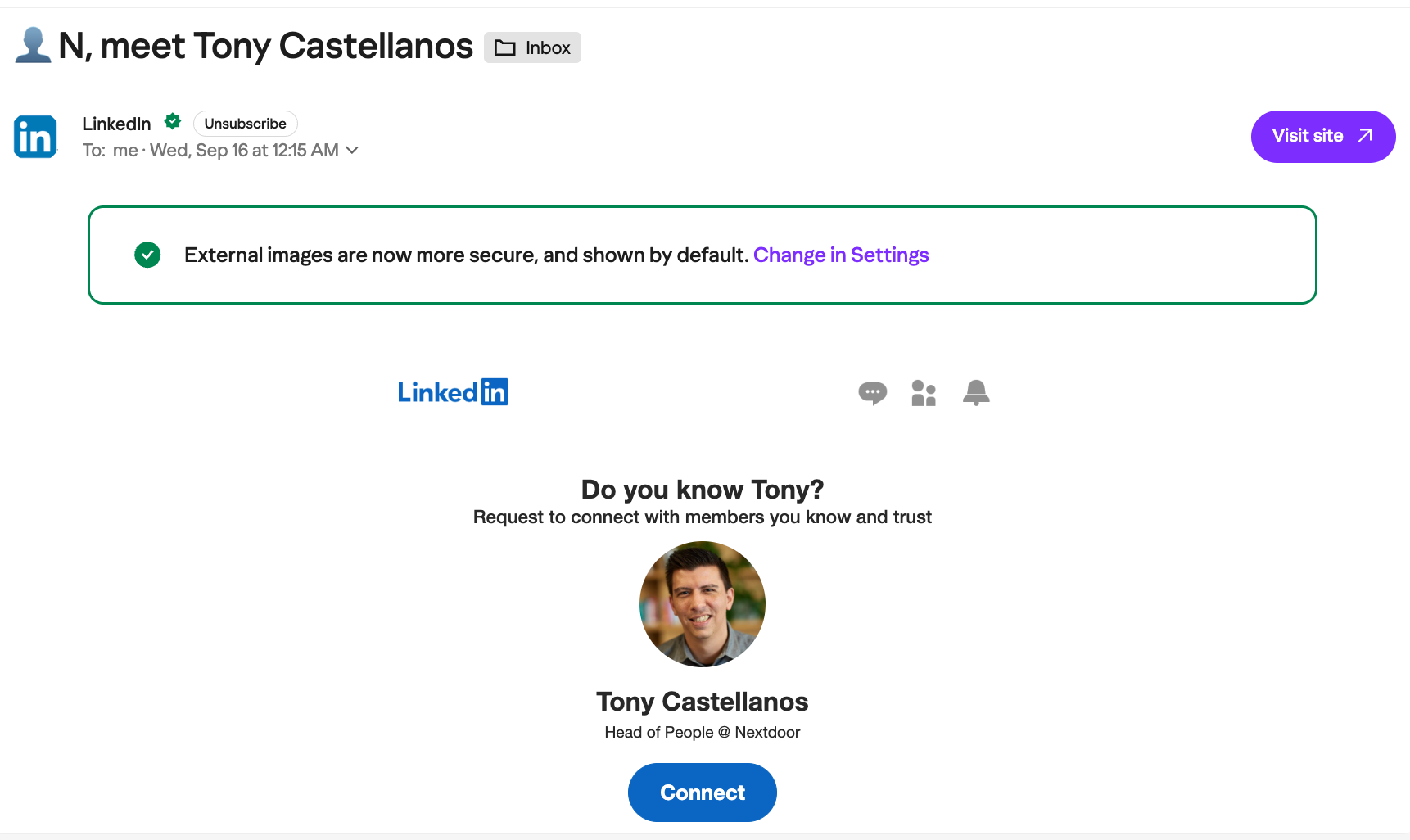
At 12:15 this morning, I received an email from LinkedIn with the subject line:
“N, meet Tony Castellanos.”
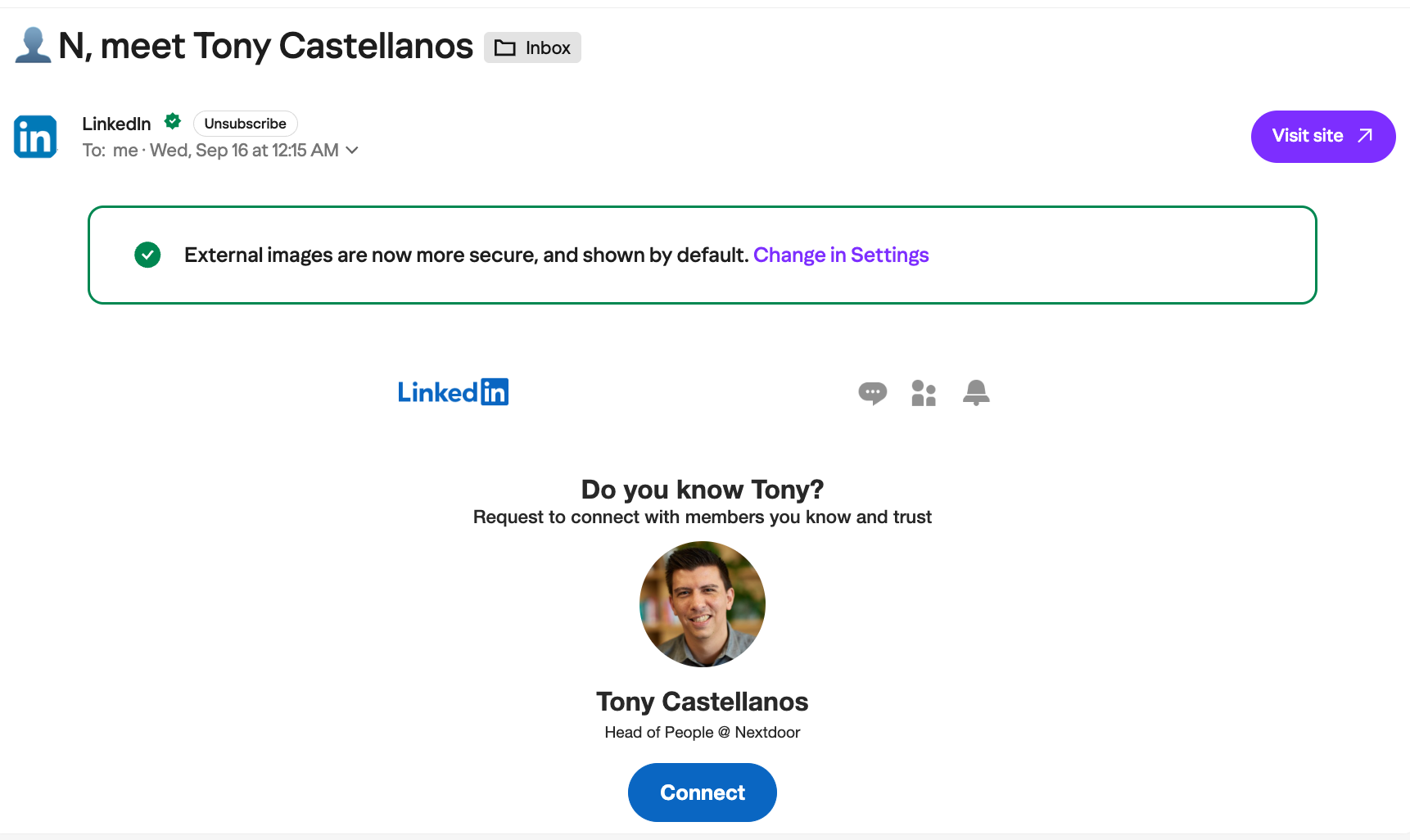
LinkedIn asked:
“Do you know Tony?”
Well, LinkedIn, not exactly.
But after 94 days, I would absolutely love to get to know him.
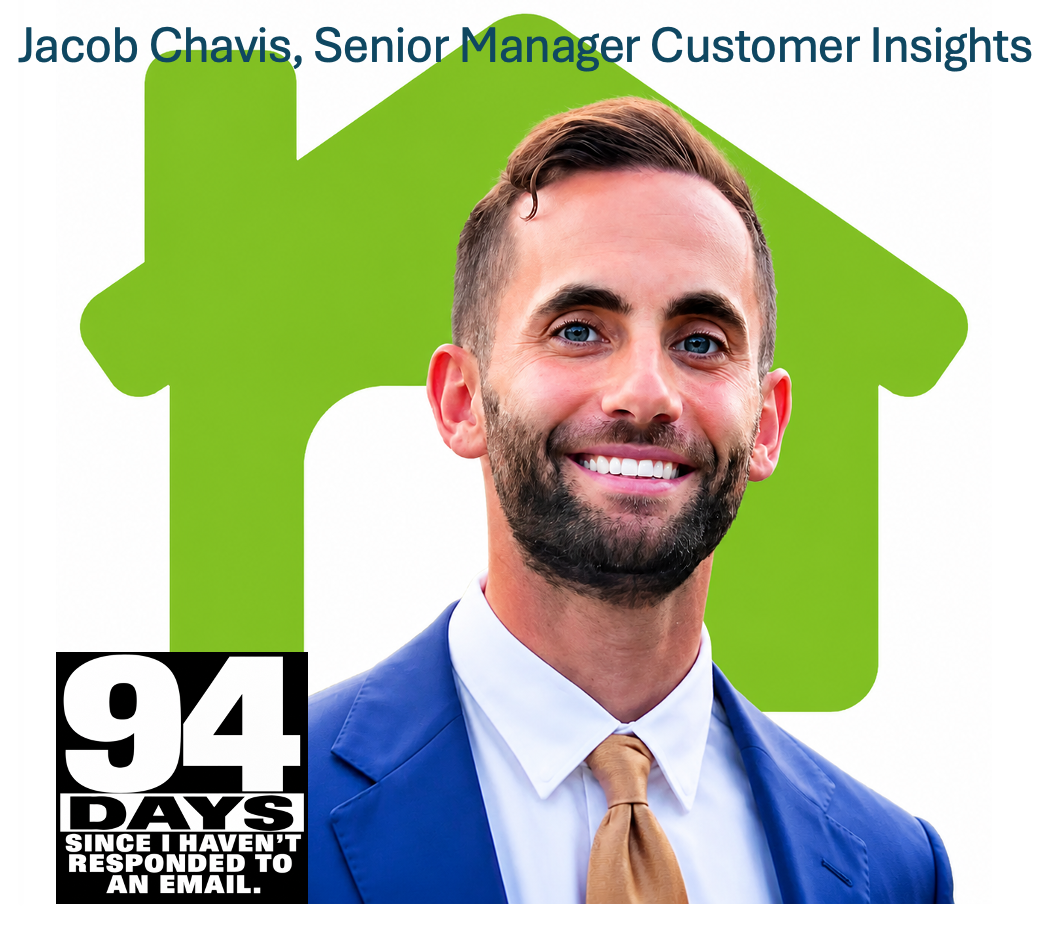
Tony Castellanos is Nextdoor’s Executive Vice President, People. Nextdoor promoted him to that position in March, giving him responsibility for its People organization, including talent acquisition, compensation, HR business partnering, and benefits. Nextdoor also describes the People function under his leadership as a strategic advisory organization that partners with senior leaders on important talent and organizational decisions. Nextdoor
So LinkedIn, your recommendation got me thinking.
Tony, Want to Have a Virtual Coffee?
I've tagged Tony a few times during this ongoing Nextdoor case study.
I may have even included him on an email or two. After 94 days, the distribution list has gotten a little crowded.
But this isn't about blaming Tony for my unanswered request.
He's not running Nextdoor Insights.
He didn't publish the Home Insurance research.
He's not responsible for sending me the data.
And I wouldn't expect the Head of People to suddenly open a spreadsheet and say:
“Niel, good news. I found your missing insurance study!”
That's not his job.
But the email made me think about something bigger.
What Does the Head of People Think?
My original request remains remarkably simple.
Nextdoor published an Insights article telling readers that they could reach out for detailed data, additional audience segments, and strategic recommendations.
I reached out.
And today is Day 94.
So I'd genuinely be interested in Tony's perspective—not necessarily on where the spreadsheet is, but on what happens organizationally when something like this continues for more than three months.
What does Nextdoor's Head of People think when a shareholder responds to a publicly advertised invitation for information and, 94 days later, still hasn't received the requested material or a definitive explanation that it isn't available?
Does he see a communication problem?
A process problem?
An ownership problem?
An escalation problem?
A training problem?
Or does he look at the situation and think Nextdoor has handled it appropriately?
I'd actually like to know.
And Then There’s Risk
This is where the People perspective becomes especially interesting.
I'm not suggesting that Tony is Nextdoor's chief risk officer, general counsel, or head of investor relations. He's not.
But senior People leaders often have a broad view of organizational behavior, leadership practices, and how internal decisions can affect employees and the business.
Nextdoor itself says Tony's People organization is designed to operate as a strategic advisor to the business. Nextdoor
So from that perspective, I'd be curious about his thoughts on organizational risk.
Not because I am declaring that Nextdoor has created some specific legal liability. That's a different question for lawyers.
I'm talking about something much more basic.
What happens when a small problem is allowed to become a 94-day problem?
The original request could have been resolved with a few sentences:
Yes, here's the data.
No, we can't provide it.
It's restricted, and here are the requirements.
That language in the article was incorrect.
Someone else handles these requests.
Any one of those would have provided closure.
Instead, we're on Day 94.
This Is Becoming a Case Study in Organizational Behavior
That's one of the reasons I've remained fascinated by this.
The longer it goes, the less interesting the actual research data becomes.
The organizational response becomes the story.
Who owns the question?
Who notices when something falls through the cracks?
Who has the authority to resolve it?
When does somebody say, “Why are we still dealing with this?”
How does feedback move through the organization?
Does escalation produce resolution—or another layer of silence?
Those are People questions.
They're also leadership questions.
And they're exactly the kinds of questions that fascinate me after more than two decades working in Learning & Development.
Sometimes what looks like a knowledge problem is really a performance problem.
Sometimes what looks like a communication problem is really an ownership problem.
And sometimes an issue survives for 94 days because nobody has decided it's their job to end it.
Tony Has Talked About Human Judgment
There's another reason LinkedIn's recommendation made me smile.
Nextdoor has recently highlighted Tony's work bringing AI into its People organization. The company says the goal is to use technology for transactional work while letting people spend more time on work that requires human judgment. Nextdoor
I actually like that philosophy.
And this seems like a pretty good opportunity for some human judgment.
Forget AI.
Forget another automated workflow.
Forget another corporate process.
A human being could probably resolve this.
Maybe over coffee.
So Yes, LinkedIn. I’d Like to Meet Tony.
LinkedIn apparently thinks Tony Castellanos and I should know each other.
I'm willing.
Tony, if you happen to see this, the invitation is sincere.
Phone.
Video.
Virtual coffee.
I'll even buy my own coffee.
I don't expect you to personally produce the Insights data. I'd simply be fascinated to hear how someone responsible for Nextdoor's People organization views what has now become a 94-day customer/shareholder communication journey.
What worked?
What didn't?
Where should ownership have existed?
What organizational risks can emerge when relatively simple questions remain unresolved?
And perhaps most importantly:
How would you prevent Day 94 from becoming Day 100?
Because tomorrow, unless something changes, there will be a Day 95.
Thanks for the introduction, LinkedIn.
Tony, the coffee invitation is open.
Follow the continuing case study at NielFlamm.com/blog.