

A Bittersweet Trip to the Eye Doctor

I’m sitting at the eye doctor’s office today—not for myself, but for my dad. He has a regularly scheduled appointment to help manage the macular degeneration in both eyes.
I drove him in his car. He can’t get into mine, a BMW X6, so he bought a Chevrolet Blazer. I’m happy to take him. He’s driven me to plenty of appointments over the years.
But today feels bittersweet.
Dad got ready on his own. He got dressed, made it down the stairs, climbed into the car, buckled his seat belt, got out at the office, and walked inside. It was good to see him manage something important to him.
And it left me thinking about what else seems important. Seeing the TV and scrolling on his phone appear to matter. But he hasn’t seen his wife since around the end of August.
He made one attempt. I didn’t take him, and I own that. But there hasn’t been another attempt since. He says he’s in too much pain to go.
Today, he made it to this appointment.
I’m not saying his pain isn’t real. I’m sitting with the contradiction, and with the sadness of watching him make the effort for one thing while the distance from his wife continues. I can’t make that choice for him.
What I Can See, What I Can’t Control
I’ve written before about the struggle with my mother and her second stroke, about setting boundaries with my father, and most recently about the way his home is becoming more cluttered. I want to share what I’ve been noticing—and what I’m learning to do with it.
I’m an alcoholic in recovery. I’ve been sober for 17 years. I believe I’ve always had an addictive mind. Alcohol was my main way of dealing with life—or avoiding it—but food, television, and other things could take hold, too. At one point, I weighed at least 350 pounds. I say “at least” because that’s where the scale stopped.
I understand that alcoholism is a disease, and that genetics can play a part. We inherit genes from both parents. But recovery has also taught me not to point fingers or label someone else. Only a person can identify their own addiction. I can speak about my experience and notice similarities, but I can’t diagnose my father.
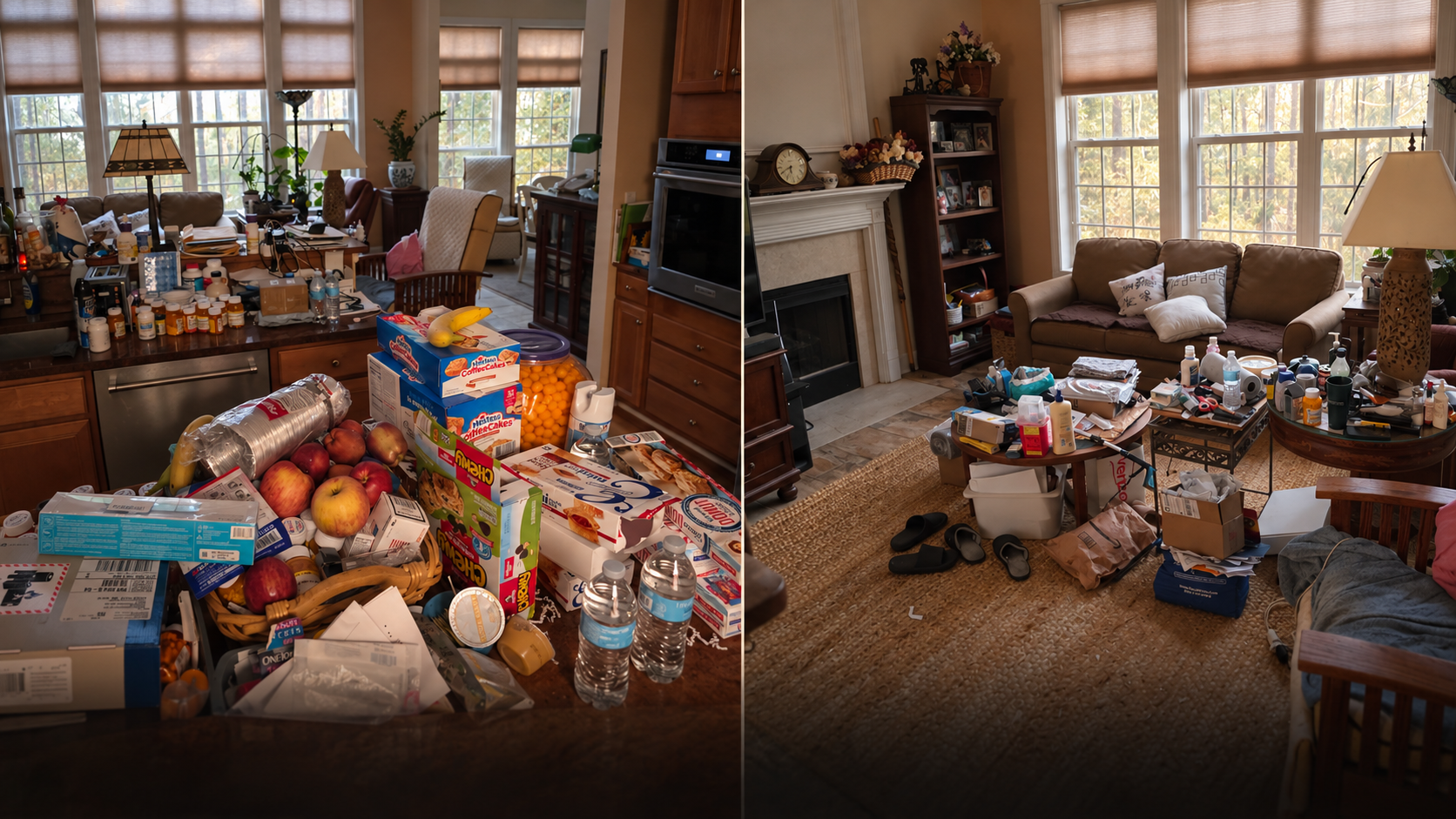
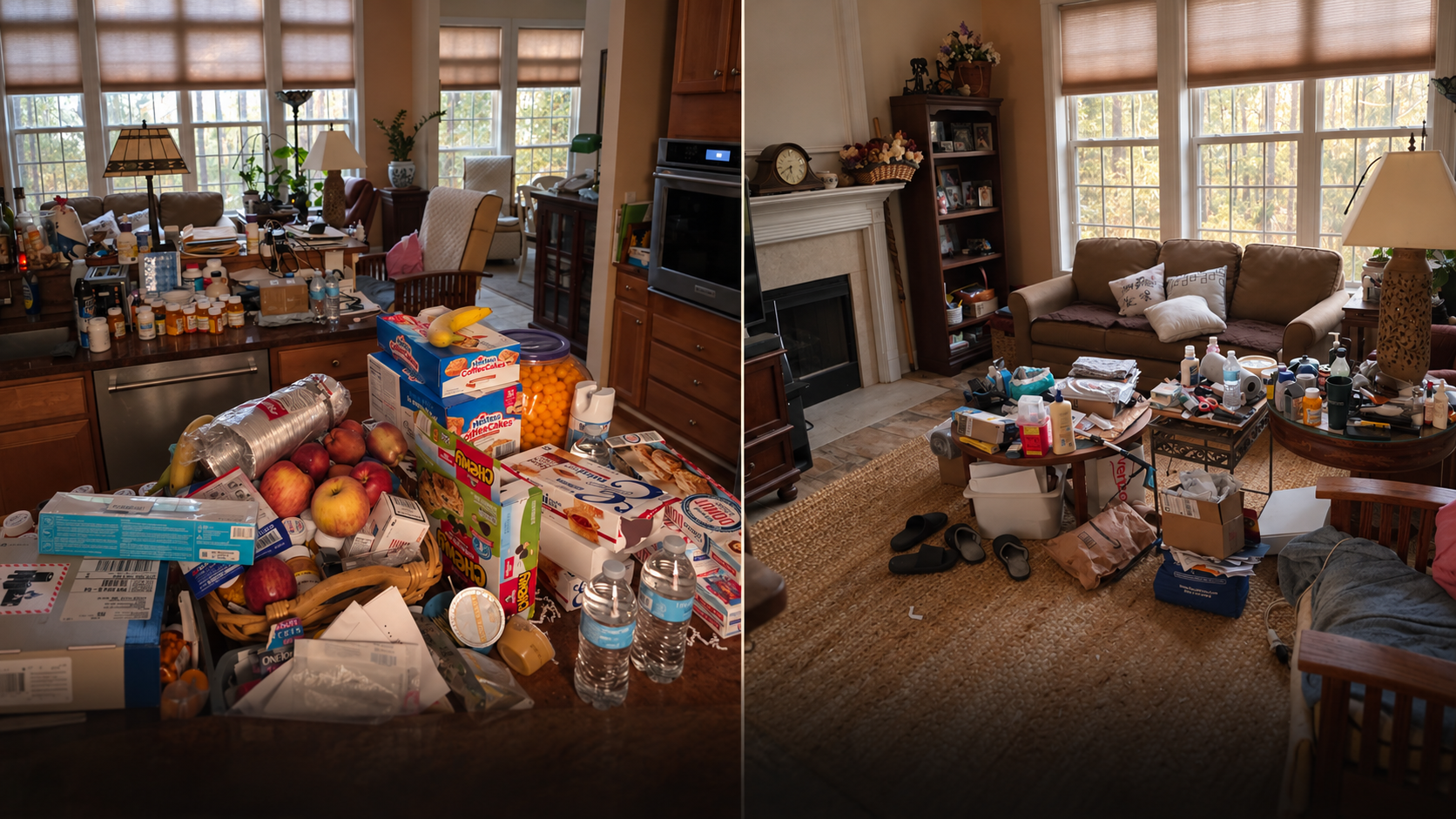
For a long time, I’ve noticed that he holds on to things “just in case.” There are expired medications, papers stacked near his computer that never seem to get looked at, and old mail. Lately, I’ve also noticed more processed food coming into the house through Amazon.
When my mother was living at home, she wouldn’t have bought this much junk food. Without her there, my father’s choices seem to be changing. I’m not going to police what he buys or try to manage his home.
This morning, I took a picture of the first floor—the kitchen and the TV area. It was never a Better Homes & Gardens photo, but it used to be tidier and stocked with healthier options. Seeing the difference was hard.
Still, noticing something doesn’t mean I can control it. I’ve set my boundary. My father’s choices are his to make, and my recovery and well-being are mine to protect.
It is what it is. I can care, be honest about what I see, and let go of what isn’t mine to manage.