
Nextdoor Didn’t Make the Top 100. Why Not?
The more I thought about Nextdoor’s LinkedIn post celebrating Publix making PEOPLE’s 100 Companies That Care, the more I realized I was focused on the wrong part of the story.
Yes, Publix ranked No. 4.
Yes, Nextdoor highlighted a Publix associate who used the Nextdoor app to discover an elderly neighbor needed help before Hurricane Milton.
It's a great story, and the employee deserves recognition.
But there's another question that I find much more interesting:
Where was Nextdoor?
Nextdoor didn't make the Top 100.
For a company whose identity revolves around neighbors, community, connection, trust and helping people locally, that's something worth examining.
Technology Companies Made the List
This wasn't a ranking limited to grocery stores, hospitals and nonprofits.
Technology companies made it.
Companies including Salesforce, Intuit, Hewlett Packard Enterprise, Adobe, ServiceNow and NVIDIA were recognized.
Salesforce ranked an impressive No. 5.
So technology isn't the barrier.
And that makes me wonder:
For a company that promotes itself as a platform for connection and community, why wasn't Nextdoor there?
We Don't Know Why—and That's Important
I don't know whether Nextdoor applied.
I don't know whether it was evaluated.
I don't know whether it qualified but didn't score high enough.
And because the published ranking ends at 100, I don't know whether Nextdoor would have been No. 101 or No. 1,001.
I'm not going to manufacture an explanation.
But I can look at some of the issues I've documented and ask whether they provide opportunities for Nextdoor to improve.
Because that's what feedback should ultimately accomplish.
Start With Small Businesses
Nextdoor talks frequently about supporting local businesses.
I've also provided feedback about what I see as an increasingly aggressive effort to monetize those businesses.
Business Pages.
Advertising.
Paid products.
Opportunity Alerts.
Nextdoor needs to make money.
Let me emphasize that because I'm a shareholder:
I WANT NEXTDOOR TO MAKE MONEY.
My concern is where intelligent monetization ends and what I've described as a money grab begins.
If you're going to position yourself as the champion of neighborhood businesses, those businesses should feel like valued members of the ecosystem—not simply another opportunity to extract revenue.
Nextdoor needs to make money with small businesses, not merely from them.
There's a difference.
Then There’s the Moderator Model
I've also repeatedly provided feedback about what I believe is a flawed volunteer moderator model.
I've questioned consistency.
Training.
Accountability.
Quality assurance.
Centralized oversight.
And what happens when personal neighborhood disputes collide with moderation authority.
When moderation works, most people probably never notice it.
When it doesn't, moderation can become the entire Nextdoor experience.
If Nextdoor wants to sell trust, its moderation system needs to consistently create trust.
That requires more than asking unpaid neighbors to police other neighbors.
And Then There’s the “Karen” Problem
Let's address the person demanding to speak with the neighborhood manager.
Nextdoor has faced a long-running public reputation in commentary as something of the “Karen” of social-media platforms.
Fair or unfair, the reputation exists.
Suspicious-neighbor posts.
Parking complaints.
Garbage-can disputes.
Political arguments.
Dog-poop investigations worthy of CSI: Suburbia.
And the classic:
“Did anyone else hear that boom?”
Nextdoor can't control every ridiculous thing someone posts.
But Nextdoor can influence the experience surrounding those posts.
Moderation.
Product design.
Algorithms.
Enforcement.
Community standards.
Leadership.
If a platform develops a cultural reputation for complaining, suspicion and neighborhood conflict, marketing alone isn't going to change it.
You have to change the experience that created the reputation.
But Here’s What Really Got My Attention About Those Tech Companies
Companies such as Salesforce, NVIDIA, Intuit, Adobe, ServiceNow, and HPE aren't charities.
They're businesses.
And some of them are extraordinarily profitable businesses.
That's important because sometimes conversations about corporate responsibility create a false choice:
Make money
or
do good.
The companies appearing on this list demonstrate that it doesn't have to work that way.
Caring and Making Money Aren’t Opposites
Take Salesforce.
Salesforce ranked No. 5 on the Companies That Care list.
In fiscal 2026, Salesforce reported a 20.1% GAAP operating margin, generated approximately $14.4 billion in free cash flow, and returned approximately $14.3 billion to shareholders through stock repurchases and dividends.
At the same time, its community efforts included its AI for Impact initiative and millions of dollars in funding, technology, and expertise for nonprofits.
Then there's NVIDIA.
NVIDIA made the Companies That Care list while also returning enormous amounts of capital to shareholders. During fiscal 2026, NVIDIA reported approximately $40.4 billion in share repurchases and $974 million in dividends.
Intuit made the list while continuing to operate a profitable technology business and connecting its community initiatives directly to its mission of “powering prosperity.”
See the pattern?
These companies didn't have to choose.
They could make money.
They could return money to shareholders.
They could invest in employees.
They could support communities.
And they could still work toward fulfilling their stated missions, visions and values.
Mission Shouldn’t Be a Substitute for Results
This is where I think the comparison becomes particularly relevant to Nextdoor.
Mission statements are wonderful.
Values are wonderful.
Community is wonderful.
But shareholders can't deposit a mission statement.
And customers can't experience corporate values that exist only on a website.
Mission, vision, and values shouldn't substitute for business results.
But the reverse is equally important:
Business results shouldn't require abandoning mission, vision and values.
Great companies figure out how to do both.
That's the standard.
And That’s Why Nextdoor’s Absence Interests Me
Think about the proposition Nextdoor is trying to sell.
It's the neighborhood platform.
The connection platform.
The place where real people connect with real neighbors.
The place where local businesses connect with customers.
The place where communities supposedly become stronger.
If I were designing a company specifically to compete for something called “100 Companies That Care,” that sounds like a pretty good starting point.
Yet Nextdoor didn't make the Top 100.
Meanwhile, companies that don't have “neighborhood connection” at the center of their entire identity did.
That's fascinating.
Maybe Connection Needs to Start at Home
Here's the question I'd ask Nextdoor:
Does the experience inside and around Nextdoor match the values Nextdoor markets outside?
Do employees feel connected?
Do neighbors trust the platform?
Do small businesses feel supported—or monetized?
Do volunteer moderators have the training, oversight, and accountability they need?
Does leadership welcome difficult feedback?
Does the platform's actual reputation resemble the brand Nextdoor wants people to see?
Is the company building sustainable profitability?
And are shareholders seeing the value created by all of it?
Those aren't accusations.
They're questions.
But they're questions I think any company built around connection should be willing to ask.
Profitability Is Part of Caring Too
This may sound strange, but I believe it.
A company that can't sustain itself can't fulfill its mission for very long.
Profit matters.
Cash flow matters.
Shareholder returns matter.
Capital allocation matters.
Employees need a financially healthy employer.
Customers need a financially sustainable product.
Communities benefit when companies can continue investing in them.
And shareholders provided capital with the expectation that management would create value.
Profit isn't the enemy of purpose.
Done correctly, profit helps fund purpose.
That's why I'm impressed when a company can simultaneously generate profits, reward shareholders, invest in employees and communities, and remain aligned with its stated values.
Imagine the Better LinkedIn Post
Rather than Nextdoor posting:
“Publix made the list, and somebody from Publix used Nextdoor!”
Imagine next year:
“Nextdoor Named One of PEOPLE’s 100 Companies That Care.”
Now we're talking.
No Six Degrees of Kevin Bacon.
No connection through Publix.
No borrowed spotlight.
Nextdoor's accomplishment.
Then imagine being able to add:
Revenue growing.
Profitable.
Employees engaged.
Small businesses succeeding.
Moderation improving.
Neighbors finding genuine value.
Shareholders receiving returns.
Community mission intact.
That's the story I'd love to write.
Here’s My Challenge to Nextdoor
Don't dismiss the Top 100 list.
Study it.
Look at the technology companies that made it.
Look at how they treat employees.
Look at their philanthropy.
Look at their community investment.
Look at their corporate cultures.
And importantly, look at how some of them simultaneously make money and create shareholder value.
Then look inward.
Fix what needs fixing.
Improve the moderator model.
Make small businesses feel like partners rather than ATMs.
Continue improving communication.
Address the platform's “Karen” reputation by improving the actual experience.
Listen to feedback—even when it's uncomfortable.
Build sustainable profitability.
Create shareholder value.
And make sure the company's actions reflect the mission, vision and values it talks about publicly.
Because you don't have to choose between:
Caring about communities
and
caring about shareholders.
The best companies can do both.
Nextdoor's mission should actually give it an advantage.
Now it needs to prove it.
Don't just connect yourself to Companies That Care.
Become a profitable Company That Cares.
And give the neighbors, employees, small businesses and shareholders something worth celebrating.
If Nextdoor makes that list someday?
I'll happily applaud them.
Read my continuing Nextdoor case study at NielFlamm.com/blog.
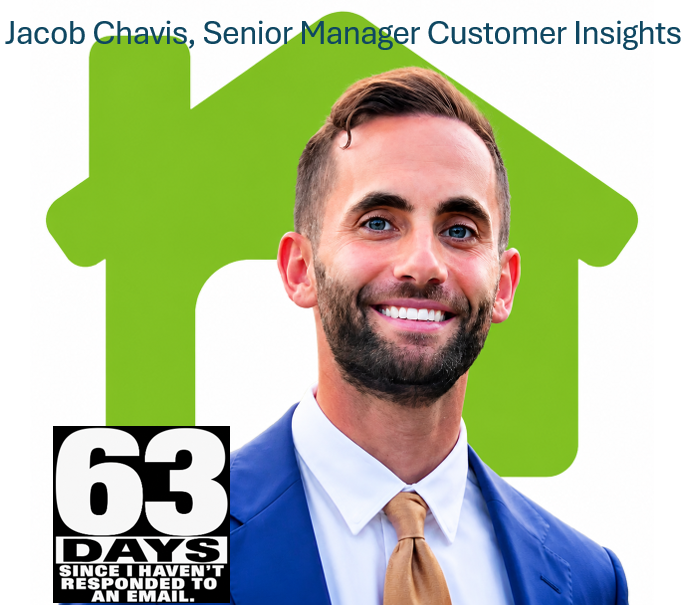
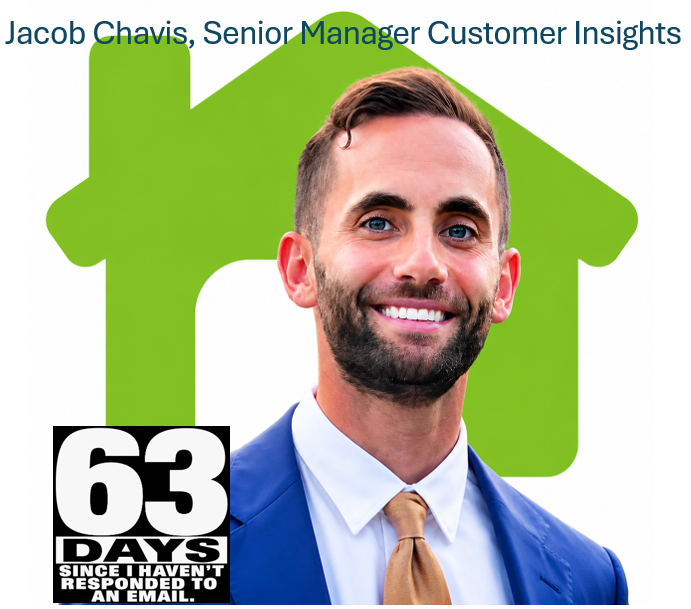
Day 63: If the Rules Aren’t Consistent, Are They Really Rules?
It's Day 63, and this morning while continuing my study of the Nextdoor app, I found another example that has me questioning its moderation model.
A neighbor posted:
“Not to get political, but I keep hearing about this runoff happening next week and I am so torn on the candidates. Does anyone have any thoughts?”
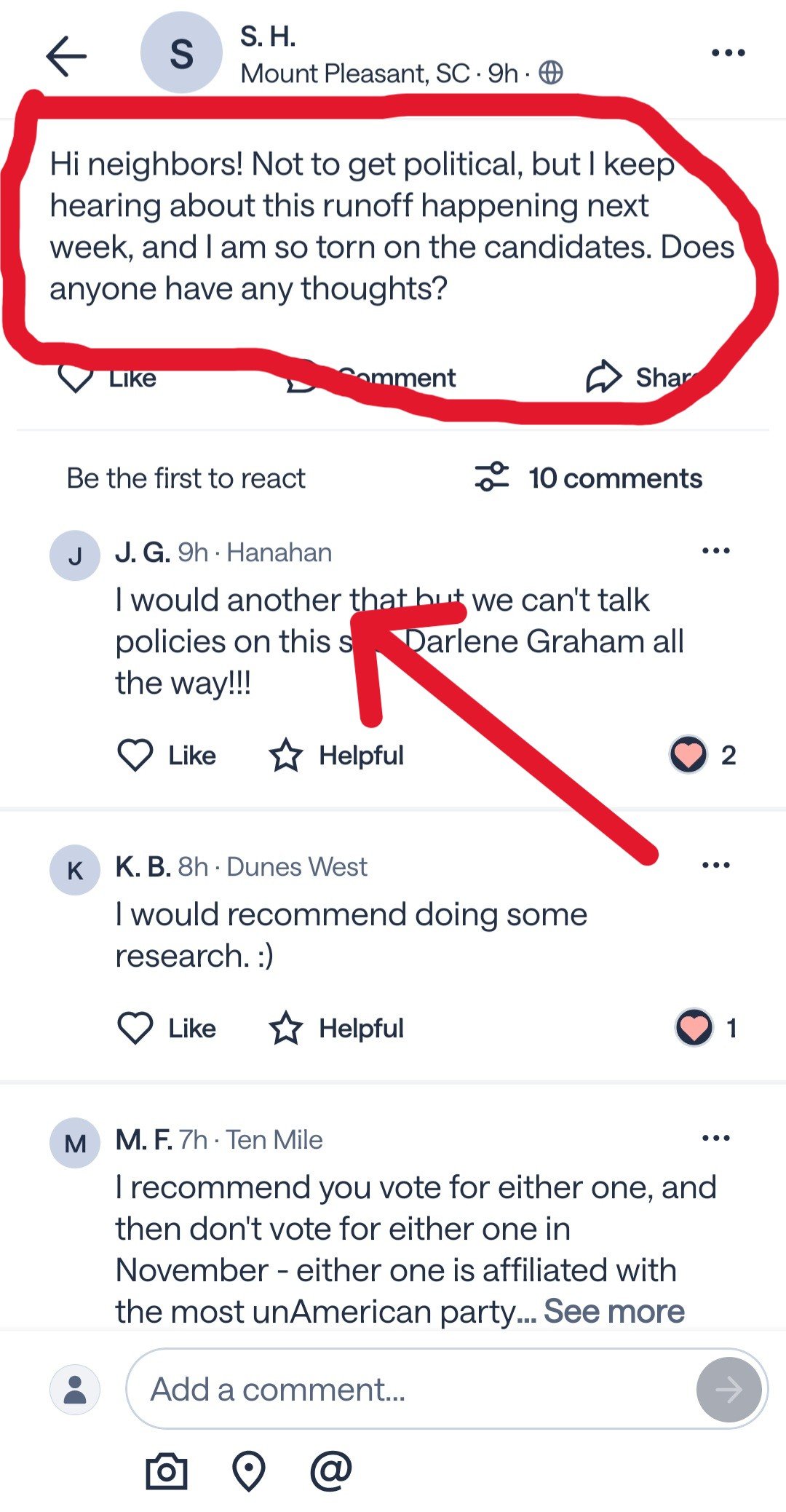
Whenever something begins with “Not to get political…”, we can probably guess where it's headed.
Politics.
And that's exactly what happened.
Neighbors discussed candidates, political parties, voting choices, and opinions. Some users even pointed out:
“We can't talk politics on this site.”
Another wrote:
“Not the place for politics. PLEASE STOP.”
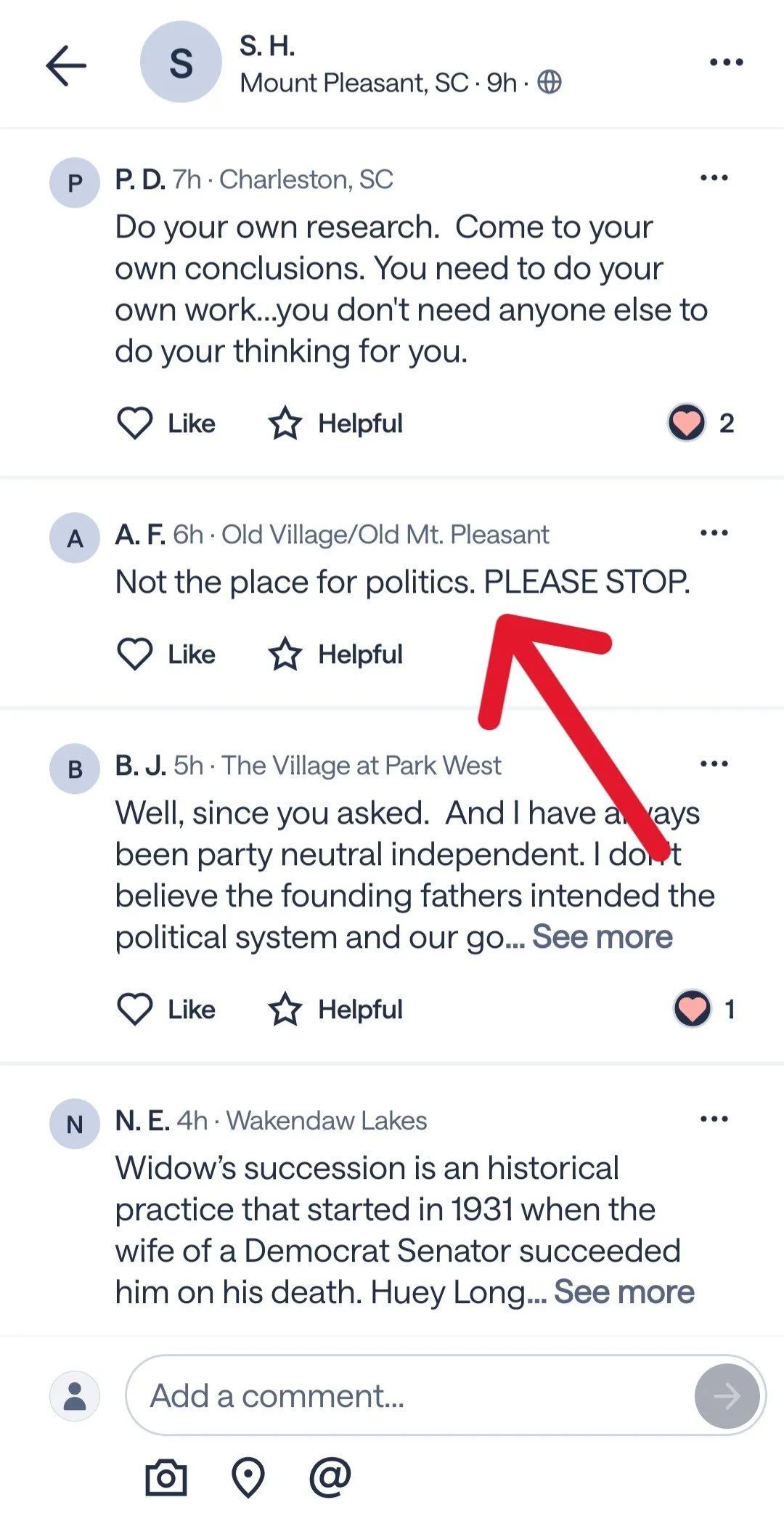
Yet, approximately nine hours after the original post, it was still there.
Here's my moderation question.
Nextdoor permits certain local political discussions, but restricts broader national politics.
This discussion involves a U.S. Senate seat. South Carolina voters elect the senator statewide, but that person then goes to Washington to vote on national legislation and policy.
So where's the line?
Is a U.S. Senate race local because the candidates campaign within South Carolina?
Or national because the winner becomes one of 100 U.S. senators?
More importantly:
Do Nextdoor's moderators agree on the answer?
That's the larger issue I've been documenting.
A moderation system is only as effective as its consistency, training, quality assurance, and enforcement.
If Moderator A removes something while Moderator B leaves essentially the same content up for nine hours—or indefinitely—the policy isn't producing consistent outcomes.
That's not merely a neighbor problem.
That's a process problem.
And when moderation relies heavily on unpaid neighbors making judgment calls about other neighbors, quality control becomes incredibly important.
I've said it before:
We inspect what we expect.
So who's inspecting the moderators?
Who's measuring agreement between them?
Who's auditing incorrect removals—and incorrect decisions to leave content up?
What are the accuracy metrics?
These aren't rhetorical questions. I'd like to see the data.
I've been asking questions about Nextdoor's research, moderation, communication, and accountability for 63 days.
Maybe this post complies with Nextdoor's rules. If so, explain why.
Maybe it doesn't. If so, why was it still there nine hours later?
Either answer would be useful.
What isn't useful is having policies whose enforcement appears unpredictable depending on the moderator, neighborhood, or day.
Day 63. Another post. Another moderation question.
And somehow, still no Jacob Chavis.
Join the discussion at NielFlamm.com/blog. Leave some feedback—I'd love to hear your perspective.
The Stories We Need... and the Stories We Keep Getting
Let's agree these are great things.
🐾 Lost pets reunited with their families.
💍 Returning a treasured heirloom, wedding ring, or keepsake.
❤️ Checking on a neighbor after a loss, illness, or surgery.
🍔 Discovering a hidden local restaurant or coffee shop.
🏃 Neighbors exercising together.
👥 Clubs and groups bringing people together.
🛍️ Supporting local small businesses.
🎃 Reminding people to stay safe during holidays.
⛈️ Preparing for severe weather.
We also know:
Loud neighbors at 2 a.m. aren't considerate.
Cancer and other life-altering diseases are heartbreaking.
Kindness matters.
I could keep going.
So what's my point?
It's not that these stories aren't important.
They absolutely are.
My concern is that they're the same kinds of stories I repeatedly see promoted on LinkedIn, X, and the Nextdoor blog.
Feel-good stories have their place.
But I'd also like to see some journalism about the platform itself.
I want to read about:
How the unpaid moderator program actually works.
Interviews with moderators about their experiences.
How appeals are reviewed.
What quality assurance exists.
How moderation consistency is measured.
What metrics leadership uses to determine whether the current model is succeeding.
Those stories would help users, advertisers, and shareholders better understand the platform.
Those are conversations worth having.
Then, after we've explored how the platform works behind the scenes...
Let's absolutely celebrate the dogs finding homes, neighbors helping neighbors, and hidden gems around town.
There's room for both.
Join the discussion at NielFlamm.com/blog. Leave some feedback—I'd love to hear from you.
Day 42: Culture, Moderation, and the Courage to Have Difficult Conversations
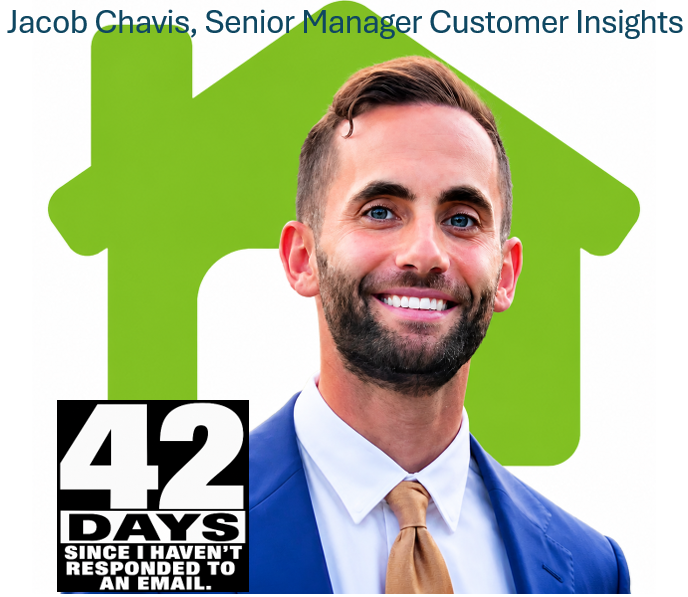
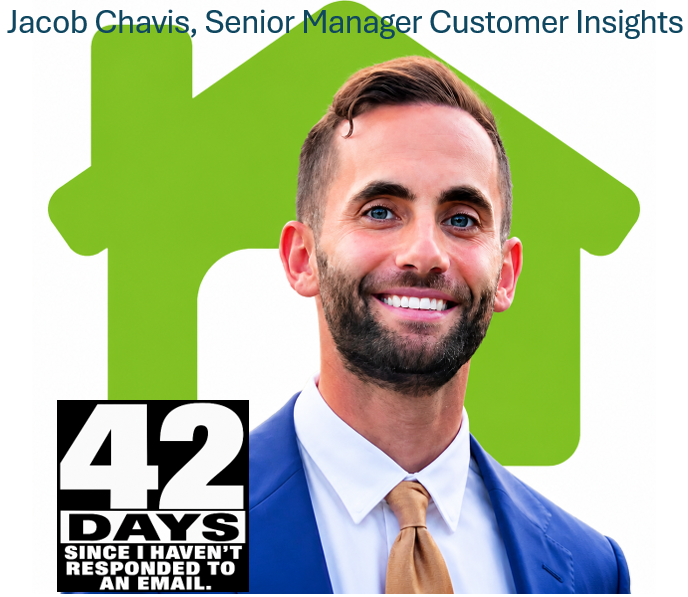
Today marks Day 42 since I requested a Nextdoor study from Jacob Chavis.
Forty-two days later, I still haven't received the study, an acknowledgment, or a response.
Over the past six weeks, my observations about Nextdoor have largely centered around three themes:
1. Culture
2. The moderation model
3. Communication
Let's start with moderation.
After a late night of blogging and recording videos for NielFlamm.com, I did what most people probably wouldn't do before bed—I spent some time browsing Nextdoor.
Yes, I know... I need better hobbies.
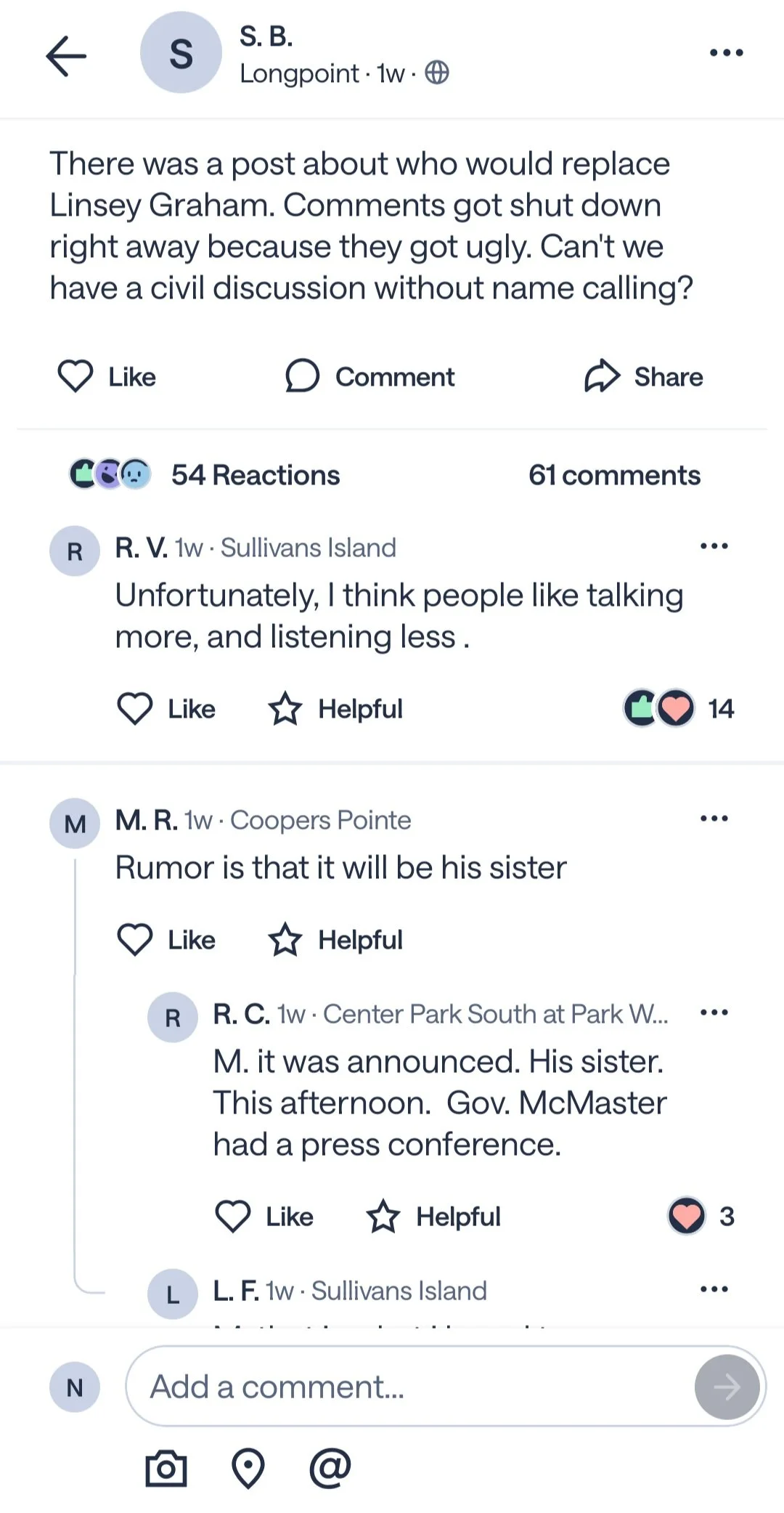
I came across a discussion that began about a week ago concerning who would temporarily fill the U.S. Senate seat vacated after Senator Lindsey Graham's death.
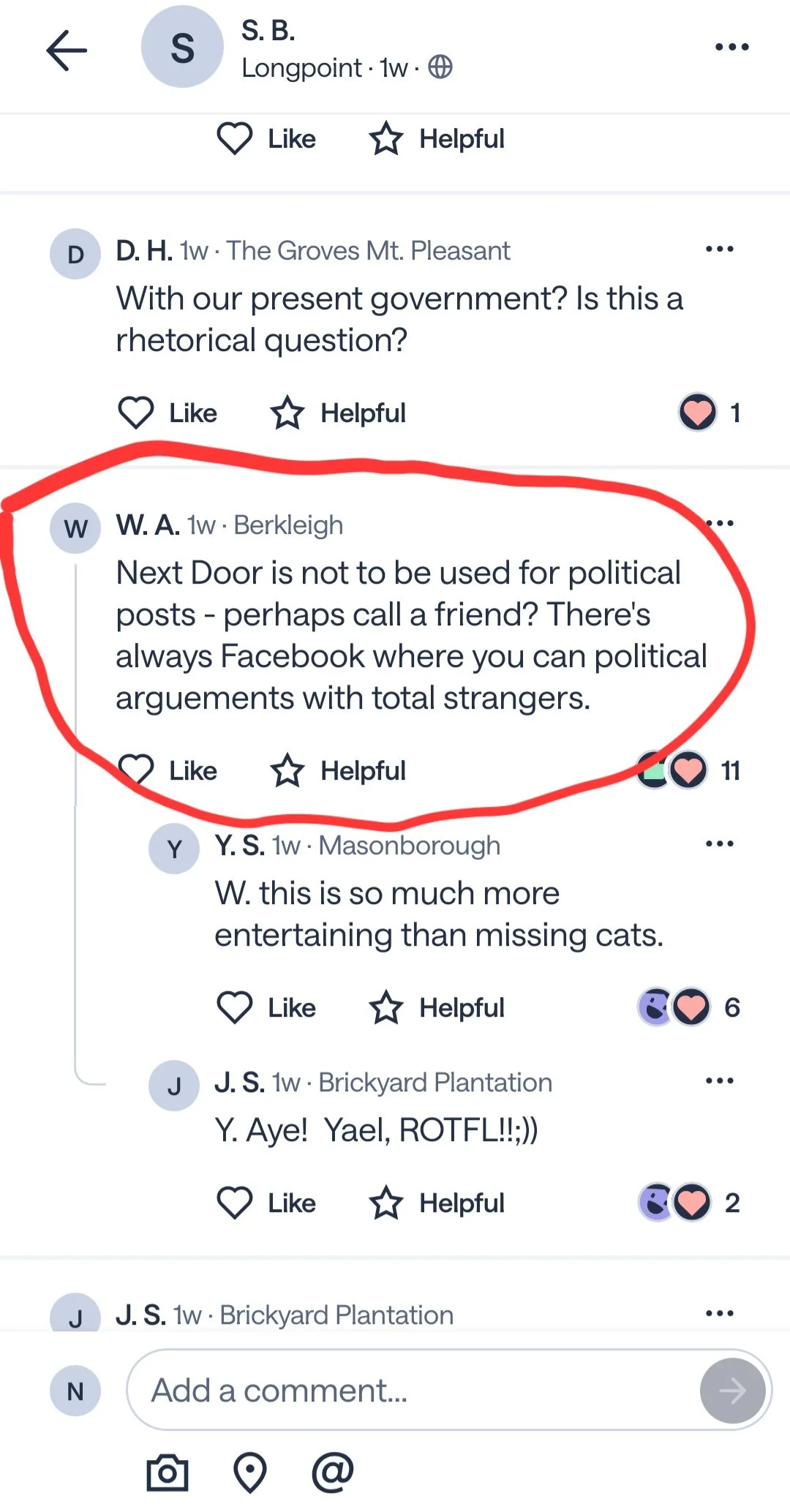
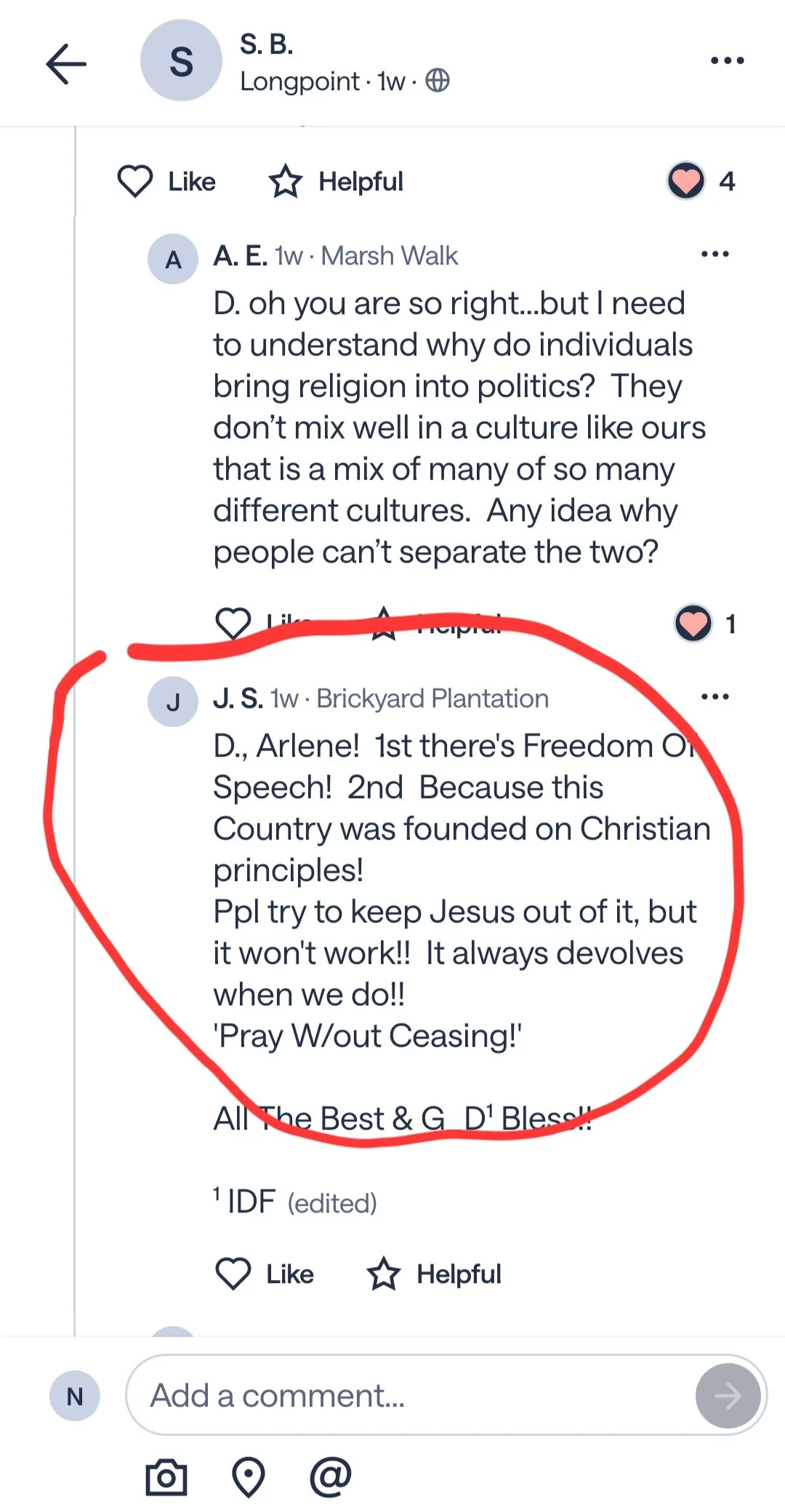
Yet, as I read through the thread, the conversation expanded well beyond the local topic into national politics, world politics, and religion.
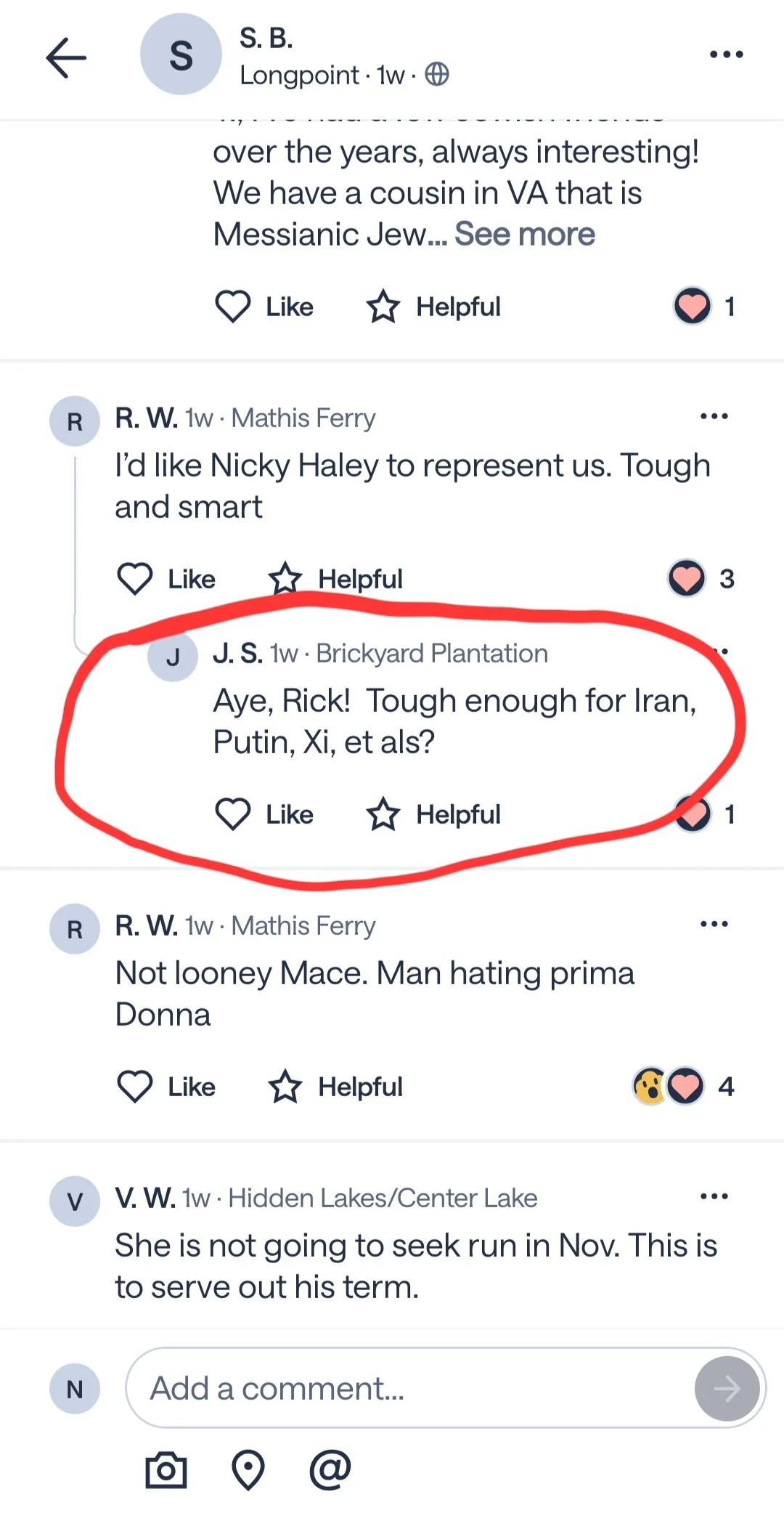
Ironically, one participant even pointed out that the platform wasn't intended for national political discussions.
Yet the discussion remained.
A week later.
That raises questions.
Was the thread never reviewed?
Was it reviewed and intentionally left up?
Were reports submitted?
If so, what standards were applied?
These are the kinds of questions that naturally arise when moderation appears inconsistent.
Consistency builds trust.
Inconsistency creates confusion.
The second thought that struck me this morning came from a Facebook Reel by Polina Mireau, a former COO, operations consultant, and leadership coach.
She talks about something many leaders struggle with: avoiding difficult conversations.
You can watch it here:
https://www.facebook.com/reel/2764410343955450
Her point is simple.
Ignoring a problem rarely makes it disappear.
People often hope difficult situations will resolve themselves.
Most don't.
Leadership means having the uncomfortable conversation.
That message resonated with me because it's exactly what I've been asking of Nextdoor leadership.
Not agreement.
Not applause.
Just a conversation.
Whether it's CEO Nirav Tolia, Jacob Chavis, Investor Relations, Communications, or anyone else at the company, my request remains the same:
Let's have the difficult conversation.
If the answer is no, say no.
If the study can't be shared, explain why.
If I've misunderstood something, tell me.
Communication—even difficult communication—is almost always better than silence.
That's what builds trust.
That's what builds culture.
And after 42 days, I believe the conversation is long overdue.
Join the discussion at NielFlamm.com/blog. Leave some feedback—I'd love to hear from you.
𝗜𝘁 𝗙𝗶𝗻𝗮𝗹𝗹𝘆 𝗗𝗮𝘄𝗻𝗲𝗱 𝗢𝗻 𝗠𝗲 𝗪𝗵𝗮𝘁 𝗜’𝗺 𝗗𝗼𝗶𝗻𝗴 𝘄𝗶𝘁𝗵 𝗡𝗲𝘅𝘁𝗱𝗼𝗼𝗿
I think I finally figured it out.
By publicly criticizing, analyzing, parodying, and discussing Nextdoor so often… I’m helping drive attention directly to the platform.
Because Nextdoor doesn’t always feel like a calm digital neighborhood square.
Sometimes it feels like daytime chaos television.
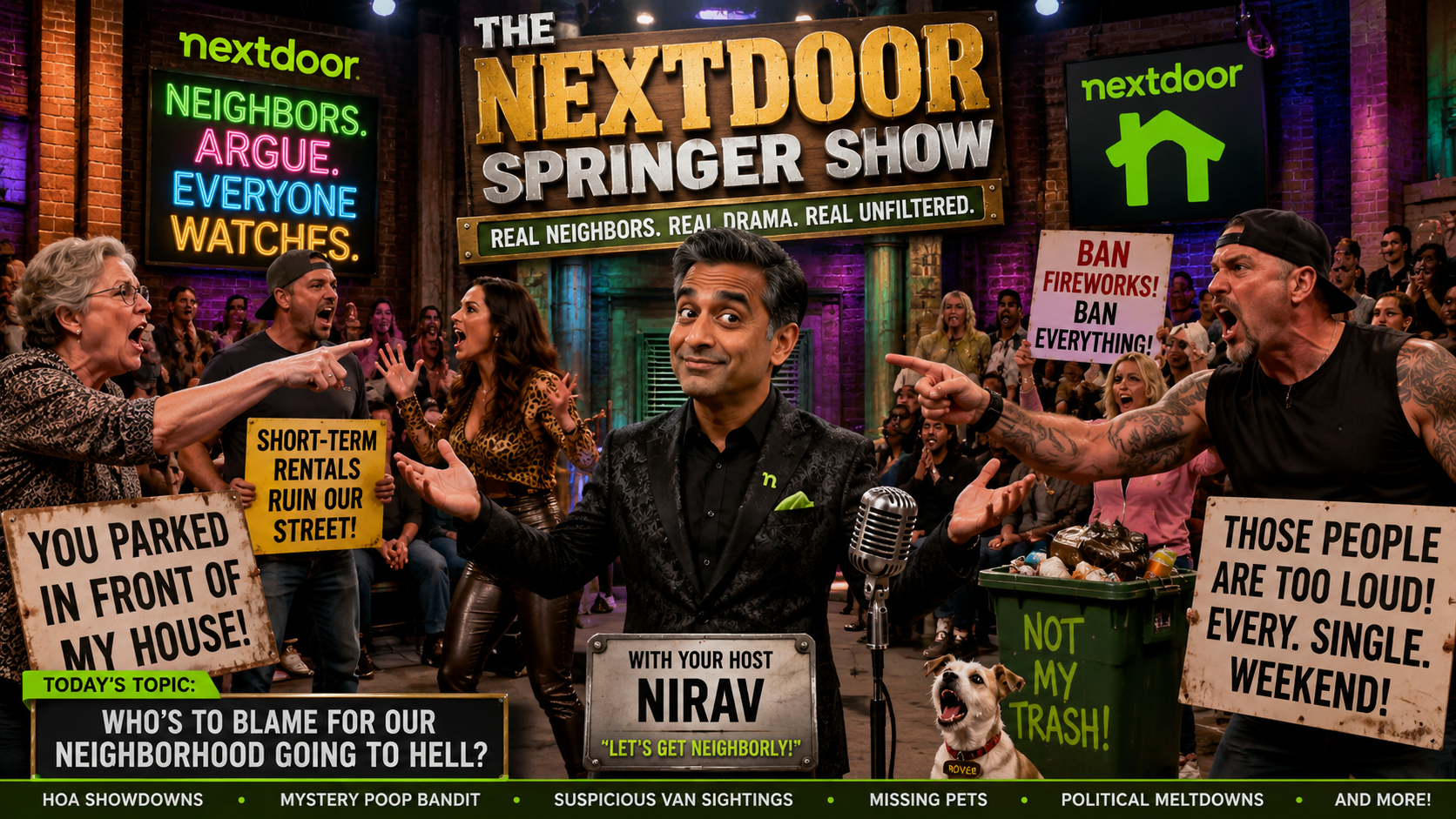
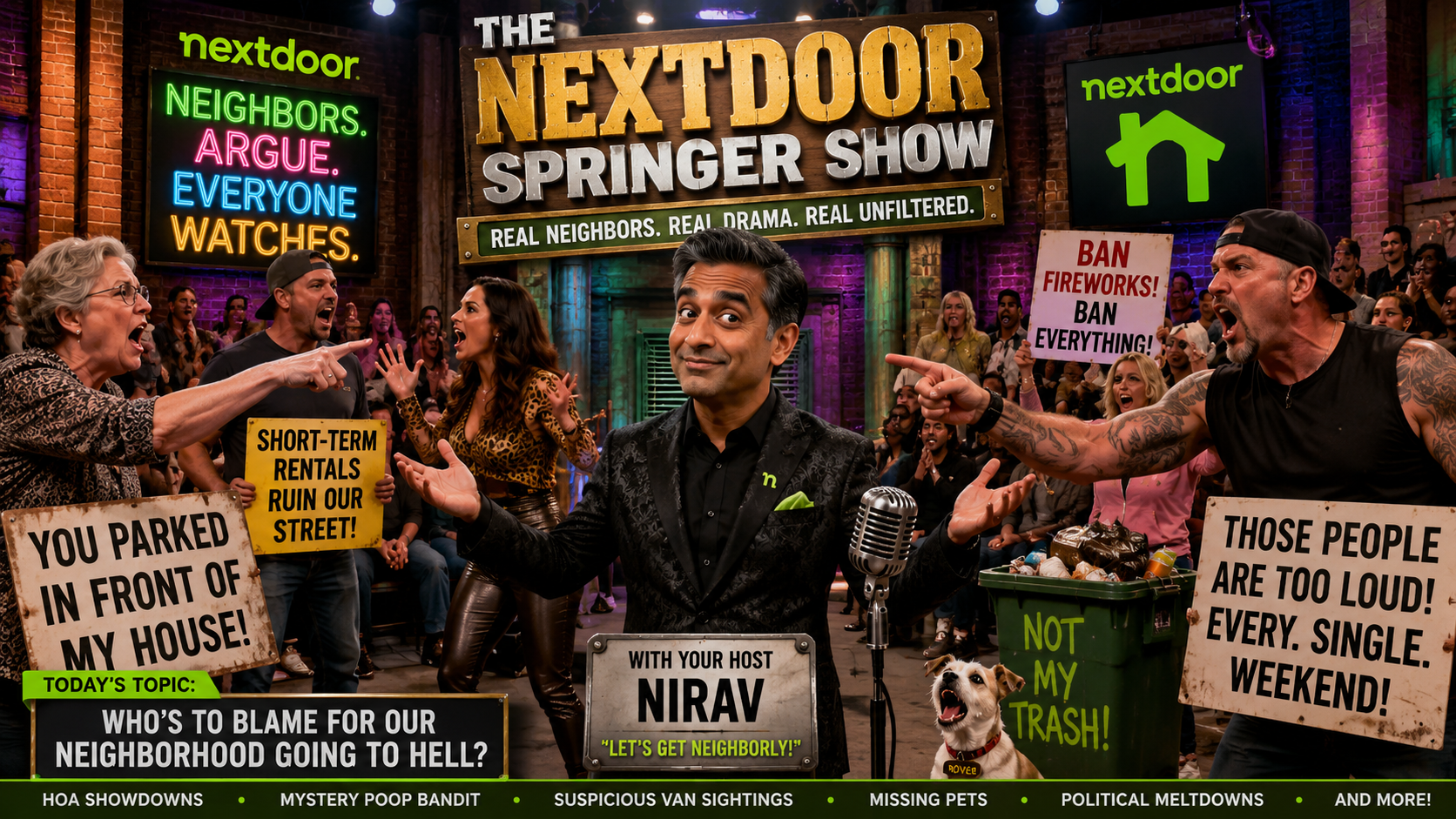
A little The Jerry Springer Show, mixed with The Steve Wilkos Show security energy, and a dash of Maury “the DNA results determined…” drama — except instead of paternity tests, it’s HOA complaints, parking wars, surveillance screenshots, suspicious vans, missing pets, fireworks at midnight, and neighbors arguing over garbage cans.
And historically, chaotic talk shows worked for one reason:
People watched.
People shared.
People talked about the chaos afterward.
That attention became the product.
The irony is hard to ignore:
The more people debate moderation, censorship, neighborhood drama, and strange platform behavior… the more engagement the platform receives.
Even investors may be noticing.
The stock has shown signs of life recently, and whether people love the platform, hate it, mock it, or criticize it — attention still fuels visibility.
That doesn’t erase legitimate concerns surrounding moderation transparency, unpaid moderators, vague rule enforcement, or appeals systems.
But it does reveal something uncomfortable about modern social media:
Outrage has economic value.
Drama has engagement value.
And maybe Nextdoor accidentally became less of a neighborhood app and more of a reality show with property lines.
Which means… I may have joined the marketing department by mistake.
You’re welcome Nirav Tolia.