
𝗜𝘁 𝗙𝗶𝗻𝗮𝗹𝗹𝘆 𝗗𝗮𝘄𝗻𝗲𝗱 𝗢𝗻 𝗠𝗲 𝗪𝗵𝗮𝘁 𝗜’𝗺 𝗗𝗼𝗶𝗻𝗴 𝘄𝗶𝘁𝗵 𝗡𝗲𝘅𝘁𝗱𝗼𝗼𝗿
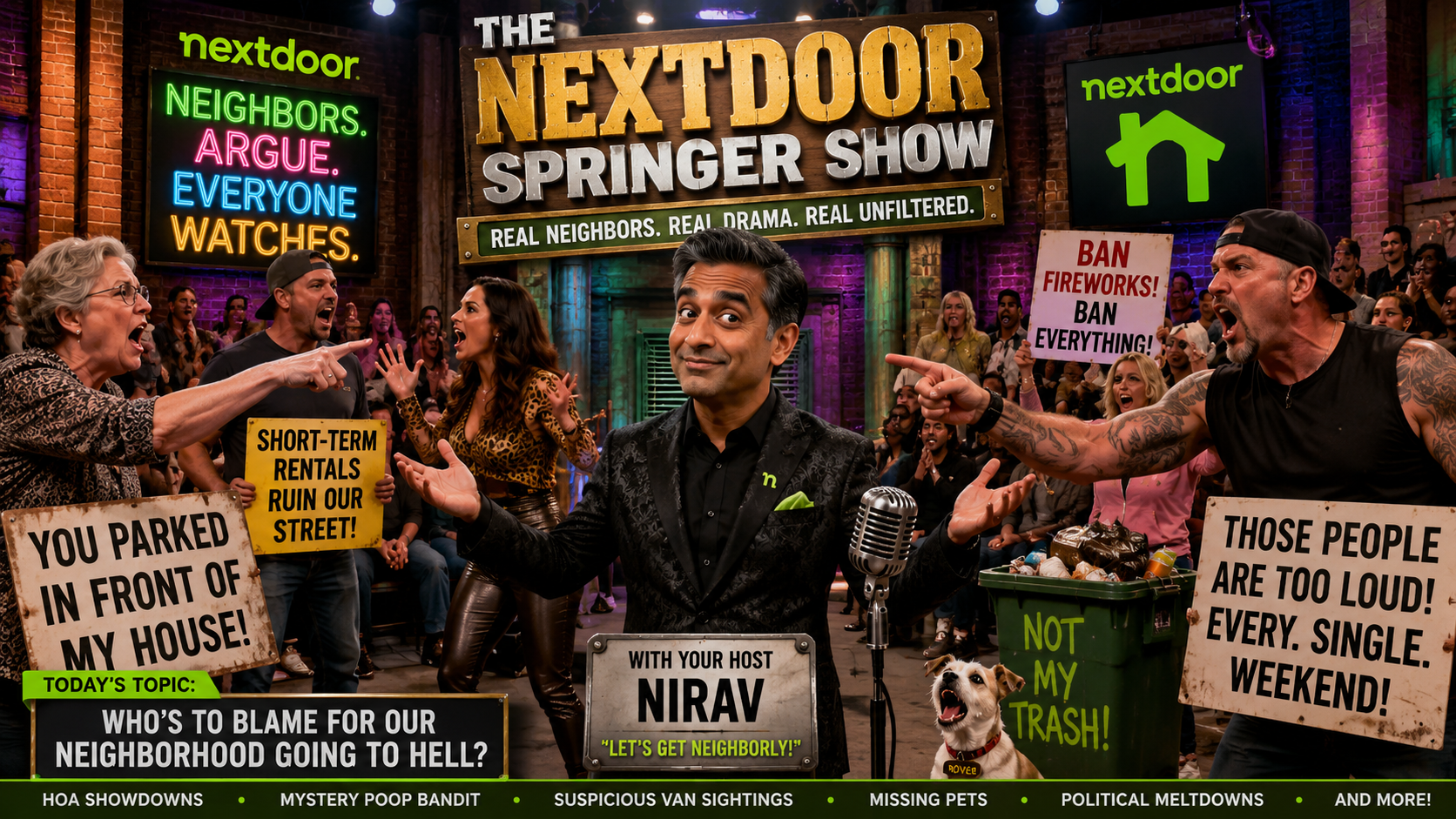
I think I finally figured it out.
By publicly criticizing, analyzing, parodying, and discussing Nextdoor so often… I’m helping drive attention directly to the platform.
Because Nextdoor doesn’t always feel like a calm digital neighborhood square.
Sometimes it feels like daytime chaos television.
A little The Jerry Springer Show, mixed with The Steve Wilkos Show security energy, and a dash of Maury “the DNA results determined…” drama — except instead of paternity tests, it’s HOA complaints, parking wars, surveillance screenshots, suspicious vans, missing pets, fireworks at midnight, and neighbors arguing over garbage cans.
And historically, chaotic talk shows worked for one reason:
People watched.
People shared.
People talked about the chaos afterward.
That attention became the product.
The irony is hard to ignore:
The more people debate moderation, censorship, neighborhood drama, and strange platform behavior… the more engagement the platform receives.
Even investors may be noticing.
The stock has shown signs of life recently, and whether people love the platform, hate it, mock it, or criticize it — attention still fuels visibility.
That doesn’t erase legitimate concerns surrounding moderation transparency, unpaid moderators, vague rule enforcement, or appeals systems.
But it does reveal something uncomfortable about modern social media:
Outrage has economic value.
Drama has engagement value.
And maybe Nextdoor accidentally became less of a neighborhood app and more of a reality show with property lines.
Which means… I may have joined the marketing department by mistake.
You’re welcome Nirav Tolia.
