

Touring The Bridge: A Smaller Community and an Unexpected Cookie Inheritance
Today started with taking a car in for routine service, followed by a stop at Sam’s Club, and then another assisted living tour for Mom.
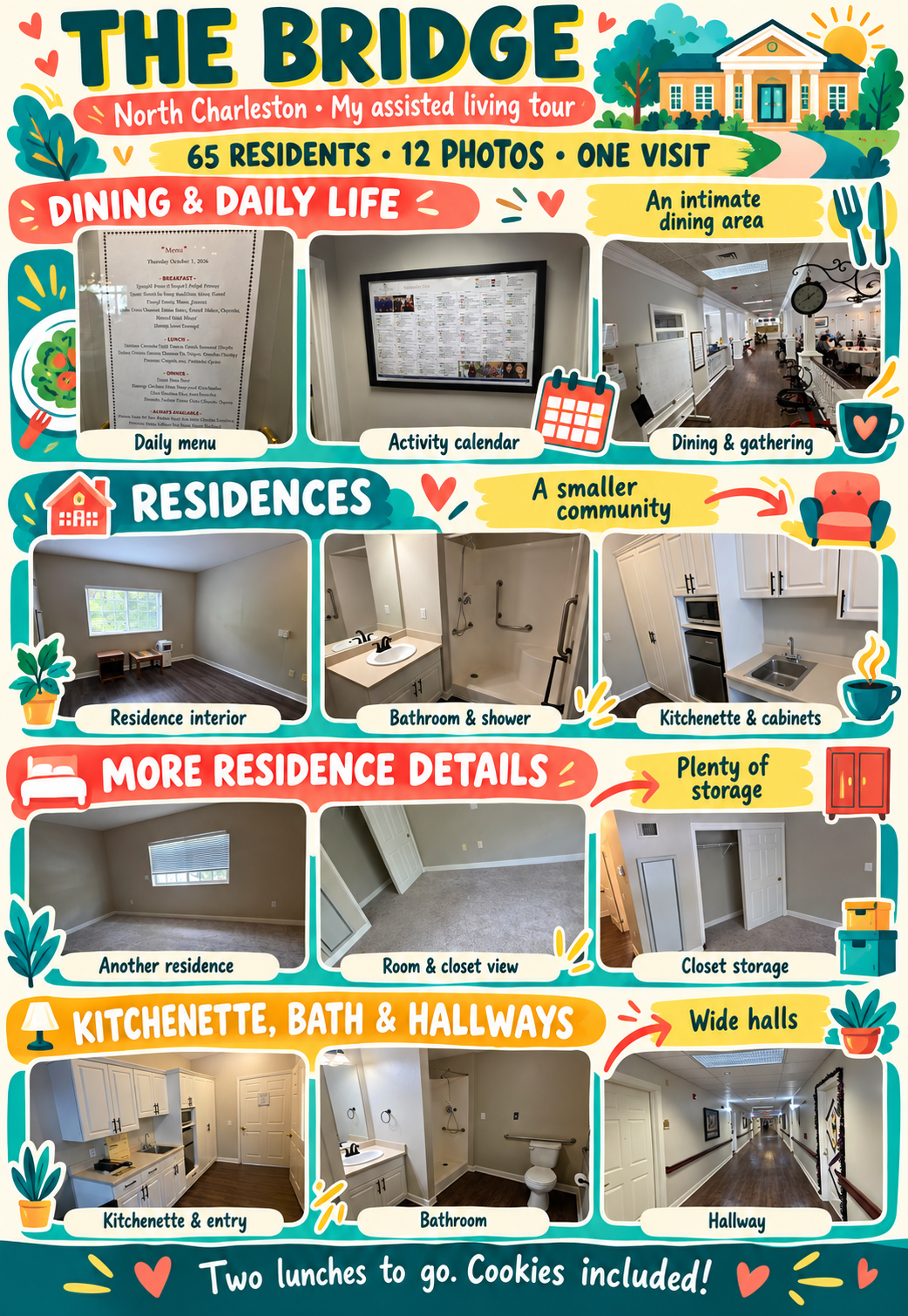
This time, I visited The Bridge in North Charleston.
It’s a smaller community with 65 residents, arranged in a square around an open courtyard. I liked the layout, and my overall impression was more positive than at The Palms.
The hallways were wide, the dining area felt intimate, and the residences seemed well laid out. They weren’t too big, but they had plenty of storage.
After a stop at Sam’s Club, I was especially prepared to appreciate storage. Buying in bulk can make a person look at cabinets differently.
As I walked through, I tried to picture Mom settling into one of the rooms. Where would her things go? Would the space feel comfortable? Could I imagine her heading to a meal and recognizing the people around her?
The smaller community appealed to me. I could picture her getting familiar with the place and finding her people over time.

The location also comes with some recognizable landmarks: Waffle House, Zaxby’s, and Trident Hospital.
I know Trident from having a stent put in and undergoing my retinal surgery involving a silicone bubble. So I’m already familiar with the area, although I would welcome future trips with fewer procedures and more time visiting Mom.
The Bridge is farther from home than the other places I’ve toured. That’s something to consider, especially since I’ll probably make most of the trips while Mom gets settled.
Fortunately, I like to drive.
If she ends up there, I expect I’ll be going back and forth while she develops a routine and gets to know people. I want her to have support during that adjustment, while also having the opportunity to build a life in the community.
And yes, I brought food.
At this point, leaving an assisted living tour without a to-go box would feel like skipping part of the inspection.
I took two lunches: collard greens, Brussels sprouts, mac and cheese, and a chicken thigh.
I’m generally not a dark-meat person. The chicken thigh was okay. The rest was great.
The vegetables had made a much better impression on me this time. After my recent disagreement with peas, I was glad to restore diplomatic relations with the side dishes.
I also received two bags of cookies.
Mom doesn’t want hers.
I respect her right to decide what to do with her own food, especially when those decisions create an unexpected cookie inheritance.
The food matters, of course, but I also left thinking about the size of the community, the dining area, and how well the rooms used their space. I liked a lot about this visit.
I’m still comparing options. A good first impression gives me something to work with, and I want to keep considering what would suit Mom’s needs and preferences over time.
I have at least one more community to tour in a few weeks.
For now, The Bridge gave me another option I feel good about exploring—and more to share with Mom and the family as we work through this together.
Today’s errands covered car maintenance, bulk shopping, assisted living, and lunch.
The cookies were an unplanned development. I’m handling it.

Touring The Palms: Nice Grounds, Friendly People, and Unfortunately, Peas

After dialysis today, I toured The Palms as I continue looking at assisted living options for Mom.
Dialysis followed by a facility tour makes for a full day, but I’m learning something useful at each stop. Seeing these places in person gives me a better sense of what daily life might look like for her—and what the differences are beyond the monthly price.
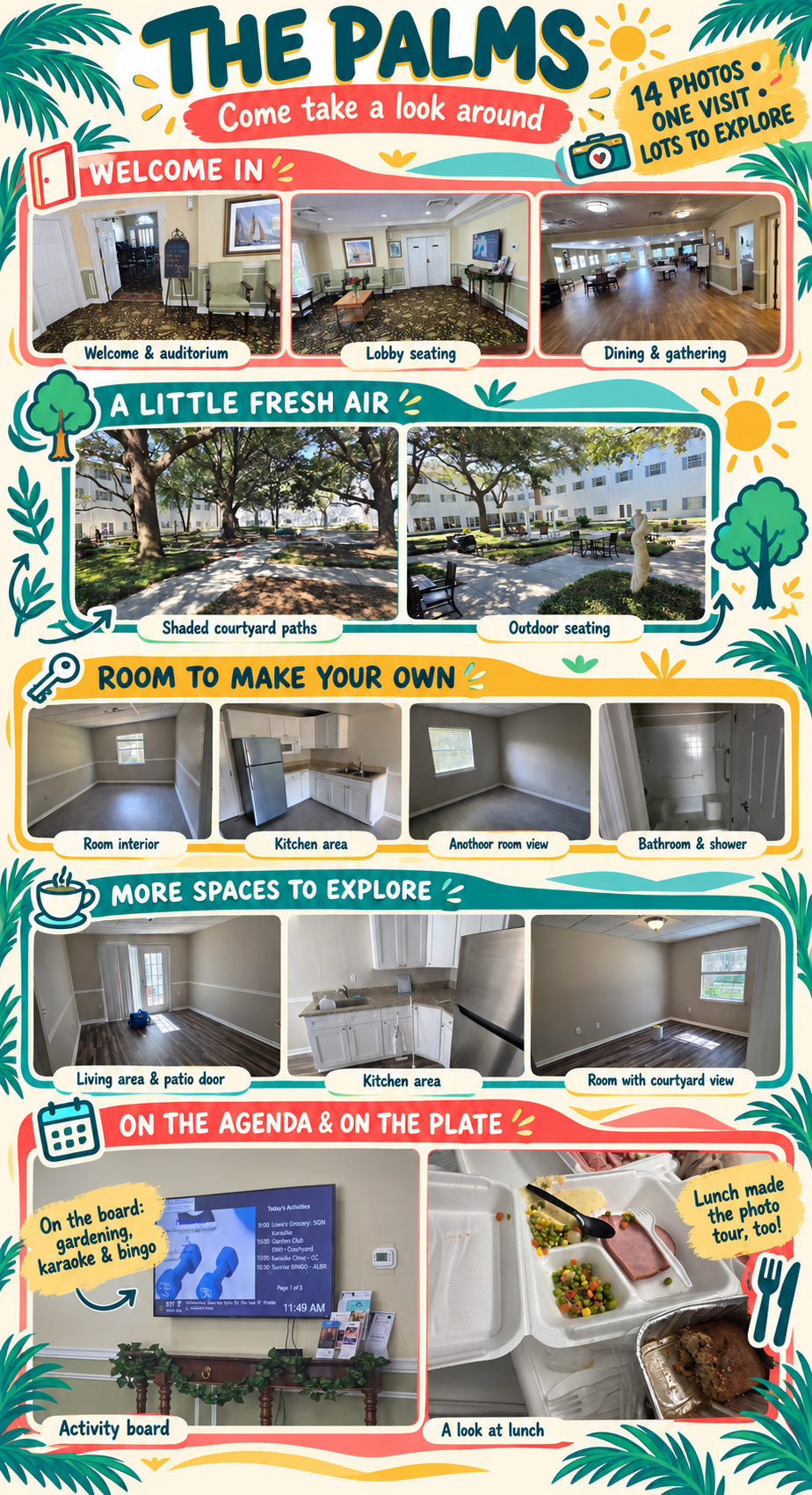
The Palms is in a building that’s about 50 years old and is being renovated. I learned the HVAC system was recently updated and needed adjustments to work properly.
I appreciate hearing about those details. Renovations are part of the picture, and I want to understand both what’s already been done and what’s still being worked on.
Compared with Somerby, The Palms didn’t feel as open and airy to me. It has a different atmosphere, and I noticed that as I walked through the common areas and rooms.
But I also noticed friendly staff and people who seemed happy.
That was only my impression during one visit, but it matters to me. I’m trying to imagine Mom living somewhere, spending time with people, asking for help, and finding a routine. A place's feel includes the people in it.
The grounds were another positive. There were trees, shaded paths, and places to sit outside. After recently spending time outdoors with Mom at the skilled nursing facility, I could appreciate having pleasant outdoor space available.
Then came the food.
You knew I was getting there.
In my opinion, the meal wasn’t as good as what I brought back from Somerby. And there were peas mixed with the corn and carrots.
Peas.
The corn and carrots had been doing perfectly well without that kind of interference.
I understand some people enjoy peas. I respect their right to be wrong at lunch.
My personal vegetable grievances aside, food is still an important part of this search. Mom has made her opinions about facility meals very clear, and I want to pay attention to what she might actually enjoy eating.
One meal gives me a sample, and this sample didn’t impress me as much as Somerby’s did.
The Palms does have another meaningful difference: it costs less per month.
That deserves consideration. These are substantial ongoing expenses, and I’m trying to weigh the cost alongside the setting, the people, the food, and how well a place could meet Mom’s needs.
So my impression today was mixed, with some real positives. The building is older and undergoing updates. The interior felt less open than Somerby. I preferred Somerby’s food. But the staff was friendly, the people I saw seemed happy, the grounds were nice, and the monthly cost was lower.
I’m glad I went.
I’ve also been sharing my thoughts with my brothers and their wives, and posting pictures in a shared Google Drive so everyone can see what I’m seeing. I want them included as we think through the options for Mom. The photos give us something concrete to discuss, and their perspectives help me consider things I might have missed. My opinion of peas, however, is already firmly established.
Each tour is helping me figure out which questions to ask and which details I want to bring back to Mom. I want her involved in thinking about where she could feel comfortable and what matters most to her.
Tomorrow, I tour another place.
I’ll keep asking questions, looking around, and tasting the food.
And quietly hoping the vegetables have made better decisions.
My First Assisted Living Tour—and a Mom-Approved Dinner
Today was a full day.
I started with a 10:15 a.m. cardiology appointment and left with some action items of my own. Taking care of Mom doesn’t take my health off the calendar.
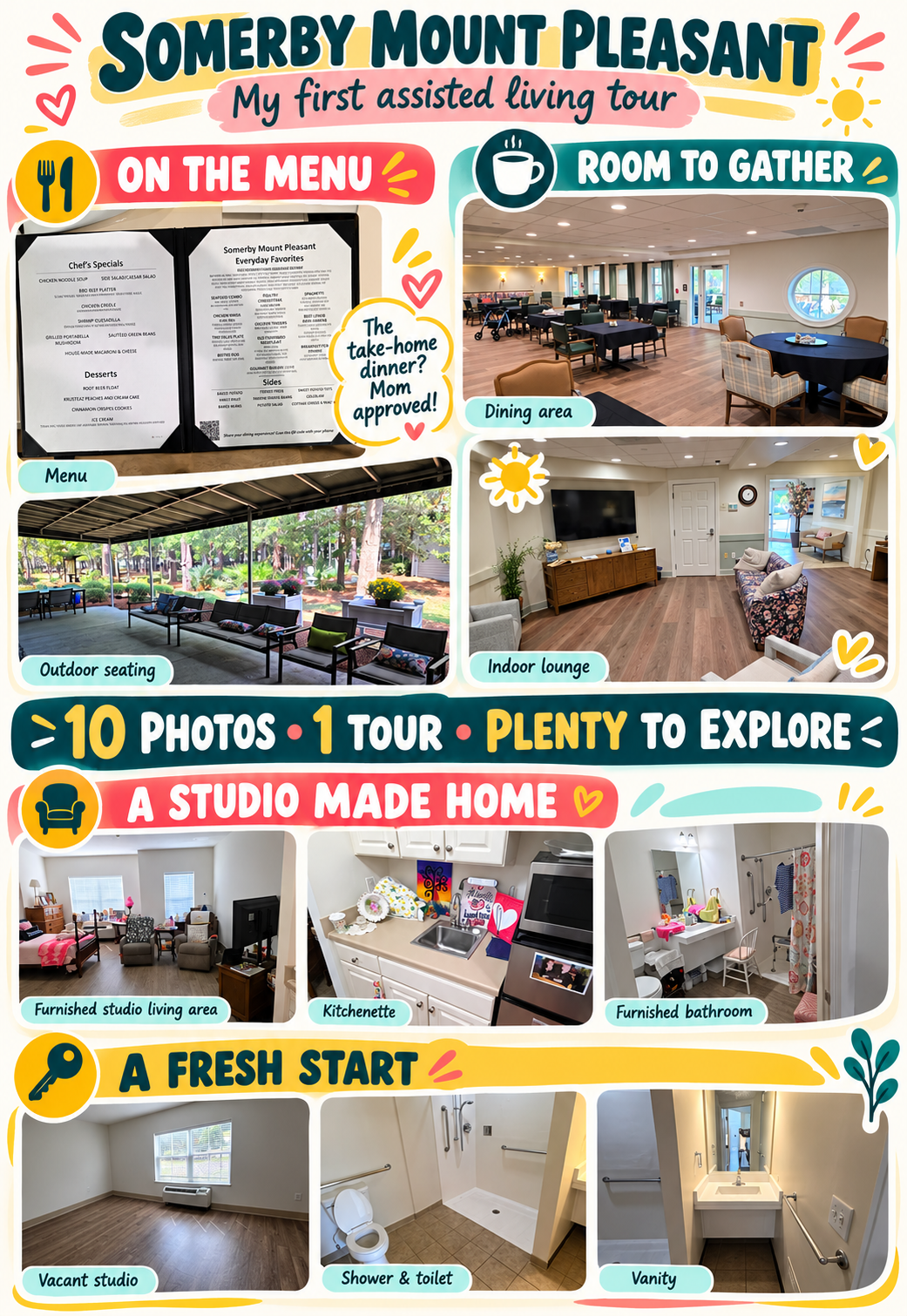
Then I went to an afternoon recovery meeting before heading to Somerby in Mount Pleasant for my first assisted living tour.
I’ve been scheduling these visits, thinking through questions, and trying to understand what the next step could look like for Mom. Today, I got to walk through a place and start putting that information into context.
There was a lot to take in.
We discussed what Mom would need to qualify for assisted living, what’s included in the residence, activities, security, and more. I’m learning how much there is to understand beyond whether a room looks nice.
I want to know how the place would work for her day-to-day. What would she have access to? What could she participate in? Would it feel like somewhere she could settle in and enjoy herself?
I saw lounges, dining and activity spaces, coffee areas, and outdoor spaces. Walking through helped me picture where Mom might spend time beyond her own room.
I also asked whether I could take pictures and made a point of saying I wouldn’t include residents. This is their home. I wanted to document the spaces while respecting the privacy of the people living there.
Then came the part of the tour I had been particularly interested in.
The food.
If you’ve been following along, you know I’ve been requesting tastings. Choosing somewhere Mom might eat every day deserves a little investigation. A brochure can describe dinner beautifully, but Mom has never eaten a brochure.
I left with two to-go boxes.
One had a fish combination with shrimp and flounder, a baked potato, and sautéed green beans. The other had a shrimp quesadilla. There were also two green salads, tartar sauce, fruit salad, and two peach cake desserts.
I had arrived for information and left carrying dinner. This is a meeting format I can support.
Of course, my opinion was only part of the process. The food needed to make it to Mom.
And it was Mom-approved.
If you're following her recent reviews of hospital and facility meals, you know this is meaningful news. We have encountered wraps that did not survive the review process.
This meal got her approval. I was glad to bring her something she enjoyed—and to have her take part in this step toward a possible next home.
One tour and one meal are a beginning. I still have information to work through and more to learn about what will fit her needs.
But I left this first visit with a clearer understanding of assisted living, a lot to think about, and something concrete to share with Mom.
After a day of my own medical responsibilities, recovery, and planning for her care, it felt good to have a simple, positive moment.
Mom liked dinner.
I’ll take that win—with a side of peach cake.
Touring Assisted Living: I Have Questions—and I’d Like to See the Menu
I’ve been scheduling visits to assisted living facilities for my mother. After two strokes and her current stay in skilled nursing, I want to help her find somewhere she feels comfortable, supported, and happy to live.
There’s a lot to ask about. A nice lobby is lovely, but my mother won’t be living next to the decorative vase by the front door.
I want to know what daily life actually looks like.
Who is available when she needs help, including overnight? How do they support her mobility and help with everyday tasks? How are medications handled? What happens if her needs change?
I also want a clear explanation of the cost. What’s included in the monthly price, and what costs extra? I’d prefer to discover the additional charges before they become a recurring surprise.
I’m also asking about activities, transportation, visitors, and how residents spend their time. Can Mom make choices about her day? Who do I contact with a concern, and how do they communicate with families?
And as I walk around, I want to pay attention to how people interact. Are staff members taking time to listen? Do residents seem comfortable asking for things? I want to picture my mother actually living there.
Then we get to the most important item on my personal tour agenda.
The food.
Yes, I have questions about staffing and care. I also have questions about the chicken.
I’d Like to Schedule a Tasting
My mother says she’s a picky eater.
Her reviews of the food at the hospitals and now the facility support that. The current place was supposed to have good food, according to the Google reviews.
Mom has apparently declined to join the consensus.
Somewhere, a glowing review of a meal is waiting for my mother to discuss with the author.
So I had a thought: people do tastings before weddings. Why wouldn’t I ask to taste the food before helping Mom choose somewhere she’ll eat every day?
A wedding dinner is one meal. This is a much longer commitment to somebody’s mashed potatoes.
As I schedule these visits, I’ve been asking whether they can have food available for me to try—and something I can take back to Mom.
I can look at the room, ask about the services, and review the costs. But I’m not volunteering to approve six months of lunches on her behalf without bringing her a sample.
I have enough responsibilities. Becoming the defendant in Mom v. The Meatloaf does not need to be another one.
Please Don’t Make Anything Special
One place asked whether there was something special they should make.
I appreciate the offer. But I’m not asking for Hell’s Kitchen. Nobody needs to summon Gordon Ramsay or explain the emotional journey behind a carrot.
I told one place: let me know what’s on the menu. If there’s a choice, I’ll choose from that. Please don’t do anything different.
I want the true experience.
If Tuesday lunch is turkey, rice, and green beans, that’s what I want to try. I want to know what Mom can expect on an ordinary day, after the tour is over and the welcome folder has been put away.
A special meal made just for my visit wouldn’t answer that question.
I’m also interested in what happens when she doesn’t like the scheduled meal. Are there alternatives? Can she choose something simple? How much flexibility is there?
Because “she’ll eat it when she gets hungry” is not a dining plan I’m looking to purchase.
Mom Gets a Vote—and a Fork
Plenty about this process feels serious, expensive, and emotionally exhausting. Food gives us something concrete to talk about—and, hopefully, something to laugh about.
It also matters to Mom. She’s told me that clearly, and I’m listening.
She’s already dealing with a lot of change. I want her to have meals she looks forward to, choices she feels good about, and a place at the table where she feels comfortable.
I’m not expecting every dish to become her new favorite. I would, however, like lunch to have a fighting chance.
So I’ll keep scheduling visits, asking questions, and looking closely at what each facility offers.
And I’ll be asking for a sample.
The brochure can tell me about the dining experience. Mom can tell me about the potatoes.