
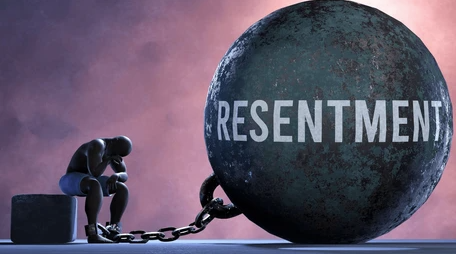
The Other Side of Acceptance: Caregiving, Family Resentment, and the Weight of Doing It All
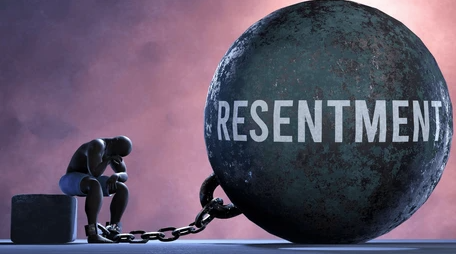
In my last blog post, I wrote about acceptance. Specifically, the difficult conversation I had with Mom about her current situation, her health, and the possibility of moving into assisted living.
But there's another side of that coin.
Resentment.
And I realized today that I feel some resentment toward Mom, caregiving, and the rest of the family.
Let me explain.
How did I become the person doing all this?
Let's look at the circumstances.
I'm not currently working. I'm close by. I'm living in my parents' home. I have time available, at least when I'm not recovering from dialysis or dealing with my own medical issues.
My kids live in other states. I don't have a wife (there is an Airica, though). And somehow, this enormous responsibility of helping Mom has become something I've taken on.
Here's the important distinction: I chose this.
Nobody forced me. Nobody coerced me. Nobody held a meeting and assigned me the job of family caregiver.
I decided to visit Mom. I decided to help with the assisted living search. I decided to get involved with the financial arrangements, the appointments, the questions, the concerns, and all the other things that come with being a caregiver.
I made that decision.
But making the decision doesn't mean it never gets difficult. It doesn't mean I won't get tired, frustrated, or resentful.
And today, I felt quite a bit of resentment.
The clothes conversation
After visiting Mom and having the difficult conversation I wrote about in my previous post, I asked her if there was anything I could bring her.
She asked me to bring some clothes.
That seemed simple enough.
But I remembered that my brother and sister-in-law had said they were going to get her clothes and drop them off Saturday or Sunday. I wanted to make sure Mom wasn't confused about whether they had already visited or brought anything.
So I got in the car and texted them both.
Me: "Did you drop off clothes?"
Answer: "No, not yet"
Me: "Are you dropping off clothes today?"
Answer: "No, we r in Myrtle beach"
Fantastic.
You mentioned yesterday that you were getting clothes and would be dropping them off. Now you're in Myrtle Beach, about two hours away.
And that's when the resentment started bubbling up.
The list running through my head
I could feel the thoughts piling up:
You said you were getting her clothes.
You said you would drop them off.
You can't visit her for more than an hour a day?
Why did you need to go to Myrtle Beach today?
What happened to the clothes?
Am I the only one who is supposed to make sure everything gets done?
And that wasn't even the whole list.
There's also a brother in Colorado who said he’d come out to visit and help. That hasn't happened either.
Meanwhile, I'm here. I'm visiting. I'm asking questions. I'm looking at assisted living facilities. I'm trying to work through the financial arrangements. I'm dealing with the day-to-day conversations and complaints.
And I'm also trying to manage my own life and health.
I know everyone has their own schedules, responsibilities, and circumstances. I don't know everything that went into their decision to go to Myrtle Beach. But when someone says they'll do something and then doesn't, it's frustrating.
Especially when the responsibility keeps landing in the same place.

The resentment isn't really about a bag of clothes
Let's be clear. This isn't really about the clothes.
The clothes are just the latest example of something much bigger.
It's about expectations, commitments, and the feeling that the responsibility of caring for Mom is unevenly distributed.
I don't expect everyone to drop everything and spend every day at the facility. I understand that people have jobs, families, obligations, and lives of their own.
But there's a difference between having a busy life and saying you’ll do something and not following through.
And there's a difference between visiting Mom and actually helping with the responsibilities that come with caring for her.
Sometimes a visit is just a visit. Sometimes caregiving means making phone calls, arranging things, researching options, following up, handling finances, and managing the details nobody necessarily sees.
Those details add up.
And when you're the person handling most of them, it can feel pretty lonely.
I chose this, so what am I resentful about?
This is where I have to look at myself.
I chose to take on this role. I wasn't assigned it. I didn't have to be the person who visits, researches, coordinates, and tries to make things happen.
But I did.
Does that mean I have no right to feel frustrated when other family members don't follow through? No.
Does it mean I should expect everyone else to contribute in the same way I do? Probably not.
And does it mean I should keep score? That's where I need to be careful.
Resentment can become a dangerous thing. It can take a legitimate frustration and turn it into something that consumes far more energy than the original problem deserves.
I can spend the rest of the evening replaying the Myrtle Beach conversation, thinking about the clothes, the missed visits, and the brother in Colorado.
Or I can acknowledge that I'm frustrated, recognize what I can and cannot control, and decide what I’ll do next.
Time for another dose of acceptance
I wrote about acceptance in my previous post. Today, I realized I need to practice it myself.
I need to accept that my siblings may not participate the way I would like them to.
I need to accept that people make commitments and sometimes don't follow through.
I need to accept that I cannot make other people prioritize something the way I prioritize it.
And I need to accept that choosing to be Mom's caregiver doesn't mean I have to do everything without boundaries.
I can ask for help. I can communicate what needs to be done. I can be clear about what I can handle. And I can stop assuming that everyone else will approach this responsibility the way I do.
Most importantly, I need to be careful not to let resentment drive my decisions.
I want to help Mom because I chose to help Mom. I don't want to do it while carrying around a running list of everything everyone else hasn't done.
That's easier said than done, especially on days like today.
Acceptance doesn't mean pretending everything is fine
I can accept that my brother and sister-in-law went to Myrtle Beach. I can accept that my brother in Colorado hasn't made the trip yet. I can accept that my family may not show up in the way I hoped.
But acceptance doesn't mean I have to pretend that it doesn't bother me.
It doesn't mean I can't talk about expectations. It doesn't mean I can't ask people to follow through. And it certainly doesn't mean I have to take on every responsibility simply because I'm nearby.
I have my own health to manage. I have dialysis. I have recovery. I have relationships and a life outside the skilled nursing facility.
I need to remember that, too.
So today, after writing about acceptance, I discovered something else I need to work on.
Resentment.
And apparently, I need another helping of acceptance.
Maybe a large one.
Stay tuned. This caregiving journey continues, and I'm learning just as much about myself as I am about helping Mom.

A Bittersweet Trip to the Eye Doctor

I’m sitting at the eye doctor’s office today—not for myself, but for my dad. He has a regularly scheduled appointment to help manage the macular degeneration in both eyes.
I drove him in his car. He can’t get into mine, a BMW X6, so he bought a Chevrolet Blazer. I’m happy to take him. He’s driven me to plenty of appointments over the years.
But today feels bittersweet.
Dad got ready on his own. He got dressed, made it down the stairs, climbed into the car, buckled his seat belt, got out at the office, and walked inside. It was good to see him manage something important to him.
And it left me thinking about what else seems important. Seeing the TV and scrolling on his phone appear to matter. But he hasn’t seen his wife since around the end of August.
He made one attempt. I didn’t take him, and I own that. But there hasn’t been another attempt since. He says he’s in too much pain to go.
Today, he made it to this appointment.
I’m not saying his pain isn’t real. I’m sitting with the contradiction, and with the sadness of watching him make the effort for one thing while the distance from his wife continues. I can’t make that choice for him.
What I Can See, What I Can’t Control
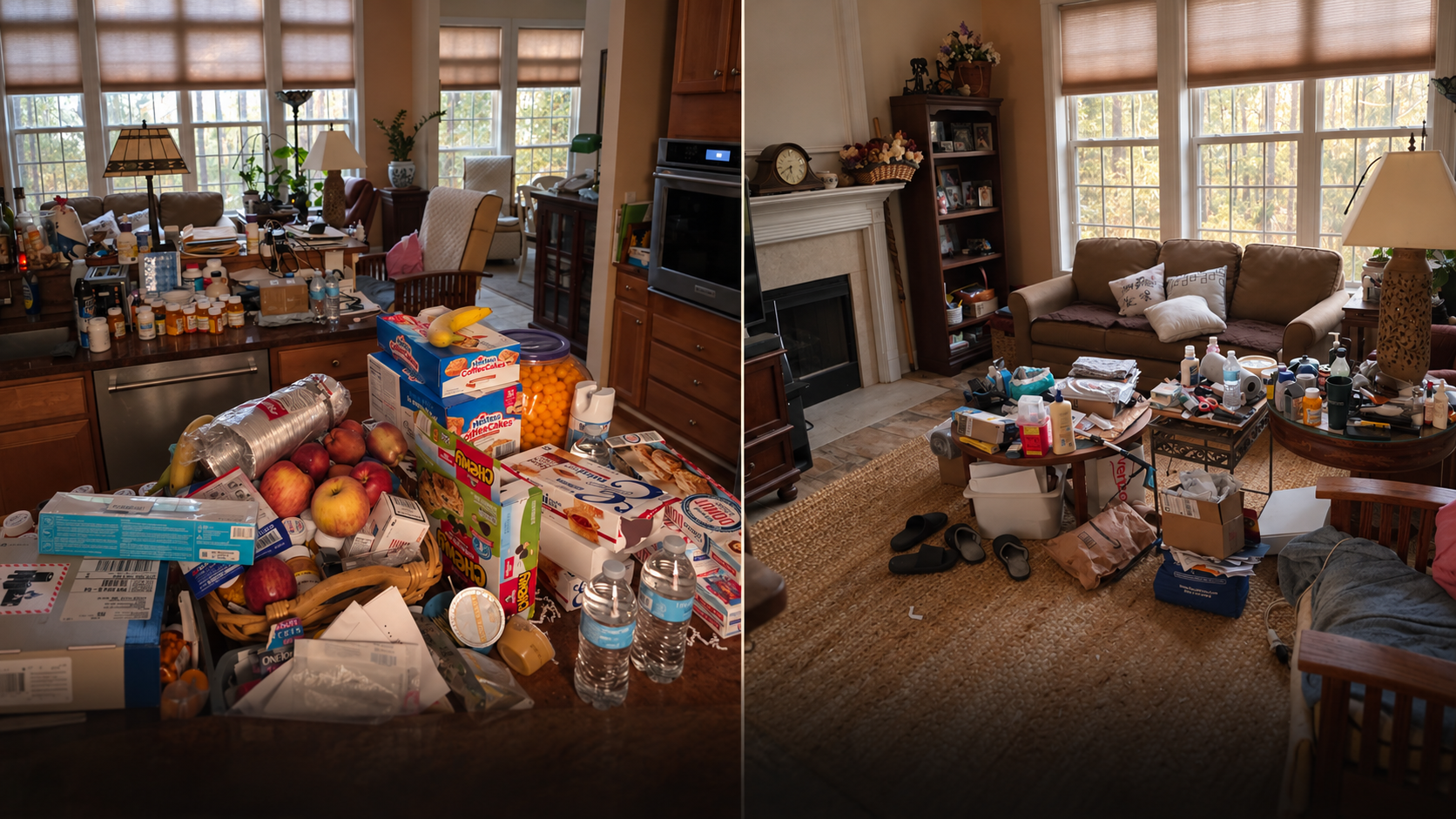
I’ve written before about the struggle with my mother and her second stroke, about setting boundaries with my father, and most recently about the way his home is becoming more cluttered. I want to share what I’ve been noticing—and what I’m learning to do with it.
I’m an alcoholic in recovery. I’ve been sober for 17 years. I believe I’ve always had an addictive mind. Alcohol was my main way of dealing with life—or avoiding it—but food, television, and other things could take hold, too. At one point, I weighed at least 350 pounds. I say “at least” because that’s where the scale stopped.
I understand that alcoholism is a disease, and that genetics can play a part. We inherit genes from both parents. But recovery has also taught me not to point fingers or label someone else. Only a person can identify their own addiction. I can speak about my experience and notice similarities, but I can’t diagnose my father.
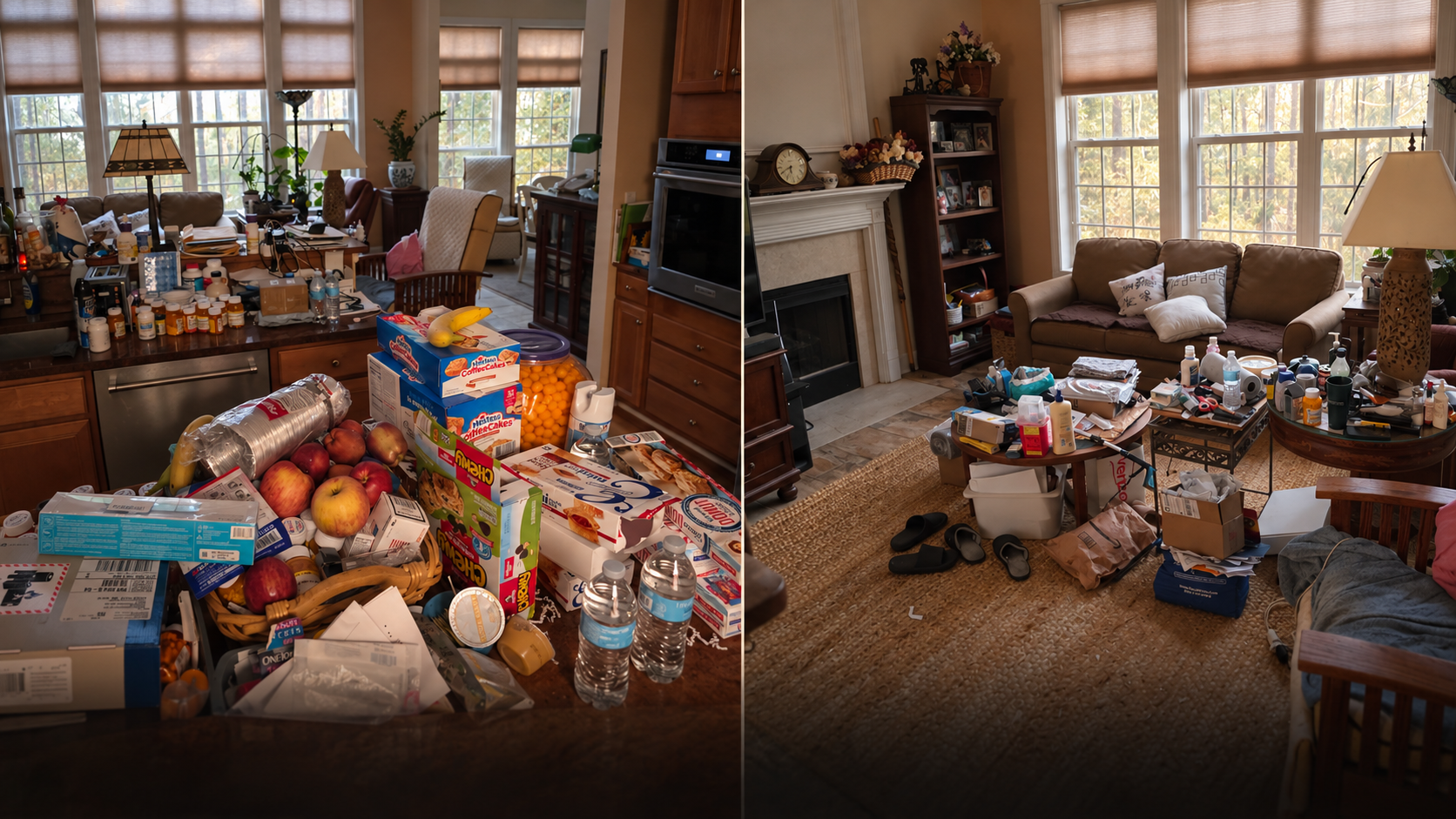
For a long time, I’ve noticed that he holds on to things “just in case.” There are expired medications, papers stacked near his computer that never seem to get looked at, and old mail. Lately, I’ve also noticed more processed food coming into the house through Amazon.
When my mother was living at home, she wouldn’t have bought this much junk food. Without her there, my father’s choices seem to be changing. I’m not going to police what he buys or try to manage his home.
This morning, I took a picture of the first floor—the kitchen and the TV area. It was never a Better Homes & Gardens photo, but it used to be tidier and stocked with healthier options. Seeing the difference was hard.
Still, noticing something doesn’t mean I can control it. I’ve set my boundary. My father’s choices are his to make, and my recovery and well-being are mine to protect.
It is what it is. I can care, be honest about what I see, and let go of what isn’t mine to manage.
A Cooler Afternoon with Mom, a Warmer Conversation, and the Ongoing Battle for Boundaries
Today, I'm sitting outside with Mom at the skilled nursing facility. It's about 20 degrees Fahrenheit cooler out here, which makes a huge difference. We're enjoying the fresh air and talking, and I'm doing what I often do: writing as life unfolds around me.
Our conversation has turned to my father, her husband, and what's going on at home.
Sometimes, the conversations you have with your mother aren't just about her recovery or what happens next. They become conversations about the life she's lived, the relationship she's in, and what's missing.
And today, that's where we are.
Another Round with Dad
Last night, my father and I got into it again.
This time, we argued about the outdoor garbage receptacles.
Yes, the garbage cans.
On Thursday, he asked if I had brought the receptacles in from the curb. I answered: Yes, they had been brought in.
Fast-forward to last night.
He asked me the same question again.
My response was straightforward: "I told you yesterday."
He came back with, "I still don't know if they were brought in."
At that point, I gave him my final answer on the subject:
"You can get up and look."
Apparently, that wasn't the response he wanted.
He then told me we needed to be civil.
My response?
"How am I not being civil?"
I'm not refusing to be civil. I'm refusing to be a servant.
There's a difference.
I'm setting boundaries, and apparently, those boundaries aren't sitting well with him.

Show My Belly? No, Just Do the Right Thing.
The conversation continued.
My father asked what he should do. Did I want him to "show his belly"?
For anyone unfamiliar with that expression, he was referring to making himself submissive to me.
My answer was simple.
"No, I want you to do the right thing and give Mom the money she earned."
That's what this is about.
My mother has spent decades working and earning money. I have Power of Attorney over her assets to help manage her finances and arrange for her care. Yet my father has voluntarily declined to share information about her employer's 401(k).
Meanwhile, I'm touring assisted living facilities, trying to figure out what Mom's next chapter might look like and how to pay for it.
This isn't about me wanting control over my father.
It's about making sure Mom's resources can be identified and used appropriately for her care.
I don't need him to be submissive to me. I need him to cooperate in doing what's right for Mom.
Those are two very different things.
Meanwhile, Back at the House...
There's another part of this situation that I can't ignore.
While all this is happening, the clutter at home keeps growing.
I'm talking about junk food, boxes, papers, old medication, and other things creeping into spaces where they don't belong.
It's becoming increasingly difficult to ignore.
I'm starting to wonder whether my father is developing hoarding behaviors. I can't diagnose him, and I don't know what's driving the accumulation, but from where I'm standing, the situation is getting out of control.
Things seem to be spreading everywhere.
And before anyone points fingers, let me acknowledge something: I don't live in the tidiest room myself. I'm not going to pretend my personal space belongs in a home organization magazine.
There's a difference, though, between having a messy room and watching clutter accumulate throughout the living space until it becomes a growing concern.
I'm not claiming to have a perfectly organized home. I'm saying that what I'm seeing is becoming a problem.
I'm planning to take some pictures to share in a future post. I want people to understand what I'm talking about, not just read my description and imagine something different.
I'll be mindful to protect personal information in any pictures I share, especially if medication labels or other private details are visible.
The clutter is another layer of stress in an already difficult situation.
I'm trying to help Mom transition to a more suitable living arrangement while navigating a strained relationship with my father. Meanwhile, the house where we both live is becoming increasingly difficult to deal with.
It's a lot.

Sitting Outside with Mom
And that brings me back to where I am today.
I'm outside with Mom, enjoying the cooler weather and talking.
She's telling me about other people at the facility.
She's noticed couples who are working together in therapy. She's seen partners visiting their loved ones. She's watching people show up for one another during a difficult chapter of life.
And I can't help but notice the contrast she's describing.
Her husband hasn't been showing up for her in that way.
At least, that's how she's experiencing it.
He's not there working alongside her in therapy. He's not visiting her or spending time with her the way she sees other partners do for their loved ones.
Instead, I'm the one making the visits, asking questions, touring facilities, and trying to figure out the next steps.
I'm not looking for a medal. I'm her son.
But I can understand why seeing those other couples might bring up some difficult feelings for her.
When recovering from a serious medical event, notice who's there for you. You notice who makes the effort. You notice the people who sit beside you, encourage you, and help you get through the day.
And sometimes, you notice who's missing.
I don't know everything that's happened throughout their 56 years of marriage. I'm not going to pretend that I do.
But I can see what's happening now, and I can hear what Mom has to say.
Boundaries Aren't the Same as Being Uncivil
My father and I are clearly not on the same page.
He wants us to be civil.
I want us to do what's necessary to help Mom.
Those goals shouldn't be incompatible.
We can disagree without being disrespectful. We can have difficult conversations without turning every question into a power struggle. We can work together on practical matters without one person expecting the other to be at their beck and call.
And we can discuss Mom's finances without turning the conversation into a debate about who is submitting to whom.
I'm not asking my father to show his belly.
I'm asking him to help resolve the financial questions standing between Mom and the care she wants.
I'm also trying to establish boundaries around what I'm willing to do, how I'm willing to be treated, and how much energy I can devote to these ongoing conflicts.
I have dialysis. I have my own health to manage. I have recovery meetings, responsibilities, and a life outside the skilled nursing facility.
I cannot spend every day fighting battles that cooperation could resolve.
And I don't want to.
What Happens Next?
For now, I'll keep moving forward.
I'll continue exploring assisted living options for Mom. I'll continue trying to understand her financial resources. I'll continue visiting her and listening to what she has to say.
And I'll continue setting boundaries when conversations with my father become unproductive.
The situation at home is another concern I'll have to address, especially as the clutter continues to spread.
I don't have all the answers.
I don't know how this will ultimately play out.
But sitting outside with Mom today, listening to her talk about the couples she sees working together, has given me something to think about.
Sometimes, support isn't complicated.
It's showing up.
It's sitting beside someone.
It's helping them take the next step, even when that step is difficult.
And sometimes, it's doing the work that needs to be done without expecting applause.
That's what I'm trying to do for Mom.
As for the garbage cans, I think we've established that my father can check them himself.
I'm her son, not his servant.
When Helping Mom Means Setting a Boundary
This afternoon, I got frustrated with Mom.
Really frustrated.
It was lunchtime at the skilled nursing facility, which meant it was also time for one of Mom's favorite activities whenever she's in an institutional setting:
Complaining about the food.
Her favorite word seems to be “terrible.”
She uses it a lot.
More than a lot.
Today, though, the frustration wasn't just about whether lunch deserved another terrible review.
While Mom ate, I stood in the hallway when one of the CNAs approached me. She brought up several concerns.
Mom isn't eating enough. She wants to go to sleep immediately after eating, even though she's been told she needs to remain upright for at least 30 minutes. Her stomach hasn't really settled since her second stroke. She's also frustrated because she says it sometimes takes too long for someone to respond after she pushes the call button.
There may have been a few other things mentioned that I'm forgetting.
I understand the complaints individually.
Put them all together, though, and I started getting frustrated.
What Does Mom Actually Want?
We've talked about this before.
Mom doesn't want to go home. She wants to leave skilled nursing and eventually move into an assisted living facility.
I'm touring two assisted living facilities this week to help make that happen.
But I explained something to her again today: moving to another facility won’t necessarily solve everything she doesn't like about this one.
There will still be other residents.
Staff will still care for multiple people.
There will still be menus she doesn't control.
There will still be times when she pushes a call button, and someone doesn't magically materialize next to her bed.
That's part of the compromise that comes with choosing a facility over living at home.
At home, she could have significantly more control over what she eats, when she eats, when she goes to bed, and many of the other things she's frustrated about now.
She doesn't want that option.
I respect that.
But choosing another option means accepting compromises.
And that's where we weren't getting anywhere today.
I'm Not Going to Chase the Impossible
I finally told Mom something that may have sounded harsh.
I'm not going to put in all the work required to find another facility, arrange everything, deal with the finances, move her, and get her settled somewhere else if we're going to repeat the same cycle.
New building.
New room.
New staff.
New food.
Same word:
“Terrible.”
I'm willing to help her find a place where she's safe, comfortable, and treated well.
I'm willing to tour facilities.
I'm willing to ask questions.
I'm willing to work through the financial issues.
I'm willing to help her get where she says she wants to go.
I can’t guarantee she’ll like everything.
No facility can do that.
I Had to Remove Myself
Eventually, I realized the conversation wasn't accomplishing anything.
I was frustrated.
She wasn't changing her position.
I wasn't changing mine.
Continuing the conversation would only make both of us more upset.
So I told her that I needed to remove myself from the situation.
That's a boundary I need right now.
There is a difference between helping someone and taking responsibility for making them happy.
I can help Mom.
I can't manufacture happiness for her.
And I can't keep running from facility to facility looking for a place where absolutely everything will be exactly the way she wants it.
Then There's the Money
There's another practical reality.
Assisted living costs money.
Potentially a lot of money.
If Mom is going to be unhappy regardless of where she lives, I have to ask a difficult question:
Why spend a significant amount of her money changing locations if the result will be the same dissatisfaction?
That's where my mind went today.
If she's going to be unhappy in assisted living and unhappy at home, then financially, being unhappy at home is considerably less expensive.
That doesn't mean I've decided she needs to go home.
It doesn't mean I'm abandoning the search.
I'm still touring the facilities this week.
But I am starting to recognize that finding Mom a new place to live and finding Mom a place where she'll never complain are two completely different assignments.
I can work on the first one.
The second one isn't mine.
Today, I needed to remind myself of that—and walk away before frustration took over the conversation.
Tomorrow is another day.
And apparently, somewhere out there, I still need to find a facility whose food doesn't earn the word “terrible.”
Wish me luck.