
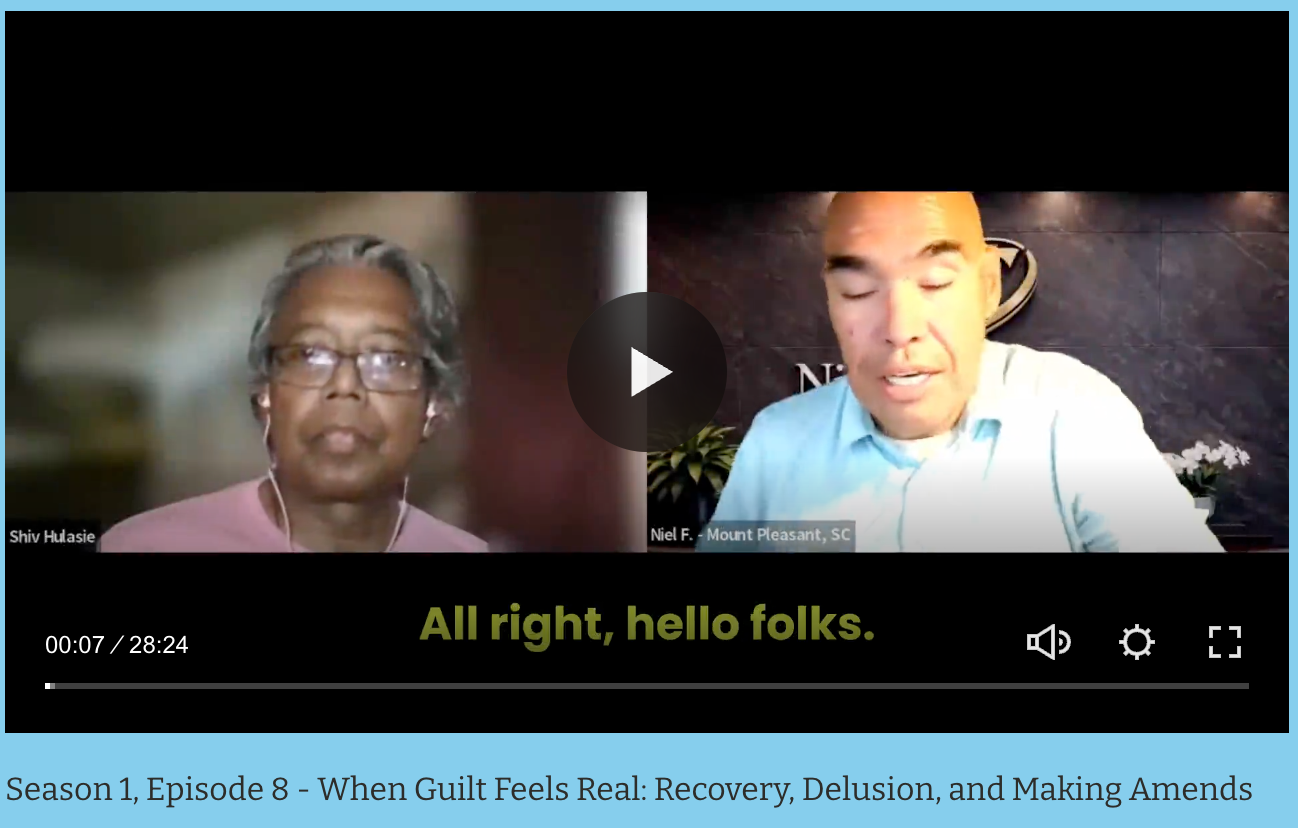
When Guilt Feels Real: Recovery, Mental Health and Making Amends
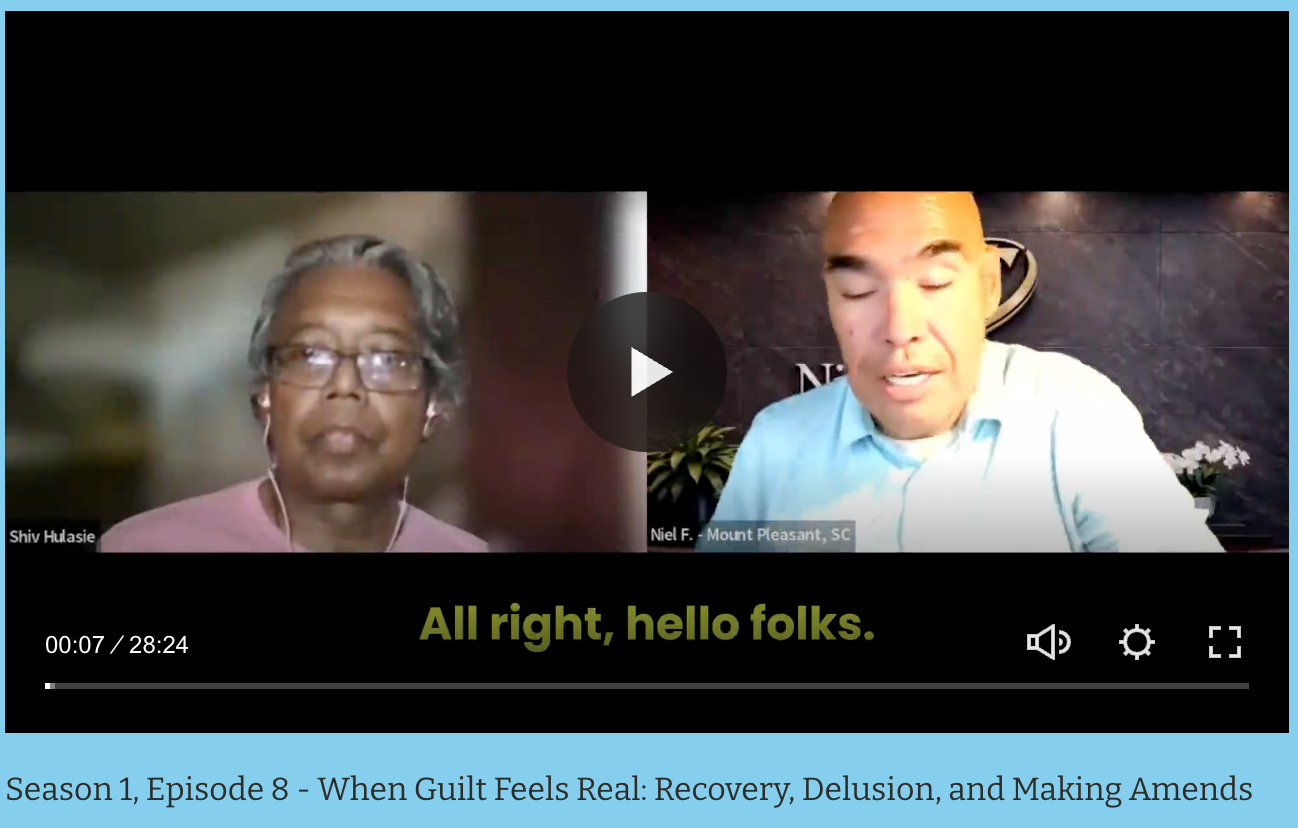
The Down a Hole podcast is back, and Fish and I are tackling a difficult question: What happens when someone feels genuine guilt about events experienced during psychosis—even after realizing those events never actually happened?
In this episode, we discuss a man in recovery who believed he had three daughters and had failed them as a father. The daughters were not real, but his memories and guilt still felt very real to him. Should he make amends to people who never existed? Could doing so provide relief, or would it reinforce the delusion?
There is no simple answer. Our conversation explores the complicated intersection of sobriety, mental health, guilt, accountability, and spirituality. We also discuss why someone facing these questions should not try to work through them alone. A therapist, psychiatrist, sponsor or another qualified and trusted person can help determine the healthiest next step.
Watching this episode may offer a different perspective on recovery and a better understanding of how real another person’s experiences can feel—even when those experiences do not match our reality. It also reminds us that listening without immediately judging or dismissing someone can create the safety needed for an honest conversation.
The full podcast is available at NielFlamm.com/podcast.
While you are there, check out the other podcast episodes available on the site. Each conversation explores different experiences, perspectives, and challenges. Watching them may help viewers feel less alone, understand someone else’s journey or begin a meaningful conversation of their own.
Sometimes the greatest benefit of a podcast is not that it provides every answer. It encourages us to ask better questions—and to listen when someone is brave enough to share a vulnerable part of their life.
When Guilt Feels Real: Recovery, Delusion, and Making Amends
The Down a Hole podcast is back.
In this episode, Fish and I explore a complicated question: If someone feels guilt over events experienced during psychosis—even when those events never actually happened—does making amends still have a place in recovery?
We discuss sobriety, mental health, accountability, vulnerability, and the importance of seeking guidance instead of facing difficult thoughts alone.
Watch the full podcast at NielFlamm.com/blog.
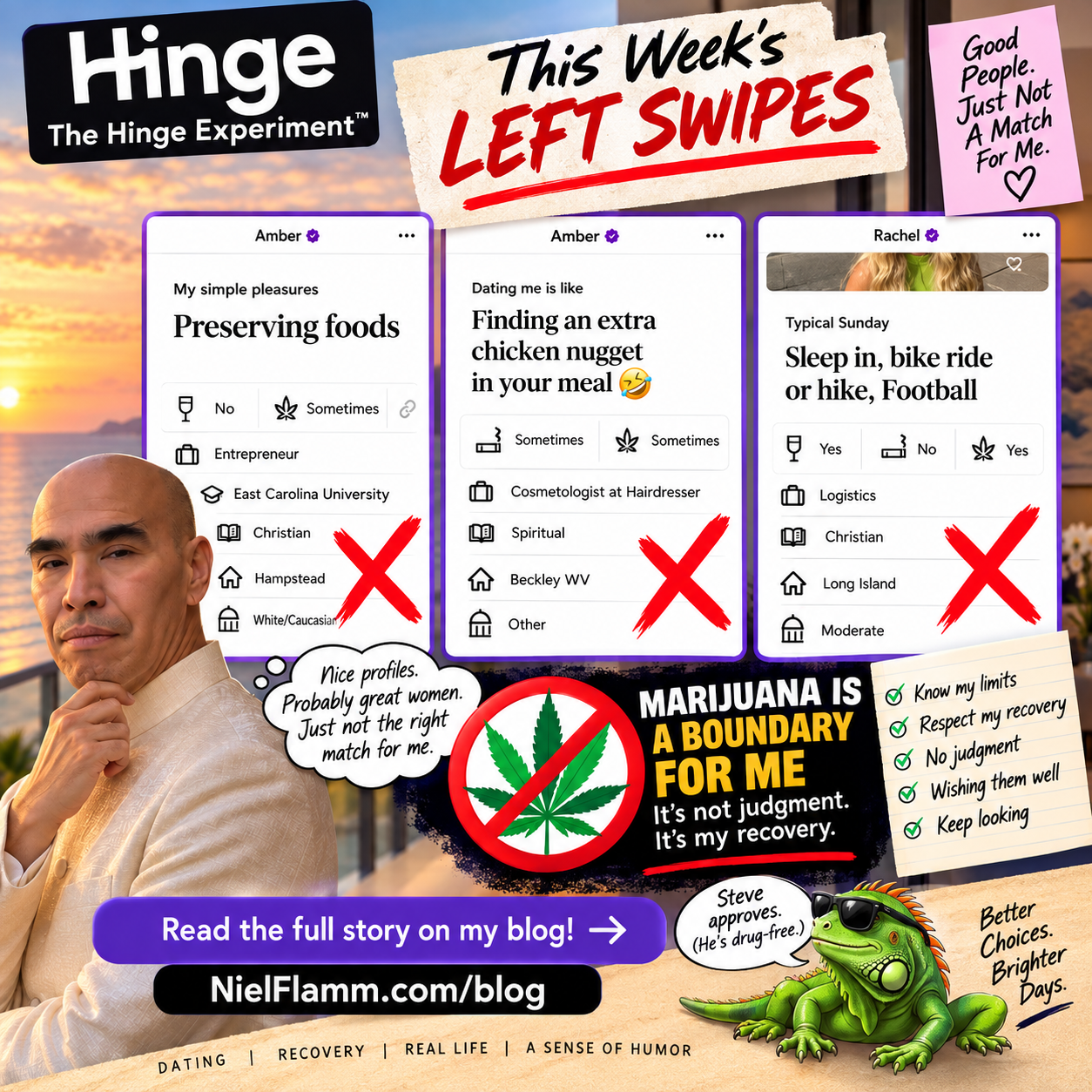
The Hinge Experiment: Sometimes the “X” Isn’t Personal—It’s a Boundary
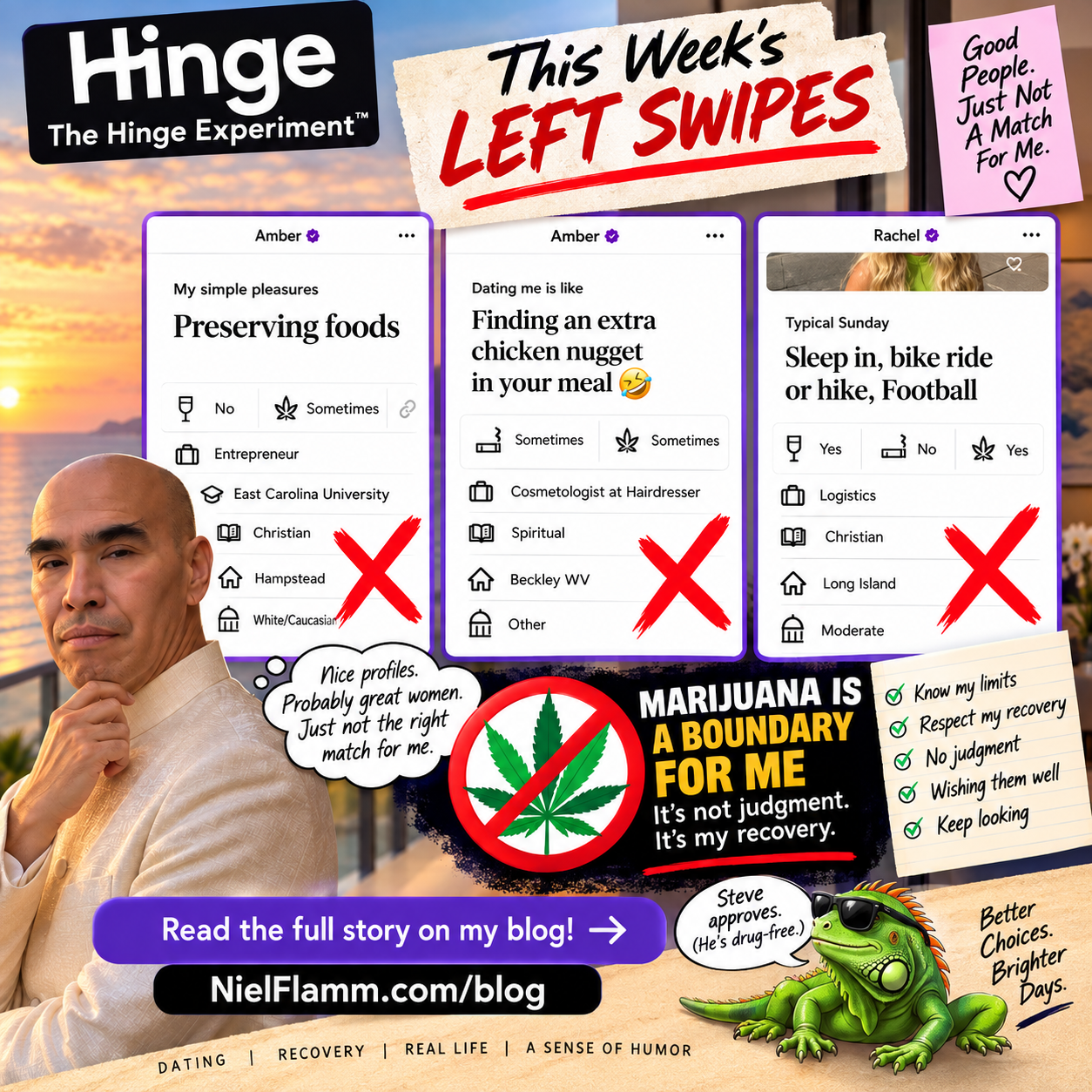
The Hinge Experiment continues.
Still no magical love story. Still no woman standing outside my door holding a Coke Zero and saying, “Niel, I've been looking everywhere for you.”
But I am looking.
And looking also means clicking the X sometimes.
Recently, I came across three profiles of women who, from what I could see, seem perfectly nice. Interesting careers, hobbies, personalities, and lives of their own.
And I clicked X on all three.
Not because I think there's anything wrong with them.
Not because of their appearance.
Not because one likes preserving food or another thinks dating her is like finding an extra chicken nugget in your meal—which, frankly, is a pretty strong sales pitch.
It came down to one little line in the profiles:
Marijuana: Sometimes.
For me, that's a no.
Before Someone Lights the Torches—or Something Else
This isn't me telling anyone else how to live.
I'm not starting the Niel Flamm War on Weed.
I'm also not interested in debating whether marijuana should be legal, illegal, medicinal, recreational, taxed, sold, grown, smoked, eaten in a gummy, baked into a brownie, or delivered by a talking iguana named Steve.
People make their own choices.
This is mine.
I'm in recovery, and I've learned over the years that I need to know my boundaries and protect them.
Based on what I've seen and experienced, I associate marijuana use with the potential to lead toward other substance use. I also know there is debate and research around the whole concept of a “gateway drug,” so I'm not presenting my personal experience as a universal scientific rule.
I don't need it to be one.
For my recovery, I choose not to have marijuana as part of my environment or romantic relationship.
That's enough.
My Friends Are a Different Story
I have friends and fraternity brothers who may enjoy marijuana.
They're adults.
They make their decisions.
I make mine.
In most cases, they consciously choose not to use it around me.
I appreciate that.
They aren't required to live their lives according to my recovery, and I don't expect them to.
But respecting my boundary tells me something important about the friendship.
They can do their thing.
I can do mine.
And nobody needs to turn Thanksgiving dinner into a TED Talk about cannabis.
Alcohol Is Weirdly Different for Me
This may sound contradictory, but I've gone on dates with women who drink alcohol responsibly.
And I find it absolutely fascinating.
Someone orders a glass of wine.
Then perhaps...
another glass of wine.
And then...
THEY STOP.
What kind of sorcery is this?
Two glasses?
You mean you're not immediately calculating how many more you can consume, where the next drink is coming from, and whether there's enough alcohol available to completely obliterate yourself?
Apparently, some people drink because they enjoy a drink.
Who knew?
That was never how I drank.
For me, drinking wasn't:
"This Cabernet has lovely notes of blackberry."
It was more:
“Excellent. How quickly can we make consciousness optional?”
That's one of the reasons I know I'm an alcoholic and why recovery remains important to me.
Someone else's responsible alcohol use doesn't automatically bother me. I know where I am with alcohol today.
Marijuana hits differently for me.
So I draw the boundary there.
Dating Is Also About Knowing What Doesn't Work
I've written a lot during The Hinge Experiment about wanting matches.
Then I finally cleaned out my matches because conversations weren't going anywhere.
Now I'm clicking through profiles looking for someone new.
But here's something important:
Getting a match isn't the goal.
Finding someone compatible is.
If I ignore something that's important to me just because someone is attractive or because my match queue currently resembles an abandoned shopping mall, what exactly am I accomplishing?
I could click the heart.
Maybe she clicks mine.
Maybe we start talking.
Maybe we like each other.
Then eventually I say:
“Oh, by the way, marijuana use is a boundary for me.”
And she says:
“Oh, by the way, I enjoy marijuana.”
Congratulations!
We've successfully discovered something the profile already told us.
That's not fair to either person.
The X is much easier.
It's Not Rejection of the Person
That's probably the biggest point.
I don't know these women.
For all I know, they're wonderful.
They may be smart, hilarious, compassionate, successful, and fantastic partners for someone.
I'm simply not that someone.
And that's okay.
Dating isn't about determining whether someone is a good or bad person.
It's determining whether two people might be good together.
There are things someone else might see on my profile and immediately think:
NOPE.
I have one leg.
I'm bald.
I'm in recovery.
I write publicly about my life.
I apparently have an imaginary iguana named Steve who has become a recurring character in my dating blog.
Take your pick.
Someone can hit X.
I'm going to survive.
So, Ladies, I Wish You Well
To these three women—and anyone else whose profile I pass because marijuana use is listed:
There is no judgment from me.
No lecture.
No attempt to change you.
No angry finger wagging from the other side of the Hinge algorithm.
Just a recognition that we probably aren't the right match.
I genuinely hope each of you finds your person.
Someone who appreciates your humor, your quirks, your interests, and whatever makes you uniquely you.
I'll keep looking for mine.
The Hinge Experiment continues.
The queue may still be empty, but I'm not going to abandon the things that matter to me just to fill it.
Besides...
Steve the Iguana has informed me that he's completely drug-free.
Finally, a viable candidate. 🦎
Two Stories About Recovery That Hit Differently This Week
On Monday, I heard about two very different stories involving two very famous people. Both made me think about recovery, sobriety, addiction, and something those of us around recovery learn pretty quickly:
There is no finish line.
The first story was about Brad Pitt.
I haven't talked to Brad Pitt. He hasn't called me lately. We haven't grabbed coffee. And until he invites me over to hang out, I can only go by what he actually said publicly.
In a recent Esquire interview, Pitt talked about having been sober for seven years and then deciding to drink again. He described his drinking now as being more restrained and acknowledged that there have already been a couple of occasions when he realized larger quantities weren't good for him.
This is also the same Brad Pitt who publicly thanked Bradley Cooper in 2020 for helping him get sober.
I'm not here to judge Brad Pitt's decision.
Recovery is personal. What works—or doesn't work—for Brad Pitt is Brad Pitt's business.
But his story caught my attention because I've heard versions of it before.
I've sat in meetings and heard people talk about having years of sobriety before eventually deciding they didn't need recovery anymore.
Maybe things were different now.
Maybe enough time had passed.
Maybe they had learned their lesson.
Maybe this time they could drink like a "normal" person.
And sometimes it started exactly that way.
Moderately.
One drink.
A glass of wine with dinner.
Only on vacation.
Only on weekends.
Until it wasn't moderate anymore.
Those are the stories I've heard. That doesn't mean Brad Pitt's story will end the same way. I don't know him, and neither I nor anyone else should pretend we know what his future holds.
But it reminds me why recovery asks us to focus on today.
Not seven years from now.
Not seven years ago.
Today.
Then There Was Hayden Panettiere
The second story was much harder to hear.
Actress Hayden Panettiere died at 36 in Greenville, South Carolina.
I knew her work. I watched Remember the Titans. I watched I Love You, Beth Cooper. I watched Scream 4.
She was somebody I'd seen on a screen for years.
She had also spoken publicly about struggles with addiction and depression.
According to authorities, Panettiere was found unresponsive and in cardiac arrest. Emergency responders attempted to resuscitate her, but she was pronounced dead. An autopsy reportedly found no trauma that contributed to her death.
At the time I'm writing this, her official cause and manner of death have not been determined. Toxicology results are still pending.
That's important.
I'm not going to declare that addiction caused her death when investigators haven't determined that.
I'm not going to turn someone's death into speculation.
But hearing about her death still made me think about recovery.
Because I've seen what addiction can do.
I've known people who got frighteningly close to dying.
I've known people who came back.
And I've known people who didn't.
There Is a Solution
That's really why I'm writing this.
Not because Brad Pitt decided to drink again.
Not because we know what caused Hayden Panettiere's death.
I'm writing it because somebody reading this might be struggling right now.
Someone might be wondering whether they really have a problem.
Someone might have been sober for years and be thinking, Maybe I've got this figured out now.
Someone might have relapsed yesterday and believe they've thrown everything away.
Someone else might be sitting alone thinking there isn't another way.
There is.
Recovery isn't reserved for celebrities.
It isn't reserved for people with money.
It isn't reserved for people who haven't relapsed.
It isn't reserved for someone who has reached some imaginary "bottom."
You don't have to wait until everything is gone.
You don't have to wait until your family gives up.
You don't have to wait until you're sitting in a hospital.
You don't have to wait until you're dying.
There is a solution.
There are meetings. There are treatment programs. There are professionals. There are recovery communities filled with people who understand exactly what it feels like to wonder how the hell life got to this point.
And there are people willing to help.
Sometimes the hardest part is simply admitting:
I can't do this by myself anymore.
You don't have to.
Whether someone has seven hours, seven days, seven months, or seven years, recovery still happens the same way.
Today.
Then tomorrow, we try to do it again.
There is a solution, and it's available to all.
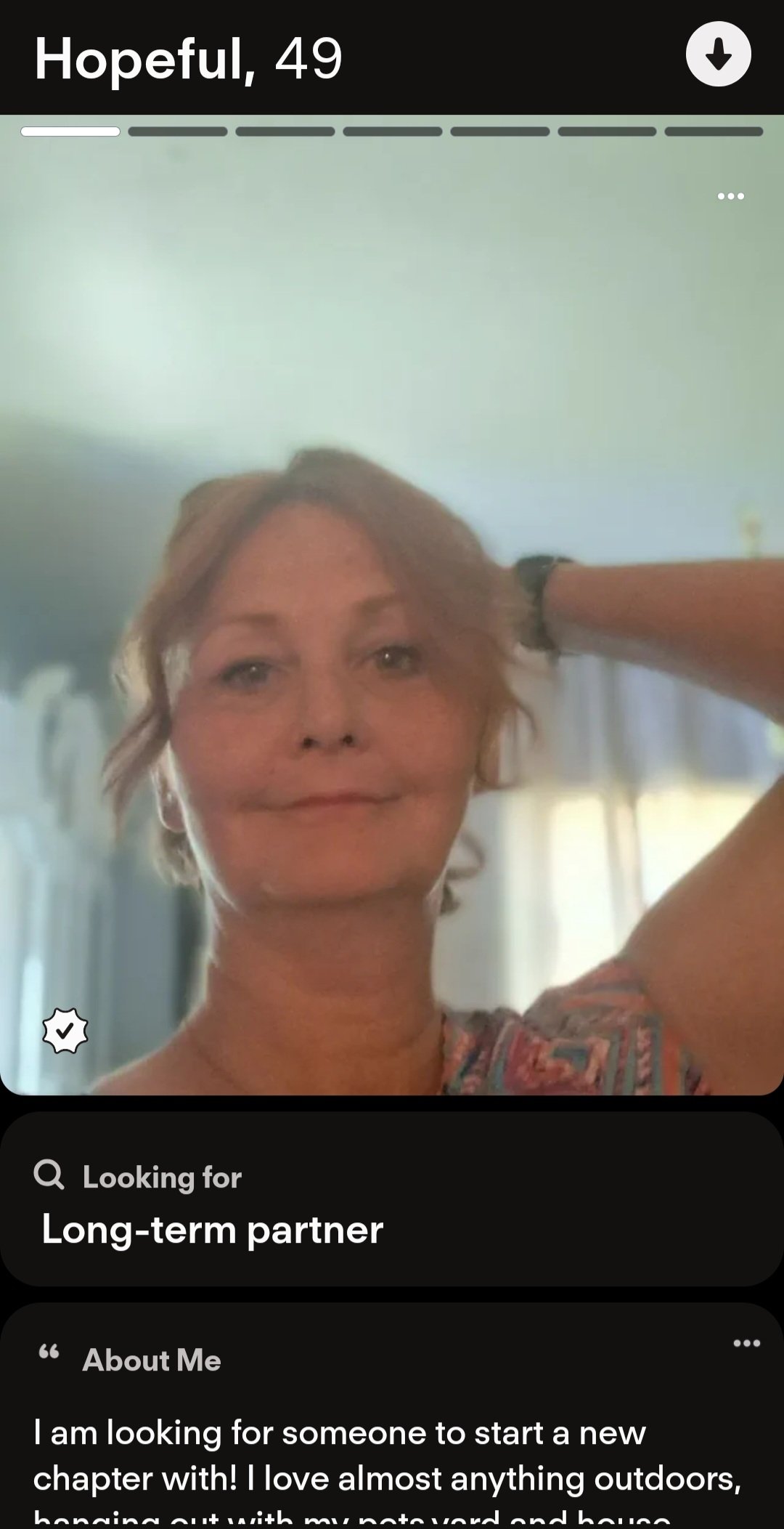
I Thought I Was Supposed to Be My True Self? Another Adventure on The Tinder
After approximately 2 billion swipes left (nope) and right (why not?), I finally got another match on the Tinder.
Her profile name?
"Hopeful."
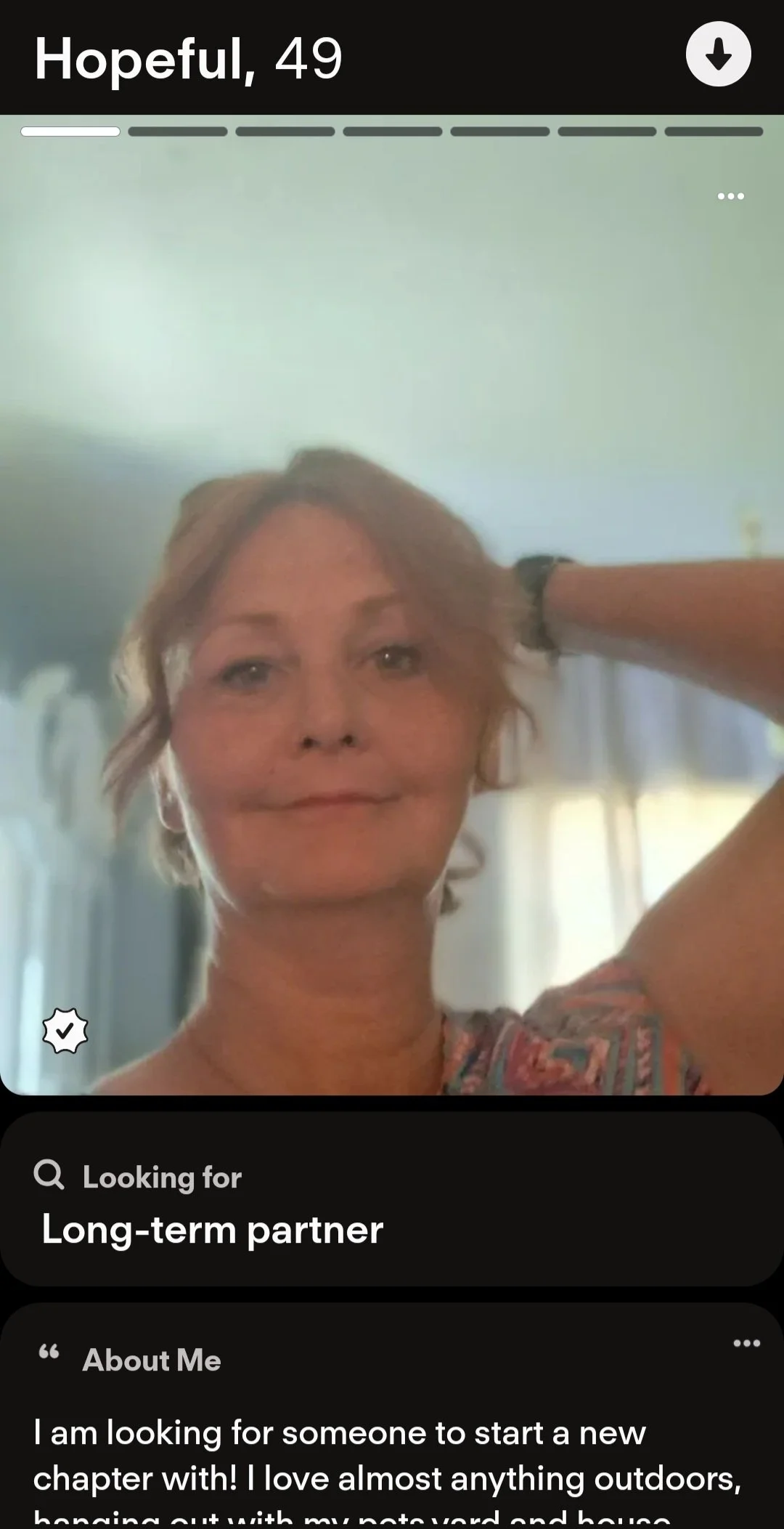
Well, that's already one more hopeful person than I expected to find on the Tinder.
Hopeful is a straight, 5'8" woman who describes herself as:
"Down to earth, laid back woman that is looking for something real..."
Excellent.
She also wants:
"Someone that can be just there true self, no lies, no games no drama just your true self no matter what and I will be the same!"
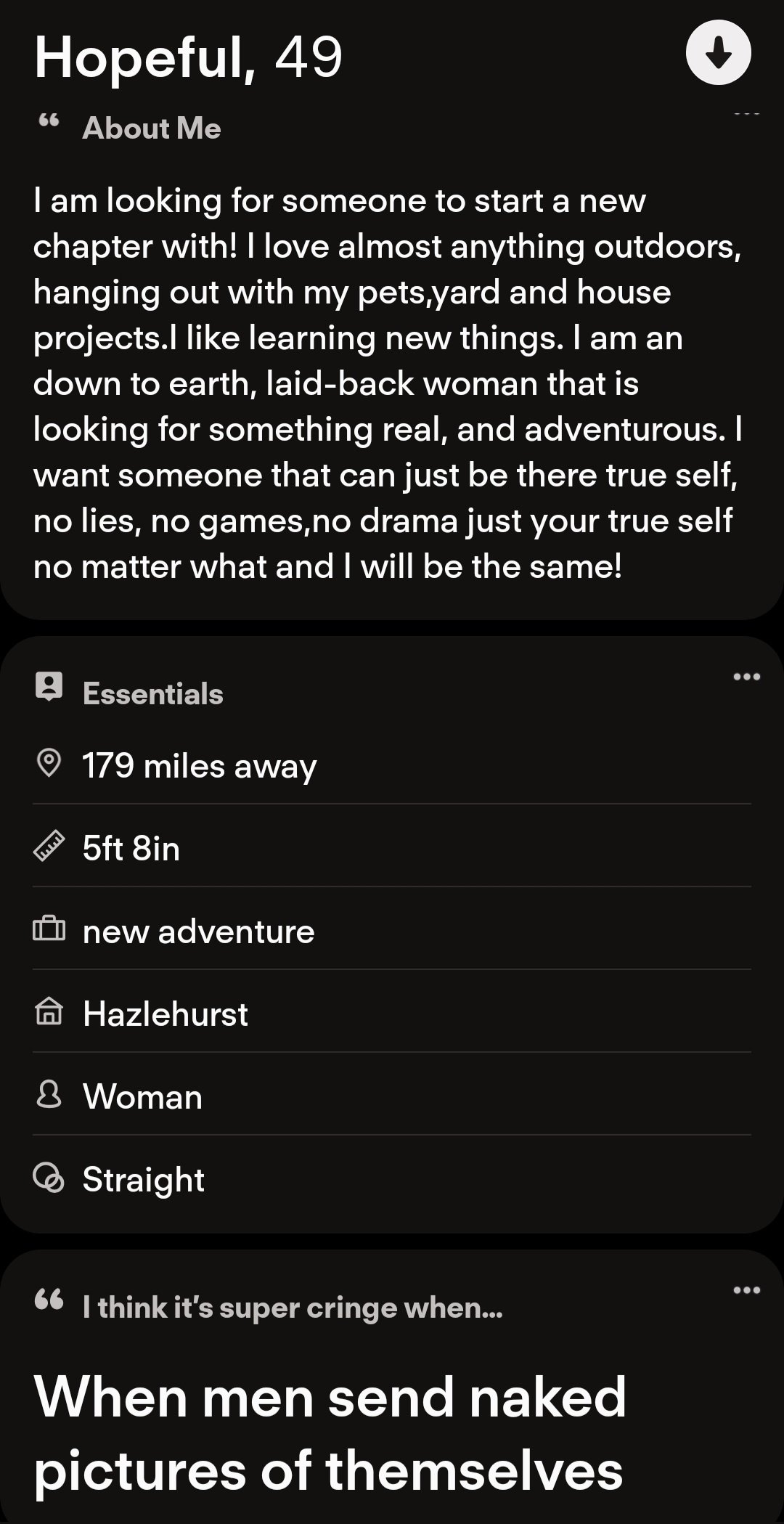
First, I believe we're looking for their true self.
But this is the Tinder, not the SATs. I'm not grading anyone.
More importantly:
Great! Imma be my true self.
Because I don't know how to be Matt Damon.
Her profile also provides some important intelligence. She doesn't like receiving nude selfies—which seems like an extremely reasonable policy—works out sometimes, smokes, which I don't, and drinks on special occasions.
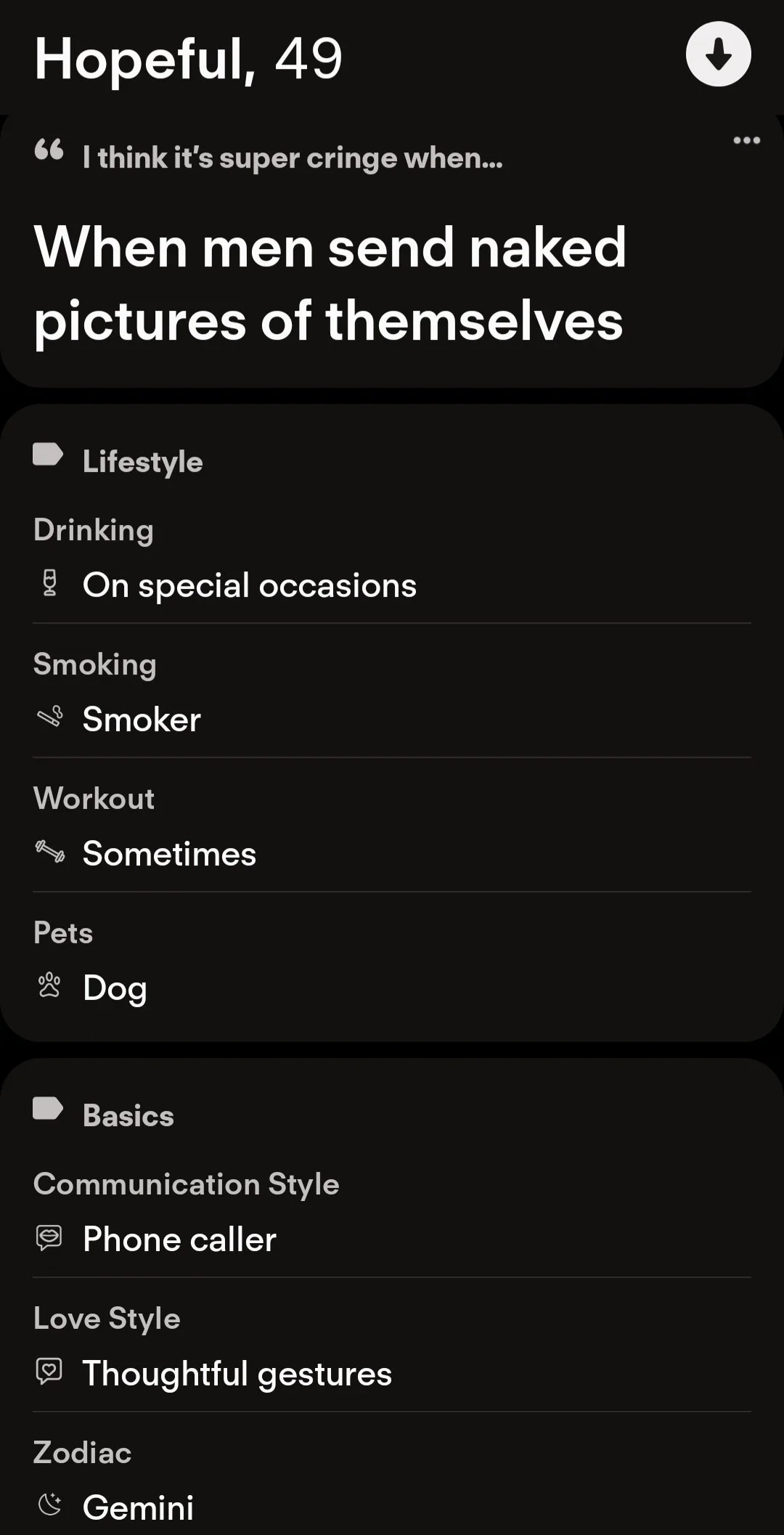
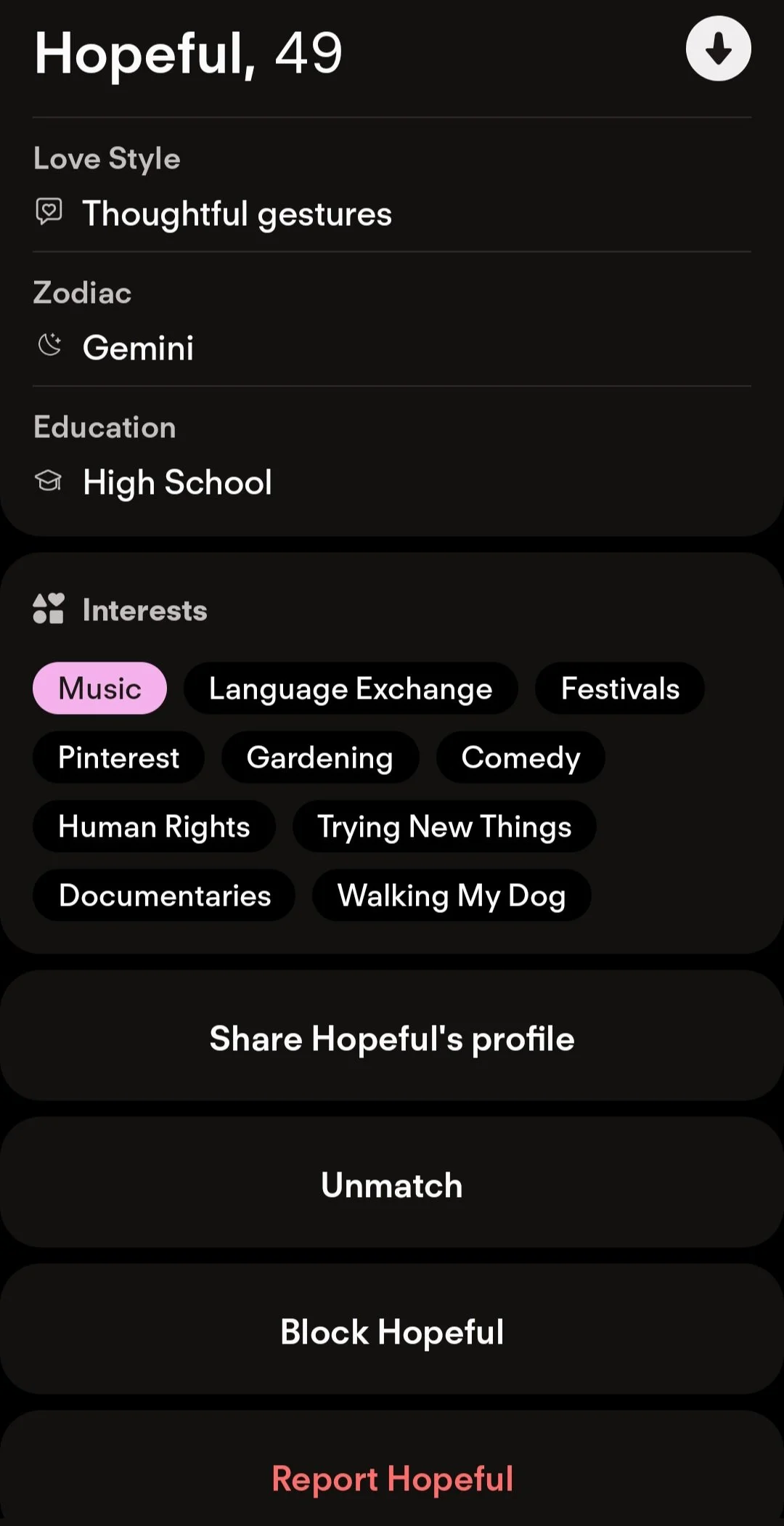
Fine.
So I start the conversation:
"Good evening, Hopeful!"
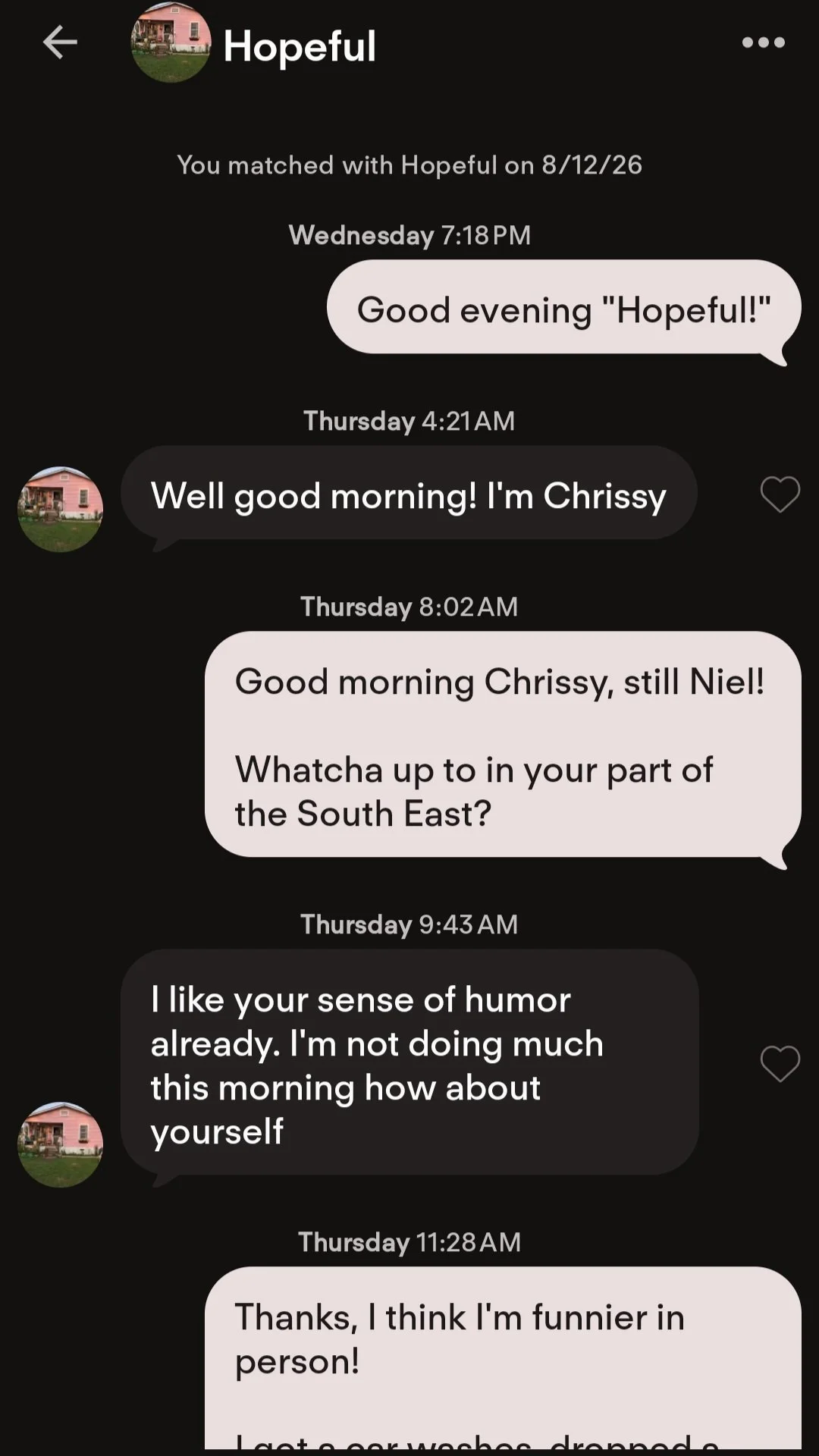
I had a sneaking suspicion her parents didn't look at their newborn daughter and say, "She's beautiful. Let's name her Hopeful."
Turns out I was correct.
Her name is Chrissy.
We start chatting. I throw in some humor. She seems to like it.
Excellent.
I tell her that I think I'm actually funnier in person.
Also excellent.
We're talking about what we're doing Thursday. I mention some completely innocuous stuff about my day. Nobody has attempted to sell cryptocurrency to anyone. Nobody claims to be conducting "market research" in Augusta.
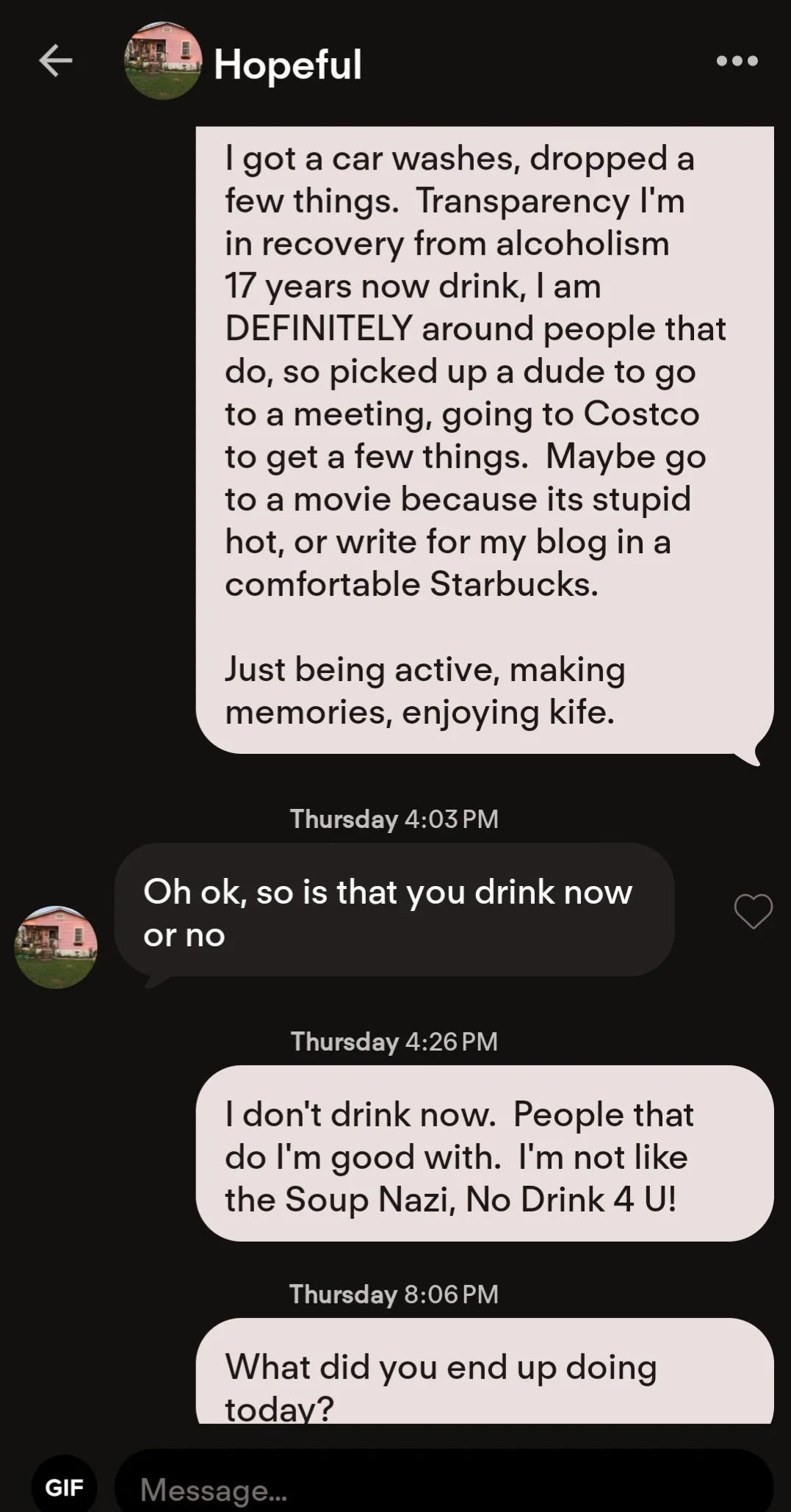
We're making progress!
Then I mention my sobriety.
Record scratch.
The conversation takes a turn.
She asks:
"So is that you drink now or no"
I explain that no, I don't drink. I've been sober for a little over 17 years.
But I also explain that I don't care if other people drink—as long as they're responsible about it.
I'm sober.
I'm not the Soup Nazi.
NO CHARDONNAY FOR YOU!
Drink your wine. Have your cocktail. Order a beer.
I'm not going to leap across the table and slap a margarita out of your hand.
This conversation happened Thursday at around 4:30 p.m.
I sent a few more messages afterward.
I even asked if she'd like to talk on the phone, since her profile said that's her preferred method of communication.
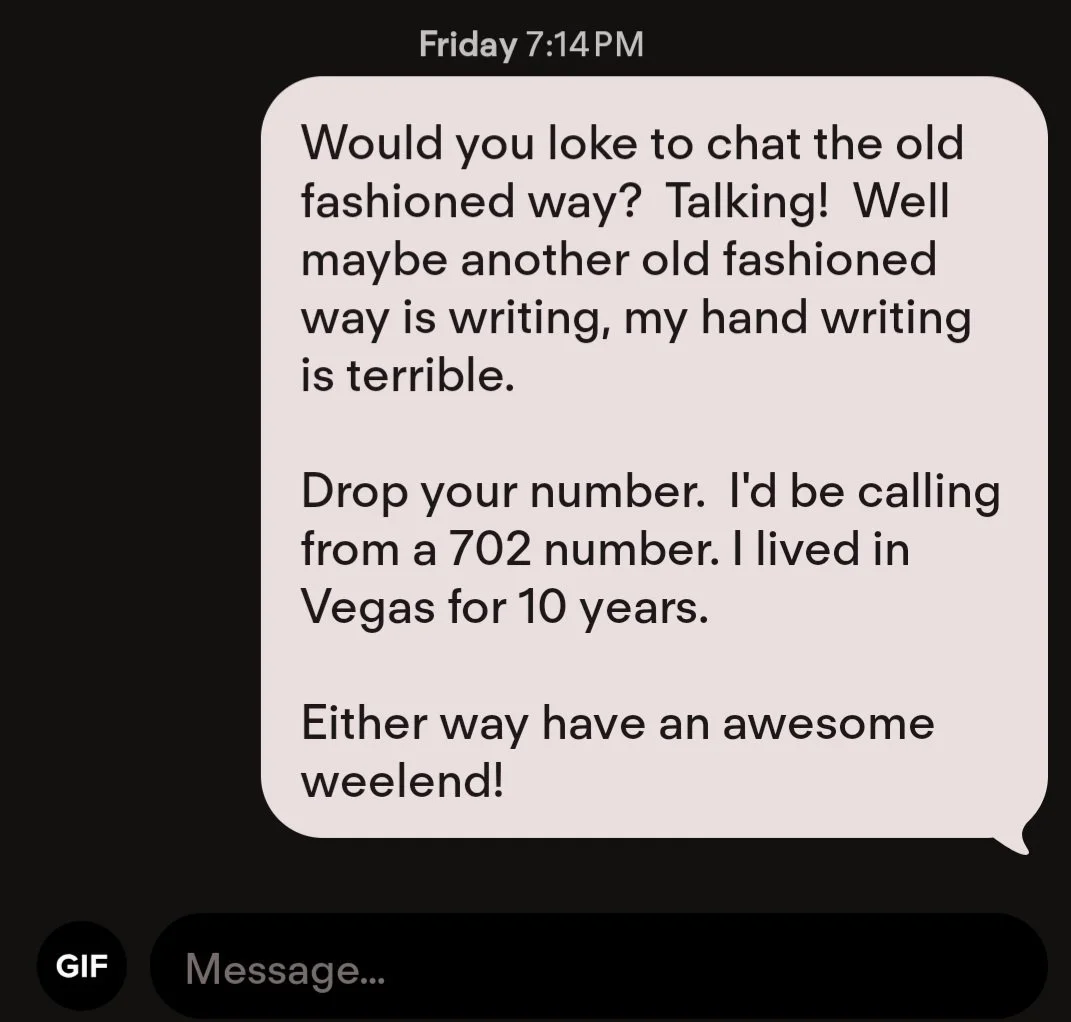
And then...
Crickets.
Not even Tinder crickets.
Those crickets have probably unmatched me too.
Which leaves me slightly confused.
Wait a minute, Chrissy.
I thought you wanted someone who could be:
"Just their true self."
That's exactly what I did!
I didn't lie.
I didn't play games.
I didn't create drama.
I didn't pretend to drink.
I didn't pretend to be Matt Damon.
I showed up as my true self, just like the advertisement requested.
Apparently there were terms and conditions.
And here's what really makes me laugh:
Her profile says she drinks "on special occasions."
Is having someone who drinks booze really that important when you only drink sometimes yourself?
Maybe there's an annual Cabernet Festival I don't know about.
Maybe Valentine's Day requires tequila.
Maybe I'm supposed to hold the wine glass while she drinks it.
I have questions.
Of course, maybe she just got busy. Maybe she'll respond eventually. Maybe she met somebody else. That's dating.
But if the sobriety conversation is what killed it, that's pretty funny.
Because after dealing with fake profiles, scammers, crypto investors, mysterious 6'6" women named Hamit, and everything else I've encountered on the Tinder, I finally did exactly what a profile asked:
I was my true self.
And apparently my true self got left on read.
Maybe next time I'll try being Matt Damon.