
Sunshine, Pudding, and Why I Choose an Aisle Seat
Mom and I spent some time outside the facility today. Mid-70s, sunshine, clear skies, and a nice breeze.
It was the kind of weather I wish I could order ahead of time.
We stayed out until Mom had enough and wanted to go back inside. I gathered my things and rolled her in. She needs a lift to get into bed, so we spent a little time in the hallway while waiting.
I noticed lunch on her table and asked whether she wanted to try it.
It looked like a chicken ranch wrap. Visually, it wasn’t making a strong case for itself.
Mom tried it and said it was terrible.
Her words. I had only done a preliminary visual inspection.
The vanilla pudding, however, disappeared in about ten seconds. The small cup of cut-up cucumber also went, along with her sweet tea.
So there were some successes on the tray. The wrap may want to request a transfer.
I’ve been asking assisted living facilities about food tastings, and moments like this explain why. Mom says she doesn’t eat much, but apparently vanilla pudding doesn’t need to be told twice.
Meanwhile, there was activity on the roommate side of the room.
Mom has the bed closest to the door. Her roommate had gone out to lunch with a friend. Then she came back in.
Then she went back out.
Then she came back in.
Then she went back out.
I was starting to feel as though we were sitting beside the entrance to a department store.
And I thought to myself: Self, this is exactly why you choose an aisle seat.
When I fly, I know I’ll probably need to get up at least once to use the bathroom. I don’t want to bother the person in the aisle, and heaven forbid I have to involve the person in the middle seat. That person has already suffered enough.
So I book the aisle. I plan for my own traffic.
Watching people come and go, I briefly wondered whether airplane seating etiquette could apply to shared rooms. Frequent departures? Let’s get you closer to the exit.
Of course, nobody was actually climbing over us. She was going about her day in her own room, and she had every right to do so.
My brain had simply decided to turn a perfectly ordinary afternoon into a seating-assignment consultation. Apparently, I’m available to reorganize a floor plan nobody asked me to review.
I remember shared rooms from my own time in skilled nursing. Two people’s schedules, visitors, meals, and routines happen in one space. Sometimes one person is ready to settle down while the other still has places to go.
Today, Mom was ready to settle down.
We’d had some sunshine, a little fresh air, and a lunch with a very clear winner.
I still want the aisle seat.
Mom can have the pudding.
Coffee, Cold Cuts, and the Donna Woods Show
Before visiting Mom this morning, I stopped at Harris Teeter to pick up a few things.
A salad for me. Two slices each of turkey, roast beef, and Swiss cheese for Mom. Literally two slices each—she told me she doesn’t eat much, and I was following instructions.
I also picked up a fruit cup with pineapple, strawberries, and melon.
Then I stopped at McDonald’s for a small coffee using points. A little grocery shopping, a little rewards redemption. I was feeling reasonably accomplished before I even reached the facility.
I dropped a few things in Mom’s room and headed toward the day room with the rest. I could see her in the distance.
I walked in, and guess who was there?
Donna Woods.
“Niel!”
“Hello, Donna Woods!”
There’s something nice about walking into a room and hearing someone call your name. A few visits ago, Donna was someone I’d just met. Now we have a greeting.
She said something else immediately afterward, delivered at her usual 200 miles an hour.
I have absolutely no idea what it was.
The television was playing Chicago P.D. at a volume that suggested the day room had been asked to assist with the investigation.
Between the television and Donna’s conversational pace, I could establish that words were being spoken. Beyond that, I would have needed subtitles.
But Donna had company.
A group of CNA students was gathered around her, and she was putting on a show.
I don’t know what was on their lesson plan for the morning, but they had arrived in time for the Donna Woods portion of the curriculum.
I’ve seen her round people up for Coffee Chats, greet nurses, meet new residents, and check on Mom. Yesterday, she approved my shoes. Today, she had an audience.
Her calendar appears to be filling up nicely.
I couldn’t make out the conversation over the television, but I enjoyed seeing her surrounded by people. I’ve been getting to know Donna through these brief encounters, and this morning I got to watch other people getting their introductions.
I hope they were keeping up better than I was.
My plan had been simple: bring Mom a little food and coffee, sit with her, and spend some time together. Along the way, I got a familiar greeting and another installment of life in the day room.
Those moments are becoming part of my visits, too. I arrive thinking about what Mom needs, and then someone calls my name from across the room.
Today, I brought two slices of everything.
Donna brought enough conversation for the whole table.

Officially Donna Approved
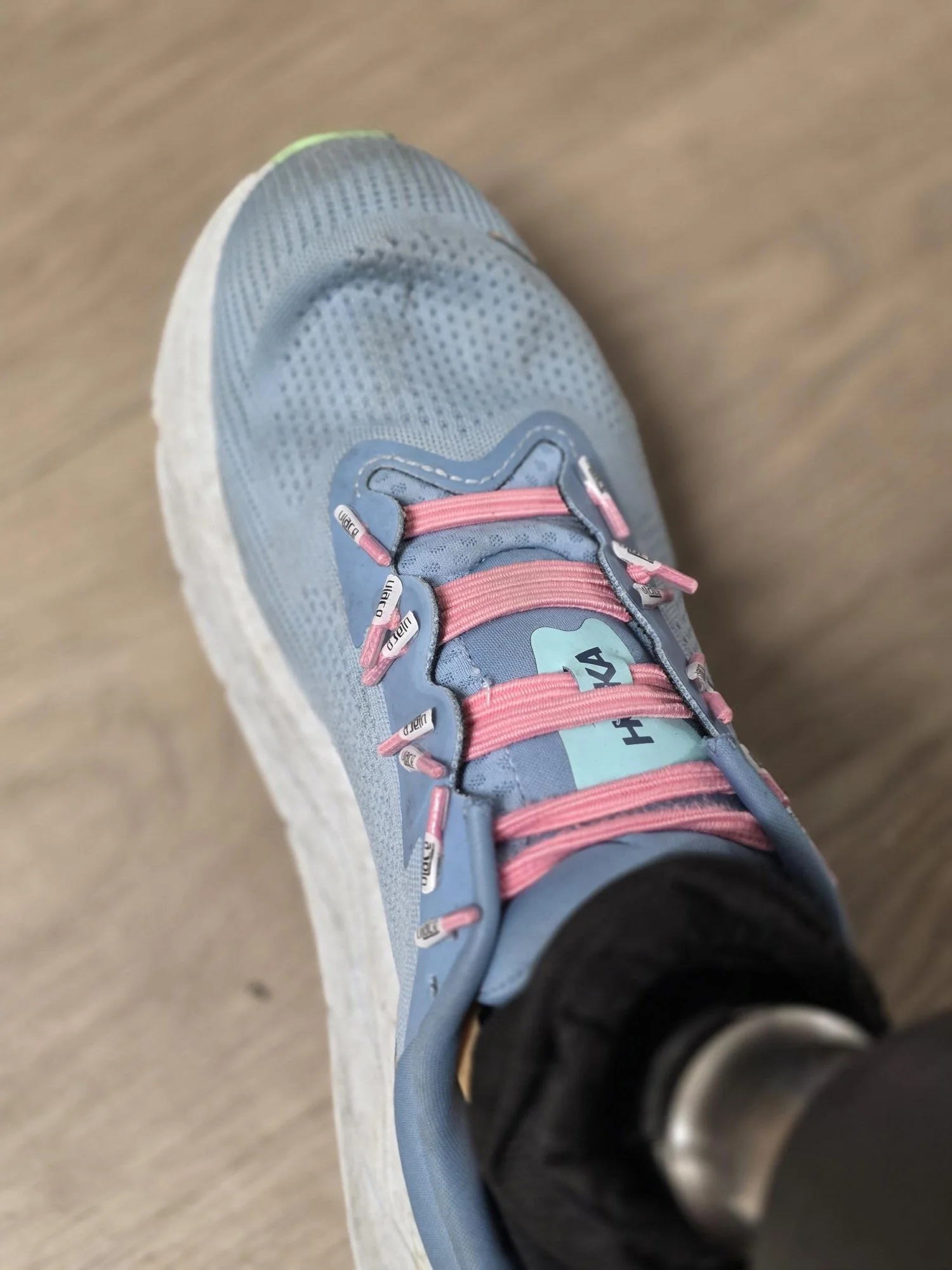
A quick update on my friend Donna Woods: apparently, her interests also include footwear.
Mom needed some help getting cleaned up and getting into bed using the Hoyer lift, so I stepped into the hallway to give her privacy. While I waited, I worked on the blog.
Then Donna came walking by with her walker.
She asked how my mother was doing and where her room was. I told her it was right behind me.
I appreciated that she asked. We’ve spent time talking about her life, her family, and her favorite foods. Now she was checking on Mom.
Then, as she passed, Donna looked down at my shoes.
Light blue Hokas. Pink no-tie laces.
And I received Donna Woods’s approval.
I hadn’t realized I was being evaluated, but I’m pleased to report that I passed.
The no-tie laces are practical. The colors apparently meet community standards. Finally, a review process in my life with a clear outcome and no additional paperwork.
I’ve learned quite a bit about Donna during these visits. Today, I learned she notices the details—and that my shoes have at least one fan.
These little encounters have become a welcome part of visiting Mom. A familiar face comes down the hall, asks how she’s doing, and gives me something to smile about while I wait.
Today, that smile came courtesy of Donna and a pair of light blue Hokas.
I’ll keep wearing them. I’d hate to jeopardize my standing with the fashion committee.
I Asked a Question. I Got the Director’s Cut.
Today, while hanging out with Mom at the skilled nursing facility, I was reminded that my preferred conversation speed isn’t necessarily everyone else’s.
Especially with people older than me. I have to say “older than me” because, at this point, I’m old, too. I’m just wearing a Yankees pullover and hoping nobody checks the paperwork.
I didn’t see my friend Donna Woods today. With all the talking she does, I’m beginning to wonder whether she knows Elle Woods from Legally Blonde. I have no evidence of a connection, but I suspect Donna could keep a courtroom occupied.
In her absence, I got better acquainted with Mom’s roommate, Miss Jenny.
I remember the roommate setup from my own days in skilled nursing. A shared room gives you plenty of opportunities to get to know someone. Sometimes more opportunities than you had scheduled.
Miss Jenny asked me a question. I asked her a question.
And that’s how I received the ten-minute answer.
I had already told her I’m a native New Yorker. Just in case she forgot, I was wearing a lightweight New York Yankees quarter-zip pullover. I felt I had provided both verbal notice and supporting documentation.
My preferred answer is fewer than ten words. About five seconds. Enough information to move forward, with perhaps a little time left to blink.
Some of the Southern folks I meet have a more generous approach to conversation. My question gets an answer, a backstory, introductions to supporting characters, and enough local history to qualify for a walking tour.
Meanwhile, my New York brain is standing by the door with its keys out.
This reminded me of a former colleague. I once asked a yes-or-no question about our learning management system, SumTotal.
Before I got the answer, I received a refresher on Kirkpatrick, Maslow’s hierarchy of needs, and the post-training assessments. All of them.
I was waiting for “yes” or “no.” Somehow, I had enrolled in continuing education.
By the time we reached the answer, my most urgent need in Maslow’s hierarchy was for the conversation to end.
It drove me bonkers.
And today, sitting with Mom and listening to Miss Jenny, I recognized that same feeling. I had asked a small question and apparently selected the extended warranty on the response.
I now know more about Miss Jenny than I expected to learn during this visit. Sometimes, the less I know, the better off I am. My brain already has enough open tabs, and several of them are playing music I can’t locate.
Of course, I can hear the irony.
I’ve spent the last few days writing about taking time to listen, visiting people, and making room for conversation.
I still mean every word.
I’m also discovering that I can believe in all of that while occasionally wishing an answer came with a table of contents.
Some days, I have the patience to follow every detour. Other days, I’m silently trying to remember what I asked in the first place. That probably says as much about me as it does about the person talking.
Today, I got to spend time with Mom and learn a little more—okay, considerably more—about Miss Jenny.
Next visit, I’ll wear the Yankees pullover again.
Apparently, it’s a fashion statement, not a speed limit.

When Guilt Feels Real: Recovery, Mental Health and Making Amends
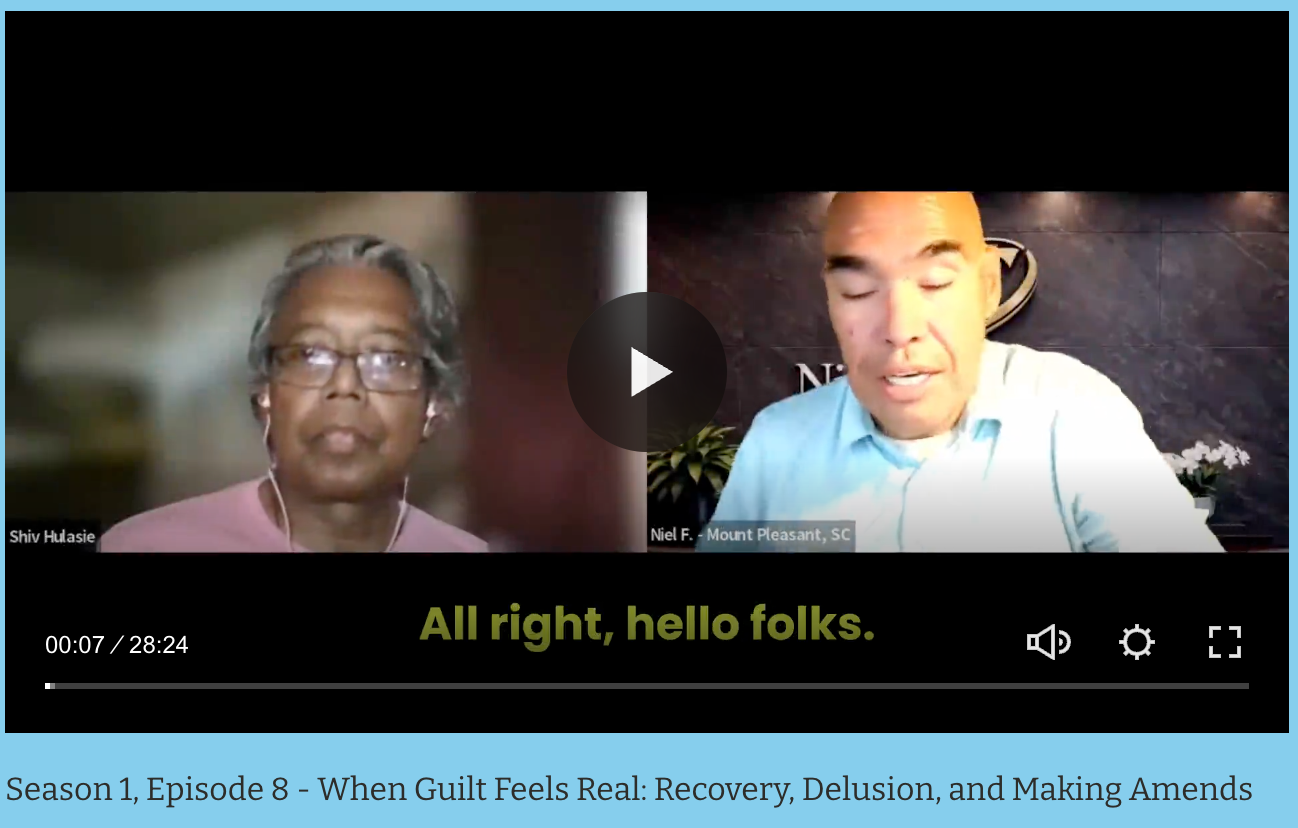
The Down a Hole podcast is back, and Fish and I are tackling a difficult question: What happens when someone feels genuine guilt about events experienced during psychosis—even after realizing those events never actually happened?
In this episode, we discuss a man in recovery who believed he had three daughters and had failed them as a father. The daughters were not real, but his memories and guilt still felt very real to him. Should he make amends to people who never existed? Could doing so provide relief, or would it reinforce the delusion?
There is no simple answer. Our conversation explores the complicated intersection of sobriety, mental health, guilt, accountability, and spirituality. We also discuss why someone facing these questions should not try to work through them alone. A therapist, psychiatrist, sponsor or another qualified and trusted person can help determine the healthiest next step.
Watching this episode may offer a different perspective on recovery and a better understanding of how real another person’s experiences can feel—even when those experiences do not match our reality. It also reminds us that listening without immediately judging or dismissing someone can create the safety needed for an honest conversation.
The full podcast is available at NielFlamm.com/podcast.
While you are there, check out the other podcast episodes available on the site. Each conversation explores different experiences, perspectives, and challenges. Watching them may help viewers feel less alone, understand someone else’s journey or begin a meaningful conversation of their own.
Sometimes the greatest benefit of a podcast is not that it provides every answer. It encourages us to ask better questions—and to listen when someone is brave enough to share a vulnerable part of their life.