

Celebrity Row or Carpetbaggers? Riding the Coattails of Lifelong New York Fans

What makes someone a real New Yorker?
Is it the ZIP code on your driver's license? The number of years you've lived in the city? Or is it something much deeper?
From Celebrity Row at Madison Square Garden to celebrity superfans suddenly embracing New York teams, I dive into one of my most unpopular opinions yet. I talk about lifelong allegiances, sports culture, and whether some famous faces are simply riding the coattails of generations of diehard New York fans.
Expect sarcasm, nostalgia, and a few laughs along the way.
Think I'm wrong? You're probably not alone.
Watch the full video and decide for yourself:
AI Isn't New. It's Just Better Marketing.
I've been watching the recent messaging from Nextdoor CEO Nirav Tolia about how AI will revolutionize the way we interact with neighbors and local businesses. While AI is certainly advancing rapidly, the idea itself isn't exactly new.
Nirav joined Yahoo as employee #84 and spent years helping shape the early internet. From web directories to e-commerce and eventually becoming one of the company's public faces, he has an impressive background. The spokesperson role certainly explains why he's comfortable in front of a camera.
But if he'd spent more time in the operational trenches, he might realize many of us have been working alongside AI for decades.
My career started in primary automotive collections—a far cry from Silicon Valley glamour. I worked predictive dialers, managed collection queues, answered inbound calls, negotiated payment arrangements, and made lending decisions. It was hard work, but I'm grateful for the experience because it exposed me to AI long before it became today's buzzword.
Some examples:
• Phone IVR Systems – "Press 1 for English. Oprima el dos para español." These systems intelligently routed calls, reduced congestion, improved service levels, and matched customers with the right department. Primitive by today's standards, but still AI-driven automation.
• Grammarly (2009) – When I transitioned into Learning & Development, I began relying heavily on Grammarly to help create participant workbooks, facilitator guides, instructional materials, one-page FAQs, job aids, and other learning documentation. It became an invaluable AI writing assistant that not only catches spelling and grammar mistakes but also predicts the author's intent, improves readability, and suggests clearer ways to communicate ideas. Even today, I use Grammarly alongside ChatGPT and other AI tools to ensure my message is conveyed as effectively as possible.
• Siri (2010) – Before becoming part of iOS, Siri launched as a standalone app capable of voice commands, sending texts, answering questions, and controlling device functions through natural language.
• Automotive Credit Decisioning Matrices – During my automotive finance career, I purchased loans and leases from franchise dealerships. A human didn’t do the first review—it was performed by an automated decision engine evaluating the four Cs of credit: Character, Capacity, Capital, and Collateral. Straightforward approvals and declines happened automatically, while analysts focused on the more complex borderline applications. Business rules could be adjusted as risk appetite changed.
AI has been quietly improving efficiency for decades. Today's generative AI is more powerful and accessible, but it didn't suddenly appear overnight.
Before declaring AI "revolutionary," let's take a moment to acknowledge the thousands of engineers, call center employees, underwriters, operations leaders, and technologists who have been working with AI since the 1990s and long before it became the latest corporate buzzword.
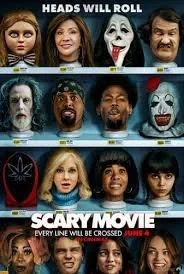
I Was the Only One in the Theater...
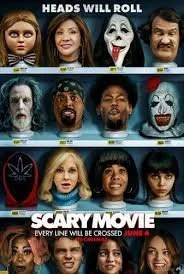
The lights went down.
The jokes started flying.
Nothing—and I mean nothing—was off limits.
I expected a cheap parody. I didn't expect to laugh as much as I did.
Was Scary Movie 6 hilariously offensive, completely ridiculous, or just plain terrible?
You'll have to watch my full review to find out...and don't leave before the end credits.
🎬 Watch the complete review at https://NielFlamm.com/videos/moviereviews
You never know what movie I'll review next.
When Will We See "Nextdoorgate"?
Social media has shown us time and time again that ordinary people can have extraordinary public meltdowns.
Think about some of the headlines we've all seen:
✈️ Tiffany Gomas on an American Airlines flight insisting another passenger "wasn't real."
🥤 A DoorDash driver allegedly pepper-spraying a customer's Arby's order after a dispute.
🍩 Ariana Grande's infamous "Donutgate" incident.
These weren't celebrities seeking attention. They were everyday people who, for one reason or another, made very public decisions they likely regret.
Which raises an interesting governance question.
Nextdoor's volunteer moderators are also everyday neighbors. They're members of the public who have been given authority to influence discussions, remove content, and help shape conversations within their communities.
They're human. They have opinions, biases, bad days, and emotions like everyone else.
I've previously asked what safeguards exist to prevent moderators from retaliating against users with unpopular viewpoints or personal disagreements.
The platform itself often hosts divisive discussions in which even topics as harmless as puppies, kittens, or neighborhood events somehow turn into arguments. If tension can escalate that quickly, what protections exist when a moderator is part of that conflict?
Risk management isn't about assuming people will behave badly—it's about recognizing that everyone is capable of making poor decisions under the right circumstances.
As a shareholder, I continue to ask: What policies, oversight, auditing, or accountability measures has CEO Nirav Tolia implemented to ensure moderator authority cannot be abused?
Waiting until a national news story forces the conversation may be waiting too long.
Hit the subscribe button for NielFlamm.com.
AI Doesn't Eliminate Economics
OpenAI recently highlighted how Nextdoor is using Codex to accelerate software development, including examples where a feature that once required three engineering teams can now be built end-to-end by a single engineer. It's an impressive showcase of what AI-assisted development can accomplish.
Read the case study:
https://openai.com/index/nextdoor/
But it also raises a bigger economic question.
If AI enables one engineer to do the work that previously required multiple specialists, what happens to labor demand?
Markets are driven by supply and demand. During COVID, shortages drove prices up across nearly every industry. The reverse is also true: if AI increases productivity while expanding the effective supply of engineering talent, compensation pressure seems inevitable over time.
I’m struggling with the messaging from Nextdoor leadership.
Nirav Tolia earned a BA in English from Stanford, one of the world's premier universities. He communicates well, but the broader corporate message often feels scattered—part neighborhood platform, part AI company, part advertising network, and part social media experiment. Having Cory Dolphin, Head of Engineering, deliver this message may have also insulated executive leadership from discussing the broader labor implications of AI.
Here's my unpopular opinion.
If AI truly allows one engineer to do the work of several engineers, then basic economics suggests IT salaries should eventually normalize downward. There is little economic justification for maintaining compensation levels that were established during a period of exceptionally high demand and limited supply if AI permanently changes that equation. Productivity gains don't just change how work gets done—they change the value of labor in the marketplace.
That may not be a popular viewpoint, but markets have never been driven by popularity.
I'm also a believer in AI. I use ChatGPT to organize my thoughts, strengthen my writing, and increase my own productivity. AI is an incredible tool when used responsibly.
But if Nextdoor leadership is truly as bullish on AI, its product, and its future as these announcements suggest, perhaps it's time to put even more conviction behind that belief. Nirav Tolia is the company's largest shareholder. If the future is as bright as advertised, why not take the company private and invest even more heavily in that vision?
Perhaps the real bottleneck isn't engineering anymore.
Perhaps it's strategy and leadership clarity.
I'd love to hear other perspectives.
Subscribe to NielFlamm.com.