
Nextdoor's Biggest Opportunity Isn't AI—It's Trust
I didn't start writing about Nirav Tolia until he blocked me on LinkedIn.
My "offense" was providing feedback about Nextdoor's moderation model and user experience. Instead of engaging with criticism that could improve the platform, he removed the feedback from his view.
I recently listened to Nirav's June 3, 2026 appearance on the New Economies podcast with Ollie Forsyth:
https://www.neweconomies.co/p/nirav-tolia
Throughout the conversation, Nirav discusses AI, local commerce, and what matters to neighbors today. To me, much of it sounds like lip service because the most pressing issue facing Nextdoor isn't AI—it's trust.
What really matters to people today is a consistent moderation program with transparency from the moment a post is submitted through the final moderation decision and the metrics behind those decisions.
Nextdoor's model is built around real names and verified addresses. That's a tremendous amount of trust that users place in the company. Yet I have repeatedly asked a simple question:
What vetting is performed to ensure a volunteer neighbor moderator cannot retaliate against another neighbor?
I've asked several times and haven't received a meaningful response.
During the podcast, Nirav also discusses the value of the information that Nextdoor possesses. That data is clearly a valuable corporate asset and part of the company's monetization strategy.
But if users are expected to trust the platform with their identities, addresses, neighborhoods, and conversations, then transparency around moderation should be every bit as important as monetizing that data.
The future of Nextdoor won't be determined by AI features alone. It will be determined by whether neighbors believe the platform is fair, consistent, and accountable.
Leadership Can't Fix What It Doesn't Experience
I don't believe Nextdoor CEO Nirav Tolia is an active, everyday user of the platform in the same way millions of neighbors experience it.
If he were regularly navigating neighborhood conversations, moderator actions, appeals, and the frustrations many users describe, I suspect the moderation model would look very different today.
Living in an affluent community like Cary Estates, where homes routinely sell in the $10–13 million range, creates a very different environment from that of many neighborhoods across America. Public records show a home purchased through a trust in 2020 that was listed around $12.5 million. That level of insulation can make it difficult to understand the pulse of the average user.
It reminds me of McDonald's CEO Chris Kempczinski promoting the Big Arch burger. The marketing videos felt staged, and his reaction while eating it came across as less than enthusiastic. Consumers can usually tell when an executive is sampling a product for the cameras versus regularly enjoying it like a customer.
The same principle applies to social media platforms.
My suggestion? Put Nirav Tolia on an episode of Undercover Boss. Have him spend a week shadowing volunteer moderators in neighborhoods that aren't insulated by wealth or status. Let him watch reports come in, observe moderation decisions, see appeals, and experience the frustration that many users describe.
Earlier in my career, I worked for an automotive finance company owned by an automobile manufacturer. One of the employee benefits was an incredible lease program with no out-of-pocket costs, insurance included, and discounted payroll-deducted lease payments.
Why? Because the company wanted employees to drive the product they represented. We became ambassadors. Whether you worked in collections, training, or customer service, you experienced the vehicle firsthand and could speak to it authentically.
That philosophy created better employees and better advocates.
Does every employee at Nextdoor actively use the platform? Do executives, engineers, legal staff, and product managers spend time participating in neighborhood conversations and seeing what moderators and users experience every day?
The best leaders don't manage from a boardroom—they manage from experience. Until leadership truly experiences the platform the way everyday users do, the moderation model risks remaining disconnected from reality.

Celebrity Row or Carpetbaggers? Riding the Coattails of Lifelong New York Fans

What makes someone a real New Yorker?
Is it the ZIP code on your driver's license? The number of years you've lived in the city? Or is it something much deeper?
From Celebrity Row at Madison Square Garden to celebrity superfans suddenly embracing New York teams, I dive into one of my most unpopular opinions yet. I talk about lifelong allegiances, sports culture, and whether some famous faces are simply riding the coattails of generations of diehard New York fans.
Expect sarcasm, nostalgia, and a few laughs along the way.
Think I'm wrong? You're probably not alone.
Watch the full video and decide for yourself:
AI Isn't New. It's Just Better Marketing.
I've been watching the recent messaging from Nextdoor CEO Nirav Tolia about how AI will revolutionize the way we interact with neighbors and local businesses. While AI is certainly advancing rapidly, the idea itself isn't exactly new.
Nirav joined Yahoo as employee #84 and spent years helping shape the early internet. From web directories to e-commerce and eventually becoming one of the company's public faces, he has an impressive background. The spokesperson role certainly explains why he's comfortable in front of a camera.
But if he'd spent more time in the operational trenches, he might realize many of us have been working alongside AI for decades.
My career started in primary automotive collections—a far cry from Silicon Valley glamour. I worked predictive dialers, managed collection queues, answered inbound calls, negotiated payment arrangements, and made lending decisions. It was hard work, but I'm grateful for the experience because it exposed me to AI long before it became today's buzzword.
Some examples:
• Phone IVR Systems – "Press 1 for English. Oprima el dos para español." These systems intelligently routed calls, reduced congestion, improved service levels, and matched customers with the right department. Primitive by today's standards, but still AI-driven automation.
• Grammarly (2009) – When I transitioned into Learning & Development, I began relying heavily on Grammarly to help create participant workbooks, facilitator guides, instructional materials, one-page FAQs, job aids, and other learning documentation. It became an invaluable AI writing assistant that not only catches spelling and grammar mistakes but also predicts the author's intent, improves readability, and suggests clearer ways to communicate ideas. Even today, I use Grammarly alongside ChatGPT and other AI tools to ensure my message is conveyed as effectively as possible.
• Siri (2010) – Before becoming part of iOS, Siri launched as a standalone app capable of voice commands, sending texts, answering questions, and controlling device functions through natural language.
• Automotive Credit Decisioning Matrices – During my automotive finance career, I purchased loans and leases from franchise dealerships. A human didn’t do the first review—it was performed by an automated decision engine evaluating the four Cs of credit: Character, Capacity, Capital, and Collateral. Straightforward approvals and declines happened automatically, while analysts focused on the more complex borderline applications. Business rules could be adjusted as risk appetite changed.
AI has been quietly improving efficiency for decades. Today's generative AI is more powerful and accessible, but it didn't suddenly appear overnight.
Before declaring AI "revolutionary," let's take a moment to acknowledge the thousands of engineers, call center employees, underwriters, operations leaders, and technologists who have been working with AI since the 1990s and long before it became the latest corporate buzzword.
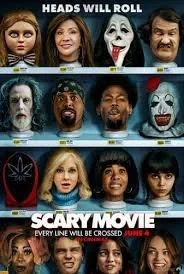
I Was the Only One in the Theater...
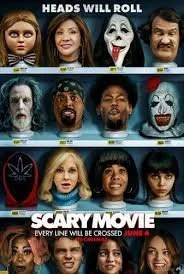
The lights went down.
The jokes started flying.
Nothing—and I mean nothing—was off limits.
I expected a cheap parody. I didn't expect to laugh as much as I did.
Was Scary Movie 6 hilariously offensive, completely ridiculous, or just plain terrible?
You'll have to watch my full review to find out...and don't leave before the end credits.
🎬 Watch the complete review at https://NielFlamm.com/videos/moviereviews
You never know what movie I'll review next.