
I Asked ChatGPT What This Means for Nextdoor. The Answer Wasn’t What I Expected.
Nextdoor recently announced a partnership with the Independent Insurance Agents & Brokers of America.
Instead of immediately forming my own opinion, I asked ChatGPT to analyze this announcement:
https://blog.nextdoor.com/indagency-partner
…along with Nextdoor’s business model, public strategy, and the potential impact on users, local businesses, and investors.
The response surprised me.
Yes, there were positives.
More advertising revenue.
More opportunities for independent insurance agencies.
Potentially better monetization.
But the majority of the analysis focused on the risks.
Local businesses could face increasing pressure to pay for visibility instead of earning it organically.
Neighbors may experience a platform that feels more like an advertising marketplace than a community.
Investors could see additional revenue without meaningful improvements in engagement or long-term loyalty.
More partnerships don’t automatically create more trust or stronger neighborhoods.
The core question remains: Does each new partnership improve the user experience, or does it primarily expand advertising opportunities?
One observation stood out to me.
ChatGPT didn’t focus on technology. It focused on behavior.
AI analyzed incentives, relationships, engagement patterns, and the gap between the company’s public messaging and the experience users may have on the platform.
Technology can generate revenue.
Behavior determines whether people return.
I’d love to hear your thoughts after reading the announcement and discussing its potential impact.
Verified… But Not My Address? The Experiment Continues
One of the selling points of Nextdoor has always been that it’s built on verified addresses. The idea is simple: verify where people live so neighborhood conversations are more trustworthy.
Well… apparently I’m on Nextdoor with a “verified” address.
The only problem?
It isn’t my address.
Way to go.
Yes, before anyone asks, I know I’m trolling a little. Sometimes the best way to understand a system is to test where it breaks.
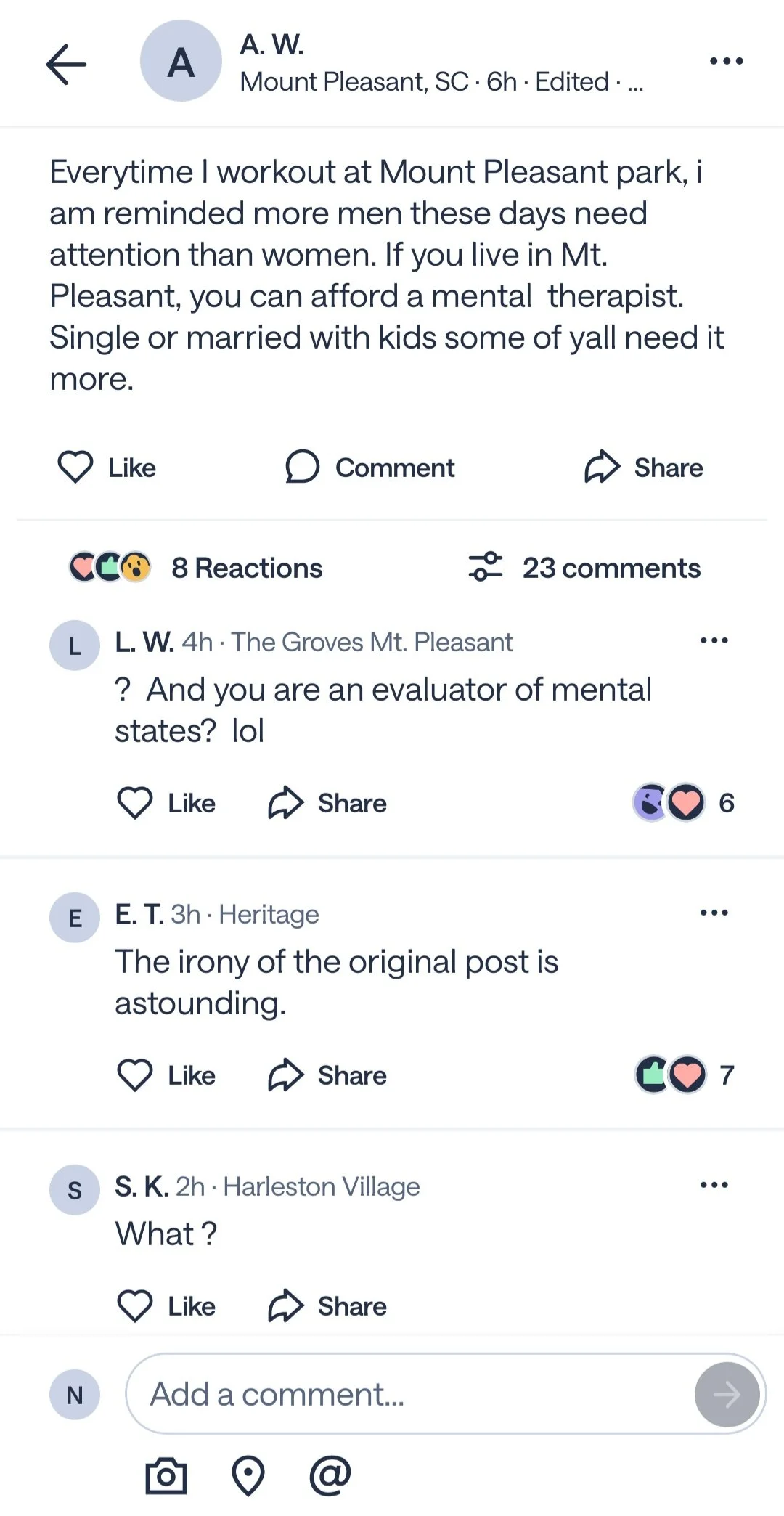
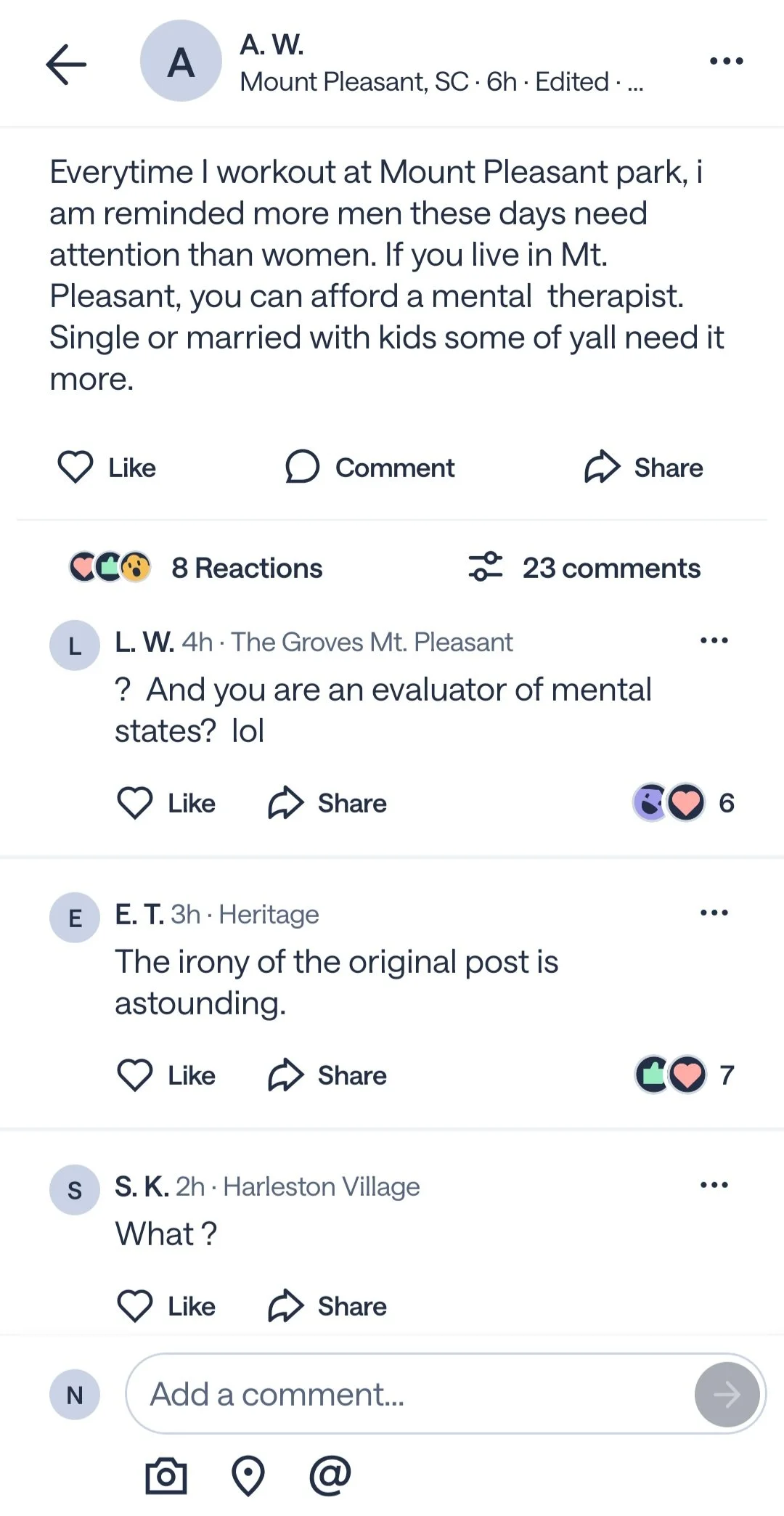
Then I looked at the post itself and had another question.
How did this post make it through?
From my perspective, it doesn’t appear to provide neighborhood information, alert residents to a local issue, or recommend a small local business. Those are the kinds of posts many users associate with Nextdoor’s purpose.
So why was this one allowed?
It made me wonder whether this is simply another example of inconsistent moderation—or whether the author happened to receive different treatment. I don’t know the answer, but it’s a question that comes to mind when people describe uneven moderation experiences.
By the way, this is now Day #11 since I requested the full insurance study from Jacob Chavis.
Still no study.
Still no acknowledgment.
At this point, the silence is becoming just as interesting as the request itself.
I’m being facetious, of course.
For a company whose mission is connecting neighborhoods, it’s fascinating when the platform can’t consistently demonstrate one of its foundational promises while simultaneously promoting itself as the place for trusted local conversations.
This isn’t about one address or one post.
It’s about whether the systems behind the scenes consistently deliver on the promises made in front of the camera.
The experiment continues.
Stay tuned.
I’m sure there will be more “neighborly” discoveries ahead.
Back Where I Never Wanted to Be
There are places in life you hope you never have to visit again.
For me, the hospital is one of them.
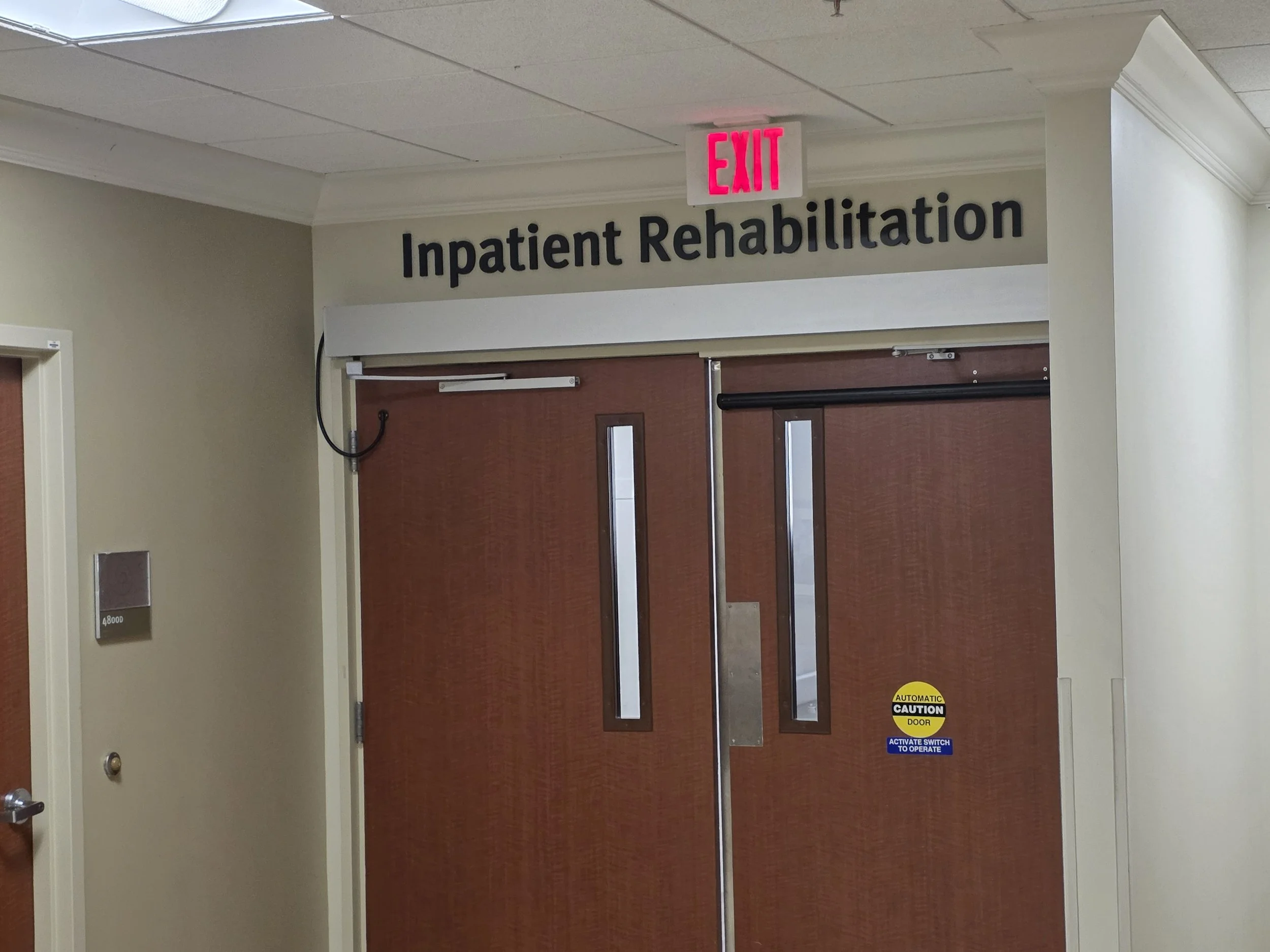
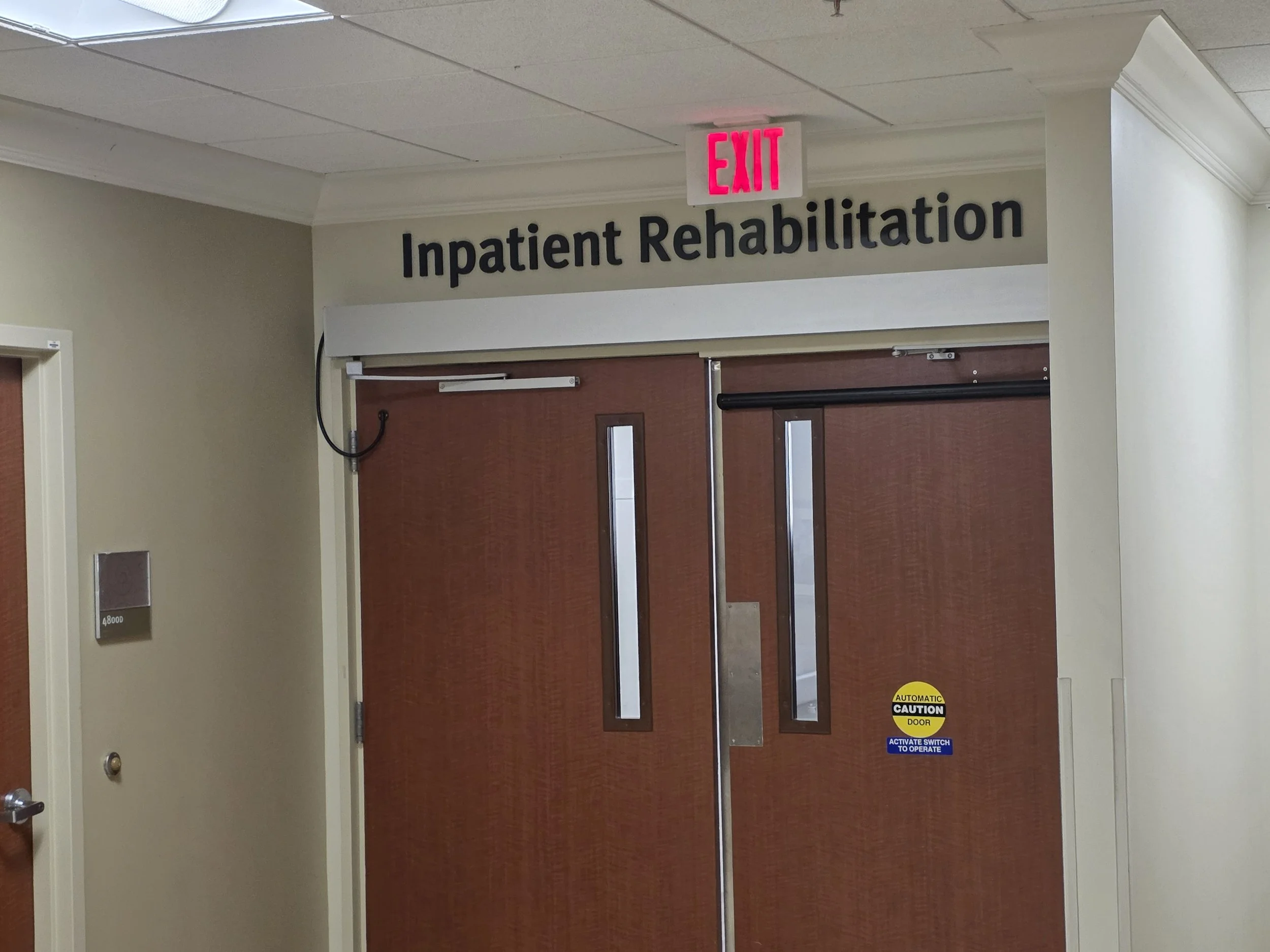
This time, I’m not here as the patient. I’m here as a visitor and caregiver for my mother.
In 2023 and 2024, the hospital became a place I knew far too well. My first extended stay came after a severe allergic reaction to an antibiotic. The second marked the beginning of my End Stage Renal Disease journey. Those experiences changed my life in ways I never imagined.
After each acute hospital stay, I was transferred to a physical rehabilitation unit. One of the most eye-opening lessons I learned was that simply lying in a hospital bed can cost you about 10 percent of your strength each day. It’s amazing how quickly the body can weaken when it’s not moving.
During rehab, the therapists asked me a question I’ll never forget:
“What kind of quality of life do you want to have?”
That question became my motivation.
The first rehabilitation stay lasted about two weeks. The second was about a week. Every exercise, every painful step, every frustrating moment had one goal—to reclaim as much of my independence as possible.
Walking through these same hallways today feels surreal. There are familiar faces everywhere. Several providers have recognized me, which is both heartwarming and a little funny. It’s strange when people remember you not because you were a regular customer, but because they helped you through some of the hardest chapters of your life.
Now the roles have changed.
I’m the one sitting beside the bed.
I’m the one encouraging someone else.
I’m the one helping navigate questions, translating when needed, and trying to bring a little comfort during an uncertain time.
Life has a funny way of bringing us full circle.
As difficult as hospitals can be, they also remind us of something important: healing doesn’t always happen the way we expect. Sometimes we’re the ones receiving the care. Other times, we’re fortunate enough to be the ones giving it.
If there’s one lesson I’ve learned, it’s that difficult seasons don’t last forever. They shape us, strengthen us, and prepare us to help someone else when their turn comes.
So today, I’m choosing gratitude—for the caregivers, for the second chances I’ve been given, and for the opportunity to be there for my mother the same way so many people were there for me.
Tomorrow may bring new challenges, but it also brings new hope. And hope is a powerful medicine.
I Asked AI for a Gap Analysis of Nextdoor. The Results Were Interesting.
Over the past several months, I've asked ChatGPT to help me write dozens of posts about Nextdoor, CEO Nirav Tolia, moderation, shareholder value, AI, surveys, advertisers, community building, and leadership.
So I asked a simple question:
Based on everything I've asked you to write, publicly available information, Nextdoor's financial results, and the stock price, what would you do differently if you were CEO?
The answer wasn't "fire everyone."
It wasn't "replace the board."
It wasn't even "launch more AI."
The biggest gap identified was this:
Nextdoor talks about human connection more than it measures human connection.
The company has made progress with revenue growth, weekly active users, near breakeven adjusted EBITDA, and a substantial cash position.
Yet AI suggested five priorities:
1. Fix trust first.
Create transparent moderator quality assurance, appeals, accountability, and enforcement metrics.
2. Turn AI into a product feature, not a podcast talking point.
Use AI for conflict de-escalation, scam detection, neighbor matching, and improving conversations.
3. Run real behavioral studies.
Pilot mediation labs, MBTI and DISC communication workshops, community service challenges, and neighborhood engagement programs using control groups and measurable outcomes.
4. Treat local advertisers like customers.
Provide responsive support, clear ROI reporting, and escalation paths when issues arise.
5. Create and communicate shareholder value.
Clearly explain how capital is being deployed and how management decisions are expected to improve long-term returns.
What fascinated me was that AI didn't conclude Nextdoor's biggest challenge is technology.
It concluded the challenge is execution.
One thing people often forget is that AI is excellent at analyzing more than numbers. It analyzes patterns, trends, sentiment, behaviors, interactions, and outcomes. That's exactly why it can be useful in understanding how neighbors communicate, where conflict emerges, and what interventions might actually improve trust and engagement.
Imagine if Nextdoor applied the same rigor as an epidemiology study.
Create pilot neighborhoods. Establish control groups. Measure sentiment, retention, advertiser engagement, conflict reduction, and community participation. Publish the methodology, demographics, limitations, and findings.
That's data.
That's science.
That's accountability.
Instead of another survey headline, we'd learn what actually helps neighbors connect.
The most surprising conclusion?
AI suggested the gap between the message and the experience may be larger than the gap between the technology and the opportunity.
That's a leadership challenge.
And leadership is ultimately measured by results.
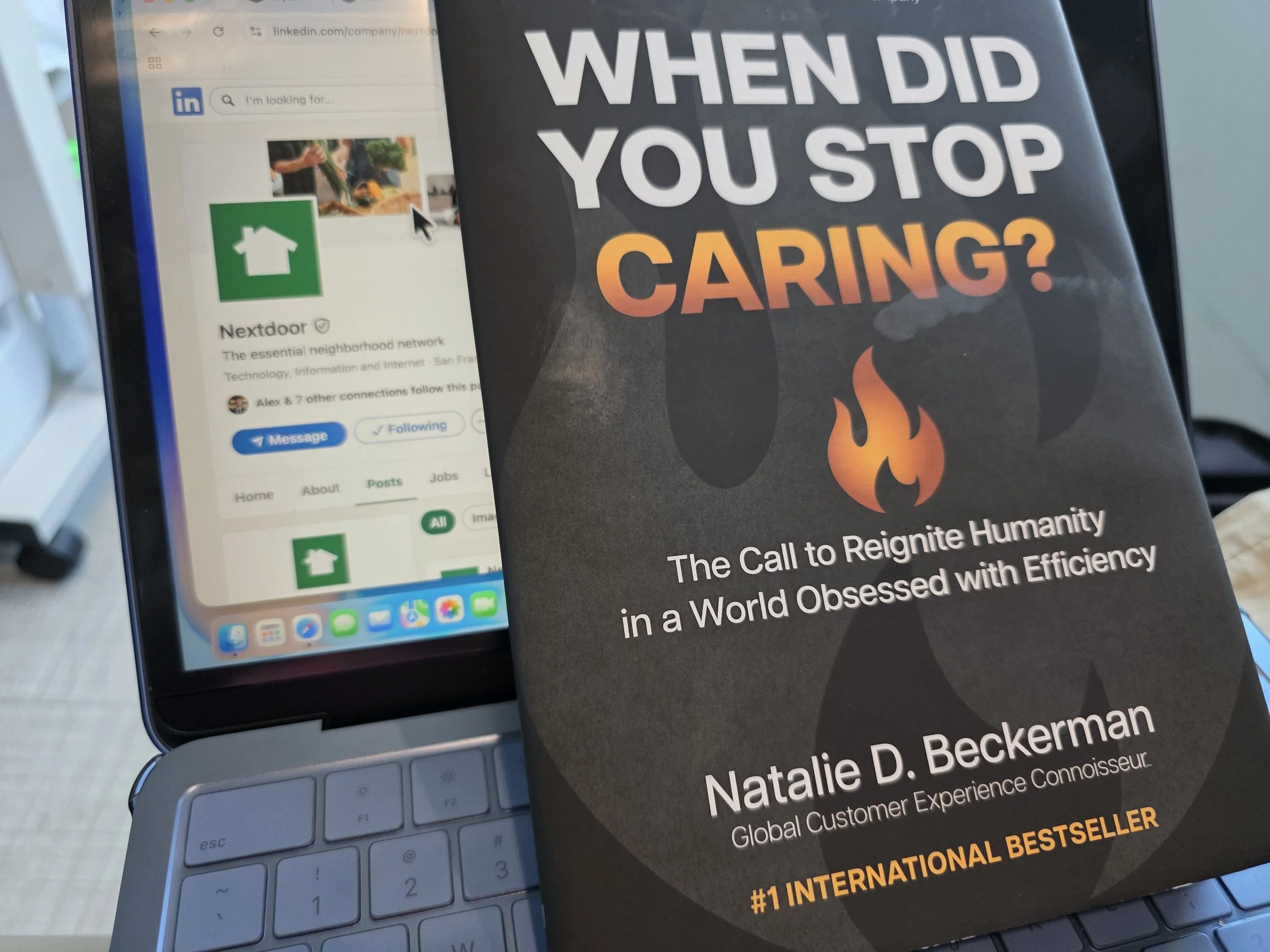
When Did You Stop Caring? The Power of a Movement
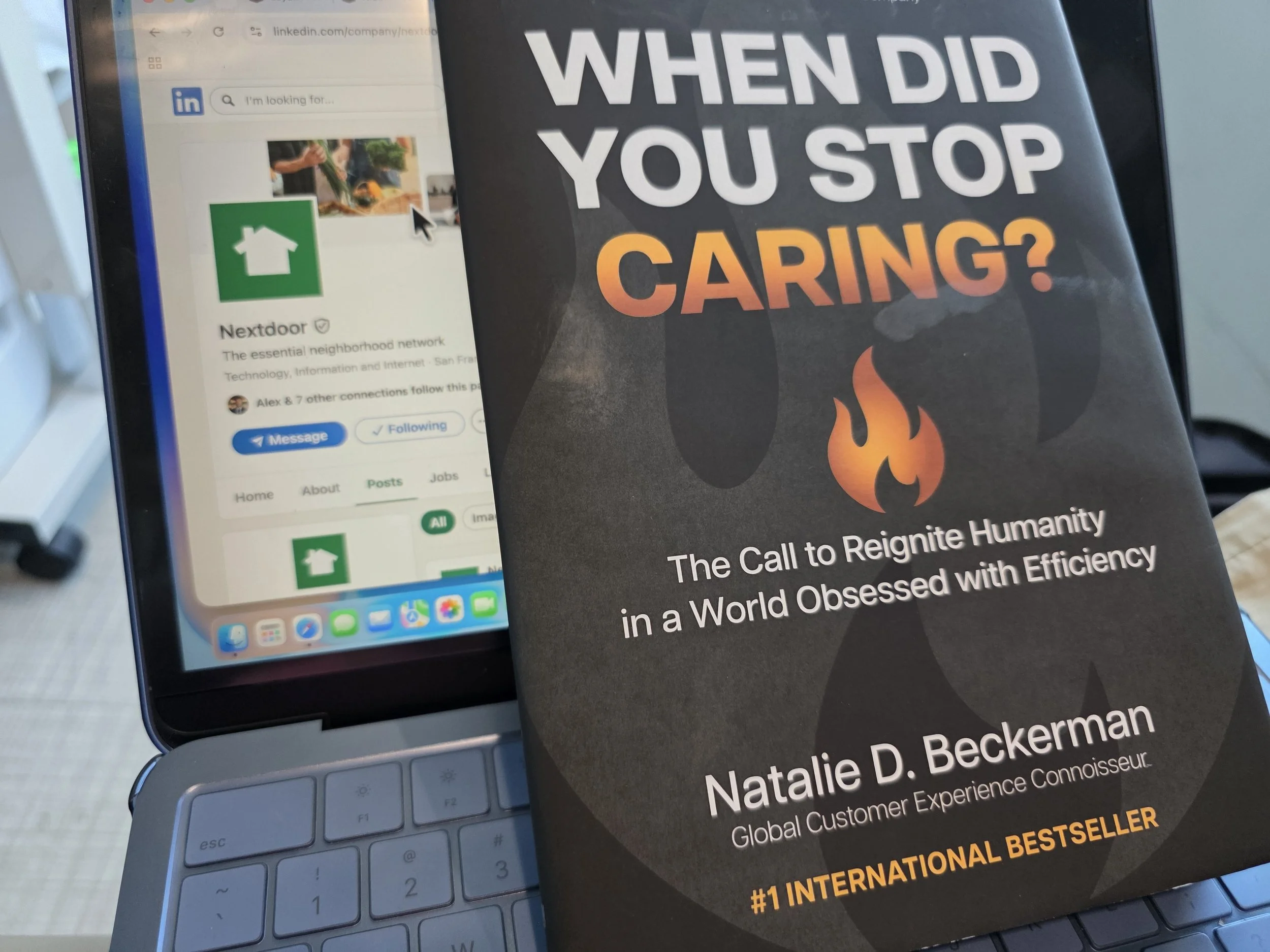
My copy of When Did You Stop Caring? by Natalie Beckerman arrived, and after starting to dig in, all I can say is: wow.
I’ve also been watching some of Natalie’s promotional shorts, and one word keeps standing out to me: movement.
Movements have the power to change people, communities, and sometimes even humanity itself.
Think about the ALS Ice Bucket Challenge. The goal wasn’t getting drenched with a bucket of ice water. The goal was awareness, conversation, and funding research to help stop ALS from devastating more lives.
Think about the Jesus Movement and the impact it had on countless people seeking purpose, faith, and connection.
Think about Pay It Forward. While fictional, the story showed how one person’s actions could inspire others and create a ripple effect of kindness and generosity.
What all of these examples have in common is simple: they started with people who cared enough to act.
Real change doesn’t happen overnight. Habits are built over time. Momentum is built over time. Success is built over time.
That’s something I remind myself of often. I keep pushing. I keep putting one foot in front of the other. I keep looking for opportunities to score a win, no matter how small.
If Natalie’s message inspires even a fraction of that mindset, then it’s a conversation worth having.
If you haven’t picked up a copy yet, you’re missing out.
📚 Amazon: https://a.co/d/0e252vBz
📚 Barnes & Noble: https://www.barnesandnoble.com/w/when-did-you-stop-caring-natalie-beckerman/1150028729?ean=9781969508448
Available now in hardcover, paperback, and digital formats.
The question isn’t whether we can change the world overnight.
The question is: What can we do today to show that we still care?