
If the Model Is Working, Why Isn’t the Business?
One thought keeps coming back to me during my ongoing Nextdoor experiment.
I’ve often heard that local moderators know their neighborhoods best, and that’s why a decentralized, unpaid moderator model works.
Perhaps that’s true.
But what if the real motivation isn’t simply local knowledge?
What if it’s about scaling the business while keeping operating costs low?
Using unpaid moderators significantly reduces labor costs. From a business perspective, that’s understandable.
The question is whether the strategy is producing results.
Nextdoor has been around for roughly 15 years.
Despite relying on an unpaid moderation workforce for much of that time, the company has struggled to achieve sustained profitability, and its financial performance and stock price continue to raise questions among investors.
For comparison, Meta reportedly reached profitability in about five years. Every company is different, but shareholders naturally ask whether the current strategy is delivering the outcomes leadership promised.
If a low-cost moderation model hasn’t translated into consistent profitability or stronger shareholder returns after 15 years, is it time to reevaluate the strategy?
This isn’t simply about moderators.
It’s about whether the company’s leadership, operating model, and capital allocation are producing measurable results.
As a shareholder, I believe that’s a fair question for the Board of Directors to ask.
Leadership should be measured not only by vision, but by execution and results.
Join the discussion on NielFlamm.com.
If AI Can Watch My Groceries, Why Can’t It Help Moderate Nextdoor?
One of Nirav Tolia’s favorite topics on the speaking circuit is AI.
That got me thinking.
If AI is such a core part of Nextdoor’s strategy, why isn’t it being used more effectively to improve moderation?
AI isn’t new. I’ve watched it evolve over the past 25 years, and today it’s part of my everyday life.
Take a trip to my local Harris Teeter.
I walk through self-checkout, scan my groceries, bag my items, and leave. Cameras, sensors, and AI are constantly evaluating what’s happening. When something falls outside an expected pattern or decision matrix, the system alerts a human associate to step in.
It’s AI first.
Human review second.
That’s a scalable model.
Now compare that to what I continue to observe on Nextdoor.
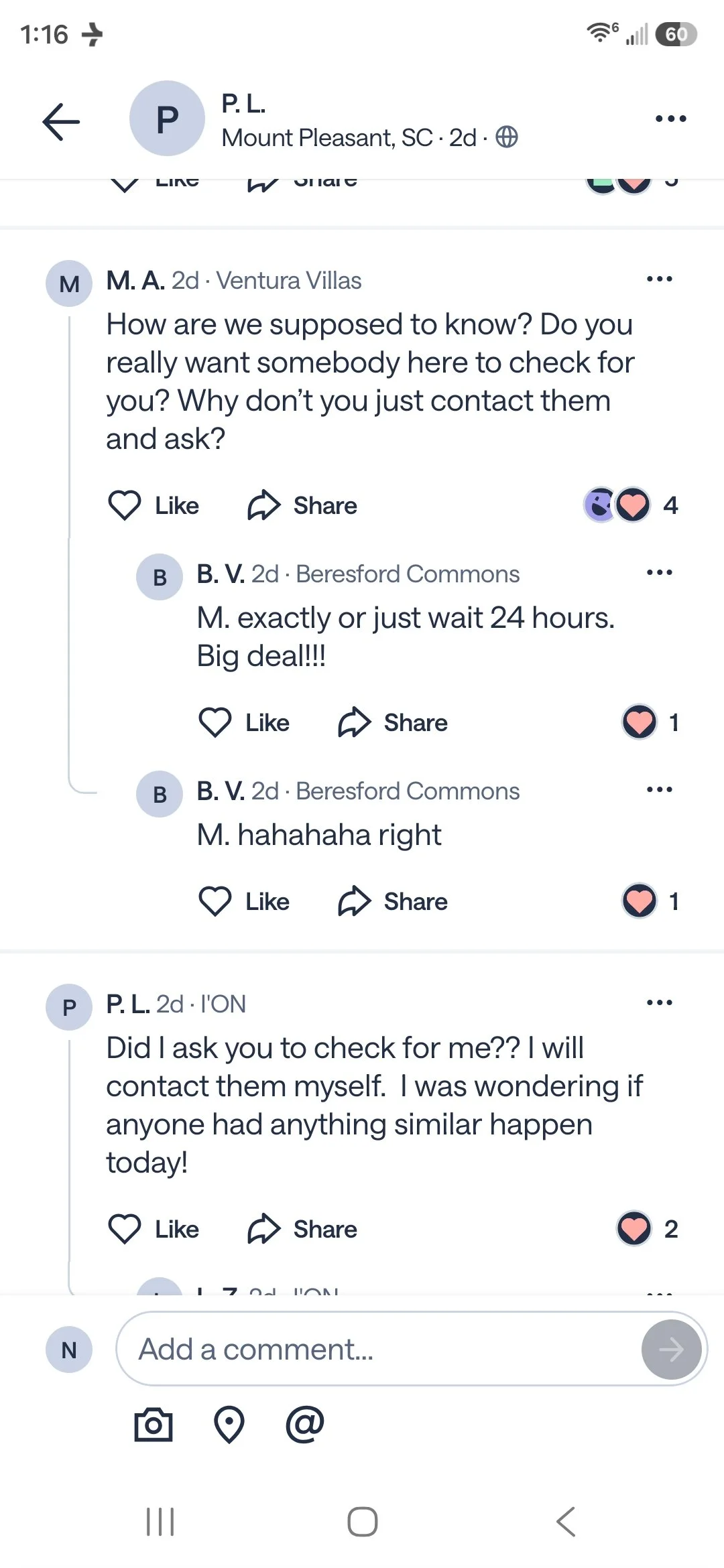
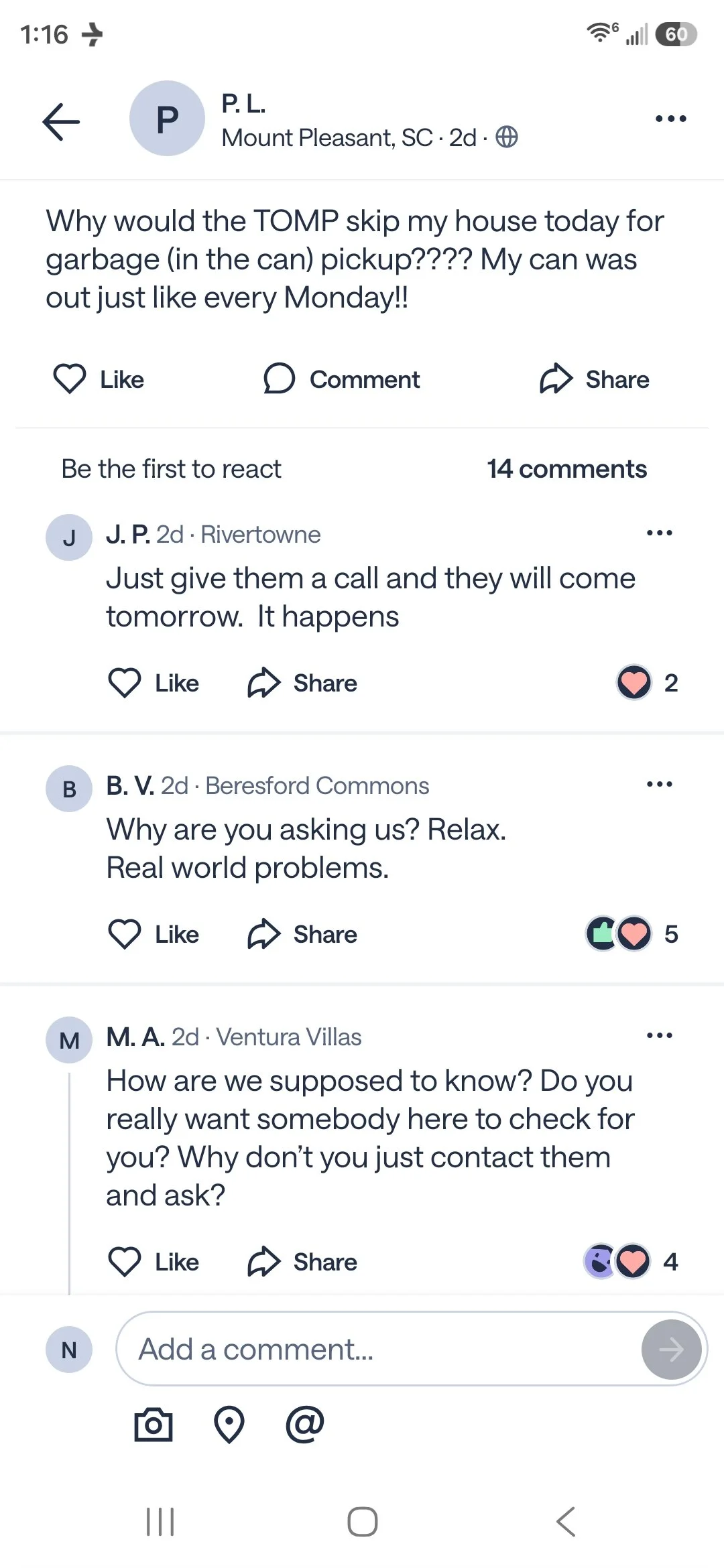
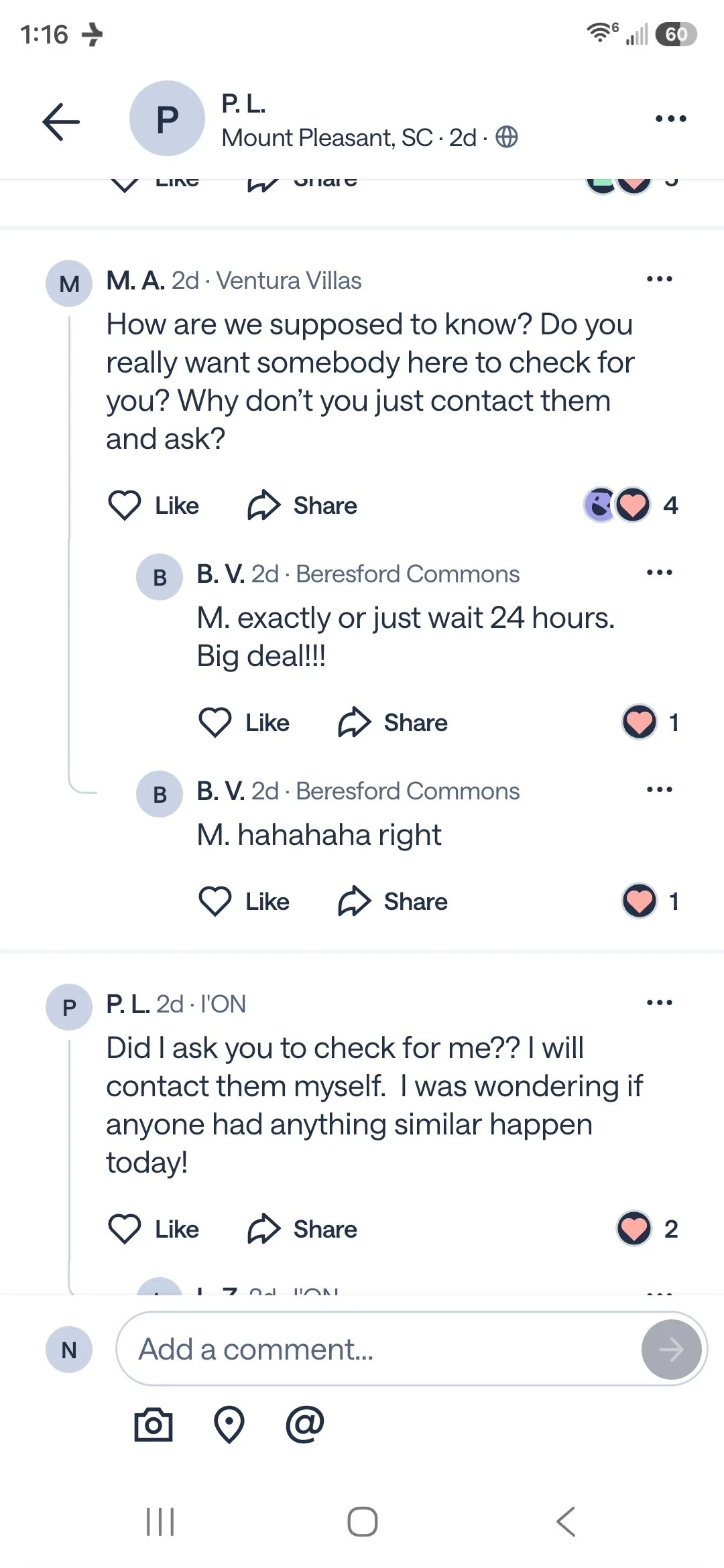
The attached example contains snarky comments that remained visible two days after they were posted. This isn’t an isolated example; it’s part of a pattern I’ve documented during my ongoing Nextdoor experiment.
Why isn’t AI identifying conversations that are escalating into personal attacks or unconstructive exchanges and routing them to trained reviewers?
Instead, Nextdoor continues to rely heavily on a decentralized network of unpaid moderators. While many volunteer with good intentions, any moderation system benefits from consistent standards, quality assurance, and ongoing coaching.
To me, the current model feels like the inmates running the prison while the warden sits in the office, removed from the chaos.
If AI can help prevent mistakes at a grocery store checkout, surely it can help create a more consistent and constructive online community.
Join the discussion on NielFlamm.com.
Day 18: Still Waiting. Still Asking. Still Documenting.
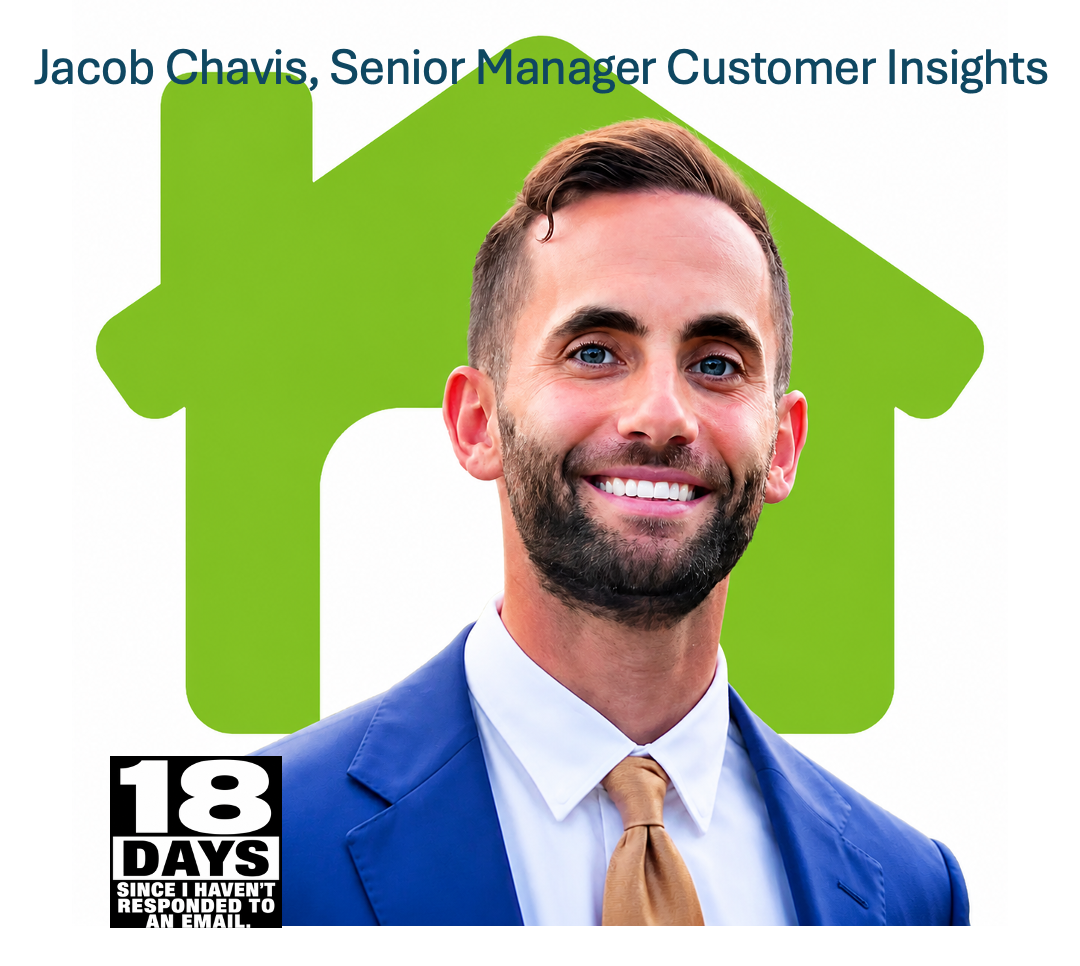
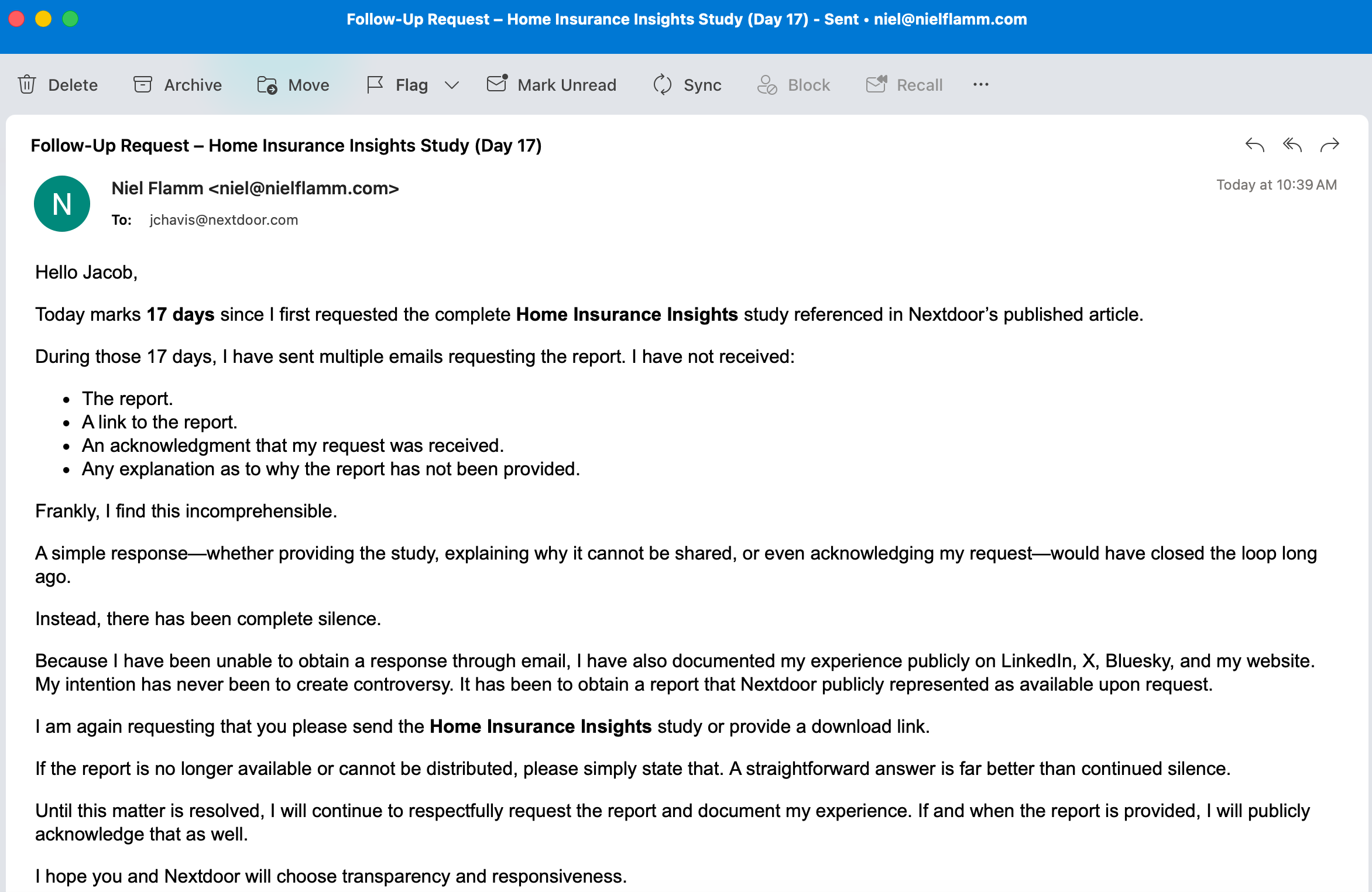
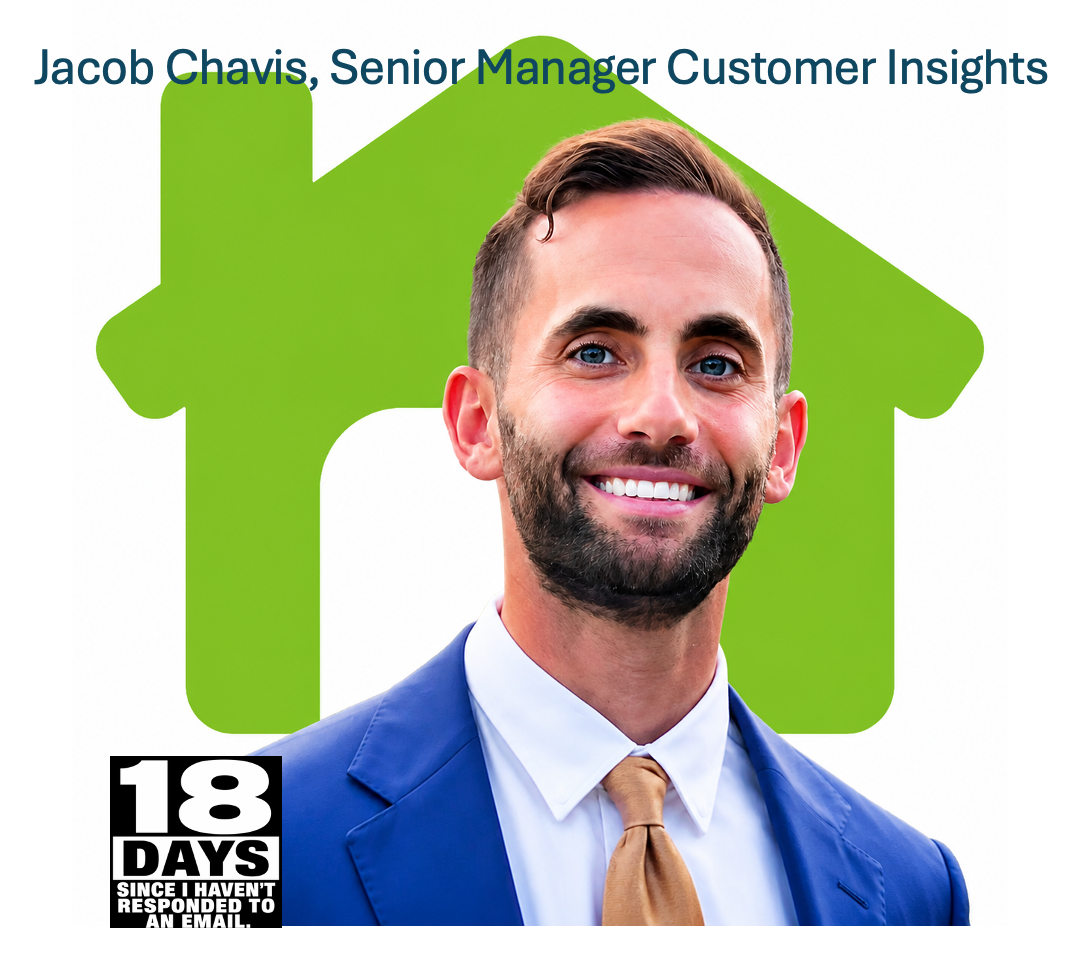
Today marks 18 days since I first requested the Home Insurance Insights study that Nextdoor publicly stated was available upon request.
In those 18 days, I’ve sent multiple emails.
I’ve received:
No study.
No link.
No acknowledgment.
No explanation.
At this point, the silence has become more noteworthy than the study itself.
A simple response—“Here’s the report,” “Here’s the link,” or even “We can’t share it”—would have resolved this weeks ago.
Instead, I’ve documented my experience across LinkedIn, X, Bluesky, and my website because transparency matters.
I sent another request today.
I’ll continue to respectfully request the report and document my experience until this matter is resolved. If Nextdoor provides the study tomorrow, next week, or next month, I’ll be just as public in acknowledging that response.
As a shareholder, I believe accountability includes responding to reasonable requests and closing the communication loop.
The question remains:
Why is a publicly referenced report so difficult to obtain?
Join the discussion at NielFlamm.com.

Is Is God Is Worth Watching? The Title Almost Kept Me Away

I almost skipped Is God Is.
Not because of the cast. Not because of the story. Simply because I couldn't figure out what the title meant.
After finally watching it on Prime Video, I'm glad I gave it a chance.
This revenge thriller has moments that remind me of Kill Bill, features a talented cast, and raises questions that stay with me long after the credits roll. It isn't a perfect movie, but it's definitely one that got me thinking.
In my latest video, I break down what worked, what didn't, why the title makes more sense after watching the film, and whether I think it's worth adding to your watch list.
🎬 Watch the full review now at: https://NielFlamm.com/videos
While you're there, check out my other movie reviews and all the other internet garbage I've managed to create. If you enjoy the content, feel free to share it with someone who loves discovering movies that fly under the radar.
Day 17: When Silence Becomes the Story
Today marks 17 days since I first requested the Home Insurance Insights study referenced in a Nextdoor article.
Seventeen days.
No study.
No link.
No acknowledgment.
The request was directed to Jacob Chavis, Senior Manager of Customer Insights. Since then, I’ve sent multiple follow-up emails, attempted to reach others within Customer Insights, and documented the process publicly. The silence itself has become part of the story.
But this didn’t start 17 days ago.
It began when I was suspended from Nextdoor and experienced what I believed was inconsistent moderation. I appealed, sought clarification, and was left with more questions than answers.
As a shareholder, I decided to look deeper.
I began examining moderation practices, customer experience, leadership communication, investor relations, and Nextdoor's public positioning. Along the way, I proposed ideas such as quality assurance for moderators, better use of AI, and more transparent communication.
What I wanted was simple:
A conversation.
Instead, I found myself documenting unanswered questions.
There’s an old saying:
“There’s no such thing as bad publicity.”
The more I’ve observed the platform, the more I think Nextdoor has created a different kind of doom scrolling.
Instead of viral videos, users are drawn into neighborhood disputes, complaints, and controversy, surrounded by sponsored content and advertising.
Some may think that’s harmless because it’s “only text.”
I disagree.
Text can be just as effective at keeping people emotionally invested and coming back for the next comment, argument, or accusation. The medium is different, but the engagement is the same.
It reminds me of America’s Funniest Home Videos. We watched people get hurt and laughed. On Nextdoor, users can become absorbed in the conflict of people who may live just around the corner.
That leaves me asking myself:
Am I feeding the system I’m questioning?
Or am I helping improve it by documenting my experience and encouraging a discussion about transparency, moderation, and customer experience?
I hope it’s the latter.
Join the discussion on NielFlamm.com.