
Is It Time to Rethink the Automotive Franchise Model?
I was thinking about the automotive franchise model and how dealerships under the same manufacturer compete against each other.
When you look around, there are other industries with similar franchise or dealer distribution models: heavy equipment, manufactured homes, commercial trucks, recreational vehicles, business-to-business equipment, tools, and office equipment.
Then I started thinking about traditional franchises like McDonald’s, Subway, and Chick-fil-A. Corporate may allow locations to have overlapping or fuzzy territory boundaries, but you typically don’t see one location dramatically undercutting another location selling the exact same product.
Automotive retail has operated differently for decades.
A customer can shop multiple dealerships selling the exact same vehicle from the exact same manufacturer and receive different pricing, incentives, fees, and experiences. Dealerships are not just competing against other brands — they are competing against their own brand family.
Part of why this structure continues is dealer protection laws. These laws were originally designed to protect independent businesses from powerful manufacturers, preventing automakers from simply replacing dealers after they invested millions into facilities, employees, and communities.
That purpose made sense.
But the question today is whether those same protections are also slowing innovation and preventing a more customer-focused purchasing experience.
Look at the complexity of a lemon law buyback situation. The customer bought the vehicle from the dealer. The manufacturer built the vehicle. The dealer performs warranty repairs. The manufacturer ultimately controls many of the decisions. The customer is stuck navigating the middle.
Who owns the problem?
The customer shouldn’t have to figure that out.
If automotive manufacturers moved toward a direct-to-consumer model, what could change?
• More consistent pricing
• Stronger margin control
• Better production and inventory planning
• Less dependence on end-of-month quotas and incentives
• Clearer ownership of customer issues
• A simpler process when something goes wrong
Dealerships have created thousands of successful businesses, jobs, and community relationships. Many provide outstanding service.
But purchasing a vehicle is one of the largest financial decisions people make, and the process should be designed around the customer first.
The future of automotive retail may not be about protecting how things have always been done.
It may be about building a better way forward.
Day 21: AI Talk vs. AI Execution
Today marks 21 days since I requested the report referenced on blog.nextdoor.com, in which Jacob Chavis of Nextdoor (jchavis@nextdoor.com) was listed as the contact for the full study.
Why did I request it?
Simple.
I wanted to understand the details behind the research:
What methodology was used?
What was the sample size?
What demographics were represented?
How was the data collected?
Basically, is this a meaningful research study or more of a FAMILY FEUD survey board?
It’s now been three weeks.
I’ll give some grace—it is Sunday, the weekend, and right after celebrating the 250th birthday of the United States of America.
However, throughout my career, as a manager and even before moving into leadership roles, responsiveness mattered. I monitored communication through company tools and responded when something required attention.
Now, compare that experience with one I recently had.
I use the Dexcom Stelo CGM to monitor my blood glucose levels. Since I’m not insulin dependent, I don’t qualify for a traditional Dexcom CGM under my UnitedHealthcare requirements, but Stelo helps me manage important health information.
Recently, my sensor session ended 8 days early.
That matters because consistent monitoring helps me understand if my glucose is trending too high or too low.
I had just received my regularly scheduled replacement, so I was able to swap sensors—but that meant I would eventually be short.
What happened next?
I used the Stelo chatbot.
It asked questions.
Created the incident.
Guided me through the process.
I filled out the required information.
Less than 24 hours later, a replacement CGM was on the way.
That made me think:
Why isn’t Nextdoor using AI like this?
A real-time AI assistant could help with:
Neighbors experience issues.
Moderation questions.
Suspension appeals.
Advertiser concerns.
Basic customer support.
Nirav Tolia frequently discusses AI as part of Nextdoor’s future.
The question I continue asking is:
Where is the execution that directly improves the user experience?
Talking about AI is easy.
Implementing AI where customers actually feel the impact is the difference.
Read more and join the discussion at NielFlamm.com
When a Positive Story Takes an Unexpected Turn
My Nextdoor experiment continues.
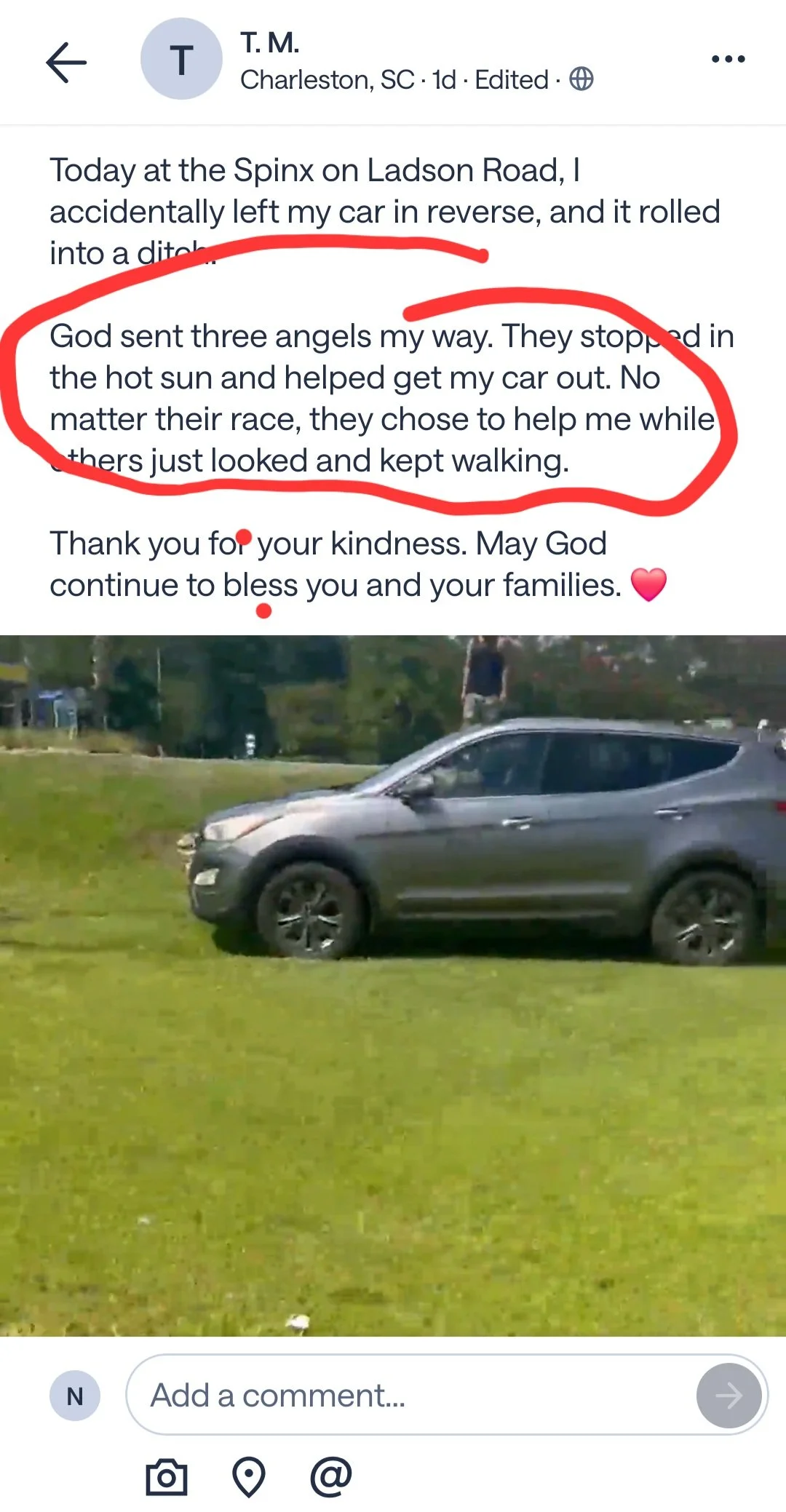
I recently came across a post that started as something inspirational and neighborly.
A neighbor made a simple mistake — accidentally leaving their vehicle in reverse — which resulted in the vehicle ending up in a ditch. Thankfully, people stepped in to help.
A great community moment.
Then the conversation shifted.
Race was introduced into the discussion, and the tone changed. To me, it had a similar feeling to the phrase:
"Some of my friends are ________."
Insert any race, background, or group.
That led other neighbors to question why race needed to be mentioned at all.
This is exactly where I believe technology could improve the experience.
If Nirav Tolia and Nextdoor are serious about AI being central to the company's future, why not use it where users actually experience the platform every day?
AI could identify potentially sensitive language, provide a pause before posting, or route questionable content for review.
Not censorship.
A moment of reflection.
A chance to ask:
"Does this detail add value to the conversation?"
My suggestion remains the same:
- Better AI-assisted moderation tools.
- Consistent standards across neighborhoods.
- Nextdoor-sponsored moderator training.
- A true QA program with coaching and calibration. See Karen Romero immediately!
- Investment in the user experience.
In my opinion as a shareholder, those investments could create more value than expanding corporate office space with the Dallas Nextdoor annex.
The goal should be simple:
Create a platform where neighbors connect without unnecessary division.
Join the discussion on NielFlamm.com.
#Nextdoor #NXDR #ArtificialIntelligence #Leadership #ContentModeration #CustomerExperience #Community #Transparency #QualityAssurance #CorporateGovernance #niravtolia
When Did You Stop Caring? The Little Things Are the Big Things
Over the past few days, I’ve been getting food to go for Mom and me while she’s been at Novant Health (formerly East Cooper Medical Center).
Why?
Because hospital food is… well… hospital food. 😬
I used to tell my parents this when they visited me during my hospital stays in 2023 and 2024. Now Mom understands.
My brothers and I have been bringing her things she actually wants to eat — breakfast, sushi, snacks, seltzer, and anything that makes a hospital stay a little more comfortable.
I’m a big believer in ordering ahead. Use the app, time the drive, walk in, grab the order, and get back.
I’m also a believer in tipping.
Food service and hospitality workers work hard. They deal with people all day. Many are underpaid. If the service is great — tip. If the service is average, I still tip.
But tipping before receiving the service? I’m starting to rethink that.
Here’s why.
Thursday 7/2/26 — Big Bad Breakfast, Mount Pleasant
I ordered Mom an omelet and pancakes for myself. I picked it up, asked the person handing me the bag:
“Are utensils in the bag?”
Answer: “Yes.”
I get back to the hospital.
No utensils.
I start searching the hospital, trying to find some. Mom is so hungry that she eats part of the omelet by hand.
Yes — I should have checked. That’s on me.
But I also specifically asked.
Tip: $4.84
I emailed the restaurant’s general manager.
No response.
Today, July 4th — Chipotle Mexican Grill
I ordered two Sofritas bowls. Mom has never had Chipotle Mexican Grill, and I thought the Sofritas would be easier for her to eat.
I ordered ingredients on the side and labeled the bowls so we’d know whose was whose.
I arrive at the hospital:
• Lids weren’t secure, causing spills
• Bowls weren’t labeled
• Black beans were missing
Tip: $3.14
I tried contacting Chipotle Mexican Grill support and met “Pepper,” the chatbot wall that didn’t solve the issue.
So what did I do?
I disputed the tip amounts.
Not the food.
The tips.
Because tipping is supposed to recognize service.
The dollar amount isn’t the point.
The principle is.
I tolerate what I allow — and I’m not allowing this.
Small details matter.
A fork matters when someone is sitting in a hospital room hungry.
A secured lid matters.
Checking an order matters.
Follow-through matters.
So I’ll ask the question from Natalie Beckerman’s best sellerbook:
“When Did You Stop Caring?”
Chipotle?
Because the little things tell customers everything.
Join the discussion on NielFlamm.com
Dialysis Isn’t Just the “Hangover”
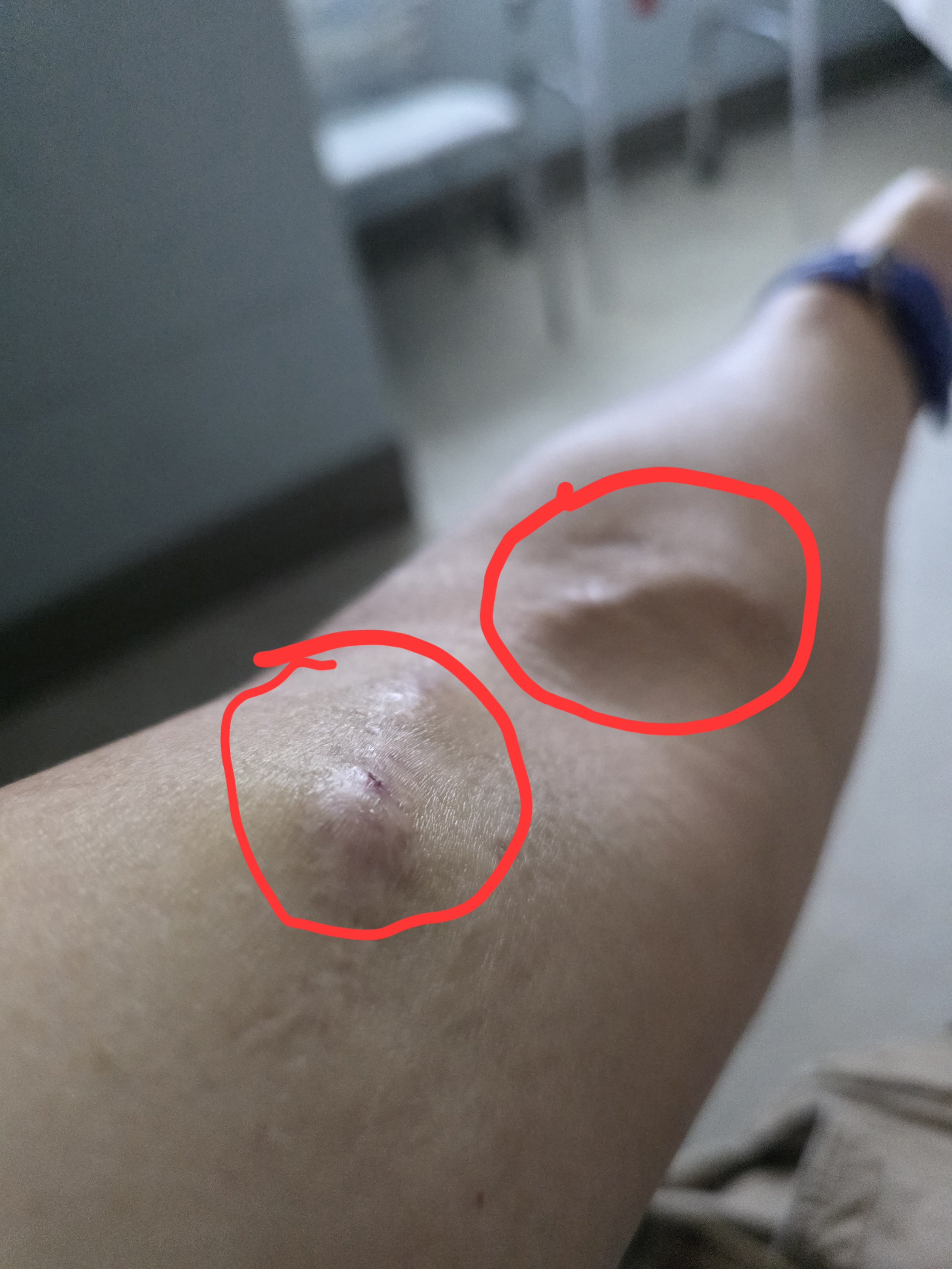
When people ask me what dialysis feels like, I often compare it to having a hangover.
Now, before anyone gets confused, I haven’t had an alcoholic beverage in more than 17 years. Recovery has been one of the greatest gifts of my life. But I do remember what a hangover felt like, and it’s one of the closest comparisons I can make.
That foggy feeling.
The fatigue.
The lack of energy.
The difficulty concentrating.
The feeling that my body just isn’t operating at 100%.
For me, dialysis can produce many of those same sensations. It’s as if someone hit the reset button on your body, but the operating system takes hours to fully boot back up.
But there are other reminders of dialysis that don’t get talked about nearly as often.
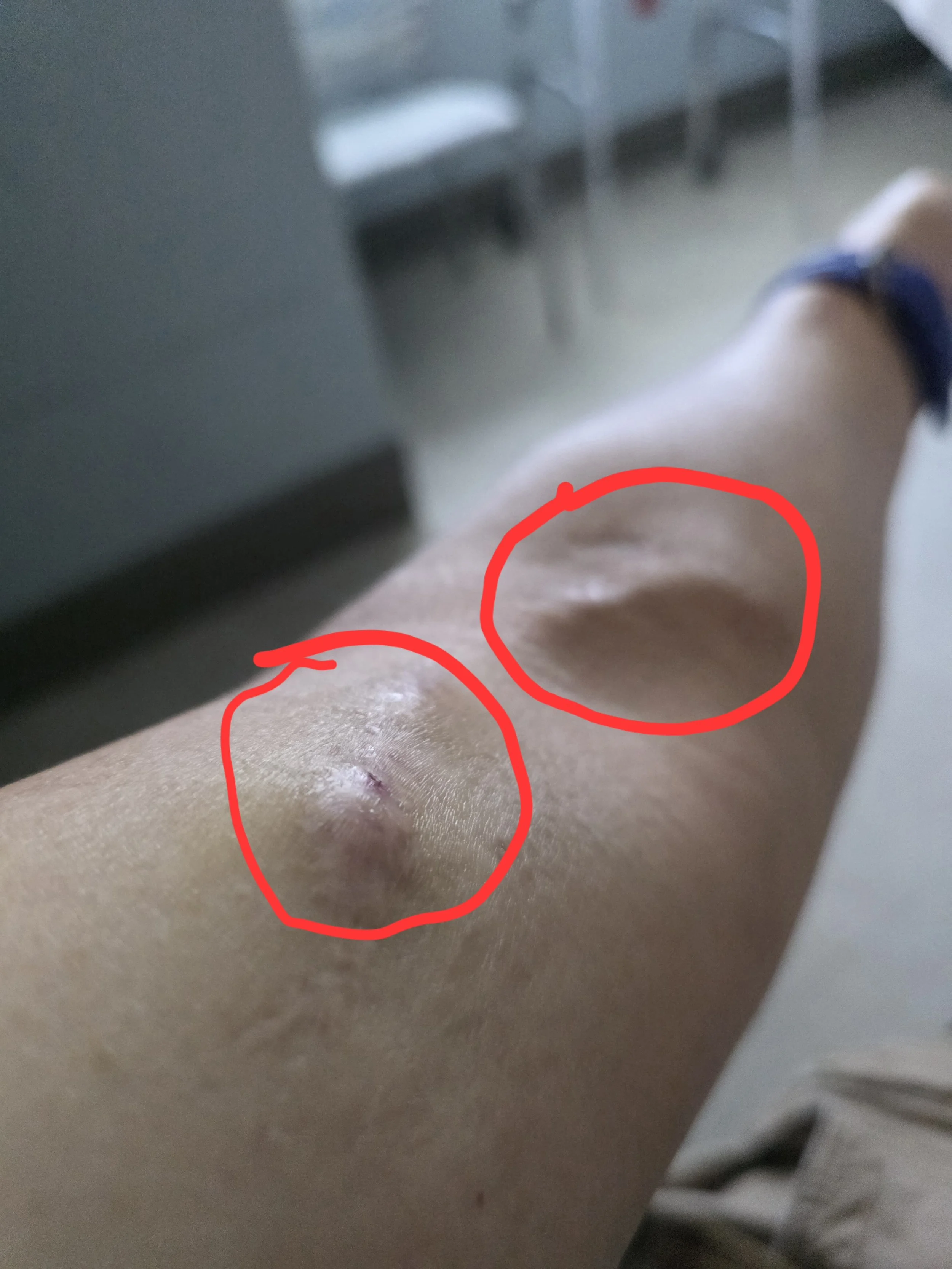
The photo with this post was taken immediately after one of my dialysis treatments. Those two puncture marks in my arm are where 15-gauge needles were inserted into my graft. During treatment, one needle carries blood from my body to the dialysis machine, where it’s filtered, and the other returns the cleaned blood back to me.
Every treatment.
Three times a week.
Week after week.
The machine isn’t just cleaning my blood. It’s also removing the small amount of excess fluid my kidneys can no longer remove on their own. Even when I carefully manage what I drink between treatments, there’s still fluid that has to come off.
Those needle marks are a reminder that dialysis isn’t just something I do—it’s something my body experiences.
In my case, I have an arteriovenous graft. Some people receive dialysis through an arteriovenous fistula, and depending on the individual, those access sites can become much more pronounced and visibly change over time. Everyone’s journey looks a little different.
When people see someone on dialysis, they often see the few hours spent sitting in a treatment chair.
What they don’t always see is what happens afterward.
The exhaustion.
The soreness.
The arm that reminds me of where two large needles were just inserted.
Planning my life around treatment schedules.
The mental adjustment of knowing I’ll be back in a couple of days to do it all over again.
I don’t write these posts for sympathy.
I write them because, unless you’ve experienced dialysis yourself—or cared for someone who has—it’s difficult to appreciate what life is really like between treatments.
If sharing my experience helps someone better understand what millions of people living with kidney disease go through, then it’s worth sharing.
And if it encourages even one person to consider becoming an organ donor, that’s even better.