
The Tinder Experiment Is Over. Welcome to The Hinge.
Well, it happened.
The Tinder experiment is officially over.
I deleted my profile. Hopefully.
I say “hopefully” because deleting anything from the internet feels less like destroying evidence and more like politely asking a multinational corporation to maybe stop showing it to people eventually.
But Tinder and I have parted ways.
After the swiping, the matching, the questionable conversations, and the recurring suspicion that I was less likely to find a date than I was to receive an exciting new investment opportunity, I decided it was time.
So naturally, I did the sensible thing.
I joined another dating app.
Welcome to The Hinge.
Yes, I know it's just called Hinge. But “The Hinge” sounds more dramatic, like a nightclub, a medical procedure, or something at Home Depot.
Apparently, Hinge is “designed to be deleted.”
Challenge accepted.
The question is: why will I delete it?
Will I actually meet someone?
Will I get any matches at all?
Will I match with someone, have a perfectly normal conversation, and then hear:
“I don't check this app very often. Do you have WhatsApp?”
🚩🚩🚩
Will someone want to take the conversation offline almost immediately?
Will she suddenly have an incredible business opportunity?
Will cryptocurrency somehow enter the conversation?
Will she own a thriving import/export business that requires absolutely no physical location?
Will we talk for three days and then she mysteriously disappear?
Or—and I realize this is an absolutely insane possibility—will someone actually want to meet me in person?
Coffee.
Dinner.
A movie.
Two human beings occupying the same physical location without anyone trying to sell the other one something.
Imagine that.
I'm going into The Hinge with an open mind. I'm going to swipe—or like, or comment, or whatever terminology we're using over there—and see what happens.
I'm not expecting perfection.
I'm not even expecting normal.
I'm just hoping for an actual human being who wants to have a conversation, laugh a little, eventually meet in person, and doesn't need me to download another messaging app before revealing that her uncle has taught her a proprietary cryptocurrency trading strategy.
The bar is low, people.
Very low.
So begins the next dating experiment.
How long will The Hinge last?
How many matches will I get?
How many will turn into conversations?
How many conversations will turn into actual dates?
And how many will end with me staring at my phone thinking:
“Oh, for God's sake. Not again.”
Only time will tell.
Until then...
Pray with me, Forest.
Pray with me.

Day 63: If the Rules Aren’t Consistent, Are They Really Rules?

It's Day 63, and this morning while continuing my study of the Nextdoor app, I found another example that has me questioning its moderation model.
A neighbor posted:
“Not to get political, but I keep hearing about this runoff happening next week and I am so torn on the candidates. Does anyone have any thoughts?”
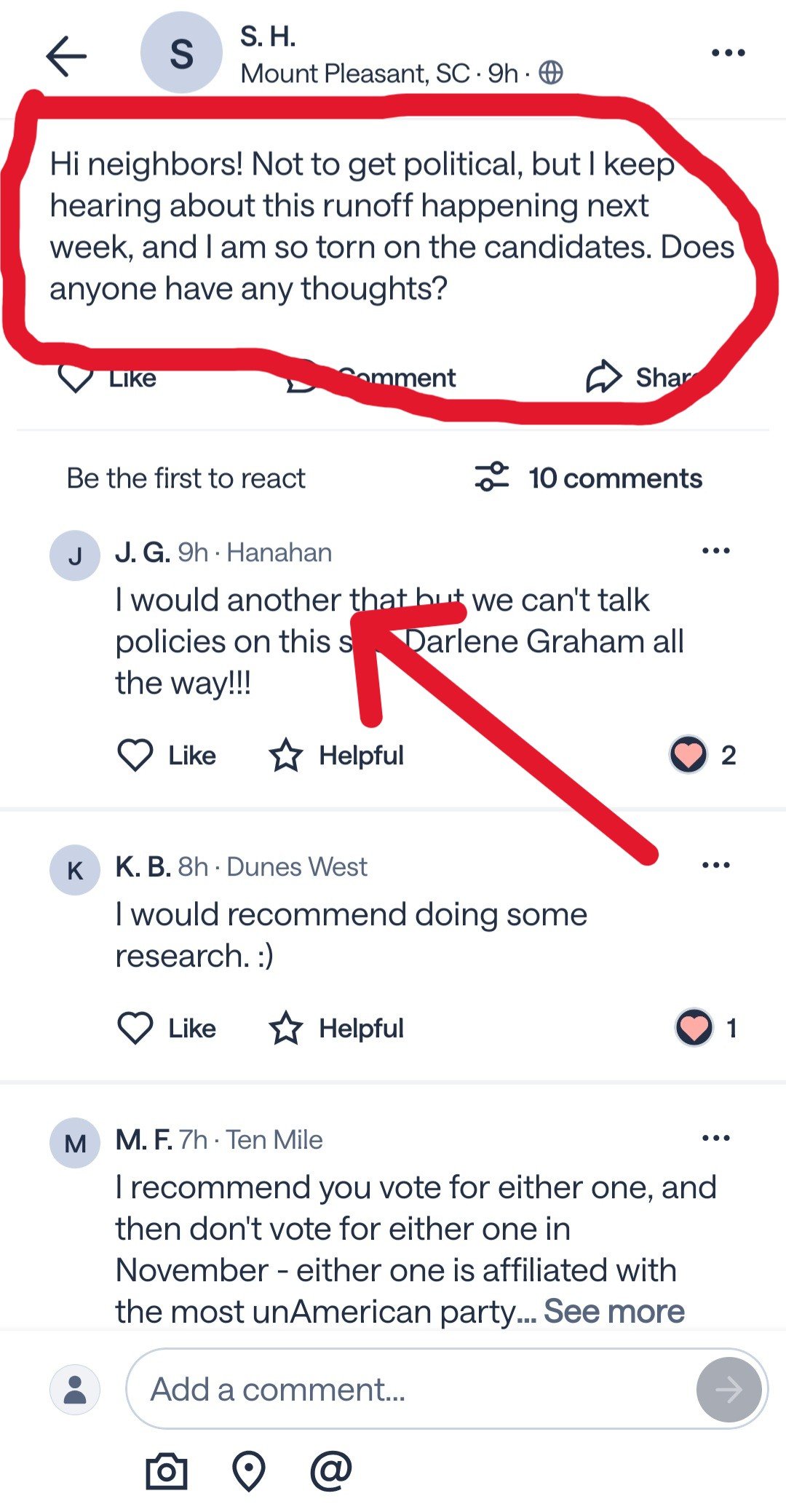
Whenever something begins with “Not to get political…”, we can probably guess where it's headed.
Politics.
And that's exactly what happened.
Neighbors discussed candidates, political parties, voting choices, and opinions. Some users even pointed out:
“We can't talk politics on this site.”
Another wrote:
“Not the place for politics. PLEASE STOP.”
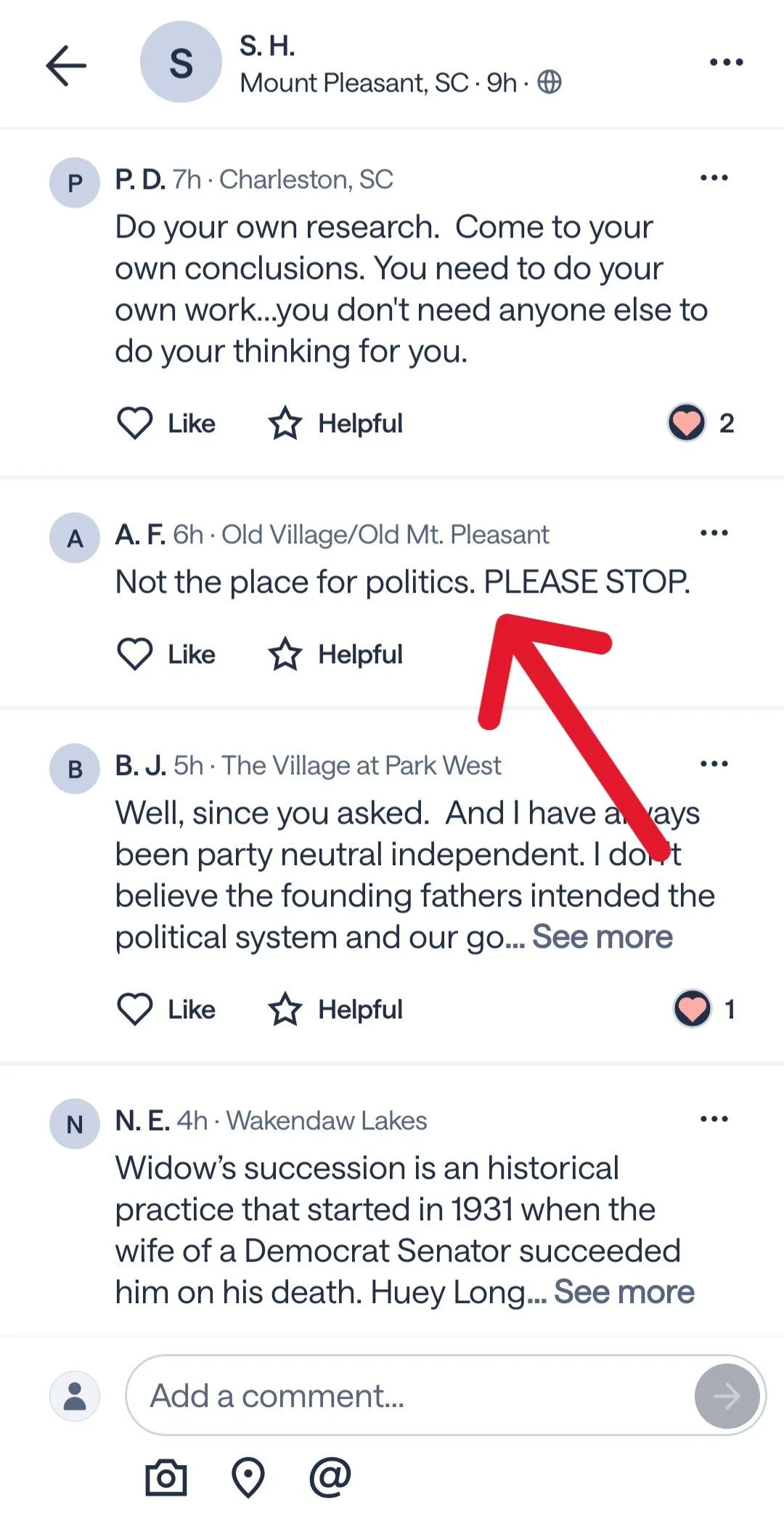
Yet, approximately nine hours after the original post, it was still there.
Here's my moderation question.
Nextdoor permits certain local political discussions, but restricts broader national politics.
This discussion involves a U.S. Senate seat. South Carolina voters elect the senator statewide, but that person then goes to Washington to vote on national legislation and policy.
So where's the line?
Is a U.S. Senate race local because the candidates campaign within South Carolina?
Or national because the winner becomes one of 100 U.S. senators?
More importantly:
Do Nextdoor's moderators agree on the answer?
That's the larger issue I've been documenting.
A moderation system is only as effective as its consistency, training, quality assurance, and enforcement.
If Moderator A removes something while Moderator B leaves essentially the same content up for nine hours—or indefinitely—the policy isn't producing consistent outcomes.
That's not merely a neighbor problem.
That's a process problem.
And when moderation relies heavily on unpaid neighbors making judgment calls about other neighbors, quality control becomes incredibly important.
I've said it before:
We inspect what we expect.
So who's inspecting the moderators?
Who's measuring agreement between them?
Who's auditing incorrect removals—and incorrect decisions to leave content up?
What are the accuracy metrics?
These aren't rhetorical questions. I'd like to see the data.
I've been asking questions about Nextdoor's research, moderation, communication, and accountability for 63 days.
Maybe this post complies with Nextdoor's rules. If so, explain why.
Maybe it doesn't. If so, why was it still there nine hours later?
Either answer would be useful.
What isn't useful is having policies whose enforcement appears unpredictable depending on the moderator, neighborhood, or day.
Day 63. Another post. Another moderation question.
And somehow, still no Jacob Chavis.
Join the discussion at NielFlamm.com/blog. Leave some feedback—I'd love to hear your perspective.

The End of Oak Street: Dinosaurs, Detroit and a LOT of Thigh
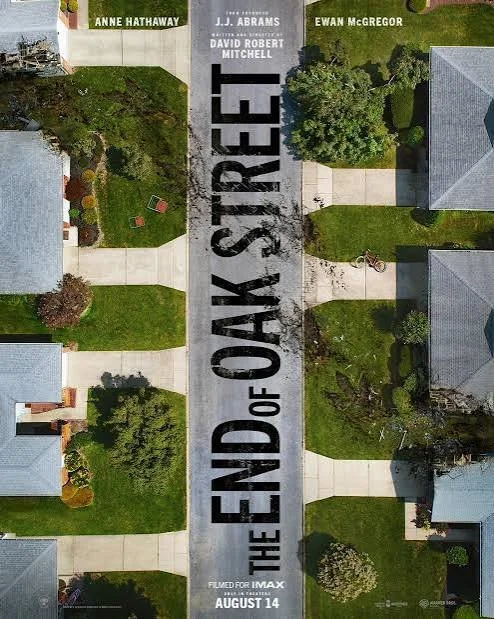
Detroit. 1982. Gas-guzzling cars, giant tube TVs, dangerously short men's shorts... and dinosaurs.
That's the setup for The End of Oak Street, starring Anne Hathaway and Ewan McGregor. What starts as a neighborhood block party takes a very strange turn involving a storm, a wormhole, some extremely unfriendly dinosaurs—and neighbors who apparently don't understand that screaming usually means STAY INSIDE.
Did I love it? Nope. Did it entertain me? Sometimes intentionally... sometimes I'm not so sure.
And I've got some questions about that ending.
🎬 Watch my full spoiler-filled review at NielFlamm.com/videos/moviereviews
Then tell me: theater-worthy, streaming-worthy, or dinosaur food?

Another Day, Another LinkedIn "Recruiting" Scam
At this point, I'm starting to wonder...
Do I have a mark on my forehead?
This time it was Eman Saber, who claimed to be a Hiring Manager | Corporate Recruiting | Kleiner Perkins.
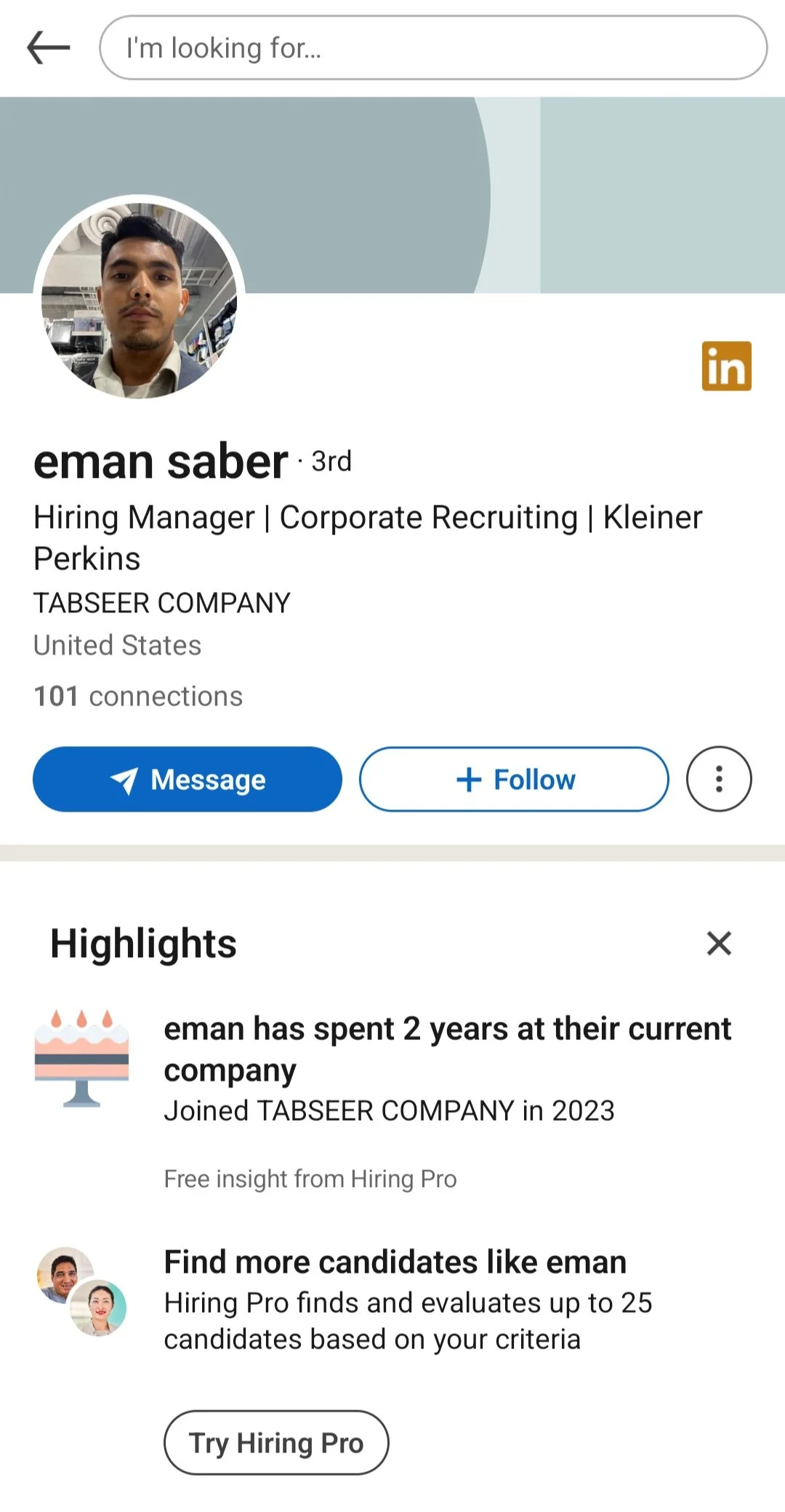
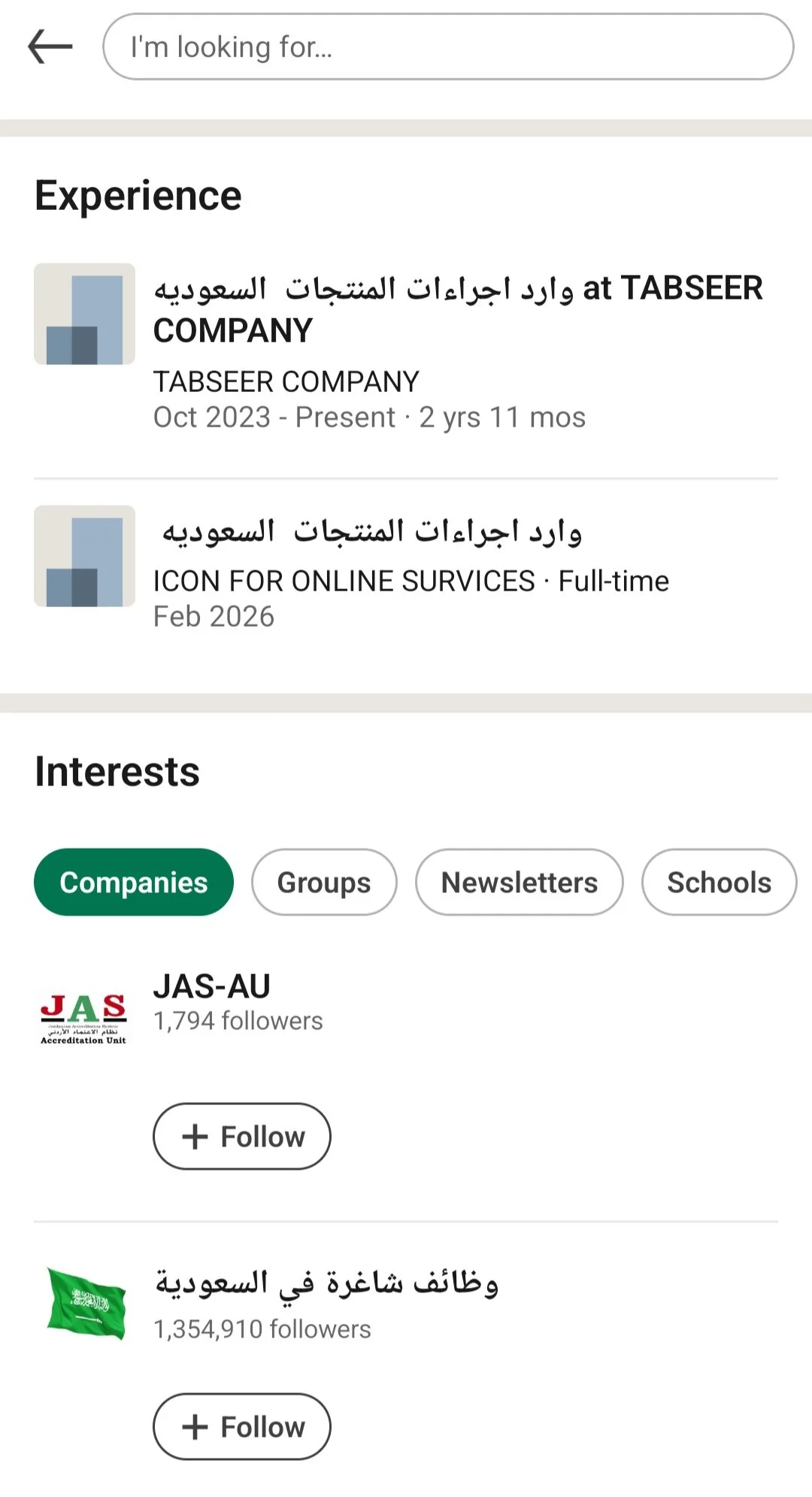
A quick look at the profile raised questions. The experience listed was extremely limited, and the employment timeline appeared to overlap with another role. Despite claiming to represent Kleiner Perkins, the profile also referenced TABSEER COMPANY, which didn't align with the recruiting message.
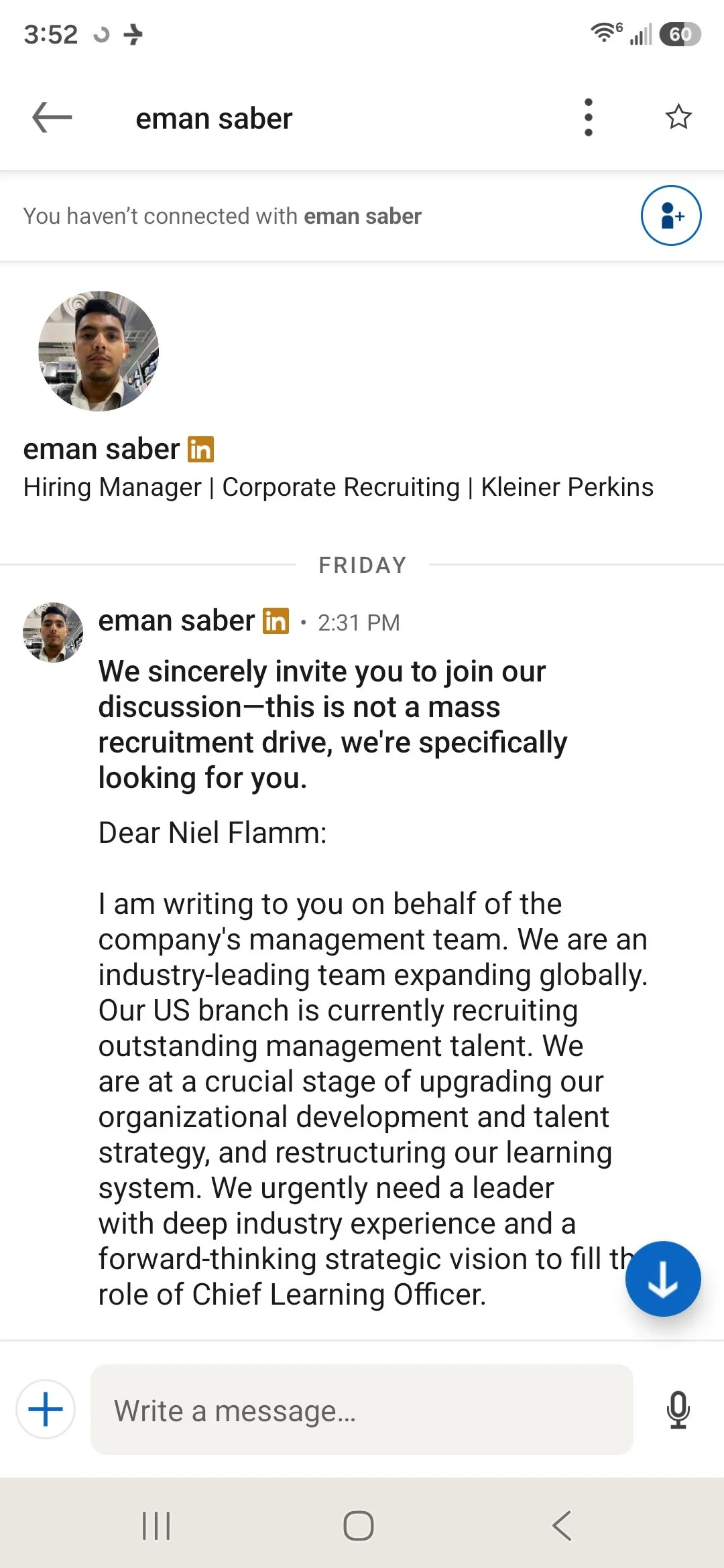
Then came the familiar script:
- An unsolicited executive opportunity.
- Generic praise about my "extensive experience."
- A request to move the conversation off LinkedIn to WhatsApp or Microsoft Teams Users Group.
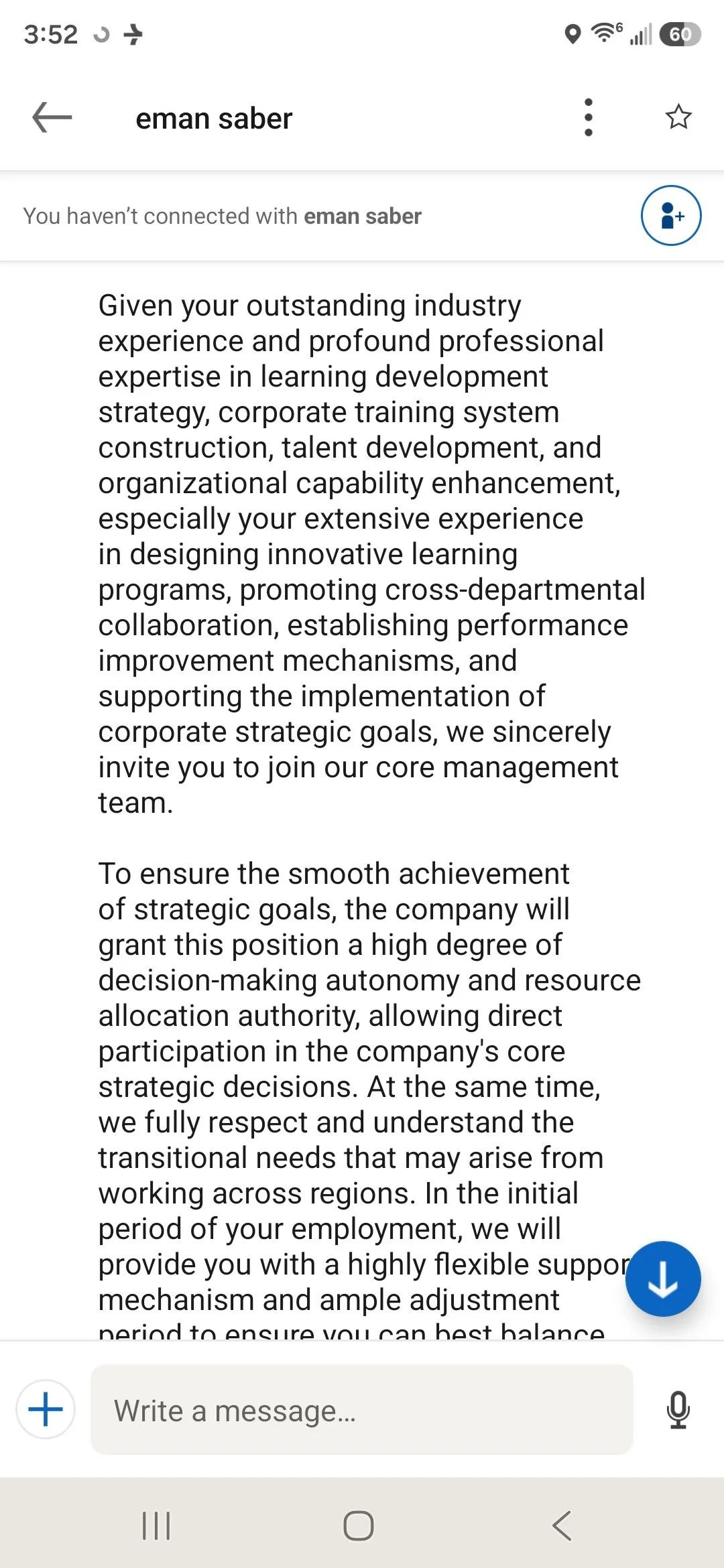
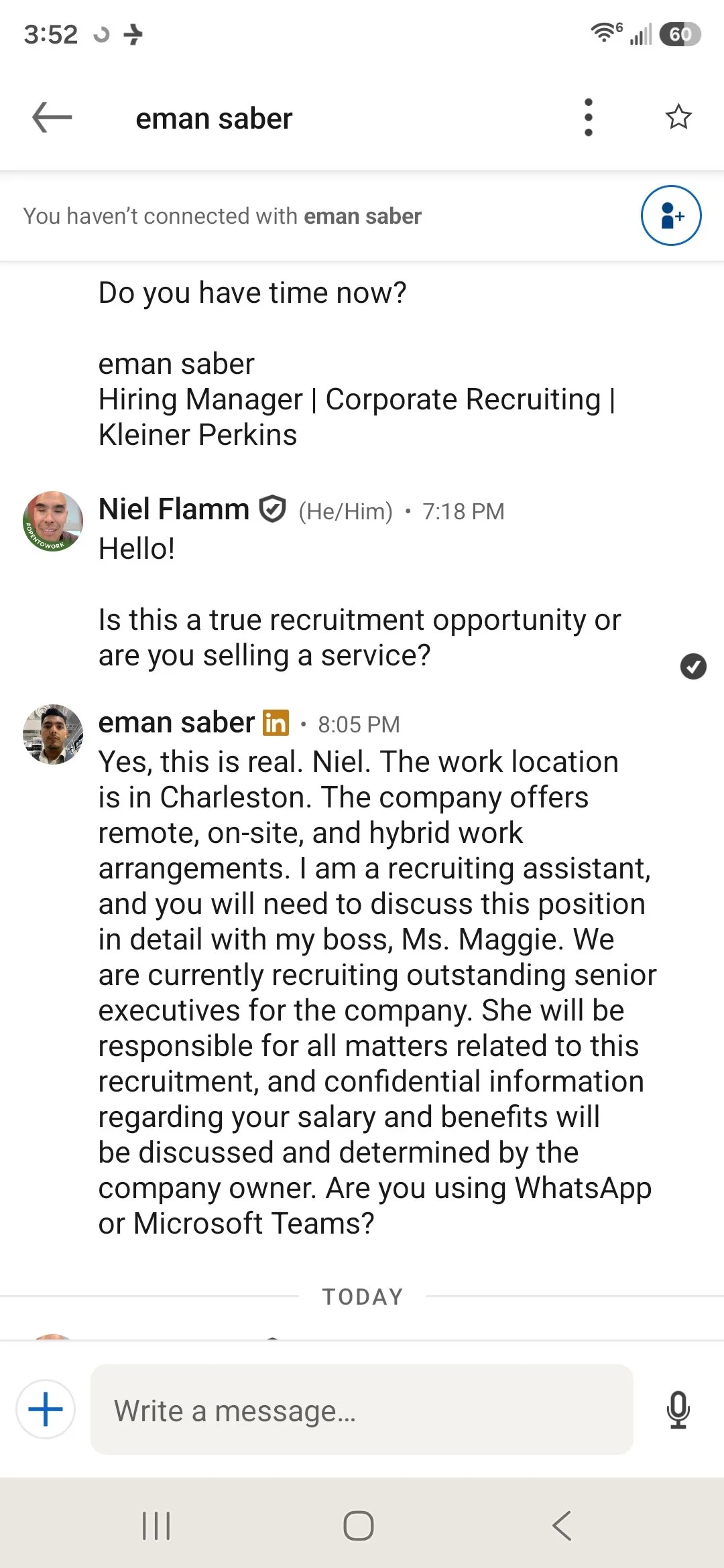
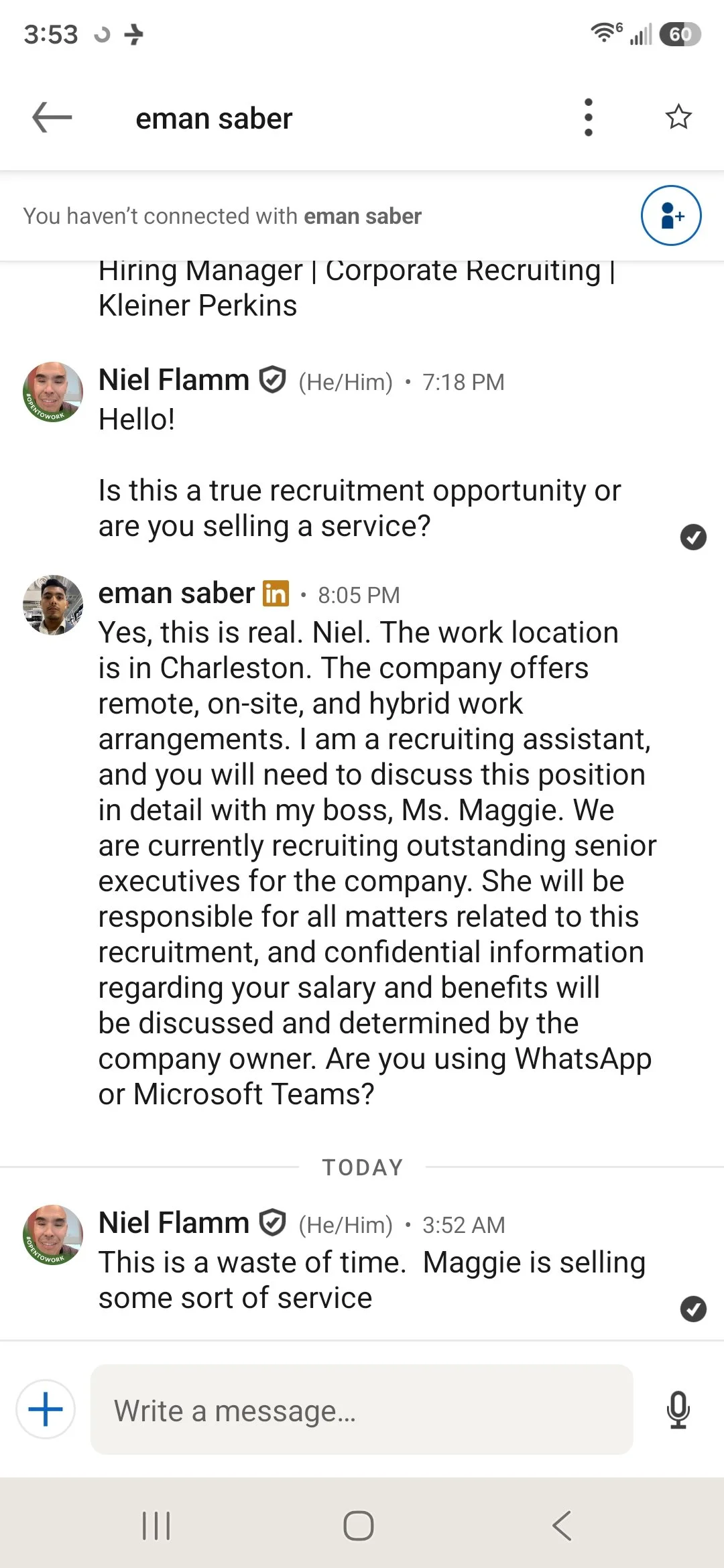
I've seen this pattern too many times.
The scammers need to do better.
Has anyone else noticed an increase in these fake recruiter accounts? I don't even have the #OpenToWork banner enabled, yet they keep finding me.
Stay skeptical. Ask for a job description. Verify who they represent. And don't leave LinkedIn until you've confirmed you're dealing with a legitimate recruiter.
Follow along on NielFlamm.com/blog.

This Was Not the Blog Post I Planned to Write
I had other things to write about.
I had just gone to see The End of Oak Street—vlog review coming soon—and then stopped at Boxcar Betty’s in MTP, where I discovered bacon jam.
I did not know I needed bacon jam in my life. Now I’m wondering how I survived this long without it. Was I even living, or was I merely existing in a tragically bacon-jam-free state?
After lunch, I wanted to go to the nearest Starbucks, sit down, and get some writing done before a recovery meeting. I had topics. I had thoughts. I may have even had a plan.
None of those topics involved the back of a Honda CR-V.
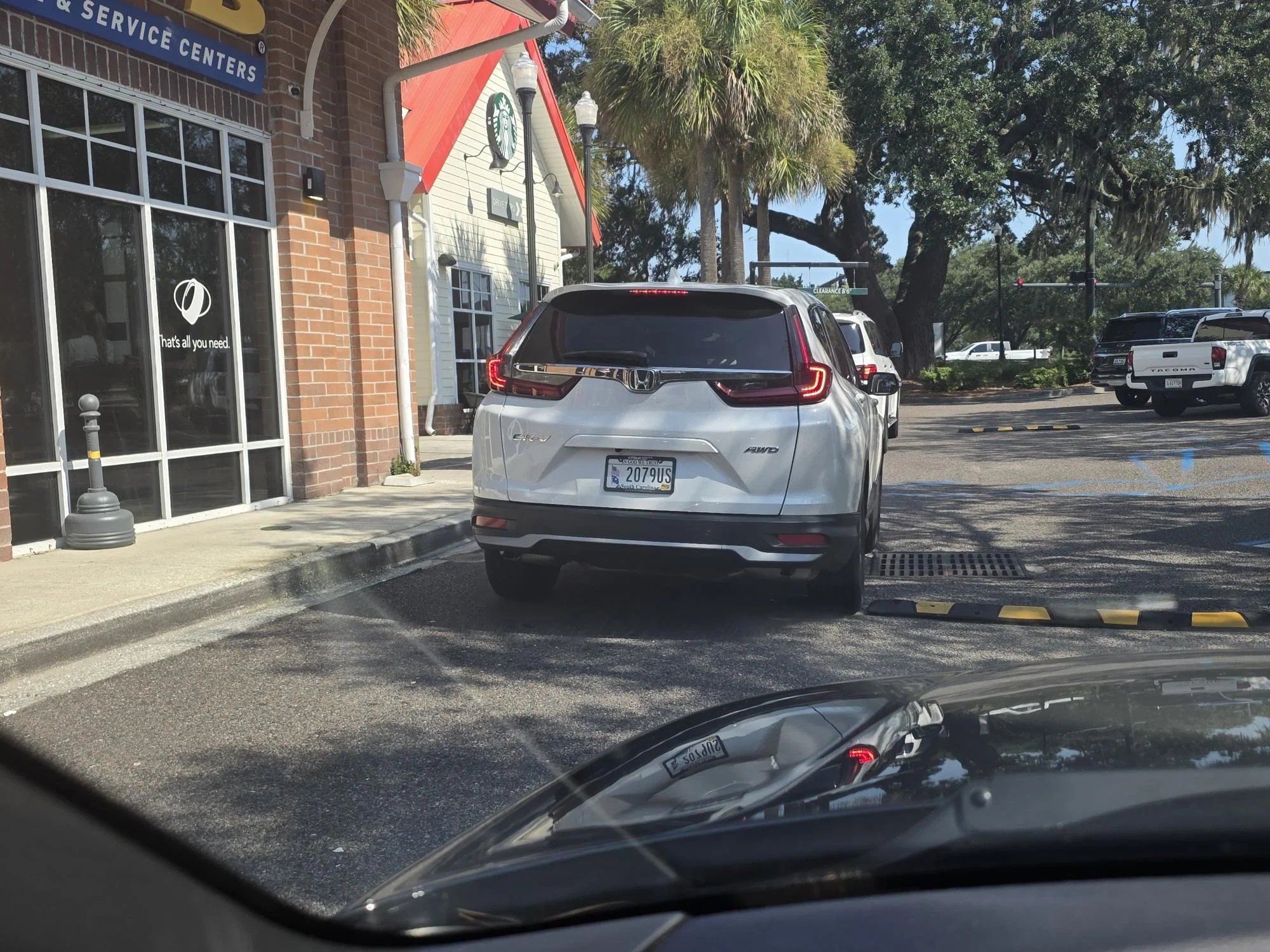
And yet, here we are.
This particular Starbucks is next to a National Tire & Battery. Because it is next to a tire shop, there are sometimes vehicles parked outside the service bays. It happens. Cars need tires. Tires need cars. The circle of automotive life continues.
The resulting passageway is narrow, but it works—as long as everybody participates in that increasingly experimental social practice known as courtesy.
Usually, drivers go around the vehicles near the service bays and move as far left as possible without sacrificing a wheel rim to the curb. It is not a perfect system, but civilization has survived on less.
Not this vehicle.
This vehicle appeared committed to occupying exactly enough of the available space to make passing somewhere between “deeply uncomfortable” and “please have your insurance information ready.”
There wasn’t much room between the building, the sidewalk, and the car. So I waited.
And waited.
At least ten minutes.
I did not honk. Remember, no horn. Read back if you don’t know that story.
I did consider flashing my high beams, but that seemed like the automotive equivalent of sending a strongly worded email while the recipient is sitting directly in front of you.
Eventually, the car moved forward.
Victory?
Not exactly.
It moved just enough to acknowledge that movement was technically possible, while still declining to leave what experts call “a reasonable amount of space.”
As I finally worked my way around, the people inside appeared to be waiting for the early-bird special to begin while conducting important business on a portable device. Perhaps they were negotiating a treaty. Perhaps they were solving the national debt. Perhaps they were watching a video explaining how driveways work.
I may never know.
Here is the semi-serious part: parking lots are small communities with bad signage. We all have somewhere to be. We are all distracted. We are all occasionally the person who doesn’t realize we are blocking someone else.
But when you are sitting in a narrow lane, and another car has been waiting behind you long enough to reconsider every decision that led them there, moving over a few feet is a lovely gesture.
It costs nothing. It requires no app. There is no subscription fee.
Just look around, notice the other humans, and share the pavement.
Anyway, I eventually made it to Starbucks. I had bacon jam in my recent past, a recovery meeting in my near future, and several completely different topics waiting to be written.
Instead, I wrote about this car.
Ugh.